博客

  • Brazil’s government says it is working with Peru to protect border Indigenous lands

    Brazil’s government says it is working with Peru to protect border Indigenous lands

    RIO DE JANEIRO, BRAZIL – In a landmark step toward collaborative conservation of the Amazon rainforest, Brazil’s Ministry of Indigenous Peoples announced Friday that it has formalized a new bilateral agreement with Peru’s Ministry of Culture focused on strengthening joint protection of Indigenous territories, particularly those housing uncontacted communities along the two nations’ shared border.

    Negotiations for the memorandum of understanding first launched in 2024, and the full text of the agreement is scheduled to be officially published in Brazil’s government register in the coming weeks, per Brazilian officials. Once implemented, the pact will create a structured cross-border framework for sharing intelligence, aligning enforcement strategies, and coordinating conservation efforts to address shared threats to vulnerable Indigenous lands.

    The announcement arrives amid urgent calls for action from Ashaninka Indigenous leaders, who are currently meeting with federal authorities in Brazil’s capital Brasília to request immediate security intervention for their cross-border territory. Earlier this month, five heavily armed men carrying machine guns entered the Ashaninka lands, threatened local families, and targeted the community’s senior leadership. Spanning the remote western Amazon along the Brazil-Peru divide, the Ashaninka territory has increasingly become a target for transnational criminal groups seeking access to unpatrolled land for illegal activity.

    The growing encroachment is directly tied to the expansion of a key drug trafficking corridor known as the Solimões River route, experts confirm. Criminal gangs and drug traffickers have increasingly carved out smuggling routes through the region, leveraging the dense, remote Amazon rainforest to move illicit goods. While Indigenous stewardship of these lands is widely recognized as one of the most effective barriers to Amazon deforestation – a critical front for regulating global climate systems – that same dense, remote tree cover that Indigenous communities protect also makes the territory ideal hiding spots for criminal networks.

    In response to the recent incursion, Brazilian federal police have opened a formal investigation into the attack, and launched a joint enforcement operation with state authorities in the region earlier this week. The operation’s official mandate is to prevent and crack down on cross-border incursions, organized criminal activity, drug trafficking, environmental harm, and other illegal activities that cross the two nations’ boundary.

    The Brazilian Army has also bolstered its presence in the border region, deploying approximately 30 additional troops to step up patrols. Preliminary intelligence gathered from Indigenous leaders and government agencies indicates the armed attackers were Peruvian citizens who crossed into the Brazilian side of the Ashaninka territory to carry out the incursion. This reinforcement, however, has drawn criticism from Indigenous advocacy groups, who have long argued that temporary troop deployments do little to address the permanent, ongoing threat of criminal encroachment on their lands.

    As of Friday, Peru’s Ministry of Culture had not responded to requests for comment on the new agreement or the recent attack. The Associated Press’ climate and environmental reporting is supported by funding from multiple private foundations, with the AP retaining full editorial control over all content. More information on the AP’s philanthropic partnership standards, a full list of supporters, and funded coverage areas is available at AP.org.

  • Firefighters struggle to contain Madrid wildfires, as more than 140,000 evacuated in France and Spain

    Firefighters struggle to contain Madrid wildfires, as more than 140,000 evacuated in France and Spain

    As southern Europe grapples with record-breaking heatwaves and prolonged drought, catastrophic wildfires have erupted across France and Spain, forcing tens of thousands of residents to flee their homes and overwhelming emergency response capabilities.

    In central Spain, three separate blazes west of Madrid merged into a single massive inferno that regional officials describe as the worst wildfire in the region’s recorded history. Spanish authorities have declared a national emergency after the blaze spun completely out of control, with at least 30,000 people evacuated and an additional 20,000 placed under mandatory lockdown. Madrid’s regional president Isabel Díaz Ayuso characterized the event as a perfect storm of extreme heat, unrelenting gusty winds, and converging fire fronts that has created an unprecedented challenge for first responders.

    Carlos Novillo, Madrid’s regional emergency management chief, confirmed that the wildfire is currently beyond the containment capacity of firefighting teams. “It is not possible to attack the fire in that area, so defensive measures are being taken,” he told reporters, noting the blaze is advancing toward the municipalities of Robledo de Chavela and Fresnedillas de la Olivia, roughly 50 kilometers outside the capital. Spain’s Military Emergency Unit has been deployed to slow the fire’s progress, with priority placed on protecting populated areas near the historic town of El Escorial.

    Emergency crews are also racing to prevent a second large wildfire in nearby Ávila province, the 15,000-hectare Burgohondo blaze, from merging with the Madrid fire. “Authorities are doing everything we can” to stop the two fires from combining, Spain’s Interior Minister Fernando Grande-Marlaska said. As of Friday, more than 15,000 total hectares of land have been burned across the Madrid and Ávila regions, with eight full municipalities fully evacuated and three additional towns locked down.

    Local officials report the fire’s spread has been alarmingly rapid: the mayor of El Tiemblo in Ávila said flames covered 20 kilometers of terrain in less than 30 minutes. For 86-year-old Ecologio Cabrera, who fled his village west of Madrid with hundreds of other evacuees seeking shelter in a Vilamanta sports hall, the disaster is unlike anything he has ever experienced. “If you don’t run from it and you try to face it, it devours you,” Cabrera told reporters. His family had attempted to protect their home with garden hoses before firefighters ordered a full evacuation.

    Spanish authorities have opened an investigation into the Burgohondo blaze, with one person arrested and a second person under investigation for alleged negligence related to heavy machinery use during a period of high fire risk. Spanish Prime Minister Pedro Sánchez is scheduled to visit the region’s emergency coordination center on Saturday to assess the response, after describing the situation as dramatic and urging residents to exercise extreme caution.

    Across the border in southwestern France, the situation is equally dire, with more than 110,000 people evacuated after wildfires tore through the Gironde and Landes regions. The Gironde blaze, labeled an “XXL fire” by local prefect Sophie Brocas, has burned more than 19,000 hectares of forest and destroyed roughly 80 homes. The entire Cap Ferret peninsula, a popular summer tourist destination, was fully evacuated, with hundreds of visitors and residents escaping by boat as flames swept through coastal communities. While the peninsula has a year-round population of less than 8,000, seasonal numbers can surge to 80,000 during peak summer travel.

    Fire officials note conditions are even more severe than the devastating 2022 wildfires that hit the same region, with prolonged drought turning vegetation into dry tinder that allows fires to spread through the night. “We have never seen a convective fire of this magnitude,” French Interior Minister Laurent Nuñez told broadcaster TF1, adding that roughly 50 firefighters have been injured in containment efforts. On Friday evening, the blaze shifted direction and began advancing east toward the major city of Bordeaux, prompting plans for additional evacuations. French President Emmanuel Macron has mobilized military forces to support the response and activated the European Union’s civil protection mechanism to request international reinforcements, which will include two Black Hawk helicopters from the Czech Republic and Slovakia.

    Further south in the Landes region, a second blaze near Biscarrosse forced more than 23,000 people to evacuate from homes, campsites, a nursing home, and a youth summer camp. Landes prefect Gilles Clavreul said the fire could not be extinguished on Friday, with sustained winds of 50 kilometers per hour and temperatures hovering near 37 degrees Celsius creating extreme fire conditions. Local leaders say the prolonged stretch of extreme, dry heat is unprecedented. “We have faced extreme weather conditions for the last month and a half” with no rain and above-average temperatures, said Philippe de Gonneville, mayor of the hard-hit town Lège-Cap Ferret. “It’s unheard of. Neither we nor the firefighters have seen anything like it.”

    The simultaneous outbreaks come as southern Europe grapples with a growing climate-fueled wildfire crisis. Data from the EU’s Copernicus Climate Change Service confirms Europe is warming at more than twice the global average, creating hotter, drier conditions that leave vegetation parched and primed for ignition. Most wildfires require a spark, often from human activity or lightning, but extreme heat, low moisture, and strong winds allow fires to spread rapidly and become nearly impossible to contain. This year alone, wildfires have burned more land across Europe than the annual average recorded over the past two decades, according to the European Forest Fire Information System. The European Environment Agency has warned that climate change has significantly increased forest fire risk across the continent, with the most severe danger concentrated in southern Europe. The European Union has already deployed additional aircraft and helicopters to support cross-border firefighting efforts in both Spain and France as authorities work to bring the blazes under control.

  • What to know about Trump’s latest tariffs

    What to know about Trump’s latest tariffs

    Just hours after a temporary, court-challenged round of global tariffs expired at midnight Friday, the Trump administration rolled out sweeping new double-digit tariffs covering imports from 60 U.S. trading partners, a policy framed as a crackdown on forced labor that critics decry as a transparent attempt to resurrect his earlier illegal global tariffs. The new levies, which apply to 99% of U.S. imports from the targeted nations, came into force precisely when the temporary tariffs put in place after the Supreme Court’s February ruling lapsed, renewing widespread pushback from domestic business groups, opposition lawmakers and U.S. allies alike.

    The tariffs are tiered: a 12.5% rate applies to countries that lack formal legislation banning forced labor-produced imports, while a 10% rate is imposed on nations that have such regulations but are deemed to lack sufficient enforcement by the Trump administration. Major U.S. trading partners including the European Union, India, Japan, Canada and Mexico all fall under the new measures, though a small set of goods are exempted: crude oil, fertilizers, products granted preferential access under the U.S.’s North American trade agreement, and steel and aluminum already targeted by earlier national security-based tariffs.

    Unlike Trump’s earlier global tariffs, which were struck down by the Supreme Court after being imposed under the International Emergency Economic Powers Act (IEEPA), the new levies are authorized under Section 301 of the 1974 Trade Act, a durable trade law that permits presidential sanctions against unfair trade practices. This is the same legal framework Trump used to impose long-standing tariffs on Chinese goods during his first term, measures that survived multiple court challenges. The temporary tariffs that expired Friday were implemented under Section 122 of the 1974 Trade Act, which only allows 150 days of import levies, matching the expiration timeline that aligned with the new tariffs’ launch.

    Critics have been quick to condemn the policy, arguing it does little to address forced labor and will only raise costs for U.S. consumers already grappling with persistent high inflation. “This is a blatant attempt to revive Trump’s illegal global tariffs under a different name,” said Oregon Senator Ron Wyden, the top Democrat on the Senate Finance Committee. “These latest tariffs will continue to keep inflation and prices high for Americans, and do nothing to help workers around the world.” The Liberty Justice Center, a libertarian legal advocacy group, has already filed a lawsuit challenging the new tariffs in federal trade court.

    Democratic lawmakers have also pointed to the uneven application of the tariff rates as proof the forced labor justification is hollow. “President Trump isn’t serious about combating forced labor,” Democratic Congresswoman Linda Sanchez wrote on X. “If he was serious, he would not be applying the same tariff rate to China, one of the worst forced labor abusers in the world, as he does to countries like Australia.” Both nations are subject to the 12.5% rate under the new policy.

    U.S. Trade Representative Jamieson Greer defended the policy, arguing that “the United States has had a forced labor import ban for nearly a century, and rigorously enforces it; it’s well past time for our trading partners to do the same.” But the justification has drawn swift pushback from major allies. Australian Trade Minister Don Farrell called the levies “completely unjustified,” while European Union foreign policy chief Kaja Kallas questioned the administration’s framing, noting the bloc’s “very good” labor standards.

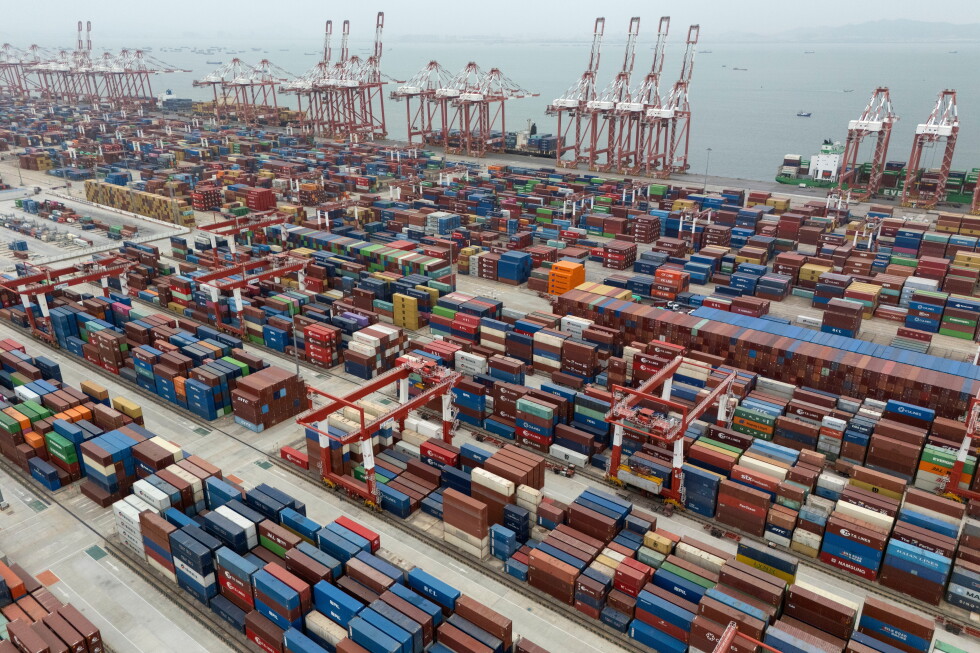
    Domestic business groups have also warned the new tariffs will pass increased costs directly to American shoppers. Many companies anticipated the policy change and pre-shipped goods to beat the implementation, driving U.S. container port import volumes to an all-time record in July, according to a joint forecast from the National Retail Federation and Hackett Associates. While Oxford Economics notes that the overall effective U.S. tariff rate will not change dramatically immediately, since the new rates are close to the 10% temporary rate they replaced, businesses warn ongoing uncertainty over potential future levies paired with current costs will keep prices rising.

    “Steeper tariffs result in higher costs for business owners — and therefore higher prices for consumers,” the National Retail Federation said in a statement Friday. “We encourage the administration to focus on trade agreements with our nation’s trading partners that truly open markets by lowering tariffs, not raising them.” Matt Priest, CEO of the Footwear Distributors and Retailers Association, added that footwear prices have already climbed 4.1% year-over-year in June, with children’s shoes rising 4.7%, as brands pre-emptively raised costs to account for the new tariffs. With additional upward pressure from fuel costs tied to the Iran war, Priest noted, “We don’t see anything in the market right now that’s pushing prices downward, and that’s a concern.” Cross-sector trade groups including the U.S. Chamber of Commerce previously argued in a July letter to Greer that broad tariffs are an ineffective solution to forced labor, calling for more targeted, collaborative measures to address the complex global issue instead.

    For the Trump administration, the new tariffs also serve a critical budget purpose: replacing lost tariff revenue that was being used to fund the president’s 2025 massive tax cuts. When the IEEPA tariffs were in effect, monthly U.S. tariff revenue peaked at more than $31.4 billion last October. After the Supreme Court struck down the levies, revenue plummeted, and the government was required to issue billions in refunds. Tariff collections dropped to $22 billion in March and April, and the budget turned negative: a $42 million shortfall in May expanded to a $25.6 billion loss in June as refunds outpaced new revenue.

    The Committee for a Responsible Federal Budget estimates that the new forced labor tariffs, when combined with separate new levies on Canada and Brazil announced this month, will replace less than 60% of the revenue lost after the Supreme Court struck down the earlier IEEPA tariffs. The policy also carries significant political risk for Trump and congressional Republicans ahead of the November 3 elections that will determine whether the party retains full control of Congress, with U.S. voters already broadly frustrated by persistent high costs of living.

  • Law student is charged over intercepted bomb in car

    Law student is charged over intercepted bomb in car

    A major law enforcement operation targeting dissident republican activity in Ireland has led to the arrest and court appearance of a 25-year-old law student, who now faces serious explosives possession charges following the interception of a vehicle carrying a viable explosive device.

    The stop and search operation unfolded Wednesday on the N2 highway at Aclint, located just south of Carrickmacross in County Monaghan, where Irish national police, known locally as gardaí, intercepted the car driven by Isobella Perrie Sullivan. Sullivan, a resident of Abbeylands Park in Clane, County Kildare, was taken into custody immediately after the search uncovered a bomb hidden inside a bag stored in the vehicle’s rear. Members of the Garda Special Detective Unit told the court the device recovered contained key explosive components: a timing power unit, a detonator, and materials that officers suspect to be Semtex, a widely known military-grade plastic explosive. After the discovery, the Irish Defence Forces were dispatched to the scene to assess the device, confirming it was a fully functional, viable bomb.

    Garda officials confirmed to reporters on Friday that the interception was part of a pre-planned operation focused on disrupting dissident republican activity, a longstanding source of security concern on the island of Ireland. Sullivan was brought before a special sitting of Trim District Court in County Meath on Friday evening to face formal charges of unlawful explosives possession.

    The defendant’s legal representation offered context for her involvement, telling the court that Sullivan had been asked to transport the bag to Northern Ireland, and had no prior knowledge of the dangerous contents hidden inside. The solicitor also noted that Sullivan lives with her father in County Kildare, is currently enrolled in a law degree program, and has aspirations to work as a barrister after graduating.

    In a bail ruling, the judge outlined that he would approve Sullivan’s release on bail conditional on a series of strict requirements. She must first secure an independent surety worth €15,000, approximately £12,800. Additional terms include surrendering her passport to authorities, complying with a mandatory daily curfew, providing her active contact number to gardaí, and checking in daily to sign the registrar at a local garda station in her home County Kildare. Ahead of the final approval of her bail application, Sullivan has been remanded in custody, with a further bail hearing scheduled to take place on Monday.

  • Former NFL star Tony Romo arrested for driving intoxicated

    Former NFL star Tony Romo arrested for driving intoxicated

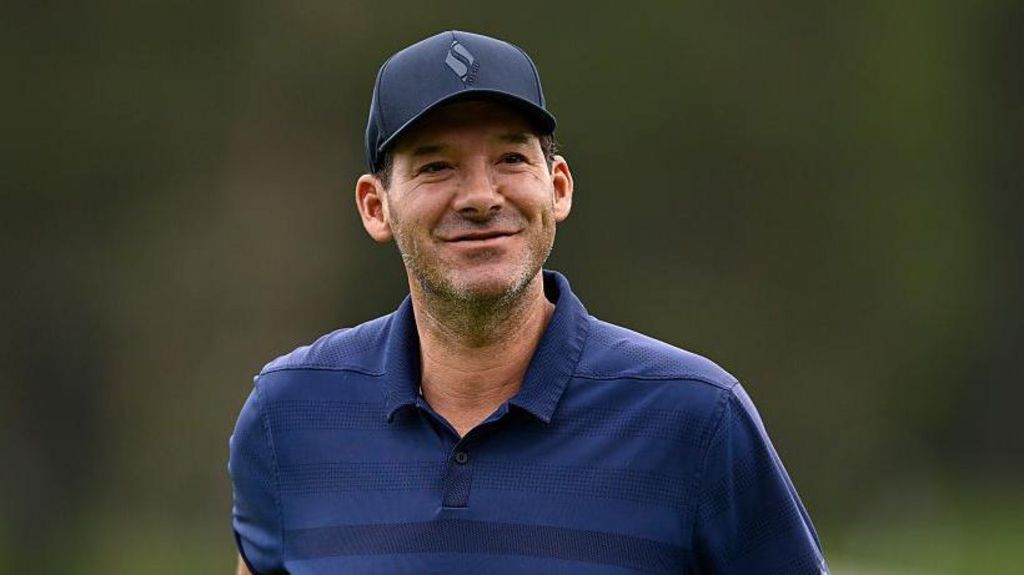
    Former Dallas Cowboys Pro Bowl quarterback Tony Romo, now a top NFL broadcaster for CBS Sports, has been taken into custody on suspicion of operating a vehicle while intoxicated, law enforcement officials confirmed this week.

    The Milwaukee County Sheriff’s Office reported that Romo was pulled over by deputies shortly after 6 p.m. local time on Thursday in his home state of Wisconsin, where he was born and raised. After conducting standardized field sobriety tests, officers determined Romo was impaired and placed him under arrest at the scene. He was processed at a local detention facility and released on bail later the same evening, and has been scheduled to make his first court appearance on September 21 to face the charge.

    Local media outlets have confirmed that this incident marks Romo’s first offense related to intoxicated driving. If convicted on the misdemeanor charge, he faces potential penalties that include a temporary suspension of his driving privileges and a monetary fine, standard for first-time offenders in Wisconsin. Since 2017, Romo has served as the lead game analyst for CBS Sports’ NFL broadcast coverage, one of the most high-profile commentary roles in American football. As of press time, CBS Sports has not issued any public statement regarding the arrest or potential impacts on Romo’s on-air role.

    A standout quarterback for the Dallas Cowboys from 2003 through his retirement in 2016, Romo retired holding nearly every major passing record in franchise history, including a career total of 248 touchdown passes. Off the field, he gained widespread public attention for his high-profile relationship with pop singer Jessica Simpson between 2007 and 2009. A lifelong Wisconsin native, Romo was born in Burlington, a small city located roughly 48 kilometers southwest of Milwaukee. He has been married to former model Candice Crawford since 2011, and the couple shares three children.

  • Israeli settlers kill four Palestinians in West Bank attack

    Israeli settlers kill four Palestinians in West Bank attack

    On a Friday morning in the occupied West Bank, a violent, deadly confrontation unfolded in the village of Tel, located southwest of Nablus, leaving four Palestinian residents dead and another Israeli settler killed in the crossfire, according to multiple on-the-ground accounts and official statements. The violence has sent already fraught regional tensions soaring, with top Israeli officials calling for harsh retaliation and Palestinian leaders decrying the attack as part of a systemic state-backed displacement campaign.

    Eyewitnesses confirm that a contingent of armed Israeli settlers pushed into residential homes and agricultural plots on Tel’s outskirts in the pre-dawn hours. Village resident Mahmoud al-Hindi told Middle East Eye that local residents assembled quickly to push back the incursion, turning a targeted incursion into a full-scale confrontation. The clash pitted unarmed Palestinian villagers against heavily armed settlers backed by uniformed Israeli troops, with violence escalating rapidly when Israeli forces and settlement security personnel opened fire on the assembled Palestinian group.

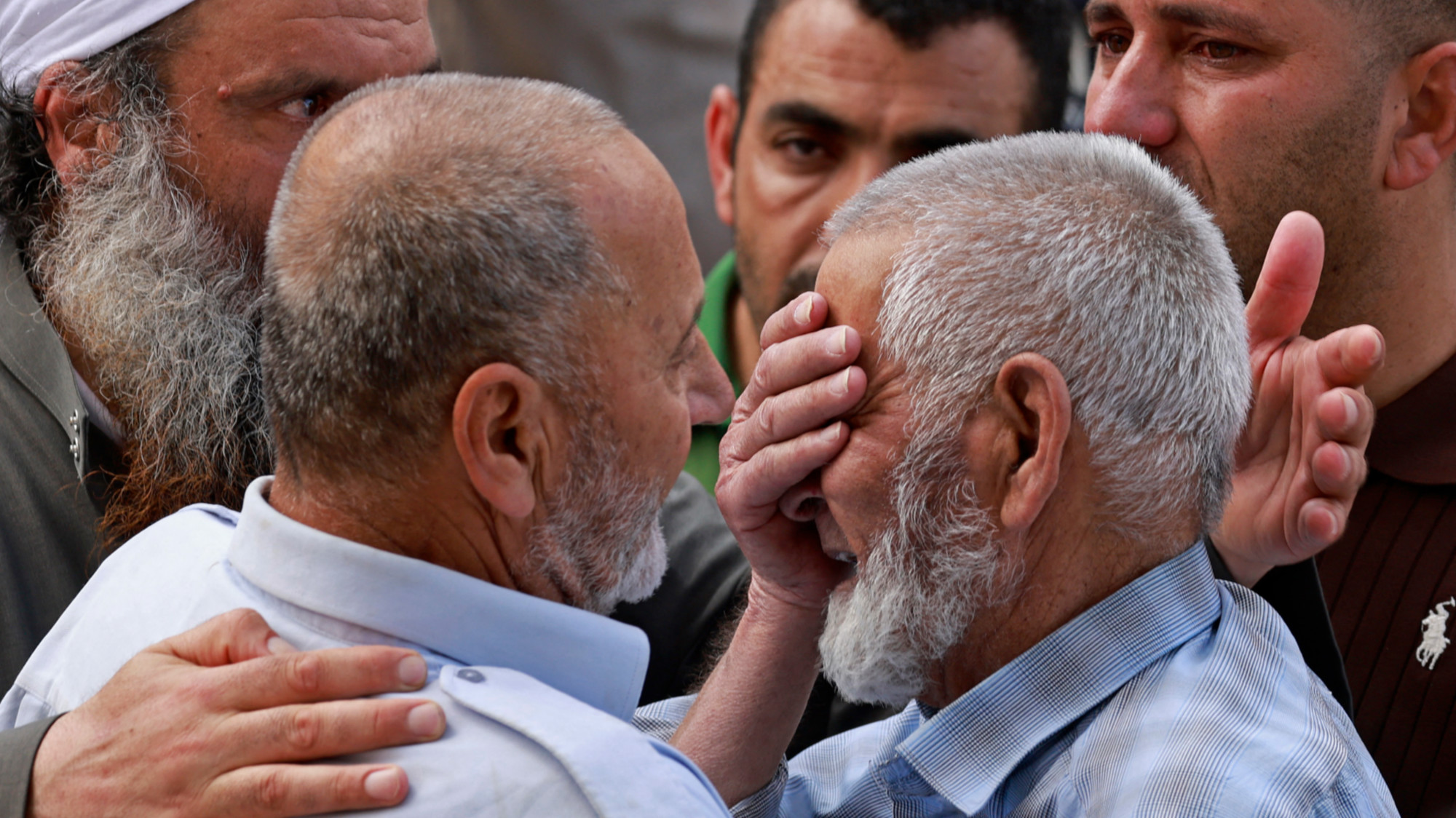
    The Palestinian Ministry of Health confirmed that four Palestinian men were killed in the shooting, with four additional people wounded, most by gunshots to the upper body. Three of the wounded remain in critical condition as of the latest updates. All four fatalities were members of the extended Saifi family: brothers Ibrahim Hussein Ali Saifi and Jawad Hussein Ali Saifi, their cousin Farouq Adnan Ali Saifi, and relative Imran Ahmed Ali Saifi. Al-Hindi noted that land grabs and incursions by settlers are a regular occurrence in the area, but Friday’s attack marked the most violent episode residents have ever experienced.

    Video footage published by Quds News Network on social media platform X (formerly Twitter) documents the attack unfolding under the direct protection of Israeli occupation forces, confirming witness accounts of military backing for the settler incursion. Israeli state media, by contrast, has confirmed that one Israeli settlement security guard was killed in the clash, with three other settlers sustaining injuries.

    The Israeli military has offered an alternate narrative of the incident, claiming the group of settlers was engaged in a recreational hike through the area when clashes erupted with local residents. According to the military’s account, settlers fired only warning shots before troops arrived to de-escalate the standoff. They claim a Palestinian attacker seized a weapon from a settlement guard, killed the guard and wounded three other settlers, before being shot and killed by an Israeli soldier. The military added that the deaths of the three other Palestinian victims remain under active investigation.

    That account was immediately rejected by Nablus governor Ghassan Daghlas during an interview with Al Araby TV. Daghlas refuted the Israeli military’s claim, confirming that settlers intentionally stormed the village, attempted to set residential structures on fire, and opened fire on residents who gathered to oppose the incursion. Witnesses who spoke to Middle East Eye added that after the shooting, Israeli forces escorted all involved settlers out of the village before launching a full raid on the community, closing all military checkpoints leading into Nablus and imposing a strict security lockdown across the entire region.

    In the hours following the initial clash, follow-up violence erupted as additional Israeli settlers launched coordinated attacks on multiple Palestinian villages near Nablus and Qalqilya. Local reports confirm that settlers set fire to dozens of civilian cars and agricultural land, and assaulted local residents who attempted to intervene. Settlers also took to social media to issue open calls for revenge and further targeted attacks against Palestinian communities across the occupied territory. The Israeli military acknowledged it was bracing for widespread retaliatory settler violence across the West Bank in the wake of the incident.

    Top far-right Israeli officials, key figures in Prime Minister Benjamin Netanyahu’s ruling coalition, have issued incendiary calls for harsh collective punishment against Palestinian communities in the area. Finance Minister Bezalel Smotrich, who resides in an Israeli settlement near Nablus, called for aggressive military action, comparing the targeted villages to refugee camps in Nablus and Tulkarm that were subjected to widespread destruction by Israeli forces in 2025. Smotrich also confirmed he would ask Netanyahu to approve construction of a new Israeli settlement directly on the site of Friday’s confrontation. National Security Minister Itamar Ben Gvir, a far-right settler based in Hebron, went further, saying Palestinian villages in the occupied West Bank should be destroyed to match the level of devastation inflicted on Beit Hanoun, a northern Gaza town that has been almost entirely leveled by Israeli military operations. “For every Jew killed, the enemy must bear the loss of land and homes,” Ben Gvir stated.

    Netanyahu’s office confirmed the prime minister held an emergency meeting with Israel’s defense minister and Israel Defense Forces chief of staff to coordinate a formal response to what the office described as a Palestinian “attack” on Israeli settlers. “We will act forcefully against the terrorists and those who send them, and we will not allow terrorism to resurface in the West Bank,” Netanyahu said in a post-meeting statement. The Israeli military later announced it would reinforce its presence across the occupied West Bank by deploying five additional infantry companies to the region.

    Palestinian leaders have condemned the attack and called for urgent international intervention. Palestinian Vice President Hussein al-Sheikh said he had held urgent diplomatic talks with officials from multiple countries, urging world powers to take immediate action to protect Palestinian civilians from what he labeled joint settler and Israeli military “terrorism.” The Palestine Liberation Organization (PLO) said the four killings in Tel were a direct reflection of long-standing “official Israeli policy” of forced displacement, carried out in coordinated fashion by the Israeli military and extremist settler groups.

    Friday’s deadly clash comes amid a years-long surge in settler violence against Palestinian communities in the occupied West Bank, a trend that has accelerated dramatically since the outbreak of the Gaza war in October 2023. Today, settlers carry out near-daily attacks on Palestinian communities, including arson, property vandalism, physical assaults, and coordinated campaigns to force residents off their land. These attacks almost always proceed with the explicit protection of Israeli military forces, according to on-the-ground monitoring groups.

    Just three days before the Tel clash, two Palestinian men were killed by Israeli fire during another military-backed settler incursion in the town of Deir Jarir, northeast of Ramallah. Palestinian health ministry data shows that at least 87 Palestinians have been killed by Israeli fire in the occupied West Bank since the start of 2026, 21 of whom were killed directly by settlers. The Colonization and Wall Resistance Commission, a Palestinian body that monitors settlement expansion and violence, confirms that deadly settler attacks have increased year over year since 2023. Eleven Palestinians were killed by settlers in 2024, a number that rose to 14 in 2025, and has already hit 21 in the first seven months of 2026. The commission notes that most victims die from direct gunfire from settlers, while others are killed in assaults, from tear gas inhalation, or from denied access to medical care during attacks — a trend that underscores the growing scale and brutality of settler violence across the occupied territory.

  • Inside the struggle to ‘stop the game’ between Ireland and Israel

    Inside the struggle to ‘stop the game’ between Ireland and Israel

    For months, a grassroots movement demanding Ireland cancel its upcoming UEFA Nations League matches against Israel has continued to gain traction, showing no signs of fading even after the Football Association of Ireland (FAI) announced a compromise to play the fixtures on neutral territory. In early July, FAI delegates passed a motion to relocate the September 27 and October 4 matches—originally scheduled for Dublin and Tel Aviv—to Hungary and Serbia respectively, a move the association framed as a resolution to the months-long controversy. But pro-Palestine campaigners say the shift in venue does not address their core demand: that Ireland refuses to compete against Israel entirely amid its ongoing military campaign in Gaza.

    Rebecca O’Keefe, a former Irish international basketball player and leading figure with Irish Sport For Palestine (ISFP), which has spearheaded the campaign since early 2024, emphasized that the movement remains unshakable. “I think it’s only going to gain strength,” O’Keefe said. “We really, really remain resolute in stopping these games. The facts haven’t changed; we’re still witnessing genocide, we’re still witnessing the total impunity of a genocidal regime.”

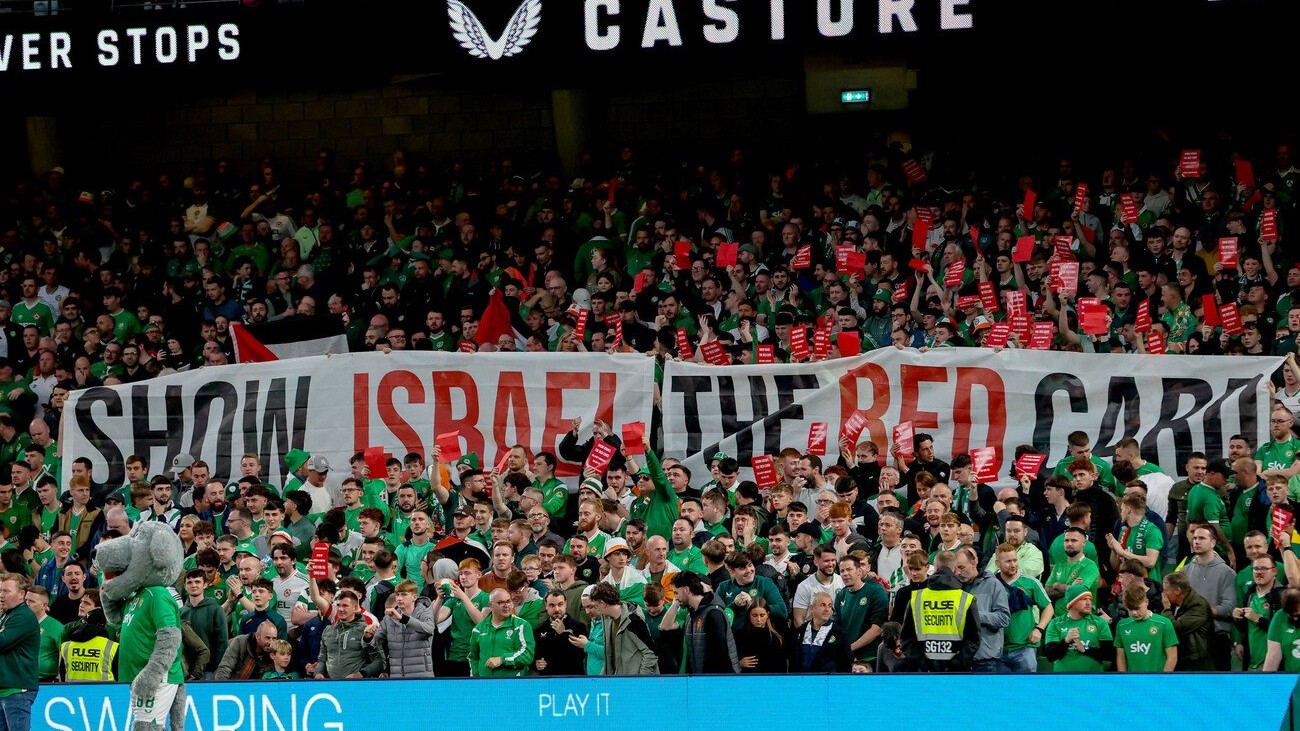
    The “Stop the Game” campaign, which counts among its supporters League of Ireland fan groups, multiple domestic clubs, trade unions, and civil society organizations, has already deployed a range of tactics to pressure the FAI. After the FAI’s relocation vote, members of League of Ireland Fans for Palestine confronted FAI president Paul Cooke directly, and the following day activists staged a high-profile protest on the roof of the association’s Dublin headquarters. The group has also openly raised the possibility of disruptive action, including blockading Irish airports to prevent the national team from traveling to the matches.

    Ken Powell, a spokesperson for the League of Ireland Fans for Palestine group, made clear that the venue change was never the goal of the campaign. “There was never any issue with the location,” Powell said. “It’s who is playing the game. Israel has killed 566 footballers in Gaza alone, since 7 October 2023. So our message remains the same: no game, not here, not anywhere.” The group has already announced plans to extend protests to Ireland’s intervening Nations League fixture against Austria in Dublin, which will be held between the two Israel matches, and ISFP has confirmed it is coordinating with pro-Palestine civil society groups in Austria to organize joint actions.

    Not all campaigners share the same level of optimism about stopping the fixtures, however. Stuart Gilhooly of the Professional Footballers’ Association of Ireland (PFAI), a union that has publicly supported a boycott, said he believes the matches will go forward as scheduled. “Realistically, I think the games will proceed. I don’t see where we can go from here unless the players take a stand and I don’t see that happening,” Gilhooly noted. The PFAI only represents domestic Irish league players, very few of whom earn call-ups to the senior national team, limiting the union’s ability to influence the outcome.

    The controversy grew out of February 2024’s Nations League draw, which placed Ireland in Group B3 alongside Israel, Austria, and Kosovo. The FAI initially confirmed it would host Israel in Dublin, a decision that drew immediate backlash, despite the association having previously submitted a motion to UEFA calling for Israel’s suspension from international football. The movement gained widespread public traction, amplified by longstanding broad solidarity with Palestine across Irish society, though Ireland also maintains deep economic ties to the United States, which has backed Israel’s military campaign.

    The FAI’s decision to reject a full boycott came amid significant institutional vulnerability. The association is currently carrying €38 million ($43 million) in debt, relies on UEFA funding to remain operational, is cutting 25% of its staff, and has publicly acknowledged it lags far behind peer international federations in resources and development. In a letter to members after the vote, the FAI board warned that refusing to play the fixtures would carry severe consequences: an initial €5.5 million revenue loss, a projected further €10.3 million in additional costs, automatic relegation from the Nations League division, and potential suspension of all Irish teams from UEFA competitions. The association also noted its hosting commitments for Euro 2028—for which Ireland is a co-host—and its bid to stage the 2029 Women’s Champions League Final in Dublin as additional factors shaping its decision.

    Campaigners have pushed back on the FAI’s financial warnings, arguing the risk of sanctions has been exaggerated. O’Keefe noted that all potential UEFA penalties are hypothetical, and that any sanctions could be challenged at the Court of Arbitration for Sport. She pointed to the coordinated boycott of Russian national teams after the 2022 invasion of Ukraine, where individual federations refused to play Russia before governing bodies implemented a formal suspension, as a precedent for action.

    The controversy has already created deep rifts within Irish football. Joanna Byrne, a Sinn Fein Member of Parliament and former co-chair of League of Ireland Premier Division side Drogheda United, says she was forced out of her voluntary role by the club’s U.S.-based ownership group Trivela Group after she publicly called for the matches to be canceled. Trivela has denied the allegation. In May, during a friendly international against Qatar at Dublin’s Aviva Stadium, pro-campaign fans disrupted the match by throwing tennis balls wrapped in Palestinian colors printed with the #stopthegame slogan onto the pitch. International players have also acknowledged the pressure the dispute places on squads: veteran Irish captain Seamus Coleman noted that the issue should be resolved by governing bodies, not players, saying “It is very difficult for us players, difficult for the manager, and all the staff that we are dealing with this… But of course, you know our feelings as human beings.”

    Some Irish politicians who support the boycott have criticized UEFA for failing to act on its own statutes, which prohibit member associations from violating the organization’s core principles. Dublin Labour Party MEP Aodhan O Riordain, who has led calls for a full sporting boycott, said: “The FAI shouldn’t be in this position. Uefa should have made the decision a long time ago. Israel are in breach of Uefa and Fifa statutes, and Israel should not be competing at all. It’s just the intensity of what’s happening in the Middle East – the presentations we as politicians are getting week in week out in the European parliament. Nobody is standing up, nobody is exercising any kind of sanction or veto.”

    While the Irish government and FAI have framed the relocation of the matches to neutral territory as a resolution to the controversy, campaigners say it only removes the issue from Irish soil without addressing their core demand. The dispute over the matches is part of a broader wave of pro-Palestine activism targeting Irish sporting institutions: activists are currently pressuring the Gaelic Athletic Association (GAA) to end its 30-year National League sponsorship deal with insurer Allianz, after Allianz was named in a June 2025 UN Special Rapporteur report for profiting from Israel’s military presence in Gaza. The football controversy also follows an earlier dispute in Irish basketball, where activists called for a 2023 EuroBasket qualifier against Israel to be boycotted; the match was eventually relocated to Riga and played amid heavy pressure.

    Both O’Keefe and O Riordain have pushed back against growing pressure on individual Irish international players to refuse to play, noting that governing bodies bear responsibility for making the decision, not athletes. O Riordain, who is pessimistic the matches will be canceled at this stage without a mass player boycott, said the broader campaign for Palestinian solidarity should now focus on Ireland’s ongoing six-month presidency of the European Council. “The bigger responsibility is that we use our presidency to push the agenda of ending the EU-Israel Association Agreement, which would be disastrous for Israel, because the EU is Israel’s biggest trading partner,” he said.

    Still, campaigners argue that an Irish boycott would act as a catalyst for other European federations to take similar action, pointing to vocal public support for Palestine in larger UEFA members including Spain, Norway, and the Netherlands. Norway’s football association has already donated to Gaza relief efforts and reportedly been working behind the scenes to diplomatically isolate Israel in global football. O Riordain noted that regardless of the outcome of the current campaign, the decision to boycott would carry long-term symbolic weight. “We don’t know, but in 50 years, 100 years’ time, if we decided not to play these games, we don’t know what kind of a domino effect that would have had. And I think if they had decided not to go ahead with the games, they certainly would have gotten a lot of credit for it.”


  • Trump vows to investigate EU over fining of US tech companies

    Trump vows to investigate EU over fining of US tech companies

    Tensions between the second Trump administration and the European Union have escalated sharply after U.S. President Donald Trump announced plans to launch a formal trade investigation into Brussels and threatened steep new tariffs over a series of antitrust penalties imposed on major American technology firms.

    The announcement comes just days after the European Commission levied an €890 million ($1 billion) fine on Alphabet Inc.’s Google, finding that the company had abused its market position to lock out competing digital services. This is not the first case of European regulators targeting large U.S. tech players: Trump claims that Apple has received $15 billion in fines, Meta has been ordered to pay $3 billion, and Amazon faces $2.5 billion in penalties, all from EU enforcement bodies.

    In a post on Truth Social, the social media platform owned by Trump, the president lashed out at the EU’s regulatory actions, arguing that the bloc has systematically targeted American companies for unfair financial punishment. “The United States of America is not a ‘PIGGYBANK’ for Europe, nor will we allow it to be!” he wrote. Trump demanded that all existing fines against the four U.S. tech giants be “entirely reversed”, confirming that he would immediately initiate a Section 301 investigation into what he called European regulators’ practice of “robbing American companies and, in turn, the American taxpayer”.

    Section 301 of the U.S. Trade Act of 1974 grants the Office of the United States Trade Representative broad authority to investigate and respond to unfair foreign trade practices. This marks the latest in a string of such probes launched by the second Trump administration since it took office last year. The new tariff threat comes only 24 hours after Trump unveiled a fresh round of tariffs ranging from 10% to 12.5% on imports from 60 major trading partners, including the EU, the United Kingdom and China.

    Google spokesman José Castañeda told the BBC that the company has worked diligently to comply with the EU’s Digital Markets Act, the landmark regulatory framework governing large digital platforms, but has raised repeated concerns about the economic and competitive impact of recent European Commission decisions. “We appreciate the engagement by the administration and US government,” Castañeda added.

    As of publication, representatives for Apple, Meta, Amazon and the European Commission have not issued public responses to Trump’s statements, after multiple requests for comment were sent. This dispute is not without precedent: shortly before Trump won the 2024 U.S. presidential election, Apple CEO Tim Cook personally called Trump to complain about EU penalties against the company, coming on the heels of a years-long legal battle over Apple’s unpaid tax obligations in Europe. Trump has a long history of clashing with European regulators over trade and regulatory policy, dating back to his first term in office.

  • Jenny Shin leads the Women’s Scottish Open by 5 strokes after two rounds

    Jenny Shin leads the Women’s Scottish Open by 5 strokes after two rounds

    TROON, Scotland — The second round of the co-sanctioned Ladies European Tour and LPGA Tour Women’s Scottish Open held at Dundonald Links delivered a dramatic shift in the leaderboard on Friday, with South Korean golfer Jenny Shin expanding her position to a commanding five-stroke advantage over the rest of the field.
    Shin entered Friday’s play tied for the top spot at six under par, but her round got off to a rocky start with an opening bogey. Rather than letting the early mistake derail her performance, the South Korean star rallied quickly, carding six birdies over the course of the round — including a standout birdie on her final hole — to finish the day with a five-under 67. That performance pushed her overall tournament total to 11 under par, giving her a substantial gap over her closest competitor.
    Friday’s play saw a dramatic fall from co-leader Lauren Coughlin, the American golfer who already notched two tournament wins this season: a victory at the Aramco Championship in April and a title at the 2024 Scottish Open. Coughlin struggled through her second round, finishing two over par for the day, which dropped her down the leaderboard to a tie for fourth place at four under par alongside Japan’s Erika Hara.
    The closest contender to Shin’s lead is German golfer Esther Henseleit, who turned in a stellar round on Friday. Henseleit carded a four-under 68, boosted by two birdies and an eagle that lifted her into second place on the overall leaderboard.
    South Korea’s A Lim Kim held onto her position in third place, even after a steady even-par round that included two birdies and two bogeys, leaving her at five under par overall.
    One of the most surprising outcomes of the day involved world No. 1 Nelly Korda, who struggled significantly throughout her round. Korda closed out her day with four consecutive bogeys, finishing with a 76 that put her at four over par for the tournament — two strokes above the projected cut line, putting her status for the weekend in serious jeopardy.

  • Luxembourg will not renew approval for Israeli war bonds, finance minister confirms

    Luxembourg will not renew approval for Israeli war bonds, finance minister confirms

    Luxembourg’s financial regulator will not extend its approval of Israel Bonds for sale across the European Union when the current authorization expires on 31 August, the country’s finance minister Gilles Roth has confirmed.

    In an interview with domestic broadcaster RTL, Roth clarified that the non-renewal decision was reached two months ago, in May, exclusively by the Commission de Surveillance du Secteur Financier (CSSF), Luxembourg’s independent financial watchdog. Rejecting criticism of the regulator’s process, Roth emphasized that the CSSF operated strictly in line with EU regulatory standards, framing the outcome as a compliance matter rather than a response to political pressure from campaign groups.

    This official narrative, however, clashes with the timeline of mounting advocacy against the bond program. May marked the peak of coordinated legal and political campaigning targeting Israel Bonds’ presence in Luxembourg, and the final decision aligns exactly with the core demand that activists have pushed for months. The confirmation also comes just weeks after a high-profile 21 July statement from Amnesty International warning that all EU member states, including Luxembourg, risk complicity in Israel’s ongoing genocide against Palestinians in Gaza if they continue to permit the bonds’ sale.

    Unless another EU member state steps forward to assume regulatory hosting for the program, Israel Bonds will no longer be available for purchase by investors across the entire bloc. Unlike standard sovereign debt issued directly by the Israeli government, these retail bonds are distributed through the U.S.-based Development Corporation for Israel (DCI), marketed under the slogan “Stand with Israel. Israel is at War.” They are sold primarily to retail investors, religious institutions, and local public funds, often leveraging global Jewish diaspora networks and appeals to political solidarity with Israel.

    Official DCI data shows the program has raised $7.7 billion for the Israeli government since October 2023, a period marked by Israel’s military operations in Gaza, Lebanon, and cross-border strikes on Iran. All proceeds flow as unrestricted general revenue into Israel’s state treasury, at a time when the country’s military spending has surged from roughly 20% to more than 30% of total government expenditure. Between 2022 and 2024, Israel’s military budget has grown from 4.2% to 8.3% of gross domestic product, pushing the country’s annual deficit to nearly 7% of GDP.

    Luxembourg’s role as the EU’s regulatory host for the program only emerged last year after a similar campaign forced Ireland to end its own approval. For years before Brexit, the United Kingdom served as the bloc’s regulatory gateway for Israel Bonds, a role that transferred to Ireland after the UK’s departure from the EU. Sustained pressure from Irish parliamentarians and civil society groups, which linked bond sales to financing Israeli military operations in Gaza, pushed Irish Central Bank governor Gabriel Makhlouf to confirm in September 2023 that Ireland would not renew its authorization. On the very same day, the CSSF approved a new 12-month prospectus for the bonds without consulting Luxembourg’s Ministry of Foreign and European Affairs, a move that placed the program under Luxembourg’s oversight for the past year. From that point forward, the Luxembourg government repeatedly maintained that it had no authority over the matter, stating consistently that the CSSF was the sole competent decision-making body.

    Pressure on Luxembourg reached a fever pitch in May 2024, when Amnesty International Luxembourg and the Committee for a Just Peace in the Middle East hosted a capital conference bringing together legal experts, economists, parliamentarians, and international law specialists to examine the legal and financial risks of hosting the program. The conference released a detailed legal report concluding that Luxembourg’s approval of the bonds violated the country’s obligations under the UN Genocide Convention and the International Court of Justice’s July 2024 advisory opinion on the occupied Palestinian territories. The report also raised investor protection concerns, noting that DCI’s marketing material obscures significant financial and legal risks associated with the bonds: despite Israel’s ongoing war and large fiscal deficit, the bonds offer yields of less than 4%, far below the market rate investors typically demand for high-risk wartime sovereign debt.

    Francesca Albanese, the UN Special Rapporteur on the occupied Palestinian territories, told the conference that “the sale of these bonds is illegal under international law because it goes directly to funding the genocide. It is morally and legally wrong to sell these bonds.” Dr. Shahd Hammouri of Law for Palestine, a co-author of the legal report, added that the CSSF had the discretionary authority under EU prospectus regulation to reject approval when the program poses systemic risks to public interest and peace, and failed to exercise that power. Irish Senator Alice-Mary Higgins, who led advocacy that forced the program out of Ireland, clarified the stakes of Luxembourg’s non-renewal: “There is no other placement: unless we agree to transfer it as the home state, and another country agrees to take it, Israel cannot sell its bonds within the EU.”

    Under EU rules, Israel now has the right to seek a new regulatory host among the bloc’s 27 member states. The Stop Israel Bonds campaign, which has coordinated cross-border advocacy across Ireland, Luxembourg, and the wider EU, has already announced its next goal: preventing the program from being transferred to Germany or any other willing EU government.

    Political economist Shir Hever, who spoke at the May conference, told Middle East Eye the Luxembourg decision could mark a major turning point for Israeli financing of its military operations. “Israel finances its wars with debt,” he explained. “Bonds raise money which keep the war machine marching at the cost of a growing debt.” Hever argued that sustained pressure from the Boycott, Divestment and Sanctions (BDS) movement and global civil society groups drove the outcome. “If no EU member states step in after Luxembourg, it could force Israel to default on some of its debt, and at the very least will crash the value of the bonds,” he said. “Anyone who was stupid enough to buy the bonds will lose some or all of their investment. It could mean a tipping point for Israel’s economy as well. A state in default cannot import weapons and ammunition.”

    Amnesty International has echoed this call, urging former host Ireland to reject any future transfer request and pressing all other EU member states to refuse to approve a new prospectus. “It is a political choice to allow these bonds to be sold in Europe,” Steve Cockburn, Amnesty’s regional director for Europe, said in the organization’s July statement. “One of the most obvious and effective ways to end Israel’s genocide against Palestinians in the Gaza Strip is to stop financing it. By continuing to facilitate the sale of these bonds, EU member states risk complicity in Israel’s international crimes against Palestinians.”

    Middle East Eye has reached out to the CSSF and Luxembourg’s Ministry of Finance for additional comment on the terms and timeline of the non-renewal decision.