博客

  • How ransom notes could help catch Nancy Guthrie’s kidnapper

    How ransom notes could help catch Nancy Guthrie’s kidnapper

    Half a year after 84-year-old Nancy Guthrie, mother of prominent American news anchor Savannah Guthrie, was abducted from her Arizona residence, law enforcement has taken a new step to generate leads in the stalled investigation: releasing two authenticated ransom notes linked to the kidnapping, hoping distinctive linguistic patterns in the documents will help identify the perpetrators.

    Guthrie went missing from her Tucson-area home in January this year, launching a months-long probe that has yielded little in the way of solid leads or persons of interest. The two notes, both sent to local Tucson television stations in early February, carry conflicting core claims: the first, sent February 2, demands a multi-million dollar ransom paid in Bitcoin, assures the Guthrie family that Nancy was alive but unhurt, and threatens to kill her if payment is not received by a specified deadline. The second, dated February 6, claims Guthrie died of an undiagnosed heart-related issue shortly after being taken, and states her body was buried in an unmarked natural location. Local authorities have not independently confirmed Guthrie’s death as of the release date.

    Investigators are pinning new hope on forensic linguistic analysis of the notes, arguing that every individual carries a unique “language fingerprint” — called an idiolect — that can distinguish their writing from that of any other person, even when the writer attempts to hide their natural style. William Eggington, a retired Brigham Young University linguistics professor and veteran forensic consultant, broke down key clues hidden in the short documents for the BBC.

    Eggington’s analysis identifies multiple revealing patterns in the first note. The writer’s consistent reliance on passive voice and structured “if-then” sentence construction suggests they have at least a high school education, and may have completed some post-secondary schooling. A notable inconsistency also appears: the writer correctly spells “received” in one sentence, but misspells it later in the text. Eggington says this inconsistency indicates either a lack of familiarity with the word’s correct spelling, or that the writer failed to closely proofread the final document before sending it.

    In the second note, Eggington points out that the writer refers to Guthrie exclusively in the third person, framing her death as the result of her own unaddressed health issues rather than a consequence of the kidnapping. This, he argues, works to dehumanize Guthrie and deflect responsibility for her death from the kidnappers. The note also uses unusually formal, restricted academic phrasing that may not reflect the writer’s natural voice, indicating a likely attempt to disguise their idiolect to avoid detection.

    Despite the potential for disguise, Eggington confirms one key finding: the same person wrote both notes. He cites consistent stylistic quirks, most notably the repeated habit of using a comma where a full stop is grammatically required to separate two independent clauses, as clear evidence of a single author.

    Forensic teams will use these small, unique details to build a behavioral and linguistic profile of the kidnapper. Once a person of interest is identified — either through investigative work or a tip from the public — investigators can compare the suspect’s known writing samples to the ransom notes to find a match. This method has led to successful arrests in high-profile cases before: in 1995, the Unabomber Theodore Kaczynski was identified after his brother recognized his unique writing style in the manifesto Kaczynski forced major publications to publish.

    Still, some criminology experts are skeptical that the notes will break the case open. Jeffrey Adler, a University of Florida professor who studies the history of American crime, points out that kidnapping is an extremely rare offense in the U.S., with most incidents involving internal family custody disputes rather than stranger abductions for ransom. With six months already passed and no solid leads to work from, Adler calls the odds of identifying the kidnapper via the notes “a stretch.”

    Police confirmed they consulted extensively with the Guthrie family before agreeing to release the redacted ransom notes to the public. Hours after the release, Savannah Guthrie issued an emotional public appeal for information, saying her family is desperate for answers and urging anyone who recognizes the writing style, or has any information related to the abduction, to come forward to authorities.

  • In Ceuta, some migrants cling to hopes of someday reaching mainland Spain

    In Ceuta, some migrants cling to hopes of someday reaching mainland Spain

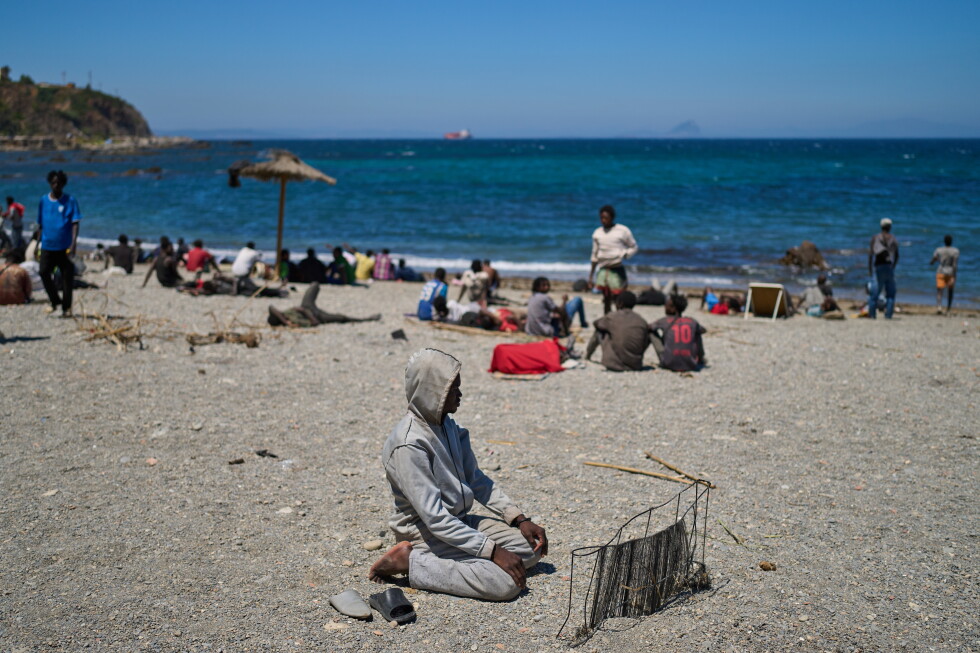
    Five days after swimming across to the Spanish North African territory of Ceuta with her teenage sister and cousin, 20-year-old Moroccan migrant Dikra has no certainty of where her next meal will come from — all her meals so far have been donated by generous local residents. One thing she is completely sure of, however, is that she will not return to her home country. “I want to stay. I want to reach mainland Spain,” Dikra told reporters, requesting her last name be withheld to protect her family back in Morocco for safety reasons.

    By Sunday afternoon, Dikra counted herself among the small group of remaining holdout migrants in Ceuta, after more than 59,000 of the 60,000 people who breached the Morocco-Ceuta border on Thursday and Friday of the previous week voluntarily crossed back into Morocco. The unprecedented mass crossing left at least 72 people dead during the dangerous journey, and the sudden humanitarian crisis sparked by the surge has reignited long-simmering debates over immigration policy across Europe and the rest of the globe.

    For Dikra, the decision to leave Morocco grew out of urgent personal need. While she worked as a cleaner in the coastal city of Tangier, she fled her home to escape an abusive alcoholic father. She holds a professional diploma in hairdressing, and hopes to put that qualification to work building a new life in mainland Spain — a goal that remains out of reach for now, separated by the Strait of Gibraltar and the European Union’s layered, often slow-moving asylum system.

    Migrants who have chosen to stay in Ceuta are left in limbo, with no clear information on what authorities will do with them next. Thirty-five-year-old Abdel Karim, another migrant from Morocco, waited outside Ceuta’s official migration reception center all day Sunday, desperate for any updates on his case. Karim was unemployed in Morocco, and had previously lived in mainland Spain years before the crossing. He was later expelled from France, where he had been living homeless on the streets after leaving Spain.

    “In Morocco, I’m labeled a deportee,” Karim explained. “Anyone who has been deported knows what that label brings — constant stress, chronic depression, crippling anguish.” Karim said he saw viral social media posts about the mass border crossing, and chose to seize the chaotic window of opportunity. He crossed into Ceuta with just 10 euros in his pocket, and showed reporters his feet, blistered and sore from the long journey. He says he is willing to take any work he can find in Spain, and remains unshaken by the bureaucratic hurdles standing between him and the mainland.

    Ceuta, along with its sister Spanish enclave Melilla on the Moroccan coast, is not part of the European Union’s Schengen Area of free movement. Any migrant seeking to travel from either enclave to mainland Spain must pass through mandatory official border checks and asylum processing before being allowed entry.

    By Sunday evening, hundreds of recent arrivals gathered on one of Ceuta’s public beaches. Some clustered around military trucks as Spanish armed forces personnel distributed bottled water to the crowd. A short distance away, outside a local migrant shelter, 25-year-old Senegalese migrant Cesse Aliou rested with a group of other sub-Saharan African migrants who had made the crossing together. Aliou said he had worked at a call center in Morocco, earning roughly 279 euros ($322) per month, but the position was irregular and offered no long-term stability.

    He traveled by train from Casablanca to Tangier, then on to the border town of Fnideq, before swimming the short distance across to Ceuta. Just a short distance from where Aliou rested, on a wooded patch of public land across the street from the shelter, a violent scuffle broke out between a group of migrants over access to drinking water that had been dropped off by local volunteers. “We are all exhausted here,” Aliou said, gesturing toward the ongoing fight. “Finding food, finding a place to sleep — it’s all incredibly hard right now. You can see for yourself what the situation is like.”

  • ‘Spider-Man’ soars to huge $355 million opening in North America

    ‘Spider-Man’ soars to huge $355 million opening in North America

    The global box office has received a much-needed jolt from Sony Pictures and Marvel Studios’ latest superhero blockbuster, *Spider-Man: Brand New Day*, which notched one of the largest opening weekends in North American cinema history, industry analysts confirmed Sunday.

    Led by British star Tom Holland in his return to the title role of Peter Parker/Spider-Man, the film pulled in an eye-watering $355 million in ticket sales across the United States and Canada during its first three days in theaters. When compared to unadjusted box office records, that debut lands in second place all-time, falling just $2 million short of the 2019 record holder *Avengers: Endgame*, according to data from box office tracking site Box Office Mojo.

    The ninth live-action theatrical outing for the iconic web-slinger – who has previously been brought to life on screen by actors Tobey Maguire and Andrew Garfield – boasts a star-studded supporting cast that includes Zendaya (Holland’s real-life spouse), Mark Ruffalo, Florence Pugh, and breakout star Sadie Sink. The latest entry in the franchise follows a broken Parker, who has stepped back from public life after erasing all public knowledge of his superhero identity, navigating a radical personal shift while fending off deadly new antagonists.

    Industry analysts have called the opening nothing short of extraordinary, noting the film arrived at a time when the summer box office had gone two months without a major tentpole action release. “This is a colossal opening,” said David A. Gross, head of entertainment research firm Franchise Entertainment Research. “The summer has been without a big action title for nine weeks – an eternity at the box office. The market is ripe-ripe-ripe for this film.”

    Beyond North American borders, the film’s performance has been equally impressive. It earned an additional $570 million from international markets in its opening weekend, pushing its total global haul to a staggering $928 million by the end of the weekend, data from industry tracker Exhibitor Relations shows. Gross added that strong performance in key international markets, including a rare positive opening result in China for a major Hollywood release, has positioned international ticket sales to make up more than 60% of the film’s final global total.

    The Spider-Man juggernaut has also lifted the entire North American box office, with other top releases seeing stable holdovers alongside the blockbuster’s massive debut. Christopher Nolan’s latest original epic *The Odyssey* from Universal Pictures held onto the second spot in its subsequent weekend, pulling in $51 million to push its domestic total to nearly $400 million. Adapted from Homer’s ancient Greek epic poem, the film stars Matt Damon as Odysseus, the hero struggling to return home after the Trojan War, with Anne Hathaway as his wife Penelope and Tom Holland in a supporting role as his son Telemachus.

    “The combination of *Spider-Man* – a legacy superhero sequel – and *The Odyssey* – a big original production – is taking the box office to new highs by a comfortable margin,” Gross noted.

    Rounding out the top five highest-grossing films for the weekend were Disney-Pixar’s *Toy Story 5* in third place with $6.3 million, Universal’s animated outing *Minions & Monsters* in fourth with $5.8 million, and Disney’s live-action remake of its animated hit *Moana* in fifth with $5.3 million. The remaining spots in the weekend top 10 went to *Hadestown: The Musical* ($2 million), *The Invite* ($1.2 million), *I Want Your Sex* ($600,000), *Evil Dead Burn* ($525,000), and *Young Washington* ($478,000).

  • Trump ‘cancels’ Iran strikes as Israeli attacks on Gaza continue

    Trump ‘cancels’ Iran strikes as Israeli attacks on Gaza continue

    Tensions across the Middle East reached a critical boiling point over the weekend before an unexpected announcement from former US President Donald Trump paused imminent military confrontation between Washington and Tehran, even as deadly Israeli operations in Gaza continue to drive a rising civilian death toll.

    Trump said Saturday via his Truth Social platform that he has called off a planned major US attack on Iran, conditional on the rapid completion of a new agreement centered on two core demands: the full, permanent reopening of the strategic Strait of Hormuz and a permanent end to what he frames as Iran’s nuclear threat. The pause came at the request of Iran and unspecified other Middle Eastern nations, Trump added, noting the decision was made “for the future benefit of the WORLD and, likewise, the survival of a successful and prosperous Iran.” He also confirmed Israel shares the commitment to this diplomatic path.

    The sudden de-escalation follows a sequence of tit-for-tat military moves and diplomatic pressure from regional powers. Hours before Trump’s announcement, Iran’s Islamic Revolutionary Guard Corps confirmed it had launched multiple ballistic missile strikes targeting a US F-35 repair hangar and aircraft ramp at Jordan’s Al-Azraq Base. The strike came as US military forces were reportedly positioning for major retaliatory attacks on Iran’s energy infrastructure. Prior to that, Iranian Foreign Minister Abbas Araghchi had warned his counterparts from Turkey, Pakistan and Saudi Arabia that Iran would respond “decisively” to any new act of US aggression.

    Multiple sources confirm regional leaders pushed aggressively for Trump to step back from military action. Axios, citing anonymous US officials, reported that Saudi Crown Prince Mohammed bin Salman placed a direct call to Trump Saturday urging de-escalation and urging him to abandon the planned strikes. In an official statement carried by Saudi state media Sunday, the crown prince reinforced that position, stressing “the necessity of prioritising dialogue to de-escalate tensions and the importance of exerting all possible efforts to achieve a truce, which paves the way for diplomatic solutions.” He added that diplomatic negotiations are the only way to preserve regional security and stability and prevent the entire area from being dragged into a far wider, more devastating conflict.

    While the US-Iran standoff has temporarily eased, violence continues to escalate in Gaza, where Israeli military operations have now killed more than 73,000 Palestinians since October 2023, according to Gaza’s Ministry of Health. Al Jazeera Arabic reported Sunday that fresh Israeli air strikes across the enclave left nine Palestinians dead, including three children. Over the prior two days, the Israeli military announced it had killed two senior Hamas commanders in targeted air strikes: Salem Jamal Abd al-Rahman Abu Labad, a cell commander in Hamas’s elite Nukhba special forces, and Muhammad Abd al-Nasser Muhammad Khatib, a battalion commander in the Maghazi area of central Gaza.

    Diplomatic efforts to broker a ceasefire are ongoing in Cairo, where a Hamas delegation held talks Sunday with leaders of Palestinian Islamic Jihad. Both factions issued a joint statement stressing the priority of forcing Israel to end its military offensive and withdraw all forces from Gaza. They called for coordinated joint action and a unified national Palestinian position to protect civilian lives and secure the Palestinian people’s long-standing legitimate rights.

    Negotiations remain deadlocked over key terms of any potential agreement. Last week, Trump stated that a so-called “Board of Peace” would oversee the collection of Hamas’s weapons as the group begins disarmament, a claim that contradicted the board’s own earlier announcement that a Palestinian technocratic governing body would take on that responsibility. Hamas has since clarified that any agreement for full disarmament of Palestinian factions in Gaza is conditional on the United States and Israel upholding all commitments laid out in the 10 October ceasefire deal. Hamas representative Ghazi Hamad told Reuters Friday that the group will retain its weapons until Israel halts all military operations, allows increased humanitarian aid and commercial goods into the blockaded enclave, and completes a full withdrawal of its forces from Gaza.

  • Trump’s on-again-off-again war against Iran: in his own words

    Trump’s on-again-off-again war against Iran: in his own words

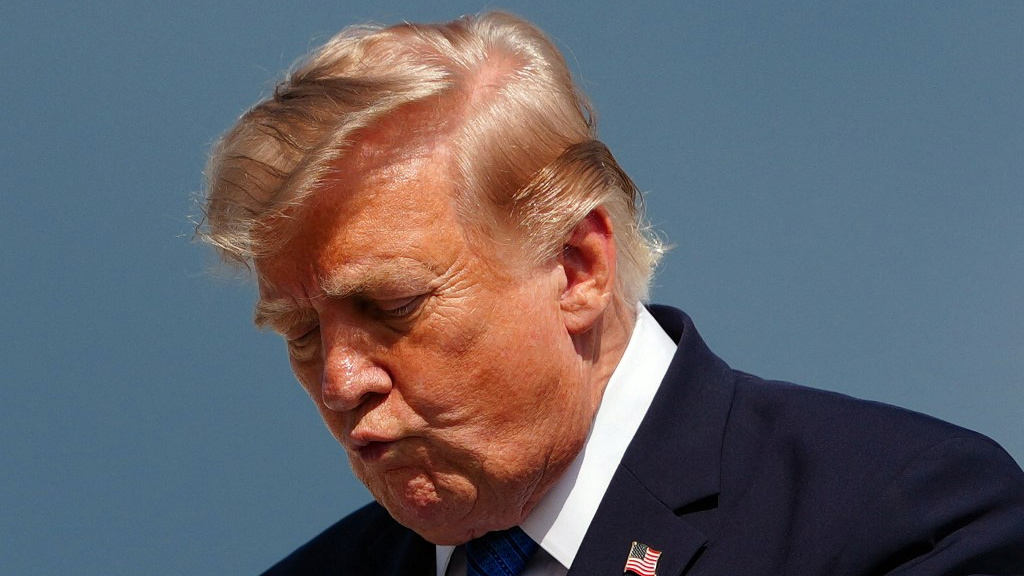
    Among all modern U.S. presidents, few have delivered public threats of military aggression as stark and contradictory as 80-year-old Republican incumbent Donald Trump when it comes to conflict with Iran. Since escalations between the two nations broke out on February 28, Trump’s stance on a U.S. confrontation with Tehran has shifted dramatically, sometimes reversing course within mere hours of making a bold statement. Time and again, he has prematurely declared victory over Iran’s military capacity, only to adjust his timeline of conflict or issue fresh threats of new strikes days or weeks later.

    What makes these reversals even more striking is the whiplash in Trump’s assessments of Iran’s ruling faction. On June 17, he praised Iran’s new leadership as “very smart” and “far less radicalized” than their predecessors, who were killed in joint U.S. and Israeli strikes. Just three weeks later on July 8, a visibly frustrated Trump discarded that positive framing entirely, telling reporters: “I don’t want to deal with them anymore, they’re scum.”

    To understand the erratic nature of Trump’s approach to Iran, a timeline of his public statements reveals the pattern of extreme threats followed by quick retreats:

    On March 21, Trump took to his Truth Social platform to issue an ultimatum: If Iran did not fully open the Strait of Hormuz to unimpeded global shipping within 48 hours, the United States would target and completely destroy the country’s power infrastructure, starting with its largest facilities. The threat drew immediate international scrutiny, as deliberate attacks on civilian critical infrastructure like power plants are broadly classified as war crimes under international humanitarian law.

    Just two days later, on March 23, Trump walked back the deadline, extending it by five days and citing “very good and productive conversations” with Iranian diplomatic representatives. He would soon extend the pause on planned strikes against power plants for another 10 days, pushing the new deadline to April 6 to allow for ongoing diplomatic negotiations to continue.

    As the 10-day extension neared its end on Easter Sunday, April 5, Trump issued an obscenity-laced follow-up threat, writing: “Open the Fuckin’ Strait, you crazy bastards, or you’ll be living in Hell,” before adding the incongruous closing line: “Praise be to Allah.”

    Two days later, on April 7, Trump issued an even more extreme warning, writing in a Truth Social post that “A whole civilization will die tonight, never to be brought back again.” The comment was widely interpreted by global policymakers and analysts as an explicit threat to eradicate Iran, a nation of more than 90 million people.

    But just hours after that alarming statement, Trump announced he would suspend all planned bombing and attacks on Iran for a two-week period. He confirmed he had accepted a truce proposal put forward by international war mediators, after a phone call with Pakistan’s prime minister.

    The pattern repeated again on June 11: Early that day, Trump posted that “The United States will be hitting Iran… VERY HARD TONIGHT” and added that “at some point in the not too distant future, we will be taking Kharg Island” — Iran’s key oil export terminal — along with other major oil infrastructure sites.

    Once again, the reversal came almost immediately: Five hours after issuing his threat of imminent strikes, Trump announced he had “cancelled the scheduled strikes and bombings against Iran this evening,” citing new progress in peace negotiations aimed at securing a permanent end to the conflict.

    By late June, an interim peace deal to end the cross-border fighting was finalized. But the truce collapsed within a month, with Iran launching attacks on U.S. military facilities across the Middle East, and U.S. forces responding with strikes on Iranian coastal defenses while expanding target lists to include civilian infrastructure and bridges.

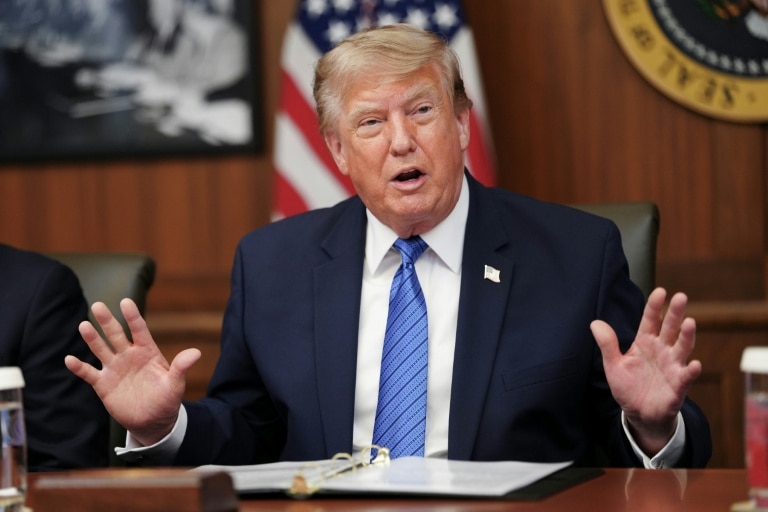
    Speaking at a cabinet meeting on July 31, Trump reaffirmed his aggressive stance, telling attendees: “We’ll be hitting them very hard, and you know at some point they’re going to say, ‘We just can’t take it anymore.’”

    Again, a reversal came the next day. On August 1, Trump announced: “We have just been asked by Iran, and other Middle Eastern Countries, to hold off any attack.” He added that the core perimeters of a permanent peace deal had already been agreed to by both sides. Iran’s state-run media quickly and forcefully denied the claim, stating that no such request for a delay had been sent by the Islamic republic.

  • OPEC+ boosts September production by 188,000 barrels/day

    OPEC+ boosts September production by 188,000 barrels/day

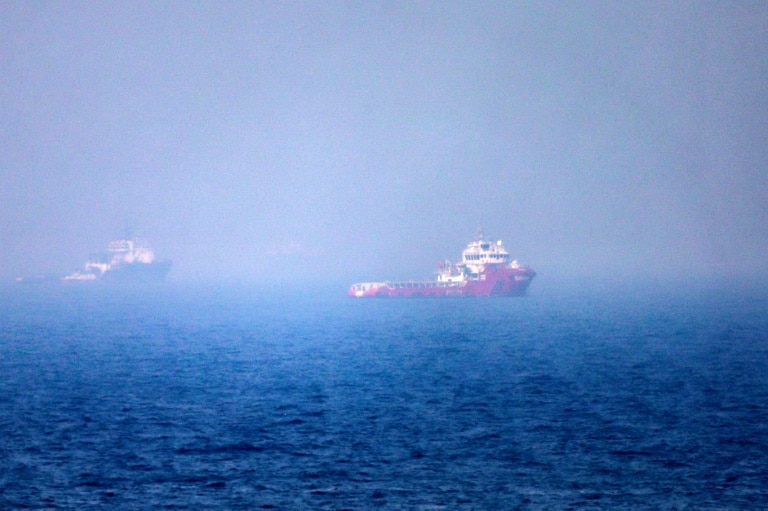
    In a Sunday virtual gathering of core OPEC+ member states, Saudi Arabia, Russia, and five other major oil-producing nations have formally approved a planned 188,000 barrel per day increase in crude oil production set to launch in September. The decision comes against a turbulent backdrop of ongoing Middle East conflict that has severely disrupted shipping and oil supply flows through the Strait of Hormuz, one of the world’s most critical energy chokepoints.

    Following the closed-door meeting, the seven participating nations released a brief joint statement confirming the production adjustment, a move that many energy market analysts had already predicted weeks in advance. This incremental production hike marks the final step in unwinding the second of three separate production cut packages rolled out by the alliance between the Organization of the Petroleum Exporting Countries and its non-OPEC partners between late 2022 and 2023, when the group moved to curb output to stem falling global oil prices, slashing a combined total of nearly six million barrels per day from global markets.

    Industry analysts note that the immediate market impact of the new production quota will be limited for the foreseeable future. For months, Gulf oil exporters have faced major barriers to ramping up exports, as the Strait of Hormuz — which carries roughly a fifth of all global oil traded internationally — has remained effectively constrained amid Iranian actions tied to the ongoing Middle East war. This logjam has persisted even after a brief uptick in shipping following a June memorandum of understanding between the United States and Iran.

    “OPEC+ has finished unwinding its voluntary cuts. The next challenge is managing the surplus that could emerge as export flows normalise,” explained Jorge Leon, senior oil market analyst at Oslo-based energy research firm Rystad Energy. Leon added that “today’s decision changes little in the near term because Hormuz remains constrained. The real market impact will come when normal export flows resume.”

    Beyond the immediate supply disruptions caused by geopolitical tensions, many OPEC+ members face structural barriers to hitting their new production targets. Giovanni Staunovo, a commodity analyst at global investment bank UBS, pointed out that numerous member nations are already unable to match their official quota levels due to long-term declines in domestic production capacity, meaning formal target increases have far less tangible impact on actual global supply than they may appear.

    Multiple member nations also face idiosyncratic challenges that limit their ability to ramp up output. Russia, one of the alliance’s two leading producers, has seen its production crimped by repeated Ukrainian drone strikes on its domestic oil infrastructure, with current output hovering around 9 million barrels per day — 800,000 barrels below its official target. While some countries like Iraq have publicly stated a desire to significantly boost production, the timing of when the alliance as a whole can actually deliver higher volumes to global markets remains uncertain.

    Looking ahead, market analysts broadly expect OPEC+ to hold off on any further supply adjustments for the final quarter of 2024 as the group begins preparations for new quota negotiations scheduled for 2027. “Having completed the restoration campaign, OPEC+ has little incentive to rush into further supply changes. Our base case is a fourth-quarter pause while the group prepares for the 2027 quota negotiations,” Leon said. He added that “for now, geopolitics is masking the scale of the supply increase. That will become much clearer once export flows normalise.”

    The alliance also faces growing internal frictions heading into upcoming quota talks scheduled to take effect next year. Analysts at DNB Carnegie note that OPEC+ “faces potentially difficult talks over new production quotas” starting in 2025, when the group plans to continue its gradual strategy of restoring production cuts. The May 2024 exit of the United Arab Emirates from the core voluntary cut group exposed existing internal divides, though Leon noted that alliance cohesion is not at immediate risk.

    “’I don’t think cohesion is at risk at this very moment,’” Leon said, though he warned that the UAE’s departure has laid bare underlying vulnerabilities in the alliance’s collective decision-making process.

  • Rescuers recover climber Nirmal Purja’s body after avalanche disaster

    Rescuers recover climber Nirmal Purja’s body after avalanche disaster

    One of the mountaineering world’s most celebrated figures has been claimed by the very peak he loved, after rescuers recovered the body of British-Nepali climber Nirmal Purja following a catastrophic avalanche that killed his entire 10-person international expedition on Pakistan’s Broad Peak. The Alpine Club of Pakistan officially confirmed Sunday that search teams reached Purja’s remains at an elevation of roughly 5,700 meters on the 12th highest mountain in the world.

    The disaster unfolded on Thursday, when a sudden avalanche hit the expedition led by the 43-year-old climber, cutting off all communications with the team immediately. In the days that followed, rescue operations launched by air and ground teams navigated treacherous high-altitude terrain to locate the missing group. As recovery efforts continued, the Alpine Club’s general secretary Ayaz Shigri confirmed that ground teams are currently transporting four recovered bodies — Purja, two additional Nepali nationals, and one Chinese citizen — down the mountain’s slopes. One more body has been located at a much higher elevation, but Shigri noted that extreme hazards and unstable conditions make any immediate recovery attempt unfeasible at this stage.

    Three other remains — those of an Omani woman, a Nepali man, and an American woman — were recovered on Friday and flown by helicopter to the nearby city of Skardu, regional authorities confirmed. Purja’s own expedition company made a devastating announcement Saturday: no members of the 10-person team had survived the avalanche.

    Before turning to full-time mountaineering, 43-year-old Purja built a distinguished career in British military service, serving first in the Brigade of Gurkhas before joining the Royal Marines’ Special Boat Squadron. After launching his mountaineering career, he broke dozens of global climbing records, and was just days away from completing a groundbreaking achievement: becoming the first person to summit all 14 of the world’s 8,000-meter “super peaks” twice without using supplemental oxygen. Just three days before the avalanche, Purja shared a public post on social media that read, “Broad Peak, I ask for nothing but safe passage up and back down.”

    News of the disaster has triggered an outpouring of shock and grief across the global mountaineering community, particularly in Nepal, where Purja worked to raise the profile of Nepali climbers and grow the country’s mountaineering sector. Britain’s Prince William was among the global leaders offering condolences, writing on X that Purja “served with distinction in the British Armed Forces before becoming one of the world’s greatest mountaineers, putting Nepalese climbers on the map,” adding that he was “truly saddened” by the loss of life.

    Fur Gelje Sherpa, President of Nepal’s mountaineering association, called the tragedy “an unthinkable loss for our mountaineering community and for the nation,” noting that Purja remained committed to elevating Nepal’s global reputation and advancing the country’s mountaineering industry. Mingma G Sherpa, a mountaineer who took part in the rescue mission, shared a heartfelt message on Instagram Saturday writing, “My loving brothers… We will take you back home to see (your) families.”

    Located in Pakistan’s Karakoram Range, Broad Peak stands as the 12th highest mountain on Earth, and is widely considered one of the most technically challenging of all 8,000-meter-plus peaks. The mountain was first successfully summited by an Austrian expedition team in 1957.

  • At Nepal school, outpouring of grief for climber Nirmal Purja

    At Nepal school, outpouring of grief for climber Nirmal Purja

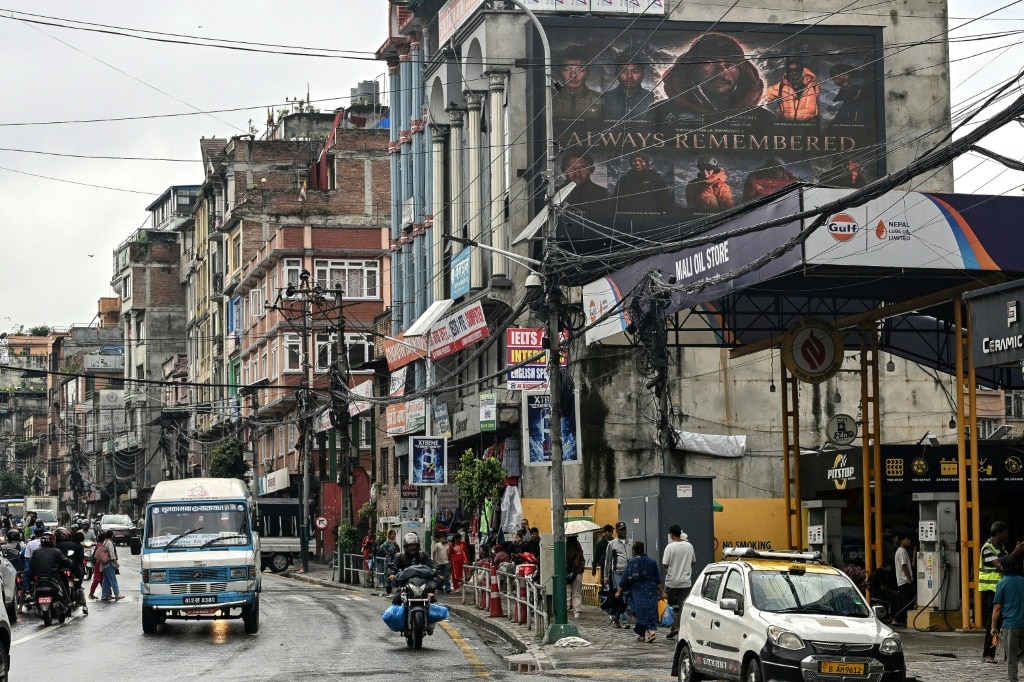
    As rescue teams pulled the body of iconic British-Nepali mountaineer Nirmal Purja from Pakistan’s Broad Peak on Sunday, waves of sorrow washed over the Nepali boarding school where his legendary grit first took root. Hundreds of kilometers from the avalanche site, teachers, former classmates and current students gathered at Small Heaven School in Nepal’s southern Chitwan district, gathering around a flower-draped framed portrait of the 43-year-old climber who reshaped modern mountaineering.

    Lighting ceremonial candles in his honor, attendees shared intimate memories of the young boy who would grow to become one of the most celebrated figures in the climbing world. Dhiraj Bahadur Panta, a childhood school friend of Purja, told AFP his voice shaking with emotion that the entire community had held out hope through the days Purja was missing. “When he was missing, we were praying for him and spent sleepless nights,” Panta said. “It was not only me and my friends. I think people all over the world who knew him… prayed for him. But it was his fate, no one could avoid it.”

    Purja died alongside nine other climbers after being caught in an unexpected massive avalanche on Broad Peak last Thursday. News of his passing triggered an outpouring of heartfelt tributes from the global climbing community and public figures alike, with Britain’s Prince William among those offering formal condolences.

    Purja first arrived at the Chitwan boarding school as a young boy, spending eight years building deep connections with the institution’s staff and fellow students before moving on to join the British Gurkhas. That path would lead him to elite military service, and eventually, to global mountaineering stardom that put Nepali climbing expertise on the world map.

    On Sunday, current students filed one by one past Purja’s portrait, laying fresh flowers and offering quiet prayers, while former teachers recalled the young pupil who showed remarkable courage and discipline even at a young age. Shailendra Baral, who supervised Purja during his time in the school’s hostel, told AFP that his exceptional character was obvious from early childhood. “Even when he was in class three, he was fearless and committed to achieving something,” Baral said. “He was honest and an obedient student, which made us happy. We found courage in him even when he was a child.”

    Purja’s climbing career was defined by record-breaking feats that stunned the global climbing community. In 2019, he completed the ascent of all 14 of the world’s highest peaks in just over six months, smashing the previous record of seven years. The extraordinary achievement was later documented in a popular Netflix documentary, which inspired a new generation of young climbers and elevated Nepal’s profile in a sport that had long been dominated by Western adventurers.

    In 2021, Purja joined the historic all-Nepali team that pulled off the first winter ascent of K2, the world’s second-highest peak and one of the most dangerous and coveted challenges in professional mountaineering. When he returned to Chitwan in 2022 for a screening of his documentary, he received a hero’s welcome from the local community. In a social media post marking the occasion, Purja reflected on his roots at the school, writing: “I grew up here, running around with no shoes on. This is my hometown and so I wanted everyone here to see the film and inspire the younger generation.”

    For current students gathered to mourn him on Sunday, Purja’s trailblazing achievements have long been woven into the school’s collective identity. “It really feels bad to hear this news because we had always heard good things about him,” said student Sarbagya Paudel. “His bravery has set a great example for our school. Not only has he made our school proud, but he has also brought pride to Nepal. It is heartbreaking to know that he is no longer with us.”

  • Lorena Wiebes sprints to second straight win at Women’s Tour de France

    Lorena Wiebes sprints to second straight win at Women’s Tour de France

    GENEVA, Switzerland – Dutch cycling star Lorena Wiebes delivered another masterclass in sprinting on Sunday, claiming her second consecutive victory at the 2024 Women’s Tour de France on the event’s second stage. The win marked Wiebes’ seventh overall Tour de France victory, extending her legacy as one of the race’s most dominant sprinters.

    The second stage of this year’s edition unfolded across a flat 147.9-kilometer route, stretching from the Swiss town of Aigle to the finish line in Geneva – the second consecutive stage held entirely on Swiss soil. Wiebes crossed the line in a total time of 3 hours, 42 minutes and 8 seconds, launching her decisive attack with just 250 meters remaining in the stage to outpace the peloton.

    This dominant performance came just one day after Wiebes claimed victory in the Tour’s opening stage, delivering back-to-back wins in equally commanding fashion. Speaking after her victory, Wiebes credited her SD Worx-Protime team for the strategic support that made the win possible. “It’s special to win in the yellow jersey, but also because again, my team worked really hard for this,” she said. “The girls were chasing full gas in the final to bring back Riejanne Markus. That makes it even more beautiful to finish it off.”

    Markus, who had held a solo breakaway for nearly 40 kilometers across the latter half of the stage, was caught by the chasing peloton just 500 meters short of the finish line, ending her bid for a stage win. Following Wiebes across the finish line, Lidl-Trek’s Elisa Balsamo secured second place, while Marianne Vos of Team Visma-Lease a Bike rounded out the top three.

    With two stages complete, Wiebes holds a 14-second overall lead over second-place rider Kim Le Court Pienaar. 2023 Tour champion Demi Vollering sits two seconds further back in third place, keeping her within striking distance of the overall lead as the race moves into its third day.

    On Monday, the peloton will face a 156.5-kilometer hilly stage, kicking off in Geneva before crossing the French border to finish in the town of Poligny. This year’s edition, the fifth running of the modern Women’s Tour de France, covers a total distance of 1,175 kilometers over nine days of racing. The Women’s Tour comes just one week after Tadej Pogacar claimed his fifth overall title at the men’s Tour de France.

  • Massive Attack responds after Singapore ban over Palestine display

    Massive Attack responds after Singapore ban over Palestine display

    British trip-hop pioneers Massive Attack has publicly spoken out against the heavy-handed response from Singaporean authorities after the band made a pro-Palestine statement during a recent concert in the Southeast Asian city-state, describing the entire ordeal as deeply unexpected and disappointing.

    In an Instagram post published Sunday, the group detailed that its core members were taken into police custody, separated from one another, and interrogated individually. Some members also had their hotel rooms searched by officers and had their passports temporarily seized during the interaction.

    The controversy stems from the band’s 29 July performance in Singapore, where founding members Robert Del Naja and Grant Marshall joined audience members to hold up a Palestinian flag and chant the slogan “Free Palestine”.

    In the wake of the incident, Singaporean officials have announced an indefinite entry and performance ban on the entire group, a confirmation that a police spokeswoman provided to the BBC Friday.

    Del Naja and Marshall have also received formal stern warnings over alleged violations of two local statutes: one that restricts the public display of foreign national flags, and another that regulates political expression at public gatherings.

    Massive Attack pushed back on the enforcement in its statement, noting that chants of “Free Palestine” first emerged organically from large sections of the audience before the band added its own support. The group said the crowd was likely aware that the spontaneous expression ran afoul of Singapore’s censorship regulations, but chose to speak out regardless.

    While the band did not directly issue a formal response challenging the ban, it framed the entire experience as surreal. “We did not imagine that merely holding up the flag of a sovereign state recognised by 157 countries would violate any law,” the group wrote.

    The collective added that it remains proud of the impromptu display of solidarity with Palestinian people that it shared with Singaporean fans, who it said “clearly felt a moral imperative” to stand with Palestinians amid the ongoing Israel-Gaza conflict.

    Massive Attack has a long, well-documented history of publicly advocating for political causes across a wide range of global issues, and the Gaza war is no exception. Earlier this year, Del Naja, 61, was arrested during a London protest on suspicion of supporting Palestine Action, a pro-Palestinian organization that is proscribed under U.K. law. Del Naja was photographed sitting among hundreds of fellow demonstrators holding a sign that read “I Oppose Genocide, I Support Palestine Action”.

    For its part, Singapore has justified its strict rules around public discussion of the Israel-Gaza war, arguing that tight regulation of such divisive issues is required to maintain racial and social cohesion in the country’s diverse multicultural society. As early as 2023, Singapore’s Ministry of Home Affairs issued a formal advisory banning the public display and wearing of items linked to the Israel-Gaza conflict, including emblems of foreign national entities.

    Massive Attack is currently mid-way through a global tour, having wrapped its Asia leg following the Singapore show, and is scheduled to perform a series of shows in Australia next week. The BBC has reached out to Singaporean police for additional comment on the incident.