博客

  • Aussie drivers reminded of ‘choice at the bowser’ as fuel excise removed

    Aussie drivers reminded of ‘choice at the bowser’ as fuel excise removed

    Australia’s federal fuel excise discount has officially expired, triggering an immediate, nationwide increase in fuel prices that has piled new pressure on motorists already grappling with soaring cost-of-living expenses. Automotive advocacy group the NRMA reported that average national prices for unleaded petrol rose by 3.2 cents per litre on the first full day after the discount was lifted, while diesel prices jumped an average of 3.4 cents per litre across the country.

    Regional variations show the burden hitting different cities unevenly: Adelaide recorded an almost 4 cent per litre increase for both petrol and diesel, while Perth saw diesel prices surge by 5.1 cents per litre. Most notably, the price gap between different fuel grades has hit historic milestones not seen in Australian fuel market history. The national difference between budget E10 blend and high-octane Premium 98 fuel now sits at a record 30.5 cents per litre, beating all previous measurements. In Sydney alone, the gap between E10 and Premium 98 reached 26.5 cents per litre – the widest margin recorded in the city since 2012. The gap between E10 and mid-tier Premium 95 also broke records, climbing to 19.1 cents per litre nationally, up from the previous high of just 13 cents per litre.

    With these unprecedented price gaps, NRMA spokesman Peter Khoury is urging Australian drivers to “shop smarter” at the bowser and consider lower-cost fuel alternatives when their vehicles allow. Khoury explained that for many motorists, paying premium prices for high-octane fuel is an unnecessary expense, and switching to cheaper blends can deliver meaningful savings for households stretched thin by inflation and ongoing global energy volatility linked to the Ukraine war. By opting for E10 fuel, a standard 55-litre tank can save drivers up to $17 per fill-up, he noted, while also supporting domestic biofuel production, boosting regional Australian jobs and cutting national dependence on imported oil.
    “It is absolutely critical that Australians understand that they have choice at the bowser,” Khoury said. “With the excise going up today and the war continuing, finding smart ways to save at the bowser remain critical for many Australian struggling with cost-of-living pressures.”

    In anticipation of the price shift, Treasurer Jim Chalmers has moved proactively to prevent price gouging by service stations, writing to Australian Competition and Consumer Commission (ACCC) chair Gina Cass-Gottlieb to call for heightened scrutiny of fuel pricing as the excise returns to its pre-cut level. Chalmers emphasized that the restoration of normal excise rates cannot be used as justification for unjustified, excessive price hikes that exploit motorists. The ACCC has been directed to investigate any reports of misleading pricing, anti-competitive behavior or unfair markup, and Chalmers reminded service station operators that penalties for price gouging have been increased, with violating businesses facing fines of millions of dollars for breaking consumer protection laws.
    “Any price increase that could not be explained will face serious scrutiny from the ACCC,” Chalmers said. “We’ve jacked up the penalties for petrol stations that rip off Australians. They face multimillion-dollar fines if they break the law.”

    As of Monday, the NRma’s ongoing price monitoring indicates most service stations are adjusting prices fairly in line with the reinstated excise. Khoury noted that the measured, proportional price increases recorded so far give the association confidence that most retailers are acting in accordance with regulatory guidelines.
    Alongside the return of the standard fuel excise, the heavy vehicle road user charge has also reverted to its normal rate of 32.4 cents per litre, up from the discounted rate of 16.4 cents per litre that applied to liquid fuels including diesel for the duration of the government’s stimulus measure.

  • Crows coach ‘completely trusts’ assistant in bid for top Essendon coaching role

    Crows coach ‘completely trusts’ assistant in bid for top Essendon coaching role

    In the aftermath of a dominant 72-point victory over Essendon at Melbourne’s Marvel Stadium on Sunday, Adelaide Crows senior head coach Matthew Nicks has publicly thrown his full support behind his trusted coaching director, Murray Davis, as Davis competes for the vacant Essendon senior coaching role.

    Nicks confirmed he has already held open discussions with Davis about the career opportunity, and made clear that the 49-year-old assistant has his complete blessing to pursue the Bombers’ top job, even if it means Davis departs the Adelaide program ahead of the upcoming September finals series.

    “I trust Murray completely,” Nicks told reporters post-game. “If he wants to stay with us, we would be thrilled to keep him here and work through the rest of the season. He has done incredible work for our program over the past two seasons, and he deserves every bit of this opportunity. If this role works out for him, we wish him nothing but the best.”

    Davis has emerged as an unexpected dark horse contender for the Essendon position, standing out from the three other high-profile candidates due to one key difference: he is the only applicant in the running without prior senior-level AFL playing experience. His competitors for the role include Essendon club legend James Hird, former Bombers midfielder Mark McVeigh, and 2000 premiership-winning defender Dean Solomon, who currently serves as Essendon’s interim head coach.

    Davis built his coaching resume over 13 seasons with the Brisbane Lions before joining Nicks’ Adelaide coaching staff at the start of the 2024 AFL season.

    Beyond the coaching staff drama, Sunday’s blowout win over Essendon delivered major postseason momentum for the Crows. Combined with Brisbane’s lopsided loss to Carlton on Saturday, the victory pushed Adelaide up past Brisbane into the AFL’s top four, putting the club in an excellent position to secure a valuable double chance in the September finals series.

    Nicks said his playing group is well aware of the opportunity now in front of them, but emphasized the squad remains focused on taking each remaining game one at a time. “We don’t shy away from the fact that a top-four spot is now within our reach,” he said. “If we win our final three games of the regular season, that spot is ours. But it’s easier said than done — we’ve got three really tough matches coming up, so we just have to lock in on the next challenge first.”

    The Crows will return to their home ground this Saturday night to face Richmond, before traveling west the following week to take on league ladder leaders Fremantle in what is shaping up to be a critical test of their top-four credentials.

  • ‘WWE toss’: Ali Brigginshaw faces monster ban for shocking Magic Round incident

    ‘WWE toss’: Ali Brigginshaw faces monster ban for shocking Magic Round incident

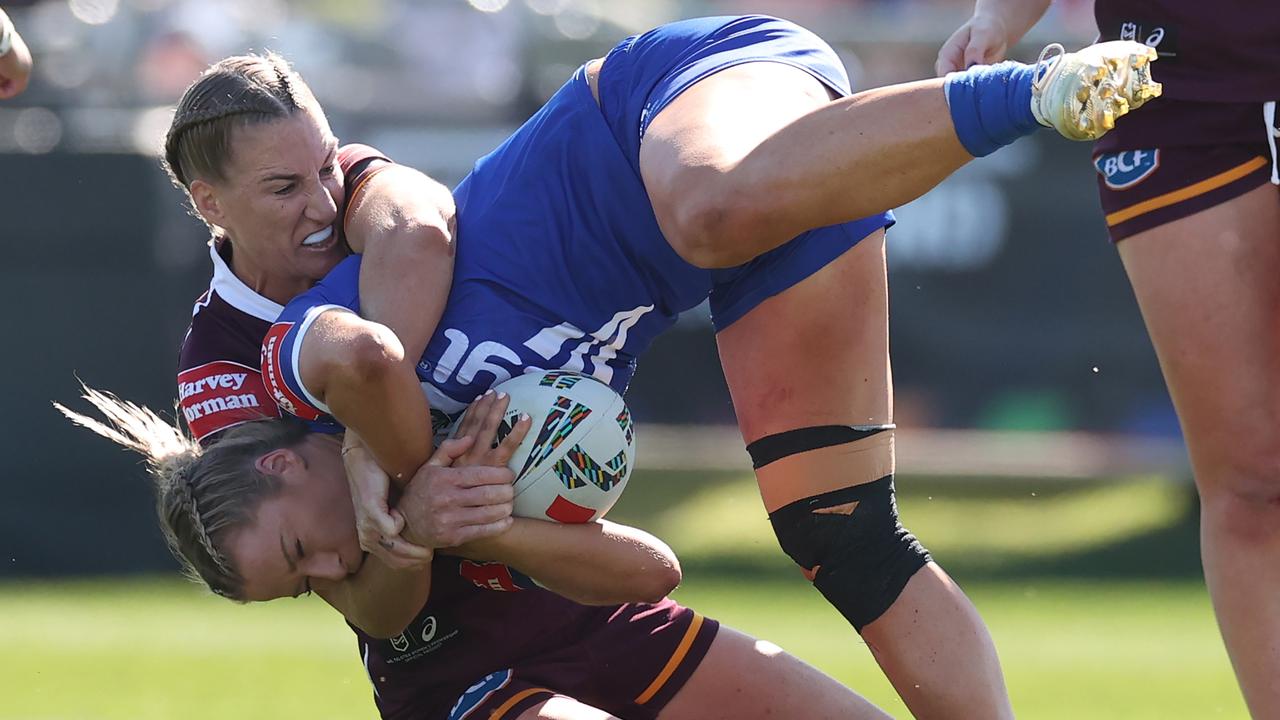
    One of the Brisbane Broncos’ most decorated athletes is facing an unexpected and devastating end to her storied NRLW career, after the league’s match review committee issued a severe grade 3 dangerous throw charge following a controversial tackle during the recent Magic Round clash against the Canterbury Bulldogs.

    The incident, which has sent shockwaves through Australian women’s rugby league, unfolded in the 28th minute of the weekend’s fixture. Brigginshaw, a four-time NRLW premiership winner playing what was meant to be her farewell season before retirement, pulled off a tackle on Bulldogs halfback Tayla Preston that dumped the playmaker directly on her head. Commentating during the match, rugby league Immortal Andrew Johns famously compared the high-impact play to a professional wrestling maneuver, calling it a “WWE toss” that was well outside the bounds of acceptable on-field contact. Though Brigginshaw was only sent to the sin bin for the infraction, match officials later noted she could have been immediately sent off for the dangerous play. Fortunately for Preston, she escaped the incident without serious long-term injury.

    The charge has directly referred Brigginshaw to an upcoming judiciary hearing scheduled for Tuesday night, leaving her playing future this season hanging in the balance. The 33-year-old playmaker holds one of the most impressive ironman streaks in league history: since the NRLW’s 2018 relaunch, she has appeared in every single one of Brisbane’s 61 regular season and finals matches, never missing a single fixture through injury or suspension. That streak is now on the brink of ending.

    With Brisbane holding six remaining regular season matches plus a potential finals run on the schedule, Brigginshaw had been on track to complete a full final campaign before hanging up her boots. A lengthy suspension, however, could cut that farewell tour drastically short, leaving her with just one or two more appearances in Broncos colors. Currently, the longest suspension in NRLW history stands at four matches, a mark that Brigginshaw could match or even exceed if the judiciary upholds the serious charge.

    Despite the off-field controversy hanging over the club, the Broncos did secure a win over the Bulldogs over the weekend. Their next fixture is a road trip to Canberra, followed by a highly anticipated grand final rematch against the Sydney Roosters. It remains to be seen whether their legendary halfback will take the field for either game.

  • Trump suggests new talks with Iran to begin on Monday

    Trump suggests new talks with Iran to begin on Monday

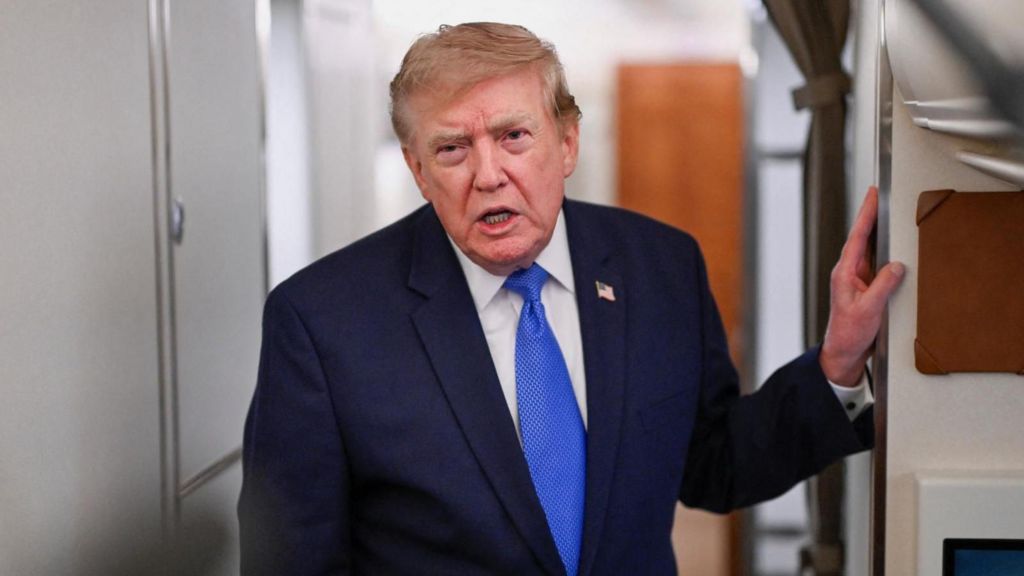
    On a Sunday flight aboard Air Force One, U.S. President Donald Trump made a sweeping announcement that new negotiations with Iran will kick off Monday afternoon, just days after he abruptly called off what he described as a “massive, unprecedented” military strike against the Islamic Republic that was already positioned and ready to launch.

    Speaking to reporters traveling with him, Trump confirmed that Iranian officials and key U.S. Middle Eastern allies had formally requested he delay the planned attack after preliminary agreement on core parameters for a potential diplomatic deal had been reached. “They saw the attack building, so they knew exactly how large it would be,” Trump told reporters. “Negotiations start tomorrow afternoon, and we will see how they progress. I’m not setting an artificial deadline for an agreement. We are fully prepared to resume military action at any moment if talks fall apart, but that is not the outcome I want – I have no interest in loss of life.”

    The U.S. leader specifically named Saudi Arabia’s Crown Prince Mohammed Bin Salman, alongside United Arab Emirates and Qatari leaders, as key regional partners that urged him to hold off on weekend strikes. “We were completely locked and loaded to go,” he said. “They asked to hold off because they believe a deal is within reach. We already have a framework for an agreement on Strait of Hormuz shipping, and we will reach a deal on Iran’s nuclear program as well.”

    Trump also emphasized that calling off the strike, which he claimed would have been the largest U.S. military attack on a single target since World War II, was necessary to preserve the fragile path to diplomacy that has opened after months of escalating conflict. When pressed if the planned strike had targeted Iranian energy infrastructure – a move that international law experts have warned would qualify as a war crime that endangers civilian energy access – Trump declined to comment.

    However, Tehran has pushed back directly against Trump’s narrative. Iran’s semi-official Mehr News Agency dismissed the president’s claim that Iran requested a delay to strikes as “nothing but a new lie.” Despite that denial, Iranian state media reported Sunday that Iranian Foreign Minister Abbas Araghchi confirmed negotiations mediated by Oman focused on securing a Strait of Hormuz shipping agreement are “on track for finalization.”

    Iran’s acting Defense Minister Majid Ibn al-Reza reiterated Tehran’s position that all American military threats are taken seriously, regardless of whether they are framed as psychological warfare. “We will not be caught off guard, and we will not remain passive in the face of any aggression,” he stated.

    Following Trump’s announcement of incoming talks, global energy markets reacted positively in early Monday Asian trading. International benchmark Brent Crude dropped 4.5% to $83.98 per barrel, while U.S. West Texas Intermediate crude fell 4.6% to $80.74 per barrel. Energy prices have swung wildly since the latest conflict between the U.S. and Iran began in February, driven by investor fears over disruptions to shipping through the Strait of Hormuz, a chokepoint that carries roughly 20% of the world’s total crude oil and liquefied natural gas supplies.

    Trump’s shift from aggressive military rhetoric to diplomacy follows a well-established pattern of the president’s approach to the conflict. Just this past Saturday, he posted to Truth Social warning that the U.S. was prepared to launch an attack on Iran “at levels of Military Terror, Strength, and Power not seen since World War II,” only to reverse course hours later and announce he was cancelling the strike for “the future benefit of the world and, likewise, the survival of a successful and prosperous Iran.”

    This back-and-forth is not new. Back in April, Trump issued an extreme warning that “a whole civilisation will die tonight” if Iran refused to enter peace talks, while also threatening to destroy Iranian civilian infrastructure and power plants. That threat did eventually lead to historic face-to-face negotiations in Pakistan led by Vice President JD Vance, but those talks ultimately failed to produce a binding agreement.

    To date, the Trump administration has not released details on where Monday’s talks will be held, nor who will represent the two sides in the negotiations. The ongoing conflict and its economic fallout have become increasingly unpopular with U.S. voters, according to multiple national polls, including disapproval from a large share of Republican voters. The low approval ratings for Trump’s handling of the conflict have sparked growing concern among conservative political strategists ahead of the November 2026 midterm elections. This report includes additional reporting from Peter Hoskins.

  • Trump says new Iran talks set to start after calling off massive attack

    Trump says new Iran talks set to start after calling off massive attack

    Just days after threatening a massive military strike on Iran that he claimed would rank as the largest attack since World War II, U.S. President Donald Trump has reversed course, announcing that new bilateral negotiations with Tehran will kick off on Monday as the administration pursues a diplomatic end to the five-month conflict.

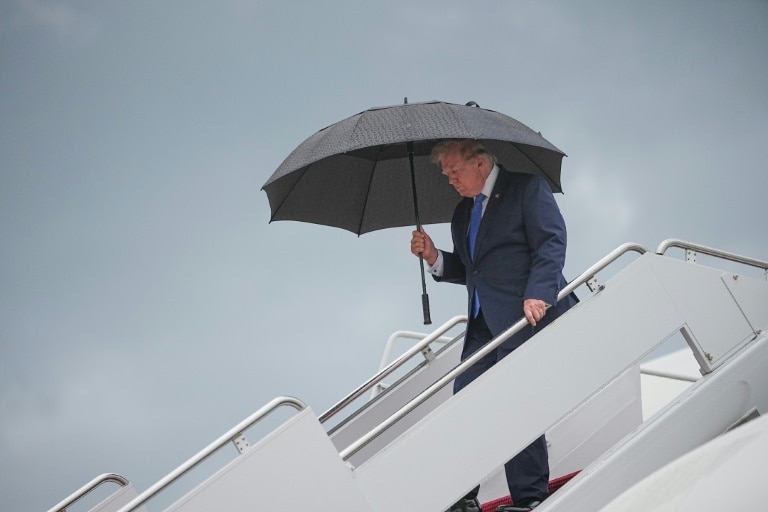
    Speaking to reporters aboard Air Force One on Sunday while returning from a weekend stay at his New Jersey golf club, Trump confirmed that talks would open the following afternoon, focusing first on the future of the Strait of Hormuz — the world’s most critical energy chokepoint that has emerged as the core flashpoint of the ongoing war — with an eventual goal of reaching an agreement on Iran’s nuclear program. He added that he had been urged to hold off on the planned strikes by Iran and key regional U.S. partners including Saudi Arabia, the United Arab Emirates, and Qatar. Iranian state media has since denied that Tehran made any such request to delay military action.

    The conflict between Washington and Tehran began on February 28, when the United States and Israel launched coordinated surprise strikes against Iranian military and nuclear infrastructure. While intermittent diplomatic talks over the past five months have created temporary periods of reduced hostilities, fighting resumed last month after Iran tightened its control over the Strait of Hormuz, a waterway that carries roughly 20% of the world’s daily oil supplies. Before the war, all vessels enjoyed free passage through the strait, but Iran closed the route after the start of hostilities, now demanding the right to control access and charge navigation tolls — a position the U.S. has flatly rejected.

    Following the resumption of strikes last month, regional tensions spiked dramatically. Trump openly threatened a devastating response against Iran, with U.S. diplomatic missions across the Middle East placed on high alert and reports indicating the administration was considering targeted strikes against Iranian energy infrastructure. By Saturday, however, the president announced he was pulling back from the threat, noting that the basic framework for a potential deal was already in place.

    On the Iranian side, parliamentary national security commission spokesman Hassan Ghashghavi confirmed Sunday that regional mediators are working to revive a preliminary U.S.-Iran memorandum of understanding reached back in June. That earlier agreement was never meant to serve as a final peace deal, but rather as a foundation for broader comprehensive negotiations, and it already included core provisions related to the Strait of Hormuz. “They know that the main issue and, in fact, the key to the matter right now is the issue of the Strait of Hormuz, so yes, there is an exchange of views,” Ghashghavi said. Iranian President Masoud Pezeshkian emphasized the country’s position in a post on X, writing, “We must strive to compel the enemy to remain committed to what it has signed.”

    In a separate development, Iranian foreign ministry spokesman Esmaeil Baqaei told state television Sunday that Tehran is nearing a bilateral transit agreement with Oman, which shares the Strait of Hormuz’s opposite coastline, for a new navigation route through the waterway. Baqaei explained the proposed route would be a compromise between Tehran’s preferred northern route and Muscat’s proposed southern route, designed to respect the sovereign claims of both countries while protecting Iran’s national security and interests. He stressed, however, that the tentative deal would not amount to a full reopening of the strait to unrestricted international traffic.

    The ongoing restrictions on Hormuz traffic have already had a sharp impact on global trade: maritime analytics firm Kpler reported Friday that shipping volume through the strait has dropped dramatically in recent weeks. The continued volatility of the region was underscored Sunday, when the United Kingdom Maritime Trade Operations (UKMTO) confirmed a commercial tanker off the Omani coast reported an explosion in its immediate vicinity. All crew and the vessel itself remained unharmed following the incident.

    Global energy markets reacted quickly to Trump’s negotiation announcement on Monday: West Texas Intermediate crude oil fell 4.7 percent to $80.72 per barrel in early Asian trading, as investors bet that reduced geopolitical risk would ease threats to global energy supplies.

  • ‘What was my fault?’: How India’s exam paper leak ended young lives

    ‘What was my fault?’: How India’s exam paper leak ended young lives

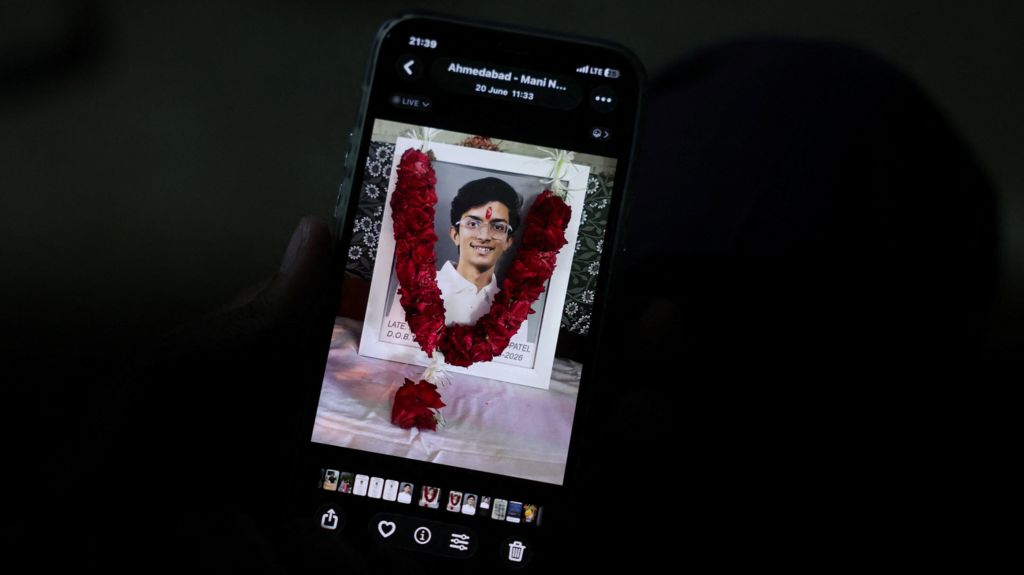
    Across the diverse social landscape of India, two young lives with one shared ambition met identical devastating ends, laying bare the human cost of systemic failure in the country’s high-stakes medical entrance examination process. In Ahmedabad, just three days before he was set to sit a rescheduled National Eligibility cum Entrance Test (NEET), 17-year-old Kahaan Patel jumped from the sixth floor of his family’s apartment building in the early hours of June 18. When his family entered his study bedroom after his death, every trace of his short, ambitious life remained: his laptop was still open, textbooks and stationery scattered across his bed and desk, his headphones still on where he had left them before the jump. In one corner stood his electric guitar, plugged into an amplifier, while his bookshelves held everything from Harry Potter and Goosebumps novels to a biography of Elon Musk, alongside a trophy he won for consistent academic performance. The only thing missing, his father Prashant Patel says quietly, was Kahaan.

    Kahaan was far from alone. He is one of at least 21 students who died by suicide after this year’s NEET exam was canceled over a widespread question paper leak, forcing nearly 2 million aspirants to retake the test. These tragic deaths became the emotional heart of an extraordinary youth-led uprising that spilled onto Delhi’s streets in July, as thousands of protesters demanded accountability for repeated government failures in managing national entrance examinations. After weeks of demonstrations organized by the satirical activist group Cockroach Janta Party, India’s education minister Dharmendra Pradhan stepped down. But behind the political upheaval are grieving families, left to piece together how an exam scandal escalated into a loss of life.

    For Prashant Patel, Kahaan’s story begins with a dream, not a funeral. After earning top marks in his secondary school leaving exams, Kahaan told his family he wanted to become a doctor – a goal no one in their family had ever pursued. The entire family restructured their lives around that ambition, relocating from Surat, a busy diamond and textile hub, to Ahmedabad, Gujarat’s largest city, so Kahaan could access a better secondary school and focused test preparation. Prashant, a lawyer, purchased an apartment close to both the city’s high court and Kahaan’s school, commuting between the two cities weekly while Kahaan lived in Ahmedabad with his mother Veena and younger brother Rihaan. “He took that decision himself,” his father says. “We only supported him.”

    Contrary to the stereotype of the singularly focused test aspirant, Kahaan was a well-rounded teenager with a wide range of passions. He played football for his school team, devoured fantasy and adventure novels, loved science fiction films, and spent hours teaching himself to play hard rock guitar riffs. He had even secured a U.S. visitor visa and was planning a trip back to Disneyland after his exam, excited to revisit a spot he first visited on a family trip 12 years earlier.

    Kahaan had already proven his skill: after the 2024 NEET leak, he took the exam as a practice run, and his score convinced both him and his teachers he was on track to secure a spot in a top medical college. When he exited the May 3 exam hall this year, he called his father giddy with relief. “Daddy, I am so happy. I am feeling free, relaxed. I’m going for dinner with my friends. I’m enjoying,” he told his father, who replied, “This is your time. Enjoy.”

    That joy shattered just days later, when reports of a widespread question paper leak broke. Kahaan’s parents tried to shield him from the news, but it spread quickly among his coaching classmates. He cut short a holiday with friends at a farmhouse, rushing home to retrieve study materials he had already given away to younger students, just in case a retest was ordered. Within days, the government officially announced the exam would be canceled and all candidates would have to retake it.

    “That was when he became angry,” his father recalls. “He kept asking me: ‘Is this a system? Is this how it works? What is my fault? What is the fault of students who gave the exam honestly? Why is the government taking it so casually?’” Prashant tried to reassure his son, telling him the broken system was out of their control. Now, he wonders if his words came off as resignation rather than comfort. “Maybe he was disappointed. Maybe he was suffering inside,” he says.

    There were few obvious warning signs. The evening before his death, Kahaan chatted cheerfully with his grandfather, who had just landed in Melbourne to visit family, and asked him to bring back Puma football boots and Levi’s denim. Later that night, he spoke to his father, who ended the call with one final reassurance: “You proved yourself once. You don’t have to prove yourself again.” Just hours later, he was dead. Only after his death did friends tell Prashant how deeply the scandal had shaken his son’s trust in the system.

    770 kilometers away in Rajasthan’s Jhunjhunu district, another grieving father asks the same unanswered questions. 23-year-old Pradeep Kumar, the only student from his small village preparing for NEET, dreamed of becoming a doctor – a milestone that would have lifted his entire working-poor family into the professional middle class. Pradeep’s father Rajesh, a 45-year-old small-scale farmer, left school as a child, and Pradeep’s mother never attended school at all. “He would tell me, ‘I want to serve people so much that they will remember me,’” Rajesh says.

    To pay for Pradeep’s coaching – the key to securing a good NEET rank – Rajesh sold part of his family land and took out a 1 million rupee ($10,480) bank loan. In 2022, Pradeep moved to Sikar, one of India’s largest entrance exam coaching hubs, sharing a small rented room with his older sister Babita, who was preparing for police recruitment exams. After two attempts, his rank improved steadily, and a spot at a government medical college finally seemed within reach.

    Pradeep dedicated every moment of his life to that goal, following a relentless 16-hour daily routine: waking at 4:30 a.m., attending coaching classes, studying independently until 9 p.m., then sleeping, repeating the cycle day after day. He refused to own a mobile phone, telling his father, “I’ll buy one after I’m selected. Phones distract me.” His only small indulgence was a collection of 10 cheap wristwatches he bought from roadside vendors during trips home.

    When he walked out of the May 3 exam, he was smiling, telling his father, “This time my selection is guaranteed.” The family planned to leave Sikar and return to their village to celebrate. Instead, the paper leak news broke, and a retest was ordered, meaning Pradeep would have to attempt NEET for a fourth time. He accepted the news stoically, telling his father they would just have to prepare again.

    On the morning of May 15, Rajesh sent his son his daily delivery of fresh milk and homemade curd on the local bus, as he had done almost every day for four years. Pradeep called to confirm it had arrived, then bought fresh okra from a roadside vendor and told his sister to go bathe, saying they would cook the okra together when she returned. When she came back half an hour later, the door was locked. In that short window, Pradeep had taken his own life. “He never told me anything,” Rajesh says. “He seemed happy.”

    Speaking about the leak, his voice hardens with anger and grief. “I sold my land to educate him. Those who have money buy question papers. Those who study honestly are left behind. The government snatched away my son. If the paper had not leaked, Pradeep would be alive today. He would have been celebrating.”

    Kahaan and Pradeep came from vastly different worlds: one was the son of a middle-class lawyer, the other the child of a small farmer who mortgaged his future to fund his son’s dream. One planned a trip to Disneyland after his exam, the other postponed buying a mobile phone until he secured his medical seat. Yet both fathers are left grappling with the same devastating question: how did children who worked tirelessly to earn their future lose all faith in the system designed to reward their hard work?

    Weeks after Kahaan’s funeral, Prashant was pulled out of his crippling grief by the student protest movement. He traveled to Delhi twice to join the July demonstrations, saying he did not go for government compensation – he went to demand accountability. The weeks of protests ultimately forced Pradhan’s resignation on July 25, and the government issued statements of sympathy for the bereaved families, promising maximum compensation per existing regulations. But for Prashant, the real impact of the movement is far deeper.

    After watching students return to the streets despite a violent police crackdown on July 20, he says, “I wanted to thank them because they had become Kahaan’s voice. If these children can come back after being beaten and still fight for justice, that gives me strength.” His son never found the courage to speak out before he died, Prashant says: “Kahaan didn’t speak out. Instead, he took his own life. The other children spoke.” He leaves a message he wishes every parent and every government official would hear: “Our duty is to hear the voices of the young before they fall silent.”

  • Israel revels in Spain’s migrant crisis while embarrassing ally Morocco

    Israel revels in Spain’s migrant crisis while embarrassing ally Morocco

    A deadly mass migration crossing crisis at the Spanish North African enclave of Ceuta has become a geopolitical flashpoint, with senior Israeli political figures openly mocking and exploiting the tragedy to punish Spain for its critical stance on Israel’s military campaign in Gaza. The crisis, which left at least 70 migrants dead and dozens more missing, has laid bare tangled diplomatic tensions across the Middle East, North Africa and Europe, even as questions swirl about the origins of the unprecedented surge in crossings.

    More than 60,000 Moroccan migrants attempted to cross the border from Morocco into Ceuta, a small Spanish territory surrounded by Moroccan land, in a sudden mass movement that caught Spanish authorities off guard. Among the fatalities was Faten Ben Omar El Azizi, a promising young female footballer for Moroccan club Moghreb Atletico Tetuan. Her death has cast a stark spotlight on the disconnect between Morocco’s heavy investment in elite football development and the systemic economic and social desperation driving thousands of young people to risk their lives for a chance to reach European soil. In a raw video recorded shortly before her burial, El Azizi’s mother questioned the circumstances that allowed the border to open, asking: “The youth are lost… Who opened the door the first time? Why did they open it so that our children could be killed?”

    Multiple independent reports have indicated that Moroccan state authorities, under the leadership of King Mohammed VI, deliberately opened the border gates to Ceuta (known as Sabtah in Morocco) last Thursday, sending an implicit signal to migrants that the route into Spanish territory was passable. While Madrid has declined to publicly accuse Rabat of orchestrating the crisis, a confidential source close to the Spanish foreign ministry confirmed to Middle East Eye that senior Spanish officials privately hold Morocco responsible for deliberately engineering the surge. Spanish outlet The Objective further reported that Spanish military and civilian intelligence agencies received repeated advance warnings of an impending mass crossing ahead of Morocco’s Throne Day celebrations, but senior officials disregarded all alerts, even as observers documented an unusual influx of buses carrying migrants to Fnideq, the Moroccan town closest to the Ceuta border.

    The strategic motive behind Morocco’s actions remains opaque, though analysts note it comes as a major blow to Spanish Prime Minister Pedro Sanchez, who worked extensively to repair bilateral relations after a 15-month diplomatic rupture between 2020 and 2022. Sanchez made a landmark concession to Morocco in 2022, endorsing Rabat’s autonomy proposal for the disputed Western Sahara territory, and later supported Morocco’s inclusion in the joint Spanish-Portuguese bid to host the 2030 FIFA World Cup. Despite these overtures, the crisis has effectively undermined the fragile bilateral alliance, leaving Sanchez politically weakened at a time when his relationship with the U.S. government has also deteriorated.

    It is Israeli officials who have moved most quickly to exploit the crisis for their own diplomatic gain, targeting Spain for its unflinching condemnation of Israel’s military operations in Gaza and its refusal to back the U.S.-Israeli strikes on Iran. Israel’s Permanent Representative to the United Nations, Danny Danon, posted a message on social media platform X last week that barely concealed his satisfaction with the crisis, writing: “Spain, which never misses an opportunity to lecture Israel, has declared a state of emergency in Ceuta following the crisis over its immigration policy.” The claim was immediately disproven: Spain never declared a state of emergency in the enclave.

    Israeli National Security Minister Itamar Ben Gvir went further, offering sarcastic “congratulations” to Sanchez and mocking Spain’s pro-Palestine stance in a provocative post. “As someone who demonstrates great concern for Hamas and the residents of Gaza, I call on you to translate words into actions: open the doors of Spain and grant refuge to the residents of Gaza who seek to emigrate,” he wrote.

    Geopolitical analyst Denis Cenusa, a fellow at the Centre for European Policy Analysis, explained that the coordinated Israeli campaign is deliberate retaliation for Spain’s position. “The involvement of official Israeli channels and associated social media accounts in amplifying anti-Spanish rhetoric in the wake of the Ceuta crisis seeks to undermine Spanish strategic positions in the Middle East and North Africa region,” Cenusa told Middle East Eye. “This constitutes clear retaliation for Spain’s firm stance on the Palestinian cause and the joint US-Israeli attacks against Iran.”

    The Israeli push extends beyond social media rhetoric, with Israeli leadership also questioning Spain’s sovereignty over Ceuta and Melilla, alongside the United States. Earlier this year, Israeli Prime Minister Benjamin Netanyahu accused Sanchez’s government of waging a “diplomatic war” against Israel and warned it would “not be allowed to continue without paying an immediate price.” Many analysts now view the exploitation of the Ceuta crisis as exactly that promised price. Cenusa added: “The Israeli ambassador to the UN and unofficial accounts on X have been amplifying anti-colonial rhetoric directed against Spain. Their emergence coincided with the height of the crisis, which could indicate a degree of coordination.”

    In the U.S., a recent House Appropriations Committee report published in late April referred to Ceuta and Melilla as “Spanish-controlled cities located in Moroccan territory” and called on the U.S. Secretary of State to推进 negotiations over their disputed status. While the language only appeared in an attached report, not the main text of the legislation, it was widely read as a deliberate diplomatic signal to Madrid, a NATO member. To date, no concrete public evidence has emerged of formal coordination between Israel, the U.S. and Morocco to orchestrate the crisis, but senior members of the Spanish government have raised the possibility of covert alignment. Spanish Transport Minister Oscar Puente went public with the suspicion, writing in a shared social media post: “Some in Washington, Tel Aviv, and Rabat… wanted images of our security forces and armed forces machine-gunning children on the beach.”

  • ‘We’ll have a conversation’: Wests Tigers will make calls on injured stars during the bye week as Jason Ryles demands consistency

    ‘We’ll have a conversation’: Wests Tigers will make calls on injured stars during the bye week as Jason Ryles demands consistency

    For the struggling Wests Tigers, the NRL’s final bye week of the 2024 season could not have come at a more opportune moment, with head coach Benji Marshall preparing to make high-stakes decisions about injured star players and team selection that will shape both the end of the current campaign and the club’s long-term future.

    After a devastating two-month form slump that has seen the club drop seven consecutive matches and stumble to an effectively season-eliminated position, Marshall will use the seven-day break to weigh two competing priorities: grinding out a few late wins to salvage some pride from the year, or prioritizing long-term health and development by moving injured stars to season-ending surgery and giving young developing prospects valuable top-flight experience.

    The Tigers have already had byes in rounds 1 and 12, leaving the squad stretched by two long stretches of back-to-back competitive matches. The team’s attacking unit has collapsed entirely during their losing streak, managing to put up just 45 points across their last six outings, a statistic that has left them adrift in the league standings.

    In their most recent outing, a heart-breaking narrow loss to the Parramatta Eels on Sunday, playmaker Adam Doueihi turned in a standout performance in his first game back after missing the club’s previous loss to Canberra, scoring a try and nailing a late field goal. Even Doueihi’s best effort was not enough to halt the Tigers’ losing run, however.

    Speaking after the match, Marshall acknowledged the physical toll the brutal losing streak has taken on his playing group, noting that multiple key stars have been playing through serious injuries that would already have required surgery for most players.

    “It’s taking its toll,” Marshall said. “We’ve got guys playing busted who probably should have surgery but are still playing to fight for the club, which says how much it means to some of the blokes. So in terms of niggles and injury, it’s a good time for us.”

    One of the biggest calls on the table is the future of fullback Jahream Bula, who has been managing a persistent shoulder injury for months and was barely able to impact Sunday’s match, which was marked as Api Koroisau’s 250th NRL game. The bye week opens the door for the club to send Bula and other injured players in for early surgery to get them healthy ahead of next season, a move that would require accepting further losses late in this campaign to open up spots in the matchday squad for young prospects.

    Marshall must also decide how much game time he is willing to give rising young talents like Javon Andrews, who would benefit from senior minutes ahead of the 2027 season and beyond, ahead of tough upcoming road matches against the Sydney Roosters, North Queensland Cowboys, and Penrith Panthers.

    The coach confirmed that the entire staff and playing group will hold strategic discussions this week to map out the final four weeks of the season, after using Sunday’s match to honor Koroisau’s milestone. “This game was a big occasion for us. We wanted to play for Api, and everyone wanted to be on board for that. I guess the bye gives us a good chance to just take a breath, have a look at the final four weeks, what the priorities are moving forward, and make a plan accordingly,” Marshall explained. “I want to win as many games as possible to finish the season. That’s the first priority. How that looks, we’ll see.”

    While the Tigers were left to lick their wounds, the Eels celebrated a narrow win that netted them two crucial competition points, though head coach Jason Ryles made it clear he was far from satisfied with his side’s performance on Sunday. The Eels committed 15 unforced errors throughout the match, a mistake count Ryles described as unacceptable.

    “The outcome was winning. The process wasn’t good,” Ryles said. “It was simple, fundamental errors that were self-inflicted. We have made a habit of that this year, and against an opposition further up the table, you don’t win those games.”

    Ryles lamented his young, inexperienced side’s ongoing inconsistency: after pushing reigning premiers Penrith to the brink in a heroic performance last week, the Eels turned in a messy, disjointed display against the lowly Tigers. Isaiah Iongi scored a late match-winning try for the Eels, but that did little to ease Ryles’ frustration with the team’s overall effort.

    “It was a really good performance from our younger guys in particular, to take Penrith to where we took them (last week) and probably be a little bit unlucky, to then dish that up is the most disappointing part,” he said. “It’s about being consistent every week. You can play NRL or you can be an NRL player. An NRL player is consistent every week, and we’re still learning that.”

    Ryles added that the squad understands where they fell short, and the quick six-day turnaround ahead of their next match against South Sydney on Saturday is a welcome chance to put the poor performance behind them quickly. “The players are not silly. They are disappointed in the way we went about it and our process. But when you do win a game of footy at the NRL level, you have to make sure you celebrate it. Then we’ll park it, review it, and move on. I’m glad it’s a six-day turnaround.”

  • Man dies after crash in County Donegal

    Man dies after crash in County Donegal

    A fatal road collision in rural County Donegal, Republic of Ireland, has claimed the life of a man in his 20s, leaving another young woman with life-threatening injuries and a third person in medical care, authorities confirmed on Wednesday. The crash, which involved a standard passenger car and a larger 4×4 utility vehicle, unfolded shortly before 3 p.m. BST in the Fincashel area of Pettigo, a small village near the border between the Republic of Ireland and Northern Ireland.

    Emergency services were dispatched to the collision site immediately after receiving reports of the incident. Upon arrival, first responders confirmed the 20-s-old male from the passenger car had already died at the scene. Following standard protocol, his remains were transferred to University Hospital Letterkenny for post-mortem examination and identification procedures.

    A female passenger in the same car, also in her 20s, suffered serious, life-altering injuries in the impact and was airlifted by emergency medical teams to a local major trauma center for urgent surgical intervention. The driver of the 4×4 vehicle, a man in his 60s, was also taken to hospital as a precautionary measure to undergo mandatory medical assessment for any potential, as yet undisclosed, injuries.

    In the hours following the crash, local law enforcement implemented full road closures at the collision site to allow for forensic collision investigation teams to document evidence and clear the wreckage. Official traffic diversions have been put in place to redirect all through-traffic around the affected area, and authorities have not yet announced when the road will reopen to the public.

    Gardaí, the national police service of the Republic of Ireland, have launched a formal investigation into the exact cause of the collision and are issuing a public appeal for any witnesses who may have seen either vehicle in the area leading up to the crash, or anyone who was present at the time of the impact, to come forward with information. Investigators are particularly keen to obtain dashcam footage from any motorists who were traveling along the road in the 15 minutes before and after the collision, as such footage could provide critical evidence to help reconstruct the events leading up to the tragedy.

  • Sudan army drone attack on Darfur court kills 35

    Sudan army drone attack on Darfur court kills 35

    A drone attack carried out by Sudan’s regular army on a traditional civilian court in the war-torn western region of Darfur has killed at least 35 people, according to a human rights documentation group that has tracked abuses across Sudan’s three-year civil conflict. The strike, which took place around 1:00 pm local time on Sunday, targeted the village of Garra al-Zawaya in North Darfur state, an area currently held by the paramilitary Rapid Support Forces (RSF), the army’s long-standing opponent in the ongoing conflict that broke out in April 2023.

    The Emergency Lawyers, the group that first documented the incident, confirmed that the strike hit the court while dozens of local civilians had gathered to attend routine hearings on local disputes and community cases. An anonymous local witness, who spoke to Agence France-Presse (AFP) on condition of anonymity to protect their safety, added that the open-air court session was being held under a large tree with local community leadership in attendance. The witness confirmed that the death toll includes four prominent local tribal leaders and two senior RSF commanders, alongside a number of ordinary civilian attendees. The RSF’s self-declared interim government has issued a formal condemnation of the attack, framing it as a “horrific crime” and claiming the actual death toll is higher at 37 killed, with an additional 50 people wounded. As of Monday morning, the Sudanese army had not issued any official response to the claims.

    Garra al-Zawaya sits roughly 150 kilometers west of El-Fasher, the former last major Sudanese army stronghold in Darfur that RSF forces captured in a deadly offensive last October. United Nations war investigators have already concluded that the violence perpetrated by RSF forces during the siege and capture of El-Fasher bears all the key hallmarks of genocide. After seizing control of El-Fasher, the RSF – which grew out of the infamous Janjaweed militia accused of mass atrocities in Darfur during the early 2000s – has consolidated its control over most of the broader Darfur region.

    In the months following the El-Fasher campaign, both warring parties have sharply ramped up their reliance on drone warfare to strike enemy positions. UN data shows that more than 1,000 civilians were killed in drone strikes across Sudan in just the first five months of 2025, marking a dramatic escalation of civilian harm from aerial attacks. The escalating violence has spread beyond Darfur in recent weeks, focusing on the key southern Kordofan city of El-Obeid. After RSF forces seized control of a critical highway connecting the capital Khartoum to El-Obeid last week, RSF leader Mohamed Hamdan Daglo released a public video telling his fighters they were “unleashed” to wage all-out war against the army.

    El-Obeid, the largest urban center in southern Kordofan, has faced relentless drone attacks in recent weeks, prompting the United Nations to issue a rare “red alert” over what UN officials describe as an unfolding humanitarian catastrophe in the city. The RSF has moved to reimpose a full blockade on El-Obeid, and intelligence assessments suggest the paramilitary group is preparing for a large-scale ground offensive to capture the city. The UN has repeatedly warned that a full RSF takeover of El-Obeid and the wider Kordofan region could trigger a new wave of mass atrocities against civilian populations.

    Sudan’s ongoing civil war between former allies Daglo and army chief Abdel Fattah al-Burhan has already killed tens of thousands of people, displaced more than 10 million Sudanese, and created what the United Nations calls the world’s worst current humanitarian crisis, with the largest population facing acute hunger and displacement globally. Both the army and the RSF have been formally accused of committing widespread war crimes, including indiscriminate attacks on civilian infrastructure and population centers. The RSF has faced particularly robust international condemnation for systemic sexual violence, widespread looting, and targeted mass atrocities against civilian communities.