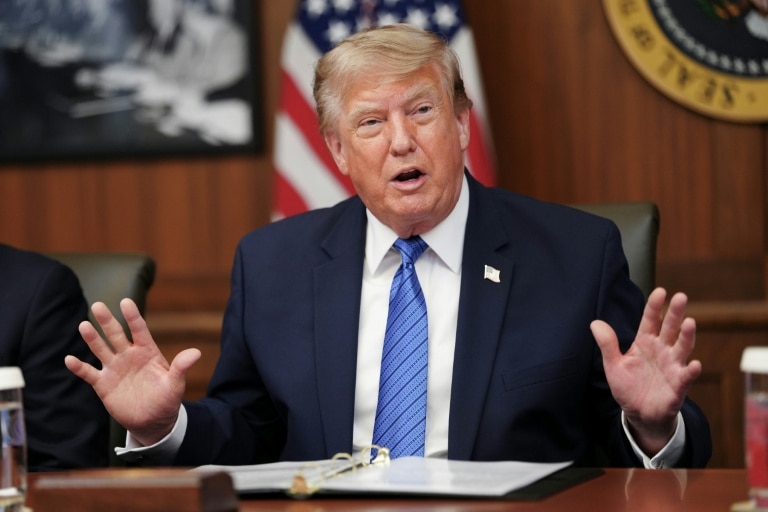
Among all modern U.S. presidents, few have delivered public threats of military aggression as stark and contradictory as 80-year-old Republican incumbent Donald Trump when it comes to conflict with Iran. Since escalations between the two nations broke out on February 28, Trump’s stance on a U.S. confrontation with Tehran has shifted dramatically, sometimes reversing course within mere hours of making a bold statement. Time and again, he has prematurely declared victory over Iran’s military capacity, only to adjust his timeline of conflict or issue fresh threats of new strikes days or weeks later.
What makes these reversals even more striking is the whiplash in Trump’s assessments of Iran’s ruling faction. On June 17, he praised Iran’s new leadership as “very smart” and “far less radicalized” than their predecessors, who were killed in joint U.S. and Israeli strikes. Just three weeks later on July 8, a visibly frustrated Trump discarded that positive framing entirely, telling reporters: “I don’t want to deal with them anymore, they’re scum.”
To understand the erratic nature of Trump’s approach to Iran, a timeline of his public statements reveals the pattern of extreme threats followed by quick retreats:
On March 21, Trump took to his Truth Social platform to issue an ultimatum: If Iran did not fully open the Strait of Hormuz to unimpeded global shipping within 48 hours, the United States would target and completely destroy the country’s power infrastructure, starting with its largest facilities. The threat drew immediate international scrutiny, as deliberate attacks on civilian critical infrastructure like power plants are broadly classified as war crimes under international humanitarian law.
Just two days later, on March 23, Trump walked back the deadline, extending it by five days and citing “very good and productive conversations” with Iranian diplomatic representatives. He would soon extend the pause on planned strikes against power plants for another 10 days, pushing the new deadline to April 6 to allow for ongoing diplomatic negotiations to continue.
As the 10-day extension neared its end on Easter Sunday, April 5, Trump issued an obscenity-laced follow-up threat, writing: “Open the Fuckin’ Strait, you crazy bastards, or you’ll be living in Hell,” before adding the incongruous closing line: “Praise be to Allah.”
Two days later, on April 7, Trump issued an even more extreme warning, writing in a Truth Social post that “A whole civilization will die tonight, never to be brought back again.” The comment was widely interpreted by global policymakers and analysts as an explicit threat to eradicate Iran, a nation of more than 90 million people.
But just hours after that alarming statement, Trump announced he would suspend all planned bombing and attacks on Iran for a two-week period. He confirmed he had accepted a truce proposal put forward by international war mediators, after a phone call with Pakistan’s prime minister.
The pattern repeated again on June 11: Early that day, Trump posted that “The United States will be hitting Iran… VERY HARD TONIGHT” and added that “at some point in the not too distant future, we will be taking Kharg Island” — Iran’s key oil export terminal — along with other major oil infrastructure sites.
Once again, the reversal came almost immediately: Five hours after issuing his threat of imminent strikes, Trump announced he had “cancelled the scheduled strikes and bombings against Iran this evening,” citing new progress in peace negotiations aimed at securing a permanent end to the conflict.
By late June, an interim peace deal to end the cross-border fighting was finalized. But the truce collapsed within a month, with Iran launching attacks on U.S. military facilities across the Middle East, and U.S. forces responding with strikes on Iranian coastal defenses while expanding target lists to include civilian infrastructure and bridges.
Speaking at a cabinet meeting on July 31, Trump reaffirmed his aggressive stance, telling attendees: “We’ll be hitting them very hard, and you know at some point they’re going to say, ‘We just can’t take it anymore.’”
Again, a reversal came the next day. On August 1, Trump announced: “We have just been asked by Iran, and other Middle Eastern Countries, to hold off any attack.” He added that the core perimeters of a permanent peace deal had already been agreed to by both sides. Iran’s state-run media quickly and forcefully denied the claim, stating that no such request for a delay had been sent by the Islamic republic.