博客

  • Handbag tosses and high-heeled sprints: Amsterdam celebrates Drag Olympics

    Handbag tosses and high-heeled sprints: Amsterdam celebrates Drag Olympics

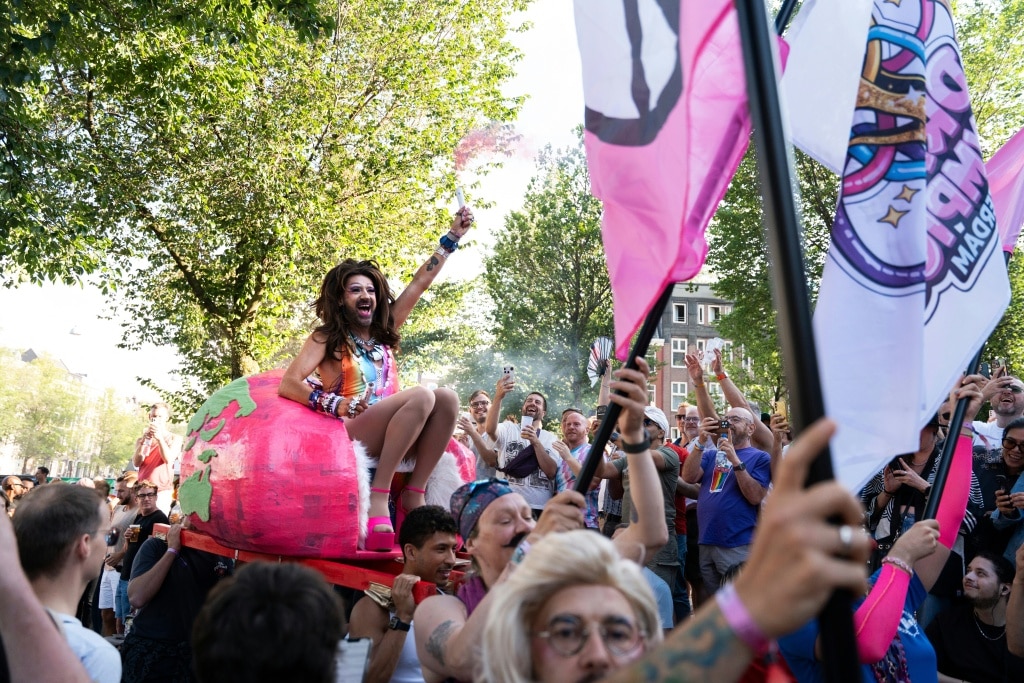
    Against a backdrop of roaring cheers and glittering costumes, the 22nd annual Drag Olympics kicked off Friday in Amsterdam, drawing hundreds of participants and spectators to what organizers call the world’s biggest sporting event exclusively for drag queens and drag kings.

    Hosted by the House of Hopelezz, Amsterdam’s longest-running drag community, this year’s event brought together amateur and veteran performers alike from across the globe, including competitors from the Netherlands, Ireland, Morocco, Russia, France, Mexico and Iran. Unlike traditional international Olympic games, the competition features five playful, drag-focused events that blend athleticism with campy flair: a high-heeled sprint, handbag toss, tug-of-war, cheekily named “bitch” volleyball, and hula hoop.

    For first-time competitor Nippy Le Twist, 35, whose legal name is Rutger van Aken, the event marked a rare public moment to embrace a side of her identity she only shared with close friends during COVID-19 lockdowns. Speaking to Agence France-Presse ahead of her first race, Le Twist said, “The first time that I was here was two years ago, and I was totally mesmerised with the performances in between the competition. It’s a side of myself that I haven’t publicly shown before, only during the COVID times with close friends at home. And I’m excited to see what this evokes in myself.”

    Jennifer Hopelezz, founder of the House of Hopelezz and creator of the Drag Olympics, noted that the event has grown dramatically since its early days, shifting from a small private gathering to a major public celebration. “It’s a silly event, it’s a stupid event, but it’s just, yeah, it’s a fun thing to do and every year it got busier and busier, more public, more audience and more competitors,” Hopelezz, whose legal name is Richard Keldoulis, said. Open to anyone willing to don a wig and a pair of heels, the event even offered on-site professional makeup artists to address last-minute cosmetic crises, with organizers gently reminding participants to prioritize wearability over height when choosing their competition heels.

    The opening ceremony carried weight beyond celebration, coming just one week after a deadly attack on Berlin’s annual Gay Pride parade. Draped in a high-cut rainbow swimsuit that emphasized her elaborately padded hips, Hopelezz led a procession through the crowd carrying a DIY Olympic torch that emitted bright pink smoke, before calling for a global Olympic truce to stand against anti-queer violence and ongoing conflicts around the world. “People are a bit nervous, and there’s a bit of a shadow over Pride, but we’re kind of determined not to go back in the closet, be visible and celebrate Pride, and not let people take that away from us,” she told the assembled crowd.

    Between competitive events, many drag artists wove explicitly political messaging into their performances, turning the stage into a platform for marginalized queer voices. A Lebanese-Palestinian drag queen incorporated commentary on the ongoing war in the Middle East into her set, while drag king Vinny von Vincy took the stage to declare that “Islamophobia does not protect queer people.” For Vincy, whose legal name is Saskia de Wildt and is 42, the event offers a rare safe space to celebrate parts of her identity that are often sidelined or rejected in mainstream spaces. “I feel like I can really express parts of myself and celebrate parts of myself that sometimes I’m marginalised for, or not so appreciated in different spaces,” she said.

    This year’s Drag Olympics is just one part of a packed month of Pride celebrations in Amsterdam, which is hosting 2025’s WorldPride festivities. The iconic annual Pride canal parade, set for Saturday, will be attended by openly gay Dutch Prime Minister Rob Jetten, with community events continuing across the city for an additional week after the parade concludes.
  • Two crew killed as British pilot survives after firefighting helicopters collide in Greece

    Two crew killed as British pilot survives after firefighting helicopters collide in Greece

    A devastating mid-air collision between two firefighting helicopters has left two people dead in Greece, as the country grapples with a wave of destructive wildfires fueled by record-breaking heatwaves that have swept across much of Southern Europe this summer.

    Local authorities confirmed the identities of the victims: a Danish helicopter pilot and a Greek fire service liaison officer assigned to the mission. On board the second helicopter, a British pilot and a second Greek liaison officer walked away from the crash with their lives, though details of their current health conditions have not yet been released to the public.

    Footage of the collision, which took place roughly 40 miles west of Athens in the Psatha region near the Attica-Boeotia border, captures one of the leased Bell helicopters striking the rotor blades of the other. The impact immediately ignited an intense blaze on the damaged aircraft, and both helicopters ultimately crashed into a deep ravine below the collision site.

    The crash unfolded as hundreds of Greek firefighters have been locked in what local media has called a “titanic battle” to contain multiple large wildfires that have sprung up across the country over the past week. Blazes are burning across a wide swathe of Greek territory, spanning Porto Germeno, Psatha, Fokida, Megara and Kefalonia. Over 500 firefighters have worked around the clock for 72 straight hours to gain control of the spread, forcing mass evacuations of at-risk communities across the affected regions.

    Greece is far from the only European nation facing this climate-fueled crisis. Early this same week, large uncontrolled wildfires broke out in both France and Spain, forcing widespread evacuations. The blazes near Madrid, Spain and Bordeaux, France have been partially contained but continue to burn, though approximately 300,000 people who were forced to leave their homes have begun returning to their properties.

    Climate scientists and fire officials have repeatedly warned that human-caused climate change is drastically increasing the frequency and severity of extreme wildfire conditions across the Mediterranean. This year, an unusually mild and wet winter across Southern Europe encouraged more abundant vegetation growth across forests and wildlands. As successive record-breaking heatwaves rolled through the region this summer, that extra vegetation dried out completely, creating massive amounts of highly flammable fuel for wildfires to feed on. While most blazes are still ignited by human activity, whether accidental or intentional, the amplified heat and dry conditions driven by climate change make it far easier for small fires to explode into large, uncontrollable infernos.

  • At the scene of deadly Moscow bomb blast

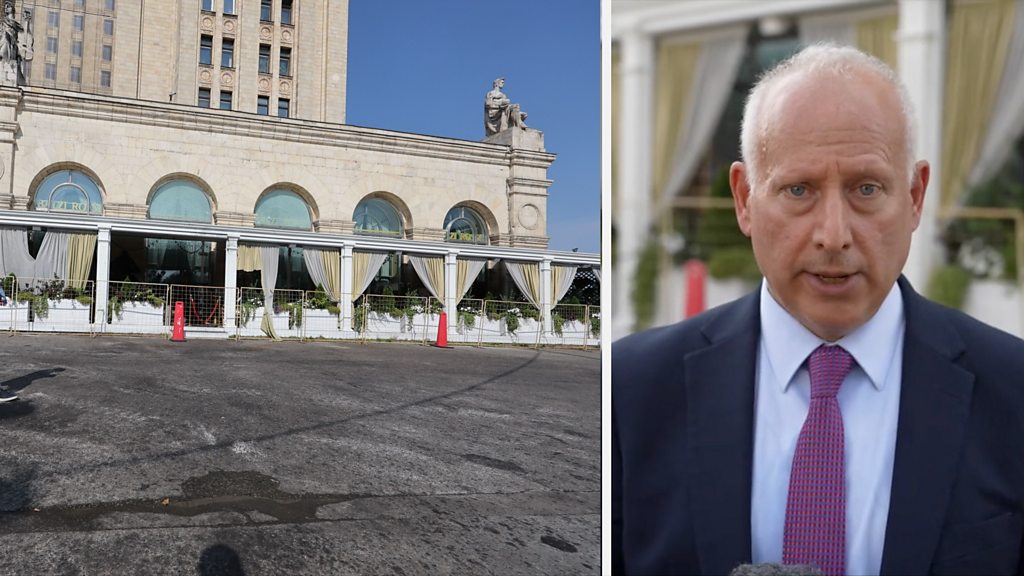
    At the scene of deadly Moscow bomb blast

    A shocking act of violence has shaken the Russian capital, after an explosive device detonated inside a popular Italian restaurant in central Moscow. According to preliminary reports released by Russian state and independent media outlets, the blast has claimed three lives and left 21 other people with injuries ranging from minor to critical. Emergency services quickly rushed to the scene of the incident, cordoning off the area to launch forensic investigations into the origin of the explosive and the circumstances surrounding the attack. Local health authorities have confirmed that medical teams are working around the clock to treat the wounded, with several casualties still in intensive care as of the latest updates. The attack has sparked immediate concern across the country, as law enforcement agencies launch a manhunt for those responsible for the bombing, while communities in Moscow grapple with the aftermath of this deadly incident.

  • Uganda unveils statue of Israel PM’s brother who died in Entebbe rescue mission

    Uganda unveils statue of Israel PM’s brother who died in Entebbe rescue mission

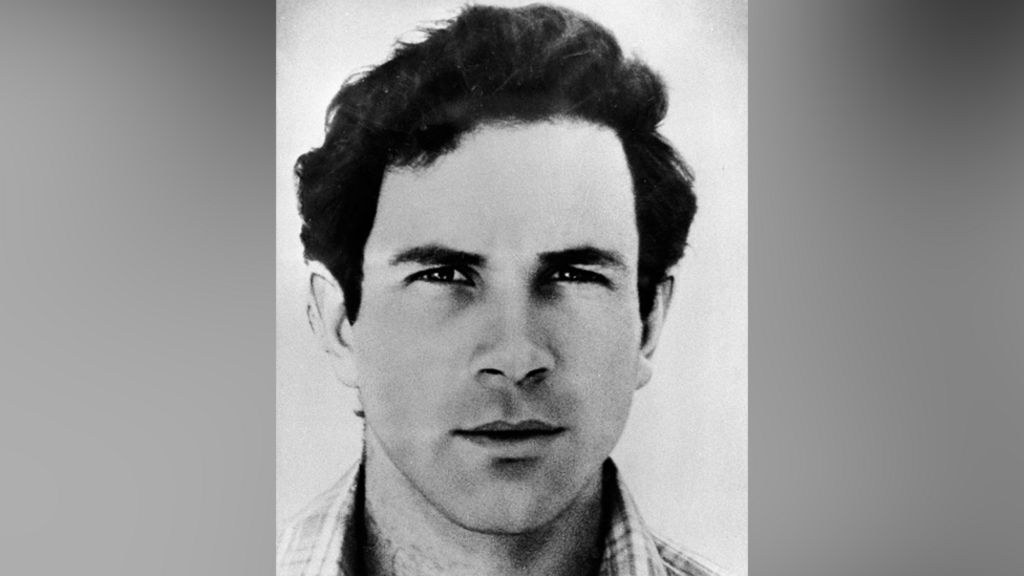
    Half a century after one of the most bold hostage rescue operations in modern military history, Uganda has inaugurated a public statue honoring Yonatan Netanyahu, the fallen Israeli commando leader and older brother of current Israeli Prime Minister Benjamin Netanyahu, who died during the Entebbe raid. The memorial stands directly outside the defunct Entebbe International Airport terminal where the 1976 operation unfolded, casting a permanent marker to the complex legacy of the event that transformed relations between Uganda and Israel.

    In remarks at the unveiling ceremony, Uganda’s army chief General Muhoozi Kainerugaba framed the monument as a tribute to Netanyahu’s extraordinary courage and selfless commitment to duty. As the commander of the Israeli elite commando unit that carried out the raid, Yonatan Netanyahu remains the only Israeli soldier killed in the operation, which successfully freed more than 100 hostages held by hijackers.
    The 1976 crisis began when four militants — two Palestinian members of the Popular Front for the Liberation of Palestine and two German collaborators — boarded an Air France Airbus A300 during a stopover in Athens. The flight had departed Tel Aviv bound for Paris, and the hijackers seized control of the aircraft, forcing it to refuel in Libya before diverting to Entebbe, where then-Ugandan dictator Idi Amin welcomed the plane and offered support to the hijackers.
    The militants issued sweeping demands: $5 million in ransom and the release of 53 imprisoned militants held across Israel, France, Germany, Switzerland and Kenya in exchange for the hostages’ lives. Most non-Israeli and non-Jewish hostages were released in the days immediately after the hijacking, but roughly 100 people who were Israeli or Jewish were kept captive in the old terminal building.
    In a pre-dawn raid on July 4, 1976, Israeli elite commandos flew nearly 2,500 miles from Israel via Kenya, landing undetected at Entebbe and launching an assault that concluded in less than 90 minutes. While the operation was widely celebrated in Israel as a landmark victory against terrorism, it delivered a devastating public humiliation to Amin’s regime.
    The human cost of the operation extended far beyond Yonatan Netanyahu’s death. Three hostages died during the fighting, and a fourth hostage, 74-year-old Dora Bloch, who had been transferred to a Kampala hospital for treatment, was later murdered on Amin’s orders. All seven hijackers and three local accomplices were killed in the raid, alongside at least 45 Ugandan soldiers who fought alongside the hijackers under orders from Amin’s government.
    In his address, Kainerugaba offered nuanced recognition of all lives lost in the operation. “The Ugandan soldiers fought valiantly… in what they believed was a justified cause,” he said. “Of course, today, we know that the government of Idi Amin, which they served, was a brutal dictatorship which did not represent the Ugandan people.” He also paid tribute to the fallen hostages, saying “May their memories continue to inspire future generations in the pursuit of peace, justice and human dignity.”
    The bronze statue depicts Netanyahu striding forward, weapon in hand, a dramatic depiction of the commando’s final advance during the raid. Looking back on the 50-year period since the operation, Kainerugaba described the Entebbe crisis as “one of the most significant episodes in modern history” and framed the current close relationship between Kampala and Jerusalem as a “remarkable journey” from a painful shared chapter to a constructive modern partnership.
    “Today, Uganda-Israel relations have developed into a partnership characterised by mutual trust, respect and co-operation,” he added. The event marks a striking turning point in how Uganda confronts the legacy of the Entebbe raid, decades after the operation toppled international confidence in Amin’s regime.
    Benjamin Netanyahu, who previously visited the Entebbe site 10 years ago, has long cited his brother’s example as a core influence on his approach to counterterrorism. “I learned from my brother that you need two things to defeat the terrorists: clarity and courage,” he said during that 2016 visit.

  • Brazil’s Lula launches reelection bid as concerns rise over foreign interference

    Brazil’s Lula launches reelection bid as concerns rise over foreign interference

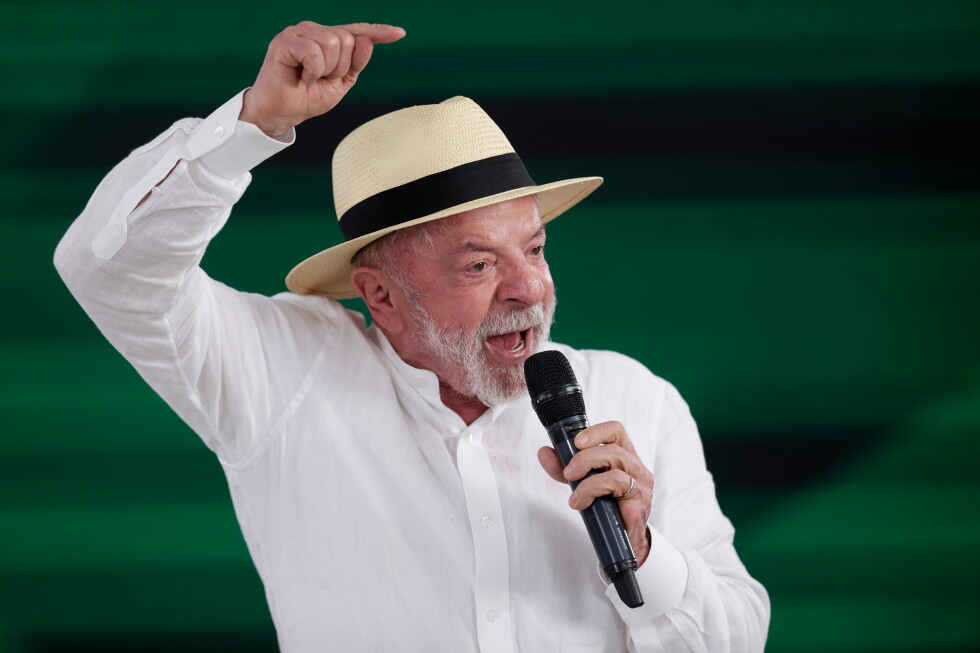
    SAO PAULO, Brazil — On Sunday, Brazil’s ruling Workers’ Party formally confirmed 80-year-old incumbent President Luiz Inácio Lula da Silva will stand in October’s general election, a race that political observers broadly expect to be the final reelection campaign of his decades-long political career. This nomination marks Lula’s seventh bid for Brazil’s highest office, coming as the sitting leader faces growing international pressure from foreign leaders aligned with his right-wing challenger.

    Lula’s main opponent in the race is Sen. Flávio Bolsonaro, the eldest son of former far-right President Jair Bolsonaro, who is currently serving a 27-year sentence under house arrest for his role in a 2022 attempted coup against Lula’s inauguration. Flávio Bolsonaro has secured open public backing from a coalition of high-profile international conservatives: former U.S. President Donald Trump’s inner circle, Argentine President Javier Milei, and Israeli Prime Minister Benjamin Netanyahu.

    In his acceptance speech to the party convention, Lula outlined three core policy priorities: expanding Brazil’s domestic defense sector, safeguarding the nation’s vast reserves of strategic rare minerals, and protecting national sovereignty. He declared firmly that no foreign power — whether from China, the United States, or France — would be allowed to exploit Brazil’s natural resources without first respecting the country’s sovereign rules and interests. “We will have to be much more daring to change a lot of things in this country,” Lula told convention delegates.

    Workers’ Party leaders have sounded the alarm about growing risks of foreign interference in Brazil’s democratic process, pointing specifically to the coordinated involvement of Trump and Milei. Party chairman Edinho Silva emphasized the high stakes of the October vote, noting that a right-wing win in Brazil would shift the entire political trajectory of Latin America, where six nations — Argentina, Paraguay, Chile, Peru, Ecuador, and Colombia — have already elected Trump-aligned conservative leaders in recent years.

    Entering the official campaign period, Lula holds a strong strategic position: he has successfully pulled multiple centrist parties away from the right-wing coalition, and his national approval ratings are noticeably higher than they were six months ago. Two of his campaign’s flagship domestic policies have also resonated strongly with voters: an overhaul of Brazil’s income tax system that reduces burdens for low-income households, and a widespread debt forgiveness program that has quickly become one of his most popular proposals.

    Beyond electoral competition, Workers’ Party officials have raised specific concerns about foreign-funded coordinated disinformation efforts, including automated bot networks and social media manipulation designed to sway voter opinion and erode public trust in Brazil’s robust electronic voting system. In a conciliatory remark made earlier this week, Lula noted he has no desire to make an enemy of Trump, while Vice President Geraldo Alckmin — who will again serve as Lula’s running mate — took a veiled swipe at foreign interference, joking that Brazil’s voting system “is so good that it doesn’t take votes from Argentines and Americans.”

    Recent diplomatic moves have amplified tensions around foreign involvement. After Flávio Bolsonaro visited the White House and U.S. State Department earlier this year, the Trump administration implemented two controversial changes: new tariffs on Brazilian exports, and the re-designation of two Brazilian criminal groups as terrorist organizations. Legal analysts warn these changes could harm Brazilian businesses and create legal pretext for further international intervention.

    On July 25, Milei traveled to São Paulo to speak at Flávio Bolsonaro’s Liberal Party convention, where he launched a verbal attack on Lula and a Supreme Court justice who oversaw the elder Bolsonaro’s attempted coup trial, sparking a full diplomatic crisis between Brazil and Argentina. Netanyahu has also recorded a public video message endorsing Flávio Bolsonaro.

    Lula has centered his campaign on defending Brazil’s national sovereignty, recently holding a lengthy diplomatic call with Chinese President Xi Jinping — leader of Brazil’s largest trading partner. His supporters argue that a second Lula term would allow the South American trade bloc Mercosur, led by Brazil as its largest economy, to advance ambitious new trade deals with global partners.

    Mirroring his father’s unfounded claims from the 2022 election, Flávio Bolsonaro has spent recent months spreading baseless doubts about the integrity of Brazil’s electronic voting system. These claims prompted action from Brazil’s foreign ministry in July, when officials denied visas to two U.S. State Department representatives amid reports the pair planned to repeat the same disinformation claims. The U.S. State Department has denied that the officials intended any such activity.

  • A suicide bomber strikes an anti-militant rally in northwestern Pakistan, killing at least 14

    A suicide bomber strikes an anti-militant rally in northwestern Pakistan, killing at least 14

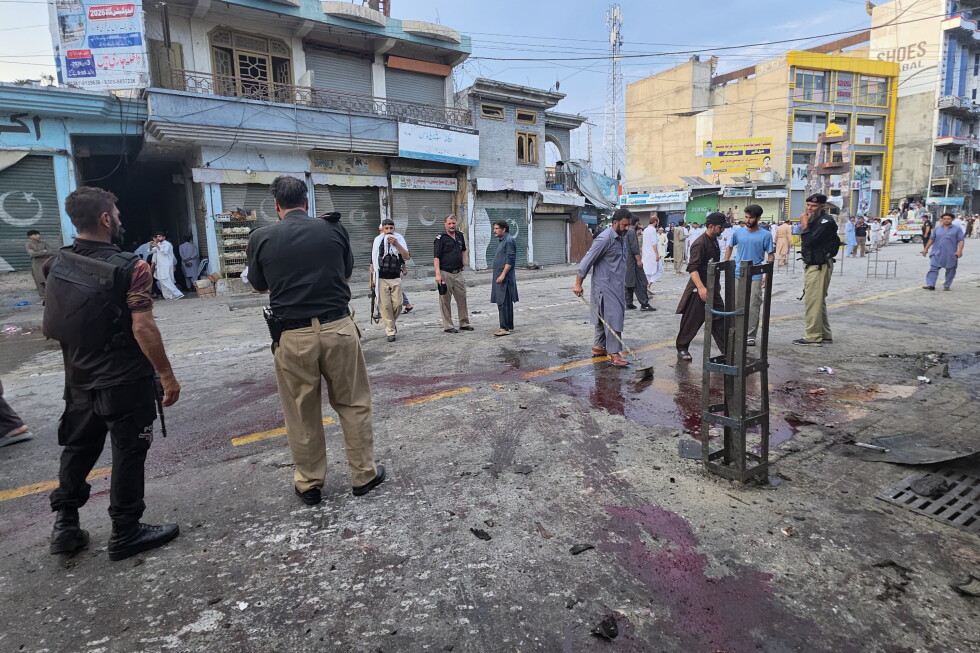
    On a Sunday in northwestern Pakistan, a devastating suicide bombing targeted a crowd of demonstrators gathering to speak out against violent extremism, leaving at least 14 people dead and more than 20 others injured, according to senior local officials. Among the fatalities were at least five on-duty police officers, who had been deployed near the site of the protest.

    The attack unfolded in Kabal, a small town located within Swat Valley, Khyber Pakhtunkhwa province. Eyewitness and official accounts confirm that the crowd had assembled within close proximity of a local police station, unified in chants condemning militant activity and calling for an end to regional violence. District police chief Omar Khan detailed that the bomber struck the gathered protesters mid-demonstration, turning a peaceful call for peace into a scene of tragedy.
    Bilal Faizi, spokesperson for the Khyber Pakhtunkhwa provincial emergency response service, confirmed that the attacker specifically targeted the group of demonstrators engaged in anti-militant protest. Pakistan’s Interior Minister Mohsin Naqvi quickly issued a formal statement condemning the violent attack, extending heartfelt condolences to the families of those who lost loved ones, and offering official prayers for the rapid recovery of those wounded in the blast.

    The Swat Valley carries deep historical context for Pakistan’s fight against domestic militancy: the region was once a primary stronghold for Islamic militants, who enforced a harsh, extreme interpretation of Sharia law across the area until the Pakistani military launched a large-scale counterinsurgency operation in 2007. That operation successfully pushed militant forces out of the valley and reestablished formal government control over the territory.

    As of the immediate aftermath of the bombing, no organized militant group has stepped forward to claim responsibility for the attack. But counterterrorism analysts and local officials widely expect suspicion to fall on Tehrik-e-Taliban Pakistan (TTP), the Pakistani Taliban. The TTP operates as an independent group distinct from Afghanistan’s ruling Taliban, but maintains close ideological and operational alliances with the Kabul-based government. Since the Afghan Taliban returned to national power in 2021, many TTP leaders and fighters have relocated to safe havens across the border in Afghanistan, according to Pakistani security officials.

    Pakistan’s government has repeatedly levied formal accusations against Afghanistan’s Taliban administration, claiming it harbors TTP militants and allows the group to plan cross-border attacks from Afghan territory. The Taliban government in Kabul has consistently denied these allegations. In recent years, Pakistan has seen a marked uptick in militant attacks across the country, with police personnel and other security forces consistently the most common targets.

  • Ukraine says major Russian oil refinery and airfield hit, as Moscow reports eight deaths

    Ukraine says major Russian oil refinery and airfield hit, as Moscow reports eight deaths

    After months of largely static ground fighting and no visible progress in international mediation efforts, both Ukraine and Russia have sharply ramped up long-range cross-border strikes targeting key energy, logistics and military infrastructure, marking a new escalation of the three-and-a-half-year conflict.

    In overnight strikes carried out deep into Russian territory, Ukraine targeted multiple high-value sites hundreds of kilometers from its own border. Ukrainian President Volodymyr Zelenskyy confirmed that the attacks hit two key facilities in Russia’s Saratov Region, roughly 600 kilometers northeast of the Ukrainian border: the Engels-2 air base, a central hub for Russia’s strategic long-range aviation fleet, and a major crude oil refinery. Additional strikes were carried out against an oil storage depot in Russia’s Kaluga Region and a drone launch facility in Bryansk Region, which shares a border with northern Ukraine.

    Zelenskyy framed these deep strikes as “our long-range sanctions” in a social media post Sunday, noting that the targeted facilities directly contribute to funding and executing Russia’s full-scale invasion of Ukraine. “These are strategic facilities that enable the Russian war machine,” he stated. The Ukrainian military confirmed that the attack on Engels airfield sparked a large blaze at the base, which regularly deploys Tu-95MC and Tu-160 strategic bombers to launch cruise missile strikes against Ukrainian cities and infrastructure.

    Russian regional officials acknowledged the damage from the strikes, with Saratov Governor Roman Busargin confirming that drone attacks damaged civilian infrastructure in both Saratov and Engels and killed two people. Across other Russian regions, the death toll from Sunday’s coordinated strikes continued to climb: three people were killed in a drone strike on a civilian vehicle in the Udmurtia Republic, another three died in strikes in the border Belgorod Region, and Russian authorities reported a total of eight fatalities across all overnight attacks. Russian air defense forces also claimed to have intercepted and shot down 635 Ukrainian drones launched across multiple regions in the attack wave.

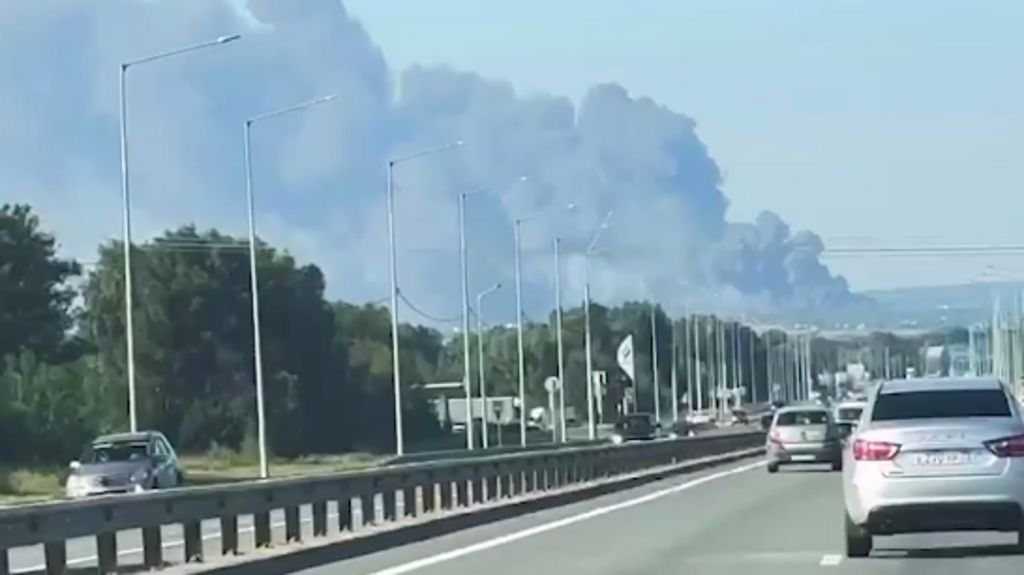
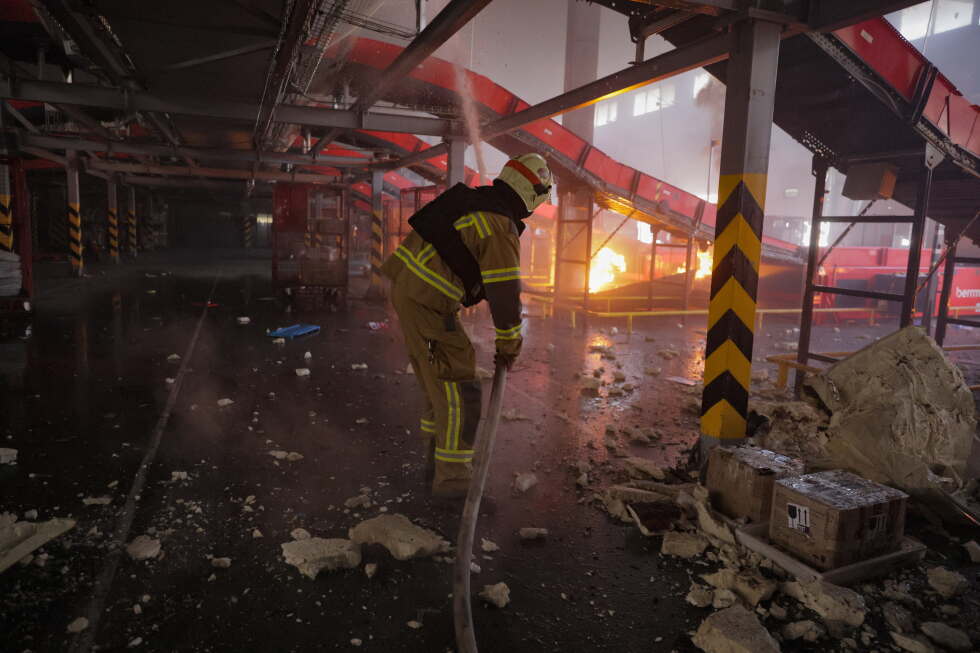
    A separate strike hit a logistics warehouse owned by Wildberries, Russia’s largest domestic e-commerce retailer, in the Samara Region. Samara Governor Vyacheslav Fedorishchev labeled the attack “another terrorist act” by Ukraine, though no casualties were reported in this strike. In recent weeks, Ukraine has repeatedly targeted Wildberries distribution hubs across Russia, justifying the attacks by claiming the retailer supplies drone components, navigation equipment and other military-grade gear to Russian forces. Often called “Russia’s Amazon,” Wildberries employs roughly 48,000 people nationwide, and repeated strikes on its logistics network have created significant disruptions for hundreds of small and medium-sized Russian businesses that rely on the platform to reach customers.

    Russia quickly retaliated for the Ukrainian strikes with its own overnight attacks on Ukrainian infrastructure. Moscow confirmed that its forces targeted two Ukrainian Black Sea ports and struck two commercial cargo vessels operating in the waterway. Later Sunday, a Russian strike on a Nova Poshta postal terminal near the northeastern Ukrainian city of Kharkiv killed one Ukrainian civilian, Ukrainian officials confirmed.

    Russia has mirrored Ukraine’s strategy of targeting commercial logistics infrastructure in recent weeks, launching repeated strikes on warehouses operated by Ukraine’s leading postal service Nova Poshta and top domestic e-commerce retailer Rozetka. Overnight, Russian drones hit Rozetka’s largest warehouse facility, the company confirmed Sunday. No injuries were reported in the attack, which comes as part of a sustained Russian campaign against Ukrainian logistics and retail networks.

    The escalation of cross-border strikes comes as the main front line stretching across eastern and southern Ukraine remains largely stagnant, and US-led international mediation efforts to negotiate a end to the conflict have failed to produce any breakthrough. Russian President Vladimir Putin launched the full-scale invasion of Ukraine in February 2022, and the conflict has entered its fifth year of continuous fighting with little prospect of a near-term diplomatic resolution.

  • Ukrainian drones kill 5 in Russia and set fire to Wildberries warehouse

    Ukrainian drones kill 5 in Russia and set fire to Wildberries warehouse

    A new wave of tit-for-tat drone assaults between Russia and Ukraine has left multiple civilians dead on both sides, with Kyiv extending its aerial campaign targeting Russian commercial and industrial infrastructure deep inside Russian territory, local officials confirmed over the weekend.

    At the center of Kyiv’s latest strikes is Russia’s largest e-commerce platform Wildberries, often dubbed the domestic equivalent of Amazon. This attack marks at least the latest hit to the retailer’s facilities in less than two weeks, part of a coordinated Ukrainian strategy to disrupt Moscow’s war economy and bring the costs of the Kremlin’s full-scale invasion of Ukraine home to the Russian public. Since the first strikes against Wildberries depots in Elektrostal (east of Moscow) and the Tambov region on July 18, Ukraine has targeted more than a dozen of the company’s warehouses across western, southern Russia and Russian-occupied Crimea, leaving at least nine people dead and dozens injured to date.

    The most recent Wildberries strike hit a depot in Russia’s Samara region, located roughly 500 miles from the Russia-Ukraine border. Samara Governor Vyacheslav Fedorishchev reported that the strike sparked a large fire but resulted in no casualties.

    Across other regions of Russia, the overnight drone attacks left a devastating civilian toll. In the Saratov region, east of Samara, two civilians were killed when a drone hit a residential building in Engels, Governor Roman Busargin announced. The strike also damaged civilian infrastructure in both Engels and the regional capital Saratov—two locations that have emerged as frequent Ukrainian strike targets in recent years, due to their hosting of a key military airbase (in Engels) and a large-scale oil refinery (in Saratov).

    Further north in Russia’s Bashkortostan republic, air defense systems repelled a mass drone attack on industrial facilities in the city of Ufa, Governor Radiy Khabirov stated. While Khabirov did not disclose details on the specific facilities targeted, he confirmed that emergency crews were working to extinguish a post-strike fire.

    In the Udmurt Republic, located northwest of Bashkortostan, three additional civilians were killed and two more wounded in a drone strike, according to acting regional head Olga Abramova. Abramova added that Russian air defenses downed two of the attacking drones and foiled another attempted incursion, noting that a civilian car was damaged in the attack, though she did not specify if the damage came from downed drone debris.

    Overall, local Russian officials confirmed that the latest round of Ukrainian drone strikes across multiple Russian regions left at least five civilians dead.

    In response to the Ukrainian attacks, Moscow claimed its air defense systems shot down 635 Ukrainian drones overnight across occupied Crimea, the Black Sea and the Azov Sea. The Russian Defense Ministry did not provide details on how many drones Ukraine launched total, or how many successfully reached their intended targets.

    Russia launched its own large-scale drone assault on Ukraine the same night, according to Ukraine’s Air Force. Ukrainian officials reported that Russia launched 133 drones, 24 of which evaded air defenses to strike targets across the country.

    Separate Russian strikes on Ukrainian territory on Sunday left two more civilians dead. In the southern Ukrainian city of Zaporizhzhia, one civilian was killed when a Russian guided bomb hit a residential building, local administration head Ivan Fedorov confirmed. In northeastern Ukraine’s Kharkiv region, a second civilian died in a strike that ignited a fire at a postal terminal on the city’s outskirts, regional governor Oleh Syniehubov reported.

  • Albanese government ups the ante in journalism pay stoush with Silicon Valley

    Albanese government ups the ante in journalism pay stoush with Silicon Valley

    The Albanese administration has issued a clear warning to global social media and technology conglomerates, unveiling a revised regulatory framework designed to compel large digital platforms to compensate Australian news organizations for the use of journalistic content. Set to be announced publicly on Monday, the adjustments to the government’s News Bargaining Incentive code modify the penalty structure that applies to platforms that refuse to enter into mandatory commercial agreements with local media outlets.

    Under the revised rules, major tech firms including Google and Meta will only face a maximum penalty equal to 2.5% of their Australian-derived digital advertising revenue if they fail to strike required deals. While the new rate marks a 0.25 percentage point increase from the originally proposed charge, the scope of taxable revenue has been narrowed from all Australian operational revenue to only digital advertising earnings, resulting in a lower overall penalty burden than the government initially outlined. According to government officials, the adjusted structure is designed to drive the same volume of voluntary commercial deals between platforms and media outlets as the original draft.

    In addition to the penalty changes, the updated code raises the minimum number of required deals with local media organizations from four to six for platforms to avoid penalties. Microsoft has also been added to the list of regulated entities, with its professional networking platform LinkedIn now brought into the scheme, in recognition of its growing role in distributing news content to Australian users.

    Financial Services Minister Daniel Mulino emphasized that the tweaks to the April draft legislation do not shift the core purpose of the policy, which is to shore up the sustainability of Australia’s journalism sector and encourage mutually beneficial commercial agreements between digital platforms and news providers. “Australian journalism is important to a well-functioning democracy and we want it to be sustainable now and into the future,” Mulino said. “We want digital platforms to do deals with a diverse range of media organisations and have shown good faith with both the platforms and media companies during the consultation process.”

    The reforms also include a series of adjustments to the News Journalism Payment Scheme ahead of the bill’s introduction to parliament. The definition of eligible journalists has been expanded to cover more essential news roles and freelance contributors, while a dedicated grant program funded by penalty revenues will be established to support small publishers and new media startups. Journalists and media outlets serving regional areas, small-to-medium audiences, and marginalized communities including Indigenous Australians and the LGBTQ+ community will receive a 20% uplift in distributed funds.

    Communications Minister Anika Wells noted that the targeted uplift for small and regional outlets recognizes the unique challenges these organizations face, as well as their critical role in serving local communities. “Journalism is the lifeblood of a robust democracy, which is why the Albanese government is backing a strong and sustainable media sector,” Wells said.

    The policy builds on a decade-long push by successive Australian governments to force large digital platforms to compensate local media, a fight that first resulted in the 2021 News Media Bargaining Code. From the start, the policy has faced fierce pushback from big tech: Meta, for example, chose to remove all news content from its Facebook platform in Australia from 2024 rather than comply with mandatory payment requirements.

    While the revised framework has been adjusted to address some tech industry concerns, it is expected to draw criticism from Australian publishers, who argue that narrowing the scope of revenue subject to penalties will reduce the overall financial pressure on platforms to strike deals. The legislation includes provisions to honor existing agreements reached during earlier bargaining periods, and a full statutory review of the scheme will be conducted three years after it takes effect.

    Major Australian news organizations including News Corp Australia, the ABC, Nine Entertainment and Australian Community Media have repeatedly backed the government’s approach. In a joint statement released during the consultation phase in April, the group argued that “if digital platforms fail to pay for the use of the news content from which they profit, then journalism becomes unsustainable.” Under the final framework, platforms that meet the requirement of striking six deals with local media will face zero penalty liability, eliminating any financial burden for compliant firms.

  • Young homeless in Victoria forced into hospital during mental health crisis, report finds

    Young homeless in Victoria forced into hospital during mental health crisis, report finds

    As Victoria prepares for its fiercely contested November state election, a new ground-breaking report has laid bare the catastrophic human cost of failing to address youth homelessness, laying the responsibility squarely at the feet of the next incoming government regardless of which party claims power.

    Released earlier this week by Melbourne City Mission (MCM), the survey of 209 young people aged 15 to 24 exposes a systemic breakdown that pushes already vulnerable homeless youth into repeated emergency department (ED) visits for life-threatening mental health emergencies. The data paints an alarming picture: more than 50% of young people accessing homelessness services in Melbourne have visited a hospital ED for urgent mental health concerns. Of these cases, nearly 60% involve self-harm, suicidal ideation, or suicide attempts, and 17% of young people have been admitted to the ED four or more times for the same issues.

    The report also uncovers deep-rooted trauma that precedes homelessness for most young people in the system. Five out of six respondents who accessed support services had grown up in households plagued by family violence, and roughly two-thirds had prior interaction with Victoria’s child protective services. Geographic data adds another layer to the crisis: in the Latrobe/Gippsland region, more than half of homeless young people have been without stable housing for two years or longer, while in Greater Melbourne, more than 25% have been unhoused for four years or more.

    In response to the findings, MCM and leading youth mental health service Orygen are calling on all political parties contesting the election to commit to building a fully funded, dedicated supported housing model specifically for vulnerable young people. The proposed model would mirror a partially implemented housing program already promised and rolled out for adults, adapted to meet the unique needs of homeless youth.

    Orygen executive director Professor Pat McGorry emphasized that stable, supported housing is not a secondary add-on to mental health care—it is a core intervention. “You cannot recover from a mental health crisis while you are sleeping rough or moving between temporary crisis beds,” McGorry explained. “Housing has to be part of youth mental health care, not an afterthought for when a young person has recovered. The Royal Commission made a promise to address this and so far the Victorian government has failed to deliver.”

    MCM chief executive Paul Wappett added that the current system traps young people in a devastating cycle: young people are treated for mental health crises in hospital, only to be discharged back into homelessness with no safe alternative. “Every young person in this snapshot has a story that starts with trauma and ends up in an emergency department, because there is nowhere else for them to go,” Wappett said. “Police, paramedics and hospital staff are working in a broken system and none of them can give a young person the home they need. That’s not a job any of them signed up for, and it’s not a job they should have to do.”

    The human impact of this policy failure is illustrated by the experience of Clara, a young Victorian who experienced chronic homelessness after being forced to leave her home at 18 to escape ongoing family violence. After leaving home, Clara cycled between temporary youth refuges, rough sleeping, and repeated ED visits for mental health emergencies. The instability and trauma derailed her education, despite her previous academic success, and her mental health declined so severely that she attempted suicide 42 times over six months.

    Clara’s trajectory shifted only after she accessed medium-term supported housing through MCM. “Having a safe place to live gave me the stability to engage in recovery, access support, and rebuild my life,” she said. Today, Clara lives in permanent stable housing with her partner, studies biomedicine, and works as an advocate in MCM’s outreach team. “My experience has shown me that safe housing is not just a roof over your head, it can be the foundation for recovery, hope, and a future,” she added.

    With the election just six months away, advocates are ramping up pressure on both major parties and minor candidates to prioritize this critical reform to end the cycle of trauma and hospitalisation facing Victoria’s most vulnerable young people.