博客

  • Body of famed international climber Nirmal Purja and 3 more found after Pakistan avalanche

    Body of famed international climber Nirmal Purja and 3 more found after Pakistan avalanche

    A devastating avalanche that struck an international climbing expedition on Pakistan’s Broad Peak — one of the world’s tallest 8,000-meter mountains — has left at least eight mountaineers dead, with rescue teams still searching for two remaining missing climbers as of Sunday, Pakistani officials confirmed. Search and recovery teams operating on foot have located the bodies of celebrated British-Nepali climber Nirmal Purja, alongside three other members of the 10-person expedition: Chinese climber Wang Zhong, and Nepali guides Nima Sherpa and Kili Pemba Sherpa.

    The avalanche hit the expedition on the upper slopes of Broad Peak earlier last week, triggering a large-scale multinational rescue operation coordinated by Pakistani authorities and mountaineering organizations. Two days before the recovery of Purja’s remains, rescuers first spotted four other bodies trapped in snow and debris, but dangerous wind and snow conditions forced helicopter operations to ground, allowing only three of those bodies to be evacuated. The three recovered earlier have been identified as Omani climber Nathira Ahmed, American climber Mallory Geis, and Nepali climber Bahadur Gurung.

    As of Sunday, military-supported search teams had restarted operations to locate the two still-unaccounted-for climbers: Pakistani guide and photographer Sohail Sakhi, who was set to retire after this expedition, and one additional team member. Crews are also working to extract the newly recovered remains of Purja and his three teammates from the high-altitude disaster zone, a slow and dangerous process given the harsh mountain conditions.

    Purja, a former British Army soldier born in Nepal who was affectionately known to the global mountaineering community as Nims Dai, earned worldwide fame for his groundbreaking 2019 achievement: climbing all 14 of the planet’s peaks over 8,000 meters in just 189 days, a world record at the time that was later broken in 2023. His feat was chronicled in the popular Netflix documentary *14 Peaks: Nothing Is Impossible*, which introduced his story to millions of non-climbers and inspired a new generation of outdoor adventurers.

    In a statement released Saturday, Purja’s own expedition company paid tribute to the legendary climber, saying “the world has lost one of mountaineering’s greats.” The statement called Purja “a leader who inspired millions through his courage, humility and unwavering belief that human potential is far greater than we often imagine.”

    Irfan Arshad Khan, president of the Alpine Club of Pakistan, which led the coordination of recovery efforts, echoed that sentiment, calling the disaster “an immeasurable loss to the global mountaineering fraternity.” He also extended the organization’s gratitude to military and civilian rescuers, local Sherpa guides, and volunteer teams that risked their own safety to carry out the search in lethal high-altitude conditions.

    Family of the fallen American climber Geis also released a statement honoring their loved one: “Mallory was a bright light who was loved deeply by her family and friends. She will be profoundly missed.”

    Sakhi, the still-missing Pakistani guide, worked for Moving Mountains, a Pakistan-based adventure travel operator. Beyond guiding expeditions, he was an accomplished geographer and high-altitude photographer who had already summited many of the world’s most famous major peaks, and this expedition was planned to be his last before retirement.

    Mountaineering accidents are a persistent risk in the mountain ranges of northern Pakistan, where unpredictable weather, high altitude, falling rock and ice, and frequent avalanches create constant danger for even the most experienced climbers.

  • 2,000km, eight countries, 29 days – the fastest runner to cross the Alps

    2,000km, eight countries, 29 days – the fastest runner to cross the Alps

    One of the world’s most punishing endurance challenges has a new record holder: New Zealand ultra-runner Sophie Woods has conquered the 2,000-kilometer Via Alpina route across eight European countries in just 29 days, cutting six full days off the previous fastest mark set earlier this year.

    The iconic trail stretches the entire length of the Alps, starting in Italy and winding through Slovenia, Austria, Germany, Liechtenstein, Switzerland and France before reaching the finish line on Monaco’s Mediterranean coast. For context, the total elevation gain along the route equals climbing Mount Everest 12 times over. Only a small handful of runners have ever attempted the route under formal timing, given its extreme technical difficulty and physical demand.

    Woods launched her attempt on July 4, but from the start, her journey was beset by unforeseen challenges. This summer, a series of record-breaking heatwaves and extreme weather have swept across southern Europe, sparking widespread wildfires that have forced hundreds of thousands of evacuations across France, Spain and Portugal. On Italy’s hottest weekend, nearly all major cities were placed on the highest red heat alert. These conditions forced Woods and her support crew to detour around active fire zones, adding an extra 5 kilometers and 200 meters of dangerous, unplanned climbing to her already grueling route. On top of wildfires and extreme heat, the team also fought through severe storms, a biting horsefly swarm, and constant physical discomfort.

    The 42-year-old runner shared that the first two weeks of the attempt were brutal. “The first week was horrendous – everything was swollen, everything was sore. I was sure I was going to pull 15 million muscles,” she told BBC Sport in a post-run interview. By the third week, however, her body adapted, and she found a steady rhythm. “It was like I was eating mountains for breakfast,” she joked.

    To sustain 15 to 18 hours of nonstop running each day, Woods relied on a practical diet of McDonald’s meals, pasta, and energy gels, with constant support from her husband George, friend Zoe, and their dog Nila along the route. In the final push to the finish, she pushed through on just 90 minutes to two and a half hours of sleep per night to secure the sub-30 day completion she had targeted from the start.

    The previous record for the fastest Via Alpina crossing was set by British runner Jake Catterall, who finished the route in 35 days in 2024. Reflecting on her achievement after crossing the finish line Saturday night, Woods said she was both overjoyed and completely exhausted. “I am ecstatic but knackered,” she said. “There were a few points where I felt like I don’t know how I’m going to get to the finish of this. I never wanted to stop but the enormity of the task was overwhelming at times.”

    Woods added that her grit for long, punishing mountain efforts is what set her apart, even if she is not the fastest sprinter on the ultra circuit. “I might not be the fastest person out there but I know how to do big, long days in the mountains and just keep moving when everything hurts,” she said.

    Woods’ record-breaking run caps a standout year for women in ultra-running, coming just months after Rachel Entrekin set a new course record at the grueling Cocodona 250 race back in May. For Woods personally, the challenge came after a difficult multi-year fertility journey that included IVF treatment. She explained that after that experience, she wanted to push her boundaries and build a life that felt fully her own, setting her sights on the Via Alpina record from the moment she signed up for the attempt. “I didn’t want to be running for more than 30 days – 30 days is enough,” she said. “I knew that I was strong and capable. But this has taken it over and beyond that.”

    She summed up the core of ultra-endurance running as equal parts preparation and mental toughness: “Ultra-running is about preparation, mental strength and being able to continue to persevere when things go wrong. I think women are really good at adapting and continuing.”

    Now that she has secured her place in endurance running history, Woods says she is ready for a much-deserved break. “I intend to spend quite a lot of time on the couch and watch Netflix – and eat some vegetables,” she joked.

  • Ceuta grapples with aftermath of border surge after most migrants leave the Spanish territory

    Ceuta grapples with aftermath of border surge after most migrants leave the Spanish territory

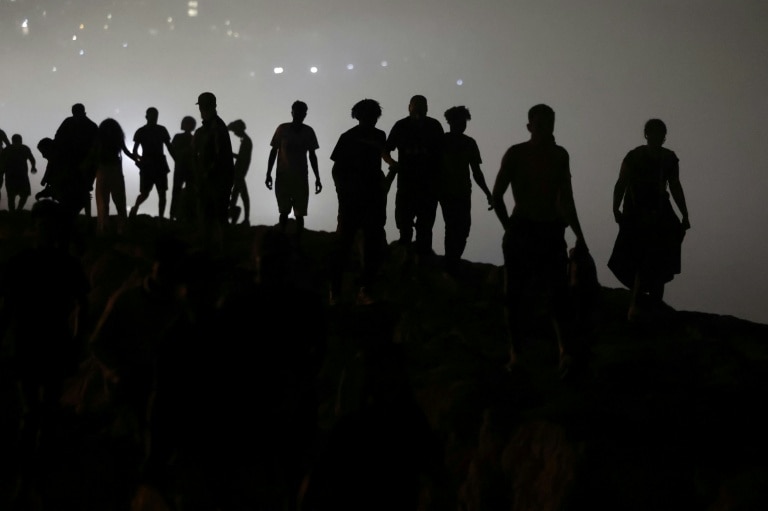
    CEUTA, Spain — By the end of last weekend, the Spanish North African exclave of Ceuta had begun to return to a superficial sense of normalcy. Storefronts that had closed amid the unprecedented border crisis had reopened their doors, and open-air terraces, restaurants and cafes across the city — home to just 84,000 permanent residents — were once again filled with locals and casual visitors. Yet the chaos that unfolded earlier that week remained the focal point of every conversation, leaving deep, unresolved rifts across the multi-cultural community.

    Earlier that week, an estimated 60,000 migrants, the majority of whom were young men, crossed into Ceuta from Morocco in a sudden mass border breach. Many swam across the coastal waters, climbed over border barriers, and pushed through frontier checkpoints to enter the tiny territory. By Sunday, most of these migrants had voluntarily returned to Morocco, while a smaller contingent remained in Ceuta, attempting to integrate into daily life undetected. As the city cleared out, Spanish Civil Guard vessels continued to comb the coastal waters near the breached urban beach, searching for the bodies of migrants who did not survive the crossing.

    Spanish authorities confirmed that at least 72 people lost their lives in the surge: some drowned in the choppy coastal waters, while others were killed in a deadly stampede as crowds pushed across a concrete breakwater barrier. This sudden humanitarian catastrophe has reignited fierce, long-simmering debates over immigration policy across Europe, drawing political actors from across the ideological spectrum to Ceuta in the wake of the crisis.

    Many local residents, including Ceuta native Mohamad Abdelkader Driss, a 44-year-old fried fish restaurant waiter, place blame for the crisis squarely on political leadership, not the migrants themselves. “If you open the border, of course everyone comes in, but the young men aren’t to blame. The authorities are responsible,” Driss explained. Migrants who returned to Morocco after the surge also reported that the border was effectively open, with Moroccan authorities taking little to no action to stop thousands of people from crossing into Ceuta over the two-day surge on Thursday and Friday. At the peak of the crisis, the influx of migrants swelled Ceuta’s total population by more than 70%, a staggering strain on the small city’s infrastructure. Driss added that despite the unprecedented disruption, the migrants who entered behaved far more calmly than many residents feared, noting “It could have been much worse.”

    The crisis quickly drew far-right anti-immigration political figures and high-profile right-wing influencers to Ceuta over the weekend, a move that sparked immediate counter-protests from the city’s large Muslim community, many of whom are of Moroccan descent. On Saturday evening, far-right Member of the European Parliament Alvise Pérez delivered a public call for all remaining migrants to be expelled, speaking to a small group of supporters before he was confronted by an angry crowd of counter-protesters. Pérez was forced to take shelter in a local bar, where residents banged on the windows in protest, until police could escort him out of the area.

    Noor Ahmed, a 20-year-old university student and lifelong Ceuta resident who joined the counter-protests, denounced far-right figures like Pérez as opportunists seeking to exploit a humanitarian crisis for political gain. “They just want to take advantage of the humanitarian crisis Ceuta is currently experiencing,” Ahmed said.

    Vox Party leader Santiago Abascal, the head of Spain’s largest far-right political party, visited Ceuta on Sunday, doubling down on harsh criticism of the Spanish central government. Abascal framed the migrant surge as “an invasion” and accused the sitting government of failing to protect Spain’s territorial borders. “The frontiers of Ceuta and Melilla are the walls of our home and homeland, and they are not being protected by a corrupt and traitorous government,” Abascal said.

    Beyond the high-profile political clashes, the crisis has put Ceuta’s long-held reputation as a haven of cross-cultural tolerance under unprecedented strain. For decades, the city has prided itself on the peaceful coexistence of its four major religious and cultural communities: Christians, Muslims, Jews, and Hindus. But the events of the week have sown doubt among some long-term residents.

    Eva Barrientos, a logistics worker and Ceuta resident who attended Saturday’s far-right gathering, said she believed another mass surge would happen in the near future, and questioned the national loyalty of Ceuta’s foreign-born residents. “In Ceuta, we have always lived together. We have four cultures living very well, without any problems,” she said. “But the only thing we are realizing now is that there is an enemy within.” Barrientos accused many foreign-born residents of holding greater loyalty to Morocco than to Spain, their country of residence.

    The international community has begun to weigh in on the crisis as well. Pope Leo XIV, who has made immigration reform a central priority of his papacy and highlighted the issue during a recent visit to Spain’s Canary Islands — one of Europe’s busiest entry points for migrant arrivals — released a statement Sunday addressing the situation. “I am following with concern the alarming situation in Ceuta, asking God … that solutions of peace, stability and justice may be found,” the Pope said.

    In the wake of the crisis, Spanish authorities have begun installing a new sea barrier along Ceuta’s border with Morocco to prevent future mass breaches, even as local residents remain divided over what caused the surge, who bears responsibility, and how the city should move forward from the event that upended its quiet, multi-cultural way of life.

  • Of thee I sing: A guide to US patriotic songs, from ‘The Liberty Song’ to Jay-Z and Kanye West

    Of thee I sing: A guide to US patriotic songs, from ‘The Liberty Song’ to Jay-Z and Kanye West

    From the fiery colonial protests against British rule to the post-9/11 cultural reckoning with national identity, American patriotic music has never been a monolith. Instead, it stands as a dynamic, evolving reflection of what it means to love one’s country – a spectrum of expressions that range from defiant celebration to critical hopefulness.

    For centuries, this body of work has carried two core truths about American national identity. First, love of country can take multiple, even conflicting forms: while anthems like *The Star-Spangled Banner* honor resilience through crisis and *God Bless America* invokes divine favor for the nation, songs from Woody Guthrie’s *This Land Is Your Land* to Curtis Mayfield’s *This Is My Country* anchor patriotism in a long tradition of social protest. These works embrace the idea that progress toward a “more perfect union” can only happen when a nation openly acknowledges its flaws. Second, patriotic music chronicles America’s journey toward cultural independence: well into the 19th century, most American patriotic lyrics were adapted to popular existing melodies imported from Britain, a practice that modern musicologists compare to setting new lyrics to a well-known Beatles track today, to make new messages instantly accessible to widespread audiences.

    To understand this rich, varied tradition, experts at the Library of Congress highlight a selection of the most influential patriotic songs spanning the nation’s history, from the colonial era to the 21st century.

    ## The Early Revolutionary Era: Forging a National Sound
    One of the earliest surviving patriotic anthems, *The Liberty Song* emerged in the late 1760s, written with lyrics by Pennsylvania-Delaware statesman John Dickinson – a figure most often remembered for his controversial refusal to sign the Declaration of Independence, believing a break from Britain was premature. Adapted from the melody of the British Royal Navy march *Heart of Oak*, Dickinson’s lyrics were a bold assertion of colonial rights and a warning against outside oppression, capturing growing fears of disenfranchisement with the iconic lines: “In freedom we’re born, and in freedom we’ll live/Our purses are ready/Steady, Friends, steady.”

    Like *The Liberty Song*, *Yankee Doodle* began as a foreign work, originating as a British marching song performed by British troops occupying Boston to mock colonial revolutionaries. By the end of the Revolutionary War, however, American rebels reclaimed the tune, turning it into a rallying cry to accompany the retreat of British forces. Fully Americanized today, it serves as Connecticut’s state song and gained wider pop culture fame as the title of the Oscar-winning World War II-era film starring James Cagney.

    ## 19th Century: Growing into a Distinct National Identity
    Written between 1831 and 1832, *My Country ‘Tis of Thee* saw theology student Samuel Francis Smith set a new hymn of freedom to the melody of Britain’s *God Save the King*. Smith’s work, which condemned tyranny and celebrated American liberty, has occupied a central place in moments of both protest and national unity: Rev. Martin Luther King Jr. quoted its lyrics during his iconic “I Have a Dream” speech, while Aretha Franklin performed it at Barack Obama’s first inauguration. It also holds a poignant place in Civil War history: eyewitness accounts record that after Abraham Lincoln issued the Emancipation Proclamation, a gathering of formerly enslaved Black people in South Carolina spontaneously sang the anthem upon hearing the news of their freedom.

    Julia Ward Howe, a prominent 19th-century abolitionist, adapted her *Battle Hymn of the Republic* (1861–1862) from the melody of *John Brown’s Body*, a popular Union camp tune she heard during a public review of Union troops. Howe, whose husband supported the martyred anti-slavery activist John Brown, would later recall that the lyrics came to her in a morning twilight half-waking state: “I awoke in the gray of the morning twilight; and as I lay waiting for the dawn, the long lines of the desired poem began to twine themselves in my mind.” The song has remained a staple of American public life, performed at events ranging from the 1971 Super Bowl to former President Jimmy Carter’s 2024 funeral.

    ## 20th Century: Expanding the Definition of Patriotism
    Written by immigrant songwriter Irving Berlin in 1918 for a World War I revue and revised in 1938 amid rising global fears of a second world war, *God Bless America* marked a clear break from earlier patriotic works. As Library of Congress folklorist Stephen Winick notes, the song is a deeply personal statement of allegiance (“Land that I love”) rather than a call to collective force – a framing that drew contemporary criticism. “He got mail from people basically saying, ‘How is it that you, this Russian Jew, has any right to ask God to bless America?’” Winick says.

    Woody Guthrie’s 1940 standard *This Land Is Your Land* was written explicitly as a response to Berlin’s work, which Guthrie argued failed to capture the full breadth of America’s natural beauty and working-class experience. Blending poetic imagery of “diamond deserts” and “wheat fields waving” with quiet social critique, Guthrie’s work embodies the protest patriotism tradition – one version of the lyrics includes a wry rebuke of the seemingly sacred American right to private property, noting: “As I went walking I saw a sign there/And on the sign it said “No Trespassing./But on the other side it didn’t say nothing.”

    Rock and roll pioneer Chuck Berry wrote *Back in the U.S.A.* in 1959 after feeling homesick during a tour of Australia. Berry’s tribute to the open road, skyscrapers, and small-town diners stretching from California to Delaware has been covered by icons from Bruce Springsteen to Linda Ronstadt, but critics have long noted its subtle undercurrent of critique. Music writer Dave Marsh once observed that Berry’s line about searching for a local eatery carried unspoken weight: in the 1950s, many public establishments refused service to Black Americans, and Berry intentionally wove that contradiction into his seemingly celebratory anthem. “Berry never lets you be sure that he’s coming to grips with the contradictory mess we’ve made of things,” Marsh wrote.

    Two distinct versions of *This Is My Country* written decades apart reflect shifting conversations about American identity. The first, a brisk 1940 march by Don Raye and Al Jacobs, was written as war broke out across Europe, and emphasized unity across regional divides with the lyrics: “What diff’rence if I hail from North or South/Or from the East or West?/My heart is filled with love for all of these.” It has since become a staple of public events, from Disney theme park fireworks shows to military recordings. By contrast, Curtis Mayfield’s 1968 soul version, recorded with his group the Impressions amid the civil rights movement, is an unflinching assertion of Black patriotism forged through centuries of oppression: “I’ve paid 300 years or more/Of slave driving, sweat, and welts on my back/This is my country.”

    Bruce Robinson’s 1996 narrative folk classic *Travelin’ Soldier*, revised in 1999, tells the quiet, devastating story of a lonely Vietnam War soldier corresponding with a young woman back home. The song, which ends with the soldier’s death and the woman’s grief, offers a moving meditation on the human cost of military sacrifice. It became a breakout hit for The Chicks (formerly the Dixie Chicks) in 2002–2003, a moment when the nation was locked in bitter debate over patriotism in the wake of 9/11 and the impending Iraq War, and was revived again by artist Cody Johnson in 2024.

    ## 21st Century: Competing Visions of National Pride
    The post-9/11 era sparked a new wave of patriotic music across genres, particularly in country and rock. Zac Brown Band’s *Chicken Fried*, originally recorded in 2003 and released in 2005, is an ode to simple American pleasures from cold beer to well-worn jeans that became an unexpected anthem thanks to its often-overlooked a cappella closing verse: “I thank God for my life / And for the stars and stripes / May freedom forever fly, let it ring.”

    Even songs sharing the same title reflect the stark diversity of 21st-century patriotic expression. Toby Keith’s 2011 *Made in America* almost did not get released: Keith feared he had already recorded too many patriotic songs, until a conversation with co-writer Bobby Pinson and actor-singer Scott Reeves convinced him to move forward. The track is a celebration of traditional American values, centered on an elderly farmer who chooses to “spend a little more in the store for a tag in the back that says ‘USA’” out of loyalty to domestic goods. The same year, Jay-Z and Kanye West released their own *Made in America* (originally titled *Sweet Baby Jesus*), a protest-inflected rap track that echoes Martin Luther King Jr.’s framing of the American Dream as an unfulfilled promissory note: “Built a republic that still stands/I’m tryna lead a nation, to leave to my little man’s/Or my daughter, so I’m boiling this water/The scales was lopsided, I’m just restoring order.”

    Across centuries and styles, American patriotic music remains a living conversation – one that continues to ask what it really means to love the country you call home.

    Contributed by AP Music Writer Maria Sherman

  • A blaze on an Indonesian passenger ferry leaves at least 5 dead and dozens missing

    A blaze on an Indonesian passenger ferry leaves at least 5 dead and dozens missing

    On a busy domestic shipping route linking Indonesia’s Java and Sulawesi islands, a devastating ferry fire has triggered a large-scale search and rescue operation, leaving at least five people dead and 41 others unaccounted for as of Sunday evening, Indonesia’s National Search and Rescue Agency (Basarnas) confirmed.

    The blaze broke out between 6 a.m. and 7 a.m. local time on the Mutiara Sentosa 2, a 525-foot passenger and cargo ferry operating the popular route from Surabaya — Indonesia’s second-largest city located in East Java — to Makassar, the capital of South Sulawesi. At the time of the incident, the vessel was carrying a total of 271 people: 232 passengers and 39 crew members, and was traveling through waters off Sumenep regency, near the northern tip of Madura Island, when the fire ignited.

    According to Basarnas’ official statement, ferry operator PT Atosim Lampung Pelayaran alerted the Surabaya search and rescue office roughly one hour after the fire was first reported by the vessel’s captain. Initial contact with the captain was maintained to confirm the vessel’s position, but all communication was lost shortly after the alert. By 9:45 a.m., authorities were able to pinpoint the ferry’s location approximately 19 nautical miles north of Buruan Sapudi island, after coordinating with the nearby cargo vessel Meratus Project 3. That cargo ship was unable to approach the burning ferry for close rescue operations, however, as it was carrying a load of flammable materials that posed a major safety risk.

    Footage released by Basarnas and user-generated videos circulating across social media and private messaging groups paint a terrifying picture of the incident. Thick plumes of black smoke billowed from one side of the ferry before spreading across most of the vessel’s hull, while bright orange flames crawled through lower decks. Terrified passengers, almost all of whom had donned life jackets, clustered on the exposed upper decks and forward bow of the ship waiting for rescue, with some forced to jump into the surrounding sea to escape the spreading fire. By the time nearby vessels arrived on scene, the fire had engulfed nearly the entire ferry, leaving only the bridge and forward bow as safe gathering points for trapped passengers.

    Just before 10 a.m., a tugboat and a second passing commercial vessel moved in to begin evacuating survivors from the burning craft. By Sunday afternoon, a total of 225 passengers and crew had been pulled from the water or evacuated from the ferry, and five bodies had been recovered from the incident site. That left 41 people still missing, as rescue teams continued to comb the surrounding waters for survivors.

    Multiple rescue assets were dispatched to the remote incident site to support the operation. A large rescue vessel departed Surabaya for the area, though officials estimated the trip would take approximately six hours to complete. A smaller rigid inflatable boat from the local Sumenep rescue post was also deployed, but was forced to return to shore due to dangerous rough seas and high waves that made navigation unsafe. The Indonesian Navy has also dispatched a warship to the area to assist with search and recovery efforts.

    The Mutiara Sentosa 2 is a 160-meter-long, 25-meter-wide ferry that regularly operates the Surabaya-Makassar route, a 40-hour crossing that serves as a key transport link for domestic travelers and cargo moving between Java, Indonesia’s most populated main island, and Sulawesi to the east. Ferries are the primary mode of inter-island travel for Indonesia, a sprawling archipelago made up of more than 17,000 individual islands that is home to 277 million people. However, transportation disasters are a regular occurrence across the country, with weak enforcement of maritime safety standards frequently cited as a contributing factor in major incidents.

    As of Sunday evening, the cause of the fire has not been determined, and official investigations into the incident are still ongoing. The reporting was led by Karmini from Jakarta, with additional contributing reporting from Associated Press writer Edna Tarigan, also based in Jakarta.

  • At least 72 died in Spain’s Ceuta migrant rush

    At least 72 died in Spain’s Ceuta migrant rush

    One of the largest uncontrolled mass migrant crossings in recent European history has left at least 72 people dead after tens of thousands of people, mostly swimming across the border from Morocco, flooded into Spain’s North African enclave of Ceuta over recent days, local government officials confirmed Sunday. The death toll, updated from an earlier count of 67, marks one of the deadliest recent migrant events on the European Union’s southern border.

    An estimated 60,000 people crossed Ceuta’s lightly guarded border barrier between Wednesday and Friday, according to official estimates, but the vast majority have returned voluntarily to Morocco over the past 48 hours, leaving the small enclave gradually returning to normal operations by Sunday. By the end of the weekend, only small scattered groups of migrants remained in public spaces across Ceuta.

    On Sunday, Spanish national police and military personnel patrolled Ceuta’s city streets as clean-up crews worked to clear trash, discarded clothing and other debris left behind along the border crossing during the mass movement. An AFP reporter on the ground witnessed Spanish soldiers detaining a group of nine exhausted migrants resting on a sidewalk near a port-side housing development, guarded by troops and an armored personnel carrier. Rescue teams deployed small inflatable vessels to patrol the Mediterranean waters surrounding the border barrier, where a new 500-meter floating security boom has been installed to reinforce border controls. Spain’s Civil Guard was also seen transporting groups of remaining migrants by bus back to the border crossing for repatriation to Morocco.

    Many unaccompanied minor migrants remained in Ceuta over the weekend, gathered in a disused industrial park on the city’s outskirts. Aziz Dabch, a 41-year-old Moroccan man who was among the few adults staying with the group, told reporters that every child at the site shared the same goal: reaching mainland Spain to build new lives.

    The unprecedented mass influx has already triggered an international diplomatic crisis, with many of Spain’s European Union partners criticizing Madrid’s handling of immigration and border policies. Multiple competing explanations have emerged for what led to the sudden surge in crossings. Spanish officials have blamed criminal smuggling networks for spreading false rumors across social media claiming that a recent Spanish Supreme Court immigration ruling would open a window for unimpeded access to the enclave and eventually mainland Europe. Multiple regional analysts have put forward an alternative theory: that Moroccan authorities intentionally relaxed border controls to place diplomatic pressure on Spain, which has recently moved to strengthen diplomatic and trade ties with Algeria, Morocco’s long-standing regional rival. This is not the first time Morocco has used this tactic: in 2021, roughly 10,000 migrants crossed into Ceuta after border controls were eased, in a widely documented move to pressure Madrid. To date, Moroccan officials have not issued any public comment on the current crisis. Migrants who crossed the border confirmed they had heard widespread claims the border was open, a rumor that spread rapidly across social media platforms to draw thousands to the crossing.

    The European Union announced Sunday that it would hold an emergency video conference on Tuesday to address the crisis, after 22 of the bloc’s 27 member states signed a joint open letter calling for an urgent, coordinated EU-wide response to prevent additional uncontrolled border crossings. The crisis has already exposed deep divisions among EU member states: on Saturday, Italy implemented a one-month suspension of its Schengen Area commitments with Spain, pausing visa-free free movement across their shared border for the duration of the emergency. Spanish Prime Minister Pedro Sanchez publicly condemned the move in a letter sent to all EU leaders, labeling the decision “selfish” and highlighting the need for collective action rather than unilateral border restrictions.

    Pope Leo XIV addressed the unfolding crisis during his regular Sunday daily prayers, saying he was following the situation in Ceuta “with deep concern” and called for a negotiated solution that delivers “peace, stability and justice” for all people affected by the crisis.

  • China: UN a solid platform for AI cooperation

    China: UN a solid platform for AI cooperation

    Two weeks after Shanghai wrapped up the 2026 World AI Conference and High-Level Meeting on Global AI Governance, China’s top envoy to the United Nations has reaffirmed the global body’s central role as the leading platform for international collaboration on shaping the future of artificial intelligence governance.

    Speaking at a briefing hosted by China’s UN mission at UN headquarters on Friday, Ambassador Fu Cong outlined China’s commitment to working with all nations through the UN framework, guided by core principles of openness, open-source collaboration, and inclusive mutual benefit. Fu emphasized that the landmark Shanghai gathering was far more than just a forum for dialogue—it created new pathways to break down barriers and enable the free global flow of AI-focused innovation resources.

    “Above all, the conference centered on the defining question of our era: how can we steer AI development to deliver shared prosperity and benefit for every person across the world?” Fu told attendees drawn from more than 70 countries and international organizations. He detailed the vision for global AI governance laid out by Chinese President Xi Jinping, which rests on four key pillars: driving innovation-led growth, upholding human oversight and AI security, fostering cross-civilizational exchange and learning, and strengthening inclusive multilateral governance frameworks.

    A signature outcome of the Shanghai conference was the launch of the World AI Cooperation Organization (WAICO), the world’s first intergovernmental international body dedicated exclusively to advancing AI collaboration. Fu described the new entity as a tangible response to growing calls from Global South nations for more equitable AI development, and a critical milestone in uniting countries around shared goals for inclusive progress and coordinated governance.

    To date, 29 countries have signed WAICO’s founding convention, and Fu stressed that the organization remains open to all nations seeking to participate. He clarified that WAICO is structured to complement, rather than compete with, existing UN efforts in AI governance, with a core focus on expanding global capacity building, facilitating policy dialogue, advancing technical cooperation, and scaling responsible AI applications.

    “China is fully prepared to deepen policy coordination, institutional partnership, and on-the-ground collaboration with the United Nations, and to support the UN in expanding its central role in global AI governance,” Fu added. “We view the UN as the primary channel and core platform for multilateral AI governance worldwide.”

    Addressing questions around AI regulation, Fu noted that governments face a critical balancing act between nurturing innovation and mitigating emerging risks. “Overly restrictive regulation will suffocate creative progress,” he explained, “but turning a blind eye and letting unregulated development run wild exposes entire societies to the inherent dangers of ungoverned AI.”

    Amandeep Gill, UN Secretary-General António Guterres’ envoy on technology, joined the briefing and praised the Shanghai conference as a transformative step forward for global AI cooperation. Gill noted that the event set a new standard for international collaboration by placing capacity building for developing nations at the top of the global AI agenda, a shift he described as “qualitatively different” from previous gatherings. He echoed Fu’s affirmation of the UN’s central role, noting that Guterres has prioritized advancing AI capacity, safety and sustainability globally, and that all complementary international initiatives should center the UN as the inclusive, multilateral home for global AI governance.

    Representatives from across every inhabited continent weighed in at the briefing, with many highlighting the unique barriers that Global South nations face in accessing AI opportunity. Moses Jere, counselor and cyber-digital expert with Zambia’s UN mission, noted that limited access to computing infrastructure is the single biggest bottleneck holding back AI progress across most African nations – not a lack of ambition or local technical talent.

    “African nations have the drive and the people to lead in AI, but we lack the foundational computing infrastructure, high-quality datasets, and harmonized standards we need to compete,” Jere explained. “The commitments made in Shanghai to expand access to these critical resources and develop inclusive AI standards are genuinely transformative for our region.”

    Asim Iftikhar Ahmad, Pakistan’s permanent representative to the UN, called the launch of WAICO both timely and consequential, saying the new body fills a critical gap by giving Global South nations a dedicated platform to build their domestic AI capacity and advance shared development. Ahmad stressed that developing countries need more than just access to finished AI products built in wealthy nations – they need support to build their own AI ecosystems, including access to data, computing capacity, open models, development tools, and sustained technical assistance to adapt AI to local needs.

    “In this respect, the outcomes of the Shanghai conference and high-level meeting deliver a clear, action-oriented roadmap to advance inclusive global progress,” Ahmad said.

    Other participating representatives echoed widespread support for WAICO, calling for all initiatives agreed in Shanghai to be translated into tangible, on-the-ground capacity building support for developing nations. The shared overarching goal across speakers was to make AI development more inclusive, broadly accessible, and mutually beneficial for all countries, regardless of their current level of economic or technological development.

  • Moscow mayor calls Saturday’s deadly bomb attack on restaurant a ‘terrorist act’

    Moscow mayor calls Saturday’s deadly bomb attack on restaurant a ‘terrorist act’

    A deadly explosion that tore through a popular restaurant in central Moscow Saturday evening has been labeled a brutal terrorist attack by the city’s top official, as Russian law enforcement and counterterrorism agencies continue their probe into the incident with no suspects or groups stepping forward to claim credit.

    Moscow Mayor Sergei Sobyanin confirmed the attack in a social media post Sunday, acknowledging the loss of innocent life and confirming that injured survivors were receiving targeted medical care at city-run hospitals across the capital. “Yesterday, a brutal terrorist act was committed in Moscow that claimed human lives. The victims are currently in the city’s hospitals, where they are receiving all necessary care,” Sobyanin wrote, stopping short of assigning blame for the coordinated attack.

    Per Russian state media, which cited official local sources, three people were confirmed dead in the blast: a working security guard at the restaurant, one civilian guest, and the female attacker who carried the explosive device. The National Anti-Terrorism Committee, in statements carried by Russia’s official state news agency RIA Novosti, added that at least 21 other people sustained injuries of varying degrees when the device detonated at the venue on Kudrinskaya Square, a busy public space in the heart of the city.

    The Moscow Investigative Committee confirmed Saturday evening that it had launched a full official investigation into the circumstances of the attack. As of early Sunday afternoon, Russian federal and local authorities had not released any new updates on the progress of the probe, and no individual or extremist organization had issued any public statement claiming responsibility for the bombing.

  • Runner on smashing Alps ultramarathon record by 6 days

    Runner on smashing Alps ultramarathon record by 6 days

    In an extraordinary display of human endurance and mental fortitude, British ultra-runner Sophie Woods has etched her name into the history books of long-distance trail running by obliterating the existing record for the iconic Via Alpina ultramarathon by a staggering six days.

    Stretching across more than 2,600 kilometers through the heart of the European Alps, the route cuts through eight different countries, presenting runners with some of the most punishing and unpredictable terrain on the planet. Over the course of her journey, Woods faced a relentless barrage of extreme weather challenges that would have stopped most athletes in their tracks. Severe storm systems rolled through mountain passes, bringing lashing rain, high winds, and reduced visibility that turned narrow alpine trails into dangerous slippery tracks. When the skies cleared, she was forced to confront sweltering heat that pushed temperatures as high as 37 degrees Celsius, testing her body’s ability to regulate temperature and maintain hydration over thousands of meters of elevation gain.

    Beyond temperature extremes, Woods also had to navigate rapidly changing environmental hazards, dodging widespread flood zones in low-lying valleys and shifting wildfire smoke and burn areas that emerged across parts of the alpine region during her run. The multi-country route exposed her to a wide range of trail conditions and regional climate variations, requiring constant adaptability and quick decision-making to stay on course and safe.

    Her achievement has sent shockwaves through the global ultra-running community, where the Via Alpina record is widely regarded as one of the most challenging markers of elite long-distance performance. The six-day margin of improvement over the previous record is far larger than most experts predicted possible, highlighting both Woods’ exceptional preparation and her extraordinary resilience in the face of unforeseen challenges.

  • Five dead, 41 missing, after Indonesia ferry catches fire

    Five dead, 41 missing, after Indonesia ferry catches fire

    A devastating maritime incident has unfolded off Indonesia’s Madura Island, where a passenger ferry carrying more than 250 people erupted in flames at sea, leaving at least five passengers dead and dozens more unaccounted for, according to Indonesia’s National Search and Rescue Agency, locally known as Basarnas.

    The vessel, identified as KMP Mutiara Sentosa 2, was traveling along a busy domestic route when the fire broke out: it departed Surabaya, East Java – Indonesia’s second-largest city – en route to Makassar, the capital of South Sulawesi. The ship’s captain first alerted authorities to the emergency after the blaze took hold, according to Basarnas.

    Timeline details released by the agency show that the Surabaya Search and Rescue office received the initial distress alert at 08:24 local time (02:24 GMT), though preliminary information from the ferry’s operating company places the start of the fire between 06:00 and 07:00 local time (00:00 to 01:00 GMT). By the time rescue teams were mobilized, the inferno had spread rapidly: Basarnas later confirmed that almost the entire vessel was engulfed in flames, leaving surviving passengers trapped on the ship’s bridge and bow as they waited for emergency assistance.

    Footage captured from the scene documents the chaos unfolding as passengers fought to escape. Local Indonesian broadcaster iNews aired footage showing large groups of survivors wearing life jackets packed into rescue lifeboats. Other clips show desperate passengers climbing down the burning hull of the ferry, as thick black smoke and bright orange flames pour from the vessel’s upper decks. Additional video released by Basarnas on its official TikTok account shows some passengers jumping into the open ocean, while nearby rescuers throw lifebuoys to stranded people before pulling them aboard rescue craft.

    As of the latest update from search and rescue officials, operations are still ongoing to locate the 41 missing passengers, while recovery teams have already recovered five bodies from the area around the burned vessel. Ferries remain a primary mode of inter-island transportation across Indonesia, an archipelago nation made up of thousands of separate islands, making maritime safety a persistent public safety priority for national authorities.