Tensions across the Middle East reached a critical boiling point over the weekend before an unexpected announcement from former US President Donald Trump paused imminent military confrontation between Washington and Tehran, even as deadly Israeli operations in Gaza continue to drive a rising civilian death toll.
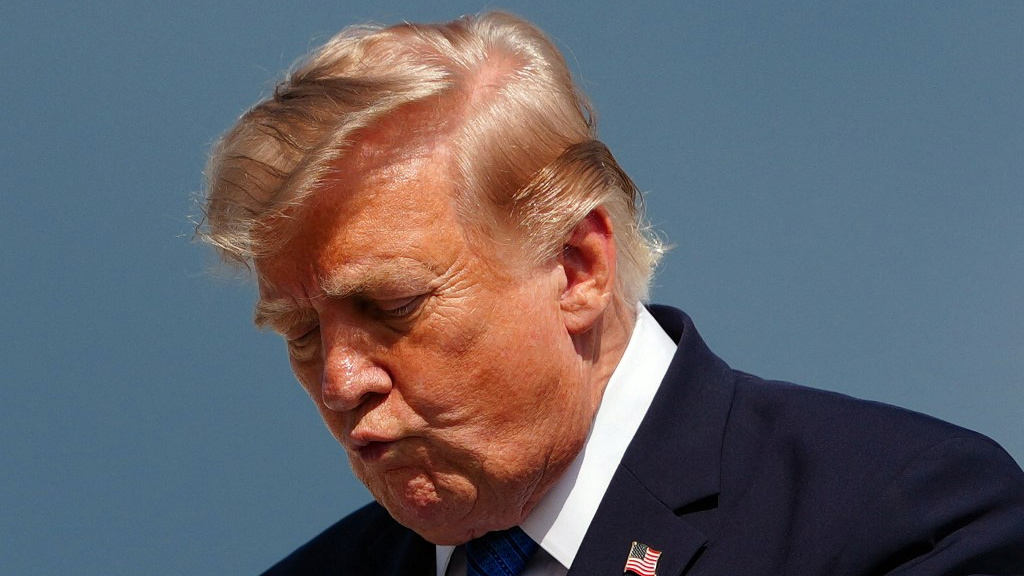
Trump said Saturday via his Truth Social platform that he has called off a planned major US attack on Iran, conditional on the rapid completion of a new agreement centered on two core demands: the full, permanent reopening of the strategic Strait of Hormuz and a permanent end to what he frames as Iran’s nuclear threat. The pause came at the request of Iran and unspecified other Middle Eastern nations, Trump added, noting the decision was made “for the future benefit of the WORLD and, likewise, the survival of a successful and prosperous Iran.” He also confirmed Israel shares the commitment to this diplomatic path.
The sudden de-escalation follows a sequence of tit-for-tat military moves and diplomatic pressure from regional powers. Hours before Trump’s announcement, Iran’s Islamic Revolutionary Guard Corps confirmed it had launched multiple ballistic missile strikes targeting a US F-35 repair hangar and aircraft ramp at Jordan’s Al-Azraq Base. The strike came as US military forces were reportedly positioning for major retaliatory attacks on Iran’s energy infrastructure. Prior to that, Iranian Foreign Minister Abbas Araghchi had warned his counterparts from Turkey, Pakistan and Saudi Arabia that Iran would respond “decisively” to any new act of US aggression.
Multiple sources confirm regional leaders pushed aggressively for Trump to step back from military action. Axios, citing anonymous US officials, reported that Saudi Crown Prince Mohammed bin Salman placed a direct call to Trump Saturday urging de-escalation and urging him to abandon the planned strikes. In an official statement carried by Saudi state media Sunday, the crown prince reinforced that position, stressing “the necessity of prioritising dialogue to de-escalate tensions and the importance of exerting all possible efforts to achieve a truce, which paves the way for diplomatic solutions.” He added that diplomatic negotiations are the only way to preserve regional security and stability and prevent the entire area from being dragged into a far wider, more devastating conflict.
While the US-Iran standoff has temporarily eased, violence continues to escalate in Gaza, where Israeli military operations have now killed more than 73,000 Palestinians since October 2023, according to Gaza’s Ministry of Health. Al Jazeera Arabic reported Sunday that fresh Israeli air strikes across the enclave left nine Palestinians dead, including three children. Over the prior two days, the Israeli military announced it had killed two senior Hamas commanders in targeted air strikes: Salem Jamal Abd al-Rahman Abu Labad, a cell commander in Hamas’s elite Nukhba special forces, and Muhammad Abd al-Nasser Muhammad Khatib, a battalion commander in the Maghazi area of central Gaza.
Diplomatic efforts to broker a ceasefire are ongoing in Cairo, where a Hamas delegation held talks Sunday with leaders of Palestinian Islamic Jihad. Both factions issued a joint statement stressing the priority of forcing Israel to end its military offensive and withdraw all forces from Gaza. They called for coordinated joint action and a unified national Palestinian position to protect civilian lives and secure the Palestinian people’s long-standing legitimate rights.
Negotiations remain deadlocked over key terms of any potential agreement. Last week, Trump stated that a so-called “Board of Peace” would oversee the collection of Hamas’s weapons as the group begins disarmament, a claim that contradicted the board’s own earlier announcement that a Palestinian technocratic governing body would take on that responsibility. Hamas has since clarified that any agreement for full disarmament of Palestinian factions in Gaza is conditional on the United States and Israel upholding all commitments laid out in the 10 October ceasefire deal. Hamas representative Ghazi Hamad told Reuters Friday that the group will retain its weapons until Israel halts all military operations, allows increased humanitarian aid and commercial goods into the blockaded enclave, and completes a full withdrawal of its forces from Gaza.