博客

  • Households face more rate hikes as global oil shock hits Australian economy

    Households face more rate hikes as global oil shock hits Australian economy

    Australia’s stretched mortgage holders are bracing for more financial pain after top economists warned that three consecutive Reserve Bank of Australia (RBA) interest rate hikes have only addressed domestic inflationary pressures, leaving the country exposed to a soaring oil price shock sparked by the US-Iran conflict that could force even more aggressive monetary policy tightening.

    In a stark warning to Australian households already grappling with rising living costs, Westpac chief economist Luci Ellis explained that the RBA’s 2026 rate hiking cycle was designed solely to cool domestic demand-driven inflation, and did not account for the global energy price volatility triggered by the escalating Middle Eastern conflict.

    “Before the war broke out, Australia’s economy was already contending with persistently high inflation, and the RBA moved to raise rates to lean against that pressure,” Ellis said. “Three back-to-back hikes had largely put domestic inflation on a path to cooling, but that entire calculus shifted once the conflict began.”

    When the conflict erupted, Australia’s headline inflation already sat at 3.7% – above the RBA’s statutory 2-3% target range. Following its latest two-day policy meeting this week, the RBA announced a further 25 basis point rate increase, lifting the official cash rate to 4.35%. This move fully erases the three rate cuts rolled out in 2025, bringing borrowing costs to their highest level in more than a decade.

    In its post-meeting statement, the RBA board noted that current inflation remains elevated at 4.6%, far outside its target range, and signaled that additional rate hikes remain on the table. The board added it would closely monitor incoming economic data and evolving global conditions to guide future policy decisions.

    Global oil prices have skyrocketed in recent weeks amid the Middle East crisis, jumping from roughly $US56 per barrel in January, before the conflict began, to a volatile range of $US100 to $US110 per barrel – a jump that translates directly to higher fuel costs for Australian consumers. Industry estimates show every $US10 per barrel increase adds 10 Australian cents to every liter of fuel at the pump, hitting household transport budgets and raising operational costs for businesses across every sector.

    Ellis noted that the RBA has now shifted its focus to global-driven inflation pressures, particularly how rising fuel, diesel and fertilizer prices flow through to broader consumer prices across the Australian economy. “Our assessment is that these price pressures are already front-loaded and extensive – we’re already seeing formal notifications of price hikes for a wide range of goods and services,” she said. “For this reason, we expect further rate hikes from the RBA from here.”

    National Australia Bank chief economist Sally Auld shares Ellis’s hawkish outlook, projecting an additional 25 basis point hike in June that would push the official cash rate to 4.60%. “The RBA continues to face the core challenge of already above-target inflation, and the second-round inflationary pressures from higher oil prices will flow through to the broader economy relatively quickly,” Auld explained.

    Not all major bank economists agree on the path forward, however. Commonwealth Bank analysts forecast the RBA will hold rates steady at 4.35% through the end of 2026, arguing that current monetary policy settings are already “well placed” to cool inflation over time.

    While the RBA has historically looked past one-off oil price shocks when setting policy, the central bank has grown increasingly concerned about second-order inflation effects, where businesses pass higher energy and input costs directly on to consumers. RBA governor Michele Bullock defended businesses’ right to pass through higher costs, noting “It is not unreasonable for firms because they are seeing their cost basis rise …. It is not unreasonable for them to want to recover their costs. The alternative is they can’t absorb the costs and they might end up going bust, and that isn’t good either.”

    Ellis said she was surprised by Bullock’s framing, arguing that effectively giving businesses the green light to pass through higher costs will only entrench higher inflation and force the RBA to implement even sharper rate hikes down the line, deepening the financial pressure on Australian households already struggling with mortgage repayments and cost-of-living increases.

  • Where do Bayern’s prolific trio rank in greatest front threes ever?

    Where do Bayern’s prolific trio rank in greatest front threes ever?

    When Harry Kane, Michael Olise and Luis Diaz surge toward the opponent’s goal, opposition defenses rarely come away unscathed. From top-flight German sides to Champions League giants like Real Madrid and Atalanta, every team that has faced this Bayern Munich trio has seen firsthand just how lethal this attacking unit can be.

    Since the three forwards first linked up at the Allianz Arena in August 2024, they have racked up more than 100 goals across all club competitions this season, making them only the fifth European front three to hit the century mark since the turn of the 21st century. This historic milestone is one of the core reasons the Bavarian giants are on the cusp of a historic treble, having already secured the Bundesliga title last month and now competing for the DFB Pokal and Champions League trophies. With the second leg of their Champions League semi-final against Paris Saint-Germain kicking off Wednesday — after a chaotic nine-goal first leg left Bayern trailing 5-4 — BBC Sport journalists Keifer MacDonald and Charlotte Coates break down how this dynamic trio stacks up against the greatest forward threes in modern football.

    Three-man forward lines have been a foundational tactical setup across football history, but the system has seen a major mainstream resurgence over the past 15 years. This revival can be traced directly to Pep Guardiola’s dominant Barcelona side between 2008 and 2012, where Guardiola built a trophy-winning dynasty around a fluid possession-based system centered on a mobile front three. Though Lionel Messi, a nine-time Ballon d’Or winner, was typically positioned as the nominal central attacker, he frequently dropped deep to pull opposing defenders out of shape, create gaps for his attacking teammates, or add a numerical advantage in midfield. This flexible, unstoppable style delivered 14 major trophies for Barcelona during Guardiola’s first tenure, cementing the three-front system as a go-to for elite clubs across the continent.

    In the years following Barcelona’s breakthrough, teams from Real Madrid to PSG began adopting similar tactical setups. In the Premier League, the closest parallel to Guardiola’s legendary front three came from Jurgen Klopp’s Liverpool, where Sadio Mane, Roberto Firmino and Mohamed Salah fired the club to both a Premier League title and a Champions League crown across five seasons together. Mirroring Messi’s role at Barcelona, Firmino served as the central forward, dropping between opposition lines to link play with midfield and open up attacking channels for Mane and Salah to exploit. The trio is widely considered one of the greatest attacking units in English football history, having claimed a full haul of major domestic and European honors.

    Today, that mantle has passed to Bayern Munich, who have carefully constructed this dominant attacking unit through three consecutive summer transfer windows starting in 2023. After all three forwards got on the scoresheet in last week’s thriller against PSG, the club made German football history: no Bayern front three had ever hit the 100-goal mark in a single season before, with the previous high of 99 goals set by Gerd Muller, Uli Hoeness and Willi Hoffman back in 1972-73.

    Century-goal front threes remain an extraordinary rarity in modern European football. Since the 2013-14 season, only five different attacking trios have broken the 100-goal barrier, and three of those came from the same legendary Barcelona unit: Messi, Luis Suarez and Neymar. Across three consecutive seasons from 2014-15 to 2016-17, the iconic Barcelona trio hit 122, 131 and 111 goals respectively, setting a benchmark that has yet to be matched. Real Madrid’s iconic trio of Gareth Bale, Cristiano Ronaldo and Karim Benzema also hit the 100-goal mark in the 2014-15 season, while Liverpool’s Salah-Firmino-Mane unit came close in 2017-18, finishing with a total of 91 strikes.

    Now, Bayern’s Kane-Olise-Diaz trio has joined that exclusive 100-goal club, leading to inevitable comparisons with the treble-chasing PSG side they face in this year’s Champions League semi-finals. PSG itself once boasted a star-studded front three of Messi, Neymar and Kylian Mbappe, and currently fields a dynamic attacking unit led by Ousmane Dembele, Desire Doue and Khvicha Kvaratskhelia. While Luis Enrique’s current PSG trio is not as prolific as Bayern’s century-mark unit, they overwhelm defenses with constant positional rotation and creative flair. Even so, the numbers don’t lie: this season, Dembele, Doue and Kvaratskhelia have combined for 48 goals, less than half of Bayern’s 101. Last campaign, PSG’s highest-scoring attacking trio (Dembele, Goncalo Ramos and Bradley Barcola) managed 72 goals in total, still far behind Bayern’s historic mark.

    Beyond the raw goal count, the two sides’ front threes differ sharply in tactical approach. Bayern operates with a fixed, predictable structure that delivers consistent output week in and week out: Diaz lines up on the left flank, Olise on the right, and Kane leads the line as the out-and-out central striker. PSG, by contrast, leans fully into the fluid approach that popularized the modern three-front system, with forwards constantly swapping positions and stepping up to deliver in high-stakes matches. As the two sides prepare for a decisive second leg to decide who advances to the 2025 Champions League final, football fans will get to see whether Bayern’s historic, record-breaking attacking unit can overturn PSG’s first-leg lead and secure their place in the final — and cement their spot among the all-time great front threes.

  • Antarctica’s tourism boom raises concerns about contamination and disease

    Antarctica’s tourism boom raises concerns about contamination and disease

    BRUSSELS — As climate change accelerates ice melt across Antarctica, a growing wave of travelers is rushing to see the continent’s one-of-a-kind frozen landscapes before they disappear forever. This surge in polar tourism, however, is raising urgent alarms among scientists and environmental advocates, who warn that more visitors bring heightened risks of ecological contamination, disease outbreaks, and irreversible damage to one of the planet’s most fragile wilderness regions.

    While annual visitor counts remain relatively modest compared to mainstream tourist destinations — limited by the extreme travel costs and long voyage times required to reach the southern continent — the pace of growth has been explosive. Data from the International Association of Antarctica Tour Operators (IAATO) shows that more than 80,000 tourists set foot on Antarctica’s ice in 2024, with an additional 36,000 observing the continent from cruise ship decks. The Union of Concerned Scientists estimates that Antarctic tourism has grown tenfold over the past three decades, and industry analysts project that number could surge even more dramatically in the coming 10 years.

    Hanne Nielsen, a senior lecturer of Antarctic law at the University of Tasmania and a former Antarctic expedition guide, notes that falling travel costs, advances in polar vessel technology, and a growing fleet of ice-capable cruise ships are opening the region to more travelers than ever before. Her university’s research team projects annual visitor numbers could triple or even quadruple to more than 400,000 by the 2030s. Much of this growth is driven by the rise of “last chance tourism,” Nielsen explains: travelers who recognize that Antarctica’s rapidly melting ice landscapes are changing permanently, and are eager to see them before they are lost.

    The vast majority of tourist expeditions are concentrated on the Antarctic Peninsula, a narrow arm of the continent that ranks among the fastest-warming regions on Earth. NASA data confirms that between 2002 and 2020, Antarctica lost an average of 149 billion metric tons of ice each year, with the greatest melt occurring along the peninsula. This accelerating climate shift is exactly what draws many visitors to the region, but it also puts the already stressed ecosystem at greater risk from outside interference.

    The risks of unregulated or expanding tourism were thrust into the spotlight earlier this year by a deadly hantavirus outbreak aboard the Dutch cruise ship *MV Hondius*, which completed a weeks-long Antarctic expedition after departing Ushuaia, Argentina on April 1. The World Health Organization (WHO) is currently investigating the outbreak, with officials noting that the initial case is believed to have been contracted before the ship departed, and no evidence of rat populations (the primary carrier of hantavirus) has been found on the vessel. WHO’s epidemic and pandemic preparedness director Dr. Maria Van Kerkhove says the organization is currently probing whether human-to-human transmission occurred during the voyage. While no contamination of Antarctica itself has been linked to the *MV Hondius* outbreak, the event has underscored the growing disease risks that accompany rising tourism.

    Ecological risks are already a documented concern. In recent years, migratory bird flocks have carried avian influenza from South America to Antarctica, according to the U.S. Centers for Disease Control and Prevention (CDC). In response, IAATO and other regulatory bodies have tightened biosecurity and hygiene rules for all visitors to the continent. To prevent the introduction of invasive species — from plant seeds and insects to microscopic pathogens — tourists are required to stay at a set distance from native wildlife, and all gear and footwear is thoroughly cleaned with vacuums, disinfectants, and brushes to remove any foreign material before landing. Even tiny crevices in boot soles and laces can trap seeds, dirt, or microbes that could disrupt the Antarctic ecosystem, Nielsen explains.

    Disease outbreaks are also a persistent risk on crowded cruise vessels. Outbreaks of highly contagious norovirus are common in the close quarters of long voyages, and the 2020 COVID-19 outbreak on the *Diamond Princess* cruise demonstrated how quickly a novel virus can spread aboard ship, turning a tourist vessel into an unintended breeding ground for infection.

    Antarctica is currently governed by the 1959 Antarctic Treaty, which designates the entire continent as a scientific preserve dedicated exclusively to peaceful purposes. The treaty’s supplementary rules require that all human activity avoid harm to the Antarctic environment, its scientific value, and its unique natural landscapes. Currently, tour operators and scientific expeditions voluntarily comply with biosecurity guidelines and submit environmental impact assessments for their operations. But environmental advocates note that the treaty framework was drafted at a time when Antarctic tourism was negligible, and it is not equipped to handle the rapid growth the region is seeing today.

    Claire Christian, executive director of the Antarctic and Southern Ocean Coalition, an environmental advocacy group, says the continent’s unique ecosystems deserve the same strict regulation that applies to other sensitive, protected ecological sites around the world. Christian is currently preparing to attend the Antarctic Treaty Consultative Meeting in Hiroshima, Japan, where she will join calls for stronger protections for Antarctica’s native species, including penguins, whales, seals, seabirds, and krill — the tiny organisms that form the base of the entire Antarctic food web.

    “The sites you will see in Antarctica are extremely unique and not replicable anywhere else on the planet — the whales, the seals, the penguins, the icebergs — it’s all really stunning and it makes a huge impression on people,” Christian said. She also noted that human footprints in Antarctica’s cold, dry environment can remain visible for 50 years or more, a reminder that even small amounts of human activity leave a lasting mark on the pristine continent. For now, despite growing warnings from scientists, the allure of the last great untouched wilderness on Earth continues to draw record numbers of curious travelers.

  • AFL 2026: Coaches hopeful for clarity and funding for full-time psychs

    AFL 2026: Coaches hopeful for clarity and funding for full-time psychs

    The Australian Football League’s recent mandate requiring all AFL and AFLW clubs to employ full-time in-house psychologists has sparked mixed reaction from two veteran senior coaches, who have raised practical and financial concerns over the new rule.

    The regulation was introduced as a key disciplinary sanction against Carlton Football Club, stemming from the controversial Elijah Hollands incident that brought club mental health support protocols under intense scrutiny. AFL chief executive Andrew Dillon and executive Laura Kane formally announced the policy change earlier this week, with additional implementation details promised for release in the coming weeks.

    Western Bulldogs head coach Luke Beveridge has publicly questioned the logic behind the strict full-time requirement, noting that his club’s existing psychologist already works a near-full-time schedule dedicated to player welfare. In comments to reporters, Beveridge said he remains confused by the wording of the new mandate, pointing to the disjointed, travel-heavy nature of the AFL competition that makes a rigid full-time role structure difficult to implement. “What happens in an AFL environment is we all take care of the players’ welfare,” Beveridge explained. “I think the empowerment of staff and the playing group to support each other is absolutely critical, and a skilled practitioner like our club psychologist Andrew Waterson is absolutely critical to any organisation. But it’s also your senior high performance management that needs to continue to oversee that and make sure everyone’s empowered to look after each other.”
    Beyond the full-time psychologist rule, Beveridge also hit out at the AFL’s updated illicit drug policy, which bars club coaching staff from being informed when a player returns a positive drug test. He argued that this restriction directly undermines the quality of care clubs can provide to at-risk athletes, as coaches are left unable to address underlying mental health struggles that may be tied to substance use.

    For his part, Essendon senior coach Brad Scott centered his criticism on the financial burden the new mandate places on already cash-strapped clubs. Scott called on the AFL to either fully fund the new full-time psychology positions or exempt their salaries from the existing club soft salary cap, arguing the league’s inconsistent financial rules create unnecessary strain for club management.
    “There’s this complex formula of exemptions that the AFL deem are more important than others. Whether that be setting a minimum spend for medical, setting a minimum spend for mental health and wellbeing,” Scott said. “Personally, it gets very frustrating when the AFL are reactive to something and decide you must spend on this after cutting the soft cap and dictating what we can and can’t do with our money. Clubs get held responsible, as Carlton have been in this case, and then the AFL come over the top and mandate things. It’s been a constant challenge that soft caps have been cut and clubs are forced to decide where to allocate money, then the AFL have an incident and respond like this.”

    The new mandate marks the AFL’s latest attempt to strengthen player mental health support across both the men’s and women’s competitions, but the pushback from two high-profile senior coaches signals ongoing debate over how best to structure welfare resources while balancing the operational constraints of individual clubs.

  • Local elections could hasten the exit of Britain’s embattled prime minister

    Local elections could hasten the exit of Britain’s embattled prime minister

    LONDON – British voters are heading to the polls on Thursday for a set of elections that carries profound implications for Prime Minister Keir Starmer’s embattled premiership and marks the latest step in the United Kingdom’s transition to an uncharted era of fragmented multiparty governance. The outcome of Thursday’s votes, which cover local government seats across England and legislative elections for the semiautonomous governments of Scotland and Wales, is widely projected to deliver a severe blow to Starmer’s center-left Labour Party.\n\nPlunged into negative approval ratings by persistent economic weakness and ongoing questions over his leadership judgment, Starmer has found Thursday’s midterm contests framed as a de facto public referendum on his two-year-old government by opposition parties. Hard-right Reform UK has even centered its campaign on the slogan “Vote Reform, Get Starmer Out,” capturing the intensity of attacks on the embattled prime minister. While the next scheduled UK national general election is not required until 2029, a catastrophic rout on Thursday could open the door to a party revolt against Starmer, less than two years after he won a landslide national victory. Luke Tryl, a senior analyst at polling firm More in Common, summed up the public mood, noting that Starmer has become a receptacle for widespread public disappointment and disillusionment across the country.\n\nStarmer’s political standing has collapsed amid a string of high-profile missteps that have piled up since he took office in July 2024. His administration has struggled to deliver on core campaign promises: boosting sluggish economic growth, repairing overstretched public services, and easing the crippling cost-of-living crisis. These challenges have been compounded by the outbreak of conflict between the U.S.-Israeli coalition and Iran, which has disrupted global oil shipments through the Strait of Hormuz, driving up energy prices and worsening economic headwinds. The prime minister’s credibility took a particularly damaging hit from his controversial decision to appoint Peter Mandelson, a figure long tied to disgraced financier Jeffrey Epstein, as Britain’s ambassador to Washington. Starmer already survived one leadership crisis in February, when a group of Labour lawmakers including the party’s Scottish leader publicly called for him to step down over the Mandelson appointment.\n\nPolitical forecasters project that Labour will lose more than half of the 2,500 local council seats it currently defends across England. The party is expected to bleed support to rivals on both its left and right flanks: the left-wing Green Party is set to gain ground in London, while Reform UK is targeting working-class former Labour strongholds in northern England. Tony Travers, a government professor at the London School of Economics, described the electoral moment as deeply perilous for Starmer. “After a series of policy U-turns and in an economy where there isn’t much money to spend on anything, his opponents are lining up,” Travers explained.\n\nA poor showing could trigger an immediate leadership challenge from high-profile Labour figures, including Health Secretary Wes Streeting, former Deputy Prime Minister Anglea Rayner, and popular Greater Manchester Mayor Andy Burnham. Under Labour Party rules, a challenger needs the backing of 80 House of Commons lawmakers – equal to one-fifth of the party’s parliamentary caucus – to trigger a formal leadership contest. For Burnham, any bid would first require him to win a seat in Parliament to be eligible for the top job. Alternately, Starmer could face growing party pressure to announce a clear timetable for an orderly departure rather than force an immediate open revolt.\n\nTim Bale, a politics professor at Queen Mary University of London, noted that Labour’s parliamentary party remains divided on the timing of any leadership change, opening the possibility of a temporary reprieve for Starmer. “His parliamentary party are unsure as to whether now is the right time to unseat him, so there might be a stay of execution,” Bale said. But he added that the broader shift within the party is clear: “it’s a case of when rather than if he goes.”\n\nBeyond the fate of Starmer’s premiership, Thursday’s election is widely seen as a defining milestone in the long-term fragmentation of Britain’s political landscape. For generations, major losses for Labour would have automatically translated into major gains for the main center-right rival, the Conservative Party. But the Conservatives remain deeply unpopular after 14 turbulent years in power that ended when Labour won the 2024 national election. Instead, the main beneficiaries of Labour’s declining support are projected to be Nigel Farage’s right-wing Reform UK, the left-leaning Green Party, and pro-nationalist devolved parties in Scotland and Wales.\n\nTravers noted that Britain’s long-standing “two-and-a-half party system” – which positioned the Liberal Democrats as the permanent third force – is rapidly evolving into a far more fragmented five-party system. This shift has created unprecedented opportunities for pro-devolution and pro-independence parties across the UK’s devolved nations.\n\nIn Wales, where Labour has dominated devolved politics for a century and held power since the Welsh Senedd was established in 1999, polls point to a historic seismic shift. Labour is projected to fall to third place, behind Plaid Cymru (the Party of Wales) and Reform UK, which are currently running neck-and-neck for the top spot. Plaid Cymru leader Rhun ap Iorwerth, who is on track to become Wales’ next first minister if current polling holds, declared that the old order of British politics is finished. “The old politics is gone,” he said. “Labour is not going to win this election.”\n\nA Plaid Cymru victory in Wales would leave three out of four of the UK’s constituent nations led by pro-independence parties. Northern Ireland has already been governed by Irish nationalist party Sinn Féin, which supports unification with the Republic of Ireland, in a power-sharing arrangement with the pro-British Democratic Unionist Party. In Scotland, the Scottish National Party (SNP), which has held power in the Scottish Parliament since 2007, has pledged to hold a second referendum on Scottish independence if it wins a majority in Thursday’s election. Scottish voters rejected independence in a 2014 referendum, but shifting public mood and long-running frustration with Westminster rule have reshaped the political landscape north of the border.\n\nWhile Plaid Cymru has said an independence referendum is not on the immediate agenda for the next term, with its short-term priorities focused on gaining greater tax-raising and spending autonomy from Westminster, the party shares the ultimate goal of breaking away from the UK. ap Iorwerth argued that the current constitutional arrangement of the UK is no longer fit for purpose, saying: “We need a fundamental redesign of Britain. This is an unequal union.”

  • Theodoros Tsalkos: Rapist convicted of 1987 kidnapping and abuse has sentence reduced after appeal

    Theodoros Tsalkos: Rapist convicted of 1987 kidnapping and abuse has sentence reduced after appeal

    Nearly 40 years after he kidnapped and sexually assaulted two underage girls while posing as a law enforcement officer, an Australian sex offender has seen his original prison term reduced following a successful sentence appeal, marking a twist in a cold case that relied on modern forensic science to reach prosecution.

    Theodoros Tsalkos, 64, was first linked to the 1987 attacks through advances in DNA testing more than three decades after the crimes. Back in the early hours of that 1987 morning in St Kilda, the then 25-year-old approached two 15- and 16-year-old child sex workers, identified their vulnerability, and claimed to be a police officer conducting a prostitution bust. Over the next three and a half hours, he subjected the teenagers to a prolonged, terrifying ordeal of sexual violence that trial judges later described as depraved, sadistic and evil, before abandoning the girls back in the St Kilda area.

    It was not until 2022 that advances in DNA technology matched Tsalkos to forensic samples recovered from the victims, leading to his arrest and trial. A jury rejected his insistence that the encounters were consensual, convicting him on charges of kidnapping, rape and gross indecency. In 2023, Judge Rosemary Carlin sentenced him to 13 years and six months in custody, with a scathing rebuke of his actions. Carlin emphasized that Tsalkos had intentionally exploited the victims’ youth and naivety by hiding behind a false police identity, threatening the girls with legal action, then subjecting them to repeated unprotected sexual assaults while ignoring their obvious fear and suffering.

    Tsalkos immediately launched an appeal against both his conviction and sentence, and in 2024 the Victorian Court of Appeal sided with him on the conviction challenge. Prosecutors appealed that ruling to the High Court of Australia, which ultimately overturned the lower appellate court’s decision by the end of 2024, ordering Tsalkos back into custody after he had spent nearly a year free in the community pending a retrial.

    With the conviction upheld, the case returned to the Victorian Court of Appeal to re-examine Tsalkos’ challenge to the length of his original sentence. On Wednesday, the court ruled that the 2023 sentence was “manifestly excessive”, setting aside the original term and resentencing him to 10 years and six months in prison. Tsalkos’ non-parole period was also cut by 18 months, bringing the new non-parole term to six years and eight months. Accounting for time he has already served in custody, he will now become eligible for parole in March 2030. Tsalkos continues to maintain his innocence in the case.

  • ‘A big pact’: How the US plans to unite Libya through two ruling families

    ‘A big pact’: How the US plans to unite Libya through two ruling families

    Amid widespread global energy market volatility triggered by the U.S.-Israeli war on Iran, the United States is actively negotiating a landmark power-sharing agreement aimed at unifying oil-rich Libya under the control of its two most influential rival political families, multiple informed sources including current and former Western officials, regional Arab insiders, and independent analysts have confirmed to Middle East Eye.

    The proposed framework would restructure Libyan governance by aligning the western-based Dbeibeh family and the eastern-based Haftar clan, while transitioning leadership from the older generation of political strongmen to a new cohort of younger leaders. Though negotiations have been ongoing for months, the initiative has gained urgent new momentum in recent weeks as rising oil prices driven by the Iran conflict have rekindled interest from U.S. energy firms in accessing Libya, which holds the largest proven crude oil reserves on the African continent.

    Libya’s existing ruling factions have already seen a dramatic surge in revenue amid the Brent crude price rally: the country’s National Oil Corporation reported April oil revenues hit $2.9 billion, a three-fold increase from the start of 2025, and Libya’s oil minister traveled to Washington for high-level talks last week.

    “This process has been in the works for several months, and the U.S. is actively laying the groundwork for a comprehensive agreement between the two families,” explained Riccardo Fabiani, North Africa director at the International Crisis Group. “There is enormous profit to be gained from expanded upstream oil exploration, so Washington has enormous stake in this outcome—especially now with the ongoing conflict in Iran.”

    Leading the U.S. diplomatic push is Massad Boulos, U.S. President Donald Trump’s special envoy for Africa. While the proposed deal has been acknowledged in limited public discourse and faces widespread opposition from Libyan civil society groups, it has received little mainstream attention in Western capitals, overshadowed by the regional focus on the war against Iran.

    Under the terms of the draft arrangement, the Trump administration is pushing for Ibrahim Dbeibeh, a veteran western Libyan powerbroker, to replace his cousin, incumbent prime minister Abdul Hamid Dbeibeh, who has struggled with ongoing health issues in recent months. An Arab source familiar with negotiations and a former senior Western official confirmed that Boulos coordinated this leadership reshuffle with Turkish officials as recently as April during the Antalya Forum, which hosted a high-level Libyan delegation.

    As previously reported and confirmed by *The New York Times*, Ibrahim has built an unusually close relationship with Boulos, and the pair have held private discussions about unlocking billions of dollars in Libyan sovereign assets that have been frozen in Western financial institutions for decades. On the eastern side of the proposed power split, 35-year-old Saddam Haftar—son of 82-year-old eastern Libyan strongman General Khalifa Haftar, who has controlled the eastern half of the country for more than a decade—would be appointed as Libya’s president.

    Saddam Haftar currently serves as deputy commander of his father’s Libyan National Army, and has already moved to rework the Haftar family’s diplomatic ties, building new relationships with former rivals including Turkey. He is widely viewed as the U.S.’s preferred successor to his aging father, and the Arab source confirmed Saddam met with the Central Intelligence Agency’s deputy director during an official visit to Washington last year. As part of Boulos’s negotiating process, Ibrahim Dbeibeh and Saddam Haftar held high-level unity talks at the Élysée Palace in Paris earlier this year.

    This latest effort to unify Libya comes after more than 14 years of fragmented governance following the 2011 NATO-backed uprising that ousted and killed long-time dictator Muammar Gaddafi. Since 2011, the country has been split into two competing political blocs: an internationally recognized government based in the western capital of Tripoli, and a parallel administration in the east led by Khalifa Haftar. The two sides fought a brutal civil war in 2019, when Khalifa Haftar launched an assault on Tripoli that devolved into a full proxy conflict: Turkey backed the UN-recognized western government, while Russia, Egypt, and the United Arab Emirates provided military and financial support to the Haftar-led eastern bloc. Abdul Hamid Dbeibeh was appointed prime minister in 2021 as part of a UN-backed initiative to lead the country toward unified democratic elections, which have been repeatedly delayed and ultimately collapsed.

    “Outside powers, including the U.S., have effectively abandoned any pretense of pushing for democratic elections in Libya,” said one former senior Western official. “Their preference is to cut a deal with the already entrenched ruling families and split the country’s energy wealth between the two most corrupt factions. But the Haftar name is toxic in western Libya, and the Dbeibeh family does not exert full control over the west. This entire process bypasses the Libyan people entirely, and it could easily backfire.”

    The Dbeibeh family has built alliances with powerful militias in western Libya but faces persistent opposition from other regional factions. Any power-sharing deal that includes Saddam Haftar is expected to face fierce pushback in Misrata, a key Mediterranean coastal city with a large, influential network of independent business families. Libya’s highest religious authority, Grand Mufti Sadiq al-Ghariani, publicly came out against any power-sharing agreement between the two families in late April.

    Even within the rival clans, internal divisions threaten to derail the deal: while Saddam Haftar has consolidated control over the eastern military, he is locked in a bitter power struggle with his brothers, most notably Belqasim Haftar, who controls the lucrative Benghazi-based Fund for Development and Reconstruction.

    “Neither the Dbeibeh family nor the Haftar clan currently operate as cohesive, unified political blocs,” said Jalal Harchaoui, a Libya expert at the Royal United Services Institute. “That fragmentation could actually make this change possible. The status quo is completely unsustainable, so if a new unified government is announced, it would mark the start of a new political process for the country.”

    A former U.S. official familiar with the Libya initiative noted that the Trump administration is building on gradual reconciliation efforts first launched by the Biden administration, but the current White House’s willingness to negotiate unlocking frozen assets and approve new commercial deals has accelerated diplomatic progress. “This is not just a personal initiative from Boulos—it is a whole-of-government effort designed to open Libya up to U.S. oil companies and create new economic opportunities for Libyan stakeholders,” the former official said. “Let’s be honest: the UN-led election process never delivered on its promises.”

    Negotiators have already notched limited tactical wins: in early April, Libya’s Central Bank announced the country’s first unified national budget in more than a decade. Last month, eastern and western Libyan military units conducted joint training exercises in Sirte as part of the U.S.-led Flintlock security drills, a surprise development for many long-time Libya analysts.

    U.S. energy firms had already begun scouting investment opportunities in Libya before the outbreak of the Iran war: Chevron won an exploration license for Libya’s Sirte Basin back in February, and Exxon Mobil signed a memorandum of understanding with the National Oil Corporation to re-enter the Libyan market by August 2025. Libya’s National Oil Corporation reported oil exports hit 1.2 million barrels per day in April, a 10-year high, though some analysts question the accuracy of those figures and argue the Iran conflict has not meaningfully altered the country’s long-term investment climate.

    Most of Libya’s oil infrastructure is more than 50 years old, and official national data remains notoriously unreliable due to the lack of transparent governance across the country. Jason Pack, founder of Libya-Analysis and author of *Libya and the Global Enduring Disorder*, argues that Washington and its allies will be disappointed if they expect Libya to replace the oil volumes lost from global markets amid the Iran conflict.

    “Libya’s inability to ramp up oil production stems from deep internal governance failures, not a lack of U.S. or external support,” Pack explained. “The idea that Libya can deliver globally significant volumes of additional oil over the course of the Iran war is completely unrealistic.” Pack noted that a similar debate emerged after Russia’s 2022 invasion of Ukraine, when policymakers claimed Libya could replace Russian natural gas supplies to Europe— a goal Libya never came close to meeting. “At the start of the Ukraine war, everyone claimed Libya would become the new Algeria for European energy, and they failed to deliver. They will fail again this time,” he said.

    That said, most experts agree that a power-sharing deal that unites the two ruling families under U.S. mediation to divide Libya’s current energy profits is a far more achievable short-term goal, in large part because the external powers that once turned Libya into a proxy battleground have significantly reworked their regional alliances. Saddam Haftar has actively courted Turkey and has begun receiving new weapons shipments from Pakistan under Saudi auspices, while Egypt—once a staunch backer of Haftar and opponent of the Tripoli government—has built closer ties with the western administration and mended relations with Turkey, its former rival in Libya.

    “Turkey and Egypt are both willing to support a deal between the two sides because the regional political context is completely different than it was even a few years ago,” Pack said. “This dynamic has nothing to do with the current U.S. administration.” Harchaoui added that the U.S. already has formal backing from Turkey, which remains one of the most influential military actors on the ground in Libya. “There are clear signs that Turkey is comfortable with whatever major announcement is coming, and that carries a lot of weight,” he said. “Saudi Arabia will likely back whatever Turkey agrees to, largely because of shared strategic interests in Sudan.”

    The initiative also gives Washington an opportunity to push Russia out of its foothold in eastern Libya: Russia has deployed private mercenary forces to support Haftar for years and has long sought permanent port access in the country. With a Russian-backed military regime in neighboring Mali on the brink of collapse amid an advance by al-Qaeda-linked militants, U.S. officials see an opening to shift Haftar away from Moscow. “It is not just energy money drawing U.S. policymakers to this initiative. Russia is already retreating in Mali, so it is not unreasonable to think they could be pushed out of Libya too,” Harchaoui said.

  • 100 years on Earth: Iconic naturalist Attenborough marks century

    100 years on Earth: Iconic naturalist Attenborough marks century

    As the clock ticks toward Friday, the global community is preparing to mark a historic milestone: the 100th birthday of David Attenborough, the legendary naturalist, broadcaster, and climate advocate whose decades of work have redefined how humanity understands the planet we call home. For nearly 80 years, Attenborough has been the guiding voice leading audiences into the most isolated, awe-inspiring corners of the Earth, turning far-flung wild landscapes into familiar fixtures in living rooms across every continent.

    Attenborough’s lifelong connection to the natural world took root in childhood, growing into an academic foundation with university studies in geology and zoology before he joined the BBC in the early 1950s to launch what would become an unparalleled broadcasting career. His 1979 magnum opus *Life on Earth* — which alone has drawn an audience of more than 500 million viewers worldwide — remains one of the most watched nature documentaries in history. It was in this series that Attenborough shared one of his most iconic personal encounters: a close, unplanned meeting with a family of mountain gorillas in the Rwandan wilderness, an experience he still calls “bliss” and “extraordinary” decades later. Recalling the moment ahead of his centenary, Attenborough described how an adult female gorilla gently twisted his head to meet his gaze, while two young gorillas settled on his lap as cameras rolled: “I was simply transported,” he said.

    Over the decades that followed, Attenborough built a catalog of landmark series including *Planet Earth II*, *Blue Planet II*, *Life in the Freezer*, and *Paradise Birds*, each capturing the fragile, extraordinary beauty of ecosystems from polar ice caps to tropical rainforests. Peers across academia and science communication say his impact extends far beyond entertainment. Sandra Knapp, research director at London’s Natural History Museum, told Agence France-Presse that Attenborough’s work “has expanded people’s horizons” and gifted global audiences access to places “we would never otherwise go” — a gift that has inspired generations of scientists, conservationists, and nature lovers. Jean-Baptiste Gouyon, a professor of science communication at University College London, notes that Attenborough achieved what few thought possible: he turned natural history programming into a cultural phenomenon as popular as mainstream football, fostering a widespread, unmatched sense of wonder and passion for the natural world among the general public.

    His influence has crossed generational and national boundaries, earning acclaim from figures across public life, royalty, and entertainment. Britain’s heir to the throne Prince William has hailed him as a “national treasure,” and the late Queen Elizabeth II knighted him in 1985. American pop star Billie Eilish, whose praise underscores Attenborough’s cross-generational appeal, has celebrated his “deep love and knowledge of our planet,” noting that “The animal kingdom brings out the childlike curiosity within us all.”

    In recent decades, Attenborough has pivoted from simply documenting the natural world to sounding the alarm about the existential threats it faces. In 2006, after waiting for conclusive scientific proof of human-caused climate change, he publicly dropped his earlier skepticism and joined the global movement calling for urgent action. Even well into his 90s, he continued to make hard-hitting, unflinching documentaries: his 2025 film *Ocean* saw him condemn the industrial fishing practices of wealthy nations, calling the exploitation “modern colonialism at sea.” Most recently, in early 2026, he released *Wild London*, which explores the unexpected wildlife thriving in his native British capital, from urban foxes and reintroduced beavers to tiny harvest mice and hedgehogs. At the 2021 UN Climate Summit in Glasgow, he shared a message of cautious hope that remains central to his public advocacy: “Perhaps the fact that the people most affected by climate change are no longer some imagined future generation, but young people alive today… will give us the impetus we need to rewrite our story, to turn this tragedy into a triumph. We are, after all, the greatest problem-solvers to have ever existed on Earth.”

    Now 100 years old, Attenborough no longer treks through remote jungles or crosses scorching deserts to film new content, but he has not stepped away from storytelling. After a lifetime of global travel, he still resides in the quiet, leafy southwest London suburb of Richmond — his favorite place on Earth, he has confided — in the family home he shared with his late wife Jane, where he raised their two children. Rejecting the label of celebrity even as he became a global household name, Attenborough has always focused attention on the natural world rather than his own fame, a trait Gouyon says has been key to his enduring connection with audiences.

    To celebrate the centenary of the British icon, the BBC is spearheading a week-long slate of special programming dedicated to Attenborough’s life and decades of work. Classic episodes of his most beloved series are being rebroadcast, with an extensive catalog of his work available to stream on the BBC’s iPlayer service. The celebration will culminate on his birthday with a 90-minute live event hosted at London’s iconic Royal Albert Hall, bringing together fans and admirers to honor the life and legacy of the man who taught the world to love the natural world.

  • Strasbourg on verge of European final amid fan displeasure at owners BlueCo

    Strasbourg on verge of European final amid fan displeasure at owners BlueCo

    As RC Strasbourg Alsace prepares to write what could be the most iconic chapter in its 118-year history this Thursday, the historic French club finds itself caught between the thrill of a once-in-a-generation European achievement and simmering discontent over the ownership structure that got it here.

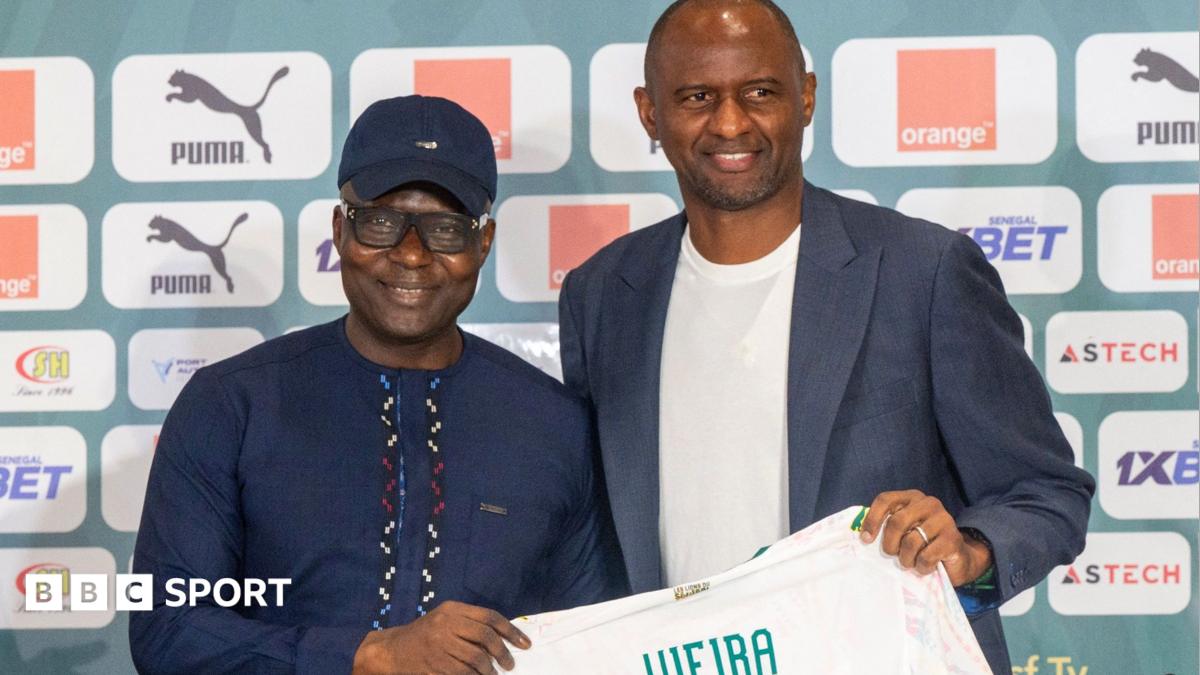
    Strasbourg, which shares its BlueCo consortium ownership with English Premier League giant Chelsea, hosts La Liga side Rayo Vallecano at its recently upgraded Stade de la Meinau for the second leg of the UEFA Conference League semi-finals. Needing to overturn a narrow 1-0 deficit from the opening fixture in Madrid, Patrick Vieira’s side? No, Gary O’Neil, the English manager appointed earlier this year, will lead the squad out for the biggest match the club has ever contested on the continental stage. The winner of the tie will advance to the May 27 final in Leipzig, where they will face either England’s Crystal Palace or Ukraine’s Shakhtar Donetsk — neither of which have secured a European final spot before this tournament either.

    For long-time supporters of the Strasbourg-based club, located on France’s eastern border with Germany and home to the European Parliament, even the prospect of reaching a continental final would have been unthinkable not long ago. The club has only ever claimed one Ligue 1 title, back in 1979, and its prior best European run came a year later, when it bowed out to Ajax in the European Cup quarter-finals. A memorable 1997 upset over Liverpool in the UEFA Cup remains the only other high-profile continental win in the club’s history, putting Thursday’s opportunity in stark context.

    The road to this semi-final has not been an easy one. Just 15 years ago, Strasbourg was on the brink of extinction, forced into liquidation after catastrophic financial mismanagement that sent it tumbling down to the amateur regional fourth and fifth tiers of French football. After a painstaking rebuild led by club president and former Strasbourg player Marc Keller, the club fought its way back to Ligue 1 in 2017, nearly a decade after its relegation, and cemented its place as a steady top-flight outfit. But competing at a continental semi-final level remained out of reach with the club’s small, fan-aligned operating model — which is what led Keller’s board to approve BlueCo’s takeover in June 2023, one year after the American consortium purchased Chelsea.

    “We were conscious that we had gone as far as we could with our existing model,” Keller explained to French broadcaster RMC after Strasbourg knocked out German side Mainz 05 in the quarter-finals. Since the takeover, significant investment has poured into the first team, allowing the club to bring in talented young players, many loaned in from Chelsea, and qualify for the Conference League on the back of a strong 2023-24 league campaign under former manager Liam Rosenior.

    But that investment has come with a steep cost that has alienated the club’s core supporter base. Fans have grown increasingly frustrated by a clear pattern emerging under BlueCo: any player or coach that posts strong results at Strasbourg is quickly poached by the consortium’s flagship club, Chelsea, turning the French side into little more than a development feeder team. The anger boiled over in September 2024, when starting striker and fan favorite Emmanuel Emegha confirmed he would move to Stamford Bridge at the end of the season. Then, in January 2025, Chelsea poached Rosenior himself to take over as their first-team manager, a move that left supporters furious. Rosenior did little to defuse tensions, telling reporters he hoped Strasbourg fans would be proud that his work at the club earned him a job at a Champions League-winning side.

    Rosenior was replaced by O’Neil, who has already guided Strasbourg to a French Cup semi-final defeat this season. Ahead of Thursday’s make-or-break tie, O’Neil has called for the full-throated support of the home crowd, saying: “Thursday’s game is the biggest in the club’s history. We will need the same support and energy that we got against Mainz.”

    Yet the club’s most passionate and vocal supporters have no plans to set aside their grievances, even for a historic European night. Since the start of last season, leading supporters group Ultra Boys 90 has organized a silent protest for the first 15 minutes of every home match, holding their cheers to demonstrate their opposition to BlueCo’s ownership model. In an open letter published earlier this year, the group warned that Strasbourg’s current situation is a warning sign for football globally: “What is happening at Strasbourg is what the future could look like for the vast majority of clubs. They will be relegated to the role of feeder teams, without their own resources, with no soul and no link to where they come from.”

    While the group is urging fans to gather outside the stadium ahead of kick-off to welcome the team bus, the 15-minute silent protest will go ahead as planned on Thursday. Despite the discontent, the recently renovated Stade de la Meinau — which expanded its capacity to 32,000 after the construction of a new main stand — is sold out once again for the semi-final. For many fans in the stands, the day will bring a complicated mix of emotion: the chance to cheer their club to a historic first European final, but a growing unease about whether the club they have supported for generations will retain its identity under its new American owners, even if it lifts a trophy that was won by BlueCo’s Chelsea just 12 months ago.

  • Ukraine reports strike as Kyiv’s ceasefire due to begin

    Ukraine reports strike as Kyiv’s ceasefire due to begin

    Hours before Kyiv’s unilateral ceasefire was scheduled to take effect on Wednesday, a wave of coordinated Russian strikes across multiple Ukrainian regions left at least 28 people dead and more than 120 wounded, marking the deadliest assault on Ukrainian territory in weeks and derailing temporary hopes for a lull in fighting.

    Ukraine’s Interior Minister Igor Klymenko confirmed the strikes targeted civilian and infrastructure sites across 10 regions, stretching from the northeastern Chernigiv and Sumy to the southern coastal region of Odesa and the frontline Zaporizhzhia. By late Tuesday, the official death toll climbed one additional fatality in Kramatorsk, the last major Ukrainian-held city in the embattled Donetsk region. The attack on Kramatorsk’s city center killed six people, with Ukrainian President Volodymyr Zelensky condemning it as a deliberate strike on civilian targets. Four people also died in a strike on the central city of Dnipro, carried out just hours before Kyiv’s ceasefire deadline, while 12 were killed in frontline Zaporizhzhia, an attack Zelensky called “absolutely without military justification.”

    Moscow’s actions drew sharp condemnation from senior Ukrainian officials, who accused the Kremlin of deliberate cynicism just days after both sides announced separate unilateral ceasefire plans tied to Russia’s annual May 9 World War II Victory Day commemorations. Russia first called for a pause in fighting to mark the holiday, which the Kremlin has framed in recent years as a ideological extension of the 1945 Soviet victory over Nazi Germany to justify its 2022 full-scale invasion. Kyiv later announced its own separate 36-hour ceasefire set to begin Wednesday, just ahead of Russia’s planned celebrations.

    “With mere hours until Ukraine’s ceasefire proposal comes into force, Russia shows no signs of preparing to end hostilities. On the contrary, Moscow intensifies terror,” Ukrainian Foreign Minister Andrii Sybiga wrote on social media platform X early Wednesday. Zelensky similarly denounced Moscow’s actions as “utter cynicism” for launching deadly attacks while publicly seeking a pause in hostilities. As of early Wednesday, Russian officials had not reported any new Ukrainian strikes in the first hours of Kyiv’s proposed truce, but Ukrainian authorities in southern Zaporizhzhia confirmed that Moscow had targeted local infrastructure overnight.

    In a surprising development that broke a months-long period of quiet diplomatic contact, U.S. Secretary of State Marco Rubio spoke by phone Tuesday with Russian Foreign Minister Sergei Lavrov at the Russian side’s request. A State Department spokesperson confirmed the two discussed U.S.-Russia relations, the ongoing war in Ukraine, and relations with Iran, but neither side released further details on the substance of the conversation. Russia’s foreign ministry confirmed the call added that the pair had discussed scheduling future bilateral contacts, offering no additional context.

    This year’s May 9 Victory Day celebrations in Russia have been significantly scaled back, a shift widely attributed to growing concerns over potential Ukrainian strikes on parade sites. For the first time since the full-scale invasion began, no military hardware will be displayed during Moscow’s main parade, and Russian authorities cut mobile internet access across the capital on Tuesday, with restrictions set to remain in place through Saturday. Ukraine has stepped up long-range retaliatory strikes in recent weeks, targeting Russian oil infrastructure and residential and government sites in Moscow, strikes Kyiv frames as justified retaliation for Russia’s regular missile and drone attacks on Ukrainian cities.

    Temporary unilateral ceasefires have been implemented occasionally during the four-year war, most recently a pause in long-range attacks during Orthodox Easter last month. However, there is little indication that either side is willing to move toward comprehensive peace talks. Moscow has issued non-negotiable demands that Kyiv withdraw all troops from the occupied Donbas region and permanently renounce any future military cooperation with Western allies, terms Kyiv has rejected as equivalent to unconditional surrender.