Hours before Kyiv’s unilateral ceasefire was scheduled to take effect on Wednesday, a wave of coordinated Russian strikes across multiple Ukrainian regions left at least 28 people dead and more than 120 wounded, marking the deadliest assault on Ukrainian territory in weeks and derailing temporary hopes for a lull in fighting.
Ukraine’s Interior Minister Igor Klymenko confirmed the strikes targeted civilian and infrastructure sites across 10 regions, stretching from the northeastern Chernigiv and Sumy to the southern coastal region of Odesa and the frontline Zaporizhzhia. By late Tuesday, the official death toll climbed one additional fatality in Kramatorsk, the last major Ukrainian-held city in the embattled Donetsk region. The attack on Kramatorsk’s city center killed six people, with Ukrainian President Volodymyr Zelensky condemning it as a deliberate strike on civilian targets. Four people also died in a strike on the central city of Dnipro, carried out just hours before Kyiv’s ceasefire deadline, while 12 were killed in frontline Zaporizhzhia, an attack Zelensky called “absolutely without military justification.”
Moscow’s actions drew sharp condemnation from senior Ukrainian officials, who accused the Kremlin of deliberate cynicism just days after both sides announced separate unilateral ceasefire plans tied to Russia’s annual May 9 World War II Victory Day commemorations. Russia first called for a pause in fighting to mark the holiday, which the Kremlin has framed in recent years as a ideological extension of the 1945 Soviet victory over Nazi Germany to justify its 2022 full-scale invasion. Kyiv later announced its own separate 36-hour ceasefire set to begin Wednesday, just ahead of Russia’s planned celebrations.
“With mere hours until Ukraine’s ceasefire proposal comes into force, Russia shows no signs of preparing to end hostilities. On the contrary, Moscow intensifies terror,” Ukrainian Foreign Minister Andrii Sybiga wrote on social media platform X early Wednesday. Zelensky similarly denounced Moscow’s actions as “utter cynicism” for launching deadly attacks while publicly seeking a pause in hostilities. As of early Wednesday, Russian officials had not reported any new Ukrainian strikes in the first hours of Kyiv’s proposed truce, but Ukrainian authorities in southern Zaporizhzhia confirmed that Moscow had targeted local infrastructure overnight.
In a surprising development that broke a months-long period of quiet diplomatic contact, U.S. Secretary of State Marco Rubio spoke by phone Tuesday with Russian Foreign Minister Sergei Lavrov at the Russian side’s request. A State Department spokesperson confirmed the two discussed U.S.-Russia relations, the ongoing war in Ukraine, and relations with Iran, but neither side released further details on the substance of the conversation. Russia’s foreign ministry confirmed the call added that the pair had discussed scheduling future bilateral contacts, offering no additional context.
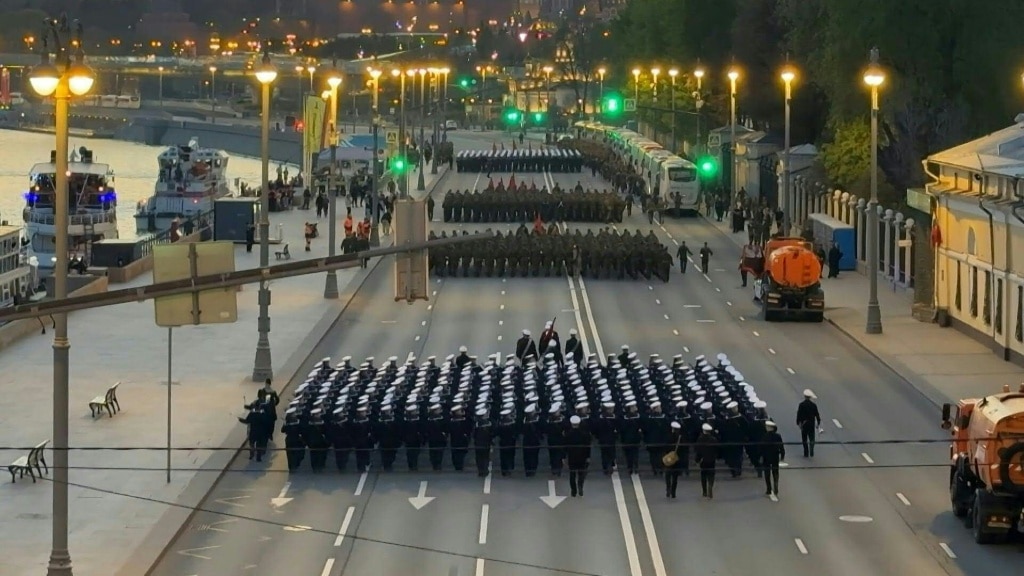
This year’s May 9 Victory Day celebrations in Russia have been significantly scaled back, a shift widely attributed to growing concerns over potential Ukrainian strikes on parade sites. For the first time since the full-scale invasion began, no military hardware will be displayed during Moscow’s main parade, and Russian authorities cut mobile internet access across the capital on Tuesday, with restrictions set to remain in place through Saturday. Ukraine has stepped up long-range retaliatory strikes in recent weeks, targeting Russian oil infrastructure and residential and government sites in Moscow, strikes Kyiv frames as justified retaliation for Russia’s regular missile and drone attacks on Ukrainian cities.
Temporary unilateral ceasefires have been implemented occasionally during the four-year war, most recently a pause in long-range attacks during Orthodox Easter last month. However, there is little indication that either side is willing to move toward comprehensive peace talks. Moscow has issued non-negotiable demands that Kyiv withdraw all troops from the occupied Donbas region and permanently renounce any future military cooperation with Western allies, terms Kyiv has rejected as equivalent to unconditional surrender.