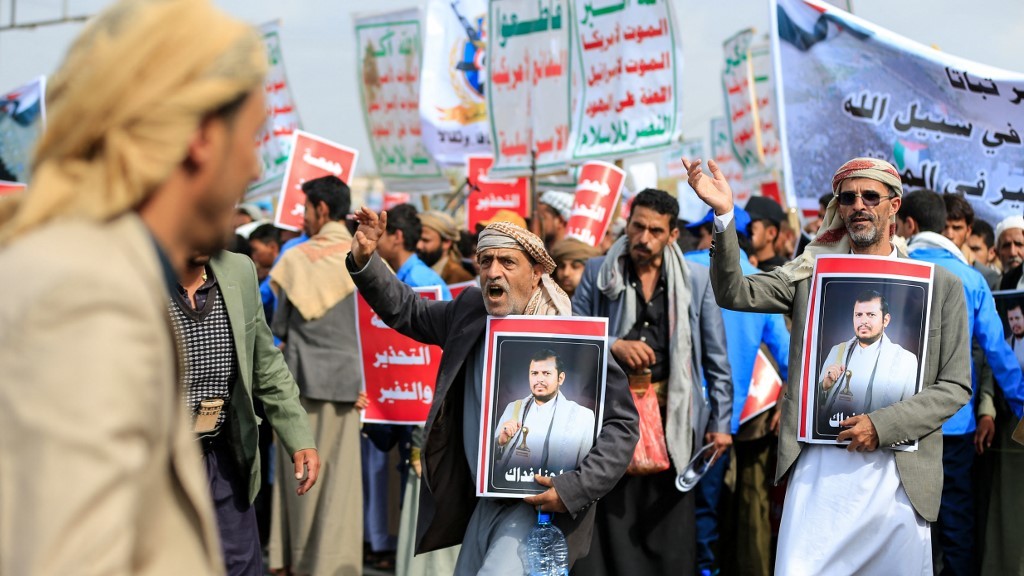
Amid escalating regional tensions that have sent global energy markets reeling, the top leader of Yemen’s Houthi movement has issued a firm public denial of allegations that the group launched a drone attack targeting Saudi Arabia’s holy city of Mecca. In a televised address broadcast to followers and international observers alike, Abdul-Malik al-Houthi dismissed the accusation of targeting the Islamic holy site as a “major lie”, emphasizing that the Houthi movement holds a core commitment to protecting all of Islam’s sacred locations. Instead of claiming or acknowledging any strike on Mecca, al-Houthi shifted blame to what he called the “Zionist enemy” — a reference to the State of Israel — framing Israel as the true source of danger to the region’s holy sites. Al-Houthi warned that Israel seeks to target all major Islamic sacred sites, including Mecca, Medina, and Jerusalem’s Al-Aqsa Mosque, and called for a unified Islamic alliance to confront this purported threat, stating that the movement stands ready to join this collective defensive effort. The denial comes on the heels of major territorial advances and military actions by the Houthis, formally known as Ansar Allah, that have upended security along one of the world’s most critical energy chokepoints. Over just one weekend, the group seized large swathes of Yemen’s coastline adjacent to the Bab-el-Mandeb strait, a key Red Sea chokepoint through which a large share of global maritime energy trade passes. Immediately following this territorial gain, the Houthis carried out an attack on the East-West Pipeline, a critical Saudi energy infrastructure that transports roughly 4% of the world’s total daily oil supply. According to reporting from Reuters, Saudi Arabian energy officials estimate that repairing the damage from the drone strike on the pipeline will take between five and six weeks, leaving a key piece of the kingdom’s energy network offline for more than a month. The recent Houthi advances have already caused significant volatility in global energy markets. Oil prices rose sharply last week in response to the group’s rapid offensive, which secured full control of the Yemeni side of the Bab-el-Mandeb strait, a pinch point for Saudi oil exports heading to global markets. For their part, Houthi officials have framed their ongoing military campaign as a direct response to what they say are unprovoked Saudi attacks on Yemeni territory, including a recent drone strike that targeted Yemen’s capital city of Sanaa. In his address, al-Houthi pushed back against claims that the Houthis are the aggressor in the long-running regional conflict, stating that Saudi Arabia has been the party that initiated hostilities at every turn of the conflict. “We are in a defensive position. We are not the ones who initiate aggression,” al-Houthi said. This original reporting was produced by Middle East Eye, a media outlet that provides independent, in-depth coverage of the Middle East, North Africa, and surrounding global regions. Information on republishing MEE content and details about the organization are available through the outlet’s official channels.
博客
-

Why an American football game played the Canadian national anthem
Nestled just a two-and-a-half-hour drive from Toronto across Lake Ontario, the Buffalo Bills’ brand-new $2.2 billion Highmark Stadium has long drawn a passionate fanbase that crosses the US-Canada border. When the franchise hosted its 2025 season home opener against the Detroit Lions on Thursday night, that cross-border connection took center stage in a heartfelt moment that cut through soaring political and trade tensions between the two North American neighbors.
Despite the fact that no Canadian franchise competes in the National Football League, the sport counts nearly 15 million Canadian fans—roughly one-third of the country’s total population. For the Bills, this northern fanbase is not just a casual niche: industry data shows 10 to 15 percent of the team’s season ticket holders live in Canada, and the combined population of nearby Greater Toronto and Hamilton exceeds 8 million, far outstripping the 1.5 million residents of western New York. This massive adjacent market has made Canadian support a core pillar of the Bills’ business model.
In a surprising but intentional nod to this loyal northern following, the Bills opened the game with a performance of *O Canada*, delivered by iconic 1990s Canadian rock group the Barenaked Ladies. The stadium field was adorned with both the American stars and stripes and Canada’s maple leaf flag, and thousands of fans in the sold-out crowd joined in to sing the anthem with full enthusiasm. Pre-game tailgates, a beloved American game-day tradition, were already packed with Canadian fans decked out in the Bills’ trademark red, white and blue, many of whom had crossed the border hours early to explore the new facility and soak in the opening day atmosphere.
The warm reception of the Canadian anthem comes at a time of unprecedented friction between Washington and Ottawa. Since Donald Trump’s return to the US presidency, bilateral relations have frayed rapidly: Trump has repeated controversial calls to annex Canada, renamed Lake Ontario (which sits between the two nations) to Lake America via executive order, and launched an escalating tit-for-tat tariff war that has hit industries on both sides of the border hard. Canadian Prime Minister Mark Carney has publicly stated Canada is “at war” with the US over trade, while Trump has lashed out at Canada, calling the country “nasty” and “entitled”. In response to the trade hostilities, many Canadian consumers have boycotted travel and spending in the US, and cross-border economic activity has dropped sharply.
For many Canadian fans in attendance, the anthem performance felt like a meaningful gesture of solidarity amid the political rancor. Ben Kerr, a fan from Bradford, Ontario who traveled to the game, noted that he intentionally bought all his food and beer in Canada before crossing the border to avoid supporting the US economy during the tariff dispute. Even so, he said he has always felt welcome in Buffalo, and called the Bills’ decision “a nice acknowledgement” of Canadian fans’ role in the team’s success. This is not the first time Buffalo’s sports community has rallied behind its northern neighbors: during an April Buffalo Sabres NHL playoff game, a microphone failure cut off the live performance of *O Canada*, and the entire crowd filled in to sing the anthem in full—a moment that moved Canadian fans across the region.
Many American fans at the game echoed that cross-border warmth. Drew Grier, a local resident who lives just eight minutes from Highmark Stadium, framed the anthem performance as a core part of Buffalo’s identity as a border community. “If anyone is polarizing it, it’s coming from those outside here, because those of us here, we love Canada,” he said. Even fans of opposing teams supported the gesture. Carol Breed, a 74-year-old die-hard Detroit Lions fan from Battle Creek, Michigan, who was unable to attend the opener, celebrated the decision by organizing her own cross-border tribute: she drove across the new Gordie Howe International Bridge (which itself has become a point of recent bilateral tension) and sang the US anthem until reaching the halfway point, then switched to *O Canada*. “I just hate what Trump has done to the partnership,” she said, noting that for many Michiganders, Canada is viewed as nothing less than family.
Not all feedback was positive, however. A small number of fans pushed back on social media and in post-game comments, arguing that playing the Canadian anthem was unnecessary when no Canadian team was competing on the field. “The only acceptable reason to sing that anthem would be if they were playing a Canadian team, but they don’t play any Canadian teams,” one fan posted online. Attendee David Waring echoed that sentiment, saying he did not think the gesture was needed.
But for team leadership and NFL Canada, the decision was a straightforward reflection of economic and social reality. Gavin Kemp, who has led the NFL Canada office for eight years, explained that the Bills were simply “leaning into one of their biggest parts of their market”. Kemp added that sports has a unique ability to rise above political divisions: “All this politics is kind of secondary to the fact that your team is doing fantastic right now.” For countless cross-border fans on both sides Thursday night, that message rang clear.
-

Uber ordered to pay $40m to family of woman killed after driver left her on highway
A California arbitration process has ended with ride-hailing giant Uber being mandated to pay $40 million in damages to the family of 23-year-old Emily Normandin-Parker, a UCLA graduate who was killed by a passing vehicle after her Uber driver forced her out of the car on a busy highway in August 2023.
Court documents detail that Normandin-Parker had booked an Uber ride home alongside a friend, when the friend became ill and vomited inside the vehicle. Both young women were intoxicated at the time of the incident, according to official filings. Normandin-Parker’s parents say their daughter made the safe, responsible decision to book a ride rather than drive herself, a choice that ultimately cost her life.
The driver, identified as Vu Tran, pulled onto the shoulder of the highway to eject both passengers instead of driving to a nearby exit to drop them off in a secure, well-lit location. After leaving the two women stranded on the side of the highway, Tran did not contact emergency services for assistance. Instead, he left the scene to call Uber solely to request a cleaning fee from Normandin-Parker’s family, showing far greater concern for damage to his new vehicle than the safety of his passengers, according to retired judge and arbitrator Richard Stone, who oversaw the five-day arbitration process.
Shortly after being forced out of the car, Normandin-Parker was struck by another passing vehicle and killed instantly. Her family, represented by the national law firm Panish, Shea, Ravipudi, pursued legal action against Uber, which had long argued that its drivers are classified as independent contractors, and therefore the company bears no legal liability for driver actions.
Arbitrator Stone rejected Uber’s liability argument and issued the binding $40 million damage award in favor of the victim’s parents. The law firm for the family also revealed that Uber had initially offered a $10 million out-of-court settlement that included a non-disclosure agreement barring the family from speaking publicly about the incident, which the family outright refused.
In a post-ruling statement to the Wall Street Journal, Uber said it disagreed with the arbitrator’s decision to hold the company legally responsible for the fatal incident. The company added that it has implemented a series of safety updates in recent years, including new technological tools, updated policies, and safety guidance that explicitly instructs drivers to avoid dropping passengers off in dangerous locations like highway shoulders. The BBC has confirmed that it reached out to Uber for additional comment on the ruling, and the company has not yet issued further public statement.
In a statement released after the ruling, Normandin-Parker’s parents said: “Emily did everything Uber tells riders to do – she made the responsible choice not to drive and we trusted Uber to get her home safely. That trust cost our daughter her life.” Arbitrator Stone echoed the family’s sentiment in his ruling, noting that Tran’s choice to strand the young women on a highway shoulder was an egregious lapse of responsibility that could have been avoided entirely with a short detour to a safe drop-off location.
-

Watch: Sixth batch of UFO files includes orbs from 1952
A long-awaited new batch of declassified unidentified flying object (UFO) records has been made public, and among the most compelling additions to the historical archive is never-before-seen footage of glowing airborne orbs documented all the way back in 1952.
The visual record was captured by a serving officer with the United States Navy, who witnessed the cluster of unusual bright objects moving through the sky in an uncontrolled, unidentifiable pattern. Following the encounter, the Navy officer followed official protocol and filed a detailed report of the sighting, along with the footage he had captured, with the U.S. Air Force’s formal UFO investigation program, the body tasked at the time with examining unexplained aerial phenomena reported across the country.
This release marks the sixth round of previously classified UFO files opened to public scrutiny, part of a broader ongoing push toward greater government transparency around unexplained aerial encounters that stretches back decades. Researchers, ufologists, and members of the public have long pushed for access to these sealed government records, arguing that open access allows for independent analysis of historical encounters that have never been fully explained.
The 1952 orb footage joins hundreds of other documents, sighting reports, and visual materials that have been declassified in recent years, offering new opportunities for researchers to examine patterns in historical UFO sightings and re-analyze previously unpublicized evidence from early Cold War-era U.S. military investigations into unexplained aerial activity.
-
Teen who piloted Channel boat with 165 migrants jailed
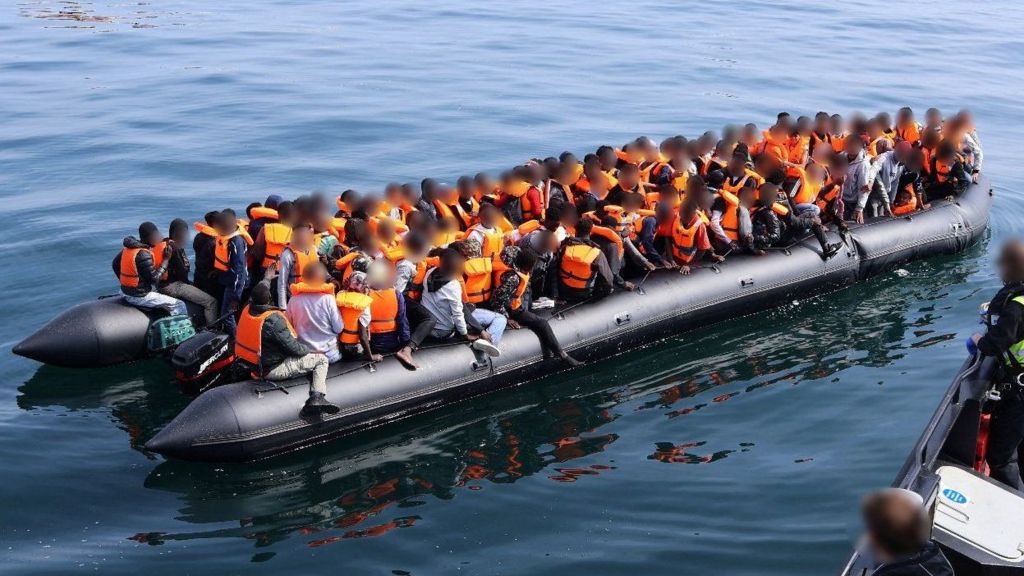
A 19-year-old South Sudanese national who steered a severely overcrowded dinghy carrying 165 migrants across the English Channel to the United Kingdom has been handed a 27-month prison sentence after pleading guilty to endangering the lives of everyone on board. The July 23 crossing marked the largest single small boat migrant crossing recorded at that time, a record that was later broken by an August incident that saw 230 people packed into a single vessel. This conviction marks the 16th secured under the new UK offense of endangerment at sea, which was introduced in January specifically to target small boat helmsmen working with people smuggling networks.
The sentencing hearing at Canterbury Crown Court on Friday delivered a firm ruling from Judge Sarah Counsell, who concluded the crime was so inherently serious that only an immediate custodial sentence could be justified. She also issued a formal warning to the defendant, Chan Mathok Atak, that as a non-UK national he will face automatic deportation at the end of his prison term in most cases.
Prosecutors laid out the full scale of the risks created during the crossing, detailing that the inflatable rigid-hulled dinghy measured just 3.9 meters wide and 14.3 meters long — approximately the same length as a standard city bus — yet carried 165 people, including 31 children as young as 14 years old. Of the vessel’s two outboard engines, only one was functional when it departed from northern France for the UK. By the time UK Border Force crews intercepted the craft mid-Channel, it was already slowly deflating after almost 24 hours adrift at sea.
A joint investigation led by the National Crime Agency (NCA) uncovered multiple catastrophic safety failures that put every passenger at immediate risk of death. The boat was classified as severely overcrowded, with only extremely limited supplies of food, drinking water and necessary medication on board. Lifejackets provided to passengers were found to be completely inadequate for an open sea crossing, and the close proximity of power batteries to exposed fuel cans created a significant fire hazard. Prosecutors confirmed there was no evidence to suggest Atak had any formal maritime training or prior experience navigating open water, meaning he was unqualified to steer any vessel, let alone an overloaded craft in one of the world’s busiest shipping lanes.
Court documents show that as border forces approached the vessel to intercept it, Atak attempted to cover his role as the helmsman: he moved away from the working engine to another section of the boat and removed the black “Italia” branded jacket he had been wearing while steering. However, 90 minutes of aerial surveillance footage captured by law enforcement clearly showed Atak operating the only functional engine for the majority of the crossing, and one passenger was recorded continuously pumping air into the deflating hull to keep it afloat. Initially, Atak told investigators he had paid smuggling gangs €200 to secure a spot on the crossing himself, and denied he had acted as the boat’s pilot.
NCA Senior Investigating Officer John Turner emphasized the extreme recklessness of Atak’s actions, noting that disaster was only avoided because law enforcement intercepted the vessel before it sank or suffered a catastrophic failure. “His actions could have easily resulted in many deaths had this boat not been intercepted,” Turner said. “Not only did he place the lives of 165 migrants in severe peril, this flimsy vessel was entirely unsuitable for crossing one of the world’s busiest shipping lanes.”
UK Border Security and Asylum Minister Anna Turley labeled Atak an “evil criminal”, pointing to the conviction as proof of the government’s crackdown on people smuggling operations across the Channel. “He joins 16 other pilots sentenced in just three months for endangering lives with flimsy, overcrowded dinghies,” Turley said. “This is a stark reminder of the ruthless acts used by smuggling gangs to exploit desperate people for profit, but today shows there is nowhere for them to hide.”
In Atak’s defense, barrister Audrey Mogan argued that her client bore no responsibility for the dangerous conditions of the crossing. Mogan stated there was no evidence linking Atak to decisions around how many passengers were loaded onto the boat, the poor condition of the dinghy, or the lack of adequate safety equipment including working lifejackets and flares. She also told the court that Atak had fled extreme violence in his home country of South Sudan, where he witnessed atrocities including mass shootings, throat slashings and militia-initiated arson on civilian neighbourhoods.
-
Russian hybrid attacks against Europe intensifying, says Macron
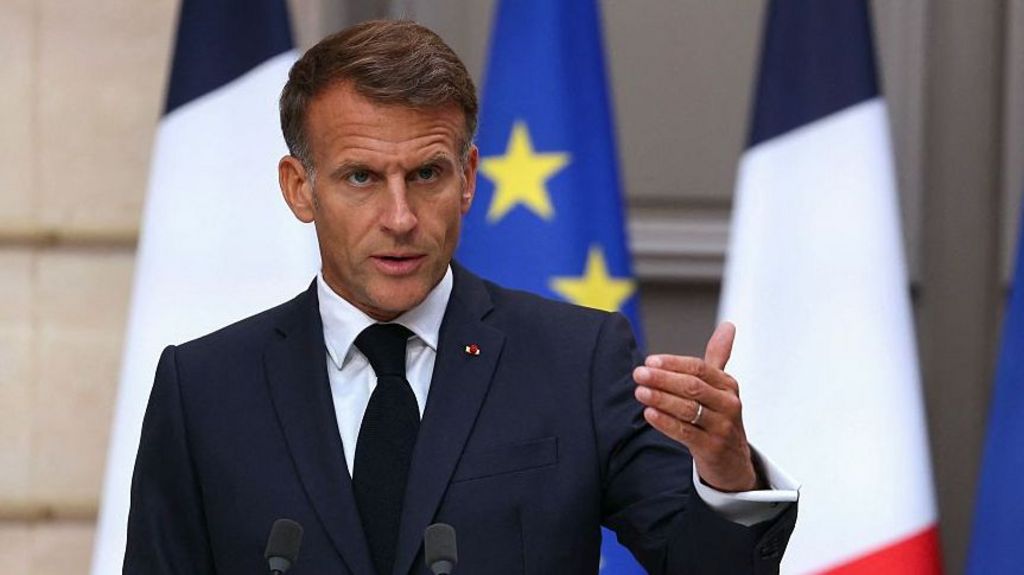
French President Emmanuel Macron has issued a stark public warning that the risk of Russian hybrid attacks targeting both France and the broader European continent has grown significantly in recent weeks. Speaking from the Elysee Palace during a press conference following a security-focused meeting with French party leaders — where the discussions centered on the far-reaching security implications of ongoing conflicts in Ukraine and the Middle East — Macron outlined urgent steps France is taking to shore up its domestic defenses against this evolving threat.
Macron confirmed that France has already been the target of multiple Russian hybrid operations in just the past month, and stressed that these aggressive actions will not go unanswered by the French government. “In recent weeks, the Russian hybrid threat against Europeans and against France has intensified,” he told assembled reporters. “The intent is to intimidate us and break our effort to support Ukraine. The result will be the exact opposite. We are not intimidated because we know that our security today and tomorrow is at stake in Ukraine.”
The French leader referenced two recent high-profile indicators of the growing threat: last month’s drone attack on Germany’s Leipzig airport, which Western officials have directly attributed to Russian operatives, and recent public comments from Polish Prime Minister Donald Tusk, who warned that Russia is actively planning potential drone and missile strikes against Poland and other NATO member states along the alliance’s eastern flank. A growing cohort of European senior leaders have echoed these warnings in recent weeks, with many suggesting Moscow is stepping up provocative attacks to test European unity and resolve in its long-term commitment to supporting Kyiv against Russia’s full-scale invasion.
In response to the elevated threat level, Macron announced he has formally instructed the French national government to draft a comprehensive new defense plan focused on shielding critical domestic infrastructure, as well as the country’s most sensitive defense industry and advanced technology sites, from two of the most common hybrid attack vectors: drone strikes and cyberattacks. Beyond domestic defense preparations, the president also laid out next steps for coordinated international action on a separate pressing security priority: energy market stability.
Macron confirmed France will convene a dedicated G7 meeting in the coming weeks to address coordinated energy policy, and will also raise the issue of European natural gas stockpiles with the European Commission during upcoming negotiations. “In the coming weeks, we will have a G7 meeting devoted to these energy issues, both to strengthen cooperation and to avoid unnecessary tensions between the G7 countries and our main partners,” he explained. “It will also be an opportunity to consider options for a possible release or unlocking of strategic reserves.”
-

Resident Evil movie director says he was not prepared for fan backlash
When you pair one of the horror genre’s most buzzed-about modern directors with the best-selling survival horror video game series in history, it is a combination that was always bound to spark intense conversation and high expectations. That exact pairing has arrived in the form of Zach Cregger’s *Resident Evil*, a brand-new big-screen adaptation of Capcom’s legendary franchise that has already divided fans ahead of release, even as critics praise its creative approach to bringing the game experience to life.
First launched in 1996 for the original Sony PlayStation by Japanese game developer Capcom, *Resident Evil* revolutionized the video game landscape. Unlike most 1990s games that cast players as overpowered, unflappable heroes, the original *Resident Evil* forced audiences to navigate terrifying environments with scarce ammo, limited healing items, and constant dread — a formula that invented the survival horror genre and spawned one of gaming’s most enduring franchises. Across nearly 30 years of smart remakes, innovative reinventions, and expanded lore, the series has sold more than 213 million copies worldwide, built a global fanbase that obsessively dissects its story and characters, and turned locations like Raccoon City into household names for gamers.
Cregger, who earned widespread acclaim from horror fans and critics alike for his original, boundary-pushing work on hit horror films *Barbarian* and *Weapons*, is a lifelong fan of the *Resident Evil* series. For his adaptation, he opted not to retread the familiar storylines and iconic characters that long-time fans know from the games. Instead, he crafted an entirely original narrative centered on Bryan, a new character portrayed by Austin Abrams — who previously collaborated with Cregger on *Weapons*. Bryan, a working courier, accepts what seems like a routine delivery job to a local hospital in Raccoon City, only to find himself trapped in the opening hours of a deadly viral outbreak that turns ordinary people into bloodthirsty, monstrous creatures. What begins as an ordinary workday quickly devolves into a relentless fight for survival, mirroring the tense, resource-scare experience of playing the original games.
This creative choice, however, sparked immediate backlash from segments of the *Resident Evil* fanbase when the film’s first trailer dropped online. Comment sections were flooded with complaints questioning the absence of beloved franchise characters like Jill Valentine, Leon Kennedy, and Albert Wesker, as well as iconic fan-favorite monsters. Cregger, who has had to repeatedly defend the project from accusations that he is simply cashing in on the *Resident Evil* brand, admits he was caught off guard by the intensity of the criticism.
“I think I was naive,” Cregger told BBC Newsbeat in an interview. “I was expecting people to be excited to see a Resident Evil movie that felt in the spirit of the games. What I was trying to do is make a movie that really honoured the experience of playing them.”
This is far from the first time *Resident Evil* has been adapted for the screen. The first big-screen adaptation launched in 2002, kicking off a six-film franchise helmed by writer-director Paul W.S. Anderson and starring Milla Jovovich. While those films eventually gained a cult following, they never won over critics and deviated heavily from the source material’s lore. A 2021 reboot that leaned more closely into the games’ story and a 2022 Netflix original series also failed to satisfy fans and critics alike. Many long-time franchise fans blame Constantin Film, the German production company that owns the live-action film rights to *Resident Evil*, for the consistent low quality of past adaptations. Unconfirmed online reports suggest Constantin’s licensing agreement with Capcom prohibits the studio from setting its adaptations within the official timeline of the games. Cregger also noted that he never received any communication from Capcom during the film’s production, stating: “Nobody from Capcom ever reached out to me, ever, in any way.” Though Constantin declined to comment on the record, BBC Newsbeat has confirmed that informal coordination between Capcom and the film’s production team happened behind the scenes.
Early critical reviews of Cregger’s *Resident Evil* have been largely positive, with many critics noting that the director successfully delivers on his goal of capturing the feeling of playing a *Resident Evil* game rather than just copying its plot. In a three-star review, NME pondered whether the film marks the first great video game horror adaptation, writing that “for a large chunk of the film’s runtime, the answer is a resounding yes” — though the review criticized Bryan’s encounters for growing repetitive in the second half. The Jam Report’s Doug Jamieson awarded the film four stars, praising Cregger’s approach: “He understands adaptation as translation rather than imitation.” Looper critic Alastair Ryder gave the film an 8 out of 10 score, writing, “Zach Cregger has done the best job I’ve seen of translating the experience of playing a video game and making it feel cinematic.”
Cregger says he acknowledges it is almost impossible to please every segment of the franchise’s massive fanbase, and that replicating a game’s plot beat-for-beat was never his goal. “If I had delivered a faithful retelling of one of the stories in the games, I feel like those people would probably be upset with me for that too, because I would have messed it up somehow, inevitably,” he explained. “So all I can do is just tell the story that I think is going to be the very best story. If somebody’s going to have a problem that it doesn’t do exactly what they had in their mind of what a Resident Evil movie is, I can’t say anything to that.”
While the full verdict from general audiences and the wider fanbase is still pending, the film is currently tracking for a strong opening weekend at the global box office. It arrives in theaters alongside a recent wave of commercially successful video game adaptations, including *The Super Mario Bros. Movie* and *Minecraft*, which earned mixed critical reviews but drew massive audiences worldwide.
-

Ronaldo named in Jesus’ first Portugal squad
Four decades after his birth, 41-year-old Portuguese football icon Cristiano Ronaldo has put an end to weeks of public uncertainty over his international football future: he is set to continue representing his nation, after being included in the first 25-man senior squad assembled by newly appointed Portugal head coach Jorge Jesus.
Ronaldo’s future with the Portuguese national side had been the subject of widespread debate since the team’s 2026 World Cup round-of-16 exit at the hands of eventual tournament champions Spain back in July. Following that disappointing defeat, the Al-Nassr striker, who had previously stated the Qatar 2022 World Cup would be his last international tournament and was visibly emotional in tears after the July elimination, declined to give a definitive answer on whether he would continue pulling on the Portugal jersey. When asked about his plans, he only noted that he would consult his family and make a decision after a period of quiet reflection. That ambiguity fueled widespread rumors that he could follow the path of his long-time rival Lionel Messi and step away from international competition.
This new call-up confirms those rumors were unfounded. Jesus, the 72-year-old coach who took over the Portugal job after Roberto Martinez stepped down in the wake of the World Cup exit, has a well-established working relationship with Ronaldo: the pair worked together at Al-Nassr last season, leading the Saudi club to its first Saudi Pro League title in seven years. Jesus opted to include the all-time leading men’s international goalscorer in his squad for four upcoming UEFA Nations League matches scheduled between September 24 and October 4.
If Ronaldo features in these upcoming fixtures, he will continue to extend his already unprecedented record as one of the oldest outfield players to compete at the top of international men’s football. He will turn 42 ahead of next summer’s Nations League finals, and would be 43 by the time UEFA Euro 2028 kicks off. The current record for the oldest player to feature at a European Championship is held by Ronaldo’s former Portugal teammate Pepe, who played his final Euro match in 2024 at 41 years and 130 days old.
Alongside Ronaldo, the 25-man squad includes a host of top Premier League-based talent: Manchester United defenders Diogo Dalot and midfielder Bruno Fernandes, Manchester City center-back Ruben Dias, and Chelsea winger Pedro Neto all earned call-ups for the crucial Nations League fixtures.
Portugal’s Nations League schedule kicks off with a home match against Wales on September 24 at 19:45 BST, followed by an away trip to face Norway three days later. The side will then travel to Denmark for a match on October 1, before returning to their home ground to host Norway for a rematch on October 4 to close out the opening set of group stage fixtures.
-

Houthi advance aids Iran but saps rebel support in Yemen
In a lightning eight-day offensive that began on September 3, 2026, Houthi forces have seized control of nearly all of Yemen’s Red Sea coastline, including the shores of the Bab el-Mandeb Strait – one of the world’s most critical maritime chokepoints for global trade. The operation started with a push to sever the strategic highway connecting the Yemeni city of Taiz to the coastal port of Mokha, and by September 11, Houthi fighters had secured Mokha, the coastal town of Dhubab, and Mayyun Island, which sits directly at the strait’s entrance. Per United Nations estimates, the rapid advance has displaced over 100,000 people, many of whom have undertaken dangerous sea crossings to seek refuge in neighboring Djibouti, after the Houthis captured roughly 2,100 square miles of territory. This territorial shift marks the most significant change to Yemen’s frontlines since a UN-brokered truce froze conflict lines in April 2022, ending years of stalemate.
Most international analysis has framed the offensive as a new strategic tool for Iran – the Houthis’ key regional patron – to increase pressure on the United States and raise fresh threats to Saudi Arabia and global commercial shipping. While this framing is not inaccurate, it overlooks deeper, underreported drivers rooted in Yemen’s own domestic politics and the Houthis’ ongoing quest for domestic legitimacy.
To understand why the Houthis launched this attack now, it is necessary to revisit the timeline of Yemen’s decade-long civil conflict. The war entered its current phase in 2014, when the Houthi movement seized the capital Sanaa from the increasingly unpopular administration of President Abdrabbuh Mansur Hadi. A Saudi-led coalition intervened the following year to restore the internationally recognized government, triggering a decade of widespread destruction and famine that left the already impoverished nation in ruins. Since 2022, however, the conflict has been largely stalemated: the Houthis control most of northwest Yemen, while Saudi-backed government forces hold sway over large swathes of the south and east.
Houthi military spokesperson Yahya Saree has framed the offensive as a direct response to years of Saudi military aggression and the ongoing blockade of Houthi-held territory. This grievance is not fabricated: UN agencies have repeatedly documented the severe humanitarian damage caused by coalition restrictions on access to Yemeni ports and airspace throughout the conflict. The Houthis also trace the collapse of the informal truce to a July 13, 2026, strike on Sanaa International Airport’s main runway, carried out by Yemeni government forces with Saudi air support. The attack forced an Iranian aircraft carrying senior officers of the Islamic Revolutionary Guard Corps (IRGC) to divert mid-flight, prompting the Houthis to declare their ceasefire with Saudi Arabia over that same day. Within hours, they launched a missile strike on Abha International Airport in southern Saudi Arabia, announced a naval blockade of Red Sea shipping one week later, and opened a sustained missile campaign in early August, weeks before the September 3 ground offensive.
But analysts argue the coordinated ground campaign and seizure of Bab el-Mandeb’s strategic islands cannot be dismissed as mere retaliation for a single airstrike. Multiple interconnected, deliberate strategic calculations underpinned the move.
First, Iran’s own regional maneuvering created a unique opening. After Iran closed the Strait of Hormuz – another critical global energy chokepoint – in March 2026, following joint U.S.-Israeli strikes on Iranian targets, Saudi Arabia rerouted roughly eight times more crude oil exports through the Bab el-Mandeb Strait than it did in 2025. Houthi control of the strait gives Iran a second strategic chokehold that mirrors the leverage it holds over Hormuz. Yemeni security sources have also confirmed that a senior IRGC commander, Abdul Reza Shahlai, was deployed on the ground to oversee parts of the September operation. For the Houthis, the move also carries clear economic incentives: since closing Hormuz, Iran has charged commercial vessels up to $2 million per ship for safe passage through the strait, and the Houthis are widely believed to be seeking similar economic leverage to shore up their war-battered movement.
The most impactful domestic driver, however, is the Houthi calculation that conditions on the ground had become uniquely favorable for an offensive. Their fractured opposition in southern Yemen has grown even more divided after a 2025 diplomatic rift between Saudi Arabia and the United Arab Emirates led the UAE to withdraw all support for anti-Houthi militias in the south, leaving coastal government forces exposed. With the broader Middle East engulfed in multiple concurrent conflicts and Saudi Arabia focused on other regional priorities, the Houthis saw a window to act.
Crucially, the Houthis have framed the Bab el-Mandeb operation as a sovereign, national Yemeni action rather than a proxy move for Iran, with senior officials repeatedly rejecting claims they are merely an extension of Tehran’s regional agenda. The movement’s core goal has always been securing power within Yemen itself. As recently as 2023, Saudi Arabia and the Houthis were negotiating a comprehensive national ceasefire that would have ended Saudi restrictions and sanctions on Houthi rule, but talks collapsed after the 2023-2024 Red Sea crisis, when the Houthis ramped up attacks on commercial shipping in protest of Israel’s military campaign in Gaza. Riyadh has since shown no urgency to revive diplomatic negotiations.
The Houthis’ bet is that escalating the conflict on Yemeni ground – where any further conflict carries massive strategic and economic costs for Saudi Arabia – is the most reliable way to force Riyadh back to the negotiating table. This time, the movement calculates it holds enough leverage to secure the formal political recognition it has long sought, rather than settling for just the limited economic concessions Saudi Arabia was willing to offer in 2023.
Despite these rapid military gains, the offensive carries severe long-term risks for the Houthi movement that could undermine their core goal of securing domestic legitimacy. Throughout modern Yemeni history, no governing authority has ever managed to maintain full military and political control over the entire country. While the Houthis hold unrivaled military power across most of northwest Yemen, they have never pursued a broad inclusive political bargain with the internationally recognized government or other Yemeni political factions, prioritizing exclusive military control over power-sharing.
The group has taken tentative steps to consolidate popular support in newly captured territories: Houthi-affiliated media confirms that within days of seizing Mokha, the group reopened the port’s customs office, cut port fees and customs duties by up to 50%, distributed 20,000 food baskets to local residents across the coastal region, and offered a general amnesty to anti-Houthi fighters who surrendered control of the coast. Houthi leader Abdulmalik al-Houthi has also directly addressed southern Yemeni communities, clarifying that his forces only target Saudi-backed troops, not local residents.
But analysts characterize these moves as performative legitimacy-building, more public relations than substantive policy reform, and fall far short of the inclusive political bargain needed to unify Yemen. A decade of Houthi rule in Sanaa has demonstrated the movement has little interest in power-sharing, with a long-standing pattern of ruling through military force rather than broad political coalition.
More broadly, controlling the Bab el-Mandeb Strait and restricting Saudi shipping through the waterway reinforces the narrative – both across much of the world and within large parts of Yemen – that the Houthis remain an instrument of Iranian regional policy, regardless of their stated domestic objectives. The offensive also almost guarantees a forceful response from Houthi enemies, which could erode the movement’s newly gained military advantages. Saudi Arabia, which has already waged a decade of war in Yemen at enormous cost to Yemeni civilians, is unlikely to stand by. While few analysts expect Saudi-backed forces to attempt to retake Sanaa by force, the Houthis’ new territorial gains expose both their own fighters and Yemeni civilians to a new wave of devastating airstrikes from the Saudi-led coalition.
In the end, the Houthi gamble carries a high risk of backfiring. Seizing territory is a far simpler task than holding it and consolidating legitimate rule. The movement may now find itself controlling a strategic chokepoint that the international community is determined to reopen, while still failing to secure the one thing control of the strait can never deliver: the consent of the Yemeni people to their rule.
-
Jagtar Singh Johal granted bail nine years after being detained in India
After nearly nine years of incarceration without a final conviction in India, Scottish Sikh activist Jagtar Singh Johal has secured a major legal victory with a bail grant from the Delhi High Court, bringing cautious relief to his family and supporters who have long campaigned for his freedom.
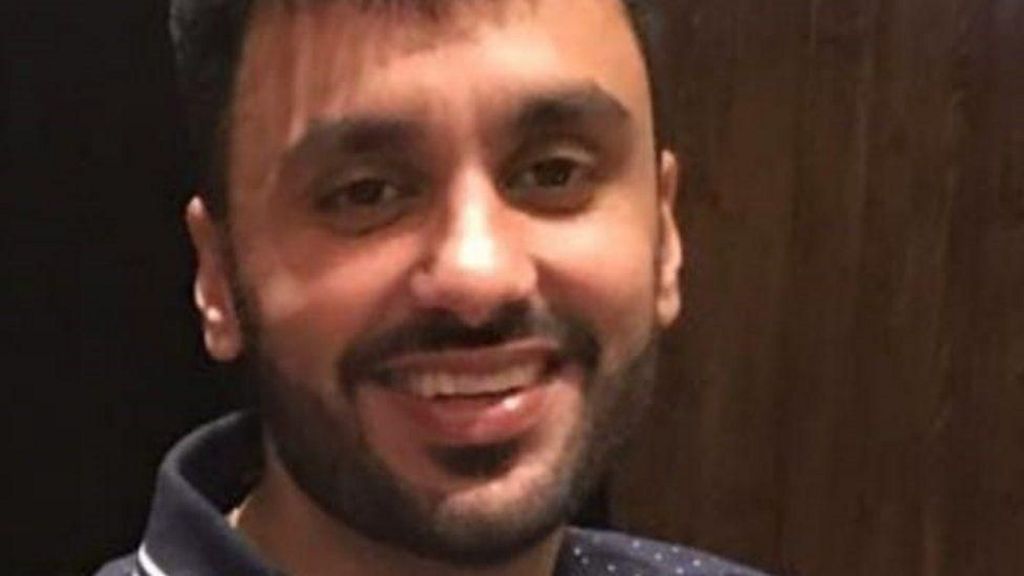
Johal, a 39-year-old native of Dumbarton, Scotland, was first taken into custody in India’s Punjab region in 2017, just weeks after he married there. Indian federal authorities have leveled serious terror-related charges against him, alleging he played a role in a string of targeted assassinations of religious and political figures. Last year, Johal was formally acquitted of charges that he provided financial backing to the Khalistan Liberation Force (KLF), an outlawed group that has carried out attacks in Punjab, but unresolved federal charges have kept him behind bars up to this ruling.
The terms of Johal’s bail come with significant restrictions: he is required to surrender his passport, deposit a personal bond of 500,000 Indian rupees (equivalent to roughly £3,907), is limited to access to just one personal phone, and is prohibited from making any media statements related to his ongoing case. For Johal’s family, who have spent years lobbying for his release, the ruling is a long-awaited breakthrough, though they stress it is only the first step toward bringing him home to Scotland.
“It is a really important milestone for Jagtar’s campaign,” Johal’s brother Gurpreet Singh Johal told BBC Radio Scotland Breakfast. “It has been a long haul and an expensive rollercoaster but the community and the public have kept me going to campaign to bring Jagtar home. This will be a huge relief for him.” Gurpreet added that the entire family has been overwhelmed by the news: “It is a momentous moment for the family, his wife has been crying since this morning. Everyone was joyful, my kids went to school saying they cannot wait to see their uncle coming home. It is just a first step, but it is a step in the right direction.”
Campaigners and supporters have long maintained that Johal’s detention is unjust. They argue he was targeted specifically for his online blogging documenting alleged human rights violations against the Sikh community in India, and that he was coerced into signing a false confession admitting involvement in the killings. A United Nations working group formally classified Johal’s detention as arbitrary back in 2022, and Johal himself has repeatedly alleged he was tortured while in custody. Indian authorities have consistently rejected the torture claims and have maintained that all judicial proceedings have followed full due process. The Johal family further assert that no credible evidence has ever been presented against Jagtar, noting that the case relies heavily on witness testimony that has since been recanted in open court.
Gurpreet, who has lobbied multiple UK governments for diplomatic intervention to secure his brother’s release, previously described a December 2025 meeting with then-UK Foreign Secretary Yvette Cooper as “disappointing.” A spokesperson for the UK Foreign, Commonwealth and Development Office has previously stated that British officials have repeatedly raised concerns over Johal’s prolonged detention with the Indian government at all appropriate diplomatic opportunities. Johal was denied bail in a 2024 application, making this week’s ruling a notable shift in his legal trajectory.
Political leaders in Scotland have welcomed the court’s decision. Scottish First Minister John Swinney called the bail grant a “significant and positive development,” adding: “I hope to see Mr Johal released from custody as soon as the necessary procedures are completed and continue to underline the importance of a fair, transparent and timely judicial process.”
Legal charities Redress and Reprieve, which represent Johal in the UK, have also welcomed the ruling but warn that major challenges remain. Dan Dolan, deputy executive director of Reprieve, pointed out that Johal still faces capital punishment on what the organization calls “trumped up charges.” “We must now watch closely to ensure this order is actually implemented and not obstructed in any way. The conditions attached are likely to be onerous,” Dolan said. Chris Esdaile, senior legal advisor at Redress, emphasized that the bail grant cannot reverse the harm Johal has already endured. “Granting bail can’t undo the intolerable suffering caused by nine years of arbitrary detention. The need for accountability for the allegations of torture and the deeply flawed proceedings against Jagtar remains urgent,” Esdaile said.