Australia’s stretched mortgage holders are bracing for more financial pain after top economists warned that three consecutive Reserve Bank of Australia (RBA) interest rate hikes have only addressed domestic inflationary pressures, leaving the country exposed to a soaring oil price shock sparked by the US-Iran conflict that could force even more aggressive monetary policy tightening.
In a stark warning to Australian households already grappling with rising living costs, Westpac chief economist Luci Ellis explained that the RBA’s 2026 rate hiking cycle was designed solely to cool domestic demand-driven inflation, and did not account for the global energy price volatility triggered by the escalating Middle Eastern conflict.
“Before the war broke out, Australia’s economy was already contending with persistently high inflation, and the RBA moved to raise rates to lean against that pressure,” Ellis said. “Three back-to-back hikes had largely put domestic inflation on a path to cooling, but that entire calculus shifted once the conflict began.”
When the conflict erupted, Australia’s headline inflation already sat at 3.7% – above the RBA’s statutory 2-3% target range. Following its latest two-day policy meeting this week, the RBA announced a further 25 basis point rate increase, lifting the official cash rate to 4.35%. This move fully erases the three rate cuts rolled out in 2025, bringing borrowing costs to their highest level in more than a decade.
In its post-meeting statement, the RBA board noted that current inflation remains elevated at 4.6%, far outside its target range, and signaled that additional rate hikes remain on the table. The board added it would closely monitor incoming economic data and evolving global conditions to guide future policy decisions.
Global oil prices have skyrocketed in recent weeks amid the Middle East crisis, jumping from roughly $US56 per barrel in January, before the conflict began, to a volatile range of $US100 to $US110 per barrel – a jump that translates directly to higher fuel costs for Australian consumers. Industry estimates show every $US10 per barrel increase adds 10 Australian cents to every liter of fuel at the pump, hitting household transport budgets and raising operational costs for businesses across every sector.
Ellis noted that the RBA has now shifted its focus to global-driven inflation pressures, particularly how rising fuel, diesel and fertilizer prices flow through to broader consumer prices across the Australian economy. “Our assessment is that these price pressures are already front-loaded and extensive – we’re already seeing formal notifications of price hikes for a wide range of goods and services,” she said. “For this reason, we expect further rate hikes from the RBA from here.”
National Australia Bank chief economist Sally Auld shares Ellis’s hawkish outlook, projecting an additional 25 basis point hike in June that would push the official cash rate to 4.60%. “The RBA continues to face the core challenge of already above-target inflation, and the second-round inflationary pressures from higher oil prices will flow through to the broader economy relatively quickly,” Auld explained.
Not all major bank economists agree on the path forward, however. Commonwealth Bank analysts forecast the RBA will hold rates steady at 4.35% through the end of 2026, arguing that current monetary policy settings are already “well placed” to cool inflation over time.
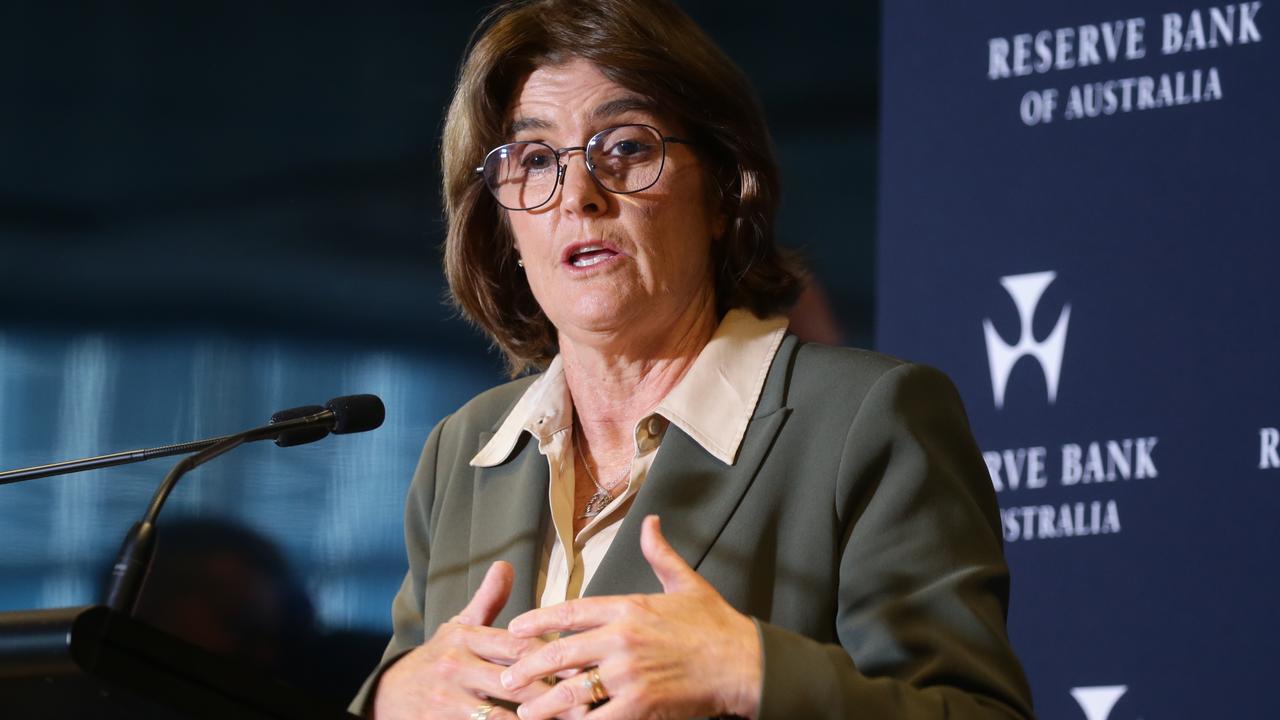
While the RBA has historically looked past one-off oil price shocks when setting policy, the central bank has grown increasingly concerned about second-order inflation effects, where businesses pass higher energy and input costs directly on to consumers. RBA governor Michele Bullock defended businesses’ right to pass through higher costs, noting “It is not unreasonable for firms because they are seeing their cost basis rise …. It is not unreasonable for them to want to recover their costs. The alternative is they can’t absorb the costs and they might end up going bust, and that isn’t good either.”
Ellis said she was surprised by Bullock’s framing, arguing that effectively giving businesses the green light to pass through higher costs will only entrench higher inflation and force the RBA to implement even sharper rate hikes down the line, deepening the financial pressure on Australian households already struggling with mortgage repayments and cost-of-living increases.