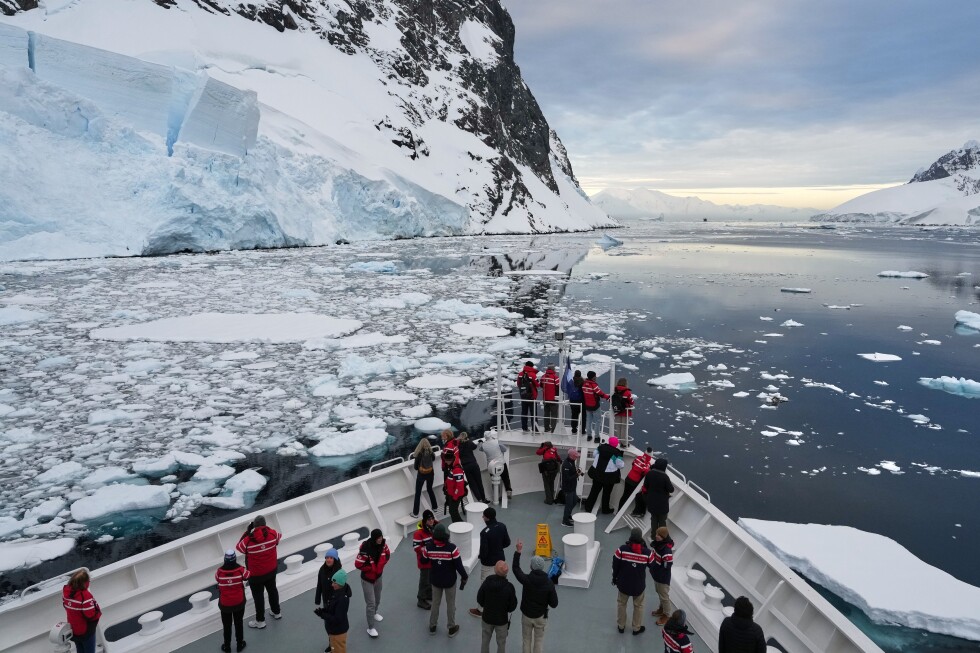
BRUSSELS — As climate change accelerates ice melt across Antarctica, a growing wave of travelers is rushing to see the continent’s one-of-a-kind frozen landscapes before they disappear forever. This surge in polar tourism, however, is raising urgent alarms among scientists and environmental advocates, who warn that more visitors bring heightened risks of ecological contamination, disease outbreaks, and irreversible damage to one of the planet’s most fragile wilderness regions.
While annual visitor counts remain relatively modest compared to mainstream tourist destinations — limited by the extreme travel costs and long voyage times required to reach the southern continent — the pace of growth has been explosive. Data from the International Association of Antarctica Tour Operators (IAATO) shows that more than 80,000 tourists set foot on Antarctica’s ice in 2024, with an additional 36,000 observing the continent from cruise ship decks. The Union of Concerned Scientists estimates that Antarctic tourism has grown tenfold over the past three decades, and industry analysts project that number could surge even more dramatically in the coming 10 years.
Hanne Nielsen, a senior lecturer of Antarctic law at the University of Tasmania and a former Antarctic expedition guide, notes that falling travel costs, advances in polar vessel technology, and a growing fleet of ice-capable cruise ships are opening the region to more travelers than ever before. Her university’s research team projects annual visitor numbers could triple or even quadruple to more than 400,000 by the 2030s. Much of this growth is driven by the rise of “last chance tourism,” Nielsen explains: travelers who recognize that Antarctica’s rapidly melting ice landscapes are changing permanently, and are eager to see them before they are lost.
The vast majority of tourist expeditions are concentrated on the Antarctic Peninsula, a narrow arm of the continent that ranks among the fastest-warming regions on Earth. NASA data confirms that between 2002 and 2020, Antarctica lost an average of 149 billion metric tons of ice each year, with the greatest melt occurring along the peninsula. This accelerating climate shift is exactly what draws many visitors to the region, but it also puts the already stressed ecosystem at greater risk from outside interference.
The risks of unregulated or expanding tourism were thrust into the spotlight earlier this year by a deadly hantavirus outbreak aboard the Dutch cruise ship *MV Hondius*, which completed a weeks-long Antarctic expedition after departing Ushuaia, Argentina on April 1. The World Health Organization (WHO) is currently investigating the outbreak, with officials noting that the initial case is believed to have been contracted before the ship departed, and no evidence of rat populations (the primary carrier of hantavirus) has been found on the vessel. WHO’s epidemic and pandemic preparedness director Dr. Maria Van Kerkhove says the organization is currently probing whether human-to-human transmission occurred during the voyage. While no contamination of Antarctica itself has been linked to the *MV Hondius* outbreak, the event has underscored the growing disease risks that accompany rising tourism.
Ecological risks are already a documented concern. In recent years, migratory bird flocks have carried avian influenza from South America to Antarctica, according to the U.S. Centers for Disease Control and Prevention (CDC). In response, IAATO and other regulatory bodies have tightened biosecurity and hygiene rules for all visitors to the continent. To prevent the introduction of invasive species — from plant seeds and insects to microscopic pathogens — tourists are required to stay at a set distance from native wildlife, and all gear and footwear is thoroughly cleaned with vacuums, disinfectants, and brushes to remove any foreign material before landing. Even tiny crevices in boot soles and laces can trap seeds, dirt, or microbes that could disrupt the Antarctic ecosystem, Nielsen explains.
Disease outbreaks are also a persistent risk on crowded cruise vessels. Outbreaks of highly contagious norovirus are common in the close quarters of long voyages, and the 2020 COVID-19 outbreak on the *Diamond Princess* cruise demonstrated how quickly a novel virus can spread aboard ship, turning a tourist vessel into an unintended breeding ground for infection.
Antarctica is currently governed by the 1959 Antarctic Treaty, which designates the entire continent as a scientific preserve dedicated exclusively to peaceful purposes. The treaty’s supplementary rules require that all human activity avoid harm to the Antarctic environment, its scientific value, and its unique natural landscapes. Currently, tour operators and scientific expeditions voluntarily comply with biosecurity guidelines and submit environmental impact assessments for their operations. But environmental advocates note that the treaty framework was drafted at a time when Antarctic tourism was negligible, and it is not equipped to handle the rapid growth the region is seeing today.
Claire Christian, executive director of the Antarctic and Southern Ocean Coalition, an environmental advocacy group, says the continent’s unique ecosystems deserve the same strict regulation that applies to other sensitive, protected ecological sites around the world. Christian is currently preparing to attend the Antarctic Treaty Consultative Meeting in Hiroshima, Japan, where she will join calls for stronger protections for Antarctica’s native species, including penguins, whales, seals, seabirds, and krill — the tiny organisms that form the base of the entire Antarctic food web.
“The sites you will see in Antarctica are extremely unique and not replicable anywhere else on the planet — the whales, the seals, the penguins, the icebergs — it’s all really stunning and it makes a huge impression on people,” Christian said. She also noted that human footprints in Antarctica’s cold, dry environment can remain visible for 50 years or more, a reminder that even small amounts of human activity leave a lasting mark on the pristine continent. For now, despite growing warnings from scientists, the allure of the last great untouched wilderness on Earth continues to draw record numbers of curious travelers.