博客

  • Trump unveils Qatari  luxury jet for Air Force One fleet

    Trump unveils Qatari luxury jet for Air Force One fleet

    At a ceremony held Friday at Joint Base Andrews, former President Donald Trump presented the newly modified Boeing 747-8 jumbo jet that will serve as an interim addition to the Air Force One fleet, a $400 million asset donated as an unconditional gift by the Qatari government one year prior. After months of structural and security adjustments, the U.S. Department of Defense has completed all custom work to convert the luxury commercial jet into a functional flying White House, bringing the aircraft to a level of opulence unmatched by any previous presidential transport, Trump emphasized in his address to attendees.

    In his remarks, Trump lavished praise on the jet’s construction quality, noting that every component from the fine wood finishes to the powerful state-of-the-art engines meets an unparalleled standard of excellence. “When you see the workmanship of this plane up close, you simply won’t believe it,” Trump stated. “These engines are the finest in the world, there’s nothing like them anywhere. It’s really an honour, and I want to thank the Emir of Qatar for this incredible gift.”

    The origin of the jet dates back to May 2025, when the Qatari royal family formally transferred ownership of the aircraft to the U.S. Department of Defense for presidential transport use. From the moment the donation was announced, it ignited fierce cross-partisan backlash, with criticism even coming from a number of Trump’s own political allies. Detractors argue that accepting a high-value gift of this size from a foreign government creates a clear conflict of interest and may violate the U.S. Constitution’s emoluments clause, which bars federal officials from accepting benefits from foreign states without congressional approval. Current federal law also restricts U.S. officials from accepting personal gifts worth more than $480 from foreign entities. The White House has pushed back against these claims, maintaining that the acceptance of the aircraft is fully legal under existing frameworks, and has confirmed that once Trump leaves office, the jet will be transferred to his presidential library for permanent preservation.

    According to U.S. Air Force announcements, the new jet is now set to enter a phase of initial operational test flights, which officials describe as a “final exam” to validate all modifications and ensure the aircraft meets all security and operational requirements for presidential travel before it enters active service. Before the arrival of the Qatari-donated jet, the Air Force One fleet consisted of two 747-200B models that have been in continuous presidential service since 1990. White House Communications Director Steven Cheung confirmed on social media platform X that one of these aging aircraft has now been retired from service, posting a photo of the jet alongside the caption: “‘Well done, good and faithful servant. The Last Ride.’”

    This interim addition to the fleet addresses a long-running delay in Boeing’s long-planned Air Force One replacement program. The aerospace giant was contracted to deliver two new custom-built VC-25B jets for permanent long-term Air Force One use, but the project has faced substantial production and delivery delays that have pushed back the expected handover by years. The Qatari-donated 747-8 will serve as a stopgap aircraft to meet presidential travel needs until the new VC-25B models are finally completed and delivered to the Air Force.

  • US-Iran peace deal: Six things we learned from the Islamabad Memorandum of Understanding

    US-Iran peace deal: Six things we learned from the Islamabad Memorandum of Understanding

    A landmark preliminary peace agreement between the United States and Iran that halted a months-long devastating conflict across the Middle East hit an immediate snag this week, after Washington confirmed that high-level final talks scheduled in Switzerland have been postponed due to unresolvable logistical challenges. The delay came just one day after the leaders of both nations signed the Islamabad Memorandum of Understanding (MoU), a 14-point framework that pauses hostilities and lays the groundwork for a permanent end to the war that broke out in late February 2026.

    US Vice President JD Vance, who was set to lead the American negotiating delegation to Switzerland, will not travel as planned, the White House announced late Thursday, noting that logistics for the summit had proven far from “simple or predictable” amid the complex, fast-moving diplomatic process.

    The preliminary deal, signed separately by US President Donald Trump and Iranian President Masoud Pezeshkian on Wednesday, marks the official end to open military conflict that has upended regional stability, crippled energy markets, and caused widespread humanitarian damage across the Middle East. The framework establishes a path to restore open commercial shipping through the Strait of Hormuz, the critical Persian Gulf chokepoint that handles roughly 20% of global oil supplies, which had been effectively blocked by Iran since the outbreak of hostilities. That blockade triggered a sharp surge in global crude prices in the months following the war’s start.

    Within hours of the MoU’s signing, the first wave of commercial shipping resumed: three Saudi-flagged supertankers completed transits through the strait by Thursday morning. Under the terms of the memorandum, Iran will guarantee toll-free safe passage for all commercial vessels through the waterway for the 60-day negotiating window, but the long-term status of shipping fees remains a major unresolved point of disagreement. Trump told The New York Times over the weekend that the final agreement would lock in a permanent toll-free arrangement, but Iranian officials announced Thursday that they plan to introduce transit fees for long-term operations. The MoU itself offers only vague guidance, requiring Iran to negotiate future regulatory frameworks with Oman and other Gulf littoral states in line with international law and the sovereign rights of coastal nations.

    The deal also outlines a series of economic concessions to Iran, whose economy has been crippled by decades of US sanctions compounded by a US naval blockade on exports imposed after the war began. Per the MoU’s terms, the US began dismantling its naval blockade on Friday morning, with full withdrawal of blockading forces scheduled for 30 days after the preliminary deal was signed. The framework also commits the US to lift all existing sanctions on Iran — including multilateral UN and IAEA sanctions, as well as Washington’s unilateral primary and secondary sanctions — as part of a final agreement, and to unlock billions of dollars in Iranian assets frozen by the US, some dating back to the 1979 Islamic Revolution.

    One of the most contentious sticking points surrounding economic relief is the proposed $300 billion reconstruction and development fund for Iran outlined in the MoU. Initial statements from Vice President Vance suggested the US would lead the funding effort, but senior administration officials have since walked that pledge back. Vance clarified Monday that the US would instead invite third countries to contribute to the fund, and Trump doubled down on that position Tuesday, telling reporters the US would not invest “ten cents” in Iranian reconstruction.

    On the regional security front, the MoU requires an immediate and permanent end to all military operations across all fronts, including Lebanon, where Israel has expanded its invasion of southern Lebanon to disarm the Iran-aligned Hezbollah movement since March. The agreement commits both the US and Iran to upholding Lebanon’s territorial integrity and sovereignty, but it makes no mention of Israel, which currently occupies roughly one-fifth of southern Lebanon and has continued airstrikes that have killed more than 3,000 people since March, even after the MoU was signed. A senior US official confirmed Friday that Israel and Hezbollah had agreed to a new ceasefire, but top Israeli officials have repeatedly rejected the US-Iran deal, saying it does not bind their government and that they will not withdraw from occupied Lebanese territory until Hezbollah is fully disarmed. Far-right Israeli National Security Minister Itamar Ben-Gvir said Monday that the agreement does not meet Israel’s security requirements, and Defense Minister Israel Katz confirmed this week that Israeli forces would remain indefinitely in self-declared “security zones” across Lebanon, Syria, and Gaza. Trump publicly criticized Israel’s conduct in Lebanon during a G7 summit Tuesday, marking a clear rift with Israeli Prime Minister Benjamin Netanyahu, saying that Israel had fought in Lebanon for “too long” and that unnecessary civilian casualties from widespread bombing were unacceptable.

    The most consequential unresolved security issues, including the status of Iran’s nuclear program and its ballistic missile arsenal, have been deliberately deferred to the 60-day negotiating period outlined in the MoU, with the window extendable by mutual consent of both parties. The US has long alleged that Iran’s enriched uranium stockpile is evidence of a covert nuclear weapons program, a claim Iran has consistently denied — a denial explicitly reaffirmed in the preliminary agreement. Currently, Iran holds uranium enriched to roughly 70%, a level far higher than the 5% needed for civilian energy production, but still below the 90% enrichment required for nuclear weapons. The MoU only requires that the two sides negotiate a mutually acceptable framework for managing the stockpile as part of a final deal. US officials have proposed exporting the stockpile to a third country, a step Iranian Supreme Leader Mojtaba Khamenei has reportedly already ruled out.

    Notably, the MoU makes no mention of limiting Iran’s ballistic missile program — a core stated war objective for the US when hostilities began. At the war’s start, Trump justified US intervention by warning that Iran’s arsenal of more than 3,000 ballistic missiles, the largest in the Middle East, could soon reach the US mainland. But this week, Trump shifted his stance, telling reporters that if other regional powers possess ballistic missiles, it is unfair to deny Iran the same capability, adding that “missiles are not the problem” in terms of global catastrophic risk.

    The agreement also formally abandons the long-rumored US and Israeli goal of regime change in Tehran. The MoU explicitly requires both nations to respect each other’s sovereignty and refrain from interference in internal affairs. At the G7 summit this week, Trump claimed he “never cared about regime change” in Iran, praising the current Iranian leadership, which took power after a US-Israeli airstrike killed longtime Supreme Leader Ali Khamenei in February. “I think they’re very smart, I think they’re far less radicalised; I think they’re good,” Trump said, adding “Frankly, I think that’s regime change.” The statement marked a sharp reversal from Trump’s address on the first day of the war, when he called on the Iranian people to overthrow the clerical government and declared “the hour of your freedom is at hand.”

    All remaining outstanding issues will be negotiated over the next 60 days, and any final peace agreement will be codified in a binding United Nations Security Council resolution, per the MoU’s terms.

  • New Zealand edge Ireland by 4 runs to keep Women’s T20 World Cup hopes alive

    New Zealand edge Ireland by 4 runs to keep Women’s T20 World Cup hopes alive

    SOUTHAMPTON, England – A dramatic, last-ball finish at the Women’s Twenty20 World Cup kept New Zealand’s faint hopes of defending their crown alive on Friday, as the defending champions squeezed out a four-run victory over a valiant Ireland side that came agonizingly close to a historic win.

    The tournament had gotten off to a disastrous start for New Zealand, which stumbled to back-to-back defeats against the West Indies and Sri Lanka, undone by 10 dropped catches across both opening matches. Heading into Friday’s group stage clash, elimination was staring the side in the face: with only two group matches remaining, a loss would end their campaign before the knockout rounds, against an Ireland side that had also failed to pick up a win in their opening fixtures.

    Ireland got off to a dream start after winning the toss and opting to bowl first, reducing New Zealand to a shaky 10 for three wickets inside just four overs, with tight early work from bowlers Orla Prendergast and Aimee Maguire. But the defending champions clawed their way back into the innings, with captain Melie Kerr grounding out a valuable 30 runs, before a 62-run fifth-wicket stand between Brooke Halliday and Izzy Sharp off just 50 balls steadied the New Zealand innings.

    The turning point of the entire match came in the final over of New Zealand’s batting, when veteran all-rounder Suzie Bates – who only made her first tournament appearance after fellow soon-to-retire star Sophie Devine fell ill – stepped in at number seven, an uncharacteristic spot for Bates in T20 career. The veteran delivered a stunning cameo of 19 runs off 12 balls, capping her innings with a six off the final ball that cleared the long leg boundary, pushing New Zealand to a final total of 140 for six wickets.

    In the chase, Ireland’s batting lineup got a late boost from a massive 110-run partnership between captain Gaby Lewis and Prendergast that stretched into the 18th over, weathering strong early bowling from New Zealand pacer Bree Illing, who finished with impressive figures of one wicket for just 18 runs off her allocation. The stand put Ireland on the cusp of breaking a 19-match World Cup losing streak to claim their first ever win at the tournament.

    But New Zealand struck back when Prendergast was caught near the boundary for 59 runs, followed just one over later by Lewis, who was caught at cover by Bates for a polished 58. The wickets left Ireland requiring 15 runs from the final over to pull off the upset. Bates, who stepped up to bowl the final over, restricted Ireland to just 10 runs off the six balls, finishing the match with Ireland all out for 136 runs, four runs short of the target.

    Captain Melie Kerr, who was named player of the match, said after the game that the win marked a critical mental shift for her side after their poor start. “It has been a disappointing start to the tournament so today was just about body language and turning up,” Kerr said. “We need to turn and believe we can still win games of cricket.”

    The group stage of the Women’s T20 World Cup continues Saturday with three fixtures: Australia faces Netherlands, Pakistan takes on Bangladesh, and hosts England play Scotland.

  • ‘Fear, panic and exhaustion’: Women in Syria’s Roj camp report worsening abuse

    ‘Fear, panic and exhaustion’: Women in Syria’s Roj camp report worsening abuse

    A new report from Sweden-based human rights organization Repatriate the Children (RTC) has sounded a fresh alarm over steeply escalating violence, intimidation, and degrading treatment against women and children detained at northeastern Syria’s Roj Camp, the country’s last major detention facility for foreign nationals alleged to have ties to the Islamic State group. The report, based on first-hand testimonies collected from more than 40 women of diverse nationalities held at the camp between January and May 2026, confirms that human rights violations against detainees have grown significantly in both frequency and severity since the start of the year.

    Located near the Iraqi border in Syria’s northeastern Hasakah province, Roj Camp is currently co-administered by the Democratic Autonomous Administration of North and East Syria and the Kurdish-led Syrian Democratic Forces (SDF). It became the sole major camp for foreign families linked to former IS fighters after the larger Hol Camp ceased operations in January 2026, amid shifting territorial control as Syria’s new Damascus government under President Ahmed al-Sharaa reclaims authority over Kurdish-held areas that have been self-governed for much of Syria’s decade-long civil war. As of mid-2026, the camp holds 2,373 people across 769 households representing 54 nationalities; the vast majority of detainees are third-country nationals, neither Syrian nor Iraqi. Official United Nations data from late 2025 confirms that children make up 63% of the camp’s population, with women accounting for another 35%, and men just 2%.

    Multiple detainees interviewed for the report described a daily reality shaped by unrelenting fear and abuse. Nightly armed raids by camp security have become routine, during which guards conduct widespread ransacking of tents, confiscate or steal personal property including money, mobile phones, food, and even a community-funded generator, carry out unprovoked beatings, and separate children from their parents. Detainees report being warned that snipers posted on camp towers will shoot anyone who leaves their tent during raids, leaving families trapped in constant terror as they wait to see if their tent will be targeted next. Women detailed additional degrading treatment, including having cold water poured over them during winter to intensify exposure to freezing temperatures, and consistent verbal abuse that includes guards telling detainees “there are no human rights” and taunting them to ask God for rescue.

    Many detainees linked the sharp deterioration in conditions to broader regional instability following the SDF’s territorial losses earlier this year. “It is like they are taking out all of their frustration on us. And we cannot do anything to protect ourselves,” one detained woman told RTC researchers. Beyond physical violence, basic services in the camp have also collapsed: widespread electricity shortages, inadequate access to healthcare, and failure to meet basic nutritional needs have left detainees in increasingly desperate condition. One woman reported that a French national held at the camp died in April after guards denied her care for severe headaches, leading to a fatal heart attack. Detainees described crippling psychological harm, with many noting that constant fear has destroyed their mental health, leaving them trapped in what one called a “live horror movie.”

    Children, who make up the majority of the camp’s population, have borne the brunt of the escalating abuse. Multiple testimonies documented children being beaten, threatened with death, and separated from their parents for days or weeks without explanation. In one case, a 12-year-old boy was held for three days, returned with visible bruising from beatings, and told he would be killed if he spoke about the experience. In another, guards beat a mother and her three young daughters with iron sticks during a night raid before detaining all of the children. In some instances, children are only returned to their families after demands for bribes, and families who inquire about detained relatives are met with threats of extended detention. Many mothers have gone to extreme lengths to prepare for potential separation: one woman wrote her family’s home country contact details on her children’s arms, so they could be identified if they were separated during a raid.

    RTC co-founder Beatrice Eriksson told Middle East Eye that the situation has reached a crisis point, noting that the international community has largely normalized the prolonged detention of these families. “We’re not talking about a temporary emergency. We’re talking about children who have spent years growing up behind fences. And it seems that the world has gradually become used to it and accepted this situation,” Eriksson said. “It’s very dark for many of these children because they’re so young.”

    Longstanding arguments from Western governments that repatriation of their citizens is impossible because the camps are controlled by non-state armed groups no longer hold, the report emphasizes. Following the collapse of the Assad government and the January 2026 agreement between Damascus and the SDF, the internationally recognized Syrian government now holds increasing influence over northeast Syria, creating new diplomatic pathways to resolve the crisis. Eriksson argues that the only barrier to repatriation now is a lack of political will, noting that international law guarantees detainees the right to return to their countries of origin. She also called out European governments for hypocrisy: many demand that Damascus accept the deportation of Syrian nationals from Europe, while refusing to repatriate their own citizens held in Roj Camp.

    “Governments must just take responsibility for their own citizens. If anyone is suspected of a crime, investigate them. If they can be prosecuted, prosecute them. But children shouldn’t spend their entire childhood detained just because governments are reluctant to deal with a politically difficult issue,” Eriksson said. The report warns that continued failure to repatriate perpetuates widespread harm and intergenerational trauma, leaving detainees exposed to violence, exploitation, human trafficking, and recruitment by armed groups. From a counterterrorism perspective, the report concludes, prolonged unlawful detention in catastrophic conditions does not reduce risk—it creates new risk. Neglect leaves vulnerable detainees desperate for support, Eriksson noted, increasing the chance they may turn to extremist groups for help. “We need to break this cycle of violence,” she said.

    Despite the new opportunities for repatriation, only two repatriations have been carried out at Roj Camp since January 2026, both to Australian citizens, one in April and one in May. Middle East Eye has contacted both the Syrian government and Kurdish regional officials to request comment on the allegations in the report, and as of publication, no response has been received. International human rights bodies have long flagged dangerous conditions in northeast Syria’s detention camps: UN experts have previously warned that conditions in Roj and Hol camps may qualify as cruel, inhuman, or degrading treatment, while Amnesty International has documented repeated allegations of gender-based violence against female detainees.

  • Israel and Hezbollah agree ceasefire after escalation threatens US-Iran deal

    Israel and Hezbollah agree ceasefire after escalation threatens US-Iran deal

    Just 24 hours after the United States and Iran finalized a broader agreement aimed at ending cross-regional hostilities, a dramatic surge in clashes between Israel and Lebanon’s Hezbollah pushed the Middle East to the brink of a wider regional war, before the two parties agreed to a ceasefire that took effect at 4 p.m. local time Friday.

    Diplomatic efforts to broker the truce were led by intensive backchannel negotiations and calls mediated by both Washington and Tehran, a source with direct knowledge of Hezbollah’s position confirmed to Middle East Eye. The breakthrough came only after Tehran threatened to pull out of planned follow-up talks with U.S. negotiators scheduled in Geneva in response to heavy Israeli airstrikes across Lebanon, the source added. The agreement remains conditional on Israel abiding by its terms, the source emphasized.

    A senior Israeli official confirmed the truce to Reuters, noting that the ceasefire would hold only so long as Hezbollah halts all attacks on Israeli targets. The official also confirmed that Israeli military forces will remain positioned in areas of southern Lebanon they have seized during recent advances.

    The rapid escalation that preceded the ceasefire began Thursday night, when Hezbollah fighters ambushed advancing Israeli troops near Ali al-Taher, a strategically critical hilltop outpost just outside the southern Lebanese city of Nabatieh. The ambush left four Israeli service members dead, including a senior battalion commander, and multiple others wounded, the Israeli military confirmed. Hezbollah claimed responsibility for the attack, stating its fighters had used both ambushes and drone strikes to repel the Israeli advance into the area.

    Israel responded within hours with a massive wave of airstrikes that hit more than 80 targets across southern and eastern Lebanon. By Friday morning, Lebanon’s Ministry of Health reported that at least 47 civilians and combatants had been killed in the bombardment, with another 39 people wounded across 11 affected towns. Rescue teams have been unable to reach trapped survivors due to ongoing shelling, health officials warned, adding that the final casualty count is expected to climb.

    Seven people were killed in the southern Lebanese village of Harouf alone, with additional residents still believed to be trapped under collapsed buildings, health ministry sources told Middle East Eye. Lebanon’s state-run National News Agency documented mass displacement from the southern districts of Tyre and Bint Jbeil, as thousands of residents fled north to escape the violence. Many of those fleeing had only just returned to their home villages in the days after the U.S.-Iran interim agreement was reached earlier this week.

    Hezbollah officials argue that the scale and scope of Israel’s retaliation went far beyond a proportional response to the ambush, suggesting the assault was a deliberate attempt to derail the broader U.S.-Iran regional peace deal. The U.S.-Iran agreement has already sparked fierce backlash in Israel, where political leaders across the ruling coalition have condemned it as a strategic victory for Tehran.

    “If this were merely a response to the ambush, then why did Israel also strike Baalbek and the Bekaa Valley in eastern Lebanon?” a second Hezbollah source asked, pointing to the geographic spread of attacks far from the site of the Thursday clash. The source explained that Israeli troop movements and the intensity of bombardment indicate the Israeli military’s core goal is to seize full control of the Ali al-Taher position, which offers unobstructed commanding views over most of the Nabatieh district and the Iqlim al-Tuffah region.

    “Israel considers it strategically significant because of its location within the area it is attempting to control, which it has described as the ‘Yellow Line’,” the source said. “Control of this position would allow Israel to overlook the entirety of the Nabatieh district and the Iqlim area, as part of an attempt to consolidate its presence in the same territory it occupied before Lebanon’s liberation in 2000.”

    The escalation came one day after the Israeli government published an official map expanding its declared military deployment zone in southern Lebanon, pushing the boundary of controlled territory all the way to the outskirts of Nabatieh, north of the Litani River. Israeli Defense Minister Israel Katz made clear the operation’s territorial goals during an interview with Israeli television, stating that holding seized territory is the military’s top priority. Katz added that the Israeli military is destroying villages in occupied areas of southern Lebanon and will not allow displaced residents to return to their homes.

    “The 200,000 residents who lived in the security zone are not returning. None of them are returning,” Katz said.

    Prime Minister Benjamin Netanyahu confirmed he had personally ordered strikes against dozens of Hezbollah targets in response to the deaths of the four Israeli soldiers, adding that Israeli forces will remain in the southern Lebanon security zone “for as long as necessary.” Far-right National Security Minister Itamar Ben Gvir doubled down on the aggressive rhetoric, calling for “all of Lebanon to burn.”

    When asked whether Hezbollah believes the Israeli escalation was carried out with U.S. approval, the second Hezbollah source said the group now assesses that public disagreements between Israeli Prime Minister Benjamin Netanyahu’s far-right government and the U.S. administration are genuine. This marks a shift from the long-held view among Hezbollah supporters that public disputes between the two allies often mask broad alignment on core regional strategic goals.

    International pressure for a de-escalation grew quickly after the violence erupted: former U.S. President Donald Trump said Washington expected a full and immediate ceasefire between Israel and Hezbollah, while France called on the U.S. to intervene aggressively to prevent the fighting from spilling into a full-scale regional war.

    The outbreak of renewed violence derailed planned diplomatic talks between the U.S. and Iran in Geneva, with negotiations scrapped as tensions flared. A third source familiar with Hezbollah’s position said Tehran has given the group clear assurances that it will not sign any final agreement with Washington that does not include binding provisions addressing Lebanon’s security and territorial integrity. Specifically, Iran will reject any deal that does not include “a complete and comprehensive cessation of hostilities against Lebanon across all Lebanese territory” alongside a formal commitment to a full Israeli military withdrawal from all seized Lebanese territory, the source said.

    When asked whether indirect diplomatic contacts between Hezbollah and the U.S. are still ongoing, the source said he would “neither confirm nor deny” that such communications are taking place, but added that when American officials wish to reach Hezbollah, “they know exactly which channels to use.”

    Hezbollah has repeatedly accused Israel of intentionally violating both the existing Lebanon ceasefire and the new U.S.-Iran regional agreement, noting that Israel has continued to target civilians, destroy civilian infrastructure and push forward with its ground incursion into southern Lebanon. The third source confirmed that Hezbollah still opposes any new round of direct bilateral negotiations between the Lebanese government and Israel hosted in Washington, and does not consider itself bound by that process. The source also added that the group has received multiple indications that the U.S. itself is no longer committed to the proposed negotiating track.

    The latest round of fighting has laid bare the core, unresolved divide that has undermined all regional efforts to end the long-running conflict. Israel insists it will retain control of seized territory in southern Lebanon and bar displaced Lebanese residents from returning to their border communities. Hezbollah, by contrast, maintains that no final regional peace agreement can be accepted without an immediate end to all Israeli attacks and a full Israeli military withdrawal from all Lebanese territory.

    As thousands of residents flee southern Lebanese towns for the second time in as many weeks, the standoff over the Ali al-Taher position has emerged as both a critical battle for strategic terrain and an early make-or-break test for the fragile U.S.-Iran negotiated framework that was meant to bring an end to cross-regional hostilities.

  • Africa CDC chief says the continent needs to invest its own funds in Ebola response, vaccine

    Africa CDC chief says the continent needs to invest its own funds in Ebola response, vaccine

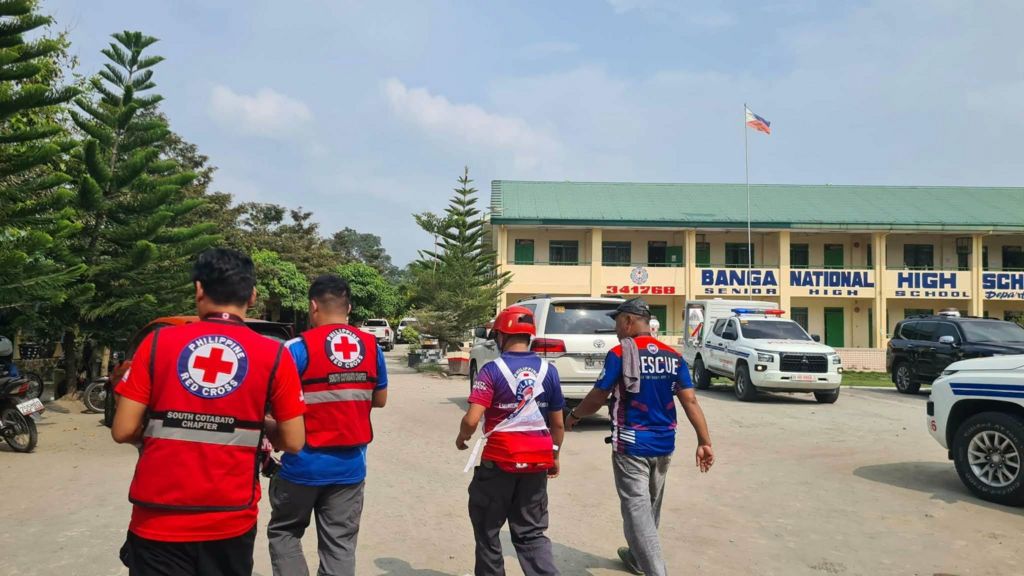
    ADDIS ABABA, Ethiopia – The African continent’s leading public health body has issued an urgent call for African governments to ramp up domestic financing to contain the ongoing Ebola outbreak spreading across the Democratic Republic of the Congo (DRC) and Uganda, while stressing the critical need to end the continent’s long-standing reliance on international partners for emergency health responses. Since the outbreak was first detected on May 15, the Africa Centers for Disease Control and Prevention (Africa CDC) confirms it has already killed more than 200 people among 894 confirmed cases, with more than 35,000 exposed contacts still to be fully traced. Public health experts warn the actual case count is likely higher, as the outbreak was only identified weeks after it first began spreading through local communities.

  • Ghana conference urges slave-trade nations to issue apologies and reparations

    Ghana conference urges slave-trade nations to issue apologies and reparations

    ACCRA, Ghana – In a pivotal gathering held in Ghana’s capital on Friday, leaders from across Africa and the Caribbean have amplified calls for formal apologies and reparatory justice from countries that orchestrated and profited from the transatlantic trafficking of enslaved African people. The summit, branded the “Next Steps” conference, comes three months after the United Nations approved a historic non-binding resolution that formally categorized the centuries-long Atlantic slave trade as “the gravest crime against humanity.”

    The final declaration issued at the conference lays out a clear demand: all nations that participated in the systematic enslavement and forced displacement of African people must issue “full, formal and unconditional apologies” as the fundamental first step toward advancing reconciliation, rebuilding broken trust, and delivering the reparatory justice that descendant communities have long demanded. While the UN resolution adopted in March carries no legal enforcement power, global activists and participating leaders note it carries unprecedented moral weight that shifts the global conversation on historical harm.

    Conference organizers emphasize that the Accra gathering is not just symbolic: its core goal is to move the global reparations debate beyond formal recognition of historical atrocities toward actionable, concrete policy measures. Among the key priorities under discussion is pushing to formalize compensation requirements under frameworks of international law.

    Historical records confirm that between the 16th and 19th centuries, an estimated 12 million African people were violently abducted from their homelands by European traders, then trafficked across the Atlantic to be forced into chattel slavery on colonial plantations. The forced labor of enslaved people generated enormous, enduring wealth for European and North American powers, a progress built entirely on the systemic violence, displacement and death of millions.

    Ghanaian President John Dramani Mahama opened the summit by noting that the UN resolution has opened an unprecedented new window for constructive global dialogue on reparations. He stressed that the intergenerational harm of centuries of slavery continues to shape structural inequalities across Africa, the Caribbean, and the global African diaspora to this day.

    Addressing delegates representing more than 80 nations in attendance, Mahama stated: “We’re here because recognition creates responsibility, and because the enduring consequences of this history continue to demand thoughtful, coordinated, and sustained international engagement.”

    This summit builds on efforts launched at a 2023 reparations gathering also hosted in Ghana, where attendees first proposed the creation of a dedicated Global Reparation Fund, though key operational details for the fund have yet to be finalized. Global opinions on reparations remain deeply divided, particularly among nations that would be expected to contribute to compensation efforts. In the United States, for example, public opinion leans heavily against reparations for descendants of enslaved people: a 2021 Pew Research Center survey found that only 30% of U.S. adults support any form of compensation such as cash payments or land grants.

    Movement activists have outlined a broad vision for reparations that extends beyond direct cash payments to individual descendants. Many leaders call for targeted developmental aid to African and Caribbean nations impacted by the slave trade, as well as the return of cultural artifacts and natural resources stolen during the colonial era that followed the formal end of the slave trade.

  • Polish president strips Zelenskyy of honor over naming of army unit after notorious WWII group

    Polish president strips Zelenskyy of honor over naming of army unit after notorious WWII group

    A diplomatic rift has opened between Warsaw and Kyiv after Polish President Karol Nawrocki announced Friday plans to strip Volodymyr Zelenskyy of Poland’s highest civilian decoration, the Order of the White Eagle, over a recent Ukrainian presidential decree tied to a World War II-era paramilitary group blamed for the mass killing of Polish civilians.

    Zelenskyy received the prestigious Order of the White Eagle in 2022 from then-Polish President Andrzej Duda, in recognition of the Ukrainian leader’s extraordinary leadership in defending his country’s sovereignty, upholding human rights, and demonstrating extraordinary resilience in the face of Russian invasion. That honor is now set to be formally revoked, triggered by Zelenskyy’s May 26 decree that bestowed the name of the Ukrainian Insurgent Army (UPA) on an active unit of Ukraine’s Special Operations Forces.

    In a 13-minute televised address shared on Polish social media platforms, Nawrocki framed the decision as a response to deep public anger across Poland. “For the vast majority of Polish society, the UPA is first and foremost an organization responsible for heinous crimes against citizens of the Polish Republic during World War II,” he stated.

    Against a backdrop of longstanding bipartisan Polish support for Ukraine’s war effort against Russia, Nawrocki was quick to emphasize that the revocation would not weaken Warsaw’s backing for Kyiv. The clarification comes as Poland prepares to host a high-profile international conference on Ukraine’s post-war reconstruction next week, an event Zelenskyy is scheduled to attend.

    For Kyiv, the renaming was framed as a step to honor historical military heritage and recognize the modern unit’s service in protecting Ukraine’s territorial integrity and independence. The UPA operated across Western Ukraine through the 1940s and 1950s, fighting for Ukrainian independence against both Nazi German occupation and Soviet rule. But in Polish collective memory, the group is synonymous with the mass murder of an estimated tens of thousands of Polish civilians in the Volhynia and Eastern Galicia regions amid wartime chaos. In 2003, the Polish parliament formally adopted a resolution labeling the UPA’s crimes against Poles as an act of genocide.

    Ukrainian historical narratives offer a different framing of the period: Ukrainian officials and historians note that both Ukrainian and Polish underground armed groups carried out reprisal attacks, resulting in massive civilian losses on both sides, rather than framing the violence as a one-sided campaign by the UPA.

    Poland’s liberal Prime Minister Donald Tusk echoed criticism of Zelenskyy’s decree, but also warned that any open rift between Warsaw and Kyiv would play directly into the hands of Russian President Vladimir Putin, who has long sought to exploit historical divisions to weaken Western support for Ukraine.

    On June 3, Ukrainian Foreign Minister Andrii Sybiha released a statement calling for de-escalation, noting that rising tensions between the two neighboring countries serves no interests for either the Ukrainian or Polish people. He urged both sides to pull back from heated rhetoric and leave the complex, sensitive chapters of shared history to analysis by professional historians.

    The current controversy marks a sharp reversal of recent progress toward historical reconciliation between the two nations. Just months prior, the two countries had restarted joint work on exhumations of Polish WWII victims, and a December 2024 meeting between the two presidents in Warsaw was widely seen as a breakthrough in bridging longstanding historical divides.

  • Israel kills dozens in Lebanon as minister calls to ‘open the gates of hell’

    Israel kills dozens in Lebanon as minister calls to ‘open the gates of hell’

    A fresh wave of Israeli airstrikes on southern Lebanon has sent shockwaves across the Middle East, killing at least 21 people and injuring more than 39 others since Thursday night, according to an official announcement from Lebanon’s Ministry of Public Health. The attack has already derailed planned follow-up negotiations between the United States and Iran aimed at cementing a region-wide ceasefire, triggering harsh condemnation from Lebanese leadership and sharp, bellicose threats from top Israeli officials.

    Lebanese President Joseph Aoun labeled the strikes a “dangerous and reprehensible escalation” that has claimed the lives of dozens of innocent civilians, among them women and children. In a formal statement, Aoun emphasized that the aggression undermines every ongoing effort to solidify a ceasefire and end broader regional conflict, coming just days after the US and Iran signed a landmark memorandum of understanding (MoU) designed to end more than 100 days of cross-border fighting that has devastated Lebanon.

    The Israeli military, for its part, confirmed that Hezbollah fighters had killed four of its soldiers in southern Lebanon on Friday, including a senior battalion commander. Hezbollah issued its own statement confirming the attack, explaining that its fighters targeted Israeli forces that were attempting to advance into sovereign Lebanese territory. The militant group detailed that it lured an Israeli military unit into a pre-planned “kill zone” near the southern Lebanese area of Ali al-Tahir, destroying three Merkava tanks in the engagement. When a second Israeli unit moved in to recover the first, fighters hit it with concentrated rocket barrages and mortar fire.

    Israeli Prime Minister Benjamin Netanyahu quickly issued a vow of retaliation in a social media statement Friday, promising Hezbollah would pay a “heavy price” for the attack. He reiterated that Israeli forces would maintain a presence in a self-declared “security zone” in southern Lebanon for as long as necessary to protect Israeli communities in the country’s north. Israeli Defense Minister Israel Katz echoed Netanyahu’s hardline stance, stating that the Israeli military would not tolerate attacks on its soldiers and civilians, and any ceasefire violation by Hezbollah would be met with overwhelming force. Katz also confirmed the security zone extends from Lebanon’s Mediterranean coastline all the way to the Beaufort Heights, formalizing Israel’s expanded military footprint in the region.

    The rhetoric grew even more extreme from far-right members of Netanyahu’s governing coalition. National Security Minister Itamar Ben Gvir, who has a long track record of inflammatory rhetoric against Lebanese people, called for a drastically more aggressive military response. “For every tear shed by an Israeli mother, a thousand Lebanese mothers should cry,” Ben Gvir wrote on the social platform X, adding that “all of Lebanon should burn” and emphasizing that Israel must make clear “the blood of our sons and the security of our citizens are not up for grabs.” This is not the first time Ben Gvir has made extreme remarks: just one week prior, he publicly called for the kidnapping of Lebanese women and youth to pressure Hezbollah.

    Shortly after Ben Gvir’s comments, Israeli Finance Minister Bezalel Smotrich, another far-right member of the coalition, echoed the rhetoric, calling on Israel to “open the gates of hell” for Hezbollah – a phrase he previously used to describe Israel’s military campaign in Gaza that has been widely labeled genocidal by international bodies and human rights groups.

    The latest escalation comes at a critical diplomatic juncture: US and Iranian officials had been scheduled to meet in Switzerland this week to continue negotiating the terms of the MoU signed in Paris Wednesday. That agreement requires an immediate end to fighting on all regional fronts, including Lebanon, and Iranian officials have repeatedly warned that any continued Israeli military presence or operation inside Lebanese territory counts as a direct violation of the deal. Crucially, the Israeli government is not a signatory to the MoU and has openly opposed its provisions for Lebanon. Since the agreement was signed, the Israeli military has released a new official map outlining plans for expanded military occupation and operations across southern Lebanon.

    In response to Israel’s new strikes, Lebanon-based broadcaster Al Mayadeen reported Thursday that the Iranian delegation had postponed its planned talks with US officials in Switzerland. The Swiss foreign ministry confirmed the postponement Friday, officially putting the diplomatic process on hold amid the new violence.

    Even before this latest wave of violence, Lebanon has already suffered staggering human cost since cross-border fighting resumed on March 2. The new strikes bring the total death toll across the country to at least 3,915, a figure that stands despite a formal ceasefire agreement between Israel and Hezbollah signed back on June 2.

  • Thumping win cements Canada’s place as a ‘soccer nation’

    Thumping win cements Canada’s place as a ‘soccer nation’

    On a red-and-white swept Thursday at Vancouver’s sold-out BC Place Stadium, the Canadian men’s national soccer team etched its name into the country’s sports history books, delivering a sensational 6-0 blowout victory over Qatar in their opening match of the tournament. What fans had only dared to hope for a narrow, solid win turned into a rout that has redefined Canada’s standing on the global soccer stage, even as the nationwide celebration was softened by a devastating injury to star midfielder Ismaël Koné that cut his tournament short.

    In the hours before kickoff, the energy building across Vancouver was palpable. Thousands of diehard Canadian supporters marched the so-called “last mile” to the stadium, their path thick with red smoke flares, turning the streets of the west coast city into a sea of the nation’s signature colors. Across the country, from downtown Vancouver’s Granville Street to tiny neighborhood bars in Toronto, thousands more gathered at public watch parties, crammed together to cheer on Les Rouges, as the squad is nicknamed. For long-time Canadian soccer fan Dave Di Cola, who joined dozens of fellow supporters at a Toronto watch party, the mood heading into kickoff was cautious: he described his outlook as “reserved optimism”, knowing how unpredictable international soccer can be.

    That uncertainty evaporated almost as soon as the first whistle blew. Canada dominated from the opening minutes, netting three goals before halftime to put the game out of reach. Qatar’s challenge was further complicated when two of their players were sent off, opening the door for Canada to extend their lead to a final 6-0 score. Star striker Jonathan David bagged a hat-trick, cementing his place as the hero of the historic night – a moment memorialized in one viral social media photo that perfectly captured Canada’s shifting soccer identity: a fan wore an ice hockey jersey for Canadian hockey legend Connor McDavid, with the “Mc” covered by a hand-drawn “J” to honor David, blending the country’s long-held hockey obsession with its new passion for soccer.

    But the elation of the win was immediately dimmed when Koné suffered a severe leg break that forced him out of the tournament. The Ottawa-native has been a core piece of Canada’s midfield, and coach Jesse Marsch called him “a big part of the heart of our team.” After Koné went down, his teammates rushed to his side to support him as medics treated him on the pitch. Just minutes after coming on as substitute for Koné, Nathan Saliba scored Canada’s fourth goal – and held up Koné’s jersey to the crowd in a moving tribute. After undergoing successful surgery overnight, Koné posted a message on Instagram Friday morning saying, “What you guys did yesterday will stay with me forever.”

    In a heartfelt post-match pep talk in the locker room, Canadian Prime Minister Mark Carney praised the entire squad for the extraordinary character they displayed in the face of adversity. “They showed a level of character that some people never achieve,” Carney told the team, speaking in front of a packed, cheering locker room. “You showed it when the entire country and a good part of the world is watching.”

    For long-time observers and fans of Canadian soccer, the lopsided win is far more than just three tournament points. For decades, Canadian soccer was sidelined, seen as a secondary sport behind hockey, basketball, and baseball. Di Cola, who has followed the team for years, noted that “Canada soccer has always been kind of a joke. It’s always always secondary.” But the outpouring of support across the country – from the sold-out stadium to packed watch parties from coast to coast – changed that narrative: Di Cola admitted the scene “nearly brought a tear to my eye.”

    Canada now joins a pantheon of iconic recent Canadian sports moments that includes Sidney Crosby’s 2010 Vancouver Olympic golden goal, the Toronto Raptors’ 2019 NBA Championship, and the Canadian women’s soccer team’s 2020 Tokyo Olympic gold medal. While Di Cola acknowledges that the team still has “a long way to go” to cement its status as a global soccer power, Thursday’s rout has already cemented the moment as one that transformed Canadian soccer. Fans across the country now look ahead with renewed momentum as Canada prepares to face Switzerland in their next group stage match.