博客

  • Tasmanian childcare centre on alert after child treated for tuberculosis, parents contacted

    Tasmanian childcare centre on alert after child treated for tuberculosis, parents contacted

    A northern Tasmanian childcare centre has activated public health protocols after health authorities confirmed a child who attended the facility was treated for tuberculosis, a rare but potentially fatal bacterial infection if left unaddressed.

    Goodstart Early Learning, which operates the Kings Meadow-based centre, was notified of the confirmed case by Tasmanian public health officials last week. According to a company spokesperson, the infected child has not set foot at the centre since mid-July, and also attended a second local childcare facility before the diagnosis.

    While tuberculosis causes roughly 1.3 million deaths globally each year, the disease is extremely uncommon in Australia, with an average annual incidence of just five cases per 100,000 people. The bacterial infection is fully preventable and curable with timely medical intervention, but poses a severe mortality risk to patients who do not receive prompt treatment.

    Following public health guidance, the centre has launched precautionary measures to contain any potential spread. Close contacts of the infected child, including both enrolled children and centre staff, have been prioritized for free testing arranged jointly by Public Health Tasmania and the Launceston General Hospital. The facility has remained open throughout the process, maintaining its usual rigorous hygiene and cleaning protocols to protect visitors and staff.

    In a statement, the Goodstart Early Learning spokesperson confirmed that the centre has followed both public health directives and its own internal infectious disease policies since receiving notification of the case. Centre leadership began reaching out to all parents this week to share full information from health authorities, noting that the overall risk of transmission to most families and educators remains low.

    Parents with any concerns about potential exposure have been urged to reach out to their local general practitioner or call the Tasmanian public health hotline at 180 671 738 for guidance and more information.

  • Prosecutors to retry Yung Filly on 3 rape charges in Australia

    Prosecutors to retry Yung Filly on 3 rape charges in Australia

    PERTH, Australia – British social media personality and rapper Yung Filly, born Andres Felipe Valencia Barrientos, will face a second trial on three unresolved rape charges stemming from an alleged sexual assault of a fan after a 2022 Perth performance, Australian justice officials confirmed Friday.

    The 30-year-old entertainer already completed an eight-day trial last month at Western Australia’s District Court, where a 12-member jury considered six total rape charges alongside two additional counts of aggravated assault causing bodily harm. By the end of deliberations, jurors found Barrientos guilty on the two assault charges connected to the alleged incident, which occurred in a downtown Perth hotel room. The victim, who was 20 years old at the time of the encounter, cannot be named publicly under Australian victim privacy laws.

    The jury delivered acquittals for one charge of choking and three of the six rape charges, but failed to reach the required 10-2 majority verdict on the three outstanding rape counts, prompting prosecutors to move forward with a retrial.

    Lead prosecutor Danielle Clarke informed original trial judge Linda Black that the alleged victim has agreed to testify a second time during the new proceedings. Justice Black has directed both the prosecution and defense teams to review two key procedural questions ahead of the retrial: whether a new judge should oversee the case, and whether the final verdict should be decided by a judge alone or a new jury.

    Barrientos, who was born in Colombia and rose to fame as a content creator and musician in the United Kingdom, has remained out on bail since his initial arrest shortly after the alleged incident. He was granted permission to return to the UK for several months during the court process and made no comment to reporters when exiting the Perth courthouse following Friday’s procedural hearing.

    Barrientetos was on a national Australian tour when the alleged encounter occurred, having already finished shows in Sydney and Melbourne before arriving in Perth for the performance in question. He was arrested days later in Brisbane, the final stop on his tour itinerary, before the legal process moved forward.

    Prosecutors’ case alleges that the accuser initially consented to sexual activity before withdrawing her consent after experiencing fear for her personal safety. Barrientos’ sentencing on the two confirmed assault convictions will be delayed until after the retrial concludes, and no official start date for the new proceedings has been scheduled as of yet.

  • Man arrested after woman found injured in Ferntree Gully home dies

    Man arrested after woman found injured in Ferntree Gully home dies

    A grim incident has unfolded in Melbourne’s southeastern suburbs, leaving a woman dead after she was discovered with serious injuries at a local residential property, and a man believed to know her is now in police custody. Emergency and law enforcement personnel were dispatched to the address on Ferntree Gully Road shortly before 10 a.m. on Friday, following reports of a medical emergency at the home. When officers arrived, they located the injured woman and immediately began administering cardiopulmonary resuscitation (CPR) in a desperate attempt to save her life. Despite the quick, skilled efforts of the first responders on scene, the woman could not be revived and was pronounced dead at the property. Within hours of the discovery, a 45-year-old man from Ferntree Gully was taken into custody by police close to the site of the incident. Investigators confirmed that the man and the deceased woman are known to one another, and he is currently undergoing formal questioning in relation to the woman’s death. Members of Victoria Police’s Homicide Squad have been called in to lead the investigation, and the squad’s detectives are now conducting a detailed forensic and evidentiary examination of the home to piece together the circumstances leading up to the woman’s death. Police have issued a public call for information, asking any member of the community who was in the area of Ferntree Gully Road on Friday morning, or who has details relevant to the incident that could assist the investigation, to contact Crime Stoppers immediately to share what they know. The investigation remains active and ongoing, with further updates expected as detectives work through the evidence.

  • Nanda Malini, one of Sri Lanka’s best known voices of protest, dies at 82

    Nanda Malini, one of Sri Lanka’s best known voices of protest, dies at 82

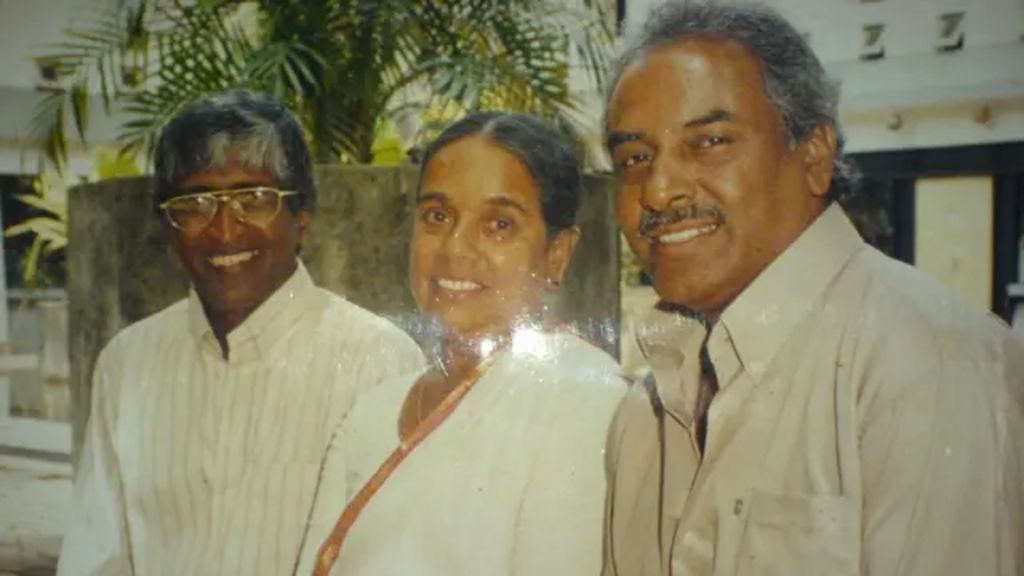
    Renowned Sri Lankan vocalist Nanda Malini, whose politically charged, socially conscious music became the defining soundtrack for decades of the island nation’s tumultuous political and social transformation, has passed away at her residence in Nawala, just five days before she would have turned 83. Born on August 23, 1943, in a rural village of Kalutara as the fourth of nine children, Malini’s path in music began in 1956, when she claimed top prize at a poetry singing competition while studying in the capital city of Colombo.

    By the 1970s and 1980s, Malini had carved out an unrivaled space in Sinhala music with lyrics that cut to the core of Sri Lanka’s most pressing societal ills. Her discography included sharp satirical takedowns of systemic corruption, urgent calls to bridge racial and religious divides, and rousing rallying cries against authoritarian tyranny — work that emerged amid a period of profound national unrest. During this era, leftist activists led widespread anti-establishment movements decrying soaring youth unemployment, entrenched social inequality, and the outsize power of the country’s elite, while simmering ethnic tensions finally boiled over into full-scale civil war in 1983.

    Malini’s unflinching willingness to confront power drew pushback from state authorities: her most iconic album 1987’s *Pawana*, a collection of tracks centered on human rights and resistance to state oppression, was completely banned from all national radio airwaves during the 1980s. The ban did little to curb her popularity, however; passionate fans continued to share her music and packed her concert venues across the country, and *Pawana* remains a cultural touchstone for that turbulent chapter of Sri Lankan history.

    Long after the 1980s, Malini never stepped back from her advocacy. As Sri Lanka spiraled into a catastrophic economic crisis in 2022 that sparked mass nationwide anti-government protests, Malini emerged as a prominent public supporter of the movement, even performing for crowds of demonstrators gathered in the capital. Those months of sustained protest ultimately led to the ousting of then-president Gotabaya Rajapaksa.

    News of Malini’s death has prompted an outpouring of tributes from across Sri Lanka, with the national government declaring a three-day official period of mourning to honor her legacy. In a public statement shared on social media, current Sri Lankan President Anura Kumara Dissanayake said he was “deeply saddened” by the passing of the beloved artist, calling her a “true musical legend of our time.” “Her timeless music inspired generations of Sri Lankans, young and old alike,” Dissanayake wrote. Today, Malini is widely remembered as one of the most influential and iconic figures in the history of Sinhala music.

  • Hungary drained its waters for generations. Now drought is exposing the cost

    Hungary drained its waters for generations. Now drought is exposing the cost

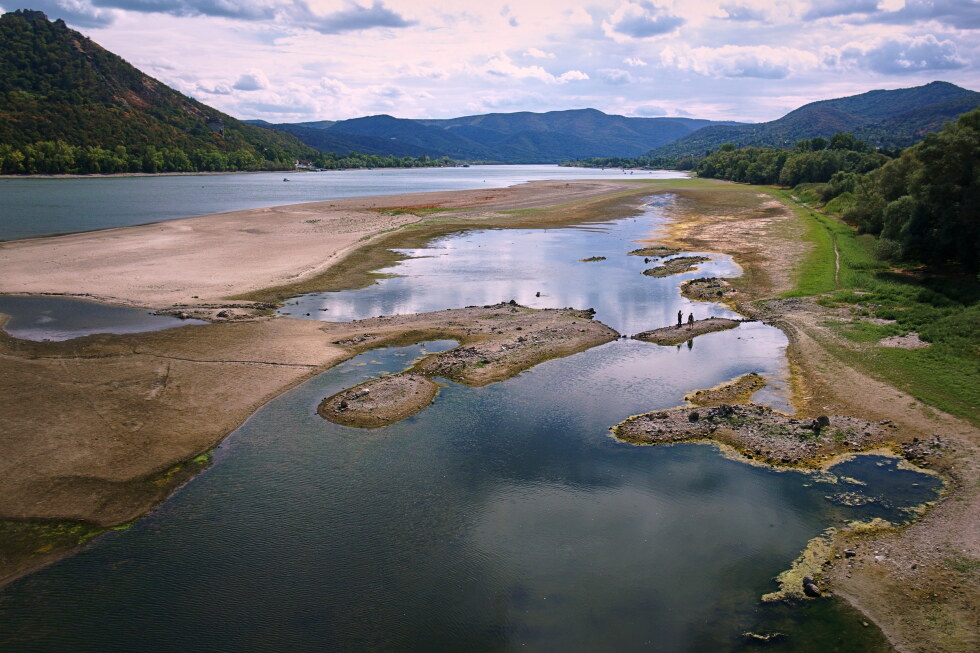
    GÁRDONY, Hungary — Last week, 58-year-old fisherman Árpád Selmeci pulled his small vessel onto the shore of Lake Velence, Hungary’s third-largest lake, navigating a dock ramp that has grown dangerously steep as water levels recede to historic lows. Today, the lake sits at roughly 20 centimeters (8 inches) deep — a stark drop from the 150-centimeter (5-foot) depth that is typical for August. Once-popular tourist swimming beaches along the lake’s shoreline have already been forced to close, and even launching a small fishing craft has become a major challenge.

    “I’ve lived alongside Lake Velence since I was a child, and I have never seen the water this low,” Selmeci told reporters. “It’s devastating. My heart hurts every time I look at it.”

    Selmeci’s experience is just one visible symptom of a cascading national water crisis that has been amplified by human-caused climate change, amplified by centuries of harmful water management policies that have left Hungary extraordinarily vulnerable to worsening droughts. Across Europe, this summer has brought record-breaking heatwaves and destructive wildfires that have scorched landscapes from the United Kingdom to Greece. In Hungary, the ongoing drought has slashed crop yields, triggered regional drinking water shortages, and even put the country’s only nuclear power plant at risk of a forced shutdown.

    While record-low rainfall driven by climate change is a core driver of the crisis, experts emphasize that long-standing human practices have turned a regional dry spell into an emergency. Hungary’s national meteorological service currently reports that 99% of the country’s total land area is experiencing severe or extreme drought, and desertification — the process where high heat and low rainfall kill off native vegetation — threatens large swathes of the ecologically and economically important Great Hungarian Plain.

    Historically, more than a quarter of Hungary’s low-lying terrain naturally trapped rainwater, and an extensive network of rivers and streams left the country rich in freshwater reserves. But a 2023 study published in the journal *Nature* estimates that Hungary has lost more than 80% of its original natural wetlands over the past two centuries. The largest driver of this loss is a massive network of drainage canals spanning more than 40,000 kilometers (25,000 miles) — longer than the Earth’s circumference — built to drain precipitation from wetlands and low-lying fields to clear space for agricultural development.

    Zsuzsanna Ujj, a biodiversity policy specialist and project coordinator for Friends of the Earth Hungary, says the country has failed to properly steward its water resources over the past 200 years. This persistent focus on draining water rather than letting natural flood cycles replenish groundwater reserves has caused a steady drop in the regional water table, drying out wetlands and topsoil across the country. As less water is available to evaporate into the atmosphere, local air grows drier, reducing the likelihood of localized summer rain — creating a dangerous feedback loop that worsens drought conditions.

    The OECD ranks Hungary as the 16th most drought-exposed country in the world, and one of the most vulnerable in Europe. Ujj argues that the country must fundamentally shift its approach to water governance. “We need to realign our water management practices, moving away from a drainage-first model to one centered on retaining water in the landscape,” she explained.

    The crisis is not limited to Lake Velence. Lake Garancsi, a small recreational body of water located just 20 kilometers (12 miles) northwest of Budapest, has existed since the Middle Ages and was even the filming location for the beloved 2001 Hungarian cult comedy *Glass Tiger*. For generations, it was a popular spot for local residents to fish, swim, and ice skate in the winter. But in recent years, the lake has shrunk so dramatically that all recreational activities have been banned, and most of its former bed is now exposed, cracked, dry earth. What little water remains is shallow and overwarm, killing off all native fish and most local wildlife. Local authorities predict the lake will dry up completely by the end of summer.

    Zoltán Mettner, who operates the Glass Tiger bar on the lake’s former shore, says conditions have worsened steadily year after year. “Looking at it now is terrible — there’s no other way to say it,” Mettner said. “It’s devastating that we let things get this far, that we didn’t take gradual action to stop this lake from being completely destroyed.”

    Hungary’s new government has now promised to course-correct. In late June, on the same day the country hit an all-time high temperature record of 42°C (107.6°F), Prime Minister Péter Magyar told lawmakers his administration would place water management on a “new footing” and launch a sweeping national water conservation program to mitigate the impacts of ongoing drought.

    “Year after year, many experts have warned that water scarcity would become one of Hungary’s most pressing challenges, one of our most critical strategic issues to solve,” Magyar said. “They were right.”

    In addition to fixing the country’s long-standing failure to retain water, Magyar noted that aging drinking water infrastructure leads to 20% to 25% of the country’s clean drinking water leaking out through cracked, outdated pipes — costing an estimated 17 billion forints ($54.4 million USD) in lost water every year. “For years, the very existence of this problem was denied and downplayed,” Magyar said. “Going forward, water retention will be the core principle of Hungarian water management.”

    But implementing these sweeping changes will take years and massive investment, while the current crisis is already threatening the country’s energy security. The Danube River, the longest river in the European Union that runs from Germany to the Black Sea, has hit successive record-low water levels this summer. That has put the Paks Nuclear Power Plant, Hungary’s only nuclear facility which relies on Danube water to cool its reactors, at risk of a forced shutdown for the first time in its 44-year history.

    The government has already launched emergency interventions to raise water levels at the plant, including sinking two 80-meter (262-foot) barges upriver and installing a temporary riverbed sill to redirect more water to the plant’s intake pumps.

    Ujj notes that intact wetlands along the Danube would normally act as a natural reservoir, releasing stored water during dry periods to maintain river levels. She explained that both the record-low Danube levels and the increasing frequency of extreme floods are consequences of human-caused climate change, impacts that could be partially offset through restoring wetlands and natural water retention habitats.

    “We absolutely should expect more extreme water level fluctuations, and more extreme precipitation patterns with drier summers in the future,” Ujj said. “But restoring wetlands and increasing evaporation in targeted regions could help boost local precipitation during the summer months, softening the worst impacts of drought.”


  • Train to nowhere? South Korea’s lonely push for peace with the North

    Train to nowhere? South Korea’s lonely push for peace with the North

    Nestled in the border town of Cheorwon, just steps from the heavily fortified Demilitarized Zone (DMZ) that has split the Korean Peninsula for nearly 70 years, the weathered platforms of Woljeong-ri Station carry a quiet, unfulfilled hope. Once a key stop on a cross-peninsula rail line connecting Seoul to the North Korean port of Wonsan, the original structure was reduced to rubble during the 1950–1953 Korean War. Rebuilt at its current site in 1988, the abandoned terminal has been reborn in recent years as a powerful symbol of the South Korean government’s ongoing push for reconciliation with Pyongyang – yet its half-finished connection to the national rail network mirrors the stalled state of inter-Korean diplomacy today.

    The Lee Jae Myung administration, which took office last year on a dovish platform of open dialogue with the North, has prioritized reviving cross-border infrastructure projects like the Woljeong-ri rail link. The long-term goal is clear: reconnecting severed transportation networks across the DMZ as a foundation for eventual political and economic integration. Lee has even offered unconditional talks with Pyongyang, including negotiations to formally end the Korean War, which has technically remained in a state of armistice for seven decades. Earlier this year, Seoul adjusted its policy approach, shifting from a strict focus on full North Korean denuclearization to prioritizing curbing further expansion of Pyongyang’s nuclear arsenal – a compromise designed to open the door for dialogue. But the overture has fallen on deaf ears in the North Korean capital.

    Recent diplomatic shifts have left South Korea increasingly sidelined in regional negotiations over the Korean Peninsula, leaving the Woljeong-ri project as one of the only tangible steps Seoul can take unilaterally to advance its peace agenda. The latest turbulence began when U.S. President Donald Trump abruptly scaled back annual joint military drills with South Korea, labeling the exercises “inappropriate and hostile” to the nuclear-armed North. Trump also publicly criticized Seoul for failing to back his administration’s campaign against Iran, while announcing plans to meet North Korean leader Kim Jong Un for a new round of talks this year – a move widely interpreted as a push for a high-profile foreign policy win ahead of U.S. midterm elections, when voter discontent over Middle East intervention has weighed on incumbent support.

    Pyongyang quickly responded to the shifting geopolitical landscape with a show of force: it test-fired roughly 10 short-range ballistic missiles just days after Trump’s announcement, while Kim Jong Un’s powerful sister ridiculed South Korea for what she called a “master-servant” unequal relationship with Washington. North Korean leadership has repeatedly cemented its position as an “irreversible” nuclear power, and in recent years has reclassified Seoul as its “most hostile” enemy, emboldened by sustained military and diplomatic support from traditional backers China and Russia (the latter of which has gained Pyongyang’s backing for its full-scale invasion of Ukraine).

    For South Korea, the new dynamic has left the government in a precarious position. Lee has publicly voiced respect for Trump’s diplomatic gambit and pledged to do “his utmost” to support U.S. peacemaking efforts, leaving Seoul with little room to advance its own outreach. “South Korea is reasonably afraid that it gets sidelined – China, Russia and now America are all engaged with Pyongyang in different ways, while Seoul is not,” explained Vladimir Tikhonov, a Korean Studies professor at the University of Oslo, in an interview with Agence France-Presse. “So, Seoul is desperate to get some opening with North Korea. But it can do very little, so far.”

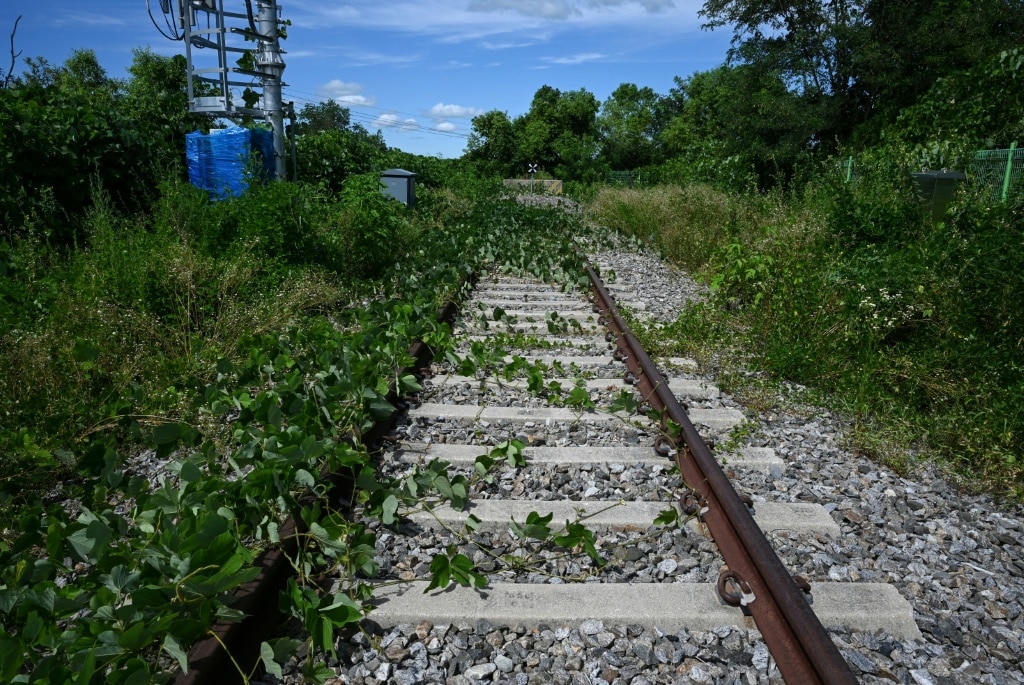
    The troubled history of the Woljeong-ri project underscores just how vulnerable inter-Korean reconciliation efforts are to shifting geopolitical tides. Initial construction work on reconnecting the station to the southern rail network began in 2015, but was halted just 12 months later after North Korea conducted its fourth nuclear test. Today, the planned section of track between Woljeong-ri and the southern Baengmagoji Station sits overgrown, with dense vegetation creeping across the rails and swallowing a nearby stone wall. A hand-painted sign at the site still reads: “The iron horse wants to run,” alongside the English phrase “We want to be back on track.”

    Many local residents and experts remain deeply skeptical that the project will ever lead to meaningful cross-border connection, even as the government frames it as a proactive preparation for future reconciliation. “It seems like they keep trying to reconcile with North Korea through the railway project, but from our point of view, it isn’t really practical,” said 70-year-old Cheorwon resident Moon Jae-yong. Kyungnam University professor Lim Eul-chul notes that building out South Korean infrastructure now could cut down on construction timelines if inter-Korean ties ever improve, but acknowledges the current reality: “But realistically, it is virtually impossible under the current circumstances, and everyone knows that. With few options on North Korea, Seoul has turned to projects it can pursue unilaterally.”

    Beyond its symbolic value, the project also aims to boost local tourism in a border region that has long faced economic stagnation and persistent security risks. During the administration of Lee’s hawkish predecessor Yoon Suk Yeol, Pyongyang launched repeated provocations along the border, sending trash-filled balloons across the divide and broadcasting unsettling, disruptive noises into South Korean border towns. “It was like scraping cement, or even ghost-like noises. It was really frightening,” recalled 70-year-old local resident Kim Sun-hee.

    A rusted, bombed-out locomotive left over from the Korean War still sits on display near Woljeong-ri Station, a permanent reminder of the peninsula’s violent division. For visitors like Ahn Seung-hyun, the half-finished dream of the rail project is a devastating reminder of what the two Koreas have lost: it is “heartbreaking to see,” he said. For now, Woljeong-ri Station remains a quiet monument to South Korea’s lonely, unfulfilled push for peace on the Korean Peninsula.

  • In Benin, malnutrition and misinformed views contribute to widespread stunting in children

    In Benin, malnutrition and misinformed views contribute to widespread stunting in children

    In the rural commune of N’dali in northern Benin, smallholder farmer Sabi Bera Zakari holds a common but dangerous misperception about childhood malnutrition. While he occasionally worries that his children do not gain enough weight, he does not see stunted growth — impaired height development from chronic poor nutrition — as a problem to address. His view is not an anomaly in this dry, drought-prone region, where decades of efforts to curb stunting have failed to reverse one of the highest prevalence rates on the African continent.

    Development sociologist Boris Gloni, a former representative for The Hunger Project who has worked on anti-hunger initiatives across Benin for years, quickly identified that two of Zakari’s young daughters show clear signs of stunting. For years, Gloni has worked to shift harmful cultural and knowledge gaps around the condition, which the Global Alliance for Improved Nutrition (GAIN) reports affects more than 30% of all children under age 5 in Benin — a startling statistic for a nation rich in natural resources with a widespread tradition of small-scale subsistence farming.

    Stunting, defined as height below the average for a child’s age caused by chronic malnutrition, often hides in plain sight: children who experience it may appear outwardly healthy to untrained parents. But public health experts warn that stunting that occurs during a child’s first 1,000 days — from conception to age two — is almost always irreversible, causing permanent damage to cognitive development and long-term physical health that limits opportunities throughout a person’s life.

    Deep-rooted misinformation and cultural norms are major barriers to progress. Gloni notes that many community members incorrectly believe feeding children protein-rich foods like milk and eggs regularly will make them permanently greedy, pushing them to steal to satisfy their cravings. Most households raise goats and chickens not for family consumption, but as a living emergency fund — animals are sold for cash only when a crisis hits, and even eggs are often sold rather than fed to growing children. “Our perception is wrong,” Gloni said. “People don’t have knowledge.”

    Dietary habits worsen the problem, compounded by worsening climate volatility. Most rural families in northern Benin rely heavily on starchy staples such as yams, cassava and maize, with almost no variation to add protein, vitamins or micronutrients. Many women work long hours in their garden plots from dawn to late afternoon, leaving young children without consistent access to food throughout the day, which further erodes nutrition.

    Northern Benin, a region of dry savannah, faces repeated, sporadic drought that disrupts crop and livestock production. In the most severe dry seasons, entire families survive on foraged wild vegetable soup, with almost no nutrient intake. Benin’s government has set a target to reduce national stunting prevalence to below 30% by 2030, but progress so far has been discouraging.

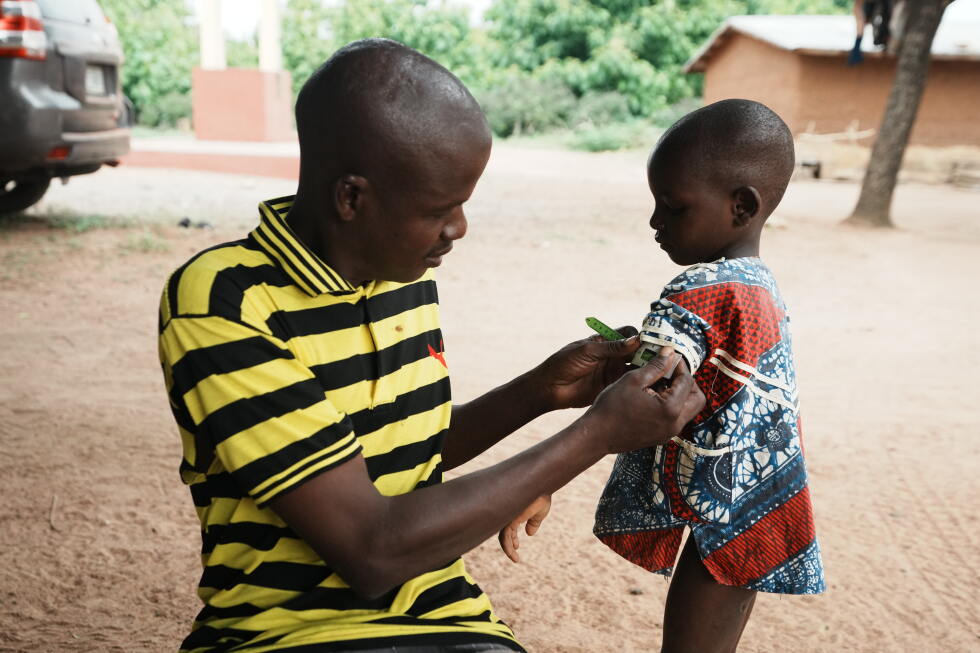
    Community volunteers like Douro Wonkourou Idrissou, a nutrition support worker in N’dali, travel door-to-door to screen children for malnutrition using color-coded measuring tapes that assess wasting by measuring upper arm circumference. While he cannot conduct formal height screenings for stunting, Idrissou says he feels deep sadness when he sees children falling far short of healthy growth markers. He says parents bear some responsibility for poor nutrition outcomes, but also lack the support and knowledge to make changes.

    Rolland Essou, who coordinates The Hunger Project’s work in northern Benin, says that despite years of intervention, stunting rates in the region have stagnated — and some data even shows national rates rising, not falling. This includes after the launch of the World Bank-funded “1,000 Days” program, a pilot initiative run by Benin’s National Agency for Food and Nutrition that began in 2024. The program provides micronutrient supplements for pregnant people and infants, and has established school canteens serving daily hot meals, but these efforts have not yet moved the needle on overall prevalence.

    Essou explains that systemic barriers will keep stunting a major challenge for years to come. Households most affected by childhood malnutrition tend to be led by young, illiterate parents with multiple children to feed, stretching limited resources even thinner. Zakari, for example, could not immediately name the ages of his children, and had to check his national ID to confirm his own age.

    Zakari’s neighbor Fati Aboubacar, a mother of five, says economic constraints make proper nutrition impossible for many families. Her household can only afford to serve eggs once a week. Even families that own livestock often cannot justify using them for food, Aboudou Salamatou, Zakari’s wife, explained: “When a chicken pecked at the dirt near her feet, she said the bird was one of many kept as money ‘in the bank,’ not for eating. Even the eggs the chickens lay may be sold for cash. “We would like to vary our food, but we don’t have the means,” she said. “When we have a little money, we invest it in the field, in health and in other problems.”

    NGO workers say intervention needs to begin even before birth to be effective. Razak Kotchoni, project manager for CASCADE Benin in Borgou, says the same harmful cultural norms that bar children from regular protein consumption also apply to pregnant people. Pregnant women are often discouraged from eating nutrient-dense cornmeal porridge because of the myth that it will cause excessive, uncontrollable hunger. “These standards are contributing factors to malnutrition,” Kotchoni said.

    His organization deploys community facilitators to lead reflective dialogues with elders, parents and other community members to challenge harmful traditional practices. One successful strategy has been training “model mothers” who demonstrate healthy nutrition practices to spread awareness through peer outreach. While some parents now reach out to volunteers like Idrissou when they notice their children are not growing properly, many others remain indifferent to the risk, he says.

    As Benin works toward its 2030 target, public health workers and community volunteers say closing knowledge gaps and addressing deep systemic poverty will be critical to turning the tide on a preventable public health crisis that robs generations of children of healthy development.

  • ‘Reasonable’ or a ‘hit list’? New Yorkers react to rollout of Mamdani’s tax on second homes

    ‘Reasonable’ or a ‘hit list’? New Yorkers react to rollout of Mamdani’s tax on second homes

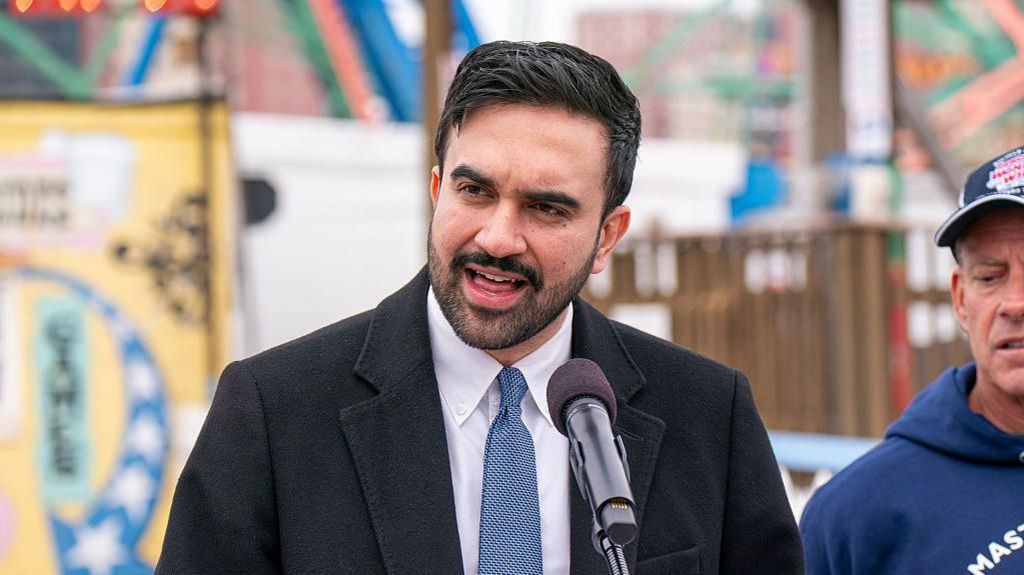
    For millions of working and middle-class New Yorkers, achieving homeownership in one of the world’s most expensive urban centers already feels like an unattainable fantasy. Yet for a small, wealthy subset of residents and out-of-state elites, the city is not just a place for one primary residence – it is a location for a second luxury pied-à-terre. To address the city’s crippling housing affordability crisis and fund critical social programs, New York Mayor Zohran Mamdani has introduced a groundbreaking annual tax on high-value second homes, but the policy’s botched rollout has sparked fierce public backlash and legal challenges.

    Under the new policy, the tax applies to second homes valued at more than $5 million, as well as condos and co-ops worth over $1 million. As part of the rollout, the city published a public list of nearly one million properties that could be subject to the new levy, releasing the names and addresses of high-profile homeowners including hedge fund billionaire Ken Griffin (owner of a $239 million Manhattan penthouse), filmmaker Woody Allen, former Vogue editor Anna Wintour, and actress Cynthia Nixon. Ultimately, the city issued formal tax notices to just 17,000 property owners, but the public disclosure of the broader list became the central flashpoint at a heated City Council oversight hearing held this week to examine concerns over the policy’s implementation.

    While some council members, including Gale Brewer, have voiced support for the core idea of a second home tax, they have acknowledged significant procedural flaws in how the policy was rolled out. Critics on the council have gone much further: Council member Kamillah Hanks slammed the public list as an unfair “hit list of the haves and the have-nots” that stigmatizes property ownership and creates unacceptable public safety risks, arguing that the disclosure frames legitimate homeownership as something to be ashamed of.

    The New York City Department of Finance has defended the release of the information, noting that address and ownership data is already required by law to be made public annually. But critics across the real estate sector and homeowner groups warn the aggregated list creates a dangerous tool for scammers and bad actors, putting wealthy homeowners at heightened risk of fraud, harassment, and even targeted crime. Jason Haber, leader of the American Real Estate Association, notes that the confusion and backlash around the tax has already led some prospective high-end property buyers to pause purchases in the city, a trend he argues could eventually offset the $500 million in annual projected revenue the tax is expected to generate. A group of homeowners has already filed a lawsuit demanding the city remove the nearly one million-name list from public view.

    Supporters of the policy, however, dismiss the backlash as overblown, framing the tax as a long-overdue measure to address New York’s staggering socioeconomic inequality. Dave Backer, a school finance professor, argued that wealthy opponents of the tax are protesting far more than the policy warrants. Beverly Solo, a 44-year New York resident who attended the hearing wearing a “Tax The Rich” shirt, noted that the revenue generated by the levy will fund critical public services that benefit all city residents. “It seems reasonable and fair to ask those who don’t pay full-time income taxes here, but have luxury homes here for pleasure, to contribute to the wellbeing of New York City,” she said, though she conceded the rollout of the policy had been “a mess.”

    Mayor Mamdani has stood firmly behind the policy, framing it as a fair mechanism to generate $500 million in annual revenue that will fund his campaign promises of universal child care, improved and free bus service, and other social programs targeted at New Yorkers struggling with housing and cost of living. Crucially, the policy has won the backing of New York Governor Kathy Hochul, who previously held reservations about raising taxes on state residents. Still, the rollout has faced repeated setbacks: Mamdani’s administration declined to attend this week’s oversight hearing, a decision that angered attendees. A spokesperson for the mayor explained the administration had requested to delay the hearing amid ongoing litigation over the policy, and that city officials are barred from testifying on a matter currently before the courts.

    Similar secondary property and empty home taxes have been implemented across the globe, with mixed results. In Paris, France, secondary properties face a 60% local tax surcharge that has generated billions of euros in public revenue. Vancouver, Canada introduced a 3% empty homes tax in 2017 to improve housing affordability; research found the tax raised nearly $194 million over eight years and reduced housing vacancies by 21%, but had little impact on lowering average rental costs. In 2022, San Francisco voters approved an empty homes tax, but the policy was found unconstitutional by a court following a lawsuit from real estate groups, and remains tied up in appeals.

    Even some prominent supporters of the New York policy acknowledge that the public disclosure of the property list was an unforced error. Morris Pearl, a former BlackRock managing director and chair of Patriotic Millionaires, a group of wealthy Americans who support higher taxes on the rich, noted that “the mayor himself … sort of unnecessarily antagonises people occasionally.” Still, Pearl says he stands firmly behind the policy itself, arguing that claims the tax will drive away wealthy investment are absurd: “Someone who owns a residence that is not their primary residence that’s worth more than $5m has the ability to pay more than most New Yorkers do.” As litigation moves forward, the future of both the controversial tax rollout and the policy itself remains undecided.

  • US, South Korean militaries wrapping up drills early, a day after North Korea’s missile barrage

    US, South Korean militaries wrapping up drills early, a day after North Korea’s missile barrage

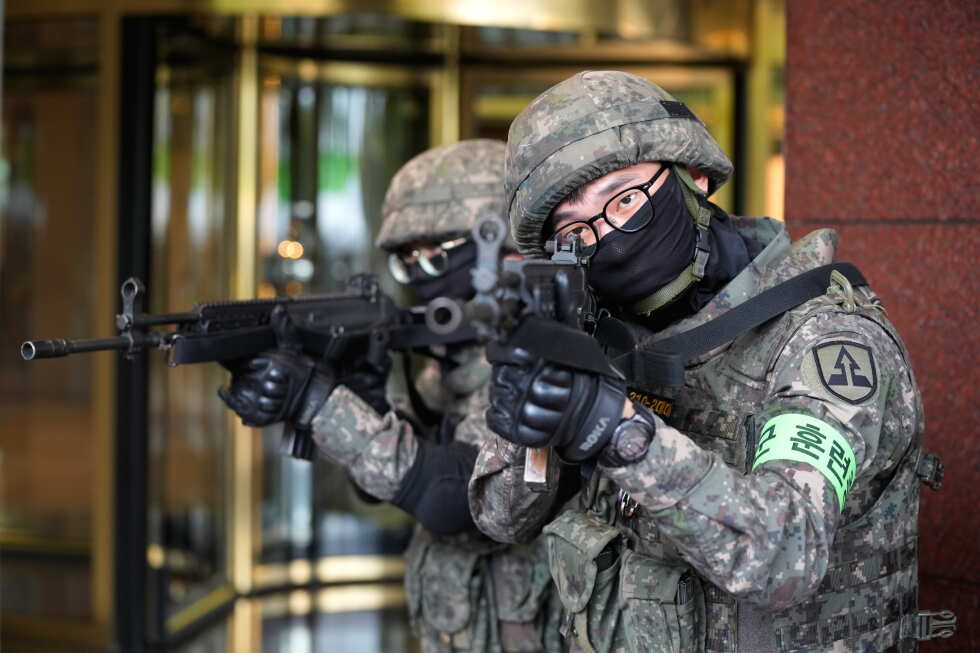
    In a surprising conciliatory move aimed at paving the way for renewed diplomacy with North Korea, the United States and South Korea have wrapped up their annual Ulchi Freedom Shield military drills six days ahead of the original schedule this Friday. This scaled-down exercise was first ordered abruptly by former U.S. President Donald Trump just days before the drills kicked off this Monday, when he instructed the Pentagon to “substantially reduce” the scope and duration of the long-planned training.

    Trump cited two core justifications for the last-minute change: his self-described positive personal rapport with North Korean leader Kim Jong Un, and South Korea’s refusal to back U.S. policy amid heightened tensions over the war in Iran. However, the goodwill gesture failed to win over Pyongyang, with Kim Yo Jong — the powerful and influential sister of Kim Jong Un — rejecting the overture just two days before the early conclusion of the drills. In her public statement, Kim Yo Jong argued that merely trimming the length and size of the exercises does nothing to alter their fundamental “provocative, aggressive nature,” which North Korea has long framed as a rehearsal for an invasion of its territory.

    Following through on its pre-stated threat to respond to the drills, North Korea launched a volley of roughly 10 short-range ballistic missiles into the sea the day after Kim Yo Jong’s statement. The U.S. Pacific Command quickly assessed that the missile launches did not present an immediate threat to U.S. territory or its regional allies, while reaffirming Washington’s unwavering commitment to defending the American homeland and its partnership with South Korea.

    The rejection of the U.S. overture has dimmed prospects for an early resumption of nuclear diplomacy between Washington and Pyongyang, which collapsed in 2019 after earlier high-profile talks failed to deliver breakthroughs. Since the diplomatic stalemate began, Kim Jong Un has moved to strengthen his negotiating position by upgrading North Korea’s nuclear and missile arsenals, and deepening his alignment with Russia amid its ongoing war in Ukraine. Pyongyang has repeatedly made clear it will not return to talks until the U.S. abandons its demand that North Korea commit to denuclearization as a precondition for any diplomatic negotiations.

    Observers note that despite the hardline stance, Kim Yo Jong’s public remarks struck a relatively measured tone, avoiding the fiery, hostile rhetoric that often characterizes North Korean statements. She also referenced what she described as an “excellent” relationship between Kim Jong Un and Trump, a signal that Pyongyang has not completely closed the door to future dialogue. Analysts say the approach suggests North Korea is holding out for larger concessions from Washington, including international recognition as a legitimate nuclear weapons state and widespread relief from harsh international economic sanctions.

    North Korea’s deepening military and economic cooperation with Russia — where Pyongyang has supplied ammunition and troops to support Moscow’s war effort in exchange for much-needed economic and military assistance — has also strengthened Pyongyang’s hand. This closer alignment with Russia has further allowed North Korea to gain more leverage with China, its largest trading partner, opening the door to additional support from Beijing.

    “After this strategic play has run its course, Kim may seek further economic and reputational benefits from Washington,” explained Leif-Eric Easley, a professor of international studies at Ewha University in Seoul. Easley added that such a move would likely come after the U.S. midterm elections, when then-President Trump was expected to face a weaker domestic political position and be more inclined to pursue high-profile foreign policy wins to boost his standing.

    Kim Dong-yub, a professor at the University of North Korean Studies in Seoul, offered a different interpretation of Kim Yo Jong’s statement. He argued that her remarks made clear North Korea’s position that the personal rapport between Kim Jong Un and Trump cannot singlehandedly move the needle on the long-stalled bilateral relationship. Kim Dong-yub added that Kim Yo Jong likely sought to pre-empt speculation that Trump’s scaled-back drills could restart diplomacy, so North Korea would not bear full blame if the diplomatic process fails to materialize.

    In a notable contradiction, Kim Yo Jong also denied Trump’s earlier claim that Kim Jong Un had responded to his request for new talks. When reporters asked Trump earlier that week if he planned to meet Kim Jong Un before the end of the year, Trump had replied, “Yeah, I will be.”

    The Ulchi Freedom Shield exercises are one of the largest annual joint military training events between the U.S. and South Korea, designed to sharpen their collective defense capabilities against potential North Korean aggression. The decision to downsize the drills has already sparked concerns among defense analysts about a potential erosion of joint operational readiness between the two allies.

  • Japan executes a man convicted of setting fire that killed 5 at a pachinko parlor in Osaka

    Japan executes a man convicted of setting fire that killed 5 at a pachinko parlor in Osaka

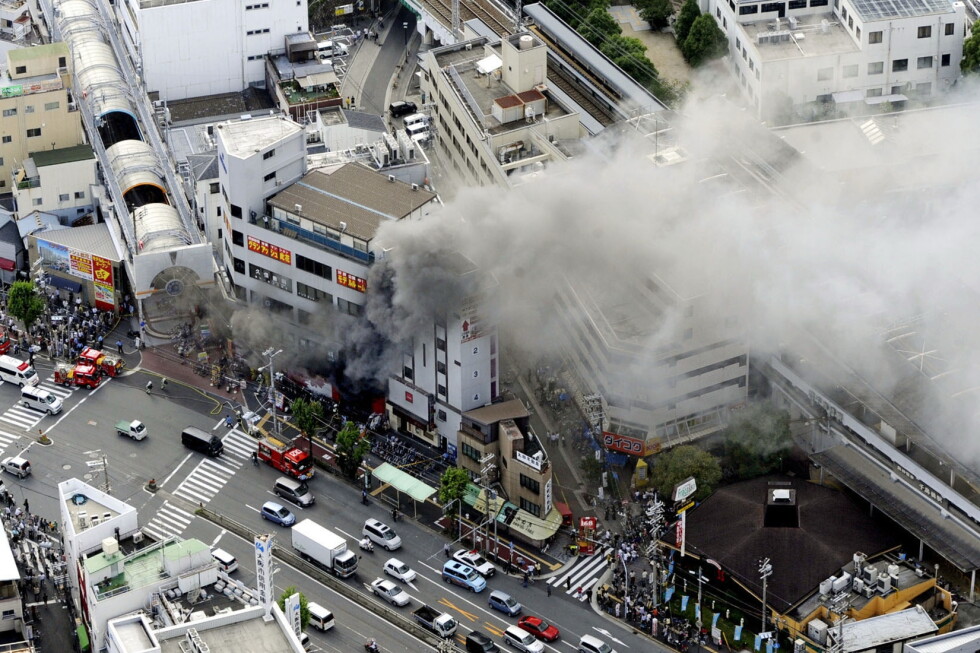
    TOKYO – In a move that reignites long-simmering debate over capital punishment in Japan, the country executed a 58-year-old man convicted of a deadly 2009 arson attack on an Osaka pachinko parlor on Friday. This hanging marks the first execution carried out by Prime Minister Sanae Takaichi’s newly formed government, coming at a time when international condemnation and domestic demands for transparency and abolition of the death penalty are rising rapidly.

    According to Justice Minister Hiroshi Hiraguchi, the condemned man, Sunao Takami, was put to death by hanging earlier the same day. Hiraguchi detailed the horrific circumstances of Takami’s crime at a post-execution press conference: in 2009, Takami spread gasoline throughout the crowded gaming facility before igniting it with a lit match. The resulting inferno engulfed the entire building, leaving five people dead and 10 others with injuries that have left permanent physical and psychological scars. “This attack caused extremely severe harm and spread profound shock and fear across Japanese society,” Hiraguchi stated. “The victims who lost their lives must have endured unimaginable pain and terror in their final moments, and the survivors are forced to live with the long-term consequences of their injuries to this day.” After what he described as careful and exhaustive deliberation, Hiraguchi said he approved the execution order.

    Takami’s legal journey had concluded nearly a decade before his execution: the Osaka District Court convicted him of murder, attempted murder, and arson, and sentenced him to death in 2011. All subsequent appeals, including his final appeal to Japan’s highest court, were rejected in 2006 when the Supreme Court upheld the lower court’s death sentence. Following Friday’s execution, Hiraguchi confirmed that 100 inmates currently remain on Japan’s death row, 43 of whom are pursuing retrials for their convictions.

    Japan has long faced sharp criticism from the international community over its retention and use of capital punishment. A large majority of countries around the world have formally abolished the death penalty, and among the Group of Seven leading industrialized economies, only Japan and the United States still carry out executions.

    Domestic pressure for reform has grown significantly since the 2024 acquittal of Iwao Hakamada, who held the distinction of being the world’s longest-serving death row inmate after spending nearly 60 years in prison before his conviction was overturned. Critics have repeatedly called for either full abolition of the death penalty or sweeping reforms to increase transparency around execution procedures.

    Unlike many countries that still use capital punishment, Japan conducts all executions in complete secrecy. Inmates are not notified that their execution will take place until the morning they are hanged, a practice that human rights groups have condemned as cruel and unnecessary. While Japan introduced limited reforms in 2007 that require public disclosure of the names of executed inmates and basic details of their crimes, transparency around the process remains far lower than international human rights standards demand.

    When asked about calls for greater disclosure, Hiraguchi said the government has no plans to revise current practices. He claimed that releasing additional information about death row inmates and upcoming executions would cause unnecessary psychological distress to those awaiting their sentences.

    Friday’s execution was carried out during a parliamentary recess, a timing that critics have denounced as a deliberate tactic to avoid public scrutiny and open debate over the government’s capital punishment policy. Hiraguchi rejected these claims, saying the scheduling was not intentional.

    This execution is the first carried out by Takaichi’s administration. Japan’s most recent prior execution took place in June 2025, when the country put to death the man known as the “Twitter killer”, who was convicted of killing and dismembering nine victims in his suburban Tokyo apartment in 2017.

    While Japan retains one of the lowest overall crime rates in the developed world, it has seen a small number of high-profile mass killing incidents in recent decades that have hardened public support for retaining capital punishment among segments of the population, even as reform movements gain traction.