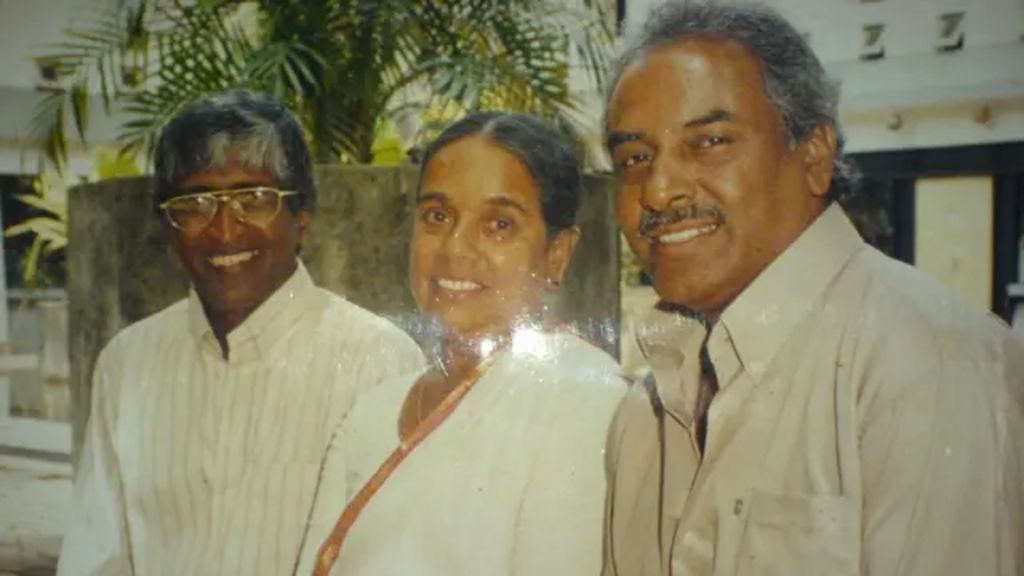
Renowned Sri Lankan vocalist Nanda Malini, whose politically charged, socially conscious music became the defining soundtrack for decades of the island nation’s tumultuous political and social transformation, has passed away at her residence in Nawala, just five days before she would have turned 83. Born on August 23, 1943, in a rural village of Kalutara as the fourth of nine children, Malini’s path in music began in 1956, when she claimed top prize at a poetry singing competition while studying in the capital city of Colombo.
By the 1970s and 1980s, Malini had carved out an unrivaled space in Sinhala music with lyrics that cut to the core of Sri Lanka’s most pressing societal ills. Her discography included sharp satirical takedowns of systemic corruption, urgent calls to bridge racial and religious divides, and rousing rallying cries against authoritarian tyranny — work that emerged amid a period of profound national unrest. During this era, leftist activists led widespread anti-establishment movements decrying soaring youth unemployment, entrenched social inequality, and the outsize power of the country’s elite, while simmering ethnic tensions finally boiled over into full-scale civil war in 1983.
Malini’s unflinching willingness to confront power drew pushback from state authorities: her most iconic album 1987’s *Pawana*, a collection of tracks centered on human rights and resistance to state oppression, was completely banned from all national radio airwaves during the 1980s. The ban did little to curb her popularity, however; passionate fans continued to share her music and packed her concert venues across the country, and *Pawana* remains a cultural touchstone for that turbulent chapter of Sri Lankan history.
Long after the 1980s, Malini never stepped back from her advocacy. As Sri Lanka spiraled into a catastrophic economic crisis in 2022 that sparked mass nationwide anti-government protests, Malini emerged as a prominent public supporter of the movement, even performing for crowds of demonstrators gathered in the capital. Those months of sustained protest ultimately led to the ousting of then-president Gotabaya Rajapaksa.
News of Malini’s death has prompted an outpouring of tributes from across Sri Lanka, with the national government declaring a three-day official period of mourning to honor her legacy. In a public statement shared on social media, current Sri Lankan President Anura Kumara Dissanayake said he was “deeply saddened” by the passing of the beloved artist, calling her a “true musical legend of our time.” “Her timeless music inspired generations of Sri Lankans, young and old alike,” Dissanayake wrote. Today, Malini is widely remembered as one of the most influential and iconic figures in the history of Sinhala music.