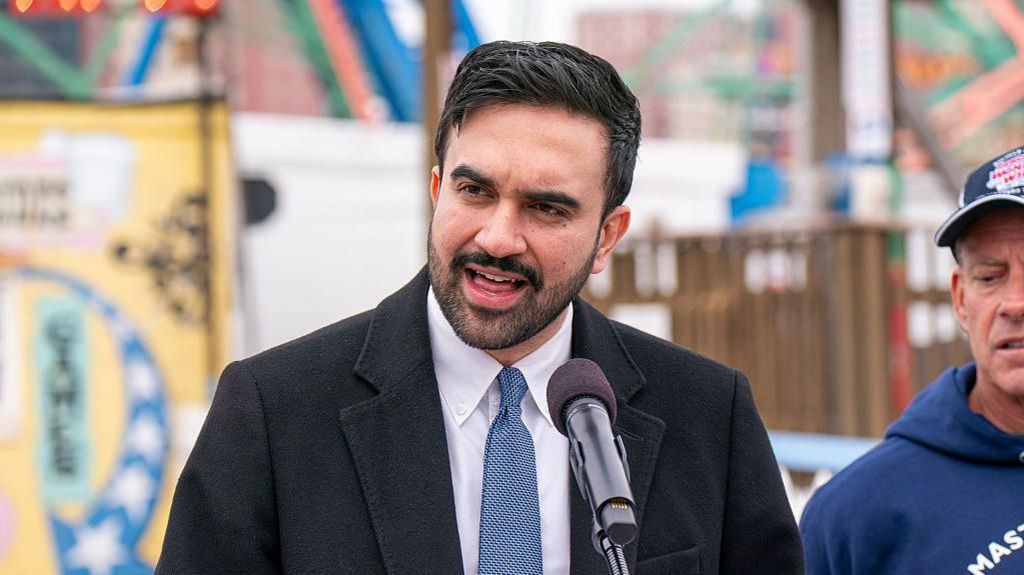
For millions of working and middle-class New Yorkers, achieving homeownership in one of the world’s most expensive urban centers already feels like an unattainable fantasy. Yet for a small, wealthy subset of residents and out-of-state elites, the city is not just a place for one primary residence – it is a location for a second luxury pied-à-terre. To address the city’s crippling housing affordability crisis and fund critical social programs, New York Mayor Zohran Mamdani has introduced a groundbreaking annual tax on high-value second homes, but the policy’s botched rollout has sparked fierce public backlash and legal challenges.
Under the new policy, the tax applies to second homes valued at more than $5 million, as well as condos and co-ops worth over $1 million. As part of the rollout, the city published a public list of nearly one million properties that could be subject to the new levy, releasing the names and addresses of high-profile homeowners including hedge fund billionaire Ken Griffin (owner of a $239 million Manhattan penthouse), filmmaker Woody Allen, former Vogue editor Anna Wintour, and actress Cynthia Nixon. Ultimately, the city issued formal tax notices to just 17,000 property owners, but the public disclosure of the broader list became the central flashpoint at a heated City Council oversight hearing held this week to examine concerns over the policy’s implementation.
While some council members, including Gale Brewer, have voiced support for the core idea of a second home tax, they have acknowledged significant procedural flaws in how the policy was rolled out. Critics on the council have gone much further: Council member Kamillah Hanks slammed the public list as an unfair “hit list of the haves and the have-nots” that stigmatizes property ownership and creates unacceptable public safety risks, arguing that the disclosure frames legitimate homeownership as something to be ashamed of.
The New York City Department of Finance has defended the release of the information, noting that address and ownership data is already required by law to be made public annually. But critics across the real estate sector and homeowner groups warn the aggregated list creates a dangerous tool for scammers and bad actors, putting wealthy homeowners at heightened risk of fraud, harassment, and even targeted crime. Jason Haber, leader of the American Real Estate Association, notes that the confusion and backlash around the tax has already led some prospective high-end property buyers to pause purchases in the city, a trend he argues could eventually offset the $500 million in annual projected revenue the tax is expected to generate. A group of homeowners has already filed a lawsuit demanding the city remove the nearly one million-name list from public view.
Supporters of the policy, however, dismiss the backlash as overblown, framing the tax as a long-overdue measure to address New York’s staggering socioeconomic inequality. Dave Backer, a school finance professor, argued that wealthy opponents of the tax are protesting far more than the policy warrants. Beverly Solo, a 44-year New York resident who attended the hearing wearing a “Tax The Rich” shirt, noted that the revenue generated by the levy will fund critical public services that benefit all city residents. “It seems reasonable and fair to ask those who don’t pay full-time income taxes here, but have luxury homes here for pleasure, to contribute to the wellbeing of New York City,” she said, though she conceded the rollout of the policy had been “a mess.”
Mayor Mamdani has stood firmly behind the policy, framing it as a fair mechanism to generate $500 million in annual revenue that will fund his campaign promises of universal child care, improved and free bus service, and other social programs targeted at New Yorkers struggling with housing and cost of living. Crucially, the policy has won the backing of New York Governor Kathy Hochul, who previously held reservations about raising taxes on state residents. Still, the rollout has faced repeated setbacks: Mamdani’s administration declined to attend this week’s oversight hearing, a decision that angered attendees. A spokesperson for the mayor explained the administration had requested to delay the hearing amid ongoing litigation over the policy, and that city officials are barred from testifying on a matter currently before the courts.
Similar secondary property and empty home taxes have been implemented across the globe, with mixed results. In Paris, France, secondary properties face a 60% local tax surcharge that has generated billions of euros in public revenue. Vancouver, Canada introduced a 3% empty homes tax in 2017 to improve housing affordability; research found the tax raised nearly $194 million over eight years and reduced housing vacancies by 21%, but had little impact on lowering average rental costs. In 2022, San Francisco voters approved an empty homes tax, but the policy was found unconstitutional by a court following a lawsuit from real estate groups, and remains tied up in appeals.
Even some prominent supporters of the New York policy acknowledge that the public disclosure of the property list was an unforced error. Morris Pearl, a former BlackRock managing director and chair of Patriotic Millionaires, a group of wealthy Americans who support higher taxes on the rich, noted that “the mayor himself … sort of unnecessarily antagonises people occasionally.” Still, Pearl says he stands firmly behind the policy itself, arguing that claims the tax will drive away wealthy investment are absurd: “Someone who owns a residence that is not their primary residence that’s worth more than $5m has the ability to pay more than most New Yorkers do.” As litigation moves forward, the future of both the controversial tax rollout and the policy itself remains undecided.