博客

  • Ater ‘Elia’ Good death: Omar Omar, 20, granted bail after murder charge dropped

    Ater ‘Elia’ Good death: Omar Omar, 20, granted bail after murder charge dropped

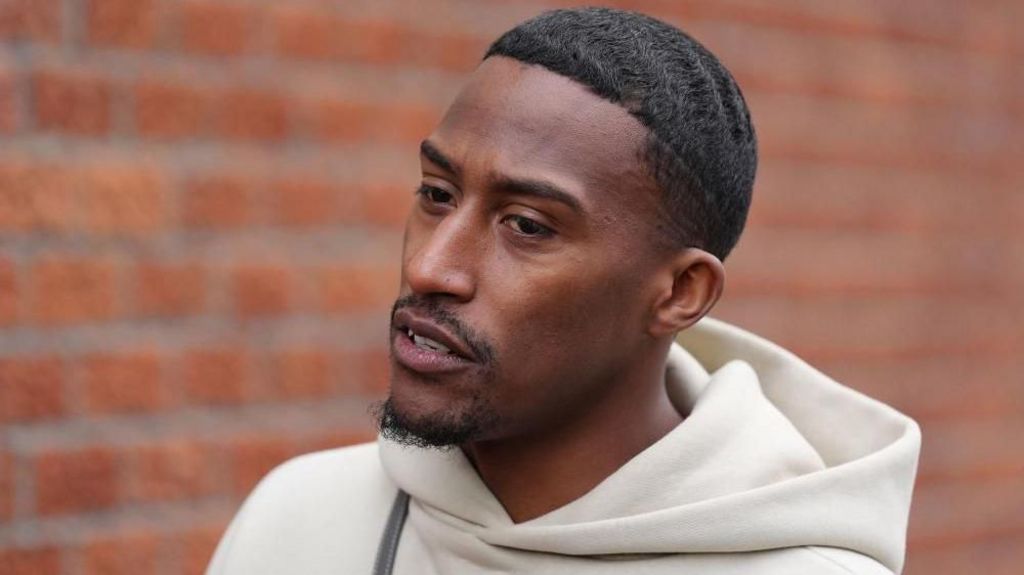
    A 20-year-old man linked to an alleged Melbourne youth gang has walked free on bail after prosecutors withdrew a murder charge connected to the fatal New Year period drive-by shooting of a 16-year-old boy, the Victorian Supreme Court has confirmed.

    The fatal incident that sparked the latest court proceedings unfolded shortly after midnight on January 3, when Ater “Eila” Good was gunned down on a street near Fitzroy Police Station, in Melbourne’s inner-northeast. The shooting was alleged by authorities to be a retaliatory attack, coming just days after a New Year’s Eve double machete stabbing in nearby Carlton.

    According to police allegations, the violence is rooted in ongoing tension between two youth groups: the Fitzroy-based 6z gang, which Good was allegedly associated with, and the Heidelberg-based H-Town Boys. Police claim 6z affiliates carried out the Carlton stabbing against two H-Town Boys-linked individuals, leading to the retaliatory killing of Good. In the weeks after Good’s death, four young men alleged to have ties to H-Town Boys were formally charged with his murder.

    On Friday, that case took a sudden turn when Omar Omar, 20, learned his murder charge had been withdrawn the previous day. In its place, prosecutors now accuse Omar of assisting the shooters after the fatal attack took place. Specific allegations against Omar include that he granted access to a car park in his apartment building for the vehicle used in the shooting, and that he has proven communications and photographed connections to other people linked to the alleged gang.

    Crown prosecutor Nadia Kaddeche argued against bail for Omar, telling the court the prosecution could not yet outline the exact details of how Omar is alleged to have aided the killers following the shooting, due to the recent charge adjustment. She centered her opposition to release on Omar’s purported connections to H-Town Boys.

    Presiding Justice Rita Incerti publicly rebuked the Office of Public Prosecutions for the lack of clarity in the case, noting the prosecution had failed to provide even a basic level of detail to let the court assess the strength of its current case. “It’s not satisfactory, what you’re telling this court is we can’t even give an indication,” Incerti said during the hearing.

    Omar’s legal team pushed back strongly against the prosecution’s framing of the case. Felicity Gerry KC, Omar’s barrister, urged the court to treat the labeling of the H-Town Boys as a criminal gang with significant caution. She told the court the group is simply a collection of young people of Somali heritage who live in the Heidelberg area, arguing that labeling it a formal criminal gang is an overreach. “It’s a huge step, in our submission, to suggest he is associated with a gang … there are live questions whether there is a gang at all,” Gerry said. “The whole basis for the Crown’s opposition to bail is certainly speculative and mislabelling the young people of Heidelberg.”

    Gerry added that evidence only shows Omar had casual contact with individuals linked to the alleged group, pointing out that her client has no prior criminal convictions, has a supportive family ready to monitor him, and already has a pending job offer with a local house painting business.

    The judge noted that longstanding tit-for-tat violence between the two groups dates back to the 2022 death of Khalid Mahat, but ruled that at this stage of proceedings, it was impossible to judge whether the prosecution’s current case against Omar is strong or weak. Granting bail, Incerti remarked that she had seen many young people like Omar caught up in damaging circumstances through her decades on the bench, telling Omar: “This is your chance, your opportunity and only you are responsible for what you do.”

    Following the ruling, Omar was seen embracing emotional family members as he left custody Friday afternoon. Three other co-accused – Shakib Abdul Kadir, Abdijalil Warsame and Sella Rabih – still face murder charges over Good’s killing. All four defendants are scheduled to next appear at the Melbourne Magistrates’ Court in November, and none have entered pleas to the charges against them.

  • Australian hiker’s body recovered as officials apologise for misreporting she was alive

    Australian hiker’s body recovered as officials apologise for misreporting she was alive

    A devastating communication error has shaken New South Wales, Australia, after 18-year-old experienced hiker Lily Hooper, who went missing while trekking in the state’s Southern Highlands, was incorrectly reported to have been found alive – a mistake that left her family briefly clinging to false hope before the tragic truth was revealed.

    Hooper, an experienced outdoor explorer, was first reported missing a week prior to the error, sparking one of the state’s largest recent land search operations. Over eight consecutive days, roughly 1,000 emergency personnel, police officers, and community volunteers combed the rugged, remote bushland of Nattai National Park, located southwest of Sydney, to locate the missing teenager.

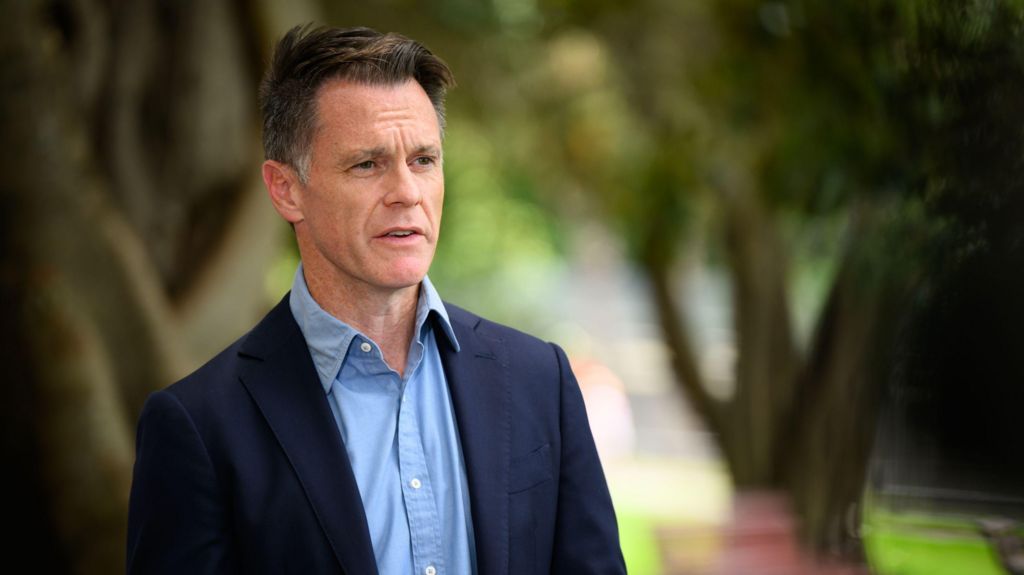
    On Thursday, the incident took a chaotic turn when NSW Premier Chris Minns told a state parliamentary hearing that search crews had recovered Hooper alive, noting she had only half a bottle of water left after eight days lost in the bush. The news spread rapidly across Australian media outlets, bringing sudden, short-lived relief to Hooper’s loved ones and the community that had rallied to support the search. But within 30 minutes, Minns issued a urgent correction, confirming that what had been found was Hooper’s body, and that she had been deceased.

    By Friday, officials confirmed Hooper’s remains had been airlifted out of the remote national park to allow for official processing. A police spokesperson told media that a post-mortem examination will be carried out in the coming days to formally confirm identification and establish an official cause of death.

    In the wake of the painful error, both Premier Minns and NSW Police Commissioner Mal Lanyon have issued formal public apologies to the Hooper family, with Minns saying he intends to deliver a personal apology directly to the family in a private conversation.

    “The government, myself – we’re profoundly sorry,” Minns said in public remarks Friday.

    Lanyon acknowledged that large-scale search operations in remote, disconnected terrain create significant communication challenges, and said the misclassification of Hooper’s condition should never have happened. “Tragically, her condition was miscommunicated, and for that I apologise,” he stated. He added that NSW Police will launch a full review of existing search communication protocols to update policies and ensure such a painful mistake cannot be repeated in the future, with the goal of creating “foolproof” processes.

    NSW State Emergency Services Commissioner Mike Wassing explained that search teams often use coded language over public radio communications during large operations, to protect sensitive information from being heard by family members, volunteers and other civilians participating in the search. Wassing noted that codes are sometimes linked to seemingly mundane details, such as “bottles of water,” though he stopped short of confirming the exact root cause of the error, which remains the subject of an active administrative investigation.

    The miscommunication created a brief, cruel window where Hooper’s parents believed their daughter was alive, before the correction came through. The mistake has prompted widespread discussion about communication protocols during large emergency searches, and the need to balance operational security with the emotional needs of affected families.

  • Flood of discounted auction homes deepens China’s property slump

    Flood of discounted auction homes deepens China’s property slump

    China’s struggling residential property market extended its downward trajectory through 2026, driven by a flood of steeply discounted court-ordered auction homes seized from defaulting mortgage borrowers. This influx has amplified buyer caution, erasing tentative hopes for a recovery in the world’s second-largest economy.

    New data from leading Chinese real estate research firm China Index Academy reveals that across 355 cities, the number of properties listed for court auction hit 539,000 in the first seven months of 2026, marking a 23.7% year-on-year increase. With courts and asset management firms racing to offload seized assets, average auction prices have dropped 9% compared to the same period last year.

    Industry data shows only roughly one-third of all listed auction properties successfully find buyers, with auctioned homes selling at an average 30% discount to comparable existing homes on the private secondary market. This price gap grows far wider in lower-tier cities: many unsold auction properties in second- and third-tier markets carry discounts of 50% to 60% off secondary market levels, with the majority drawing no bidders at all.

    These deep discounts have reshaped buyer psychology, reinforcing widespread expectations that home prices will continue to fall before hitting a market bottom. Instead of rushing to purchase discounted properties, prospective buyers are now extremely selective, prioritizing assets that offer strong resale value. Demand has become heavily concentrated in well-located units in top-tier cities with reliable transportation access and proximity to high-performing schools, while remote, older, and rural properties sit largely unwanted.

    Shaanxi-based economic commentator Jiang Xiaorong notes that while the total volume of completed court-auction home transactions rose 42.7% year-on-year in the first seven months of 2026, this growth is not a sign of renewed buyer confidence. “This looks more like sellers using deep price cuts to clear a growing backlog of defaulted assets, not buyers suddenly turning bullish on housing again,” Jiang explained.

    For ordinary private homeowners looking to upgrade their properties, the crisis is not just about falling paper values—it is a catastrophic collapse in market liquidity. Jiang shared the example of one upgrading household that needed a 3 million yuan (roughly US$420,000) down payment for their new home. Their existing property, originally valued at 2.5 million yuan, has remained unsold for three months even after two consecutive price cuts that brought its asking price down to 2.2 million yuan, leaving the family unable to meet their purchase deadline.

    Many desperate sellers turn to high-interest consumer loans or dip into long-term savings earmarked for elderly family care or children’s education to raise emergency funds, while others continue slashing prices to force a quick sale. For these households, liquidity matters far more than theoretical property value: court auction data underscores that an asset is only worth what a buyer will pay in cash immediately.

    As of April 2026, 8 million Chinese borrowers are officially listed as loan defaulters after missing mortgage payments, with 60% of these defaulters under the age of 35, according to a commentator writing under the pen name Property Observer. He shared the case of one buyer who purchased an apartment for 3.48 million yuan with a 2.8 million yuan mortgage. Just a few years later, the property’s market value dropped to 1.2 million yuan, but the buyer remains obligated to continue paying down the full original mortgage. If they stop payments, the home will be auctioned off, and they will still be left responsible for the remaining massive debt.

    The commentator added that roughly 45% of borrowers who default on mortgages did so after losing their jobs, as once-stable sectors including hospitality, real estate, and private education have implemented widespread layoffs in recent years. For most households, giving up a home to auction is not a voluntary choice—it is a last resort.

    Official data from the National Bureau of Statistics (NBS) confirms the uneven, two-speed downturn playing out across China’s secondary housing market. In July 2026, secondary home prices in first-tier cities fell 3.7% year-on-year, with Guangzhou recording the steepest drop among the four major top-tier cities at 4.7%, followed by Beijing at 4.5%, Shenzhen at 3.6%, and Shanghai with the smallest decline at 2%.

    Second-tier cities saw a sharper 5.1% year-on-year drop in secondary home prices, while third-tier cities recorded the most severe declines at 5.8% year-on-year. Chinese market analysts say this gap highlights that liquidity, not just price, is the defining feature of today’s market. Top-tier cities are cooling far more slowly because buyers still recognize limited supply and consistent underlying demand, while smaller cities face years of persistent oversupply that leaves sellers with almost no negotiating power.

    “The secondary market has a shortage of high-quality listings, so newer homes in good school districts or prime locations can still hold their value relatively well,” explained Yan Yuejin, deputy director of the Shanghai-based E-house Real Estate Research Institute. “But overall, sellers in most cities are still cutting prices just to keep transactions moving, and further price adjustments will be needed to draw hesitant buyers back into the market.”

    Auction clearance rates— the share of listed properties that actually sell—mirror this stark divide across city tiers. Nationwide, 89,000 of 245,000 listed residential auction properties sold in the first seven months of 2026, for an overall clearance rate of 36.2%. Clearance rates are far higher in top-tier and economically strong second-tier cities: Ningbo leads the country with an 80.8% clearance rate, followed by Shanghai at 78.5%, Shenzhen at 71.3%, Hangzhou at 70.4%, and Guangzhou at 55.6%.

    Smaller cities fare dramatically worse. In Luoyang, a mid-sized city in central China, only 12.87% of auctioned homes found buyers, meaning fewer than 13 out of every 100 listed properties actually transact.

    Across the country, auctioned homes sold for an average of 73% of their appraised value in 2026, equal to a 27% discount. If a property fails to sell in its first auction round, starting bids for the second round can be cut by as much as 20%.

    Commentator Yang Po describes the situation as particularly devastating in Shijiazhuang, a second-tier city adjacent to Beijing where thousands of homeowners have lost their jobs, their homes, and decades of accumulated savings amid the multi-year property downturn. She shared the story of a local man surnamed Zhang, who purchased a small three-bedroom apartment in 2019 for 1.1 million yuan, putting down 350,000 yuan in savings and taking out a 750,000 yuan mortgage with monthly payments of 4,200 yuan. Zhang lost his full-time job in winter 2024, and even after switching to work as a food delivery driver, he could not cover his monthly expenses. His home was seized and listed for court auction with a starting price of 660,000 yuan, equal to 70% of its appraised value. No bidders stepped forward. In the second auction round, the home sold for just 560,000 yuan, leaving Zhang still owing 190,000 yuan to the bank.

    Yang notes that the low auction sale price dragged down property valuations for the entire surrounding neighborhood, amplifying anxiety for other private homeowners in the area.

    The ongoing downturn has also forced private property developers to scale back activity sharply, with new project development slowing dramatically. NBS data shows that nationwide real estate development investment dropped 19.2% year-on-year to 4.3 trillion yuan in the first seven months of 2026, further weighing on broader economic growth.

  • British rapper Yung Filly to face retrial on rape charges in Australia

    British rapper Yung Filly to face retrial on rape charges in Australia

    British social media personality and rapper Yung Filly, whose legal name is Andres Felipe Valencia Barrientos, will undergo a new trial for three unresolved rape charges in Australia, following a jury verdict that acquitted him on multiple sexual assault counts but failed to reach a unanimous decision on the remaining charges. The 31-year-old creator, who rose to fame through his YouTube content, was first accused of a series of violent sexual offenses against a fan following a 2024 performance at a Perth nightclub. The allegations date back to an incident in the performer’s hotel room, where the accuser, a 20-year-old fan, told the court the pair initially engaged in consensual sexual activity before Barrientos allegedly became violent, continuing sexual contact after she repeatedly asked him to stop. Barrientos has maintained his innocence across all 10 charges brought against him. During his first trial last month, the Perth jury delivered not guilty verdicts on six of the counts: three charges of sexual penetration without consent, one count of common assault, and one count of strangulation. The jury did find Barrientos guilty on two counts of assault occasioning bodily harm. Sentencing for these convictions has been delayed until the conclusion of his upcoming retrial. Barrientos is scheduled to appear before a Western Australian court again on 27 August for a hearing to consider an application to modify his current bail conditions. As of this update, no official date has been set for the new trial. This is an ongoing developing story, with new details expected to be released in the coming days. Readers can access real-time updates through the BBC News mobile application or by following the official @BBCBreaking account on the social platform X for the latest alerts.

  • A question looms over Harry’s return to the UK. Can he rebuild his relationship with Prince William?

    A question looms over Harry’s return to the UK. Can he rebuild his relationship with Prince William?

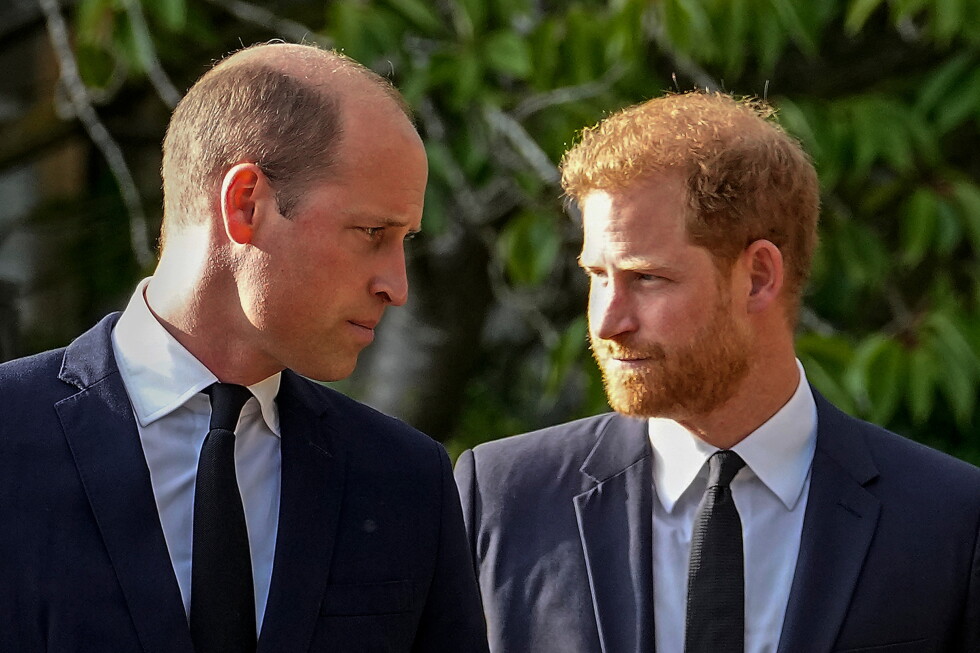
    LONDON – Six years after stepping back from official royal roles and relocating to Montecito, California, Prince Harry and his wife Meghan Markle are preparing to move back to the United Kingdom with their two young children, a surprise announcement that has thrown the House of Windsor into a new period of uncertainty and quiet hope.

    The couple has already enrolled 7-year-old Prince Archie and 5-year-old Princess Lilibet in British schools ahead of the upcoming autumn term, according to reports first published by the Telegraph and The Sun late Wednesday. Multiple British outlets have confirmed the pair will reside in a private, non-royal residence outside London and will not resume the official royal duties they abandoned in 2020.

    Their decision to return comes at a pivotal moment for the British monarchy: 77-year-old King Charles III, Harry’s father, continues ongoing cancer treatment after a diagnosis in early 2024. Harry has previously spoken publicly about his fear of losing his father, and has cited a desire for his two children to build a relationship with their grandfather and experience a British upbringing as core motivations for the move. Royal historian Ed Owens, author of *After Elizabeth: Can the Monarchy Save Itself?*, notes that shifting circumstances have cleared a tentative path for the couple’s return, starting with a successful private meeting between the King, Harry, Meghan, and their children at Charles’ Highgrove estate last month. Beyond family ties, Owens adds that growing political and social division in the United States has also made the UK a more appealing place to raise the couple’s children.

    But the return has sparked immediate questions and unresolved tensions that have defined Harry and Meghan’s relationship with the royal family for nearly five years. The most pressing challenge, many experts note, is whether Harry can repair his severely fractured relationship with his older brother Prince William, the heir to the British throne. The rift opened after Harry and Meghan stepped down from their roles, and widened dramatically following a series of explosive public interviews and Harry’s 2023 memoir *Spare*, in which he accused Buckingham Palace staff of mistreatment, alleged a senior royal had made racist comments about Meghan’s unborn child, and criticized the institution of the monarchy for its rigid restrictions. That public criticism decimated what was once a close brotherly bond, and there are widespread concerns within palace circles that the couple’s high-profile return could overshadow the official work of working royals including William and his wife Catherine, Princess of Wales.

    “That will be something for the palace to deal with,” explained Craig Prescott, a constitutional and monarchy expert at Royal Holloway, University of London, in an interview with the Associated Press. “They wouldn’t want Meghan and Harry’s presence in the U.K. here to overshadow the work of the monarchy, and there will have to be some discussion and allowance for that.”

    Unresolved practical issues also hang over the move, most notably security arrangements and ongoing legal battles. For years, Harry has fought a legal challenge against the British government, which stripped him of publicly funded armed police protection when he gave up his working royal role. After losing his court challenge in May 2025, Harry told the BBC he could not imagine bringing his family back to the UK under those conditions, a stance that makes his current announcement all the more surprising. When asked about security arrangements this week, Prime Minister Keir Starmer (note: corrected from original typo Andy Burnham) described the issue as a “private matter” for the couple. Harry also faces a potential £34.5 million ($47 million) legal bill after losing a high-profile privacy lawsuit against the publisher of the Daily Mail last month, in which he accused tabloid journalists of phone hacking and illegal privacy intrusion.

    While the challenges to reconciliation are significant, many royal observers expect King Charles to welcome Harry and Meghan’s return. As Supreme Governor of the Church of England, Owens notes that Charles is bound by Christian teachings to prioritize forgiveness, even after years of public criticism. For William, the road to reconciliation may be rockier: Owens argues that while William may never privately forgive what he sees as Harry’s public betrayal of the royal family, tradition and his future role as head of the Church of England will require a public show of reconciliation. For now, the coming weeks will mark a critical test for the monarchy: after years of public infighting that has shaken public confidence in the institution, the royal family faces a choice between mending long-standing rifts or descending back into the chaos of public division.

    “It may be that privately William never fully forgives his younger brother for what he deems the betrayal of the family,” Owens told the AP. “But publicly, he will, because for traditional moralists, traditional Christian values, they demand that there is this public act of forgiveness, that there’s reconciliation between the brothers.” Owens added that time may help ease tensions, saying “I think time is a great healer. It creates space in a social media-saturated world. People are always looking for the next thing to talk about, and, arguably, that will be reconciliation between first of all father and son, and then potentially the two brothers.”

  • Indian captain ‘scapegoat’ in Britain’s Russia shadow fleet case, wife says

    Indian captain ‘scapegoat’ in Britain’s Russia shadow fleet case, wife says

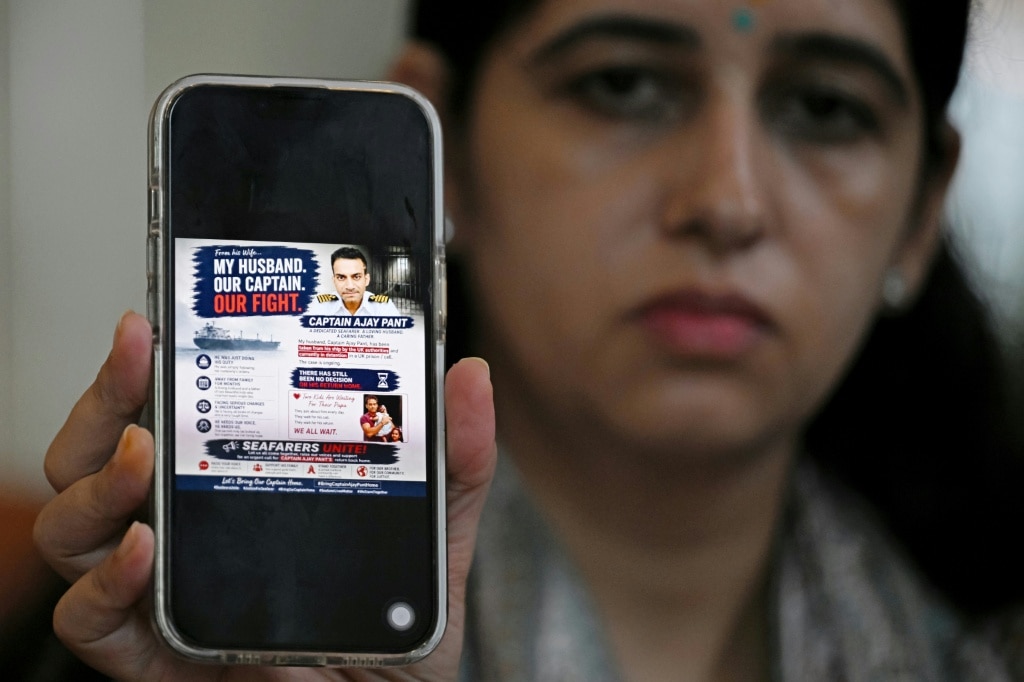
    A high-stakes legal case unfolding in the United Kingdom is sending shockwaves through the global merchant shipping industry, after an Indian captain of an oil tanker linked to Russia’s shadow fleet was hit with sanctions violations that could put him behind bars for a decade. For Ajay Pant, the 38-year-old mariner now held in British custody, the situation is a personal catastrophe, and his family insists he is nothing more than a political scapegoat caught in the crossfire of international geopolitics.

    Pant’s arrest came on June 14, when British special forces commandos fast-roped from a military helicopter onto the deck of the tanker *Smyrtos* mid-voyage through the English Channel. The vessel is accused of being part of Russia’s vast “shadow fleet” – a loose network of ships with deliberately obscured ownership and unorthodox insurance arrangements that Moscow has deployed to bypass Western oil sanctions imposed after its full-scale invasion of Ukraine in 2022.

    Shipping tracking data from MarineTraffic confirms the *Smyrtos* departed Russia’s Baltic port of Ust-Luga on June 5, bound for Egypt’s Port Said. When it entered the English Channel, UK authorities launched their operation. The intercept marked the first UK-led mission of its kind targeting a Russian shadow fleet vessel, and then-Prime Minister Keir Starmer publicly celebrated the action as a significant “blow to Russia”.

    In her first public interview since Pant’s arrest, Ritu Pant, the captain’s 36-year-old wife, told Agence France-Presse that her husband was simply in the wrong place at the wrong time, and is being punished for actions that were out of his control. “My husband just became the scapegoat,” she said, fighting back tears as she described their first phone call after his arrest. “He was broken and he was just crying. He didn’t know what had happened to him… He just said, ‘I am in jail, please take me out.’” Bail has been denied to Pant, and his wife says he is struggling deeply with the conditions of his pre-trial custody.

    As the court case proceeds, the core legal argument from Pant’s defense is clear: as an employee of the ship’s owners, he was only following orders to deliver cargo to its scheduled destination. Prosecutors, however, contend that as the vessel’s master, Pant had full knowledge of the sanctioned cargo – 98,000 tonnes of Russian crude oil – and is therefore legally responsible.

    This unprecedented case is set to open on December 15, and legal and maritime experts warn it will set a critical precedent that reshapes how Western nations enforce sanctions against Russian shadow fleets. It is the first known instance of a European country filing criminal sanctions charges against a ship’s captain, rather than only targeting the vessel itself or its corporate owners, a shift that has raised urgent questions about accountability for working seafarers caught in geopolitical disputes.

    Anwar Sadat, a legal expert with the Indian Society of International Law, noted that the case raises unusually complex legal questions that have not been fully tested in international courts. Writing in an analysis for Lloyd’s List Intelligence, David Hammond of Human Rights at Sea International summed up the broader stakes of the trial: “The case carries implications far beyond the fate of a single ship, its cargo or its master. It is likely to become an early test of how far Western governments are prepared to use criminal sanctions enforcement not only against shadow fleet operators, but also against the seafarers who work aboard their vessels.”

    Of the 25 crew members on board the *Smyrtos*, Pant is the only one facing criminal charges. The other 24 sailors have been repatriated to their home countries, and the tanker remains anchored off the southern coast of England. India’s Ministry of Foreign Affairs confirmed that consular officials have visited Pant to check on his welfare, but the family has launched a public appeal for the Indian government to intervene to secure his release.

    For the global shipping community, the case has sparked widespread anxiety among seafarers, who often find themselves caught between competing geopolitical blocs with little ability to verify the details of their cargo or their vessel’s ownership. Steve Yandell, coordinator of the seafarers’ section at the International Transport Workers’ Federation, explained that many working mariners have no way of knowing if their vessel is carrying sanctioned cargo, leaving them exposed to criminal penalties for actions outside their control. “Seafarers will often not know that their ship might be carrying sanctioned oil, and that they’re potentially open to getting caught up in a geopolitical conflict,” Yandell said. “They’re stuck in the middle of a tug-of-war between rival powers.”

    India supplies more than 320,000 seafarers to the global merchant shipping industry, making it one of the largest sources of maritime labor in the world. Sanket Joshi, a veteran Indian tanker captain with 40 years of experience, called the case deeply alarming, noting it marks the first time a captain has been arrested over commercial sanctions violations rather than standard maritime safety breaches.

    For Pant’s family, who live in the quiet Himalayan foothill town of Ramnagar, the anxiety of the past five months has been overwhelming. Days before his arrest, Pant had written to his wife expressing growing concern about the risks of working in increasingly geopolitically tense waters, coming on the heels of the deaths of several Indian sailors near the Strait of Hormuz amid Middle East tensions. “He said that the sea is becoming very difficult now,” Ritu Pant recalled. “I was just praying, and telling him that, ‘just be calm, be careful and just keep contacting us.’”

    Pant’s 60-year-old mother Deepa has made an emotional public appeal for governments to intervene to bring her son home. “I just want to plead to the government, with folded hands, to get my son back home,” she said through tears.

  • What happened to Meghan and Harry’s American dream?

    What happened to Meghan and Harry’s American dream?

    When Prince Harry and Meghan Markle, the Duke and Duchess of Sussex, stepped away from their official working roles with the British Royal Family in 2020 and relocated to coastal California, they brought a one-of-a-kind commodity to Tinseltown: authentic royal cachet that no studio or PR team could manufacture. What followed was five years of high-stakes commercial deals, viral media attention, and unexpected setbacks that ultimately led the couple to pack their bags and return to the United Kingdom – a shift that has drawn a largely apathetic reaction from the American public.

    When they first launched their cross-Atlantic “American dream,” the couple made clear their goals extended far beyond simple financial independence. In her bombshell 2021 interview with Oprah Winfrey, Meghan framed the move as a chance to claim personal autonomy, calling the ability to make her own choices “liberating.” For Harry, the relocation promised a level of privacy and freedom he argued his family could “undoubtedly never” access in Britain, a life he believes his mother, Princess Diana, would have wanted him to build.

    The couple put down roots in Montecito, an exclusive celebrity enclave nestled a few hours north of Los Angeles, where their neighbors included A-listers like Winfrey, Gwyneth Paltrow and Rob Lowe. Major commercial opportunities followed almost immediately: multi-million-dollar content deals with Spotify and Netflix turned the couple into major players in the global entertainment industry almost overnight.

    “When they first arrived, they were incredibly high-profile, instantly grabbing headlines and commanding global attention,” explained Stacy Jones, chief executive officer of leading entertainment marketing and PR firm Hollywood Branded. “For celebrities embedded in the Hollywood ecosystem, there is no shortage of exclusive events, high-profile parties and opportunities to engage. But what many quickly realize is that almost every one of these opportunities is tied to selling something – and Harry and Meghan had no shortage of personal brand to market.”

    For many observers, the news of the couple’s departure came as a surprise. LA-based royal journalist Elizabeth Holmes, author of *HRH: So Many Thoughts on Royal Style*, notes that the couple had appeared to fully settle into their quiet, upscale California lifestyle. But reactions to the announcement across the United States have been mixed at best, with many outlets and members of the public showing little regret over their exit. The New York Post, a publication that has been openly critical of the couple for years, celebrated the news with the cheeky headline “Throne Back!”, declaring America’s “long national nightmare” over.

    Critics often dismiss the couple’s Hollywood tenure as a failure, but they did achieve a feat most new entrants to Tinseltown never pull off: convincing some of the world’s biggest media companies to invest nine-figure sums in their personal brand. The harder challenge, it turned out, was sustaining that early momentum.

    Their Spotify partnership, reportedly valued at up to $25 million, produced *Archetypes*, Meghan’s 12-episode podcast that drew A-list guests including Serena Williams and Mariah Carey. But just two years into the multi-year deal, Spotify and the couple’s Archewell Audio production label announced they had “mutually agreed to part ways.”

    Similarly, the couple’s 2020 five-year deal with Netflix, reportedly valued between $60 million and $100 million, delivered a handful of original projects, but the partnership was renegotiated into a far less lucrative arrangement amid a broader industry-wide downturn that has squeezed content spending across streaming platforms. Behind the scenes, the couple’s production venture faced persistent turmoil, with high staff turnover leading some former employees to privately refer to themselves as the “Sussex Survivors Club.”

    Harry did see breakout commercial success, but almost exclusively when his work centered on his own experience as a royal. His 2023 memoir *Spare* became a global publishing phenomenon, landing a reported $20 million advance and selling more than six million copies worldwide to earn the title of fastest-selling non-fiction book in recorded history. To promote the book, Harry joined prominent trauma specialist Dr. Gabor Maté for a public conversation exploring how his childhood as a working royal shaped his lifelong mental health struggles. Speaking to BBC Newsnight, Maté described Harry as “very personable, very sensitive,” noting the prince is committed to ensuring he “doesn’t pass on his traumas to his children.”

    Harry remains a marketable commodity when the content centers on his own story, the Royal Family, or the causes he has long championed. He took on the role of chief impact officer at Silicon Valley-based coaching firm BetterUp, and co-created the Apple TV+ mental health docuseries *The Me You Can’t See* alongside Winfrey. His Netflix projects leaned into his long-standing personal interests: *Heart of Invictus* followed wounded military veterans training for the Invictus Games Harry founded, while *Polo* explored his love for the equestrian sport. Neither project came close to matching the viral attention generated by the couple’s bombshell Netflix docuseries *Harry & Meghan* or the explosive personal revelations in *Spare*.

    In 2022, Harry delivered a high-profile keynote address at an informal UN General Assembly session marking Nelson Mandela International Day in New York, where he reflected on his mother’s legacy, his connection to Africa, and Mandela’s work. Still, experts note Harry struggled to break out of the “royal typecast” that defined his public identity in the US.

    For Meghan, a former *Suits* actress, the most recent project was *With Love, Meghan*, a Netflix cooking and lifestyle series that showcased the couple’s idyllic Montecito life, complete with rescue chickens and home-grown strawberries set against the backdrop of the Santa Ynez Mountains. Though the series was canceled after two seasons, it earned an Emmy nomination in the Outstanding Lifestyle Series category earlier this year. Earlier in 2026, Netflix ended its partnership with Meghan’s lifestyle brand As Ever. As Jones puts it: “Netflix produces movies. Netflix doesn’t produce jam.”

    Critics have attacked the carefully curated, upscale lifestyle Meghan presented on the show as out of touch, but Jones points out that even negative press can hold brand value, as it keeps a public figure at the center of conversation. Meghan’s projects kept her in the public eye and gave audiences consistent content to engage with, even as the commercial momentum faded.

    Royal commentator Kinsey Schofield, host of a popular podcast focused on the British Royal Family, argues the couple’s return to the UK is tied to their core brand. “In moving to Britain, it looks like they are continuing to chase that proximity to the Royal Family to validate themselves or, in some cases, to commercialise,” Schofield said. “Meghan’s been cosplaying as a royal selling her teas and her fruit spread through As Ever since it launched.”

    The Sussexes still have a small slate of projects in development in the US: they recently released a documentary focused on the Girl Scouts, and a scripted series set in the elite world of professional polo, produced by the team behind *Gossip Girl*, is still in the works. Still, their half-decade American experiment offers a clear case study in the limits of celebrity fame in Hollywood. A well-known name can open the door to opportunity, but it cannot guarantee long-term commercial success or staying power.

    Jones notes that the couple’s struggles have unfolded against a uniquely challenging moment for the entertainment industry. “Hollywood is going through an incredibly hard time right now, and it’s a fractured landscape,” she explained. Widespread layoffs, repeated corporate restructuring, and persistent turnover have destabilized media companies across the sector, making it far harder to launch and sustain a new production venture. “It is pretty hard to start and launch a company and keep it going,” Jones said. “When that company is being launched by someone who is a mega media star, it needs some really strong people supporting it.”

    While the couple no longer hold the A-list status they claimed when they first arrived in the US, and they have framed their return to the UK as a bid to live as private citizens, few experts expect them to fade from public view entirely. “They will never be private citizens anywhere in their lives,” Jones said. “They are not people who can ever become background players. They are stars of their own show – or stars of someone else’s show. Even if they’re lower-level stars, they’re still stars.”
  • Japan executes man who killed five in Pachinko parlour fire

    Japan executes man who killed five in Pachinko parlour fire

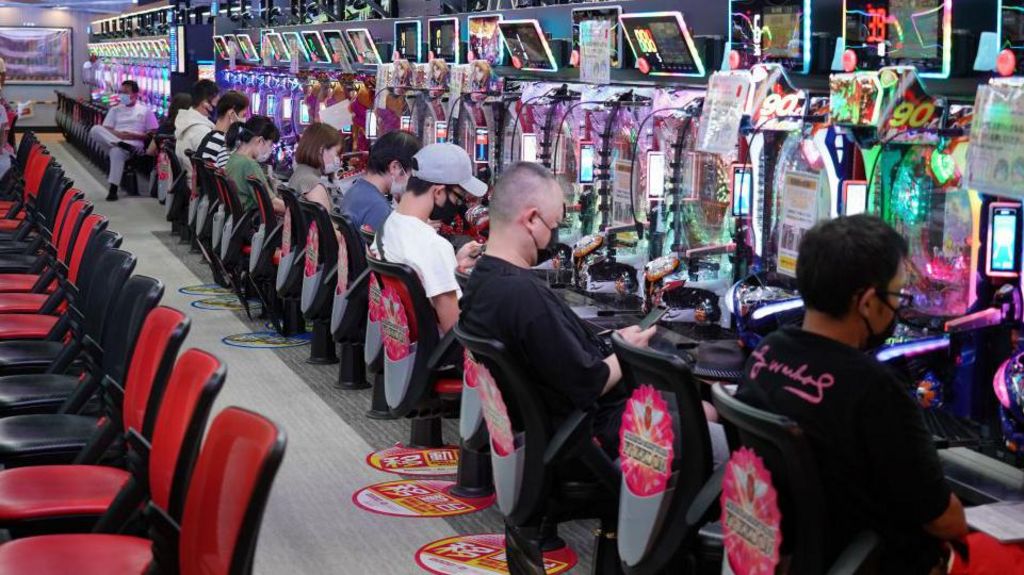
    After more than a year without capital punishment carried out across the country, Japan has resumed executions with the hanging of 58-year-old Sunao Takami, a man convicted of a fatal 2009 arson attack at an Osaka pachinko gaming parlour that left five people dead.

    The 2009 attack, which unfolded near Takami’s residential neighborhood, saw the perpetrator douse the interior of the popular gambling venue in gasoline before igniting the blaze. The attack killed four customers who were inside at the time and one on-site employee, leaving survivors and local communities reeling from the violence.

    Takami’s legal journey concluded in 2011, when a six-member jury and three-judge panel rejected the defense team’s core argument that the defendant was experiencing severe mental incapacity at the time of the crime. The court handed down a death sentence by hanging, which was carried out this week.

    Japan remains one of only two Group of Seven (G7) nations that still actively practices capital punishment, alongside the United States. A defining feature of Japan’s capital punishment system is its policy of last-minute notification: death row inmates are typically informed of their upcoming execution only a few hours before it is carried out, a practice that has drawn widespread criticism from global human rights organizations.

    Speaking to reporters on Friday, Japanese Justice Minister Hiroshi Hiraguchi confirmed the execution, noting that the decision came only after a comprehensive, careful review of the case. This execution marks the first death sentence carried out under the newly formed Takaichi administration.

    The last execution Japan conducted was in June of last year, when the country put to death Takahiro Shiraishi, infamously known as the “Twitter Killer.” Shiraishi, who targeted vulnerable people he contacted through the social media platform, murdered and dismembered nine people in 2017. His crimes were exposed in October 2017, when police searching for one of his missing victims discovered dismembered body parts at his home in Zama, a city located just outside of Tokyo.

  • Israeli opinion article says Turkey’s Nato protection does not apply to troops in Syria

    Israeli opinion article says Turkey’s Nato protection does not apply to troops in Syria

    Two days after Israeli warplanes carried out air strikes that destroyed sections of a decommissioned military air base in northern Syria, just kilometers from the Turkish border, a high-profile opinion piece published Thursday in Israel Hayom, a leading right-wing Israeli outlet, has thrown fuel on an already volatile regional standoff over expanding Turkish military presence in Syrian territory.

    The column, written by Shay Gal, founder of the government relations and strategy firm Line of State, argues that any Turkish combat troops that deploy inside Syria would become vulnerable targets for Israeli military strikes, because NATO’s collective defense guarantee does not extend to military forces operating outside a member nation’s sovereign borders. Gal notes that Israeli security analysts have thoroughly mapped the limits of NATO’s Article 5 mutual defense clause, which only protects the recognized home territory of alliance members. “The treaty protects Turkish territory; Turkish troops do not carry that territory with them onto Syrian or occupied Cypriot soil,” Gal wrote.

    Gal explained that Israel’s pre-emptive strike on the Abu al-Duhur air base was a deliberate calculation to act before Turkish forces could establish a permanent foothold. “Before Turkish troops arrive, the target is infrastructure; once they arrive, striking it also risks Turkish casualties, retaliation, American intervention and confrontation with a NATO member. Those costs alter the calculation, not Israel’s authority to decide,” he added. The opinion piece frames Turkey’s growing military engagement in post-Assad Syria as an existential threat to Israeli security, pointing to Ankara’s expanding influence across the country: Turkish military teams have already scouted potential base locations at T4, Palmyra, and Hama, all of which have been struck by Israeli warplanes after the inspections.

    Gal warned that Israel is determined to avoid a repeat of the decades-long Turkish military occupation of northern Cyprus, acting to nip any permanent deployment in the region before it can mature.

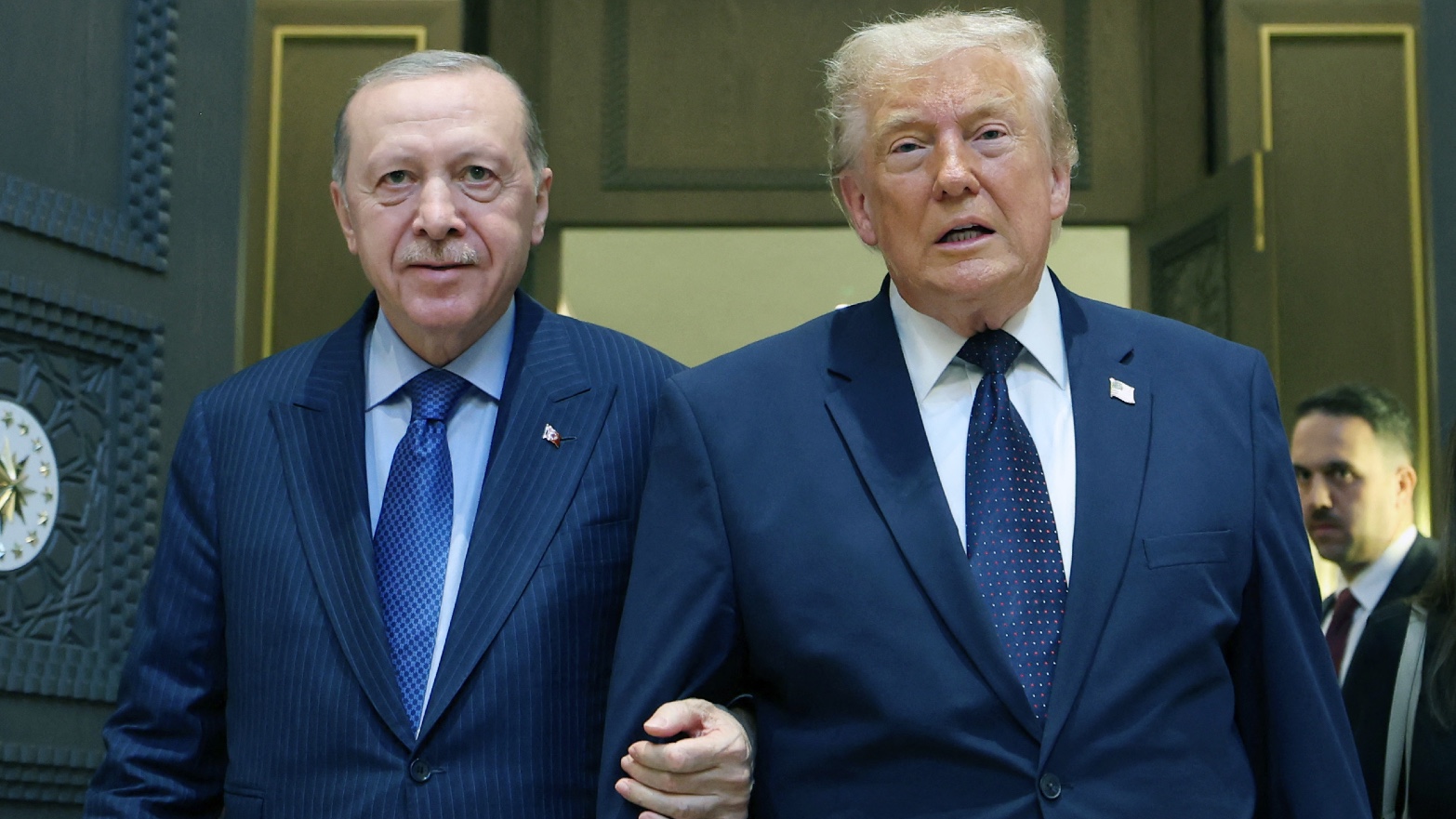
    The opinion piece carries outsized political weight because Israel Hayom is owned by Miriam Adelson, an Israeli-American billionaire who is one of the largest financial donors to former U.S. President Donald Trump’s political campaigns, and Trump has publicly acknowledged that Adelson holds significant influence over his administration’s Middle East policy. That connection adds a layer of geopolitical complexity to the already fraught dynamics, as the Trump administration has significantly deepened U.S. ties with Ankara in recent months.

    The Israeli government has openly identified the administration of Turkish President Recep Tayyip Erdoğan as a strategic foe that seeks to undermine Israeli national security, but the tightening U.S.-Turkey alignment under Trump has created a new diplomatic balancing act for Israeli leaders. In the wake of the strike, U.S. officials have openly criticized the Israeli action.

    Tom Barrack, who serves as both U.S. Ambassador to Turkey and U.S. envoy to Syria, confirmed this week that Turkey received no advance warning of the air strikes, despite a U.S.-brokered deconfliction hotline between Israel and Ankara that has been in place in Syria for a year. Barrack told Reuters that the incident exposed a critical breakdown in communication between all parties in the region. “This underscores the need for a deconfliction mechanism involving Israel, Syria and Turkey. That is something we are actively working on to establish in order to prevent future miscommunication,” he said.

    Barrack pushed back against Israeli justifications for the strike in a post on X Tuesday, arguing that the attack constituted unnecessary escalation against the new Syrian government led by Ahmed al-Sharaa. “The Al-Sharaa government has neither adopted a predatory posture nor maintained proxy forces. It has, in fact, repeatedly indicated a preference for de-escalation with Israel,” Barrack wrote. “We are deeply concerned. [This] does not advance regional stability.”

    Official accounts from both Damascus and Ankara contradict Israeli claims that the air base was set to imminently host a Turkish combat deployment. The Syrian government issued a formal condemnation of the attack, confirming that eight precision strikes hit the base’s runway in the early hours of Tuesday local time. The Syrian Observatory for Human Rights, a UK-based monitoring group, confirmed that a Turkish military delegation had visited the airfield in the days before the strike as part of plans to reactivate the facility.

    However, Syrian officials told Middle East Eye that only a Turkish technical team was present at the base to carry out repairs to the runway and control tower, with no full combat deployment in place. “The last team tasked with reconstructing the base was there two days beforehand,” one senior Syrian official said. Officials emphasized that Turkey is assisting the new Syrian government in rebuilding national military capacity across the country, with no aggressive plans targeting Israel. “Turkey doesn’t take over every base,” the official added, noting that Ankara has actually closed dozens of small outposts in northern Syria and only maintains a handful of established permanent bases in the region.

    Israeli officials defended the strike in a statement released late Tuesday, saying that the operation was necessary to uphold the long-standing security status quo between Israel and Syria, which Damascus was set to violate by allowing Turkish troops to deploy at the base near Aleppo. Since former Syrian President Bashar al-Assad fled to Russia in December 2024, Israel has launched a sustained campaign of air and ground operations across northern and western Syria, focused primarily on degrading the remaining Syrian air force infrastructure and expanding Israeli control into the UN-managed buffer zone along the shared border.

  • Bali jails Swiss tourist for insulting sacred Day of Silence

    Bali jails Swiss tourist for insulting sacred Day of Silence

    Bali, Indonesia’s world-famous holiday island, has long drawn millions of international visitors drawn to its lush coastlines, vibrant culture, and warm hospitality. But a recent legal ruling has put a sharp spotlight on the growing tensions between surging post-pandemic tourism and respect for local Balinese religious traditions: a 26-year-old Swiss national has been sentenced to 12 months in prison for insulting one of the island’s most sacred annual observances, Nyepi, the Day of Silence.

    The incident dates back to March of this year, when Nyepi fell on March 19. Nyepi is a foundational Hindu holiday for Balinese communities, marking the start of a new Saka year. Unlike most major cultural festivals that bring crowds and celebration, Nyepi is defined by complete quiet: for 24 hours, the entire island shuts down. Normally crowded beaches stand completely empty, the international airport halts all operations, public entertainment is banned, internet access is restricted, and even voluntary cuts to electricity use are widely observed. All people on the island — regardless of their personal religion or citizenship — are required to stay home and observe the day of silence, with locals stocking up on groceries in advance to avoid leaving their residences.

    Against this backdrop, Luzian Andrin Zgraggen, the Swiss tourist, deliberately violated the movement ban to walk along one of Bali’s normally busy empty beaches. He recorded a video of his outing, shared it to his Instagram account with profane captions, and described the quiet, empty scene as “crazy”. The video quickly spread across local social media platforms, sparking immediate and widespread outrage among Balinese communities. Zgraggen was taken into custody by local authorities shortly after the video went viral, and the clip was later removed from the platform.

    During his trial, Zgraggen testified that he did not fully grasp the scope and cultural significance of Nyepi’s restrictions, and insisted he never intended to offend Balinese people or their religious beliefs. “I deeply regret what I did, I apologise to the Balinese people,” he told the court, according to reporting from the Associated Press.

    However, presiding judges rejected that mitigation in their ruling, affirming that Zgraggen’s actions had caused measurable harm. “What the defendant did offended the Balinese people, hurt their faith and provoked public outrage,” the judge stated in the verdict.

    This case is not an isolated incident. In past years, a small number of foreign tourists have been detained or deported for breaking Nyepi’s rules, but this one-year prison sentence marks a notably strict penalty that underscores Bali’s growing commitment to enforcing respect for local culture. In the years following the global COVID-19 pandemic, Bali’s tourism sector has rebounded dramatically: in 2025, the island welcomed a record-breaking seven million international visitors, surpassing pre-pandemic numbers and bringing a major boost to the local economy.

    Yet that rapid rebound has come with a growing set of challenges. A steady stream of unruly behavior by foreign visitors has frustrated local residents and strained authorities, with incidents ranging from offensive acts at sacred religious sites to the creation of unregulated, exclusive tourist enclaves that sideline local communities, to widespread flouting of local traffic laws. In response, Bali’s government has already pledged to ramp up scrutiny of foreign visitors and enforce stricter penalties for any behavior that disrespects local norms and laws, in an effort to balance the economic benefits of mass tourism with protection of the island’s unique cultural and religious heritage.