博客

  • China moves to wrap up saga of troubled property giant Evergrande after founder gets life sentence

    China moves to wrap up saga of troubled property giant Evergrande after founder gets life sentence

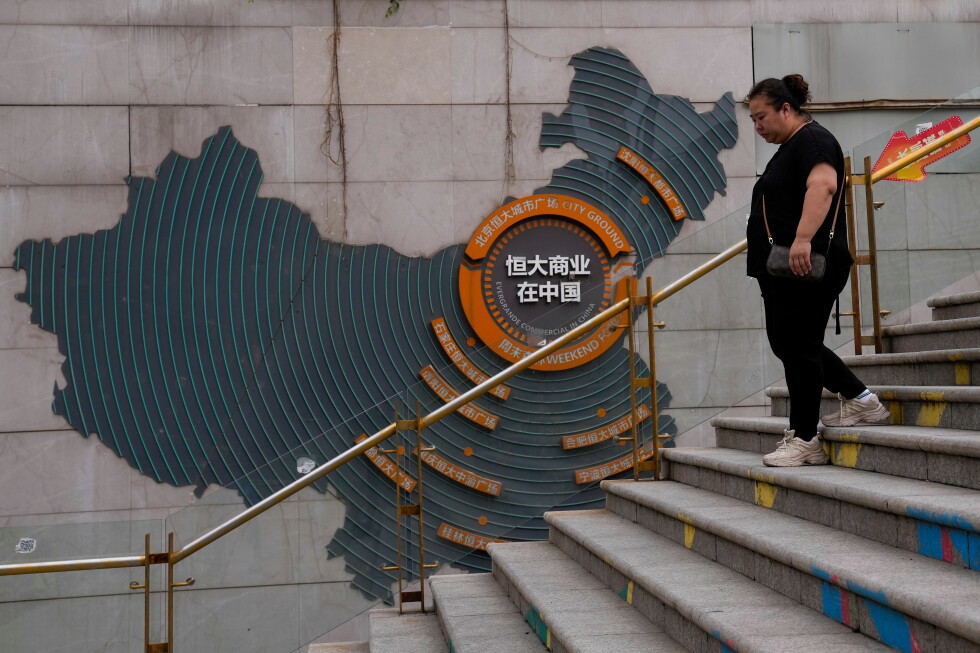
    Nearly five years after Chinese property giant China Evergrande defaulted on a staggering $300 billion in total liabilities, Chinese authorities have launched the final phase of resolving one of the largest corporate collapses in global history.

    On Friday, a court in Guangzhou, the capital of southern China’s Guangdong province, confirmed it has accepted a bankruptcy liquidation petition targeting Evergrande’s core onshore property development unit — the entity responsible for the vast majority of the group’s total outstanding debt. The court filing comes just one day after a Shenzhen court handed down a life prison sentence to 67-year-old Evergrande founder Hui Ka Yan, also known as Xu Jiayin, on multiple financial crime charges. Dozens of other co-defendants with ties to the embattled conglomerate, including two of Hui’s sons, were also sentenced to prison terms ranging up to 18 years. The Shenzhen court additionally ordered full confiscation of Hui’s personal assets; once ranked China’s richest person, Hui currently has an estimated $7.7 billion in global assets that have already been frozen under a Hong Kong court order.

    Industry restructuring specialists say the sequence of legal actions makes clear that Chinese regulators have a clear timeline to bring the years-long Evergrande crisis to a close. “Beijing appears to already have a clear road map for wrapping up the entire Evergrande saga,” explained Foreky Wong, founding partner of Hong Kong-based restructuring advisory Fortune Ark. “These procedural steps were inevitable, but they have moved forward sooner than many market observers expected.” Still, Wong cautioned that given Evergrande’s unprecedented scale, the full bankruptcy and liquidation process will extend over multiple years.

    The Evergrande collapse first erupted in 2020, when Chinese regulators introduced strict new limits on excessive borrowing among real estate developers to cool overheated housing markets. The policy crackdown triggered a sudden liquidity crisis for Evergrande, which at the time was the world’s most indebted developer, and sparked a domino effect of defaults across China’s property sector that plunged the industry into a deep, prolonged downturn. For years prior to the crisis, real estate served as the primary engine of China’s economic growth, accounting for roughly a quarter of total national GDP as recently as the late 2010s. Today, three years after Evergrande’s first default, average national home prices have fallen by roughly 20% or more, and the sector has shown few signs of a sustained recovery. Oversupply continues to plague hundreds of smaller tier cities across China, while broad domestic economic slowdown has eroded household consumer confidence and purchasing power, leaving demand far weaker than pre-crisis levels.

    Back in 2024, a Hong Kong court ordered the liquidation of Evergrande’s Cayman Islands-incorporated holding company, which was listed on the Hong Kong stock exchange, after the group failed to reach a viable debt restructuring agreement with international creditors. But legal experts note that cross-jurisdictional complexities will significantly slow asset recovery efforts. Most of Evergrande’s assets and core operations are located on mainland China, which operates under a separate legal system from Hong Kong, leaving Hong Kong-appointed liquidators with very limited authority to seize and distribute onshore assets to creditors.

    Jonathan Leitch, a restructuring partner at international law firm Hogan Lovells Cadwalader, noted that the Guangzhou court’s ruling has opened a host of untested legal questions that will take years to resolve. “One of the biggest open questions is how competing claims on Hui Ka Yan’s personal assets will be prioritized, between mainland authorities and the Hong Kong liquidation team,” Leitch explained.

    Beyond pursuing Hui and other former Evergrande executives, liquidators have also launched legal action against Big Four accounting firm PwC, seeking $8.4 billion in damages over PwC’s role auditing Evergrande’s financial statements in the years leading up to its collapse. Regulatory investigations confirmed that Evergrande inflated its total revenue by roughly $80 billion across 2019 and 2020 through widespread financial manipulation. In 2024, mainland Chinese regulators fined PwC approximately $62 million for its audit failures, while Hong Kong regulators secured a $166 million fine and compensation settlement from the firm in April 2024.

    Most industry analysts agree that Evergrande’s creditors — both domestic and international — will only recoup a tiny fraction of the total money they are owed. Wong projects that even after all asset recoveries are complete, total creditor payouts will amount to only a single-digit percentage of Evergrande’s $300 billion in total liabilities.


  • Indonesia warns against starting open blazes as haze from wildfires spreads to Malaysia

    Indonesia warns against starting open blazes as haze from wildfires spreads to Malaysia

    JAKARTA, Indonesia – As massive wildfires on the island of Borneo churn out toxic, choking haze that has blanketed urban centers and drifted across international borders into neighboring Malaysia, Indonesian law enforcement and environmental officials announced Friday that strict legal penalties will be pursued against any individual found starting illegal open burns.

    The vast majority of the fire activity is concentrated on Borneo, the world’s third-largest island, which is split between three Southeast Asian nations: Indonesia, Malaysia, and Brunei. Indonesia controls around 75 percent of the island’s territory, and the country’s Ministry of Forestry has documented more than 5,000 distinct fire hot spots across its portion of Borneo. Local media reports confirm that the thick haze has smothered large swathes of Indonesia’s Kalimantan region, cutting visibility to as low as just 1 to 10 meters in the most affected areas. This reduced visibility has already sparked multiple traffic collisions and forced flight delays across the region.

    Broadcast television footage from impacted areas shows streets, residential and commercial buildings, and public infrastructure completely obscured by thick gray smoke. Motorists have been forced to drive with full headlights activated during broad daylight, and outdoor photos show residents of all ages, including school-age children, wearing protective face masks to limit smoke inhalation.

    Indonesia’s National Disaster Management Agency explained that a strengthening El Niño weather pattern and an unusually long, dry dry season have created ideal conditions for the fires to spread rapidly out of control. The dense smoke plume generated by the blazes has drifted across the maritime border into Malaysia, where the eastern state of Sarawak has borne the brunt of the cross-border pollution. As of Friday, one Sarawak district registered “very unhealthy” air quality readings, while eight additional districts posted scores that fall into the unhealthy range. In response, the Sarawak state government has ordered the closure of nearly 600 schools, disrupting learning for roughly 200,000 enrolled students.

    On Indonesia’s side of Borneo, Central Kalimantan Police Chief Iwan Kurniawan confirmed that investigators have already taken 12 suspects into custody over the past week. The detainees are linked to allegations of arson and illegal land clearing to prepare ground for agricultural or plantation development, the common driver of annual fire seasons in the region. “Every forest and land fire incident in Central Kalimantan is investigated,” Kurniawan said, noting that authorities are still working to map the full scope of fire causes and hold all responsible parties accountable.

    Forestry Minister Raja Juli Antoni, who toured fire-ravaged areas near the Central Kalimantan provincial capital of Palangka Raya earlier this week, doubled down on the government’s pledge of harsh enforcement. “Whoever they are, big or small, without exception, anyone who destroys nature and forests will face strict legal action,” Antoni said.

    Across social media, affected residents have shared widespread accounts of physical distress, reporting ongoing breathing difficulties and growing anxiety about long-term respiratory and cardiovascular health risks from prolonged exposure to the hazardous smoke.

    The scale of this year’s fire season has already far outpaced early 2024 activity. In the 24-hour period ending Friday, Indonesia’s Forestry Ministry detected 11,908 hot spots nationwide, almost double the 6,352 hot spots recorded just one day prior. Independent forest monitoring platform Nusantara Atlas reports that roughly 182,000 hectares (450,000 acres) of land were consumed by fire in July alone — an area nearly twice the size of the total scorched across the first six months of the year. To date, the total burned area across Indonesia this fire season has reached approximately 285,000 hectares (704,000 acres).

    Transboundary haze has become a recurring annual crisis for Southeast Asia, particularly during intense El Niño cycles that extend dry seasons across Indonesia’s Sumatra and Kalimantan regions. Indonesian authorities have long confirmed that most wildfires in the region are deliberately ignited by parties seeking to clear forest and peatland inexpensively for commercial plantation development, most often for palm oil and pulpwood production. This annual fire activity repeatedly blankets large swathes of Indonesia and neighboring countries in hazardous air pollution that endangers public health across the region.

    Associated Press reporters Eileen Ng in Kuala Lumpur, Malaysia, and Edna Tarigan in Jakarta, Indonesia, contributed reporting to this article.

  • Australian travellers bound for Fiji to be hit with new tourism tax, travel industry slams ‘broken promise’

    Australian travellers bound for Fiji to be hit with new tourism tax, travel industry slams ‘broken promise’

    One of the most beloved overseas holiday spots for Australian travelers is set to become costlier starting next month, after Fiji’s government approved a new tourism-focused tax as part of its 2026-27 national budget. The new 5% levy, scheduled to take effect on September 1, applies to large tourism operators — including accommodation providers, cruise lines, and tour companies — with annual turnovers exceeding FJ$2 million, equal to roughly AU$1.3 million.

    Fiji remains a top 10 most popular international holiday destination for Australian tourists, and industry leaders from across the Australia and New Zealand travel sectors have raised urgent warnings that the additional tax burden will ultimately be passed on to visiting travelers. Critically, the levy applies to all trips starting on or after September 1, including bookings that were finalized and paid for long before the new tax was approved, a provision that has drawn fierce condemnation from major travel industry associations.

    Dean Long, chief executive of the Australian Travel Industry Association, issued a scathing rebuke of the policy, arguing that its structure and rollout demonstrate a fundamental lack of understanding of how the global travel booking system operates. Once a traveler pays for a holiday package, the price is locked in, Long explained, meaning the retrospective application of the new levy leaves operators and travelers in an untenable position. Sending an additional bill after a booking has already been paid is not legitimate tax policy, he said, but rather a broken promise to travelers who chose Fiji as their holiday destination in good faith.

    Long added that the unclear rollout will create widespread confusion for travelers with pre-booked trips starting after the September 1 implementation date, and that both consumers and local travel businesses will bear the cost of the policy’s flaws. Julie White, chief executive of the Travel Agents’ Association of New Zealand, echoed these criticisms, noting that the only fair outcome would be to exempt existing pre-paid bookings from the new levy through a grandfathering clause.

    Fijian officials have defended the new measure, explaining that all revenue generated by the levy will be specifically allocated to support Fiji Airways, the country’s national flag carrier, which is still working to rebuild its operations and financial stability after devastating disruptions caused by the COVID-19 pandemic. Officials project the levy will generate approximately FJ$70 million, equal to AU$44.7 million, to fund the airline’s recovery.

  • Remains found of American mountain climber who died in an avalanche on Pakistan’s Broad Peak

    Remains found of American mountain climber who died in an avalanche on Pakistan’s Broad Peak

    Nearly two months after a catastrophic avalanche swept away an international mountaineering expedition on Pakistan’s Broad Peak, search operations have concluded with the recovery of the last missing climber, 39-year-old American mountaineer Mallory Geis. Pakistan Alpine Club president Irfan Arshad Khan confirmed Friday that a crew of local volunteer searchers located Geis’ remains, bringing closure to the massive search operation launched after the July 31 incident that claimed the lives of all 10 members of the expedition.

    Geis, a resident of San Antonio, Texas, had embarked on the Broad Peak expedition as her first attempt to summit one of the world’s 14 peaks over 8,000 meters, which stands at 26,247 feet above sea level. Earlier this year, she shared her ambitious life shift on social media: she had closed her local Pilates studio to step into what she called “a giant leap of faith into the unknown to see where life goes.” She added at the time that she suspected her future would hold “lots of helmets, harnesses, and crampons,” leaning fully into her passion for high-altitude climbing.

    In the weeks following the avalanche, Geis’ family released a public statement honoring her memory, describing her as “a bright light who was loved deeply by family and friends.”

    The ill-fated expedition was led by Nirmal Purja, a Nepal-born former British Army soldier better known to the climbing community as Nims Dai. Purja earned global fame for his groundbreaking 2019 achievement of scaling all 14 of the world’s 8,000-meter peaks in a record-breaking 189 days, a feat that was later chronicled in the popular Netflix documentary *14 Peaks: Nothing Is Impossible*. Purja’s speed record was ultimately broken by another climber in 2023.

    High-altitude climbing expeditions in northern Pakistan’s Karakoram Range, where Broad Peak is located, carry inherently high risk. Avalanches, falling ice and rock, severe altitude sickness, and rapidly shifting weather patterns make fatal accidents a common occurrence for climbing teams operating in the region.

  • Bodies of two hikers missing for decades found after Swiss glacier melts

    Bodies of two hikers missing for decades found after Swiss glacier melts

    Decades after two Belgian climbers vanished while exploring the Swiss Alps, the accelerating melt of one of the region’s most well-known glaciers has finally solved a 34-year-old missing persons case. Local law enforcement confirmed this week that DNA testing has positively identified two bodies found by a passing hiker on the Trift Glacier, located south of Lucerne, as the 39-year-old and 41-year-old mountaineers who disappeared near Weissmies Mountain back in 1992.

    The hiker first stumbled on the remains on July 26, after rising temperatures drove enough glacial ice melt to expose the bodies that had been entombed for more than three decades. Valais regional police launched an immediate recovery mission shortly after the discovery, moving the remains to a cantonal hospital in Sion for formal forensic identification.

    Weissmies Mountain, a 4,000-meter-plus peak in the popular Saas Valley mountaineering region, has long drawn climbing enthusiasts from across the globe. Regional authorities maintain a centralized missing persons database stretching back to 1925, and officials note that the majority of open cases involve people who disappeared while traversing the Alps’ icy terrain, or in nearby rivers and alpine waterways.

    This latest discovery is far from an isolated incident. Police confirmed that glacial melt driven by rising temperatures has repeatedly uncovered the remains of long-missing people in recent years. In 2023, for example, remains found on a glacier near the iconic Matterhorn were confirmed to belong to a German climber who had been missing since 1986.

    The unearthing of the 1992 climbers shines a stark new light on the dramatic pace of glacial retreat across the European Alps, a trend scientists overwhelmingly tie to human-caused climate change. Data from Glacier Monitoring in Switzerland (Glamos) shows that Swiss glaciers have lost 25% of their total ice volume over the 10-year period ending in 2025, after already seeing record-breaking ice loss in 2022 and 2023. Glamos recorded an additional 3% reduction in glacial coverage across Switzerland in 2025 alone.

    Global monitoring data backs up this alarming trend. Copernicus, the European Commission’s climate monitoring service, reports that glacial shrinkage has accelerated worldwide since the 1990s, with an even steeper rate of loss starting in 2000. Switzerland has experienced some of the most dramatic melt on the continent.

    Beyond revealing long-buried remains, the steady loss of glacial ice and reduced winter snowpack linked to rising global average temperatures has created widespread disruption for Switzerland. Unseasonably warm conditions at high altitudes have threatened the future of many alpine ski resorts and forced the cancellation of multiple high-profile winter competitions in recent years.

  • Premier League returns with Arsenal eyeing title dynasty

    Premier League returns with Arsenal eyeing title dynasty

    The English Premier League’s new season is finally upon us, launching Friday with defending champions Arsenal opening their title defense at the Emirates Stadium against newly promoted Coventry City. Just 34 days on from the conclusion of the last men’s World Cup, the world’s most-watched club football league returns with a fresh narrative: a seismic shift in the league’s biggest clubs has left defending champions Arsenal as the overwhelming pre-season favorites to etch their names into history.

    Arsenal ended a 22-year title drought last season, lifting the Premier League trophy after years of near-misses that left fans and pundits questioning the club’s big-match temperament. That long-awaited triumph was a cathartic turning point for the North London side, and now manager Mikel Arteta is targeting a second consecutive title — a feat the club has not achieved since the 1930s.

    Arteta’s side has entered the new season reinforced by a string of shrewd transfer moves. The club has already added elite midfielder Bruno Guimaraes and winger Christos Tzolis to their ranks, with a deal for Aston Villa center-back Ezri Konsa close to completion. This strengthened squad proved their early credentials with a dominant 3-0 victory over Manchester City in last weekend’s Community Shield, sending a clear warning to all title challengers that the Gunners mean to retain their crown.

    For Arteta, the pressure of being the hunted side — the team every opponent raises their game to beat — is a challenge he welcomes. “We start from scratch, from zero, and we’re going to have to prove we are at the level to go back to that position again,” the Spaniard told reporters ahead of the opening match. “We need to show that desire, and the ambition to be better than what we were last season, a month ago, a week ago. If you give me the choice, I want to be first, I want to be hunted, and I want to be in control of our future, rather than depending on somebody else.”

    Acknowledging the 38-game league season is a grueling test of endurance rather than a short sprint, Arteta added: “We need to breathe because it’s going to be a long marathon. We have the ability to improve, to evolve, and that’s what I sense and I feel around the club, especially around the players.” The lessons learned from years of falling short before last season’s title win, Arteta believes, have prepared his squad to handle the weight of expectation this term.

    This season marks a historic transition for two of Arsenal’s biggest traditional rivals. Manchester City, last season’s runners-up, begin their first campaign under new manager Enzo Maresca on Sunday against Bournemouth, following the departure of Pep Guardiola. Guardiola stepped down at the end of last season after a legendary 10-year tenure that delivered 20 major trophies, transforming City into a global football powerhouse. Maresca, formerly of Chelsea, faces the unenviable task of matching the Catalan’s unprecedented success.

    Over at Liverpool, another new era begins: iconic forward Mohamed Salah has left for Turkish club Trabzonspor, and new manager Andoni Iraola takes charge of his first match this Sunday when the Reds travel to face Newcastle United. Iraola, the former Bournemouth boss, was hired to replace Arne Slot, who was sacked after Liverpool finished a disappointing fifth last season, outside of the top-four Champions League places.

    Other high-profile new managerial regimes get underway this opening weekend. Xabi Alonso, who was sacked by Real Madrid after less than eight months in charge last term, begins his reign as Chelsea manager with a tense West London derby against Fulham on Monday. Chelsea finished a dismal 10th last season despite a massive outlay on transfer talent, and Alonso has made it clear his side is hungry to prove their credentials this term. “We feel ready. The desire, the ambition, the hunger to start the Premier League is already in the building, looking forward to it,” Alonso said.

    Elsewhere in the opening round of fixtures, Manchester United kick off their campaign on Saturday away to Hull City, who are returning to the top flight for the first time since 2017. United manager Michael Carrick has strengthened his squad with the additions of Belgium midfielder Youri Tielemans from Aston Villa, defender Andrey Santos and goalkeeper Karl Darlow, with a move for Brighton’s Carlos Baleba still in the works.

    Big-spending Tottenham Hotspur, who narrowly avoided relegation in a shocking 2024-25 campaign, travel to Brentford on Saturday. The North London club has poured more than 200 million pounds into two high-profile signings, Sandro Tonali and Mateus Fernandes, who are both set to feature in the opening match. Europa League winners Aston Villa, meanwhile, have been decimated by player departures this off-season and head to Brighton for their opening fixture on Sunday.

    While the departures of Guardiola and Salah have marked the end of an era for two of the league’s biggest clubs, the Premier League remains brimming with elite world-class talent and exciting emerging young stars, set to deliver another season of high-stakes, unpredictable drama over the coming nine months.

  • Eight killed in plane crash at remote Alaskan military site, air force says

    Eight killed in plane crash at remote Alaskan military site, air force says

    A tragic aviation accident has left eight people dead after a contracted civilian aircraft crashed at a remote United States Air Force installation in Southwest Alaska, US military officials confirmed this week. The crash occurred shortly after 12 p.m. local time Thursday, which translates to 20:00 GMT, in the vicinity of Cape Newenham, the location of a long-range radar station’s airfield. The United States Air Force Alaskan Command confirmed that rescue teams deployed to the isolated crash site have found no survivors among those on the plane. According to command records, the flight originated at Ted Stevens Anchorage International Airport and was traveling approximately 450 air miles west to reach its destination at Cape Newenham. As of initial reports, the identities of the passengers and the full details of their purpose at the radar site have not been released, pending notification of the victims’ next of kin. However, Lieutenant General Robert Davis, head of US Air Force Alaskan Command, described all those on board as committed specialists carrying out critical work in Alaska’s harsh operating conditions. “This is a devastating loss for our military family and the communities we serve,” Davis said in an official statement. “Our absolute priority right now is providing unwavering support to their families, friends and teammates during this devastating time. We are profoundly grateful for the swift and tireless response of our search and recovery professionals.” Clint Johnson, chief of the National Transportation Safety Board’s Alaska regional office, confirmed the breakdown of those on board in comments reported by CBS News, the BBC’s US partner: two crew members working as pilots and six passengers. An official investigation into the cause of the crash is currently ongoing, led by federal safety and military authorities. The Cape Newenham radar installation is a key node in the Alaska Radar System, a sprawling network of remote monitoring outposts designed to track aircraft moving through or approaching Alaska’s large national airspace. Located along Alaska’s sparsely populated southwest coast, the site operates in one of the most geographically challenging regions in the United States, where harsh weather and isolation create unique obstacles for air travel and emergency response.

  • Rare disease drug Tavneos recalled in Republic of Ireland

    Rare disease drug Tavneos recalled in Republic of Ireland

    A critical recall of the rare autoimmune disease treatment Tavneos (generic name Avacopan) is now underway across the Republic of Ireland, following a sweeping decision by European regulators to pull the drug from the regional market.

    Manufactured by U.S.-based biotechnology giant Amgen and distributed globally through a network of regional partner pharmaceutical firms, Tavneos is specifically designed to treat adults living with severe, rare autoimmune conditions that trigger dangerous inflammation of blood vessels. Until recently, it had been authorized for use across the European Union, including Ireland.

    The chain of regulatory action began earlier this year, when Japanese pharmaceutical firm Kissei – which holds marketing rights to Tavneos in Japan – published safety data in May covering more than 8,500 Japanese patients treated with the drug since its 2022 launch in the country. The data showed 20 patient deaths among this treated group. To date, regulators have not confirmed whether Tavneos was the direct cause of these fatalities, and Amgen has previously pushed back on causal links, noting that “these figures include cases for which a causal relationship with the product could not be determined.”

    Despite the unresolved connection, European drug regulators moved forward with restrictive action. In July, the European Medicines Agency (EMA), the EU’s top drug safety body, issued a formal recommendation to revoke Tavneos’ existing marketing authorization across the bloc. The European Commission, the EU’s executive arm, finalized and approved that recommendation earlier this August.

    In line with the EU decision, Irish health regulators have moved quickly to implement the recall. Distribution of Tavneos from Irish pharmaceutical wholesalers halted on 11 August, and on Thursday, the Health Products Regulatory Authority (HPRA), Ireland’s national drug safety watchdog, issued an official order to recall all remaining wholesale stock of the drug.

    According to reports from Irish public broadcaster RTÉ, around 60 patients in Ireland received Tavneos treatment before the EMA’s recommendation was issued. The HPRA clarified that the drug was only ever prescribed by specialist consultants with specific expertise in managing these rare vascular autoimmune conditions, and many of these clinicians had already begun transitioning patients to alternative treatments ahead of the formal recall.

    For patients currently undergoing treatment with Tavneos, the HPRA issued a clear public advisory: do not discontinue use of the drug without first consulting your treating specialist physician, to avoid dangerous health complications from unmanaged disease.

    The recall is not limited to Ireland. France’s national drug safety agency, ANSM, has announced that a full recall of all existing Tavneos batches across the country will launch on 19 August. Across the English Channel, the UK’s Medicines and Healthcare products Regulatory Agency (MHRA) confirmed back in June that it was conducting its own independent review of Tavneos’ benefits and risks, and has not yet issued a final decision. Outlets have contacted the MHRA for additional comment on the agency’s current stance following the EU’s withdrawal of authorization.

  • The inside story of how Trabzonspor pulled off Salah deal

    The inside story of how Trabzonspor pulled off Salah deal

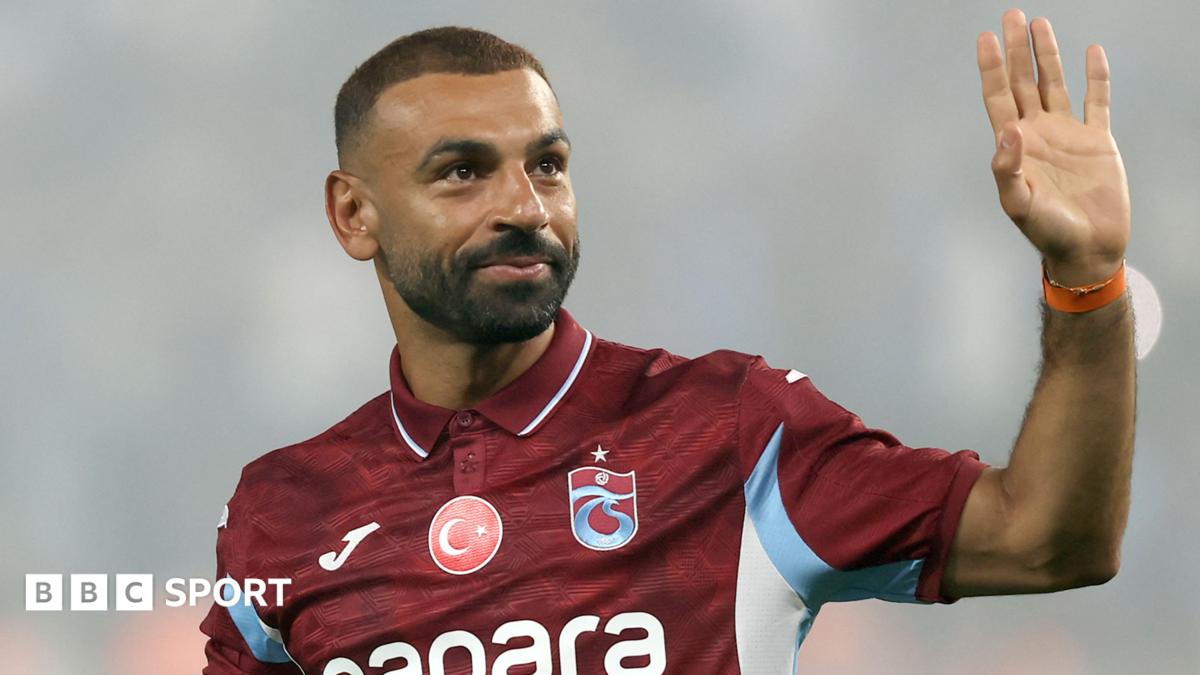
    In a transfer move that sent shockwaves across the global football community, Egyptian superstar Mohamed Salah has put pen to paper on a two-year contract with Turkish side Trabzonspor, capping off an unlikely pursuit that defied widespread expectations. The historic signing was celebrated in front of a roaring crowd of 35,000 passionate fans at Trabzonspor’s Papara Park stadium, where even club president Ertugrul Dogan — the architect of the deal — could barely contain his excitement over pulling off one of the most surprising high-profile transfers in recent football history.

    Dogan, a native Trabzon local who built his business empire across real estate, hazelnut trading, and the biofuel energy sector before taking over as club president in 2023, has openly described the capture of Salah as a transformative moment for his boyhood club. The deal has already sent ripples of excitement across global football, with many observers left wondering how a mid-sized Turkish club, without Champions League football and just one domestic league title since its 1970s and early 1980s heyday, convinced one of the game’s biggest names to spurn more high-profile suitors from Saudi Arabia and the United States.

    Trabzonspor is based in the coastal Black Sea city of Trabzon, a city of 800,000 located in Turkey’s far northeast near the Georgian border that does not even rank among Turkey’s 20 largest urban centers. But Dogan argues the city and its club hold a unique, intangible appeal that sets it apart from other destinations. “We’re the biggest one-club city in the world,” Dogan told BBC Sport Africa and BBC Turkish in an exclusive interview. When Salah asked why he should choose Trabzonspor, Dogan’s answer was simple: “You can be sure you will meet a group of supporters unlike any you have experienced before. You’ll feel the genuine love those people have inside them.”

    For Dogan, the signing of Salah is the centerpiece of a broader club strategy that balances investment in emerging young talent with high-profile experienced stars. In the most recent off-season, Trabzonspar turned a significant profit by selling 20-year-old Ivorian midfielder Christ Inao Oulai to Fiorentina and 22-year-old Brazilian forward Felipe Augusto to Zenit St Petersburg after just one season at the club. Those outgoing transfers were replaced by promising young prospects from across Europe and Africa, while Cameroon goalkeeper Andre Onana returned for a second season on loan from Manchester United. But the Salah deal stands alone as a potential game-changer for the club’s global profile.

    Dogan has been transparent about the financial terms of the deal, confirming Salah will earn €17m per year, plus 20% of all revenue from merchandise bearing his name. While the transfer does not promise an immediate direct financial return, Dogan says the intangible value of global attention and fan engagement is immeasurable. Even after raising season ticket prices to help fund the deal, fan enthusiasm has outstripped all expectations: nearly 70% of Salah’s annual salary was already covered by season ticket sales within just five days of the announcement. The club initially targeted 25,000 season ticket sales, but now projects to pass 30,000, with major corporate sponsors from Turkey, Europe, and the Arab world reaching out to get involved with what fans have dubbed “Salah-mania.”

    Salah, who scored 191 Premier League goals and sits fourth on the league’s all-time top scorers list after nine seasons with Liverpool, was widely expected to move to either the Saudi Pro League, where many elite global stars have landed in recent years, or join Lionel Messi in Major League Soccer in the United States. But Dogan says the deal came together surprisingly quickly once negotiations entered their final stage. Trabzonspor had initially been tracking Salah since the 2022 World Cup, while the player was in talks with multiple suitors, and respected an unwritten Turkish club convention that holds no club will disrupt another’s ongoing negotiations. Once other interested Turkish clubs pulled out of the running, talks progressed rapidly, with the full deal concluded in just five to six days.

    Initial discussions took place over Zoom while Salah was on holiday in Mykonos, Greece, before the player traveled to Istanbul for his medical. Dogan intentionally chose Istanbul for the medical to show Salah the scale of fan support across the entire country, not just in Trabzon — and the gamble paid off: thousands of fans turned out at the airport to greet the superstar mid-week on a working day. Salah made his debut as a second-half substitute in a 1-1 away draw against Kasimpasa on the opening weekend of the new Turkish Super Lig season, and is set to make his much-anticipated home debut in Trabzon this coming Sunday.

    Trabzonspor, nicknamed the Black Sea Storm, has enjoyed mixed success in recent seasons: it claimed the 2021-22 Super Lig title shortly before Dogan took over as president, and has finished third, seventh, and third in the league under his leadership, while claiming the Turkish Cup last season. The club is currently competing in the Europa League play-offs, holding a narrow 1-0 first-leg deficit against Hungary’s Ferencvaros heading into the second leg. Beyond the immediate buzz of the transfer, Dogan says he hopes the signing of Salah will put Trabzon on the map as a global destination for top young talent, helping develop prospects to move on to bigger European clubs while creating a blueprint for sustainable future success. For Dogan and Trabzonspor’s millions of passionate fans, the signing of Salah has already delivered a moment of joy that will last for years to come.

  • Erin Holland and Ben Cutting welcome baby daughter after difficult five-year journey

    Erin Holland and Ben Cutting welcome baby daughter after difficult five-year journey

    For celebrity couple Erin Holland, a well-known model and television presenter, and Ben Cutting, an Australian professional cricketer, a years-long battle against infertility has ended in joy, as the pair have welcomed their first child, a baby girl. The happy news of their daughter’s arrival on August 18 was shared with fans and followers via the couple’s joint Instagram account, where Holland posted a series of soft black-and-white photographs capturing the intimate first moments of their new life as a family of three.

    In her heartfelt caption accompanying the photos, Holland summed up the years of heartache and uncertainty that preceded her daughter’s birth, writing, “All of a sudden, it all makes sense. It was always you.” The announcement quickly flooded with messages of congratulations from across the Australian media and sports industries, including warm notes from Holland’s colleagues at Channel 7. Kylie Gillies, co-host of the network’s top-rated *The Morning Show*, called the birth “beautiful news,” while television personality and former veterinarian Dr Chris Brown added, “How special. Congrats you guys. The best news.”

    What makes this birth particularly meaningful is the extraordinary path the couple walked to reach this moment. Since their 2021 wedding, Holland and Cutting have been open about their devastating fertility struggles, choosing to speak out to normalize experiences that many couples still hide. In total, the pair endured four devastating miscarriages, one life-threatening ectopic pregnancy, 20 rounds of in vitro fertilization (IVF) treatment, five egg collection procedures, and seven embryo transfer attempts. Five full years of ongoing treatment passed before they received the positive pregnancy news they had chased for so long.

    In a podcast interview earlier this year in May, Holland opened up about the emotional toll of repeated disappointment, explaining how the simple joy many expecting parents take for granted is slowly stripped away after multiple losses. “I think the hard part about infertility and pregnancy loss is that beautiful naivety of just seeing a double line on a pregnancy test is robbed from you,” she explained. “Because the first time you do it, it’s elation, it’s so exciting. Then the second time you do it, you’re cautiously excited. By the third and the fourth time, you think it’s catfishing you.”

    When Cutting announced the pregnancy three months before their daughter’s birth, he paid tribute to his wife’s resilience through years of physical and emotional strain. “Countless disappointments, hormones, surgeries … lead to this one,” he wrote on Instagram at the time. “I don’t know how she pushed through.”

    In a 2022 interview with Channel 7, Holland reflected on how the IVF process upended her expectations of what building a family would look like. “As someone who went in just wanting to freeze embryos until the time was ‘right’, I’ve grappled with the confusing feelings of the loss of any ‘normality’ of this process, feeling like the universe was telling me I’m not meant to be a mother,” she said. Despite years of setbacks, Holland never abandoned her hope of building a family with Cutting, a perseverance that has now rewarded her with the daughter she long dreamed of.