博客

  • Russell qualifies on pole for sprint race as F1 returns at the Dutch GP

    Russell qualifies on pole for sprint race as F1 returns at the Dutch GP

    As Formula 1 roared back to action following its annual midseason summer break, Friday at Circuit Zandvoort delivered high-stakes qualifying drama for the Dutch Grand Prix’s sprint race, with Mercedes driver George Russell edging out the field to secure a critical pole position.

    Russell clocked a lap just 0.041 seconds faster than McLaren’s Lando Norris, the defending winner of the Hungarian Grand Prix, to claim top spot on the sprint grid. Ferrari’s Charles Leclerc followed close behind in third, finishing a mere 0.014 seconds behind Norris in one of the tightest qualifying sessions of the 2025 season. Championship standings leader Kimi Antonelli, Russell’s teenage Mercedes teammate, ended the session in fifth, revealing post-qualifying that damage from an early off-track excursion into a gravel trap had hampered his performance. “There were a couple of holes in the floor of the car from the run through gravel,” Antonelli explained. His closest title contender, Ferrari’s Lewis Hamilton, fared even worse, securing only seventh place on the grid.

    For Russell, the pole position marks a much-needed momentum boost after a challenging run of results. The British driver has not stood atop the podium since the Austrian Grand Prix in June, and a series of software glitches impacting his Mercedes powertrain’s energy management have left him struggling to match the pace of his teenage teammate. A near-stall at last month’s Hungarian Grand Prix compounded his bad luck, leaving him 59 points adrift of Antonelli in the drivers’ championship. “It was a tough end to the first half of the season,” Russell acknowledged after qualifying. “But today the lap felt really good — it all came together nicely.”

    Earlier in the day, the only practice session played out on a rapidly evolving drying track following an early rain shower, keeping teams on their toes as they adjusted to changing grip levels. Antonelli topped the practice timing sheets, putting down the fastest lap despite the tricky conditions. While rainy conditions briefly raised the prospect of the sport’s new 2026 regulation cars testing their heavy electrical power in wet race conditions for the first time, the circuit dried out quickly ahead of qualifying, leaving the entire sprint session to run on a fully dry surface.

    This weekend’s event carries extra significance: it marks the sixth and final Dutch Grand Prix at Zandvoort after the race returned to the F1 calendar in 2021. Organizers kicked off event weekend Thursday with a stadium playing of 1980s rock anthem *The Final Countdown* to mark the occasion. Unlike many F1 events that rely on public government support, the Zandvoort race is privately funded, and organizers announced back in 2024 that they would opt to “go out on a high” rather than take on growing financial and operational risks, confirming this edition would be the last for the foreseeable future.

    The Dutch GP also stands out for its unique fan experience: the tight, seaside resort location means most attendees are banned from driving to the circuit per local traffic rules. Instead, thousands of fans travel to Zandvoort by train from Amsterdam, while tens of thousands more embrace a distinctly Dutch tradition — cycling to the race.

    Friday also held last-minute drama for the Red Bull team: reserve driver Liam Lawson was called up to the main squad just this week after regular driver Isack Hadjar suffered a wrist injury that ruled him out of the event. Lawson has only tested the 2026-spec Red Bull in a hastily arranged simulator session on Wednesday, and still managed to qualify 11th. The last-minute promotion pushed Yuki Tsunoda back to the Racing Bulls squad, where he also made a quick adjustment: he had not raced the 2026 regulation car at all prior to this weekend, and secured 12th position in qualifying. The event also made headlines earlier in the week when three-time defending champion Max Verstappen announced he had signed a new contract extension with Red Bull keeping him with the team through 2030, ending widespread speculation about a potential exit from the sport.


  • Man City agrees to club-record sale of Savinho to Tottenham in $115M deal, AP source says

    Man City agrees to club-record sale of Savinho to Tottenham in $115M deal, AP source says

    English Premier League powerhouse Manchester City has struck a preliminary agreement to send Brazilian winger Savinho to Tottenham Hotspur in a deal valued at £85 million ($115 million), multiple sources familiar with the confidential transaction confirmed to the Associated Press on Friday. This transfer will become the highest outgoing sale in Manchester City’s club history, marking another major step in the club’s dramatic summer roster restructuring.

    The insider requested anonymity because neither club has authorized the public release of transfer details, and representatives from both Manchester City and Tottenham have so far declined to issue any official statement on the deal.

    Savinho’s impending exit comes just days after Manchester City sold Spanish international captain Rodri to FC Barcelona for 76.5 million euros ($88.5 million). This offseason has already seen a historic exodus of first-team talent from City: midfielders Tijjani Reijnders and defender Nathan Ake have also departed, while veteran starters John Stones and Bernardo Silva have left the club upon the expiration of their contracts. Up to this point, City’s only senior outfield addition has been English midfielder Elliot Anderson, who joined for a reported incoming club-record fee of £116 million ($155 million).

    The roster overhaul comes as City enters a new era under newly appointed manager Enzo Maresca, who took over the role following Pep Guardiola’s long-awaited departure after multiple trophy-laden seasons. With City’s 3-0 defeat to Arsenal in the recent Community Shield still fresh, the club is widely expected to make additional moves in the final week of the summer transfer window as Maresca fine-tunes his squad for the upcoming campaign.

    When Savinho arrived at Manchester City from sister club Girona in summer 2024 for 40 million euros ($43.6 million), he was introduced to fans as one of the most promising young wingers in European soccer. However, the 25-year-old failed to meet the high expectations attached to his transfer: he managed just two goals across 53 Premier League appearances, and inconsistent final balls and questionable on-pitch decision-making left teammates and supporters underwhelmed. He was also left out of Brazil’s final squad for the 2026 FIFA World Cup, capping off a disappointing tenure at the Etihad Stadium.

    For Tottenham, the potential signing of Savinho would cap off a record-breaking summer of spending that marks a stark shift from the club’s previous transfer strategy. Manager Roberto De Zerbi is currently overhauling the squad after Tottenham narrowly avoided Premier League relegation on the final matchday of the 2025-26 season, a result that extended the club’s run of consecutive 17th-place league finishes to two seasons. The poor on-pitch performance prompted major changes at the leadership level, with chairman Peter Charrington admitting in a post-season open letter that “football success had not been driving our decisions” in previous transfer cycles.

    De Zerbi has already landed a series of high-profile signings this window: last month, Tottenham secured Italian midfielder Sandro Tonali from Newcastle United for a previous club-record £100 million ($133 million), just days after completing an £85 million ($113 million) move for midfielder Mateus Fernandes from West Ham United. Center backs Jan Paul van Hecke and Marco Senesi have also joined the club, as has former Liverpool left-back Andy Robertson. If the Savinho deal goes through, Tottenham will tie Chelsea as the biggest spenders in European men’s soccer this offseason, a dramatic reversal for a club that has long spent far less than its top Premier League rivals in the transfer market.

  • Top India court orders new steps to protect threatened elephants

    Top India court orders new steps to protect threatened elephants

    As habitat fragmentation and escalating human-elephant conflict push Asia’s endangered elephant population toward greater risk, India’s highest judicial body has enacted landmark new regulations to safeguard both wild and captive elephant populations across the country. Conservation advocates have broadly praised the ruling as a long-overdue intervention to reverse decades of unregulated habitat destruction.

    India hosts roughly 75% of the world’s remaining wild Asian elephants, a species categorized as Endangered on the International Union for Conservation of Nature’s Red List. In recent decades, rapid infrastructure expansion—including new highways, railways, and industrial mining operations—has split apart the large, contiguous habitats these wide-ranging animals require to forage, breed, and migrate between seasonal ranges. This fragmentation has forced increasing numbers of elephants into human settlements, sparking deadly conflict that kills hundreds of people and elephants annually in India.

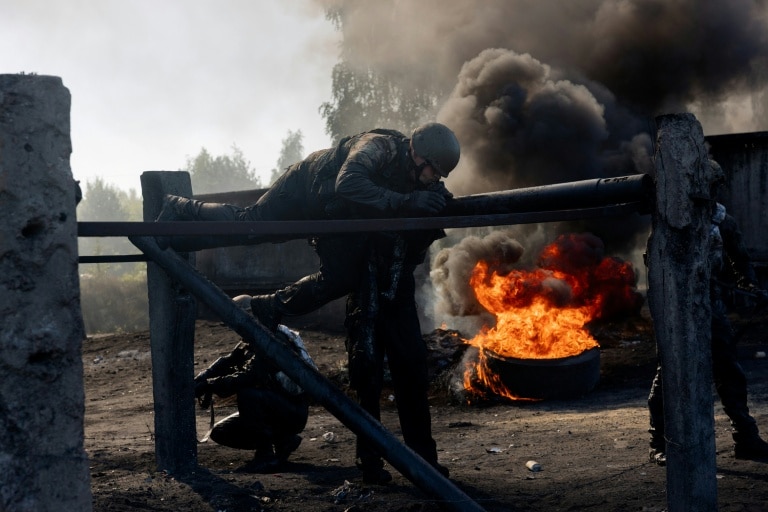
    Issued by the Supreme Court of India on Monday, the new order mandates state governments to clear all existing blockages to critical elephant corridors, the narrow migratory routes that connect fragmented habitats for wandering herds. The ruling explicitly requires an immediate nationwide survey to map and document all man-made obstructions along these corridors, and bans the use of coercive tactics to force elephants off their traditional movement paths. One particularly harmful practice targeted by the ban is the so-called “hulla parties”, where large groups of people chase wild elephants out of farmland or settlements using fireballs and burning wooden stakes.

    The Supreme Court noted that federal guidelines mandating unobstructed access to elephant corridors have been in place for years, but widespread non-compliance and weak enforcement have left these critical routes largely blocked across most elephant range states. The public interest case that led to the ruling was led pro bono by prominent Indian wildlife conservationist Prerna Singh Bindra, a former member of the National Board for Wildlife, India’s top wildlife policy body. Bindra’s petition challenged state governments for endorsing the cruel, ineffective practices like hulla parties that do nothing to resolve long-term conflict and instead make encounters more dangerous.

    “It becomes a mob situation with thousands of people chasing the elephants using burning spears,” Bindra told reporters from Agence France-Presse. “That does nothing to resolve conflict; science shows it only exacerbates the conflict.”

    Current global population estimates place the total number of wild Asian elephants at fewer than 50,000 individuals, with more than 22,000 of those living across India, according to the Indian government’s 2025 national elephant survey. The 2025 survey delivered a stark warning: wild elephants now occupy just 3.5% of their historical range across India, confined to a tiny fraction of the land they once roamed freely. For conservationists, the new court order fills a critical enforcement gap that has allowed unchecked habitat destruction to continue.

    “We know where elephant corridors and habitats are — and they are being destroyed and fragmented at an unprecedented pace,” Bindra said. “The will to protect and preserve is markedly absent. We hope with this Supreme Court order, this survey must lead to action.”

    Beyond protections for wild herds, the Supreme Court issued a separate ruling on Tuesday mandating enhanced welfare standards for India’s more than 2,600 captive elephants. Once widely used for industrial logging, captive elephants are now kept primarily for religious ceremonies, tourism attractions, and entertainment events. The new regulations require every captive elephant to have up-to-date medical records and mandatory routine health checks to address widespread reports of neglect and abuse.

    Animal welfare organizations have welcomed the new captive elephant regulations, though many say the only long-term ethical solution is to end elephant captivity entirely. People for the Ethical Treatment of Animals (PETA) India, a leading animal rights group, applauded the measures to reduce captive animal suffering but reiterated its position that “no elephant belongs in captivity.”

    “Whether captured from the wild or bred for a lifetime of confinement, these intelligent, social animals are denied their forest homes, separated from their mothers, stripped of autonomy, enslaved, and controlled through intimidation and weapons,” PETA India director Poorva Joshipura told AFP.

    In a country where elephants hold deep cultural and religious significance—they are designated India’s national heritage animal, and revered by followers of the elephant-headed Hindu deity Ganesha—the ruling marks a turning point in balancing rapid economic development with the long-term survival of one of Asia’s most iconic endangered species.

  • Indonesia and China discuss increasing defense cooperation and energy security

    Indonesia and China discuss increasing defense cooperation and energy security

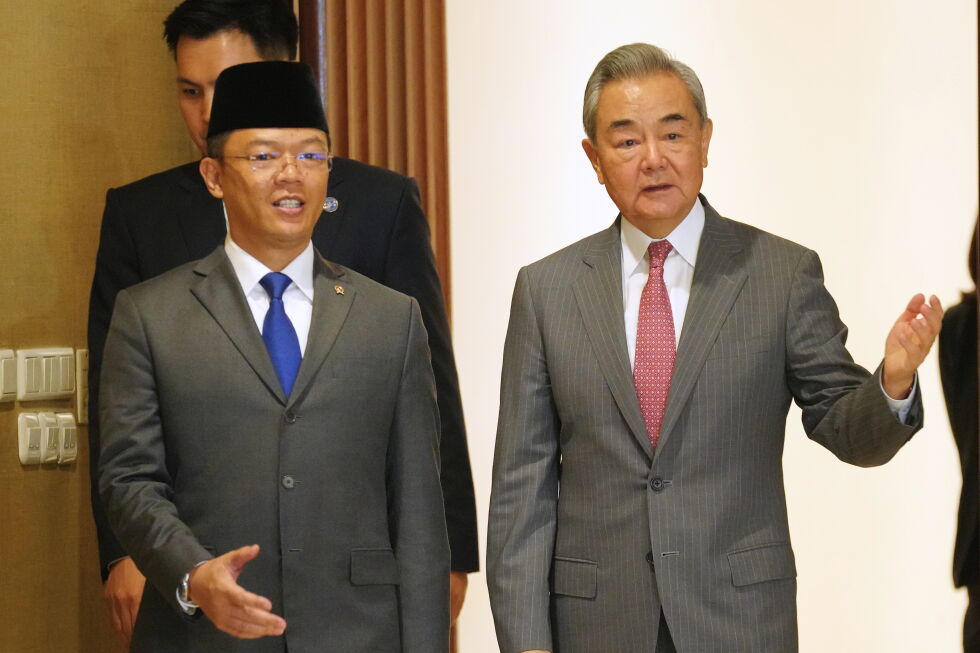
    High-stakes diplomatic meetings between top Indonesian and Chinese officials in Jakarta on Friday have opened a new chapter of bilateral cooperation, with the two nations committing to advance collaboration across defense, food security, energy, trade and cutting-edge technology while taking a unified stance against global coercion and historical revisionism.

    The talks brought together foreign and defense ministers from both countries, marking a formal step forward for the updated bilateral dialogue mechanism that the two sides have developed to align their policy priorities. Indonesian Foreign Minister Sugiono, who goes by a single name, outlined the broad scope of the talks after the meetings, noting that the new dialogue framework is designed to deliver tangible progress across five core pillars of partnership: political, economic, security, maritime, and people-to-people exchanges.

    Chinese Foreign Minister Wang Yi emphasized that both sides have agreed to align their development and security priorities more closely, creating a robust foundation that will support each nation’s modernization goals. In a joint statement issued after the talks, Wang made clear the two countries’ shared commitment to upholding global order. “We will jointly oppose unilateral bullying and power politics. We must also remain vigilant against attempts in the region to challenge the outcomes of victory in World War II and turn back the wheel of history,” Wang said. “We should safeguard international fairness and justice, as well as the legitimate rights and interests of developing countries.”

    Beyond diplomatic alignment, the talks covered concrete cooperation across economic and technological domains. Sugiono said ministers discussed strengthening food, energy, and mineral supply security by building strategic domestic industries that boost national resilience. The partnership will expand into new cutting-edge areas in coming years, including artificial intelligence research, co-development of communications satellites, and other advanced technology initiatives. The two sides also reached agreement to expand bilateral trade, with a focus on opening new markets and increasing access for Indonesia’s key commodity exports to China.

    Wang noted that the revitalized bilateral dialogue sends a powerful message of unity to the global community. “It [sends] a clear signal to the world of solidarity and cooperation between our two major emerging-market countries,” Wang added.

    In a separate meeting held alongside the foreign minister talks, defense ministers from both nations hammered out details for expanded defense cooperation. Indonesia’s Defense Minister Sjafrie Sjamsoeddin said his counterpart, China’s Defense Minister Dong Jun, and he discussed expanding cooperation across multiple areas, including defense equipment supply, personnel training exchanges, and collaboration between the two countries’ domestic defense industries. Sjamsoeddin also extended an invitation to Chinese armed forces to take part in Indonesia’s Heping Garuda joint exercise, a step he described as a tangible demonstration of the growing military ties between the two nations.

    Economic relations between Indonesia and China have expanded rapidly in recent years, with total bilateral trade hitting roughly $167 billion in 2024. China has held the position of Indonesia’s largest trading partner for multiple consecutive years, and has invested tens of billions of dollars in large-scale infrastructure projects across Indonesia as part of Chinese President Xi Jinping’s signature Belt and Road Initiative. Notable completed projects include the Jakarta-Bandung high-speed railway, the first high-speed rail line in Southeast Asia, and the Cirata floating solar farm, the largest facility of its kind in the region, located on a reservoir in West Java roughly 80 miles outside Jakarta. While minor disputes over project timelines and pricing have emerged during implementation, China has reaffirmed its commitment to completing all agreed projects in line with bilateral agreements.

    Associated Press video producer Olivia Zhang in Beijing contributed reporting to this article.

  • Australia charges man with trying to pass Ukraine military intel to Russia

    Australia charges man with trying to pass Ukraine military intel to Russia

    In a high-stakes national security operation that underscores growing concerns over foreign interference on Australian soil, federal law enforcement and intelligence officials have brought charges against a 27-year-old dual Russian-Australian citizen accused of plotting to pass sensitive Ukrainian military data to Russian intelligence agencies. The charges were officially filed on Friday, marking the eighth recent case of espionage or foreign interference-related prosecution in the country, and triggering a joint ongoing probe by the Australian Federal Police (AFP) and the Australian Security Intelligence Organisation (ASIO), Australia’s domestic spy agency.

    According to official allegations laid out by AFP Commissioner Krissy Barrett at a public press briefing, the accused followed a pre-planned trajectory that began with military-style training on Russian territory in October 2024. After completing the training, he returned to Australia, where he allegedly maintained regular communication with individuals he believed to be connected to Moscow’s intelligence network. In 2025, the man traveled to Ukraine and successfully enlisted in the Ukrainian armed forces, a move that granted him unauthorised access to sensitive details including Ukrainian military personnel rosters, unit deployments, and operational locations, Barrett said.

    Investigators allege that once in possession of the classified information, the man made active attempts to transmit the data back to his alleged contacts working on behalf of Russian intelligence. Barrett emphasized that the alleged operation posed a direct, tangible threat to the safety and security of frontline Ukrainian service members, saying, “It is alleged this conduct created a risk to the safety and security of Ukrainian military personnel.” She added that Australian law enforcement has zero tolerance for covert foreign activity within the country’s borders, noting, “We don’t want Australia to become a safe haven for people who are undertaking foreign interference on behalf of other countries.”

    Officials confirmed that the accused, who has not been publicly identified and is reported to be unemployed, received no military training within Australia. Law enforcement teams have already executed multiple search warrants as part of the investigation, and Barrett left open the possibility of additional arrests in connection with the case. The accused is scheduled to make his first court appearance at a Brisbane court on the same day charges were filed.

    ASIO Deputy Director-General Claire McGuinness issued a sharp warning to foreign governments that engage in covert interference operations, stating, “This case should put regimes perpetrating foreign interference on notice: we have zero tolerance.”

    When contacted by Agence France-Presse (AFP) for comment, Russia’s embassy in Canberra said it had only learned of the case through public media reports. The embassy confirmed that as of Friday, no official notification or request for assistance had been received from Australian law enforcement, nor from the accused himself. “We are currently using the available channels and resources to establish the circumstances of the case,” the embassy said in a written statement.

    The case comes amid longstanding warnings from Australian security officials about aggressive Russian espionage activity targeting the country. Last year, ASIO Director-General Mike Burgess publicly identified Russia as one of the most aggressive espionage threats to Australian national security. In 2024, Australian federal police charged a married Russian-born couple with espionage on behalf of Moscow, accusing the pair of accessing classified national security material held by the Australian military. Kira Korolev, 40, and her 62-year-old husband Igor, who both hold Russian passports and had lived in Australia for more than a decade before their arrest, had obtained Australian citizenship prior to the charges being laid. Under Australian law, the offence of intentional foreign interference carries a maximum penalty of 20 years behind bars.

  • Five missing after fire in Swiss Alpine town

    Five missing after fire in Swiss Alpine town

    A devastating overnight fire has completely destroyed a mixed-use building combining a restaurant and residential apartments in the Swiss Alpine town of Thusis, leaving five people unaccounted for and eight others injured, regional law enforcement confirmed Friday.

    Graubünden Cantonal Police, the leading authority on the incident, reported that emergency services received the first alert about the blaze shortly after midnight local time, which corresponds to 22:00 GMT on Thursday. Initial on-site assessments have traced the origin of the fire to the building’s second floor, though investigators have not yet determined what sparked the incident. The official investigation into the cause is being conducted jointly by cantonal police and the local public prosecutor’s office.

    Nearly 100 firefighters from across the region were deployed to battle the fast-spreading inferno. First responders faced significant structural complications during the operation: the building’s main stairwell collapsed early in the response effort, forcing crews to use a crane to access and open the collapsed roof to extinguish remaining hotspots.

    Of the 14 people who managed to escape the burning structure before it was completely destroyed, eight required medical attention for fire-related injuries. According to police, the injuries range in severity: two people are in serious condition, two have moderate wounds, and four suffered minor injuries. All injured individuals have been transported to hospitals across multiple regions, including facilities in Chur, Thusis, Ilanz, and Zurich for treatment.

    Thusis is located within Graubünden, also widely known by its alternative name Grisons, which sits in eastern Switzerland. The region is one of the country’s most popular holiday destinations, drawing visitors year-round for world-class winter skiing and snowboarding, as well as summer hiking, mountain climbing, and other outdoor nature activities.

    As of the latest update, search and rescue teams continue to comb through the charred rubble of the building to locate the five missing residents and visitors.

  • Would Marmoush joining Tottenham be a masterstroke or risk?

    Would Marmoush joining Tottenham be a masterstroke or risk?

    North London Premier League side Tottenham Hotspur are progressing in negotiations with Manchester City to acquire Egyptian forward Omar Marmoush, as the club continues its aggressive summer transfer rebuild under manager Roberto De Zerbi, according to a report from BBC Sport. While no final deal has been agreed yet, the potential signing would push Tottenham’s total summer transfer expenditure past the £300 million mark, capping off a transformative window for the club.

    Tottenham have already committed £229.5 million to bring in centre-back Jan Paul van Hecke and midfielders Sandro Tonali and Mateus Fernandes, and just this week confirmed a £75 million agreement for Manchester City winger Savinho to bolster their attacking options. The club’s move for Marmoush comes amid growing uncertainty around their existing forward group: starter Dominic Solanke has struggled with repeated injury issues over the past 18 months, while Brazilian attacker Richarlison is entering the final 12 months of his current contract.

    The 27-year-old Marmoush’s path to Manchester City was a rapid ascent. After joining Eintracht Frankfurt on a free transfer from Wolfsburg in 2023, he emerged as one of the most promising young forwards in Europe. In his breakout 2024-25 first half season, he scored 15 Bundesliga goals from just 8.9 expected goals, added nine assists in 17 league appearances, and notched 20 goals and 13 assists across all competitions before his January 2025 move. He also made history by becoming the first player in Europe’s top five leagues since Lionel Messi in 2019 to score directly from a free kick in three consecutive matches, highlighting his quality from set pieces.

    Manchester City paid £59 million to secure Marmoush’s signature in January 2025, and his early performances at the Etihad Stadium showed immediate promise. He scored his first career hat-trick against Newcastle United, netted the match-winning goal in City’s FA Cup quarter-final trip to Bournemouth, and followed that up with a long-range strike against the same side in the Premier League that earned him the league’s Goal of the Season award. However, his stint at City has been mixed, highlighted by a high-profile penalty miss in the 2025 FA Cup final against Crystal Palace: with City trailing, Erling Haaland passed the penalty opportunity to Marmoush, whose effort was saved by goalkeeper Dean Henderson, as City went on to lose the trophy at Wembley.

    Former Manchester City defender Nedum Onuoha argues that penalty miss should not define Marmoush’s tenure at the club. “When I see Marmoush, I don’t see the penalty miss,” Onuoha told BBC Sport. “I see the strength he has with some of the runs he makes in behind.”

    Across his 18 months at City, Marmoush has scored 16 goals in 62 appearances in all competitions. Eight of those goals came in the 2025-26 season, but his first-team opportunities have dropped sharply. He started just eight Premier League matches last campaign, playing only around 700 minutes – fewer than he managed in his half-season after arriving in 2025. He finished the season with three goals and three assists in league play, with an expected goals total of 3.53 that suggests his finishing was not the root of his limited minutes.

    The core issue for Marmoush at City was a logjam in attacking positions, with the club’s system built around starting centre-forward Erling Haaland, and new attacking reinforcements added over the transfer windows. “All the positions Marmoush could play are being filled by people who are specialists in those roles,” Onuoha explained. “Haaland is essentially always going to be the number nine, while City also regularly play with number 10s and Guardiola likes his wingers to stay wide.”

    While Marmoush is primarily a central number nine, he has built a reputation as a flexible forward capable of playing across the entire front line. At Frankfurt, he was used mainly through the middle but also featured as a second striker and left-sided forward, a role distribution City mirrored during his time at the club. That positional flexibility is seen as a perfect fit for De Zerbi’s system at Tottenham, which relies heavily on forwards interchanging positions, dropping deep to receive the ball, and exploiting the space created when opponents are pulled out of shape.

    Onuoha noted that Marmoush is at his most dangerous when running in behind opposition defences, a skill that aligns directly with how De Zerbi wants his team to attack. “As much as he is good dropping towards the ball, I think he is better when he plays on the shoulder,” he said. “He needs to be in a team that will constantly play balls in behind and force the opposition to run back towards their own goal. That’s when you see a better version of Marmoush.”

    Opta data from the 2025-26 Premier League season backs up that assessment: Marmoush averaged 11.46 runs in behind per 90 minutes, nearly matching Solanke’s 11.61 and outpacing Richarlison’s 10.03. Crucially, he also offers more ball progression than Tottenham’s current forward options. He averaged 5.67 progressive carries per 90 minutes, compared to just 3.24 for Solanke and 2.48 for Richarlison. He also led both Tottenham forwards in shots per 90, chances created per 90, successful take-ons, and touches in the opposition penalty area, producing 0.77 goals and assists per game – ahead of Richarlison’s 0.69 and Solanke’s 0.27. While his limited minutes mean the sample size is smaller, the stylistic difference between Marmoush and Tottenham’s existing forwards is clear: he is far more inclined to take opponents on and create his own shooting opportunities, a valuable asset when teams sit deep to block Tottenham’s direct attacking play.

    Crucially, Marmoush would not need to replace either Solanke or Richarlison to be an effective addition. His ability to play off another striker opens up the possibility of the two starting together, with Solanke using his physical presence to occupy central defenders while Marmoush moves into wide areas or drops between the lines to link play. That combination could play directly into De Zerbi’s preferred style of breaking pressing opposition defences. “Solanke is different to Marmoush. He’s got more of a physical presence,” Onuoha said. “I could see the goalkeeper playing a flat ball into Solanke, Marmoush coming underneath him to receive it, and that becoming the start of the attack. The two of them could complement each other. Playing in a front two might bring out more of Marmoush’s strengths.”

  • Panama Canal to cut number of ships passing through due to El Niño

    Panama Canal to cut number of ships passing through due to El Niño

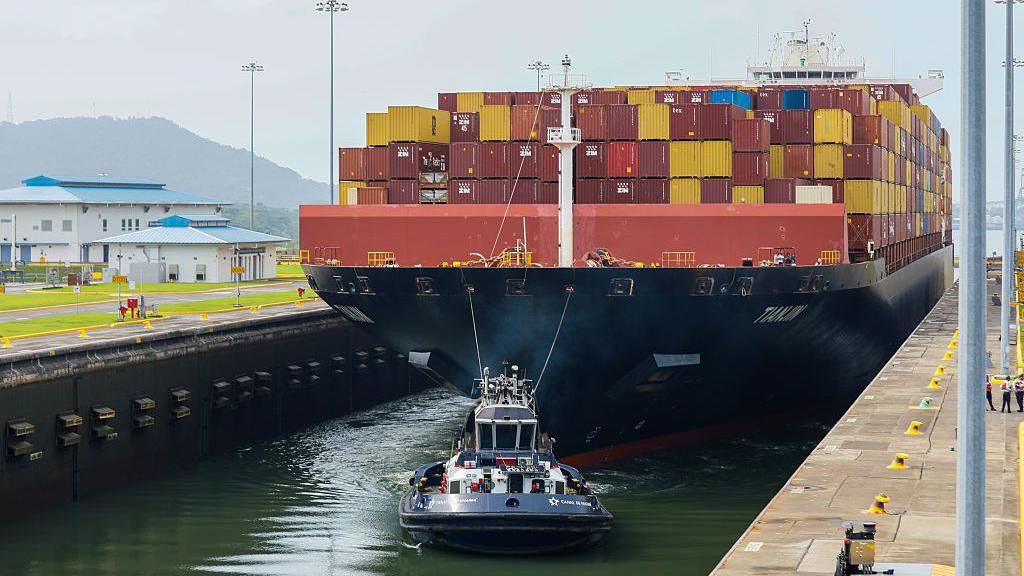
    One of the world’s most critical maritime chokepoints is facing fresh disruption, as the Panama Canal Authority (ACP) has announced sweeping cuts to daily vessel transits through the key waterway. The move comes in response to severe low water levels driven by below-average rainfall linked to this year’s projected intense El Niño event, compounded by long-term climate change.

    In a formal notice to global shipping companies issued Thursday, the ACP confirmed that starting September 15, only 32 vessels will be allowed to transit the canal each day, down from the current daily cap of 36. The new restrictions will be rolled out in a phased sequence beginning September 3 to give shipping lines time to adjust their schedules.

    El Niño, a naturally occurring cyclical climate pattern marked by elevated sea surface temperatures in the central and eastern Pacific, ripples through global weather systems, bringing extreme drought to regions including Central America. Climatologists warn this year’s event is on track to be one of the strongest on record, with its drying effects amplified by human-caused climate change. This marks the second major round of transit cuts in just a few years: in 2023, the ACP reduced vessel numbers after Panama recorded its driest October since national rainfall tracking began in 1950, during the previous El Niño cycle. Since that event, the authority has implemented multiple water conservation measures to reduce the canal’s overall water consumption, but additional action was deemed unavoidable this year.

    The ACP emphasized that the cuts are necessary to achieve two core priorities: maintaining reliable transit operations for essential trade, and protecting limited freshwater reserves that also supply local communities for drinking and daily use. Even with the onset of Central America’s annual rainy season and existing water-saving initiatives, the authority said further intervention was required to secure the long-term sustainability of the canal’s transit operations.

    For the global shipping industry, this new disruption comes at a time of already intense pressure. Shipping lines are already grappling with major route disruptions tied to heightened geopolitical tensions that have cut vessel traffic through the Strait of Hormuz, another of the world’s most vital energy and trade chokepoints. Many carriers have already been forced to reroute vessels around the Cape of Good Hope at significant additional cost and time delay, and the Panama Canal cuts will only add to congestion and logistics costs across global supply chains.

    The Panama Canal is a linchpin of global commerce, cutting thousands of miles off travel distances between Atlantic and Pacific basin ports for roughly 14,000 vessels every year. Operating around the clock 365 days a year, the artificial waterway does not only underpin $trillions in annual global trade, it is also the single largest source of revenue for the Panamanian government, generating approximately $3 billion in annual income. Climate scientists warn that more frequent and intense drought events driven by climate change will continue to test the waterway’s operations, posing long-term risks to global trade flows and Panama’s economy.

  • ‘So bad it’s good’: rough animated film becomes surprise Chinese hit

    ‘So bad it’s good’: rough animated film becomes surprise Chinese hit

    Against all odds, a small-budget Chinese animated feature widely panned for its unrefined, rough visuals has exploded into an unexpected cultural phenomenon in China, drawing massive cinema crowds who turn out specifically to experience its one-of-a-kind, “so bad it’s good” charm. Titled *Niu Lai*, which translates to *Here Comes the Cow*, the independent production got off to a muted start when it launched in theaters on August 5, pulling in just around 7,000 yuan (equivalent to roughly $1,000) in its opening week. But according to data from Chinese ticketing platform Maoyan, the film has since seen an extraordinary surge in ticket sales, pushing its total domestic box office to 33.06 million yuan ($4.92 million) to date.

    What makes the project even more remarkable is its origins: local Chinese media reports confirm the entire film was created entirely by a mother-and-son team, who worked frame-by-frame over the course of five years to bring the story of a young calf named Niu Lai to life. The pair even composed original musical scores for the film’s closing credits, pouring years of personal effort into a project built entirely outside of China’s big-budget mainstream animation industry.

    Caelan Moriarty, a 25-year-old American musician based in China, shared his thoughts on the viral hit with Agence France-Presse, summing up the widespread public sentiment perfectly: the film is “so bad that it’s so good”. Moriarty explained that while the film’s technical flaws are obvious, the genuine heart the creators poured into the project makes it impossible to dismiss. He noted that modern artificial intelligence could generate a full-length animated feature in a fraction of the time the team spent, but that refusal to cut corners with AI and the commitment to handcrafted, slow work is what makes the project stand out. “It’s not perfect. But because it’s not perfect, it’s good, it shows how human it is… and I think that’s why this is trending,” Moriarty told AFP.

    Centered on the relationship between the young calf Niu Lai and his mother, the film draws criticism and attention alike for its stiff 3D character models, clunky awkward dialogue, and overall unpolished visual style. But rather than turning audiences away, these imperfections quickly became a viral talking point on Chinese social media, with legions of new fans embracing the film’s rough edges as a core part of its unique appeal. Stella Xing, a Beijing university student who bought a ticket after seeing *Niu Lai* memes circulating online, told AFP that the film’s awkwardness is exactly what makes it entertaining. “Even though it’s pretty rough around the edges, there are so many funny details — like the way (Niu Lai) walks, for instance,” she said. “It’s hilarious and really makes people want to come see it.”

    The contrast between *Here Comes the Cow* and big-studio productions is impossible to miss at Beijing cinemas: hand-drawn promotional banners featuring the yellow, human-like cow protagonist with exaggerated eyebrows stand directly beside the sleek, glossy marketing materials for major blockbusters such as Christopher Nolan’s latest release *The Odyssey*. Notably, the independent film received almost no traditional marketing or promotional support before its release, with its entire viral growth driven entirely by organic social media conversation.

    As *Niu Lai* took over Chinese social media and climbed the box office charts, online vendors on major Chinese e-commerce platforms such as Taobao quickly moved to cash in on the trend, rushing out a wide range of unofficial merchandise featuring the iconic yellow calf, from graphic T-shirts and resin figurines all the way to casual apparel. One online seller told AFP he jumped into the market just days after the film went viral, adding *Niu Lai* keychains to his shop’s inventory to meet unexpected consumer demand.

    Pan Wang, an associate professor of media studies at the University of New South Wales in Australia, explained that the film’s unexpected success comes from its radical departure from the polished, big-budget content that dominates mainstream cinema today. “It is a bit like eating refined grains every day and then suddenly having some coarse grains for a change — the contrast itself feels refreshing,” Wang said. “Its roughness, absurdity and imperfection become part of its appeal.”

    The breakout success of *Here Comes the Cow* also comes at a time when animated content is booming in China, the world’s second-largest film market. Just months ago, the big-budget polished Chinese animated blockbuster *Ne Zha 2* overtook Disney’s 2024 hit *Inside Out 2* to claim the title of the highest-grossing animated film of all time at the Chinese box office, proving the massive audience appetite for animated content of all stripes.

  • Gandhi’s handwritten notes on life sold for $1.69m at Indian auction

    Gandhi’s handwritten notes on life sold for $1.69m at Indian auction

    A one-of-a-kind archive of handwritten messages from Mahatma Gandhi, the iconic leader of India’s independence movement, has fetched $1.69 million (£1.3 million) at a Mumbai auction, breaking the record for the highest price ever paid for an Indian historical document at public sale.

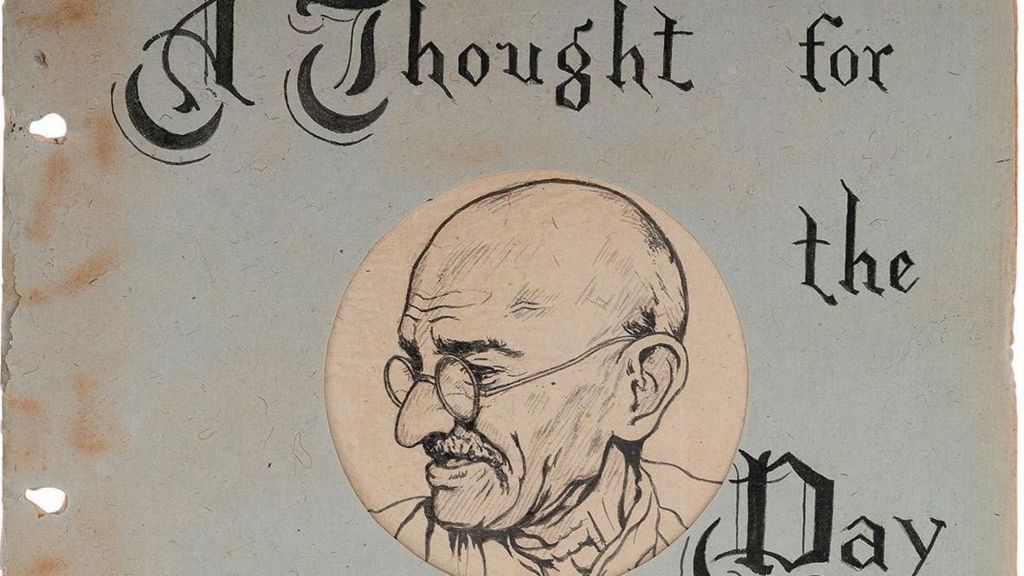
    The 688 personal notes, which were held and cared for nearly eight decades by the family of Gandhi’s close associate and fellow freedom fighter Anand T Hingorani, were composed between 1944 and 1946. This period fell in the final stretch of India’s campaign to end British colonial rule, a turning point in modern South Asian history that Gandhi shaped through his unwavering commitment to nonviolent resistance.

    Beyond their historical significance, the collection offers an intimate, unfiltered look at Gandhi the person, separate from his public role as the “Father of the Indian Nation.” Most of the notes were written as a source of comfort, guidance, and encouragement for Hingorani in the two years following the death of Hingorani’s wife, Vidya. Many of the texts center on Gandhi’s core teachings: truth, nonviolence, and self-discipline. The messages were eventually compiled into the published volume *A Thought for the Day*.

    The archive was the centerpiece of Saffronart’s 86-lot auction titled “Gandhi: From the Collection of Anand T Hingorani,” which brought together decades of artifacts preserved by the Hingorani family spanning more than 20 years of Gandhi’s friendship and collaboration with Anand Hingorani. Alongside the 1944-1946 notes, the auction featured additional rare pieces: Gandhi’s reflections on the Hindu sacred text the Bhagavad Gita and concepts of God, his personal portable spinning wheel (a symbol of his self-reliance movement), and two letters discussing the spiritual practice of spinning. The entire collection traces key moments of the independence struggle while documenting the deep personal bond between the two men.

    “These reflections offer a rare insight into how Gandhi lived the principles he advocated publicly, making this an especially valuable record of his thought and practice,” Dinesh Vazirani, co-founder of auction house Saffronart, explained in a prepared statement. Vazirani added that the unique collection allows modern audiences to engage with Gandhi “through the lens of a close, personal relationship,” rather than solely as a towering political figure.

    While Saffronart has chosen not to release any identifying details about the winning bidder, the auction house confirmed one key detail that will resonate with Indian cultural heritage groups: the historic notes will stay within India’s borders, remaining accessible for future study and appreciation of Gandhi’s legacy.