Scotland is grappling with a deepening public health crisis that has cemented its position as the European nation with the highest rate of drug-related deaths, new official figures reveal. Last year alone, the number of fatalities linked to the use of illicit narcotics climbed 11% year-over-year, reaching a total of 1,133 preventable deaths. This grim milestone has reignited urgent questions about why the country has failed to reverse a years-long upward trend in overdose deaths, outpacing every other European nation in drug-related fatalities per capita. Public health experts, policymakers, and addiction support advocates have pointed to a range of interconnected factors driving the crisis, including deep-rooted socioeconomic inequality in former industrial regions, stretched support services, and the growing prevalence of highly potent synthetic opioids flooding the country’s unregulated drug market. The latest data has put fresh pressure on the Scottish government to accelerate the rollout of harm reduction programs and expanded addiction treatment, as communities across the country continue to mourn lives lost to addiction.
博客
-
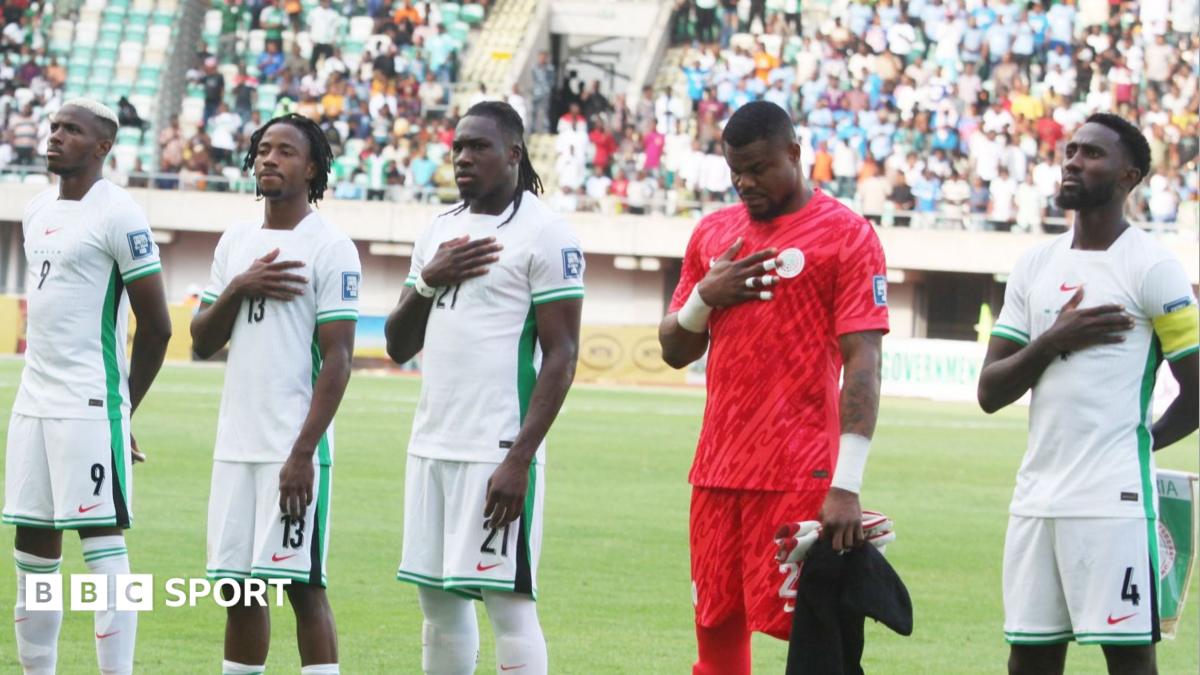
Nigerian football enduring ‘worst time in history’ – Odegbami
Nigeria, long recognized as one of African football’s most dominant traditional powers, is now navigating its darkest period in the history of the sport, according to national legend Segun Odegbami. As the country’s men’s senior team, the Super Eagles, prepares to kick off its 2027 Africa Cup of Nations qualifying campaign this week, the entire football ecosystem is grappling with a cascading series of failures that have triggered top-level leadership resignations, government-backed reform calls, and urgent debates about long-term restructuring.
Over the last 12 months, the scope of Nigerian football’s struggles has spread beyond the senior national squads. Both the men’s Super Eagles and the women’s Super Falcons, long a dominant force in women’s football on the continent, missed out on qualification for their respective 2026 FIFA World Cup tournaments. This marks the first time in Nigeria’s history that both senior teams have failed to book a spot at the men’s and women’s World Cups in the same cycle. The downturn also extends to youth football and African club competitions, with the quarter-final finish of the country’s under-20 women’s team at the 2024 World Cup standing as one of the few bright spots in an otherwise bleak stretch of results.
Odegbami, a 74-year-old former international who led Nigeria to its first ever Afcon title on home soil in 1980, described the current string of underperformance as a “tectonic shift” that has shaken the foundation of the sport in the West African nation. “It has never been this bad in our entire history that we didn’t qualify for the World Cup,” he told BBC Sport Africa. “Our girls, who were African champions, failed to win a 2025 Women’s Afcon qualification that was well within their grasp. All our junior teams are struggling, our domestic league cannot generate sustainable revenue. Something is fundamentally broken here.”
Widespread public anger over the repeated failures has already forced sweeping changes at the top of the Nigeria Football Federation (NFF). Last month, NFF president Ibrahim Gusau, general secretary Mohammed Sanusi, and multiple members of the federation’s executive committee stepped down from their roles amid mounting public and political pressure. Odegbami noted that the ousted leadership did not represent the best possible group of administrators for Nigerian football, and is now pushing for a full structural restructure to lay the groundwork for sustainable long-term development.
“Public outcry was universal. Every Nigerian wanted the old leadership out, and even President Bola Tinubu publicly called for sweeping reforms,” Odegbami explained. “All these factors have come together, and we are now working to build a comprehensive development blueprint that addresses every gap in our football ecosystem.”
In the weeks following the leadership resignations, a joint delegation from global governing body FIFA and the Confederation of African Football (Caf) has held formal talks with Nigeria’s National Sports Commission to map out a path for reform. The NFF’s scheduled leadership elections, originally set for September 27, have been suspended while the reforms are negotiated, and interim officials have been appointed to lead the federation through the transition: Emmanuel Ikpeme takes over as interim general secretary, with Ademola Olajire serving as his deputy. President Tinubu has made his own support for full reform clear, citing the need to reverse what he has called “repeated failures” at all levels of the national game.
Even with top-level leadership changes in place, stakeholders across Nigerian football warn that reform must go deeper than swapping out senior officials. Nigerian sports journalist Fisayo Dairo argues that a complete overhaul of governing structures is required to unlock sustainable growth. “Reform can’t just stop at changing who sits in the top offices,” Dairo explained. “We need to build a formal, functional framework that lets our football thrive. That means investing in national team development, nurturing talent from the grassroots level, and building a governance model that includes input from all stakeholders. The corporate sector needs full representation to help the administration generate consistent, reliable funding.”
For Odegbami, the current crisis stands in stark contrast to the golden era he helped create more than four decades ago. Nicknamed “Mathematical” for his precise, clinical skill on the pitch, Odegbami scored 23 goals in 46 appearances for the Super Eagles, and was named to the tournament All-Star team when Nigeria lifted its first Afcon trophy with a 3-0 final win over Algeria in Lagos in 1980.
“We had unprecedented state support, and everything aligned for us to succeed,” he recalled. “The atmosphere during that time was indescribable. That experience remains indelible in our minds, nothing can compare to it.”
Following that 1980 triumph, Nigeria went on to lift the Afcon trophy two more times in 1994 and 2013, finished as runners-up at the 2023 tournament, and claimed third-place finishes in 2019 and 2025. But Odegbami argues that successive Nigerian governments have long sidelined sport as a national priority, and that poor administration has derailed development since the mid-1990s.
“Our leaders have not guided us well, and that failure has affected every single layer of our football development,” he said. “That includes grassroots scouting, player discovery and development, the institutions that support players, academies, and domestic and international club pathways. We don’t even have a clear national coaching methodology, a unifying football philosophy, or a defined national style of play anymore.”
Beyond administrative failure, crumbling infrastructure and chronic underinvestment have emerged as core barriers to rebuilding Nigerian football. While other African nations have poured resources into hosting major international competitions – Senegal is set to host the Youth Olympic Games in October 2025, the 2026 men’s Cricket World Cup will be co-hosted by South Africa, Zimbabwe and Namibia, Kenya will stage the 2029 World Athletics Championships, and Morocco will co-host the 2030 men’s World Cup with Spain and Portugal – many of Nigeria’s once-iconic top-class venues have fallen into severe disrepair from decades of neglect.
Odegbami singled out historic venues including Lagos’ Surulere National Stadium, which hosted matches during the 1980 and 2000 Afcons, Ibadan’s Obafemi Awolowo Stadium (formerly Liberty Stadium), Kaduna’s Ahmadu Bello Stadium, and Calabar’s UJ Esuene Stadium as landmarks that have suffered irreparable damage. “I weep when I think about what has happened to our football infrastructure and these historic national facilities,” he said. “Whether it was intentional neglect or just ignorance, they did permanent damage to Nigeria’s football heritage. Even the Godswill Akpabio Stadium in Uyo, currently the best venue we have, is not even half as good as the top facilities we had from the 1960s through the 1990s.”
Now, as the Super Eagles get ready to open their 2027 Afcon qualifying campaign with a match against Madagascar at Uyo’s Godswill Akpabio Stadium on Friday at 16:00 GMT, followed by a September 29 away fixture against Guinea-Bissau, the team will be without star forward and former African Footballer of the Year Victor Osimhen, who was ruled out of head coach Eric Chelle’s squad through injury. For a nation once used to continental and global success, the qualifying campaign kicks off against a backdrop of uncertainty, as leaders and stakeholders work to build a new foundation for the future of Nigerian football.
-
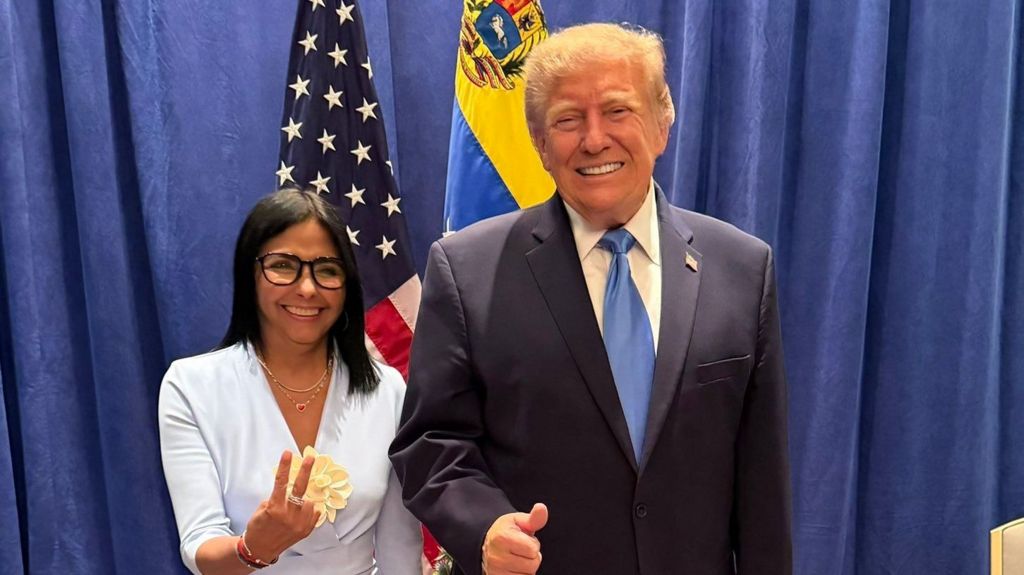
Trump meets US-backed Venezuelan president for first time since Maduro seized
On the sidelines of the United Nations General Assembly in New York, U.S. President Donald Trump held his first in-person talks with Venezuela’s interim head of state Delcy Rodríguez, a landmark meeting that comes just weeks after a U.S. military operation seized former Venezuelan President Nicolás Maduro in Caracas and installed Rodríguez’s U.S.-backed administration.
The encounter took place just kilometers from a New York detention facility where Maduro is currently being held, awaiting trial on charges of drug trafficking and additional criminal offenses. The meeting included other senior U.S. officials: Secretary of State Marco Rubio and White House Chief of Staff Susie Wiles also joined the bilateral discussions.
Following the talks, Rodríguez confirmed that the two sides had negotiated a roadmap to deepen cooperation across key strategic sectors, including energy, mining, and national security. The Rodríguez administration has already signed a landmark energy agreement that grants the U.S. control over more than 65 billion barrels of Venezuelan oil reserves — equivalent to over one-fifth of the country’s total proven reserves. The deal also awards a U.S.-led energy corporation 100-year operating concessions for 17 major Venezuelan oil fields. Trump has previously hailed the agreement as “the biggest oil deal in world history.”
During his Monday address to the UN General Assembly, Trump emphasized that the U.S. and the new Venezuelan government combined now hold more than 60 percent of the world’s total proven oil reserves, closing his remark on the topic with the phrase: “To the victor belong the spoils.” Rodríguez is scheduled to deliver her own address to the UN assembly on Wednesday.
Rodríguez’s political path to the presidency reflects the rapid shift in Venezuela’s political landscape. She previously served as vice president under Maduro, and was originally sanctioned by the U.S. in 2018 over her role in the Maduro administration. Those sanctions were fully lifted in April this year, just months before the U.S. raid on Caracas. Days after the U.S. operation, Rodríguez was sworn in as interim president by Venezuela’s National Assembly with explicit backing from the White House.
Prominent Venezuelan opposition leader Maria Corina Machado has repeatedly been blocked from re-entering the country since the political transition, a development that has drawn little public comment from the new administration or U.S. officials.
-
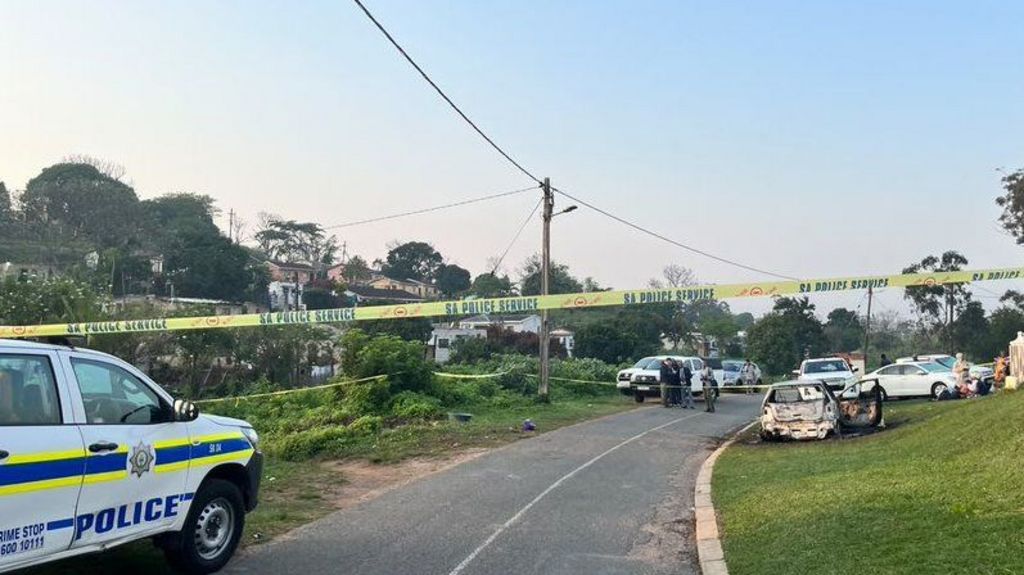
Eleven killed in mass shooting at house in South Africa
South Africa, a nation long grappling with one of the globe’s highest homicide rates, is reeling from another devastating act of gang-linked violence that has left 11 people dead following a mass shooting in a coastal province residential area.
On Tuesday evening, three armed gunmen stormed a private residence in KwaMakhutha, a township located just outside the major port city of Durban in KwaZulu-Natal, opening fire on a group of people gathered inside the home. Initial police accounts confirm that 10 people were killed instantly at the scene, while four surviving victims were rushed to nearby medical facilities for emergency treatment. Tragically, one of those injured later succumbed to her wounds, bringing the total death toll to 11.
According to official statements from the South African Police Service (SAPS), the group targeted in the attack included 13 men and one woman, who was reported to be pregnant. The pregnant woman was counted among the fatalities. Police have not yet released a confirmed motive for the attack, but investigators have not ruled out the possibility that the shooting stemmed from a long-simmering feud between competing criminal groups. Investigators also noted that some of the victims were being monitored by law enforcement in connection with unspecified illegal activities, adding that details cannot be released publicly at this stage to preserve the integrity of the ongoing investigation.
Local reporting from eNCA, a prominent South African television news network, confirms that before fleeing the scene, the attackers set fire to a vehicle registered to one of the victims. Footage from the site shows the charred, burned-out remains of the car abandoned by the gunmen. In the wake of the attack, SAPS has launched a large-scale manhunt to track down and apprehend the three suspects still at large.
This latest mass shooting comes as South Africa continues to face a persistent national crisis of violent crime. Official police data puts the country’s daily murder average at more than 60 killings per day, one of the highest per-capita homicide rates on the planet. In recent weeks alone, the grim discovery of at least nine murdered women—many of whose bodies were dumped along public roadways—has stoked widespread public anxiety over the country’s growing violent crime epidemic. High-profile mass shootings have also shaken communities across the nation in recent years: just last year, a mass shooting at a tavern in Johannesburg left nine people dead.
Law enforcement and policy analysts have repeatedly linked the surge in brutal violent crime to systemic issues including ongoing turf wars between rival criminal gangs, illicit drug trafficking networks, and the proliferation of unregulated illegal mining operations across the country. These activities have become deeply embedded in many communities, fueling frequent cycles of retaliatory violence.
Back in February, South African President Cyril Ramaphosa publicly identified organized criminal activity as “the most immediate threat to our democracy, our society and our economic development.” In response to the growing crisis, Ramaphosa announced a plan to deploy members of the South African National Defence Force to assist overstretched local police forces in combating rising violent crime.
-
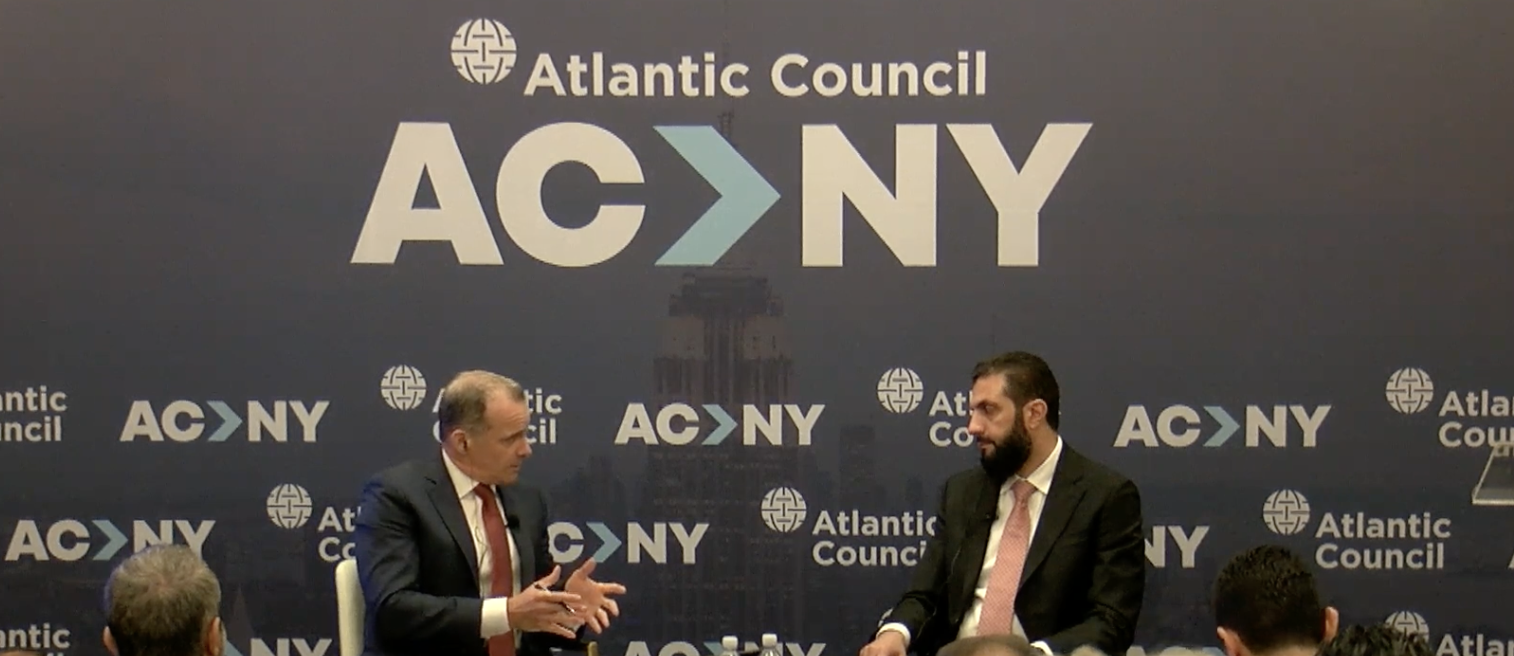
No peace with Israel ‘if rights of Syrians are usurped’, Sharaa says
Speaking at an Atlantic Council event on the sidelines of the United Nations General Assembly in New York City this Tuesday, Syrian President Ahmed al-Sharaa laid out a clear, non-negotiable condition for any future diplomatic engagement with Israel: an end to ongoing air strikes, incursions, and the illegal occupation of Syrian territory, most notably the Golan Heights — his place of birth.
Al-Sharaa, who led Syrian rebel factions to seize Damascus and oust long-time former president Bashar al-Assad last December, emphasized that Israel has escalated its aggressive actions against Syria since the collapse of the old regime. Speaking through a translator, he noted that Israeli forces have seized additional Syrian territory in the months following December 8, 2024, and continue to carry out cross-border incursions, arrests, and bombing raids across multiple regions of the country. Despite these ongoing hostilities, he confirmed that Syria remains committed to pursuing diplomatic resolution through dialogue and negotiation, and has already sought mediation from countries deemed friendly to Israel, including the United States — though progress has been fraught with obstacles.
“The Israelis will often reach 90 percent of a security agreement with Syria before suddenly withdrawing for different reasons,” al-Sharaa told attendees. He stressed that no formal peace talks can move forward until Syrian sovereignty and the rights of the Syrian people are fully respected, stating firmly: “We cannot talk about peace if the rights of Syrians are usurped.”
The Golan Heights, a strategic plateau captured by Israel from Syria in the 1967 Six-Day War, remains a core point of contention. While the United Nations universally recognizes the Golan as occupied Syrian territory, then-U.S. President Donald Trump unilaterally recognized Israeli sovereignty over the region in 2018, a long-sought policy win for Israeli Prime Minister Benjamin Netanyahu. Al-Sharaa recalled a lighthearted but pointed exchange he had with Trump during a 2024 White House visit, when he joked: “Why don’t you give New Jersey to the Israelis? You don’t own Golan Heights to give it to them, but you own New Jersey, and I believe that New Jersey is full of Democrats, and they are not voting for Trump. So it will be good to give it to the Israelis.” The quip drew laughter from the audience, but al-Sharaa backed it with a serious call for an independent international committee to examine territorial claims and counter the constant framing of negotiations around Israel’s perceived security needs alone. Al-Sharaa emphasized: “There is no discussion about those territories and to whom they belong.”
Turning to the ongoing conflict between Israel and Hezbollah in neighboring Lebanon, which has escalated dramatically since Hezbollah launched rocket attacks in support of Hamas in October 2023, al-Sharaa addressed Trump’s earlier proposal that Syrian forces assist in disarming Hezbollah as part of a broader Israel-Lebanon peace deal — an idea widely seen as unfeasible given post-war Syria’s fragile stability and Hezbollah’s long-standing support for al-Assad during the civil war. Al-Sharaa instead outlined a more measured approach: Syria will work to empower the Lebanese government to strengthen its state institutions, ensure all weapons operate under official Lebanese state authority, and support improvements to Lebanon’s struggling economy and civil society to address long-running instability that was exacerbated by the former Assad regime’s actions. “So we are engaging [on] a best mechanism for political reform,” he added.
The discussion, moderated by veteran Middle East negotiator Brett McGurk — a former Biden White House official with a long history of U.S. Middle East policy across four U.S. administrations, and a known hawkish pro-Israel, pro-intervention stance — quickly turned to questions about al-Sharaa’s controversial past. Less than two years ago, the U.S. State Department labeled him a top terrorist with a $10 million bounty on his head, when he operated under the nom de guerre Abu Mohammed al-Jolani, leader of the al-Qaeda-affiliated militant group Hay’at Tahrir al-Sham. McGurk opened the questioning by referencing the 25th anniversary of the September 11, 2001 attacks, and pressed al-Sharaa to renounce a 2013 pledge of allegiance to al-Qaeda leader Ayman al-Zawahiri, one of the primary masterminds of the 9/11 attacks.
Al-Sharaa pushed back on the line of questioning, noting: “9/11, I had nothing to do with that at the time. I was 13 years old.” When pressed again to renounce the past pledge, he responded that the region’s historical context must be acknowledged: “There are so many questions that are part of the past now, so maybe we need to update ourselves. I don’t believe that it is appropriate time to discuss things that happened 25 years ago. I was at a different age, and the conditions in the region were different, and they were pushing a lot of young people to go into that direction because of the pressure in that region.”
Al-Sharaa, who spent six years in a U.S. prison in Iraq after joining anti-coalition militias following the 2003 U.S. invasion, framed his current leadership as a break from his earlier years, centered on removing the decades-long injustice of Assad family rule. “Lifting that injustice is a noble act that any person will be honoured to do,” he told McGurk.
Addressing a 2024 ISIS attack on a joint U.S.-Syrian convoy that killed two American soldiers and a civilian interpreter, al-Sharaa acknowledged that Syria is still in the early stages of building a new national security infrastructure after the civil war. He explained that simultaneously working to dismantle rogue militias, bring all weapons under state control, and vet and recruit personnel for a new national army has created growing pains that can lead to unforeseen security incidents, noting that similar attacks have targeted other groups beyond U.S. personnel.
When McGurk asked whether al-Sharaa would welcome a large-scale return of U.S. troops to Syria to train the new national army, the Syrian president reaffirmed his commitment to full Syrian sovereignty and the 2019 withdrawal of U.S. forces ordered by Trump, which he said proceeded smoothly and without the security vacuum many predicted. “The withdrawal was very safe, and the region remained calm. No problems happened because of that vacuum, and the Syrian state and Syrian forces took control over the area, and [Kurdish forces] in the northeast were integrated [into Syria’s military],” he said. “Emptying Syria from foreign bases… that is a good approach.”
This principle applies to all foreign military presences, including Russia, al-Sharaa confirmed. Where Russia once operated 170 military bases across Syria, that number has now been reduced to just two, both of which will only be used for training the newly formed Syrian military.
On the topic of governing Syria’s diverse mosaic of ethnic and religious groups, al-Sharaa said his transitional government will build on existing legal frameworks to expand devolved power to local governorates as the country prepares for a new presidential election within three years, and a full constitutional rewrite within the five-year transition period. “There are wide powers for the governorates in the election of the municipal councils,” he explained. “The People’s Assembly is going to appoint a committee that is going to review the different laws in Syria, and another committee that will start drafting the constitution. And I believe that will be completed before the end of the five years [transition period].” When asked, al-Sharaa did not rule out running for president in the upcoming election.
Al-Sharaa is scheduled to deliver an address to the full United Nations General Assembly later this week, after making history last year as the first Syrian leader to speak from the UN podium in 60 years.
-
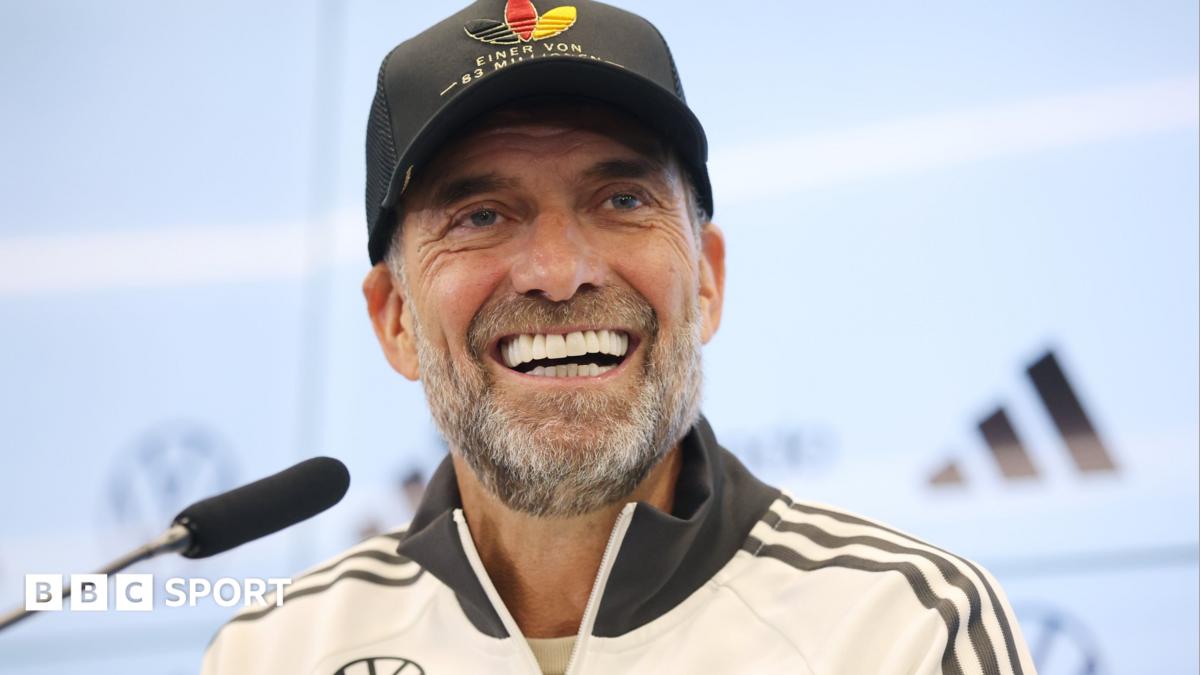
Germany’s saviour? How Klopp is looking to turn fortunes around
It has only been two months since Jurgen Klopp was formally unveiled as the new head coach of the German men’s national football team, and already his tenure has been defined by headline-making moves both on and off the training pitch. From confronting rising political tensions in the country to shaking up the national squad selection process, the charismatic 59-year-old has wasted no time leaving his mark on German football.
In his very first public address after taking the job, Klopp set clear boundaries with the press, calling for fair coverage and protection for his family. Most recently, amid growing political upheaval driven by electoral gains for the far-right, anti-immigration Alternative for Germany (AfD) in multiple eastern state elections, Klopp used a media appearance last Thursday to articulate a vision of “positive patriotism” that unites all Germans.
When asked if he saw himself as a national ambassador in his new role, Klopp offered a thoughtful, impassioned response. “From my perspective as a sportsman, I can say that I would very much like to reclaim the flag for myself, for all of us,” he said. “I want it so that when someone waves it, no-one thinks: ‘What is wrong with you?’ Instead, I want people to understand: You are happy and realise how lucky you were to be born, grow up, or move to this wonderful country.”
His remarks struck a chord across German media, particularly given the German national team’s long-standing identity as a reflection of the country’s diverse population, with dozens of current and recent players counting migrant backgrounds. Klopp doubled down on this unifying message, pointing to recent success across German sport — from Alexander Zverev’s run at the US Open to the women’s basketball team’s European Championship triumph and strong results at the European Athletics Championships — as proof that sport can foster a much-needed “sense of community”. “This is our mission: we need to create a good atmosphere,” he added.
While Klopp has dominated off-field headlines, the German Football Association (DFB) signed the former Liverpool manager on a £6 million annual salary to fix a national side that has struggled for consistency and form in recent major tournaments. Since taking the role, Klopp has been ubiquitous across German football, making constant visits to Bundesliga stadiums, training grounds across the country to scout talent in person. One day he can be spotted in the stands at Borussia Dortmund’s Signal Iduna Park, his old coaching stomping ground, and the next he’s spotted holding conversations with players at 1. FSV Mainz 05 or Eintracht Frankfurt.
For his first set of fixtures — back-to-back Nations League matchups against the Netherlands, Serbia and Greece, spread across the current international break — Klopp has taken an unprecedented approach to squad selection. After drawing up an initial shortlist of 50+ potential candidates, he and his coaching staff split the available call-ups into two nearly entirely separate squads for the four matches, leaning into a trial-and-error philosophy to cast as wide a net as possible.
The first squad, featuring established stars including Joshua Kimmich, Kai Havertz and Jamal Musiala, will kick off the break with a Thursday clash against rivals the Netherlands at Amsterdam’s Johan Cruyff Arena, followed by a home fixture against Greece on Sunday. The second group, which includes rising talents Florian Wirtz and Aleksandar Pavlovic, will face Serbia at home and Greece on the road in the second half of the break. The only player named to both squads is reserve goalkeeper Finn Dahmen.
The split-squad strategy means fans will not see a full-strength German starting XI in these opening fixtures, but that is exactly Klopp’s intention: the gaffer is prioritizing giving untested and underrated prospects a chance to prove themselves, even including players who were competing in Germany’s second tier just a few months ago. Take 23-year-old utility player Felix Keidel, for example: a year ago, the SV Elversberg man was seemingly worlds away from a national team call-up, but he is now one of six uncapped lower-league prospects given an opportunity to force his way into Klopp’s plans.
This approach is entirely consistent with Klopp’s long career. The manager has never built success solely on big-name stars, instead with a track record of developing overlooked talent into world-class players: he turned little-known Polish winger Lukasz Piszczek into one of Europe’s top right-backs capable of competing with prime Cristiano Ronaldo, and reshaped Andy Robertson into one of the best left-backs in the world during his time at Liverpool. For Klopp, what matters is fitness and mental readiness, not reputation or past caps — and he has made clear that even the newest prospects will get a fair shot to impress.
Tactically, Klopp is also set to shift away from the complex system implemented by predecessor Julian Nagelsmann, who built convoluted structures to mask perceived squad flaws. Instead, Klopp plans to simplify Germany’s possession play and focus on attacking through the wings, a strategy that delivered historic success at Liverpool with wide attackers like Mohamed Salah and Sadio Mane. With Germany boasting a deep pool of young winger talent, including promising prospects like Said El Mala, Lennart Karl, Derry Scherhant, Karim Adeyemi and returning Brentford man Kevin Schade, this approach could unlock an exciting, dynamic style of play German fans have not seen from their national side in years.
Klopp has also made clear he is prioritizing youth renewal: after the recent retirements of veterans Manuel Neuer, Antonio Rudiger and Pascal Gross, most other players in their 30s have not been called up, with both split squads boasting an average age between 24 and 25. “I have the desire to work with guys who cannot wait to wear this jersey, who want to play the kind of football everybody enjoys and who perform even better wearing the national team jersey,” Klopp explained. Former international Pascal Gross echoed that sentiment after a recent club win, saying: “I think it is about time to wish the new generation best of luck. I still enjoy playing football here in the club, but there’s a change in Germany and rightfully so.”
For Klopp, the project extends beyond tactical results. He has framed his tenure as a chance to build a fresh national identity and unify the country, epitomized by the “One of 83 million” cap he wore during his recent press conference, a nod to Germany’s total population. After weeks of shaping his narrative off the pitch, all attention now turns to the pitch: can Klopp turn his ambitious, unifying vision into concrete results for a German side hungry for a return to winning ways?
-
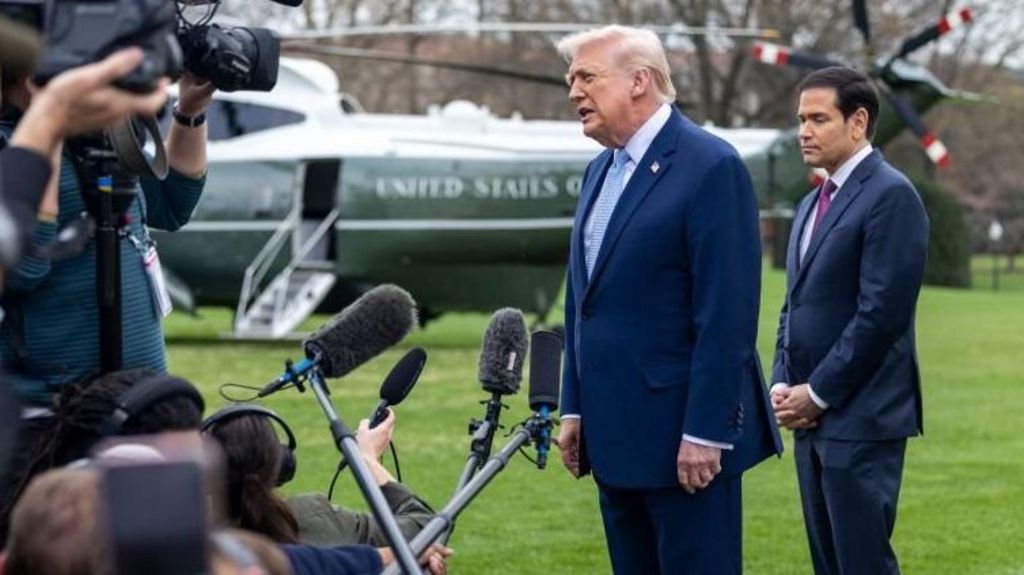
Trump administration accuses banned media outlets of ‘falsehoods’ ahead of court hearing
A high-stakes legal battle over press freedom is set for a key procedural milestone this Wednesday, as a federal judge in Washington D.C. will decide whether to temporarily suspend former President Donald Trump’s controversial ban on three major U.S. media outlets from accessing the White House complex.
Last week, Trump administration officials revoked the press passes of reporters from CNN, Politico and MS NOW, barring the outlets from on-site White House access over allegations that the organizations have repeatedly spread what the president calls “fake news.” Immediately following the revocation of their credentials, the three outlets launched a joint lawsuit against the administration, arguing that the ban is a blatant violation of U.S. constitutional law.
As the court prepares to hear arguments this week, the U.S. Justice Department has submitted formal court documents defending the administration’s decision, claiming the three outlets have “trafficked in verifiable falsehoods” through their reporting, and that some of their coverage has posed active threats to U.S. national security. The department’s filing outlines that White House officials issued a formal list of problematic reporting incidents to the outlets before implementing the ban. Cited in the filing are stories covering unpublicized construction projects on White House grounds, including work on a new security bunker and a planned private ballroom, as well as a report on an ongoing internal investigation into White House information leaks.
In its defense of the administration’s policy, the Justice Department emphasized that “access to the White House is a privilege, not a right” for press organizations. Legal representatives for the three media outlets have pushed back forcefully, arguing that the ban directly violates protections guaranteed under the First Amendment to the U.S. Constitution, which prohibits the federal government from infringing on the freedom of the press.
In their joint statement announcing the lawsuit, the outlets condemned the administration’s actions as an unprecedented attack on independent journalism. “Without notice or process, the White House revoked our journalists’ credentials because it objected to our reporting,” the statement read. “Left unchallenged, this threatens press freedom and the public’s right to independent journalism free from government interference.”
The ban has already triggered widespread pushback across the U.S. journalism industry: major national television networks have withdrawn from the White House press pool, the long-standing collaborative arrangement that shares video and still footage of the president with all participating outlets, in a coordinated show of protest against the administration’s move. Within days of the networks’ withdrawal, the White House launched its own standalone streaming platform, branded “Trump TV,” which operates a 24-hour continuous feed of clips and content featuring the president.
Wednesday’s ruling will address the media outlets’ request for a temporary injunction that would lift the ban while the full legal case proceeds through the court system, setting off what is widely expected to become a landmark constitutional battle over the boundaries of press freedom and executive authority.
-
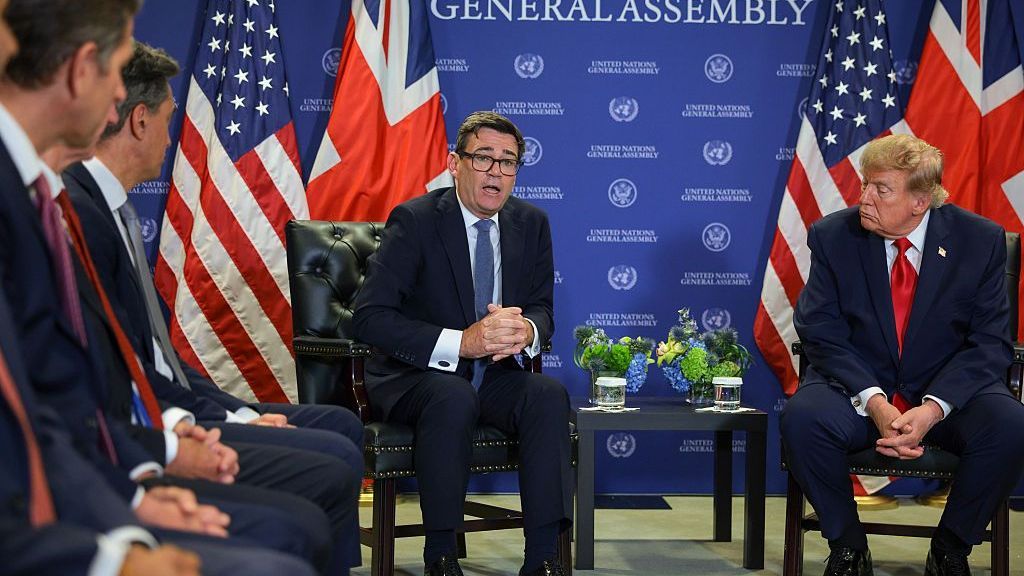
Chris Mason: From inside the room, how Burnham survived first Trump meeting
It was an unconventional diplomatic encounter held in a windowless, unremarkable basement meeting room down a dim corridor at the United Nations headquarters — far from the polished grandeur of the White House Oval Office. As a reporter crouched between a bank of press cameras, hoping to catch U.S. President Donald Trump’s attention for a question, I watched the former (and seeking re-election) president lean into a rare moment of measured cordiality. As anyone who has covered Trump knows, he can flip between sharp acerbity and genuine warmth at will, and on this occasion, he chose warmth.
Seated beside the most powerful leader in the world was Andy Burnham, who had only stepped into the role of UK Prime Minister months earlier after serving as a city mayor. Burnham had publicly stated ahead of the meeting that he was looking forward to the discussion, but even with that confident framing, a flicker of nervousness would have been understandable. Reporters in the room noted that he did appear slightly on edge when the press pool entered the space, but any tension was quickly defused by a steady stream of compliments from the U.S. president.
The original schedule called for journalists to join the two leaders just minutes after their first greeting, to open the meeting to press. Instead, the press pool was held outside while the pair held closed-door private talks first — an unexpected change that ended up working in reporters’ favor, leaving both leaders with more prepared comments about their discussions than they would have shared otherwise.
Burnham went into the encounter well aware that unscripted, live on-camera meetings with Trump are famously unpredictable: they can veer off into unplanned controversy at any moment, akin to riding a rollercoaster without a safety harness. Once the press was inside, I managed to get myself into Trump’s line of sight, and waited until Burnham finished his opening remarks to call out my question. I asked the U.S. president whether, despite their well-documented political differences, he believed Burnham was a leader the U.S. could work with.
Trump’s response was immediately warm. “I do, I think he’s a natural business person. We’ve had a lot of discussions even before this meeting. We’ve spoken to each other numerous times on the phone. Yeah, I think so, I think so. He gets it. He understands what he has to do.”
The open goodwill was clear, and it likely eased any pre-meeting jitters the Downing Street team had been feeling. The meeting was entirely in Trump’s hands: he controls the length of these public question sessions, which have sometimes stretched well past 30 minutes. This time, the neutral, low-key setting at the UN seemed to tone down the sense of high-stakes spectacle.
Even as the conversation turned to potentially divisive issues, the bonhomie held. A question about immigration, a longstanding point of policy friction between the two leaders’ positions, passed without incident. So did discussion of the Burnham government’s recent announcement — made by Foreign Secretary Ed Miliband, who was in attendance at the meeting — of new sanctions on Israeli settlements in the West Bank, a decision that drew fierce anger from the Israeli government.
But when the conversation turned to the future of the Chagos Islands, Trump could not hide his blunt disapproval of the previous UK government’s decision to cede sovereignty of the archipelago to Mauritius, while retaining a long-term lease for the critical British military base on Diego Garcia. He called the deal “terrible”, adding that he believed the new prime minister would revisit the agreement. Burnham simply replied “yep” to the president’s comment.
After the joint press availability, I spoke one-on-one with Prime Minister Burnham on behalf of all major broadcasters. Burnham framed the first meeting as “very encouraging”, noting that the pair “had established a good connection” to build on. When I pressed him on whether the Chagos Islands deal would be revised, he pointed out that the agreement had been finalized by the previous government, which he “inherited” upon taking office. “We’ve got to find a resolution, and so work will continue now…to see where that resolution might lead,” he said. That response strongly suggests the deal is set for renegotiation.
Few global leaders manage to avoid public flashpoints with the Trump administration, so future disagreements between the two leaders are almost inevitable. Burnham may even choose to take public stances that create friction in time, and issues like the Chagos deal could easily become a point of contention down the line. But for the moment, the first face-to-face meeting has left Burnham with a working relationship with Trump that he can build on. After the unpredictable, high-stakes encounter with Trump, the rest of Burnham’s UN meetings followed the traditional, predictable rhythm of standard diplomacy — a far cry from the wild ride he had just navigated successfully.
To stay updated on the inner workings of UK politics at Westminster and beyond, sign up for the *Politics Essential* newsletter.
-
More than 170,000 respiratory cases recorded in haze-choked Indonesia
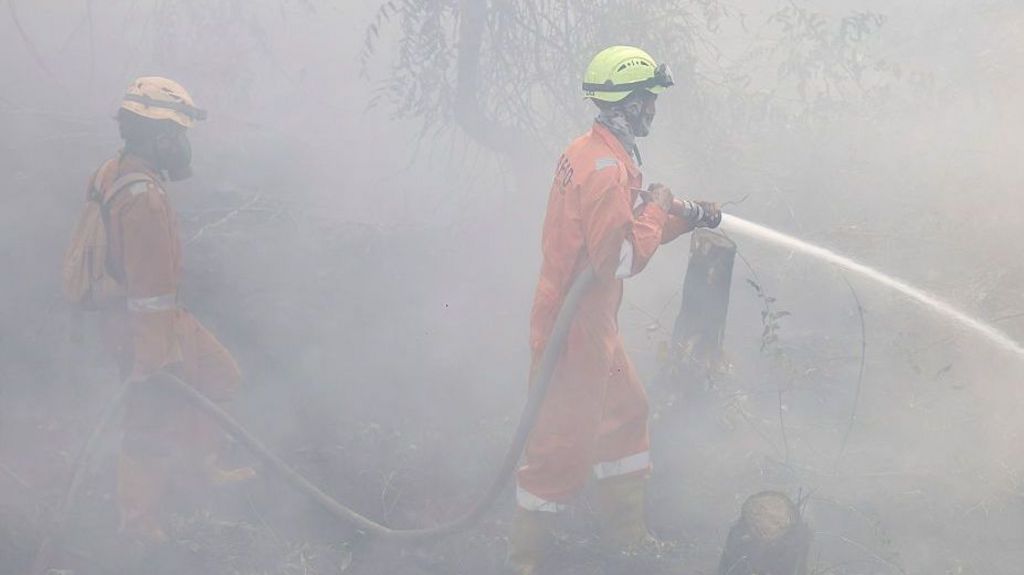
Indonesia is facing one of its worst wildfire crises in recent history, as blazes stoked by the extreme dry conditions of a “Godzilla” El Nino have swept across the archipelago for weeks, triggering a nationwide public health emergency and spreading toxic haze across Southeast Asia.
Indonesia’s Ministry of Health confirmed that as of recent reports, more than 175,000 people across the country have developed respiratory illnesses since August, with cases ranging from mild coughs and bronchitis to severe pneumonia. Alarmingly, over 40,000 of these confirmed cases involve toddlers, who are particularly vulnerable to the damaging effects of air pollution.
The unchecked blazes have sent thick plumes of toxic smoke across large swathes of Indonesia, as well as neighboring Malaysia, Singapore, and even parts of the Philippines. Air quality indices across affected regions have repeatedly plunged into the “unhealthy” range, forcing public health advisories and disrupting daily life for millions.
Authorities have deployed over 54,000 personnel and dozens of aircraft to conduct water bombing operations on the hardest-hit islands of Borneo and Sumatra. However, extinguishing the fires has proven an uphill battle, due to the vast area impacted and the challenging conditions of burning peatlands, which smolder deep underground and reignite easily. “From the air to the ground, all forces continue to move,” Indonesia’s Cabinet Secretary Teddy Indra Wijaya stated on Monday. “Everything is being done to extinguish the fires, reduce the impact of the smoke, and, most importantly, protect the public from the threat of forest and land fires.”
Wildfires are a recurring annual hazard during Indonesia’s dry season, which typically runs from July to October. But this year, the extreme weather event dubbed “Godzilla” El Nino has created unprecedentedly arid conditions that have supercharged the spread of fires. As of Wednesday, independent forest monitoring group Nusantara Atlas has detected approximately 734,000 fire hotspots across the country — a 30% increase from 2019, one of Indonesia’s most severe wildfire seasons on record. Since the start of the year, at least 895,657 hectares of land have burned — an area nearly six times the size of Greater London.
The disaster has already upended daily life across much of Indonesia, with widespread school closures and a sharp surge in hospital admissions for smoke-related illness. Health ministry data shows that the number of reported respiratory illness cases more than doubled between September 1 and September 9, jumping from 50,891 to 113,336.
Beyond human health impacts, the wildfires have also taken a devastating toll on regional wildlife, including the critically endangered Bornean orangutan. Late last month, an Indonesian wildlife foundation released footage showing an orangutan writhing on the ground in a West Kalimantan palm oil plantation — one of the worst-affected regions. Rescued by a local farmer, the great ape received emergency treatment for smoke-induced hypoxia, but ultimately succumbed to its injuries.
The ongoing crisis has sparked legal action against Indonesian authorities: last week, indigenous and civil society groups in West Kalimantan filed a class-action lawsuit against the national and local governments, accusing them of deliberate negligence for failing to prevent and properly address the wildfires. “This is a disaster that occurs every year. This recurring pattern proves our view that the defendants knew about the potential haze disaster and the risks of disaster from forest and land fires,” the group’s lawyer Glorio Sanen said in a statement.
In an effort to curb the blazes and alleviate the drought conditions fueling them, Indonesia has conducted multiple rounds of cloud-seeding operations, some in partnership with the Japan Self-Defense Forces, which deployed personnel to Borneo earlier this month to assist with firefighting. Cloud seeding works by introducing particles like salt crystals or silver iodide into existing clouds to encourage precipitation, though meteorologists remain divided on how effective the technique is for large-scale wildfire response.
Malaysia’s Sarawak state, one of the worst-hit areas outside Indonesia, also launched a five-day cloud-seeding operation earlier this month. Beyond tackling haze, the effort was intended to boost declining water levels at regional hydropower dams ahead of a forecasted severe dry spell in October. “October might be hotter and drier,” Sarawak’s Deputy Premier Douglas Uggah Embas told reporters. “We want to increase the water levels as much as possible while we still can.”
As of publication, the haze continues to spread across Southeast Asia, with Singapore issuing daily haze advisories and Philippine officials urging residents to limit outdoor exposure until air quality improves.
-
Iran and US held direct UN talks, with Islamic Republic’s terms to reopen Hormuz hardening
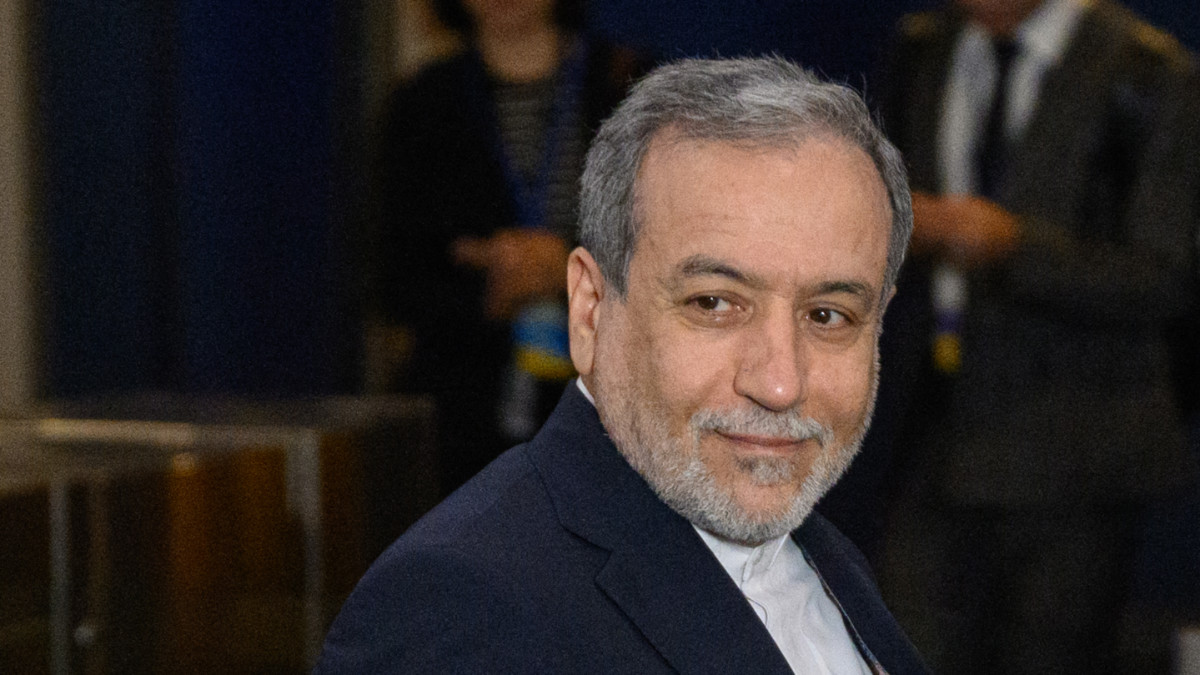
Against the backdrop of the annual United Nations General Assembly in New York City, a historic moment unfolded on Tuesday: Iranian Foreign Minister Abbas Araghchi held a public, high-profile meeting with United States special envoy Steve Witkoff, marking the first formal, public encounter between the two long-adversarial nations in months. The discussions centered on negotiating binding terms to end their ongoing open conflict, a development that has sent ripples across global geopolitical circles.
According to multiple senior Gulf officials speaking exclusively to Middle East Eye, regional powers have been working behind the scenes to orchestrate an unplanned, informal encounter between US President Donald Trump and Iran’s newly inaugurated President Masoud Pezeshkian on the UNGA sidelines. However, multiple logistical and political hurdles have complicated those efforts so far, leaving the prospective meeting in limbo.
Qatar has emerged as the primary Gulf facilitator for the Araghchi-Witkoff talks, taking the lead among regional states that have spent days pushing for renewed US-Iran diplomatic engagement ahead of the General Assembly’s official kickoff. Over the weekend, both Qatar and the United Arab Emirates publicly called for de-escalation of tensions and constructive dialogue with the Islamic Republic, signaling regional anxiety over the risk of broader conflict.
In comments to reporters following the meeting, Trump confirmed that the bilateral talks between the two nations’ mediators were “very good” and productive – a striking contrast to the hardline rhetoric he deployed moments earlier during his address to the UN General Assembly, where he threatened to “annihilate” Iran outright. “They had a very good meeting, a very productive meeting; they have another one scheduled in the very near future,” Trump told reporters during a side meeting with Ukrainian President Volodymyr Zelensky. When asked about the prospects of reaching a new comprehensive agreement, Trump framed the outcome as binary: “I can’t imagine why they wouldn’t want to do it. It’s potential greatness, or obliteration.” For his part, Witkoff offered a similarly optimistic off-the-cuff assessment, telling reporters “I feel very good right now” when queried about the trajectory of the negotiations.
Direct US-Iran negotiations have been stalled since June, when a temporary ceasefire extension collapsed after weeks of fragile compliance. In the months since, both sides have carried out repeated strikes on commercial and military vessels transiting the Strait of Hormuz, a critical global chokepoint for 20% of the world’s oil trade, as each moves to assert de facto control over the waterway.
Later Tuesday, Iranian state media officially confirmed the meeting between Araghchi and Witkoff, and disclosed that the Iranian foreign minister had formally submitted Tehran’s core negotiating terms to reopen the Strait of Hormuz to unimpeded commercial traffic. Per Iranian state media, Iran’s core demands have not shifted in broad strokes: Tehran is calling for the immediate lifting of the US naval blockade in the region, the full release of all Iranian assets frozen by American sanctions, and a complete end to US-backed hostilities across all Middle Eastern “resistance” fronts where Iran-aligned groups operate.
While the broad outlines of Iran’s demands mirror those presented in June’s failed talks, a senior unnamed Iranian official indicated that Tehran has hardened its negotiating position significantly. In an earlier interview with Agence France-Presse, Hossein Mohebi, spokesperson for Iran’s powerful Islamic Revolutionary Guard Corps (IRGC), clarified that Tehran is now demanding the full release of all $24 billion in frozen Iranian assets up front, rather than the phased release that was on the table in June negotiations. Mohebi also added a new, non-negotiable demand: any final ceasefire agreement must include the lifting of Saudi Arabia’s blockade on Houthi-controlled territories in Yemen, a provision that was not part of June’s draft framework. “The issue of Yemen was not on the agenda of the previous agreement. We are now demanding that the lifting of the blockade on Yemen be included in the agreement,” he stated.
In June, Iran tied any bilateral ceasefire with the US to a separate Israeli commitment to halt its military strikes against Hezbollah, Iran’s key ally in Lebanon. To date, Israeli airstrikes on Lebanese territory have continued unabated with no sign of a pause. That June ceasefire framework also included a US commitment to release a portion of Iran’s frozen assets, a move that drew fierce bipartisan criticism from pro-Israel lawmakers and commentators in Washington. The breakdown of the ceasefire shortly after the framework was agreed left it unclear whether any of the pledged funds were ever transferred to Tehran.
Mohebi’s comments also laid bare open internal friction between Iran’s hardline military establishment and its civilian diplomatic corps. While Iranian state media openly confirmed Tuesday’s meeting with Witkoff, Mohebi had publicly ruled out any diplomatic engagement with the US earlier that same day. “The Americans have tried to contact us, but we refuse any such contact. Our dealings with the enemy, as long as they remain hostile, are conducted solely through arms,” he said prior to the meeting’s confirmation, highlighting the competing power centers shaping Iran’s negotiating position.