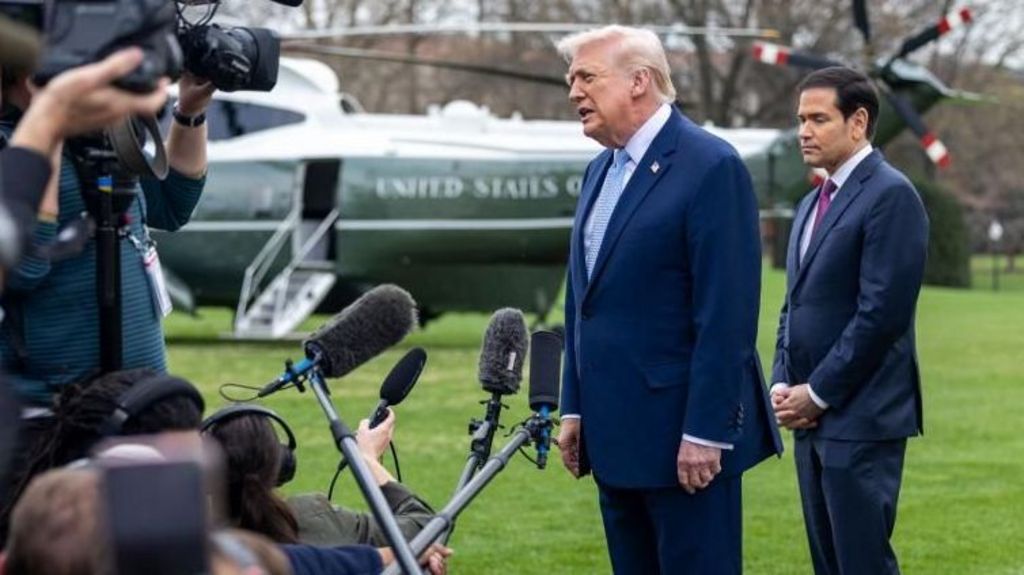
A high-stakes legal battle over press freedom is set for a key procedural milestone this Wednesday, as a federal judge in Washington D.C. will decide whether to temporarily suspend former President Donald Trump’s controversial ban on three major U.S. media outlets from accessing the White House complex.
Last week, Trump administration officials revoked the press passes of reporters from CNN, Politico and MS NOW, barring the outlets from on-site White House access over allegations that the organizations have repeatedly spread what the president calls “fake news.” Immediately following the revocation of their credentials, the three outlets launched a joint lawsuit against the administration, arguing that the ban is a blatant violation of U.S. constitutional law.
As the court prepares to hear arguments this week, the U.S. Justice Department has submitted formal court documents defending the administration’s decision, claiming the three outlets have “trafficked in verifiable falsehoods” through their reporting, and that some of their coverage has posed active threats to U.S. national security. The department’s filing outlines that White House officials issued a formal list of problematic reporting incidents to the outlets before implementing the ban. Cited in the filing are stories covering unpublicized construction projects on White House grounds, including work on a new security bunker and a planned private ballroom, as well as a report on an ongoing internal investigation into White House information leaks.
In its defense of the administration’s policy, the Justice Department emphasized that “access to the White House is a privilege, not a right” for press organizations. Legal representatives for the three media outlets have pushed back forcefully, arguing that the ban directly violates protections guaranteed under the First Amendment to the U.S. Constitution, which prohibits the federal government from infringing on the freedom of the press.
In their joint statement announcing the lawsuit, the outlets condemned the administration’s actions as an unprecedented attack on independent journalism. “Without notice or process, the White House revoked our journalists’ credentials because it objected to our reporting,” the statement read. “Left unchallenged, this threatens press freedom and the public’s right to independent journalism free from government interference.”
The ban has already triggered widespread pushback across the U.S. journalism industry: major national television networks have withdrawn from the White House press pool, the long-standing collaborative arrangement that shares video and still footage of the president with all participating outlets, in a coordinated show of protest against the administration’s move. Within days of the networks’ withdrawal, the White House launched its own standalone streaming platform, branded “Trump TV,” which operates a 24-hour continuous feed of clips and content featuring the president.
Wednesday’s ruling will address the media outlets’ request for a temporary injunction that would lift the ban while the full legal case proceeds through the court system, setting off what is widely expected to become a landmark constitutional battle over the boundaries of press freedom and executive authority.