博客

  • Iran’s president tells Trump it will never ‘bend the knee’

    Iran’s president tells Trump it will never ‘bend the knee’

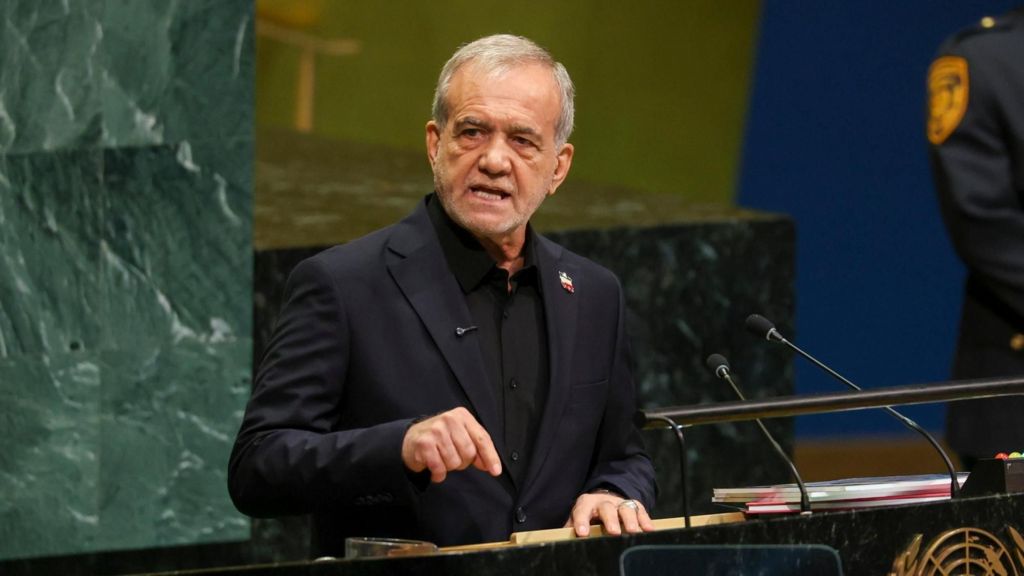
    Seven months into open conflict between Iran, the United States, and Israel, Iran’s newly inaugurated President Masoud Pezeshkian delivered a defiant yet open message to the global community from the floor of the United Nations General Assembly this week. Reaffirming Iran’s unyielding stance in the face of intensifying pressure from Washington, Pezeshkian declared that the Islamic Republic would never “bend the knee” — but stressed that Tehran remains committed to pursuing a diplomatic resolution to the ongoing hostilities.

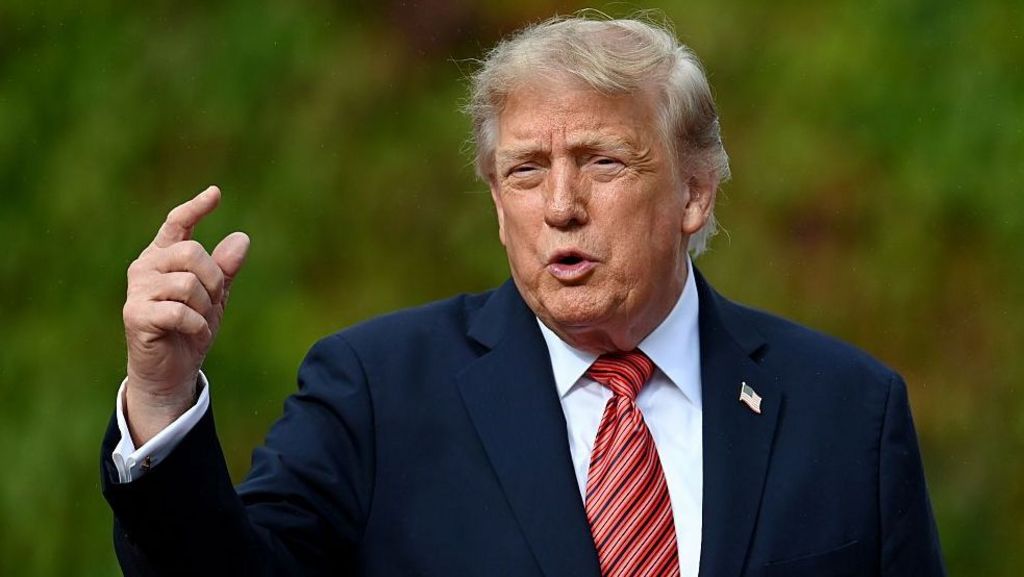
    His address came in direct response to a recent threat from U.S. President Donald Trump, who warned that he would “annihilate” the Islamic Republic if a new negotiated deal was not reached in short order. Pushing back against this rhetoric, Pezeshkian emphasized that U.S. strategy of escalating sanctions, pressure campaigns, and international bullying would only strengthen Iranian public resolve. “He must know that the resistance of the Iranian people will only increase in the face of sanctions, increased pressure, increased bullying,” Pezeshkian told the assembled delegates.

    The Iranian president laid out non-negotiable conditions for any lasting agreement, chief among them a full end to the U.S. naval and economic blockade of Iranian ports and shipping. Pezeshkian argued that Iran could not accept a deal that locks its commercial vessels out of key regional waterways while other nations benefit unimpeded. “It cannot be the case that everyone benefits from the Strait of Hormuz while we are denied access,” he said.

    The strategic Strait of Hormuz, which normally carries roughly 20% of the world’s annual oil and natural gas shipments, has been effectively closed to commercial navigation since the outbreak of hostilities in late February. The closure stems from two overlapping factors: Iranian drone and missile attacks on transiting commercial vessels, and the U.S. naval blockade imposed in response.

    This is not the first attempt at diplomacy to de-escalate the crisis. A preliminary agreement to end hostilities and reopen the strait was reached between U.S. and Iranian negotiators in June, but the deal collapsed within weeks. After Iran resumed attacks on commercial shipping, the United States reimposed its full blockade.

    Even so, diplomatic efforts have resumed on the sidelines of this year’s UN General Assembly in New York. On Tuesday, Iranian Foreign Minister Abbas Araghchi and U.S. special envoy Steve Witkoff held indirect talks mediated by Qatari brokers. This meeting marked the first formal diplomatic contact between the two sides since the June agreement collapsed.

    Witkoff struck an optimistic note following the discussions, telling reporters he hoped the talks would “prove constructive and promising” and confirming that Qatari mediators would continue their work to bridge the gap between the two parties. But Iranian foreign ministry spokesman Esmail Baqai struck a more cautious tone, describing the discussions as “not anything new” and confirming that Araghchi had held firm to Iran’s core preconditions: an end to the U.S. blockade, and the release of billions of dollars in frozen Iranian assets held abroad.

    The renewed diplomatic push comes amid growing global concern over the economic impact of the Strait of Hormuz closure, which has sent ripples through global energy markets and raised fears of a broader regional conflict that could draw in additional powers.
  • Watch: How toxic smog from wildfires is making Indonesians sick

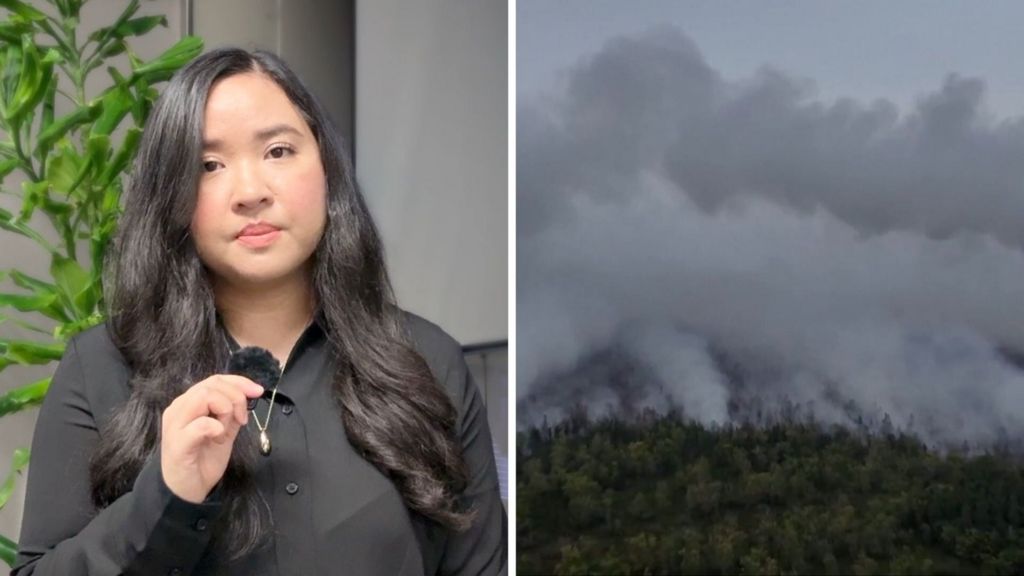
    Watch: How toxic smog from wildfires is making Indonesians sick

    Indonesia is currently grappling with a public health emergency sparked by toxic smog drifting from raging seasonal wildfires, new data shows. Since the start of August, nearly 175,000 people across the archipelago have developed respiratory illnesses linked directly to exposure to the hazardous air pollution.

    The annual wildfire crisis, which is often amplified by dry El Niño weather conditions and uncontrolled land clearing for agricultural expansion, has sent plumes of fine particulate matter and toxic chemicals billowing across populated regions of the country. Unlike regular air pollution, wildfire smog carries a concentrated mix of carcinogens and irritants that penetrate deep into the lungs and bloodstream, worsening pre-existing conditions and triggering acute illness even among otherwise healthy people.

    Local health authorities have deployed mobile clinics to hard-hit areas to treat affected residents, but ongoing poor air quality continues to drive new cases daily. The crisis has also renewed calls for more coordinated national and regional action to address the root causes of recurrent wildfires, as climate change continues to exacerbate dry conditions that turn land clearing accidents into out-of-control blazes.

    The public health impact extends beyond immediate respiratory issues, with researchers warning that long-term exposure to this level of toxic smog can lead to chronic cardiovascular problems, impaired child development and increased mortality risk for vulnerable groups including the elderly and immunocompromised.

  • Poland accuses Russian military helicopter of violating its airspace

    Poland accuses Russian military helicopter of violating its airspace

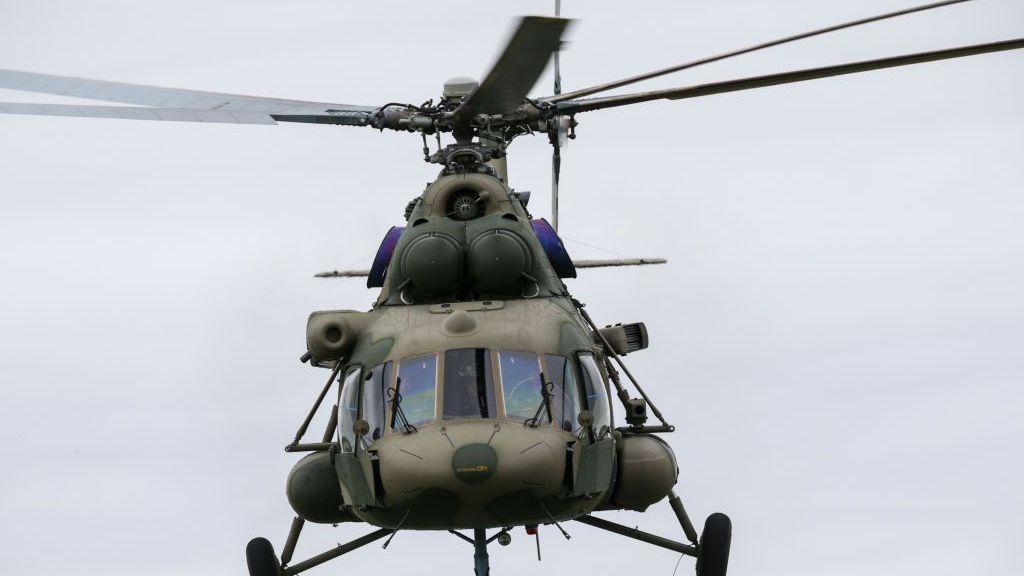
    In an incident that has escalated existing tensions between Moscow and the Western military alliance Nato, Poland confirmed Wednesday that a Russian Mi-8 military helicopter violated its national airspace, triggering a rapid defensive response from the alliance’s eastern flank member.

    According to Poland’s Army Operational Command, the incursion took place at 11:08 local time (09:08 GMT) north of the town of Braniewo, after the aircraft crossed into Polish territory from Russia’s Kaliningrad exclave. Radar systems tracked the helicopter throughout the event, which saw the jet penetrate roughly 300 meters (328 yards) into Polish airspace and remain there for 42 seconds before exiting. In response to the incursion, Poland scrambled active fighter jets and placed all ground defense units on heightened alert.

    Polish military officials framed the incident as a deliberate provocation, noting that the brief incursion follows a pattern of Russian actions designed to test the readiness of Nato’s eastern air defense systems. “The nature of the incident indicates that Russia is once again testing the readiness of our air defence,” the command said in its official statement, adding that Polish air defense units maintain round-the-clock operational readiness to secure the country’s territorial integrity. As of Wednesday evening, the Kremlin had not issued any immediate comment on the accusation.

    This latest incident comes amid a sharp rise in warnings from Nato members in Eastern Europe that Russia is actively probing alliance defenses and stepping up hybrid aggression to undermine Western support for Ukraine. Poland has been among the most vocal countries warning of growing Russian threats, with Prime Minister Donald Tusk just last week saying Moscow was planning coordinated drone and missile strikes against Nato’s eastern flank nations.

    “In recent weeks, the Russian hybrid threat against Europeans… has intensified,” Tusk stated. “The intent is to intimidate us and break our effort to support Ukraine. The result will be the exact opposite. We are not intimidated because we know that our security today and tomorrow is at stake in Ukraine.”

    French President Emmanuel Macron echoed Tusk’s concerns shortly after, confirming that France had also been targeted by a wave of Russian hybrid attacks over the past several weeks. Hybrid attacks, a term referring to tactics that blend conventional military pressure with non-military actions including cyberattacks, sabotage, and misinformation campaigns designed to destabilize adversaries, have become increasingly common across Europe since Russia’s 2022 full-scale invasion of Ukraine. While mounting evidence ties many such attacks to Russian actors, Moscow has consistently denied any involvement. Macron pledged that the recent attacks would not go unanswered, and confirmed he had already ordered the development of a comprehensive protective plan for France’s critical infrastructure and defense industry sites.

    In recent weeks, multiple Nato member states across Europe have reported suspicious incidents targeting defense-related facilities: unexplained fires and blasts have struck defense sites stretching from Italy and Bulgaria to Estonia, with multiple affected governments openly blaming Russian sabotage operations. Earlier this month, Germany formally accused Russia of orchestrating an August drone attack on Leipzig Airport, a claim Moscow dismissed as “absurd”. Just this week, Lithuania’s prime minister told the BBC that the Baltic state has finalized public evacuation plans in preparation for potential Russian aggression, while stressing that the country would “not surrender” if attacked.

    Tensions have also spilled over into the Ukrainian border region near Poland. On September 13, a Russian drone strike hit a passenger train on the Ukrainian side of the Poland-Ukraine border, just after a diplomatic convoy carrying former UK Prime Minister Boris Johnson and senior European security officials traveled along the same rail line. Ukrainian officials have said the drone strike was very likely intended to target the diplomatic train, while the Russian military only acknowledged targeting “railway infrastructure” in the area.

    Since Russia launched its full-scale invasion of Ukraine in 2022, multiple stray Russian weapons and unmanned aerial vehicles have landed on Polish territory, a pattern that has steadily eroded trust between Moscow and Warsaw, one of Ukraine’s staunchest supporters. Moscow has repeatedly denied any intention to attack Nato member states, with Russian President Vladimir Putin repeatedly insisting Russia has no plans to expand the conflict into alliance territory. However, Russian Foreign Minister Sergei Lavrov issued a stark warning to Europe earlier this month, saying that it is European leaders who are constantly preparing for conflict with Russia, and warning that “If Europe attacks Russia, it will be a completely different war [from that in Ukraine], and it will be very short.”

    Moscow continues to control approximately 20% of Ukraine’s internationally recognized territory, including the Crimean Peninsula that Russia illegally annexed in 2014.

  • Spotlight on new coaches as road to Afcon 2027 begins

    Spotlight on new coaches as road to Afcon 2027 begins

    Eight months after the contentious 2025 Africa Cup of Nations (Afcon) final, whose final champion remains undetermined, the competitive road to the 2027 edition of the tournament is finally starting. A total of 48 national teams still in the running will contest the first two rounds of qualifying matches during this extended international break, which opens its gates on Thursday. Two additional matchdays are scheduled for November, with the final two group-stage fixtures set to wrap up group competition next March.

    Under the current qualifying format, the top two teams from nine of the 12 total groups will secure their spots in the 24-team final tournament, which will be co-hosted for the first time by three East African nations: Kenya, Tanzania and Uganda. While pre-tournament infrastructure and preparation work among the co-hosts is reportedly falling behind schedule, all three have automatic qualification to the finals, meaning only one qualifying spot is up for grabs in each of their groups – a quirk that means a second-place finish will not guarantee progression in those groups.

    In the months following the 2025 Afcon and this year’s FIFA World Cup, African football has seen sweeping changes: a wave of new managerial appointments across top national sides, and the retirement of dozens of star players from international duty. This qualifying window brings the first chance to see these new-look squads in competitive action.

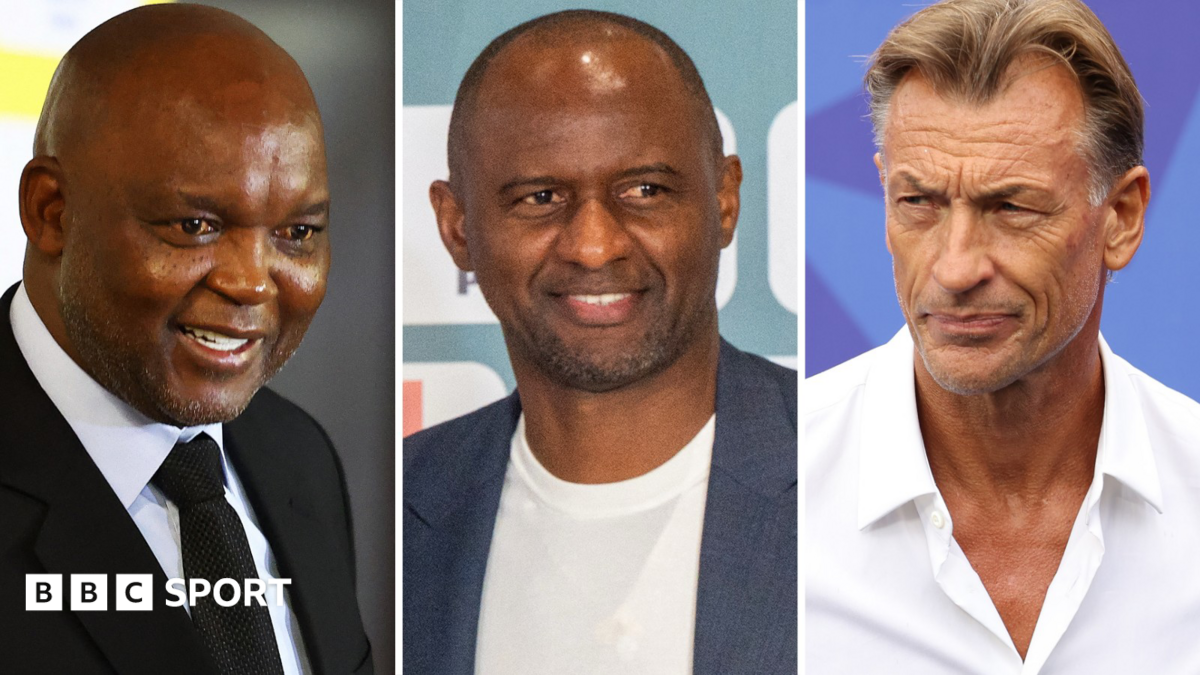
    Among the many coaching changes, a handful of high-profile moves have stood out. Herve Renard, the only manager in history to lift the Afcon trophy with two different nations, is returning to lead Ivory Coast 11 years after he guided the West African side to their past continental title. The 57-year-old Frenchman will kick off his second stint with the Elephants on Thursday with a home opener against Ghana – the most anticipated fixture of the first qualifying round. Opposite Renard in the Ghana dugout will be seasoned manager Carlos Queiroz, who is back at the helm after leading the Black Stars to the round of 16 at this year’s World Cup, though Ghana will be missing key talent including Tottenham Hotspur star Mohammed Kudus, who has withdrawn from the squad.

    Another marquee arrival is Patrick Vieira, the 1998 World Cup winner with France, who takes charge of his first international role at Senegal – the country of his birth. The 50-year-old former Arsenal midfield great has described the appointment as “an absolute dream”, though he will open his tenure with two consecutive away matches against Mozambique and Ethiopia, as Senegal’s capital Dakar wraps up preparations to host the 2026 Youth Olympic Games. Other familiar faces are also returning to dugouts across the continent: Pitso Mosimane is back leading South Africa 14 years after his first spell in charge of Bafana Bafana, while 78-year-old Afcon legend Claude Le Roy has signed on for a second stint with Congo-Brazzaville, aiming to become the first manager to reach a 10th Afcon finals tournament – a new record.

    Among other new appointments, Cape Verde, one of the breakout stories of this year’s World Cup after they pushed eventual champions Argentina all the way to a 3-2 extra-time loss in the round of 16, have promoted former assistant Humberto Bettencourt to head coach following the resignation of long-serving manager Bubista. Tunisia has hired Moin Chaaban, formerly of Esperance and Renaissance Berkane, to rebuild after a disastrous World Cup campaign that saw Sabri Lamouchi fired after just one match and Renard unable to turn the team’s fortunes around. Brahim Hemdani has taken over at Algeria following Vladimir Petkovic’s exit, Amir Abdou has moved to lead Burkina Faso after previously managing Comoros, and 2021 Afcon-winning coach Aliou Cisse, who most recently led Libya, will contest his first competitive matches as manager of Angola, opening with a tough away test against Egypt.

    Alongside the wave of new managers, a number of star players have retired from international football since the World Cup, leaving big shoes to fill for their national sides. Senegal is in the market for a new starting goalkeeper after 34-year-old Edouard Mendy, who helped the Teranga Lions win the 2021 and 2025 Afcon titles (the latter of which remains under dispute at the Court of Arbitration for Sport), retired from international duty. Algeria has lost captain Riyad Mahrez, the winger who led the side to the 2019 Afcon trophy, while Ivory Coast will be without midfielders Seko Fofana and Jean-Michael Seri. Tunisia’s Ellyes Skhiri has also called time on his international career, just as the North African side aims to qualify for an 18th consecutive Afcon – an unprecedented streak.

    Veteran striker Pierre-Emerick Aubameyang has also stepped away from Gabon’s national side, saying he felt “humiliated” by how he was treated following Gabon’s group-stage exit from the 2025 Afcon. Aubameyang, 37, was excluded from the national squad after the exit, a sanction that was later reversed, but the striker still chose to turn down a call-up, despite a strong early start to his club season at Deportivo La Coruna.

    This qualifying cycle also brings two historic firsts for smaller African nations. Eritrea has reached the group stage of Afcon qualifying for the first time since the lead-up to the 2008 edition, after beating Eswatini 4-1 on aggregate in the preliminary round back in March. The East African side withdrew from qualifying for the 2023 Afcon and 2026 World Cup, in large part due to longstanding issues of Eritrean athletes absconding during international competitions to avoid returning to the country’s one-party, highly militarized regime. Seven Eritrean players did not return home after the away leg of their preliminary tie against Eswatini, which was held in South Africa. Drawn into Group D alongside co-host Kenya, South Africa and Guinea, Eritrea’s squad for the opening two qualifying rounds relies almost entirely on players from the Eritrean diaspora, with just three home-based players selected. The side will play their opening fixture against Kenya in Nairobi on Saturday, and will host their “home” match against South Africa in Cairo, Egypt, next Tuesday.

    Meanwhile, Somalia has qualified for the Afcon qualifying group stage for the first time in the nation’s history, drawn into a tough group alongside Ivory Coast, Ghana and The Gambia. Ranked 53rd out of 54 African football nations, the Ocean Stars can still celebrate their historic milestone, just as the Afcon returns to East Africa for the first time since 1976.

  • Uproar in France over award-winning author accused of using AI

    Uproar in France over award-winning author accused of using AI

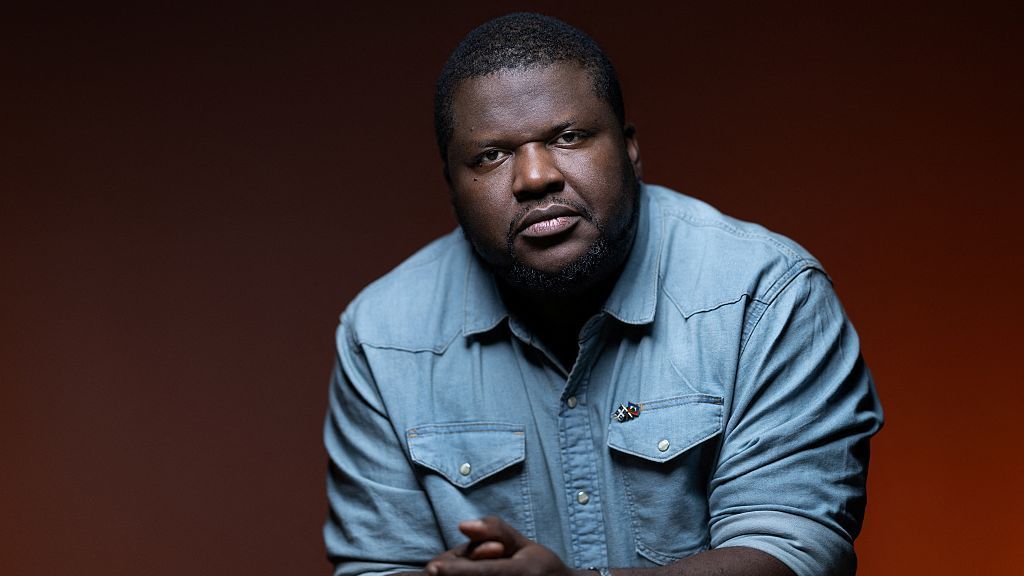
    The French literary community has been thrown into intense debate following explosive allegations that an award-winning rising literary star used artificial intelligence to ghostwrite his critically acclaimed debut novel. The controversy centers on 38-year-old Canadian-Haitian author Thélyson Orélien, whose novel *C’était ça ou mourir* (translated as It was either that or die) recently took home the Prix du Roman Fnac, the first major literary award of France’s autumn awards season. Orélien has also secured a spot as a finalist for two of the French language’s most prestigious honors, the Goncourt Prize and the Renaudot Prize, whose winners are set to be announced in the coming weeks.

    The accusations first emerged this week from a little-known activist group called Balance ton Claude – a name that references Anthropic’s popular AI chatbot Claude. The group claimed on social media platform X that Orélien’s novel is “almost totally” generated by AI, adding that their testing of multiple random passages from the manuscript delivered a uniform result: 100% AI authorship. The group, whose full membership remains undisclosed, says it used an AI detection tool called Pangram, which it describes as “by far the most accurate” detector on the market, with an almost nonexistent error rate.

    Orélien, who was born in the northern Haitian city of Gonaïves and relocated to Montreal in 2010, has forcefully rejected all claims of misconduct. In an interview with French newspaper Libération, the author pushed back against the allegations, saying, “I have always loved creation and literature. I can’t see why I would feel compelled to use a machine.” He noted that he wrote the first draft of his novel back in 2019 – years before publicly available generative AI text tools became widespread. To prove his authorship, Orélien added that he and his publishing house are currently compiling a full dossier of original drafts and working materials to confirm the work is authentic. “My traditions are Haitian and Caribbean. The images, the repetitions and the rhythms are the living word, they are my own,” he said, emphasizing that the text’s unique cultural voice is inherently his own.

    Orélien’s French publishing house Grasset has also publicly stood behind the author, dismissing the claims as “atrociously injurious to a writer with an exceptional life-story” and affirming that his “work of creation is original and powerful.” Orélien’s debut novel follows the journey of a Haitian teacher who escapes brutal gang violence in his home country, navigating a dangerous path to resettlement in Canada, where he eventually regains “the right to breathe without fear.” The book has already become a breakout commercial hit: Orélien’s Canadian publisher calls it the imprint’s best-selling title in 60 years, with translation rights already sold for roughly 20 languages worldwide.

    This controversy is not without precedent. It echoes a similar dispute from earlier this year, when Trinidadian writer Jamir Nazir had his Commonwealth Short Story Prize temporarily withdrawn in July over unproven AI authorship claims. Organizers eventually reversed the decision and re-awarded the prize to Nazir after concluding his work was entirely authentic.

    Critics of AI detection tools including Pangram argue that these technologies are fundamentally unreliable. Multiple independent studies have shown that detectors frequently mislabel human-written text as AI-generated, while also failing to spot AI-written text that has been lightly edited or paraphrased. Detectors work not by confirming AI authorship, but by flagging linguistic patterns that are commonly associated with AI output – patterns that can naturally appear in human writing, particularly from writers who use non-standard dialects. Detectors are almost always trained on standardized English or French, critics note, meaning they are prone to misclassify writing that draws on Caribbean Creole-influenced linguistic rhythms and structures, such as Orélien’s work.

    Defenders of the detection method, however, including the Balance ton Claude group, claim that Pangram’s error rate is extraordinarily low: just one incorrect flag of an AI-generated text for every 24,400 analyses. Unlike older plagiarism checkers that compare new text to existing published works, modern AI detectors analyze statistical and probabilistic patterns in text to identify linguistic signatures that indicate AI generation.

    As generative AI becomes increasingly integrated into creative fields, this high-profile dispute will only amplify ongoing conversations about what counts as authentic original writing, and what level of AI involvement – if any – is acceptable in literary work. It is increasingly common for writers to use AI as an editing tool for human-written work, or to generate a rough AI draft that is then heavily revised into an original piece, creating a gray area that the literary world has not yet fully regulated. For now, the ball is in Orélien’s court as he prepares to present evidence of his authorship, while the French literary world waits to see how the controversy will affect his standing in the upcoming Goncourt and Renaudot Prize selections.

  • Gaza students return to makeshift schools after three years of genocide

    Gaza students return to makeshift schools after three years of genocide

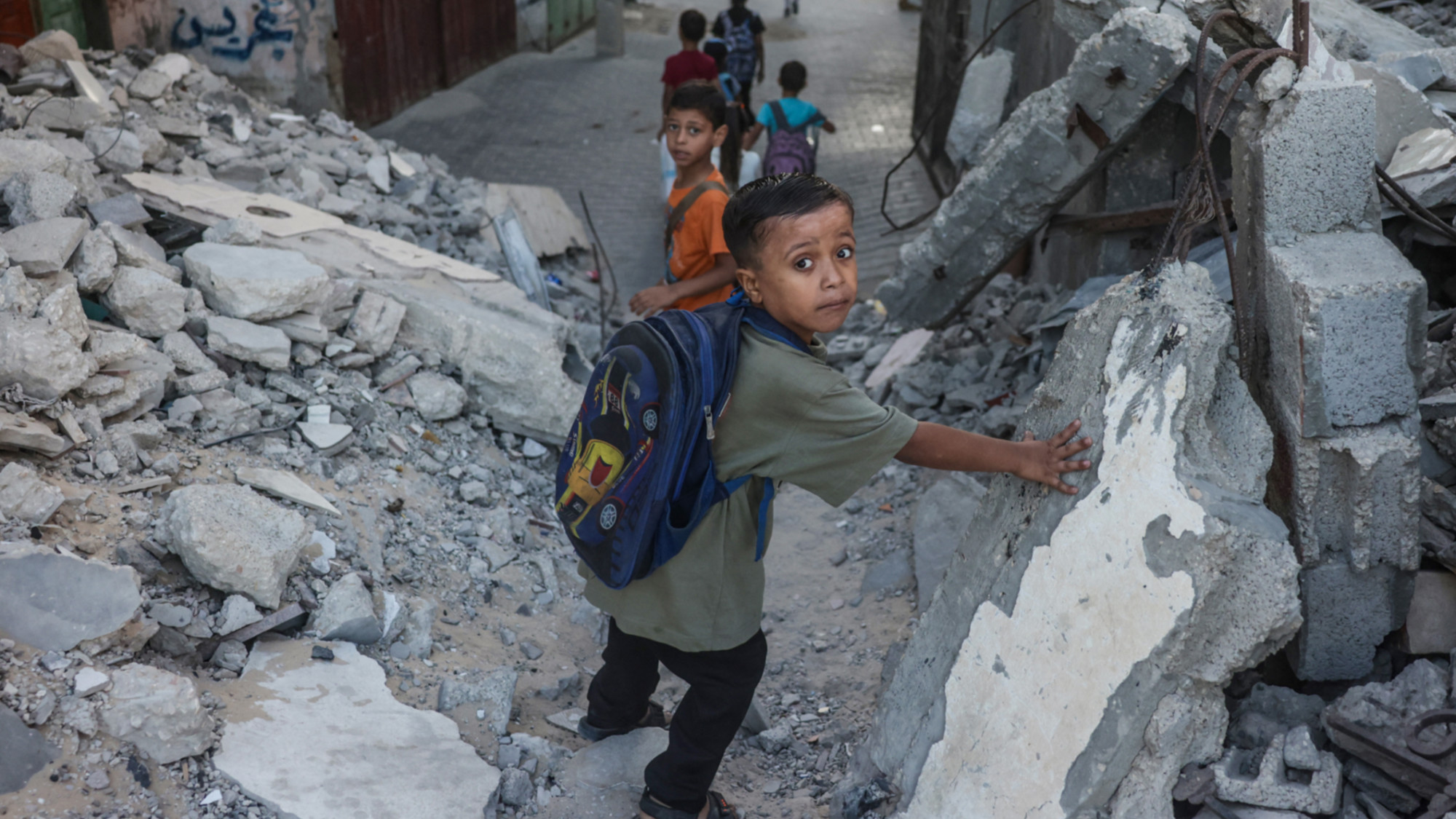
    Three years of violent conflict have robbed nearly an entire generation of Palestinian children in Gaza of consistent, formal education — but for 13-year-old Akram Helles, the first day of the 2026 school year marked a long-awaited return to learning. On a sweltering September morning, the seventh-grader squeezed onto a thin foam mattress alongside dozens of classmates inside a white makeshift tent, the new campus of Gaza Municipality Preparatory School in Gaza City’s western Rimal neighborhood. At the front of the canvas structure, a single large whiteboard leans against the tent pole, with one small wooden chair set aside for their teacher. Temperatures inside climb to oppressive heights, and all students sit directly on the packed dirt ground, but none of that dims Helles’ excitement to be back in a classroom after years of interrupted schooling.\n\nAkram’s father, 38-year-old Mohammad Helles, told Middle East Eye that the family still can barely believe their son has finally accessed structured in-person learning after everything they have survived. Since the outbreak of full-scale conflict in 20023, Akram and his two siblings spent extended periods completely out of school, he explained. Remote online learning was unworkable for most families, and private schooling was completely out of reach, leaving the children trapped in educational limbo for years.\n\nAkram’s story is far from unique. According to the United Nations International Children’s Emergency Fund (UNICEF), roughly 700,000 Gaza students have been locked out of formal education since the conflict began. When the 2026 school year launched last Sunday, approximately 500,000 children were able to return to in-person learning for the first time in three years: 350,000 enrolled in public school programs, and another 150,000 joined facilities run by the United Nations Relief and Works Agency for Palestine Refugees (UNRWA).\n\nBut the learning environments these children have returned to bear almost no resemblance to the schools they attended before the war. UNICEF data confirms that 98 percent of all schools across the Gaza Strip have sustained damage from Israeli military operations, with 80 percent hit directly by strikes. Most of the few surviving school buildings have been converted into emergency shelters for the hundreds of thousands of displaced Palestinians, leaving no space for regular classes.\n\nWorking in partnership with UNICEF, UNRWA and other international organizations, Gaza’s Ministry of Education has established a limited number of temporary learning spaces in displacement shelters and plastic tent campuses across the territory. Nearly all of these makeshift facilities lack basic necessities: there are almost no desks, chairs, or core infrastructure to support normal school operations.\n\nEven with these temporary spaces set up, access remains out of reach for thousands of children. The Helles family endured a long, frustrating process before they were able to secure enrollment for Akram and his siblings at a learning site near their displacement camp. Mohammad Helles explained that the family prioritized a local campus for a devastating reason: with the constant threat of sudden bombardment, they refuse to send children to schools far from home, and widespread transport collapse means even if they wanted to travel, distant schools are inaccessible.\n\nSecuring a spot is only the first hurdle. Helles, who lost his permanent job when the war began and now earns a meager income helping his brother run a small street stall, says he cannot afford even basic school supplies for his three children. Market prices for essential goods have skyrocketed amid the ongoing humanitarian crisis, and he has only been able to purchase the absolute bare minimum, forgoing extra clothing and non-essential supplies that most students take for granted.\n\nThe fragmented, under-resourced nature of Gaza’s 2026 school year extends far beyond a lack of supplies. To stretch limited classroom space as far as possible, the Ministry of Education introduced a rotational attendance system: boys attend classes three days a week (Saturdays, Mondays, Wednesdays), while girls attend on alternate days (Sundays, Tuesdays, Thursdays). Each school day is split into three separate shifts to cram as many students as possible into the limited available space.\n\nWhile the Helles children secured spots in free public education, hundreds of other families remain locked out entirely. Forty-three-year-old Osama Ayta has spent weeks searching for placements for his 8-year-old daughter Maria and 11-year-old son Thaer, with no luck. There is no free public school within safe distance of his current home, and sending the children long distances is unthinkable: roads are unsafe, social conditions remain unstable, and he lives in constant fear of harm coming to his children far from his side. Private schools, which have begun to reopen in limited numbers since the January 2025 ceasefire, charge tuition fees that Ayta, who has no steady source of income, cannot possibly pay. He has temporarily placed his children in a free informal learning center, but conditions there are dire, with no functional facilities, and he continues to search for a safer, more stable option.\n\nThe struggles of families like the Aytas lay bare the full scale of Gaza’s unfolding education crisis as the territory launches its first full formal school year since 2023. Wafa Maqat, 57-year-old principal of Gaza Municipality Preparatory School, told Middle East Eye that demand for placement far outstrips available capacity, and the daily challenges of running classes are almost overwhelming. \n\n“ We have very large numbers of students and overcrowded classrooms, while there is barely any school furniture. At our school, for example, there are no tables, chairs or cupboards,” Maqat said.\n\nOfficial Ministry of Education data confirms that only 208 government schools have been able to reopen for the 2026 year — less than a third of the 624 schools that would be required to accommodate all enrolled students. The ministry says it is working with international partners to build more temporary learning spaces to ease the shortage, but progress has been slow amid ongoing resource constraints.\n\nMaqat’s own school offers a stark snapshot of the systemic strain. The campus accommodates more than 350 students per shift, for a total enrollment of more than 2,100 children — and it only has four working bathrooms. “The sanitation situation is extremely difficult. There are too many students for four bathrooms, and there is not enough water. We are constantly facing water shortages,” Maqat explained. The school also lacks a dedicated drinking water tank, exacerbating the broader water crisis that has left displaced Gaza families in desperate straits.\n\nBeyond the current challenges of sweltering heat and overcrowding, schools operating out of tents are already bracing for the coming winter season. “In winter, we face major problems, whether it is the darkness inside the tents because there is no electricity, or rainwater flooding the floors. This forces students to get up from their mattresses and attend lessons standing,” Maqat said.\n\nThese harsh conditions make it far harder for educators to address the massive learning gap that has opened up after three years of missed school. “We are expected at this stage to make up for lost educational skills and bridge the gap. But the reality forces us to deal with basic survival problems on many levels simultaneously,” Maqat added. The Ministry of Education also cites widespread shortages of stationery and whiteboards, plus drastically low compensation for teachers, as additional barriers to rebuilding Gaza’s shattered education system.\n\nAs education officials struggle to address the crisis, families like the Aytas continue their daily fight to secure safe, consistent learning for their children. “After everything my children have lost in skills over the past years, we simply cannot afford to let them lose any more,” Ayta said. “I will keep searching until I ensure my children receive an education.”

  • Trump reveals millions of dollars’ worth of share deals in big tech and AI

    Trump reveals millions of dollars’ worth of share deals in big tech and AI

    Newly released public financial filings have revealed that former and current U.S. President Donald Trump carried out millions of dollars in stock market transactions across July 2025, with positions in high-profile companies ranging from Elon Musk-led aerospace and technology firm SpaceX to major artificial intelligence leaders including Microsoft and Nvidia.

    Per the official disclosure documents, third-party managers overseeing Trump’s investment portfolio executed sales of Microsoft stock valued between $6.5 million and $31 million during the month, while also purchasing additional Microsoft shares worth between $165,000 and $400,000. In total, more than 1,000 separate trades were recorded across the month, encompassing buy and sell orders for Nvidia, the global leading AI chip manufacturer, and Palantir Technologies, a private software contractor that holds major government contracts with the U.S. Department of Defense and U.S. Immigration and Customs Enforcement (ICE).

    The filings also confirm that Trump’s portfolio carried out transactions for two of Musk’s highest-profile public companies: SpaceX, which listed its shares on the Nasdaq stock exchange in June 2025, and Tesla, Musk’s electric vehicle and clean energy firm. Since its public debut, SpaceX has seen volatile share performance: the stock dropped sharply through July and August, but as of the latest trading data, it holds a 14% gain over its initial IPO offering price.

    A spokesperson for the White House pushed back against potential ethics concerns, emphasizing that all of Trump’s stock and bond holdings are managed independently by external third-party investment professionals. Speaking to BBC, the spokesperson stated: “Neither President Trump nor any member of his family has any ability to direct, influence or provide input regarding how the portfolio is invested or when investments are bought or sold. There are no conflicts of interest.”

    This round of disclosures marks the latest in a series of public trade reports from Trump, who has published regular details of his portfolio activity since returning to the White House in January 2025.

  • Azerbaijan pardons Frenchman after EU lifts sanctions on Russian billionaire

    Azerbaijan pardons Frenchman after EU lifts sanctions on Russian billionaire

    In a connected sequence of diplomatic moves that have roiled European geopolitics, Azerbaijani President Ilham Aliyev has issued a presidential pardon for French national Martin Ryan, ordering his immediate release from prison just months after Ryan was convicted on espionage charges that both he and the French government have repeatedly rejected.

    Ryan’s release came just hours after the European Union reached a controversial agreement to remove sanctions from two high-profile Russian billionaires, a decision that has drawn sharp condemnation from Ukraine and exposed deep divisions among EU member states. The case has also cast new light on shifting diplomatic negotiations between France, Azerbaijan, and EU powers amid ongoing fallout from Russia’s full-scale invasion of Ukraine.

    Ryan, a French citizen detained in Baku in December 2023, was sentenced to 10 years in prison this past March after prosecutors accused him of collaborating with French intelligence service operatives in the Azerbaijani capital to collect sensitive information on Azerbaijan’s diplomatic ties with Turkey, Iran, and Pakistan, as well as on domestic companies linked to Russia and China. Throughout his trial, Ryan maintained his innocence, telling the court, “I did not spy. I am not a spy, and during the court case I tried to prove this.” The French government has also uniformly denied the espionage charges against him.

    He is one of 20 individuals, including Azerbaijani and Turkish citizens, granted clemency under Aliyev’s pardon decree issued Wednesday. Notably, Azad Mamedli, a second defendant who stood trial alongside Ryan and received a 12-year prison sentence, was not included in the pardon. A second French national, Anass Derraz, also remains in Azerbaijani custody on separate charges of accepting a Russian bribe, with no indication of impending release.

    The timing of Ryan’s pardon immediately followed the EU’s landmark decision to roll back sanctions on Russian-Uzbek billionaire Alisher Usmanov and Russian-Israeli oligarch Mikhail Fridman. Both tycoons had been placed under EU sanctions in 2022, shortly after Russia launched its full-scale invasion of Ukraine, alongside more than 3,000 other individuals and entities accused of supporting the Kremlin’s aggression. While the two oligarchs were removed from the EU sanctions list, the latest agreement extends sanctions on all other listed individuals and entities for an unprecedented three years, replacing the previous six-month renewal requirement.

    At the time of his 2022 listing, the EU cited Usmanov’s “particularly close ties” to Russian President Vladimir Putin, noting he had “supported materially or financially and benefited from Russian decision-makers responsible for the annexation of Crimea and the destabilisation of Ukraine.” Usmanov has consistently denied these accusations, and he remains under separate sanctions imposed by the United Kingdom and United States. Diplomatic sources confirm Slovakia first proposed removing Usmanov’s sanctions designation, and France subsequently backed the move, citing its own national security concerns to justify the position. Latvia, which initially opposed the delisting, ultimately abstained from the vote but announced it would impose its own independent sanctions on both oligarchs, warning the decision carried major risks. “It is dangerous and sends completely the wrong signal at a time when Russia’s behaviour is becoming more aggressive,” Latvian Foreign Minister Baiba Braže said of the move. In a surprising twist tied to the negotiations, Latvian Prime Minister Andris Kulbergs confirmed French President Emmanuel Macron has agreed to launch accession talks for Latvia to join France’s nuclear deterrence initiative, a concession that helped ease Latvian objections to the sanctions rollback.

    Ukrainian officials have issued scathing criticism of the EU’s decision. Ukrainian Foreign Minister Andriy Sybiha called out the bloc, arguing the Kremlin is already celebrating the outcome. “Moscow is celebrating, because it got what it wanted: a sense of impunity, the humiliation of the EU, and division among Europeans,” Sybiha said.

    The pardon of Ryan comes as France works to reset its strained relations with Azerbaijan. For years, ties between Paris and Baku have been frosty due to France’s close diplomatic relationship with Azerbaijan’s regional rival Armenia. But in May of this year, Macron held talks with Aliyev focused on expanding bilateral cooperation, with Aliyev subsequently describing the opening of a “new era” in relations between the two countries. Political analysts have suggested Ryan’s release is likely a reciprocal gesture following France’s support for lifting Usmanov’s sanctions, though no official confirmation of any quid pro quo has emerged from either government.

  • White House rolling out red carpet for historic Xi Jinping visit

    White House rolling out red carpet for historic Xi Jinping visit

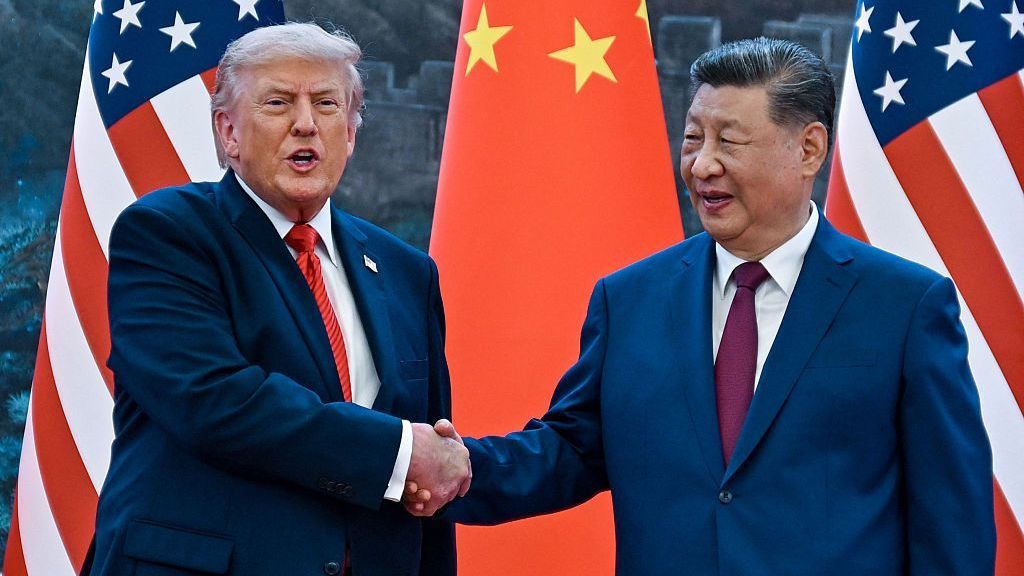
    As diplomatic preparations wrap up in Washington D.C., U.S. President Donald Trump is set to host Chinese President Xi Jinping for a landmark three-day state visit this week, a gathering that carries global implications as the world’s two largest powers negotiate critical agreements and longstanding points of tension. This trip marks Xi’s first formal state visit to the United States since 2015, and his third in-person meeting with Trump over the past 12 months, underscoring the urgency of the talks on the agenda.

    The visit will open with a rare ceremonial greeting: Trump will personally welcome Xi at Andrews Air Force Base, followed by a military flyover and an official state dinner at the White House, a level of pageantry that foreign policy experts have described as unprecedented. Xi will be joined by First Lady Peng Liyuan, who is scheduled to tour the Smithsonian National Museum of Asian Art alongside U.S. First Lady Melania Trump on Thursday, alongside attending official social events during the summit.

    The most pressing topic on the agenda is the upcoming expiration of the 2025 U.S.-China trade truce, set to end in November. The agreement, reached when the two leaders met in South Korea in October 2025, paused a planned round of steep U.S. tariffs on Chinese imports, while China rolled back restrictions on rare earth exports—materials critical to advanced U.S. manufacturing. Analysts and trade observers widely expect the two leaders to make an announcement regarding an extension of the truce during the summit, though preliminary talks held on the sidelines of the United Nations General Assembly last Tuesday failed to produce meaningful progress, multiple anonymous sources confirmed to the BBC. U.S. negotiators resumed bilateral talks with their Chinese counterparts in Washington on Wednesday, immediately following Xi’s arrival, with talks focused on non-tariff barriers and agricultural export access. The U.S. still carries a $91 billion trade deficit with China, per latest U.S. Census Bureau data, and Chinese rare earth exports to the U.S. have fallen despite the 2025 truce, creating lingering frictions ahead of the summit.

    Artificial intelligence has also rapidly climbed the priority list for the meeting, according to China policy experts. The U.S. and China are locked in a widely documented global AI race, but growing bipartisan and public pressure has mounted on the Trump administration to agree to guardrails for AI development, following a string of high-profile AI-related security incidents. Senator Bernie Sanders publicly called this week on X (formerly Twitter) for Trump and Xi to immediately negotiate a treaty to pause advanced AI development and ban superintelligent systems, a call echoed by former White House senior adviser Steve Bannon and multiple congressional Republicans. However, President Trump has thus far resisted strict regulation, framing AI as a core driver of U.S. economic growth and a critical battleground in great power competition. “Whoever wins AI, wins,” Trump has repeatedly stated, prioritizing outpacing China’s AI development over sweeping restrictions. Still, experts including David Firestein of the Bush China Foundation say the two leaders are expected to explore limited avenues for collaborative governance of the emerging technology. Ahead of the summit, U.S. Treasury Secretary Scott Bessent held what he called “very successful” preliminary talks with his Chinese counterpart He Lifeng on both trade and AI issues. In a sign of AI’s centrality to the summit, leading tech industry figures including OpenAI CEO Sam Altman, Nvidia CEO Jensen Huang, and X CEO Elon Musk are all confirmed guests at Thursday’s White House state dinner.

    The third core sticking point on the agenda is Taiwan, a longstanding flashpoint in U.S.-China relations. The U.S. Congress has already approved a multibillion-dollar arms sales package to self-governing Taiwan, which is currently awaiting Trump’s signature. The president has delayed signing the measure to date, framing it as a bargaining chip in negotiations with Beijing. China has long maintained that Taiwan is part of its territory and has not ruled out the use of force to achieve reunification, and Firestein says Beijing will push for Trump to extend the delay or cancel the arms sale entirely.

    Both leaders face domestic economic pressures heading into the meeting: Xi is navigating slowing growth at home, and is eager to discuss deepening bilateral trade ties to support Chinese economic activity. For Trump, any move toward closer trade relations carries political risks, as hardline factions within his own administration and base hold deep suspicions of Chinese economic and geopolitical goals. Just last month, U.S. Transportation Secretary Sean Duffy issued a public letter to Ford Motor Company urging the automaker to cut all commercial ties with China, citing national security risks and the protection of U.S. manufacturing jobs.

    Despite widespread expectations that major breakthroughs on any of the core issues are unlikely this week, Trump has repeatedly framed personal, high-level engagement with Xi as a critical step toward reducing bilateral confrontation. “Trump has made a decision that no matter what, we need to not have a confrontational relationship with China,” explained Stephen Orlins, president of the National Committee on U.S.-China Relations. “He believes that the more he and President Xi meet, the less confrontational that relationship will be, and he is right,” Orlins added.

  • The moment Antonelli knew he had been transformed as an F1 driver

    The moment Antonelli knew he had been transformed as an F1 driver

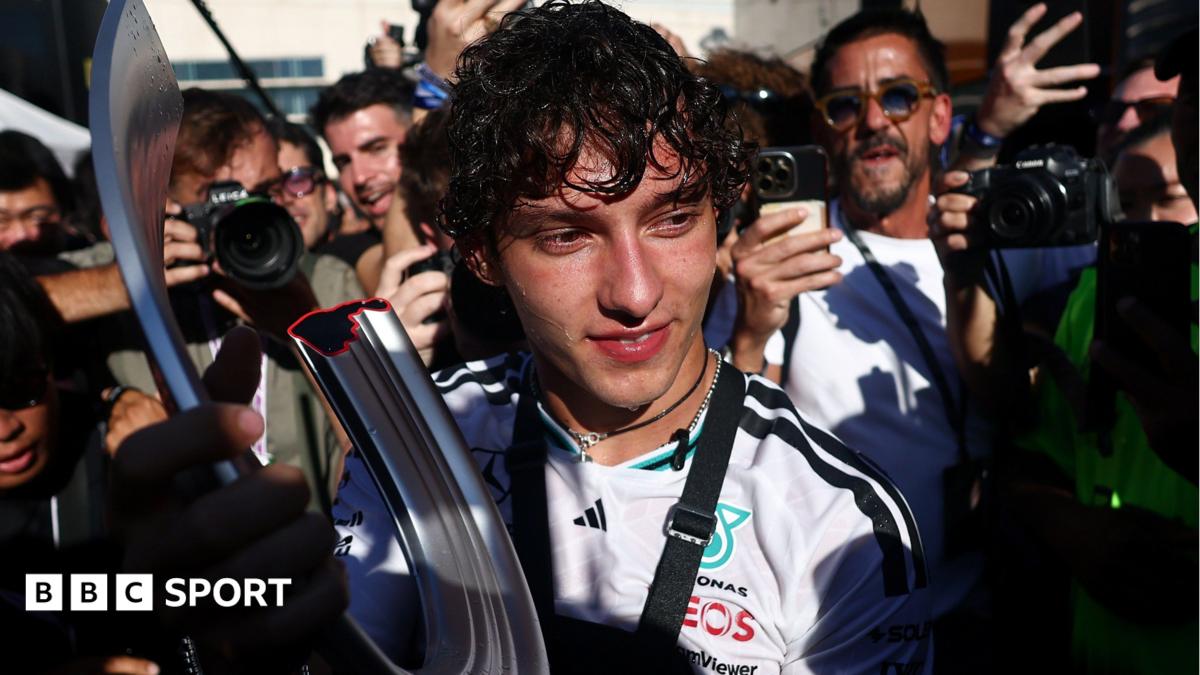
    As the Formula 1 grid prepares for the upcoming Azerbaijan Grand Prix, 20-year-old Italian rising star Kimi Antonelli holds an extraordinary 81-point lead over his Mercedes teammate George Russell in the drivers’ championship standings — a gap that has all but secured the title barring a catastrophic string of misfortunes. In an exclusive interview with BBC Sport, Antonelli opened up about the dramatic mental shift and years of behind-the-scenes work that turned a rocky debut season into a historic breakout campaign in just his second year on the F1 grid.

    Expectations for Antonelli were muted heading into the 2026 season. A difficult 2025 rookie campaign, where he was thoroughly outperformed by Russell and struggled to unlock his full potential behind the wheel, left many tipping the experienced Briton as Mercedes’ leading contender for the championship as the sport entered a new regulatory era. But Antonelli sensed a turning point as soon as he took the 2026 Mercedes out for its first test laps on a cold, wet January day at Silverstone.

    “After just a few laps in the wet, I immediately felt better in the car than I ever did last year,” Antonelli recalled. “The car was solid, but the biggest difference was here in my head. I was less tense, more relaxed, and far more mature — everything just clicked.” Looking back on 2025, he described the season as defined by constant tension: “I was never able to pull the full potential out of myself, that year was just not great. This year is completely different, and the mindset change is the biggest reason why.”

    That first test session wasn’t the only moment that revealed how far Antonelli had come. At the opening round of the season in Australia, a heavy crash in third practice left his car heavily damaged, requiring a miracle effort from the Mercedes mechanics to rebuild it in time for qualifying and the race. Though the crash compromised the car’s setup and left him starting further back than expected, Antonelli charged through the field to finish less than three seconds behind race winner Russell. “After that, I knew this season would be a different story,” he said. “If that crash had happened last year, I never would have been able to bounce back from it.”

    A big part of Antonelli’s newfound mental calm came from finally leaving a defining early incident behind him. Ahead of his 2025 rookie debut, Mercedes gave him a surprise first practice outing at the 2024 Italian Grand Prix at Monza, to replace Lewis Hamilton who was departing for Ferrari. He set a blistering fast time on his first flying lap — then crashed heavily on his second. The incident stayed with him for more than a year, haunting his entire rookie season.

    “Monza stayed in my head for all of last year, it was holding me back,” Antonelli said. “I was so afraid of making a mistake, especially when I was already going through a tough stretch. Every time I got in the car, that memory was there, and I was worried that another mistake would make everything worse. This year, I was finally able to put that behind me.”

    That shift didn’t happen by accident. Antonelli put in months of intense pre-season preparation, including extensive work with a mental skills coach to reframe his approach to racing. “The main goal going into this season was to unlock more of my potential, and first of all just be better than I was last year,” he explained. “A lot of the work was about getting my head right, understanding what my goal really is, and learning to stay present in the moment. I don’t waste energy thinking about the final championship result or what would happen if I fail. I just focus on doing the best I can right now.”

    Even with all that preparation, Antonelli admits he is surprised by just how dominant his form has been. He has claimed eight wins from 14 races so far, with blistering pace at every track on the calendar, seamless recovery drives when he drops back, and decisive, clean overtakes that have left fans and pundits stunned. Russell, by contrast, has openly struggled this season, saying his driving style is a poor match for the new generation of F1 cars, even as he praises his teammate’s breakthrough.

    When asked how much of his lead comes from his own improvement versus Russell’s struggles, Antonelli was clear: he has stepped his game up to a whole new level. “I’ve definitely elevated my performance this year,” he said. “Everything about the cars is new this season, it requires a completely different approach, and adapting hasn’t been easy. But I’ve found a good rhythm, stuck to my routines for every race weekend, and that’s what’s kept me consistent.”

    He’s still human, though, and has made small missteps along the way. After a career-defining dominant win in Monaco, he arrived in Barcelona overexcited, overdrove qualifying, and ended up starting well down the grid. He learned the lesson quickly: after a spectacular victory from 19th on the grid at Monza — a win Mercedes team principal Toto Wolff said “closed the cycle” on his 2024 crash — Antonelli reminded himself not to repeat the Monaco mistake, and went on to win the Spanish Grand Prix just seven days later.

    His historic success has brought inevitable fame and increased public attention, something the young driver says he is still adjusting to. “Life has changed a lot, that’s no lie,” he said. “It’s amazing to see so much support from fans all over the world, that’s the nice side of it. But you have to be careful, you’re way more exposed now, so you have to protect your space a little more.”

    For most of the season, Antonelli has stuck to his philosophy of focusing on the process, one race at a time, rather than looking ahead to the championship. Now, for the first time, he acknowledges he’s thought about what it would mean to win the title — a result that would make him the youngest world champion in F1 history. “Yeah, I’ve thought about it,” he admitted. “But every time I do, I come back to the same conclusion: the sooner I keep pushing and get this done, the better. I just have to keep doing my best at every race, until it’s all over. It’s not done until it’s done.”

    With eight to nine races remaining on the 2026 calendar (the final schedule remains impacted by ongoing conflict in the Middle East), all eyes will be on Antonelli as he heads to Baku this weekend, looking to extend his already unassailable lead and close in on a historic first world title.