博客

  • Asian shares mostly rise as oil prices fall and hope grows for AI

    Asian shares mostly rise as oil prices fall and hope grows for AI

    In early trading on Wednesday, most Asian equity markets posted gains, as investors closely monitored diplomatic negotiations aimed at reopening the Strait of Hormuz — a critical global shipping chokepoint that remains largely closed following the outbreak of war in Iran.

    Global enthusiasm around artificial innovation continued to lift a number of regional technology stocks, while sliding crude oil prices injected fresh optimism into major oil-importing economies including Japan, which relies on foreign purchases for nearly 100% of its energy needs. Japan’s benchmark Nikkei 225 climbed 0.6% to 66,227.55 during morning session trading. Meanwhile, South Korea’s Kospi outperformed regional peers with a 1.6% jump to 6,849.92, Hong Kong’s Hang Seng gained 0.8% to 25,712.29, and China’s Shanghai Composite posted a modest 0.7% rise to 3,917.04. Australia’s S&P/ASX 200 was the only major index to trend downward, dipping 0.2% to 9,142.60.

    Oil prices extended their downward trend through early Wednesday, with benchmark U.S. crude falling $2.06 to settle at $80.30 per barrel. International benchmark Brent crude dropped $2.31 to $86.27 a barrel. Brent saw extreme volatility last month, swinging between $72 and $102 per barrel as investor hopes for a U.S.-Iran negotiated deal rose and fell amid escalating tensions. Tensions between Washington and Tehran climbed higher recently after the Trump administration unveiled a new round of economic sanctions designed to further pressure Iran’s struggling economy.

    Diplomatic efforts to de-escalate conflict and reopen the strategic waterway gained momentum this week. Top diplomats from Iran and Oman met Tuesday to discuss a phased plan for restoring commercial ship traffic through the strait. The talks followed a recent attack that left an oil tanker disabled off the coast of Oman, a stark reminder of the persistent safety risks facing shipping operators that attempt to traverse the waterway while it remains under Iranian control. In a parallel diplomatic push, a Pakistani delegation held discussions with Iran’s president to restart negotiations aimed at ending the U.S.-Iran conflict. Pakistan’s Interior Minister Mohsin Naqvi described the meeting with Iranian President Masoud Pezeshkian as “very positive and productive,” per comments shared by the Pakistani military.

    Beyond energy and geopolitics, the global AI sector remained a key driver of market momentum. On U.S. markets, chipmaker Nvidia — one of the biggest beneficiaries of the AI boom, which is scheduled to release its latest quarterly earnings report Wednesday — led gains with a 2.2% rise. The uptick came one day after a 2.9% drop for the stock, which had been the largest drag on the S&P 500 in the prior session.

    Eric Schiffer, CEO of the Los Angeles-based investment firm Patriarch Organization, argued that long-term demand for AI technology will continue to grow despite near-term market fluctuations, as both private companies and governments view AI investment as a non-negotiable requirement to maintain global competitiveness. “There’s a lot of fear about AI. Those fears are based on the financing side, meaning that there is so much money that needs to be raised. What it’s underrating, in my opinion, is the fact that this technology is so incredible,” Schiffer said. AI stocks have seen sharp volatility through the summer, as investors weigh concerns that valuations have risen too quickly and that the AI boom may prove unsustainable over the long term.

    U.S. bond markets also saw movement this week, with the yield on 10-year Treasury notes falling to 4.63%, down from 4.70% on Monday and 4.74% at the end of last week. While this represents a notable shift for the bond market, the 10-year yield remains well above the 3.97% level recorded before the Iran war sent oil prices and inflation concerns soaring. By the close of trading, the S&P 500 gained 24.42 points to reach 7,677.28, the Dow Jones Industrial Average added 160.24 points to hit 53,577.40, and the Nasdaq composite climbed 171.11 points to 26,151.30.

    In foreign exchange markets, the U.S. dollar edged slightly lower against the Japanese yen, falling to 159.02 yen from 159.20 yen in the prior session. The euro also slipped modestly, trading at $1.1669 compared to $1.1675 at the previous close.

  • Major childcare provider Edge Early Learning in voluntary administration, separate centre in Melbourne shut

    Major childcare provider Edge Early Learning in voluntary administration, separate centre in Melbourne shut

    Thousands of families across Australia have been thrown into chaos this week following dual disruptions in the early childcare sector, where one major national provider entered voluntary administration and an independent Melbourne centre shut its doors abruptly with less than a day’s notice.

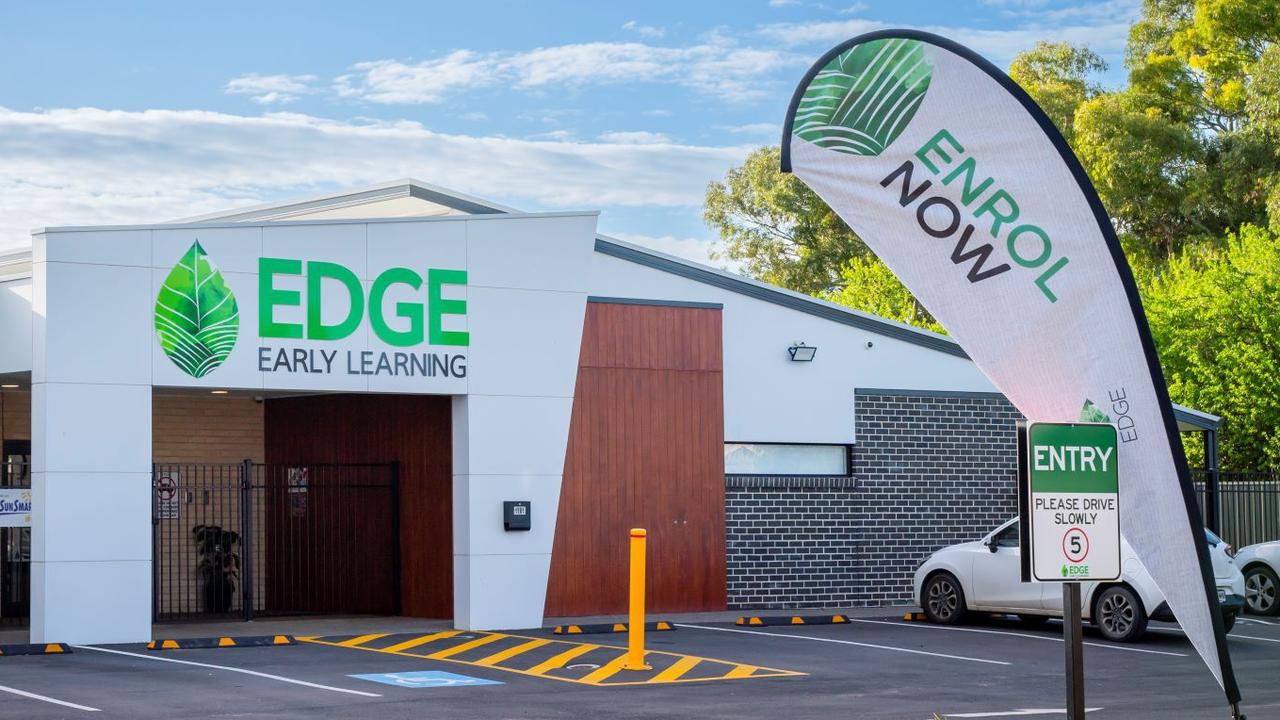
    The larger disruption affects families enrolled at Edge Early Learning, a multi-state provider that serves communities across Queensland, South Australia, and the Australian Capital Territory. Last week, the company confirmed it had appointed restructuring firm KordaMentha as voluntary administrators to carry out an urgent review of the provider’s financial and operational standing.

    In a public statement addressing concerned parents, Edge Early Learning Chief Executive Chris Chambers emphasized that administrators are working closely with existing management to keep all centres running as close to normal as possible during the review period. “At this stage, all centres are expected to continue operating as usual and families should continue to attend their centres,” Chambers said. “We understand that this news may cause concern, and we want to reassure you that our immediate priority is to ensure the ongoing operation of all centres with as little disruption as possible to children, families and educators. The Voluntary Administrators’ intention is to provide a stable environment for children while we work through this process.”

    David Johnstone, the lead KordaMentha administrator assigned to the case, echoed this commitment, noting that the care, safety and wellbeing of enrolled children remain the highest priority throughout the entire administration process. He also confirmed that families should continue sending their children to their regular Edge Early Learning centres while the urgent operational assessment is completed.

    In a separate, more disruptive development, a standalone Melbourne childcare centre, Avondale Heights Childcare and Early Learning Centre, closed permanently on Tuesday with only 12 hours’ notice to parents. Liquidators from SSB Advisory, the firm appointed to wind down the centre’s operations, explained that the shutdown came after a planned sale of the business fell through when the prospective buyer was unable to complete the transaction. The centre’s directors had been covering operating costs out of their own pockets for an extended period to keep the facility open, but could no longer continue to subsidize operations, the liquidator confirmed.

    “On behalf of the company, I sincerely apologise for the distress and inconvenience caused by having to arrange alternative childcare arrangements at such short notice,” the liquidator said in a statement sent to parents overnight. SSB Advisory has yet to issue further comment on the closure beyond the initial notification to families.

  • BBC at Dolly Parton’s Hollywood star as fans pay tribute

    BBC at Dolly Parton’s Hollywood star as fans pay tribute

    In the wake of the passing of legendary country music icon Dolly Parton, dozens of grieving fans flocked to her star on the iconic Hollywood Walk of Fame on Tuesday evening to lay flowers, leave handwritten notes, and share personal stories celebrating her decades-long legacy. The BBC’s Los Angeles-based correspondent Shaimaa Khalil was on location, reporting live from the tribute gathering, capturing the raw emotion of supporters who had traveled from across the country to honor the star.

    Witnesses described a quiet, reverent atmosphere mixed with moments of joyful remembrance, as fans sang snippets of Parton’s most beloved hits and recalled how her music and philanthropy had touched their lives. Many attendees brought handwritten messages highlighting Parton’s advocacy for literacy, childhood education, and disaster relief efforts, underscoring that her impact extended far beyond the entertainment industry. Local organizers confirmed that the star has become an impromptu memorial in the days following the announcement of her death, with a steady stream of visitors stopping by to pay their respects since Tuesday morning.

  • Why Tesla has been caught up in a massive car recall in China

    Why Tesla has been caught up in a massive car recall in China

    Concealed, flush-mounted car door handles, a design aesthetic first popularized globally by Elon Musk’s Tesla, have emerged as a focal point of global automotive safety debates after China launched the largest vehicle recall in the country’s history, impacting more than four million mostly electric vehicles (EVs) across multiple brands. The massive recall comes as China implements groundbreaking new regulations that will ban the sale of new EVs lacking dual mechanical door release mechanisms on both interior and exterior door panels starting in 2027, a policy shift spurred by mounting fatal incidents linked to electronic door handle failures.

    First adopted by Tesla for its Model S sedan back in 2014, hidden door handles have become a ubiquitous design choice in the global EV industry, valued for their aerodynamic efficiency that extends driving range and sleek, minimalist exterior styling. Industry data shows that roughly 60% of China’s top 100 best-selling new energy vehicles – including both pure EVs and plug-in hybrids – currently feature this design. Yet growing reports of entrapment during accidents have turned this popular styling feature into a major public safety concern.

    Shanghai-based automotive industry analyst Stephen Dyer, from global consultancy AlixPartners, told reporters that even experienced drivers often struggle to locate door release controls in unfamiliar vehicles equipped with hidden handles. Beyond usability confusion, safety experts warn that electronically operated hidden handles can fail completely after a crash when a vehicle’s electrical system is damaged, trapping occupants inside and delaying critical emergency rescue efforts.

    “A door handle may seem like a trivial component, but it becomes safety-critical in the immediate seconds after a collision,” explained Lyu Chen, an associate professor at Nanyang Technological University specializing in automotive engineering. Chen added that the widespread shift to electronically controlled hidden handles has created tangible, underrecognized safety risks for drivers and passengers.

    These safety concerns moved from abstract debate to urgent public scrutiny following two fatal 2025 crashes involving Chinese tech giant Xiaomi’s first electric vehicle, the SU7. Regional Chinese media, as cited by the *Global Times*, documented one fatal highway crash in Tongling, eastern China that killed all three occupants inside the vehicle. Family members of the victims reported that passengers were trapped after the crash because the electronic door handles failed to unlock, preventing escape and delaying rescue. At the time, Xiaomi stated that the SU7 was equipped with power-independent mechanical emergency releases located at the bottom of each door, and that the company was cooperating with police investigations. The brand has since updated newer SU7 models to include power-free manual door opening mechanisms, but has not responded to recent requests for comment on the recall.

    Tesla, the brand that pioneered the design, has also faced legal action over its hidden door handle systems in the United States. The company is currently being sued by the sole survivor of a 2024 Cybertruck crash in California that killed three college students. Jordan Miller, the survivor, alleges that the Cybertruck’s door system – which relies on electronic buttons with no exterior mechanical release – trapped passengers inside the burning vehicle after the electronics failed, blocking escape and rescue. “When you design a vehicle with no mechanical way to open doors from the outside, you are gambling that electronics will work perfectly in every scenario, even a high-speed crash followed by a fire,” stated a legal representative from The Veen Firm, which is representing Miller. Tesla has denied all wrongdoing in court filings, noting that the Cybertruck meets all current U.S. federal safety standards. Additional reports from the U.S. have documented multiple other cases of passengers, including young children, being trapped in Tesla vehicles after sudden door handle electronic failures.

    In February 2026, China made history as the first country in the world to officially ban non-compliant hidden door handles, with the new regulatory framework set to take effect on January 1, 2027. The rules require all new passenger vehicle designs to include fully functional mechanical door releases on both the inside and outside of every door, and mandate clear visible signage inside the cabin indicating how to operate emergency releases. Dyer notes that China’s move to regulate this safety issue ahead of the U.S. and European Union – regions that typically lead global automotive safety standard-setting – is largely driven by China’s status as the world’s largest EV market, with far more concealed-handle EVs on roads than any other country.

    On August 21, China’s State Administration for Market Regulation (SAMR) announced the massive recall, covering vehicles from Tesla and major domestic Chinese EV makers including Xiaomi, XPeng, and Geely. Per SAMR’s order, manufacturers must add prominent warning labels inside vehicle doors to clearly identify emergency release mechanisms. For some affected models, manufacturers will also roll out software updates that automatically lower vehicle windows if a crash is detected, providing an alternative escape route if doors fail to open.

    Of the 4 million-plus recalled vehicles, nearly 3 million are Tesla models. SAMR’s official recall notice cites two key defects: the emergency release handles on many recalled models are hard to identify because they match the color of interior trim, and the design can prevent quick door opening after electrical failure, slowing escape and hindering bystander rescue efforts. Xiaomi, XPeng, and Geely together are recalling more than 750,000 additional affected vehicles.

    Even with the recall and new regulations in place, some safety and engineering experts argue that the current measures do not go far enough to address core safety risks. Lim Hong Wee, an engineering instructor at the National University of Singapore, points out that the recall fixes do not mandate adding exterior mechanical releases, which means emergency access still depends on functional electrical systems and working software. Gokul Krithivasan, a risk management specialist at Singapore-based consultancy SecureSafe, adds that the recall’s focus on warning labels is an insufficient solution. “When people are panicking after a crash, they rely on instinct, not reading small print in a dark, smoke-filled cabin,” Krithivasan explained. He also noted that current recall measures focus primarily on helping occupants escape, but do not create reliable access for first responders trying to enter a damaged vehicle.

    Right now, it remains unclear whether similar recalls will be launched for affected vehicles outside of China. BBC reporting indicates that automakers have not yet notified U.S. regulators of plans for a matching recall, and the U.S. National Highway Traffic Safety Administration says it is still reviewing whether to mandate new emergency door exit requirements for all new vehicles. European regulators have already flagged the safety risks of concealed door handles and have drafted new standards requiring door operation even after total power loss, but have not announced large-scale recalls to date.

    Automotive engineering experts note that while hidden door handles remain a common design choice for EVs, the new Chinese regulations are likely to shift global design standards, as most mass-produced vehicles are built for global distribution. “The core principle is unambiguous: emergency entry and exit must remain possible even if a vehicle loses all electrical power,” Lyu Chen said, predicting that China’s new safety rules will eventually be adopted by regulators around the world.

  • High quality, low risk: record number of Japanese in Premier League

    High quality, low risk: record number of Japanese in Premier League

    The 2024-25 Premier League campaign has kicked off with a historic milestone for Japanese football: a record 10 Japanese players have been registered to compete in England’s top flight, marking the highest number of Japanese athletes to feature in the league in a single season. With the summer transfer window still open, more Japanese talent could make the move to English clubs before it closes, signaling a growing appetite for Japanese players among Premier League sides.

    Among this season’s high-profile arrivals is 24-year-old goalkeeper Zion Suzuki, who recently completed a transfer from Italy’s Parma to Aston Villa. If Suzuki makes his competitive debut, he will become the first Japanese goalkeeper to ever play in the Premier League. Other notable incoming transfers include former Arsenal defender Takehiro Tomiyasu, who moved to Crystal Palace, midfielder Hidemasa Morita, who joined Hull City, and forward Daizen Maeda, who made the switch from Scottish side Celtic to newly promoted Ipswich Town. These new arrivals join a well-established cohort of Japanese stars already plying their trade in the league, such as Brighton’s dynamic winger Kaoru Mitoma, Liverpool’s tough-tackling midfielder Wataru Endo and Crystal Palace playmaker Daichi Kamada, plus Ao Tanaka of Leeds, Kota Takai of Tottenham Hotspur and Tatsuhiro Sakamoto of Coventry.

    Football agents and analysts point to multiple factors driving this surge in Japanese talent in the Premier League. Joel Pannick, a FIFA-registered agent with CAA Base who represents around 60 Japanese players, told AFP that English clubs have steadily grown more confident that signing Japanese players is a low-risk, high-reward investment. “There aren’t many examples of clubs signing Japanese players and having issues with their adaptation, with their personality, with their integration into the squad, with discipline,” Pannick explained. “The risk element that teams previously feared, this fear of the unknown, has gone because with each example of a successful Japanese player it gives more confidence.”

    The current generation of Japanese players also arrives better prepared for life in English football than their predecessors, thanks in large part to a cultural shift led by veteran defender Maya Yoshida. Yoshida, who spent nearly eight years playing for Southampton in the Premier League, served as Japan’s national team captain ahead of the 2022 Qatar World Cup and mandated that all players sitting at his lunch table communicate only in English. That emphasis on language acquisition has created a more globally minded cohort of players: nearly every current Japanese national team player who competed at the 2022 World Cup speaks conversational English, removing one of the biggest barriers to adaptation for overseas players. Suzuki, for his part, already speaks fluent English, a skill that is expected to smooth his transition to Aston Villa.

    Veteran Japanese football journalist Yoshiyuki Osumi believes Suzuki’s potential breakthrough as a Premier League goalkeeper could have a transformative impact on Japanese football. “He is 10 or 20 years ahead of his time for a Japanese goalkeeper,” Osumi said. “If he can play in the Premier League as a goalkeeper, I think that would have a big impact on Japanese football.”

    This moment comes more than two decades after the first Japanese player signed for a Premier League club, when Junichi Inamoto joined Arsenal in 2001. Inamoto left for Fulham a year later without ever making a league appearance, but a string of successful Japanese players have since paved the way for the current boom. Shinji Kagawa, Shinji Okazaki, Takumi Minamino and Wataru Endo have all won Premier League titles during their time in England, proving that Japanese players can compete at the highest level of the English game.

    Two broader shifts have also opened the door for more Japanese players in the Premier League. Post-Brexit changes to UK work permit rules have forced English clubs to expand their scouting networks beyond Europe, creating new opportunities for top talent from Asia and other regions. Additionally, the overall quality of Japanese players has improved dramatically in recent decades, while the evolution of the Premier League itself has aligned with the strengths of Japanese footballers. “The Premier League has become more tactical, and there are more teams that play as a coordinated unit,” Osumi noted. “That kind of football is something Japanese players find very easy to adapt to.”

    Most Japanese players now cut their teeth in other European leagues – such as Belgium, the Netherlands and Portugal – or England’s second-tier Championship before moving up to the Premier League, a path that allows them to adapt to European football gradually. Currently, eight more Japanese players compete in the Championship, suggesting the pipeline of Japanese talent into the Premier League will only grow stronger in coming seasons.

  • Chinese artist jailed over satirical Mao sculptures, say rights groups

    Chinese artist jailed over satirical Mao sculptures, say rights groups

    A prominent 70-year-old Chinese artist known for politically provocative satirical work has been handed the maximum three-year prison sentence on charges of defaming China’s officially revered historical figures, according to multiple international human rights organizations. The guilty ruling was issued Tuesday by a court in northern China’s Hebei Province, which found Gao Zhen’s artwork violated the reputation of state-sanctioned heroes and undermined public interest.

    Gao, who first rose to international acclaim alongside his brother Gao Qiang as a leading voice in Chinese contemporary art through the 1990s and 2000s, has become one of the most high-profile targets of Beijing’s expanding crackdown on dissenting artistic expression. The works at the center of the legal case date back more than 15 years, created years before the 2018 law under which he was charged. The most controversial piece, co-created with his brother, is *Execution of Christ*, a sculptural installation showing a squad of figures resembling Mao Zedong holding Jesus Christ at gunpoint. Two additional works were also cited in the prosecution: *Mao’s Guilt*, a life-sized sculpture of Mao kneeling in a pose of repentance, and *Miss Mao*, a satirical piece depicting the leader with exaggerated feminine features and a long Pinocchio-style nose.

    After relocating to the United States in 2022, Gao returned to China to visit his studio on the outskirts of Beijing in August 2024, where he was taken into custody. He has already been held in detention for two years prior to the sentencing, and authorities additionally moved to seize all of his artwork and impose an exit ban on his wife and 7-year-old child, barring them from leaving the country.

    The closed-door trial, held earlier this year in a single day, received almost no domestic media coverage within China, consistent with the government’s pattern of restricting public reporting on politically sensitive cases. Amnesty International confirmed Tuesday that Gao intends to file an appeal against his conviction. If the original verdict is upheld, he will complete his sentence in August 2027 after accounting for the time he has already served in detention.

    International human rights bodies and political observers have widely condemned the sentencing as a significant escalation of the Chinese Communist Party’s efforts to police dissenting expression, even beyond China’s borders and applying retroactively to work created decades earlier. Amnesty International’s China Director Sarah Brooks called the ruling a deliberate attack on fundamental artistic freedom. “No artist should face criminal punishment for creating work that challenges official narratives or encourages critical reflection on history,” Brooks stated Tuesday. She added that the case illustrates how vaguely worded, politically motivated legislation is weaponized—including retroactively—to silence any person who dares to hold views divergent from the ruling party.

    The United Nations Human Rights Office also raised urgent red flags about the case in comments to AFP, pointing to three core concerns: the retroactive application of criminal law, the use of severe criminal penalties to punish protected artistic expression, and the punitive collective impact on Gao’s family. Gao Qiang, who remains outside of China, told the BBC earlier this year that the outcome of the case sends an unambiguous chilling message to artists globally: “Even if a work was made 15 years ago, it can still be turned into a crime if today’s political climate changes.”

    China analysts note that Gao’s case fits into a broader pattern of expanding authoritarian control by the CCP, with the party extending its regulatory and punitive reach to target citizens even when they reside abroad, and enforcing political conformity retroactively on decades-old creative work. The case has drawn renewed international attention to the 2018 law that criminalizes defamation of heroes and martyrs associated with the Communist Party, a piece of legislation that rights groups say has been systematically used to erase critical discourse about modern Chinese history.

  • Social media use on the rise among Australian under-16s after ban: data

    Social media use on the rise among Australian under-16s after ban: data

    Months after Australia introduced landmark legislation banning children under 16 from accessing major social media platforms, new usage data reveals that underage engagement with apps including TikTok, Instagram and Snapchat has rebounded sharply, nearing pre-ban levels in many age groups. This world-first policy, implemented last December, has been watched closely by governments across the globe, with the United Kingdom, France and other nations already moving to adopt similar restrictions, and New Zealand announcing this week that it will introduce its own strict regulatory bill that could hit non-compliant tech giants like Meta with fines equal to up to 10% of their annual global revenue.

    The new usage figures were released Wednesday by Qustodio, a leading provider of parental control software, which tracks anonymized monthly activity from Australian households using its services. The company defines active usage as any child opening an app for at least five consecutive minutes at least once per month. Immediately after the ban went into effect, Qustodio recorded a broad, across-the-board drop in underage social media use. But that initial dip has not been sustained: across the two tracked under-16 age groups — 10 to 12 years old and 13 to 15 years old — usage across all three major platforms has climbed steadily back up.

    The rebound is most stark for TikTok, the world’s fastest-growing short-form video platform. Among 13 to 15-year-olds, 25.9% still actively use the app, only 1.1 percentage points lower than the pre-ban baseline. For 10 to 12-year-olds, TikTok usage is just 0.06 percentage points below pre-ban levels, a statistically negligible difference. Alongside major social platforms, the data also shows a growing shift toward WhatsApp, the Meta-owned messaging platform that is not covered by Australia’s current age ban.

    Yasmin London, Qustodio’s global online safety expert, outlined multiple potential explanations for the unexpected rebound. Many underage users may be evading the ban’s safeguards by using virtual private networks (VPNs) to mask their location, or by lying about their date of birth during account registration. More critically, London noted that the data suggests the core issue may be that the restrictions themselves are simply not being enforced effectively enough to block widespread access. “It could really be as simple as they’re just accessing these apps because the restrictions aren’t working,” she said.

    Australian federal officials have defended the ban, framing it as a critical safeguard to protect young people from well-documented harms including online bullying, mental health distress, and the impact of predatory recommendation algorithms that prioritize engaging, often harmful content to keep users on platform. However, Qustodio’s findings align with earlier independent research: a peer-reviewed study published in June by a team of Australia-based academic researchers found little evidence that the ban had driven a lasting drop in teenage social media engagement.

  • AFL 2026: Collingwood coach Craig McRae addresses Scott Pendlebury’s future

    AFL 2026: Collingwood coach Craig McRae addresses Scott Pendlebury’s future

    One of Australian Football League’s most decorated modern players, Collingwood Magpies champion Scott Pendlebury, remains undecided on whether he will hang up his boots at the end of the current season or extend his legendary playing career, according to Magpies head coach Craig McRae. The uncertain future of the league’s all-time games record holder comes as a recent hamstring injury rules him out of the club’s high-stakes wildcard final clash against the Western Bulldogs this Friday, which will be played in front of a capacity crowd at the Melbourne Cricket Ground.

    Pendlebury, a veteran midfielder who cemented his place in AFL folklore earlier this year when he broke the league’s all-time games record, delivered one of the most iconic Anzac Day match performances in the competition’s history just months ago. He left the field in a hamstring injury against the Brisbane Lions just over a week ago, in what many fans are already speculating could be his final appearance in the black and white stripes.

    When asked to share an update on Pendlebury’s thinking around his future, McRae told reporters the 400-game veteran is still weighing up his options, with the outcome of his decision currently too close to call. “It’s probably 50-50, to be honest, I could see opportunities for him to play on and retire,” McRae said. “I’m sure he’s weighing up those things.”

    Rumors have circulated in recent weeks that if Collingwood chooses not to retain Pendlebury on its senior playing list for the 2025 season, the veteran could move to a rival club to extend his playing career one last time. McRae declined to comment on that speculation, noting that all future plans are currently Pendlebury’s to evaluate alongside his management team.

    “These are decisions he’s obviously weighing up with him and his management,” McRae said. “It is a big story because he is a remarkable player for such a long time, but we will give him respect and the time that he’s asked for.”

    McRae emphasized that the club has maintained consistent open communication with Pendlebury throughout the season, and has deliberately stepped back to let the club’s greatest ever player make a decision on his own timeline. He added that the pair held a direct conversation about the future over the weekend, pushing back on narratives that the club was pushing Pendlebury toward an immediate call.

    “Yeah multiple times, I spoke to him Saturday about that. I heard some narrative about Pendles letting the player dictate their own decisions for the future,” McRae said. “Having these conversations with Pendles for the last five years around what’s best for him and best for us gives me great comfort that he’ll do what is best for the footy club.”

    McRae said he has full confidence that Pendlebury will only choose to continue his playing career if he is confident he can still perform at the elite level that has defined his 18-year career. “He won’t go on and play, in my eyes, unless he can perform at a certain level – so that gives you great confidence, ‘Hey, over to you mate, you make those decisions when you think they’re appropriate’,” he said.

    While Collingwood is leading the conversation around Pendlebury’s future, McRae noted the final call is not entirely in the midfielder’s hands, but the club is committed to centering Pendlebury’s input in the process. “(The decision) not entirely in his hands but led by conversations with him. We’re an open dialogue around that – I am giving him space as requested and he will make that decision at the end of the year and we’ll let him have that,” McRae added. For Pendlebury to take the field again this season, Collingwood will need to advance deep into the 2024 finals series, a path that starts without their games record holder this Friday night.

  • Turkey won’t abandon Syria or let Israel draw ‘red lines’, Erdogan says

    Turkey won’t abandon Syria or let Israel draw ‘red lines’, Erdogan says

    Fresh tensions have roiled the Eastern Mediterranean after Israeli warplanes carried out multiple airstrikes last week on the Abu al-Duhur military airbase in northern Syria, a facility located roughly 70 kilometers from the Turkish border. Israel justified the attack by claiming Ankara was preparing to deploy advanced air defense systems at the site — a move Israeli officials have long framed as an unacceptable “red line,” arguing that a permanent Turkish military presence in northern Syria would curtail Israel’s freedom of operations in Syrian airspace.

    The Israeli allegations have been uniformly rejected by multiple parties. Both Turkish and Syrian government officials have clarified that Turkish personnel were only present at Abu al-Duhur to carry out critical repairs to the base’s runway and control tower, with no plans for air defense deployment. This account has even been corroborated by Tom Barrack, the United States ambassador to Turkey, a longstanding NATO ally of Ankara that also maintains close strategic ties to Israel.

    Breaking his silence after several days of holiday, Turkish President Recep Tayyip Erdogan issued a formal response to the strikes during a speech in Ahlat, eastern Turkey’s Bitlis province, following a cabinet meeting on Monday. In a pointed rebuke that notably avoided naming Israel or Prime Minister Benjamin Netanyahu directly, Erdogan pushed back against claims that Turkey was acting out of self-serving regional interests.

    “Let me state this clearly and unequivocally: We will not allow politically moribund, presumptuous incompetents to use us as fodder for their rhetoric,” Erdogan told the audience. Addressing Ankara’s partnership in Syria, he emphasized that Turkey would never forsake allies that have placed their trust in the country. “We will not stop supporting our neighbours in getting back on their feet merely because it unsettles murderous networks with the blood of innocent people on their hands,” he added. “No actor other than the nation itself can dictate Turkey’s course or set the boundaries of its foreign policy.”

    Last week, Turkey’s presidency drew a direct link between the airstrikes and Israel’s upcoming October parliamentary elections, where incumbent Prime Minister Netanyahu is widely projected to underperform. Erdogan’s Monday remarks doubled down on Turkey’s rejection of accusations that it harbors a hidden anti-Israel agenda in the region, with many Israeli officials claiming Ankara is bolstering Syria’s new government to eventually use it as a proxy against the Jewish state.

    “Today, I wish to reiterate one fundamental truth: Turkey has no purpose, objective or aspiration anywhere in our region other than peace, justice, stability and security,” Erdogan said. “Contrary to what some claim, we have no hidden agenda and no ulterior motives.”

    The escalating standoff has prompted concern from the United States, which has pushed to de-escalate tensions. Barrack has publicly called for the creation of a trilateral cooperation mechanism between the relevant parties to prevent further friction that could destabilize the already volatile region.

    The tensions have spilled into the legal sphere as well. On Friday, Turkish Justice Minister Akin Gurlek announced that Turkey’s justice ministry had formally requested Interpol issue Red Notices for Netanyahu and another senior Israeli official on charges of genocide. The request stems from ongoing legal proceedings connected to Israel’s interception of the Global Sumud Flotilla, an activist vessel that set sail earlier this year to deliver humanitarian aid to blockaded Gaza, which Israel attacked in international waters.

  • How a Chinese film shot in dialect is finding a global audience

    How a Chinese film shot in dialect is finding a global audience

    BANGKOK, Thailand — A surprise cinematic breakout from China has defied industry expectations this year, topping domestic box office charts and rolling out across international markets as a centerpiece of Beijing’s growing soft power push. What makes *Dear You*’s success all the more remarkable is its core creative choice: nearly the entire film is performed in Teochew, a regional southern Chinese dialect largely unintelligible to most Mandarin-speaking Chinese audiences, who rely on subtitles to follow the story.