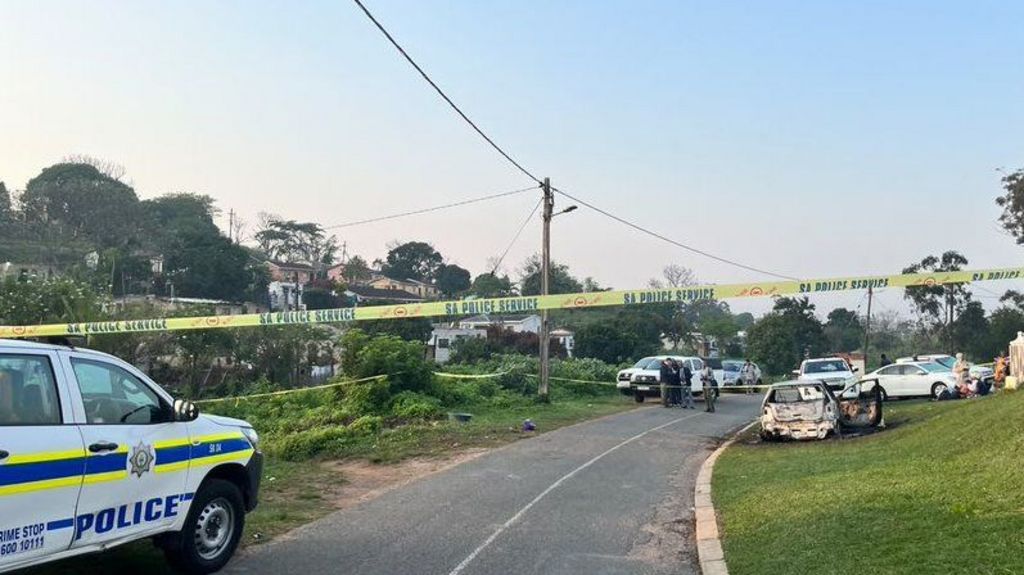
South Africa, a nation long grappling with one of the globe’s highest homicide rates, is reeling from another devastating act of gang-linked violence that has left 11 people dead following a mass shooting in a coastal province residential area.
On Tuesday evening, three armed gunmen stormed a private residence in KwaMakhutha, a township located just outside the major port city of Durban in KwaZulu-Natal, opening fire on a group of people gathered inside the home. Initial police accounts confirm that 10 people were killed instantly at the scene, while four surviving victims were rushed to nearby medical facilities for emergency treatment. Tragically, one of those injured later succumbed to her wounds, bringing the total death toll to 11.
According to official statements from the South African Police Service (SAPS), the group targeted in the attack included 13 men and one woman, who was reported to be pregnant. The pregnant woman was counted among the fatalities. Police have not yet released a confirmed motive for the attack, but investigators have not ruled out the possibility that the shooting stemmed from a long-simmering feud between competing criminal groups. Investigators also noted that some of the victims were being monitored by law enforcement in connection with unspecified illegal activities, adding that details cannot be released publicly at this stage to preserve the integrity of the ongoing investigation.
Local reporting from eNCA, a prominent South African television news network, confirms that before fleeing the scene, the attackers set fire to a vehicle registered to one of the victims. Footage from the site shows the charred, burned-out remains of the car abandoned by the gunmen. In the wake of the attack, SAPS has launched a large-scale manhunt to track down and apprehend the three suspects still at large.
This latest mass shooting comes as South Africa continues to face a persistent national crisis of violent crime. Official police data puts the country’s daily murder average at more than 60 killings per day, one of the highest per-capita homicide rates on the planet. In recent weeks alone, the grim discovery of at least nine murdered women—many of whose bodies were dumped along public roadways—has stoked widespread public anxiety over the country’s growing violent crime epidemic. High-profile mass shootings have also shaken communities across the nation in recent years: just last year, a mass shooting at a tavern in Johannesburg left nine people dead.
Law enforcement and policy analysts have repeatedly linked the surge in brutal violent crime to systemic issues including ongoing turf wars between rival criminal gangs, illicit drug trafficking networks, and the proliferation of unregulated illegal mining operations across the country. These activities have become deeply embedded in many communities, fueling frequent cycles of retaliatory violence.
Back in February, South African President Cyril Ramaphosa publicly identified organized criminal activity as “the most immediate threat to our democracy, our society and our economic development.” In response to the growing crisis, Ramaphosa announced a plan to deploy members of the South African National Defence Force to assist overstretched local police forces in combating rising violent crime.