博客

  • India is producing more green energy – but wasting a lot of it

    India is producing more green energy – but wasting a lot of it

    In a landmark breakthrough for global clean energy transition, India has announced that renewable energy now accounts for 54% of its total 552 gigawatts (GW) of installed power capacity — a target reached five years ahead of its original 2030 deadline. This achievement marks a dramatic turning point for a nation long labeled as dependent on coal, signaling how rapidly emerging economies can scale up non-fossil fuel power.

    The turning point was highlighted on a hot July afternoon this year, when renewable sources collectively met more than half of India’s peak national electricity demand for just the second time in the country’s history; the first occurrence took place during the same summer period in 2025. While this record only held for a short window, industry leaders frame it as a transformative milestone that redefines the role of clean energy in India’s power landscape.

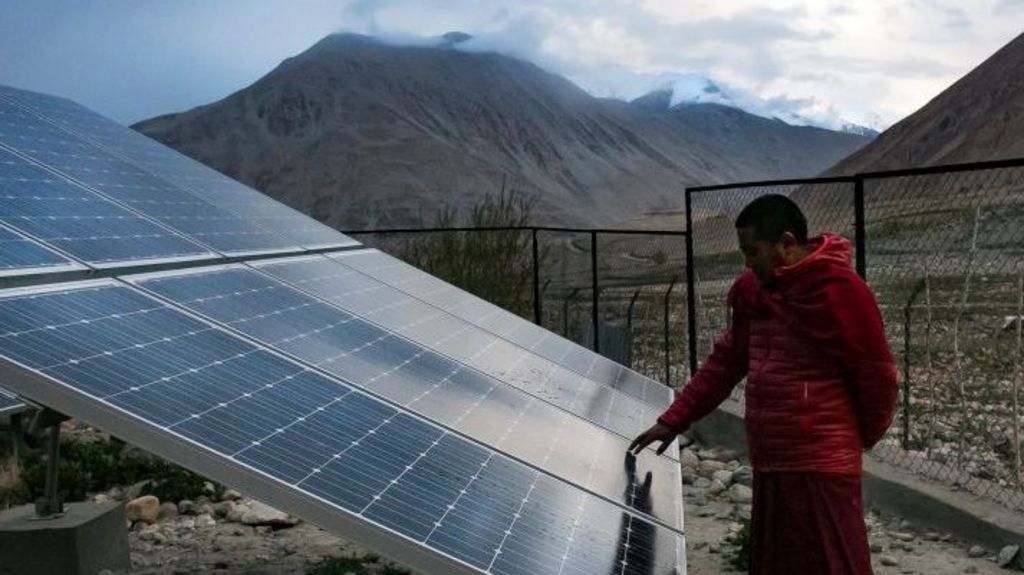
    “Renewable energy is no longer a marginal source sitting at the edge of the power system,” explained Sumant Sinha, CEO of ReNew Power, one of India’s largest Nasdaq-listed clean energy firms, in an interview with the BBC. A decade ago, India’s total installed renewable capacity stood at barely 4GW. Today, that figure has surged to 300GW, a more than 70-fold expansion that underscores the speed of the country’s clean energy push.

    Even with this historic progress, coal still generates around 70% of India’s annual electricity output on average, due to coal plants’ higher capacity factors and ability to operate around the clock, unlike intermittent solar and wind generation. Still, the milestone confirms that India’s decades-long transition to clean energy has reached an irreversible inflection point, experts say.

    Despite this remarkable growth, three interconnected challenges threaten to derail India’s ambitious 2030 target of 500GW of non-fossil electricity: strained transmission infrastructure, underdeveloped energy storage capacity, and persistent financing gaps that plague the entire sector.

    The most pressing issue is the severe mismatch between the speed of renewable generation build-out and the expansion of the nation’s transmission grid. Development of new generation capacity has drastically outpaced upgrades to transmission lines, a problem that policymakers and analysts call the most critical operational risk to India’s climate goals.

    According to global energy think tank Ember, transmission constraints were responsible for nearly two-thirds of all renewable energy curtailment — the practice of turning off working renewable plants when the grid cannot absorb their output — in the first quarter of 2026, totaling 300 gigawatt-hours of wasted clean energy. The root of the problem lies in the vastly different timelines for building generation versus transmission infrastructure, Sinha explained.

    “Generation projects can be constructed in 18-24 months… Transmission can take much longer because they involve right-of-way, land acquisition, approvals and coordination across many agencies,” Sinha said. “It is an execution issue that becomes more important as the system gets larger.”

    Vibhuti Garg, an energy analyst at the Institute for Energy Economics and Financial Analysis, added that poor long-term planning has exacerbated the strain. When India was adding just 10-15GW of new renewable capacity annually, the existing grid was able to absorb the new supply. But last year, India added a record 51GW of new renewable capacity, far outstripping what the aging transmission network can handle. The concentration of most new renewable projects in the northwestern states of Gujarat and Rajasthan has further strained the system, making it harder to move surplus clean power to high-demand regions across the country.

    A common proposed fix for this mismatch is building large-scale battery storage systems at renewable energy hubs, which would store excess power for later use instead of curtailing it. But storage deployment has stalled in India, held back by spiking battery prices, raw material shortages linked to ongoing conflict in the Middle East, and a depreciation of the Indian rupee that has driven up financing costs for domestic companies. As a result, dozens of planned storage projects have been canceled or put on hold, Garg said.

    Financing constraints extend far beyond storage projects, affecting the entire Indian renewable sector. While developed nations have abundant access to low-cost global capital for green transition, Indian clean energy firms have consistently struggled to secure affordable financing, even as the country has emerged as a global leader in renewable scaling. Government economic data shows that roughly 83% of all climate mitigation financing in India currently comes from domestic sources.

    India will need an estimated $400-500 billion in total investment to hit its 2030 500GW non-fossil target. While the Paris Agreement committed developed nations to provide $100 billion annually in climate finance to developing countries by 2025, that pledge has yet to be fulfilled. Sinha noted that emerging and developing economies outside of China receive only around 15% of global clean energy investment, despite being home to roughly two-thirds of the world’s population.

    Sinha emphasized that India does not require developed nations to fund its entire energy transition, but called for targeted support in the form of lower-interest loans, risk guarantees, and currency risk protection to encourage greater private sector investment in the sector.

    Experts warn that addressing these gaps is critical not just for India, but for the entire world’s fight against climate change. India is the world’s third largest emitter of greenhouse gases, and its electricity demand is growing faster than any major emerging economy, with a compound annual growth rate of more than 7% in recent years. Demand is expected to accelerate even further as new energy-intensive industries such as data centers and semiconductor manufacturing expand across the country. The International Energy Agency projects that India’s total electricity demand will rise by 80% by 2035, the fastest increase of any major emerging economy.

    Even with current challenges, the IEA has credited India’s rapid renewable expansion as a key factor that helped slow global emissions growth in 2026, even as energy-related carbon emissions rose in advanced economies at the fastest rate since the 1990s. How successfully India navigates its current hurdles and delivers on its clean energy targets will have an outsize impact on whether the world can meet its global climate goals, analysts say.
  • Revealed: Cisco talks with pro-Palestine employees over discrimination complaint collapse

    Revealed: Cisco talks with pro-Palestine employees over discrimination complaint collapse

    A federally mediated conciliation process between tech giant Cisco and a group of its pro-Palestine employees has collapsed entirely after the U.S. Equal Employment Opportunity Commission (EEOC) determined the company refused to participate in good faith, exclusive reporting from Middle East Eye has confirmed.

    The dispute dates back to early 2024, when a group of Cisco employees launched Bridge to Humanity (B2H), an organizing body formed to call attention to the firm’s business ties to the Israeli military. In June 2024, B2H published an open letter to Cisco executive leadership demanding the company end technology sales to the Israeli government, divest from targeted Israeli entities, implement equal pay for Palestinian and Israeli staff, and uphold its own internal equity policies. The letter garnered nearly 1,700 employee signatures, but Cisco quickly removed the document from its internal platforms.

    In the wake of the open letter’s publication, employees reported a sharp rise in hostile internal conditions. B2H later filed a formal discrimination complaint with the EEOC, alleging anti-Arab and anti-Muslim harassment on internal messaging channels and company-run affinity groups. The group also raised alarms that an employee compiled a spreadsheet of all open letter signatories to monitor their activity, and that multiple signatories had been doxxed. These allegations pushed former Cisco corporate lawyer Reyhan Bilici to resign from the firm publicly on LinkedIn, citing institutionalized Islamophobia within the company. Bilici told Middle East Eye that after she shared her resignation letter across internal employee communities, Cisco leadership forced moderators to remove the post from a space intended for open dialogue.

    Following its investigation, the head of the EEOC’s San Jose local office ruled in June that there was reasonable cause to believe Cisco had created a hostile work environment for multiple Muslim and Middle Eastern employees who expressed pro-Palestine views. The agency then scheduled voluntary, confidential conciliation talks — an informal dispute resolution process overseen by the EEOC — to resolve the claims in August.

    However, the planned negotiations collapsed before any substantive discussions could begin. Christopher Ho, program director at Legal Aid at Work and lead counsel for B2H, told Middle East Eye that after three hours of waiting for Cisco to engage, the EEOC lead investigator announced the process would be terminated because the company had refused to respond to the agency’s settlement proposal. Ho noted that the abrupt end came as a shock, as B2H had not even had the chance to exchange formal settlement offers with Cisco representatives.

    Despite the collapse of mediation, Ho emphasized that the EEOC’s finding of reasonable cause marked an unprecedented win for organized tech workers. “It is significant that a group of tech employees who have organised collectively for such accountability has been harassed or otherwise treated unlawfully for speaking, and then vindicated by a federal agency,” Ho explained.

    Cisco has publicly pushed back against the EEOC’s findings, maintaining that it is dedicated to upholding an inclusive, respectful workplace. “We disagree with the EEOC’s district office findings. Aligned with the company’s commitment to being an equal opportunity employer, Cisco thoroughly investigated all concerns and took appropriate action,” a company spokesperson said in a statement. The firm declined to issue any specific comment on the allegation that it refused to participate in conciliation in good faith, nor did it respond to multiple other complaints raised by current and former employees, including claims that pro-Palestine voices were disproportionately targeted in recent layoffs.

    In May 2024, Cisco announced plans to cut roughly 4,000 roles, a move that came just after the company reported record quarterly profits of $15.8 billion. The layoff is part of a broader industry-wide restructuring among major U.S. tech firms including Meta, Amazon, and PayPal, which have cut tens of thousands of jobs overall as companies shift resources toward artificial intelligence development. Cisco finance manager Aamir Ahmad, one of the B2H organizers, told Middle East Eye that multiple rounds of layoffs at the company have disproportionately targeted staff who spoke out in support of Palestine.

    Ahmad also praised the EEOC’s intervention, noting that even the agency’s finding of reasonable cause underscores the severity of the violations the employees reported. “The fact that the EEOC, now operating under the direction of the [US President Donald] Trump administration, sided with the complainants goes to show how egregious the violations actually were,” Ahmad said. He added that there is a clear disconnect between Cisco’s public branding as an inclusive employer and its internal treatment of vulnerable Muslim and Middle Eastern staff: “The company espouses an inclusive culture, but then exposes vulnerable employees to such vitriol. What kind of message is Cisco sending to the world when they are treating employees in such a fashion? Cisco has partners and employees in the Middle East, and when they try to bring up these concerns, you dismiss them. They go to a third party to get some justice and to have someone see their point of view, and Cisco just dismiss it.”

    Ahmad said many pro-Palestine staff at Cisco now face an impossible choice between their personal convictions and their financial livelihoods. “I feel stuck. A lot of people feel the same way. Personally, I’m in a tough spot. People within my professional and personal network have asked me: ‘How can you still work at a company that basically hates you?’ I have tough conversations trying to reconcile that with my financial and familial obligations,” he said.

    As of press time, it remains unclear what下一步 steps will be taken in the dispute. The EEOC has not responded to requests for comment on the collapsed talks, and B2H and its legal team have declined to share details about potential future action.

  • UN General Assembly 2026: War on Iran and Gaza genocide dominate

    UN General Assembly 2026: War on Iran and Gaza genocide dominate

    The 81st session of the United Nations General Assembly kicked off this Tuesday at UN Headquarters in New York, with outgoing Secretary-General António Guterres using his final opening address to frame a defining shift in global order and issue an urgent plea to end the bloodshed across the Middle East.

    Guterres opened by declaring that the global transition to a multipolar world is an irreversible process, noting that even the world’s most powerful nations are now facing hard limits on the reach of their influence. “Military power alone cannot secure peace. Economic power alone cannot command stability. And technological power alone cannot guarantee security,” he told assembled world leaders. He argued that a interconnected multipolar system can lay the groundwork for more equitable, representative global problem-solving—if that system is anchored by a balanced, inclusive United Nations at its core.

    Turning to the escalating crisis in the Middle East, Guterres condemned the hollow ceasefire agreements that have done little to stop civilian harm. “So-called ceasefires have amounted to little more than ‘lesser fires’, with civilians continuing to pay the price,” he said. “Enough is enough. I appeal to the leaders in this chamber to maximise this high-level week for de-escalation and dialogue. Let’s send a clear message from this hall: the fighting must stop.” He warned leaders against abandoning the decades-long push for a two-state solution to the Israeli-Palestinian conflict, marking nearly one year since the October 7 Hamas attacks that killed roughly 1,200 Israelis. He called the subsequent Israeli military campaign in Gaza an “onslaught” of killing and destruction unseen during his tenure as secretary-general, adding that expanding Israeli settlements and escalating violence in the occupied West Bank are erasing the last paths to peace and raising the alarming threat of ethnic cleansing. “We cannot allow the two-state solution to disappear before our eyes,” he stressed.

    Following a longstanding UN tradition that grants Brazil the floor as the first member state to address the assembly, Brazilian President Luiz Inácio Lula da Silva delivered a sharp rebuke of unilateral power plays and growing global militarism, without directly naming US President Donald Trump. Lula centered his speech on the legacy of former Palestinian leader Yasser Arafat and former Israeli Prime Minister Yitzhak Rabin, two architects of the 1993 Oslo Peace Accords who he framed as the kind of statesmanship the world desperately needs amid today’s global scourge of war. “We are called to choose between multilateralism and unilateralism. Democracy or extremism. Sovereignty or subordination,” Lula said, warning that trillions of dollars are now fueling a new global arms race. Recounting the legacy of Arafat and Rabin—who were ultimately killed by extremists opposed to their peace deal—Lula said they “challenged the past to envision a future of peace” and were ultimately defeated by hatred.

    Lula explicitly condemned what he called Israel’s genocide in Gaza, where official Palestinian health authorities estimate nearly 74,000 Palestinians, most of them women and children, have been killed since the start of the Israeli campaign. He acknowledged that Israeli civilians also suffer from the “radicalism and intolerance of Hamas terrorist acts,” but said generations of Palestinians will carry the trauma of the killings perpetrated by Prime Minister Benjamin Netanyahu’s government.

    The Brazilian leader also pushed back against US efforts to undermine the International Criminal Court, which issued arrest warrants for Netanyahu and former Israeli Defense Minister Yoav Gallant in November 2024 over alleged war crimes and crimes against humanity in Gaza. “Persecuting the International Criminal Court and its members encourages these crimes to go unpunished,” he said. He also defended UN Special Rapporteur on the Occupied Palestinian Territories Francesca Albanese, who faced US sanctions earlier this year that were only lifted after a federal judge ruled they violated her First Amendment rights to free speech. “The UN special rapporteur must not be silenced for telling the truth,” Lula added.

    Jordan’s King Abdullah II followed with a blistering condemnation of Israeli policy, accusing the Israeli government of committing widespread war crimes across Gaza and the occupied West Bank, and warning that its territorial expansionism extends far beyond Palestinian lands. He accused Israel of intentionally inciting a religious war, framing its conflict with Palestinians as a battle between Judaism and Christianity on one side and Islam on the other. “This [Israeli] government’s sense of impunity has reached terrifying levels,” he said. “No one in this assembly should assume this Israeli government’s appetite stops at Palestine,” he added, pointing to Israeli attacks and occupation of Syrian territory.

    King Abdullah cited the recent US-Israeli military campaign against Iran as proof that Middle Eastern instability carries global ripple effects. “If anyone had any doubt that conflict in our part of the world stays there, just look at the energy and grocery bills from ordinary families from Mumbai to Madrid to Minnesota,” he said. “The Iran war has shown how quickly instability can disrupt trade, investment and lives beyond the region.” He criticized the international community for choosing to merely manage the Israeli-Palestinian conflict rather than confront its root causes, with catastrophic results. He detailed widespread abuses against Palestinians in the West Bank, where Israeli home demolitions to expand illegal settlements amount to forcible transfer—a war crime—and said Israel is carrying out a de facto annexation of the territory that amounts to a systematic campaign of subjugation. “Gaza and the West Bank are two fronts of the same Israeli strategy. In both, Palestinians are being killed. In both, the reality on the ground is being remade: Gaza through destruction, the West Bank through de facto annexation,” he said.

    Turkish President Recep Tayyip Erdoğan opened by condemning the ongoing ban on Palestinian Authority President Mahmoud Abbas addressing the General Assembly, marking the second consecutive year Abbas has been barred from attending. Calling the exclusion a blatant injustice, Erdoğan said Turkey would continue to stand as a voice for an independent, sovereign Palestine, urging all nations that have not yet recognized Palestinian statehood to reverse their position. He described the past 12 months as one of the bloodiest periods for global conflict in three decades, drawing particular attention to the ongoing violence in Gaza. “We lost [thousands of Palestinians] to what we regard as acts of state terror by Israel,” he said.

    Erdoğan noted that even after a US- and Turkish-mediated ceasefire deal was reached between Israel and Palestinian factions in October 2025, more than 1,500 additional Palestinians have been killed in Gaza. While Palestinian resistance groups have followed through on their commitments to move forward with the second phase of the peace plan, he said the Israeli government continues to refuse to end its occupation of Palestinian territories. He added that the occupied West Bank is facing its worst wave of Israeli settler violence in modern history, with data from the Palestinian Wall and Settlement Resistance Commission showing a 63 percent jump in settler attacks in the first seven months of 2026 compared to the same period last year.

    Erdoğan also joined calls for sweeping UN reform, arguing that the current global body structure is controlled by the five permanent members of the Security Council and fails to represent the interests of the broader global community of more than 190 member states. “The United Nations, established 81 years ago to maintain peace and security, has become unable to fulfil this mission, or rather it has been made unable to do so,” he said. On the ongoing conflict between Saudi Arabia and Yemen’s Houthi movement, Erdoğan said Turkey continues to work with all parties to reach a negotiated end to the conflict, noting that prolonging the fighting benefits no one. Houthi forces have recently stepped up attacks on Saudi territory and taken control of the Bab el-Mandeb Strait, a critical global energy chokepoint.

    Qatar’s ruling Emir Sheikh Tamim bin Hamad Al Thani warned that the Gulf region is entering one of its most dangerous phases in modern history, brought on by decades of delaying meaningful conflict resolution through temporary fixes and unworkable policy. He stressed the urgent need for a regional collective security framework that respects national sovereignty, territorial integrity, the peaceful resolution of disputes and non-interference in internal affairs. “In the absence of such a system, it becomes possible for a war to erupt,” he said. “It has become possible for one party to drag its neighbours into a war that is not theirs, targeting their vital assets and installations despite their strenuous efforts to avert escalation.”

    Qatar has found itself drawn into the ongoing conflict between the US, Israel and Iran despite its best efforts to stay neutral and avoid escalation. Iranian attacks on Qatar’s Ras Laffan energy complex damaged two major liquefied natural gas (LNG) processing trains and a gas-to-liquids plant, taking roughly 17 percent of the country’s total LNG export capacity offline temporarily, according to QatarEnergy. The conflict has also completely shut down the Strait of Hormuz—through which roughly a quarter of the world’s global energy trade passes—severely disrupting Qatar’s energy exports and roiling global energy markets. As a result, Al Thani said, food and medicine prices have spiked on every continent, harming the livelihoods of ordinary people with no connection to the conflict.

    The Qatari emir called for a diplomatic resolution to the Gulf crisis, urging the reopening of the Strait of Hormuz and a return to negotiations to prevent full-scale regional war. On the Palestinian issue, he condemned Israeli leaders who openly advocate for the forced displacement of Gaza’s population, which they frame as “migration.” He called on Israel to meet its international commitments: end all military operations in Gaza, withdraw all forces from the besieged territory, lift the illegal 19-year blockade on Gaza, and allow unimpeded access for humanitarian aid. “There can be no talk of a just international order as long as Palestine remains a blind spot within it,” he said. “Dealing with Israel, putting an end to the harm it causes, and restraining its unlawful conduct constitutes the true test of the international community’s seriousness in upholding values and the rule of law. The law must apply equally to all.”

  • ‘We are settling years of unfinished business’: Trump talks up Iran, Gaza, Latin America strategy

    ‘We are settling years of unfinished business’: Trump talks up Iran, Gaza, Latin America strategy

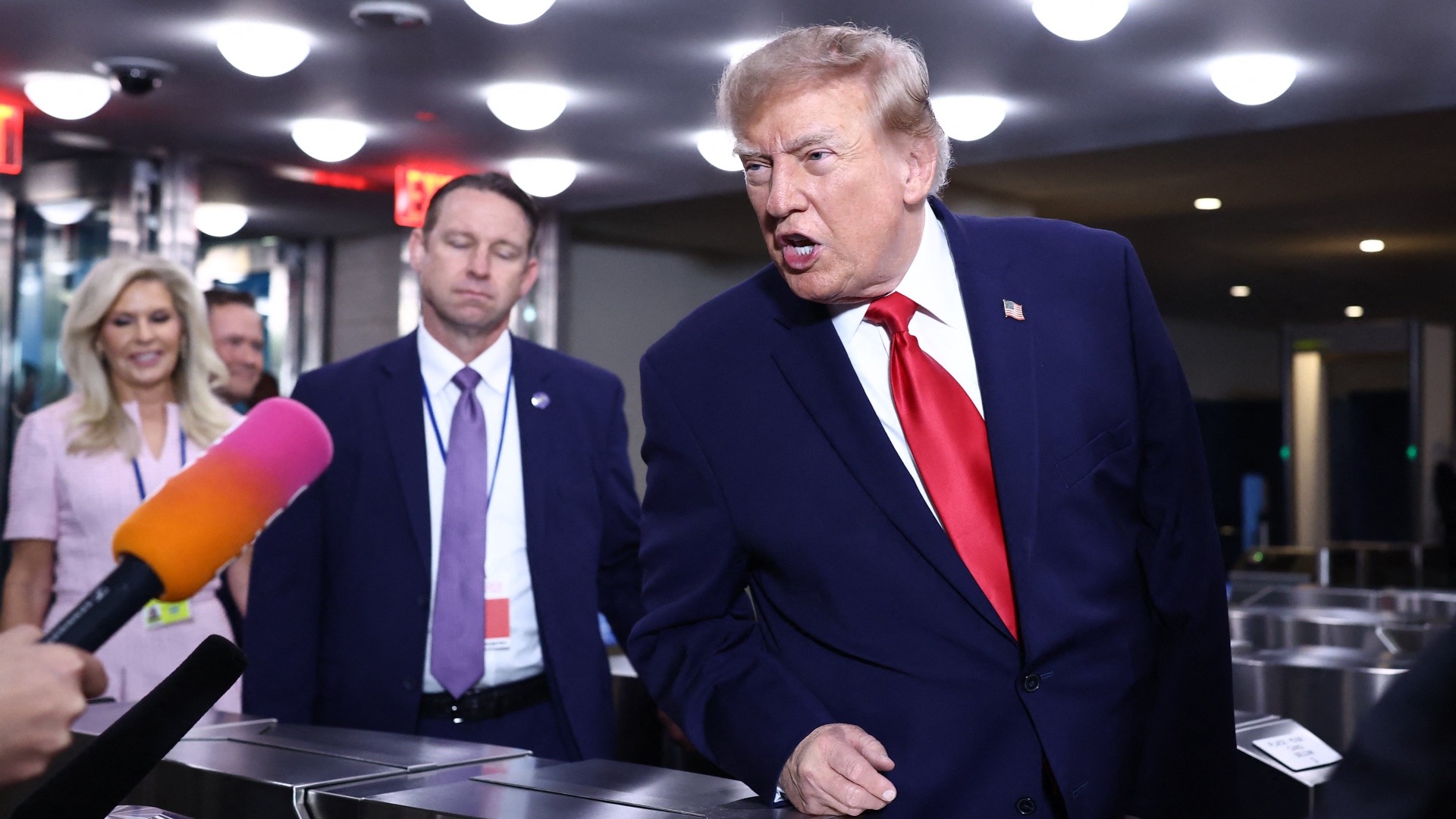
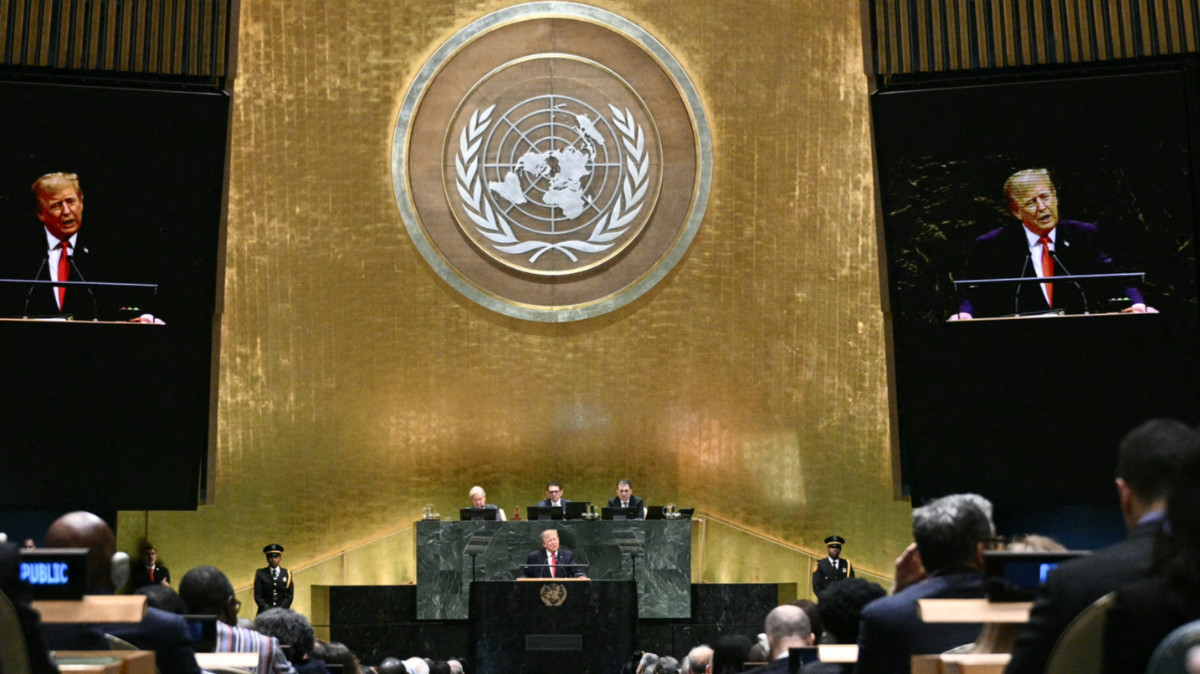
    In a 38-minute address to the United Nations General Assembly Tuesday, former U.S. President Donald Trump (in his second term) laid out his 20-month foreign policy legacy through sweeping, unsubstantiated claims, while issuing a stark demand that all UN member states withdraw from the International Criminal Court (ICC).

    Compared to his fiery 2024 UNGA speech packed with direct personal attacks, this year’s address carried a calmer tone on the surface, but retained multiple debunked, unproven allegations against regional adversaries. Most notably, Trump claimed without evidence that 72,000 Iranians were killed by their own government during late 2024 and early 2025 anti-government protests. This figure stands in stark contradiction to all available public data: Iranian authorities put the death toll at approximately 3,500, while independent international human rights monitors estimate the count at roughly 5,000 or higher. Throughout 2025, Trump has cited inconsistent figures ranging from 40,000 to 82,000 for these deaths, with no verifiable source for the inflated numbers; even satellite imagery, which has been used to confirm mass casualty events in other global conflicts, has shown no evidence to support his claims.

    The president also repeated a false allegation that Hamas and other Palestinian groups tortured, mutilated, and killed numerous infants during the October 7, 2023 attacks in southern Israel. Israeli independent media investigations have already debunked these specific claims, and the Israel Defense Forces acknowledged that at least one soldier provided incorrect information to Israeli rescue organization Zaka that fueled the false reports. While five young children (including one four-year-old, two five-year-olds, and two six-year-olds) were among those killed on October 7, the majority of child fatalities that day were between 12 and 17 years old, with some killed by errant rocket fire.

    The ICC’s recent issuance of arrest warrants for three Hamas leaders (all subsequently killed by Israeli forces) as well as Israeli Prime Minister Benjamin Netanyahu and former Defense Minister Yoav Gallant drew fierce condemnation from Trump, who labeled the court “out of control” and “a rogue institution” run by “an evil group of people.” “I call on all nations that are members of the ICC to officially resign from this rogue institution immediately,” he told the assembled delegates.

    Turning to the ongoing U.S.-Israeli military campaign against Iran, now in its seventh month, Trump doubled down on his longstanding pledge to block Iran from acquiring a nuclear weapon. He claimed that shortly after taking office for his second term in 2025, he opened direct negotiations with Tehran, offering full economic cooperation in exchange for ending Iran’s nuclear program and what he calls support for terrorist groups—an offer he said Iran “absolutely refused.” While the decision to pursue direct talks drew some early praise, the diplomatic effort, led by special envoy Steve Witkoff and Trump’s son-in-law Jared Kushner, has faced widespread criticism for mismanagement and incompetence.

    Since March 2025, Iranian retaliatory strikes against U.S. allies in the Gulf have disrupted global shipping, closing key chokepoints including the Strait of Hormuz and the Bab el-Mandeb (blocked by Iran-aligned Houthi forces in Yemen). The disruption has sent U.S. gasoline prices soaring, worsening a persistent affordability crisis that has not eased significantly since the COVID-19 pandemic. At least 14 U.S. military personnel have been killed in regional attacks, with nearly 600 more wounded. Echoing the blunt framing of his old reality television show *The Apprentice*, Trump teased a potential post-election deal to end the conflict: “Will a deal be made with Iran that lets them rebuild and create a far greater country than it ever was before, maybe one of the greatest in the Middle East or even the world, or do I annihilate the Islamic Republic and do it quickly, never giving them a chance to kill and destroy people and countries again?” He added that he expects a deal to be reached shortly after the upcoming November 3 midterm elections, claiming Iranian leaders are waiting to see the election’s outcome—though he noted he is not on the ballot this cycle. Forecasters widely expect the midterms to flip the U.S. House of Representatives from Republican to Democratic control, with the Senate also likely to flip or end in an even split; the results are widely viewed as a public referendum on Trump’s first 20 months of his second term.

    Trump also forcefully pushed back against a recent report from his own Department of Defense inspector general that warned the U.S. is depleting its weapons stockpiles due to sustained military support for allies in the Iran campaign. “The cowards and traitors would love to say the United States is low on munitions, but that’s not true,” he said. “We have more munitions than we could ever possibly even think of using, and we’re building them at levels that we have never done before… There are 18 new massive munition plants being built by the world’s largest defense contractors right now.” He closed his remarks on Iran by calling for global collective action to enforce full economic isolation of Tehran until it halts attacks on commercial shipping, abandons its nuclear program, and ends support for armed groups he labels terrorist.

    Trump’s address came just two weeks ahead of the third anniversary of the October 7, 2023 attacks, and three weeks after a Trump-brokered ceasefire between Israel and Hamas went into effect on October 10, 2025. UN Secretary-General has criticized the ceasefire as a “lesser fire,” noting that Israel has continued carrying out air strikes that killed more than a dozen children in Gaza just this month, with few of the ceasefire’s obligations met by Israeli authorities. According to the Palestinian Ministry of Health, the confirmed death toll in Gaza has now reached nearly 74,000, with the final count expected to surpass 100,000 once rubble clearing operations recover the remains of missing people.

    Despite little tangible progress on the Trump-created “Board of Peace” for Gaza, a body of which Trump named himself chairman for life, the president used his UNGA platform to highlight supposed international praise for the initiative, citing endorsements from the leaders of Pakistan, Azerbaijan, and Armenia. He also thanked donor nations that have contributed $1 billion to the initiative, despite multiple unconfirmed reports that the dedicated World Bank account for Gaza relief remains empty. Trump thanked the UN Security Council for unanimously approving his 20-point Gaza peace plan and formalizing the Board of Peace, noting that his administration added a last-minute reference to Palestinian self-determination to the draft resolution to win support from Arab and Muslim nations, which the administration hopes will contribute troops to a proposed international stabilization force for Gaza. Regional diplomats are scheduled to hold follow-up talks with Trump on the sidelines of this year’s General Assembly, focused largely on Iran.

    Trump linked his decision to launch the February 28, 2025 military campaign against Iran to the successful U.S. abduction of former Venezuelan President Nicolas Maduro in early January 2025, framing the operation as proof of U.S. willingness to use military force to advance its interests in the Western Hemisphere—a core priority driven by hawkish Secretary of State Marco Rubio, who has long pushed aggressive policy toward Latin American adversaries. The New York Times reported earlier this year that Venezuela’s new government, led by Maduro’s former deputy Delcy Rodriguez, is effectively controlled from Washington. Trump also announced a historic $65 billion oil concession deal with Venezuela, covering 65 billion barrels of crude that he claimed would lower global energy prices, though analysts note benefits to U.S. consumers will not materialize for at least a decade, and critics question whether the deal will improve quality of life for ordinary Venezuelans.

    Cuba, another longstanding U.S. adversary facing a crippling Trump administration embargo that has worsened the island’s ongoing energy crisis and collapsed its national electrical grid, was also a target of Trump’s remarks. The Cuban UN delegation walked out of the General Assembly hall mid-speech in protest as Trump called for fundamental regime change in Havana, claiming the communist government is “an absolutely failed state” facing greater pressure than ever before. He noted that Marco Rubio is leading ongoing negotiations with Cuban officials, adding “let’s see what happens.”

    In a sweeping generalization on global religious freedom, Trump claimed that “Christians are being persecuted all over the world,” criticizing the UN Human Rights Council for failing to address the issue. His remarks align with repeated statements from senior administration officials, including Vice President JD Vance and Secretary of Defense Pete Hegseth, who have argued the U.S. should identify as a Christian nation in spite of the constitutional separation of church and state. Trump also used the moment to defend his administration’s hardline immigration policies, including the closure of the U.S. southern border and the rollback of multiple legal immigration pathways, claiming the UN pushes for open U.S. borders to admit criminal gangs from unstable regions.

    In the only concrete policy announcement of his speech, Trump revealed that for all official U.S. government documents and communications, the term “Artificial Intelligence” will be replaced with the new name “Super Intelligence.”

    This report was sourced from independent open-source reporting by Middle East Eye.

  • ICC took no steps to withdraw Netanyahu arrest warrant, deputy prosecutor says

    ICC took no steps to withdraw Netanyahu arrest warrant, deputy prosecutor says

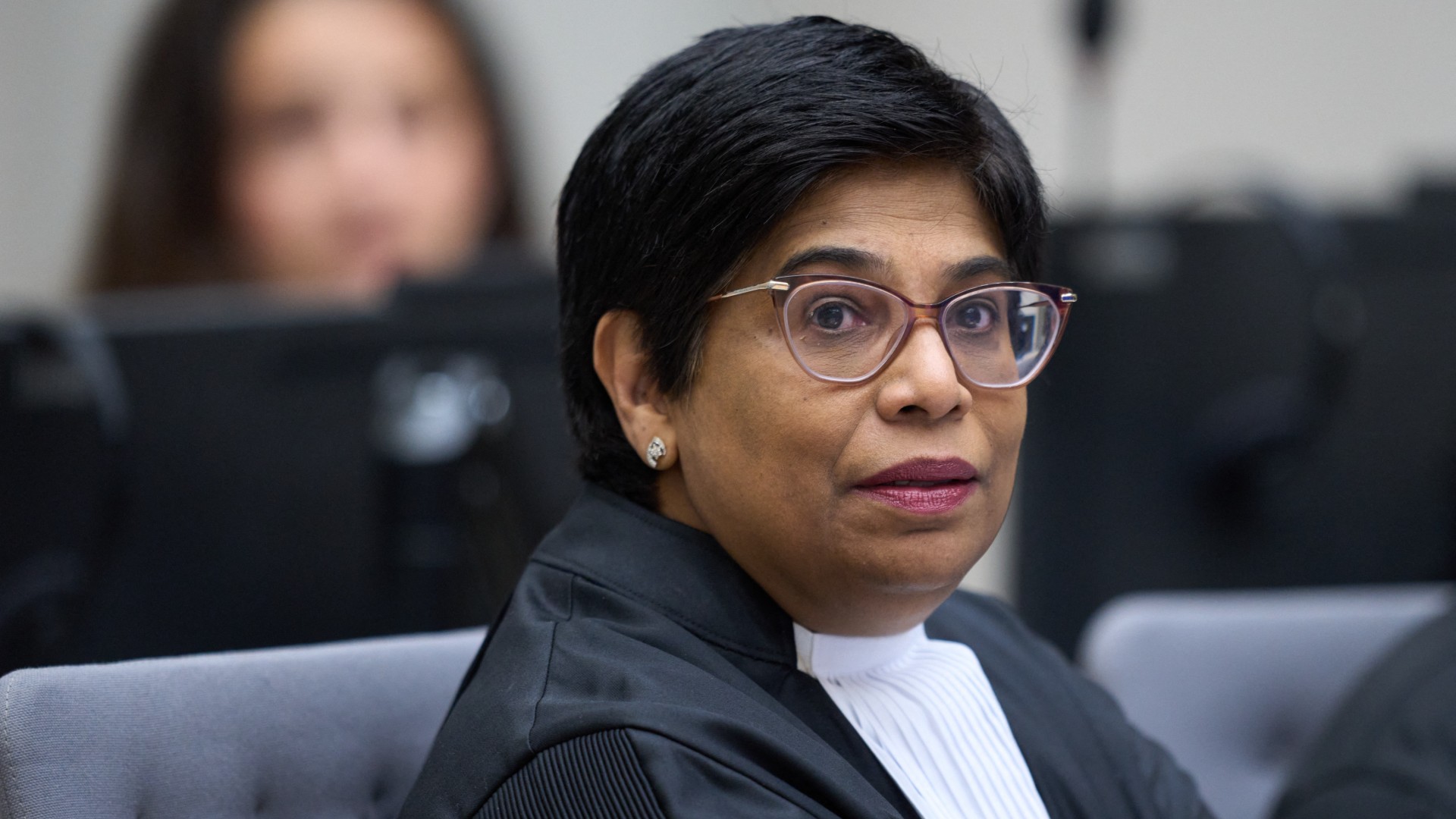
    The International Criminal Court (ICC) has not retreated from its legal actions against senior Israeli officials, even as the United States ramps up punitive pressure and broad sanctions against the court’s leadership and institutional operations, ICC Deputy Prosecutor Nazhat Shameem Khan has confirmed in an exclusive interview with CNN.

    In the weekend interview, Khan made clear the court’s investigation into alleged atrocities in Gaza remains on track, with no moves initiated to withdraw any existing arrest warrants or pending applications. “The case is still proceeding,” she stated. “We have taken no steps to try and withdraw any of those arrest warrant applications or the arrest warrants themselves, and the team continues to investigate in that situation.”

    The legal process began in November 2024, when ICC judges issued arrest warrants for Israeli Prime Minister Benjamin Netanyahu and his former defense minister Yoav Gallant. The warrants stem from allegations of war crimes and crimes against humanity committed during the military campaign in Gaza that launched in October 2023. Israel, which is not a member state of the ICC, has launched two appeals against the rulings, one of which challenges the court’s fundamental jurisdiction over Israeli citizens. Both appeals are currently pending.

    Beyond the high-profile warrants for Netanyahu and Gallant, reporting from independent outlet Middle East Eye (MEE) reveals the ICC prosecutor’s office has advanced additional investigations into other senior Israeli leaders over the past two years. In May 2025, MEE disclosed that prosecutors had submitted a confidential application for an arrest warrant targeting Israeli Finance Minister Bezalel Smotrich, over alleged offenses against Palestinians in the occupied West Bank. The charges against Smotrich include forced displacement classified as both a war crime and crime against humanity, the transfer of Israeli civilian populations into occupied territory (a recognized war crime), and persecution and apartheid as crimes against humanity. An evidence review has also been completed to evaluate two additional arrest warrant applications, one of which names Israeli National Security Minister Itamar Ben Gvir.

    Khan’s defiant comments come in the context of an aggressive, escalating campaign against the Hague-based permanent court from the second Trump administration. In July 2025, US Secretary of State Marco Rubio publicly declared that Washington would deploy every available policy tool to “dismantle the ICC – brick by brick, if necessary”, and called on all ICC member states to cut their financial and political support for the institution. In subsequent public remarks, Rubio launched verbal attacks on the court, labeling it a “stupid organisation” run by “lunatics and crazies”, and warned of severe consequences if the ICC attempts to exercise jurisdiction over American citizens.

    In August 2025, the US imposed asset freezes and transaction bans on Khan, fellow Deputy Prosecutor Mame Mandiaye Niang, and two sitting ICC judges, expanding sanctions that were already levied against former chief prosecutor Karim Khan, nine judges including the ICC president, and most other senior court leaders. The sanctions block any assets held by targeted individuals in US jurisdictions, and bar all American individuals and companies from providing funds, goods, or services to the sanctioned officials.

    Khan detailed the tangible personal and professional harms the sanctions have imposed. Sanctioned ICC leaders lose access to international banking services, have their credit cards revoked, and can only process financial transactions within the Single Euro Payments Area in Europe, she explained. She added that third-party service providers, including global health insurance firms, have cut ties with sanctioned personnel, and family members of targeted officials may be barred from entering the United States. Khan also noted she has never received an official explanation for her designation, but said she has no doubt the sanctions are retaliation for her role as a senior leader in the ICC prosecutor’s office.

    Against this pressure, Khan reaffirmed the court’s unwavering commitment to its mandate rooted in the Rome Statute, the founding treaty that was negotiated over decades and adopted by the sovereign decision of the court’s member states. “The work of the court continues unabated,” she emphasized. “We have trials in court. We have a trial scheduled for November of this year and one for next year. We have, in the course of the last year, seen convictions in two major trials, and we continue to conduct our investigations and our prosecutions, and appear in court on a regular basis, regardless of these events.”

    Established in 2002, the ICC is the world’s only permanent international court with authority to prosecute senior officials for four core international crimes: genocide, war crimes, crimes against humanity, and the crime of aggression. Beyond its investigation into alleged crimes in Palestinian territory, the court currently oversees more than a dozen active investigations across global conflict zones, including Ukraine, Darfur, Libya, and Afghanistan.

    Khan acknowledged that the court and its staff operate under unprecedented levels of external pressure. “The nature of the work that we do means that we inevitably will face pressure of all sorts to try and toe a political line, for instance, or to take a different position on the charging of accused persons, or to follow a path in investigation and prosecution,” she said. “So, indeed, we do feel pressure, but, as I’ve said, the dedication of our staff is extraordinary, and they continue to do their work.”

    Reports from international policy circles indicate the Trump administration is now drafting even broader institutional sanctions that would target the ICC as an organization, rather than just individual leaders. The proposed measures could cut the court off from all US dollar transactions, and restrict its access to global banking, insurance, and core technology services.

    Despite the mounting threats to the court’s operations, Khan said she retains hope for the future of international accountability. “The work that we do for victims, the fact that we continue to hear their voices stridently, with so much sincerity – they believe in this court,” she said. “For them, this provides an avenue of justice that may not necessarily be provided in many courts around the world. Every single member of this court works for humanity, and there can be nothing better than that.”

  • As Trump and Xi talk, China surges ahead with its AI ambitions

    As Trump and Xi talk, China surges ahead with its AI ambitions

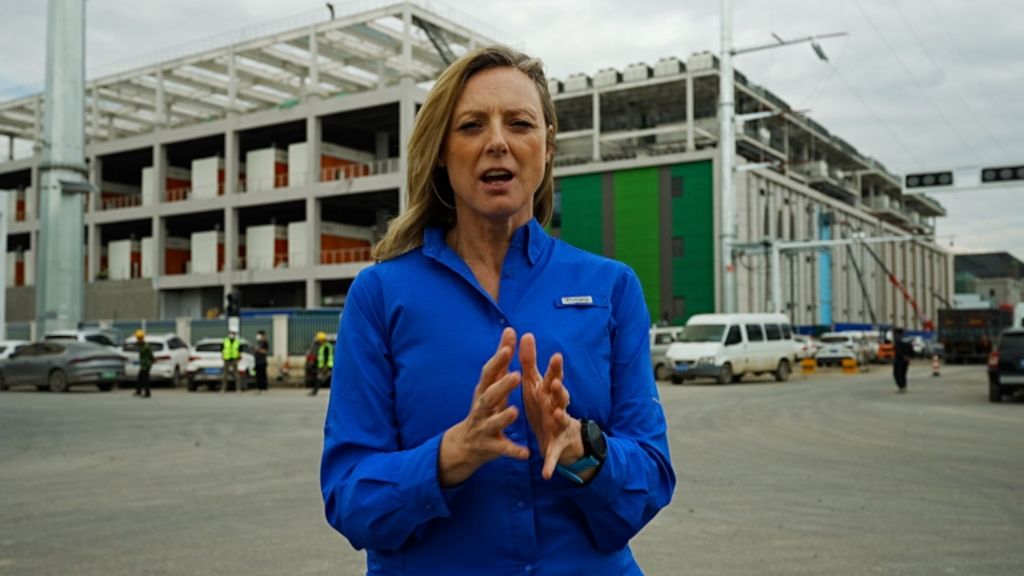
    Beneath the wide open skies of Inner Mongolia’s rolling grasslands, traditional potato harvests now share space with a very different kind of development: sprawling construction sites for massive data centres that will underpin China’s global push to lead the artificial intelligence industry. This unexpected digital frontier in Ulanqab, a city long known as China’s official “potato capital” for its fertile steppes and dramatic volcanic landscapes, is ground zero for Beijing’s ambitious AI expansion, just as Chinese President Xi Jinping meets with former U.S. President Donald Trump in Washington to discuss AI safety and bilateral tech competition.

    On these active construction zones, hundreds of construction workers in bright yellow hard hats haul heavy structural materials across muddy lots, while welding torches send sparks flying across metal scaffolding. Towering cranes maneuver with deliberate precision to lift prefabricated roof sections into place, and masons balance on narrow ladders to smooth brick facades. “This is China speed,” one worker joked with reporters, describing his country as an “infrastructure maniac” before walking off with a laugh. An electrical engineer overseeing the project outlined the phased development timeline: “We complete one full phase every year, and this is already our second. There are many more phases to come after this.”

    Artificial intelligence has become the central arena of strategic competition between China and the United States, and the raw computing power housed in these new data centres is the core of that race. For the Chinese Communist Party, these facilities are a critical pillar of both national economic growth and national security. Once fully operational, they will bring Beijing closer to its stated goal of integrating AI into 90 percent of China’s industries and social sectors by 2030.

    Beyond building out physical infrastructure, China is also cultivating a growing domestic talent pool of young engineers and AI researchers. Shifting global dynamics, including rising U.S.-China tensions and restrictive U.S. immigration policies introduced during the Trump administration, have dimmed the appeal of the “American dream” for many Chinese STEM scholars, pushing more to stay in their home country or return after completing studies abroad. Jack Zhang, a researcher from the University of Science and Technology of China who previously studied at Yale University in the U.S. and the University of Cambridge in the U.K., was recruited back to China through a high-level national talent program. “Fewer students and researchers are heading to the U.S. now, and more are coming back from the U.S. to China — that trend is very clear,” he explained. For Zhang, returning home allowed him to translate his laboratory AI research into practical applications for human health and medicine, a goal that required access to large-scale resources, research teams, and government support that he could not easily secure while working overseas.

    China’s rapidly expanding AI capabilities have in turn hardened Washington’s position: U.S. leaders have rejected calls to pause domestic AI development, despite widespread warnings from industry leaders that the technology is advancing faster than regulatory frameworks can manage. “Whoever wins AI, wins the future,” Trump stated publicly just one week ahead of the Washington summit. Dario Amodei, CEO of leading U.S. AI firm Anthropic, has called for maintaining the existing U.S.-led ban on selling advanced AI chips and equipment to China, warning that a Chinese lead in AI would “pose grave danger for the U.S. and the world.”

    That hardline stance is not what Beijing will come to the table with during Wednesday’s White House talks. The Global Times, a Chinese state-run newspaper that reflects official government policy, has dismissed U.S. concerns as nothing more than a Cold War-era playbook designed to contain China’s peaceful economic and technological rise.

    Beyond just competing to catch up to U.S. AI leadership, China is actively promoting an alternative development model for the industry. President Xi has encouraged Chinese AI firms to prioritize low-cost, open-source AI models that allow external developers, companies and even foreign governments to modify and adapt the technology to their own needs. This stands in direct contrast to the dominant U.S. model, where leading developers including OpenAI and Anthropic rely on closed, proprietary AI systems that keep core design details confidential.

    Beijing’s embrace of open-source AI is rooted in practical experience: sharing core technology across domestic firms has enabled faster collective innovation, helping China overcome one of its biggest structural barriers to AI growth: limited global access to the advanced semiconductors that deliver cutting-edge computing power. Beyond technological strategy, Beijing is also seeking a greater seat at the table to write global rules governing AI development. President Xi has repeatedly called for international collaborative regulation and a unified global governance framework for the sector. With global momentum for AI safety regulation building, this week’s bilateral summit carries outsized significance: observers are watching closely to see if the two major powers can find common ground on AI oversight, or if the pace of competitive development will make any slowdown unworkable.

    On the ground in Ulanqab, there is no sign of a slowdown. China is constructing hundreds of new data centres for major domestic tech players including Huawei, ByteDance, and DeepSeek across sparsely populated regions: northern provinces including Ulanqab, Ningxia, and Gansu, as well as Guizhou in the southwest. These locations offer major practical advantages: China has already built massive renewable energy capacity (mostly wind and solar) in these areas, land costs are far lower than in major urban centers, and cooler ambient temperatures reduce the energy and water needed to cool server banks.

    Still, the rapid transformation of these rural regions has not come without challenges and local concerns. Beijing has set a target powering most of its data centres with green energy by 2030, but much of China’s national power grid still relies on coal-generated electricity. Water scarcity is also a persistent risk in the arid grasslands of Inner Mongolia. Multiple whole villages have been relocated to clear space for data centre construction, though it is difficult to confirm the total number of relocated households or the level of compensation offered to residents. Open criticism of these projects is rare, as speaking out publicly carries significant risk for local people.

    “This big data has absolutely nothing to do with ordinary people,” one local resident told reporters anonymously, speaking off-camera. “What benefits has it brought us?” He added that few local workers have been hired for jobs at the completed facilities. Other local residents shared fears that their farmland would be seized for future development, leaving them unable to continue the agricultural work that has sustained their communities for generations.

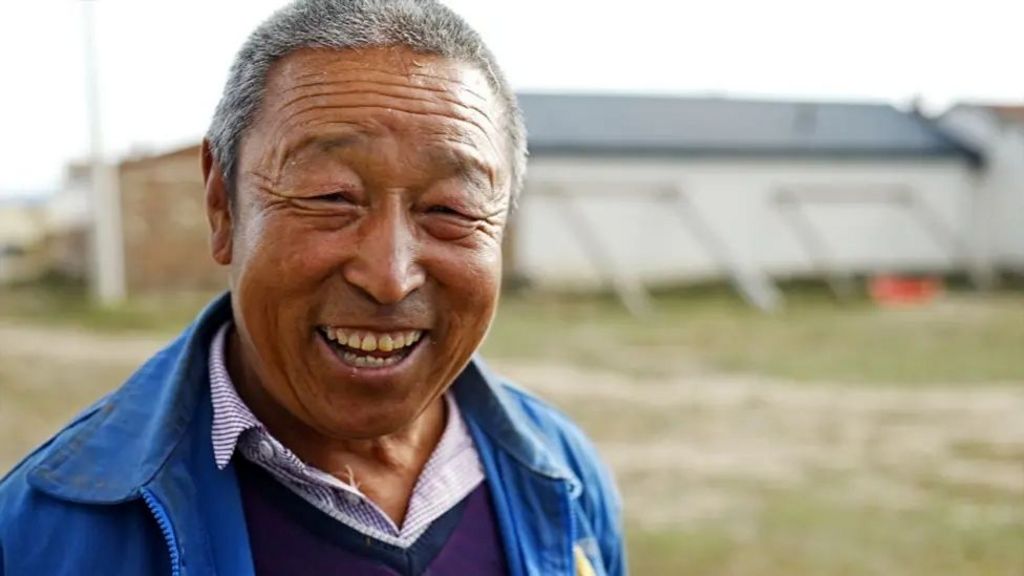
    Not all local perspectives are critical, however. A local resident who gave his surname as Zhang, standing near a potato harvest adjacent to one of the new data centres, expressed optimism about China’s AI push. “China is now at the forefront of the world,” he said. “It’s not like the 1960s, when we were relatively backward. China is doing alright now, whether in economic development or other areas.” Zhang noted that his own children have secured stable jobs at the new data centres.

    Surveys conducted in China suggest far lower public opposition to widespread AI adoption than is seen in many other Western countries, though the accuracy of these figures is difficult to verify in a political environment with strict media censorship. Beijing has framed AI as a solution to the challenge of China’s aging workforce, and is rapidly automating manufacturing and production sectors, a shift that has created unreported anxiety around potential mass job displacement.

    Even with these challenges, China produces roughly five million new science and technology graduates each year, compared to just half a million in the United States. As more of these graduates choose to build their careers domestically, a thriving, self-sustaining innovation ecosystem has taken root. Dang Ronghao, a 27-year-old AI developer working for a leading Chinese tech firm in Shanghai, noted that Chinese academic institutions have grown far more open to global collaboration, allowing him to partner with researchers around the world from his base in China. “I’ve seen research combining AI with nuclear fusion, AI with astrophysics, AI with new materials, and AI with the development of new drugs,” he said. “I think we are entering a good era for AI innovation here.”

    Still, some long-time observers argue that China’s academic and research culture still prioritizes conformity over critical challenge. Liu Jun, a professor in the Department of Statistics and Data Science at Tsinghua University who has previously taught at Harvard and Stanford, said: “It’s not as open as I wish it would be. I keep encouraging students here to ask more questions, to challenge existing assumptions more, but that’s a hard culture to change. I think it’s partly rooted in traditional culture, and partly shaped by the political system.”

    Far from the cutting-edge research labs of Beijing and Shanghai, and the construction sites of Inner Mongolia, many ordinary Chinese people are still grappling with far more immediate economic challenges: slow post-pandemic growth, persistently high youth unemployment, stagnant consumer spending, and plummeting property values. In rural areas like Ulanqab, an aging farming population remains the most pressing local concern. For many long-term residents, the AI boom unfolding alongside their potato fields feels like a distant, irrelevant development.

    “Big data and all that… it’s pretty good, but it has nothing to do with me,” said one elderly Inner Mongolian farmer as he rode a cart to check on his sheep flock. The farmer said he has no practical use for AI, and barely uses the internet at all. His smartphone screen is cracked, and he only pays for a pocket Wi-Fi dongle that costs roughly 40 yuan (around $5.50) per month for basic connectivity. “There haven’t really been any changes for me. I don’t know what the future will hold,” he said.

    This widespread public disconnect between national AI ambitions and ordinary people’s daily lives poses a quiet long-term challenge for Beijing. All across China, rapid technological transformation is reshaping landscapes and economies, but it remains unclear how much of the general population shares their leaders’ enthusiasm for a tech-driven future.

  • Rare look at the remote engine rooms powering China’s AI ambitions

    Rare look at the remote engine rooms powering China’s AI ambitions

    In the vast grasslands of northern China’s Inner Mongolia region, a quiet transformation is unfolding that could reshape the global trajectory of artificial intelligence development. Dozens of large-scale data centers, the unseen engine rooms that power cutting-edge AI systems, are rising across this remote, resource-rich area, offering a rare glimpse into China’s aggressive push to claim global leadership in the AI sector.

    BBC journalists gained exclusive on-the-ground access to this emerging tech hub, documenting the rapid construction activity that signals the scale of China’s AI ambition. Unlike the dense coastal tech clusters that dominate public awareness of China’s digital economy, Inner Mongolia was selected for this massive infrastructure buildout for key practical advantages: abundant low-cost land, cooler year-round temperatures that reduce the energy needed for cooling heat-generating servers, and access to abundant coal and renewable energy supplies to keep the facilities running.

    Each of these data centers will house tens of thousands of high-performance computing servers specifically designed to train the large language models and generative AI systems that have driven the global AI boom in recent years. As countries around the world race to scale up AI infrastructure to support innovation in everything from autonomous vehicles to medical diagnostics, China’s investment in these remote computing hubs underscores its national strategy to outpace competitors and capture a leading share of the global AI market. Industry analysts note that this massive infrastructure build is a critical foundational step, as advanced AI systems require exponentially more computing power than traditional digital services, making access to large-scale data center capacity a key competitive advantage. The construction activity in Inner Mongolia is just one visible part of a broader national push that includes billions in government investment, support for domestic AI research, and policy initiatives designed to integrate AI across every sector of the Chinese economy.

  • Israel Football Association cites Nobel Prize winners in rant at Ireland coach

    Israel Football Association cites Nobel Prize winners in rant at Ireland coach

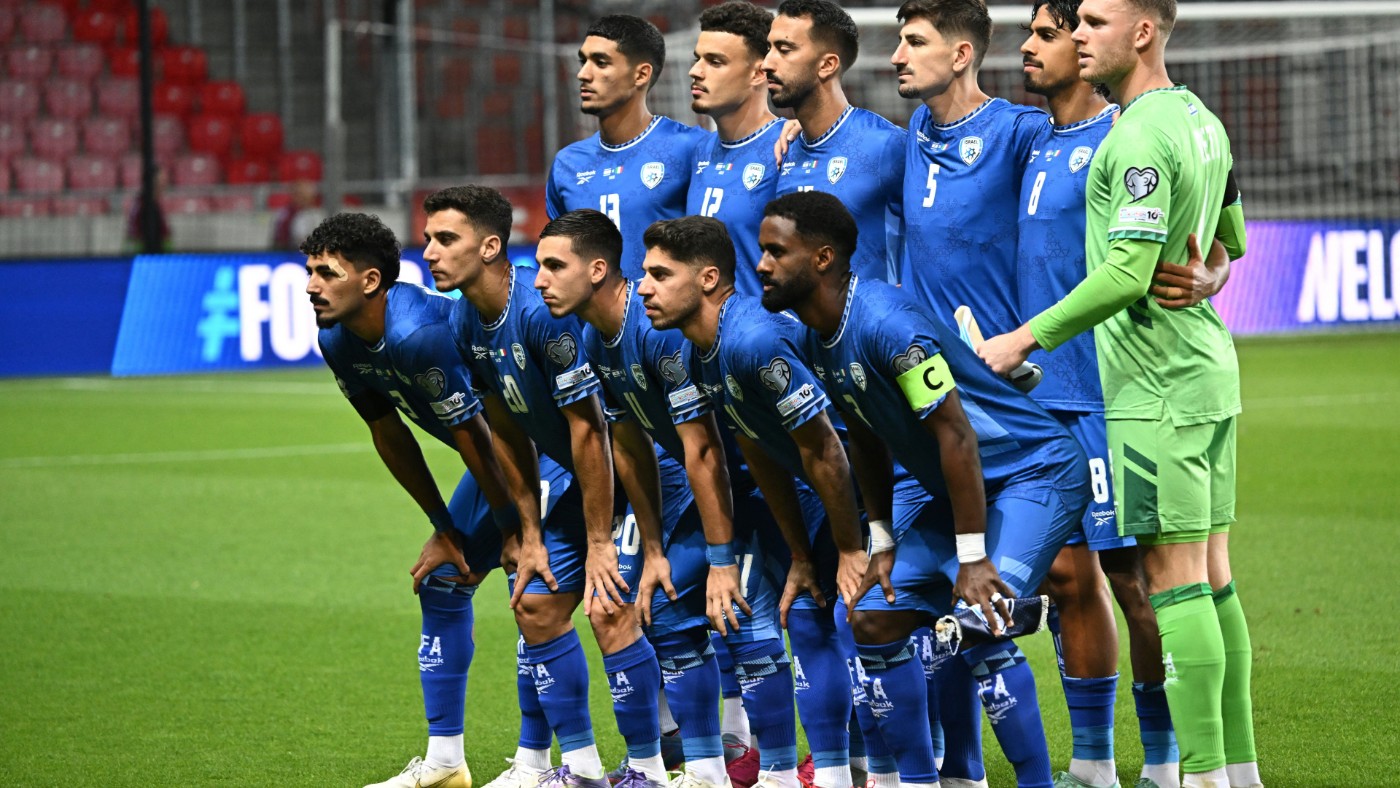
    A bitter public dispute has erupted between the Israel Football Association (IFA) and the Republic of Ireland men’s national football team’s head coach Heimir Hallgrimsson in the lead-up to their highly controversial UEFA Nations League Group G fixtures, set to kick off this week across Europe. The conflict has brought long-simmering tensions over Israel’s military campaign in Gaza directly into the world of international football, amplifying calls for Israel’s suspension from global athletic competition.

    The IFA launched a scathing verbal attack against Hallgrimsson in a viral social media post published on the evening of September 21, 2026. In the post, the association highlighted Israel’s long record of cultural and scientific contribution to global society, noting that Israeli citizens have claimed an impressive number of Nobel Prizes across multiple fields. “Unfortunately, we have not yet found a cure for stupidity, ignorance and hypocrisy displayed by @IrelandFootball team coach,” the IFA wrote. “We’re not playing with ignorance, hypocrisy and stupidity, we’re playing against the coach who embodies them.”

    The harsh rebuke came in direct response to comments Hallgrimsson made a week earlier, when the Icelandic coach addressed questions about how his squad would stay focused on football amid the intense political controversy surrounding the upcoming matches. “We are not playing with genocide, we are playing against genocide,” Hallgrimsson said. “We are playing against Israel; we are not playing with Israel.”

    Ireland and Israel have been drawn into Group G of this edition of the UEFA Nations League alongside Austria and Kosovo. Ireland’s campaign kicks off with a match against Kosovo this Thursday, followed by back-to-back fixtures against Israel: first in Debrecen, Hungary on September 27, then in what is technically Ireland’s home match on October 4 in Backa Topola, Serbia. The home fixture was originally scheduled for Dublin, but the Football Association of Ireland (FAI) relocated it citing unspecified operational challenges that could disrupt hosting the match. Israel opens its Nations League campaign this Thursday against Austria in Linz.

    The controversial matches have been the target of a months-long campaign by Irish pro-Palestine advocacy groups, who have pushed to cancel the fixtures entirely in protest of Israel’s ongoing military operations in Gaza. The Gaza death toll from the conflict has surpassed 74,000 Palestinians, according to reported counts, including more than 1,000 Palestinian athletes. Since October 2023, no international or European club football matches have been hosted in Israel due to widespread security concerns across the region.

    Irish Sport for Palestine (ISFP), the leading group organizing the “Stop the Game” campaign, has coordinated with pro-Palestine civil society groups across Europe to ramp up pressure ahead of the fixtures. “We’re looking at all channels of action. We have been connecting with pro-Palestine Austrian groups on the ground, civil society groups, and we’re going to be working alongside them,” ISFP representative Rebecca O’Keeffe explained in a July 2026 interview.

    On September 21, the campaign gained high-profile backing when more than 160 top Irish athletes signed an open letter calling on the Irish national men’s squad to refuse to play the matches on conscience grounds. Signatories include household names in Irish sport such as legendary rugby player Tony Ward, prominent Gaelic footballers Joe Brolly and Colm O’Rourke, and elite distance runner Ciara Mageean.

    The debate over Israel’s participation in international football is not a new one. In March 2025, global governing body FIFA found that the IFA had brought football “into disrepute” amid the campaign, but stopped short of issuing a suspension, instead imposing a $190,000 fine on the association. In November 2025, FAI membership passed an overwhelming formal resolution ordering the association’s board to call on UEFA to immediately suspend the IFA from European competition.

    Despite widespread public and organizational opposition to holding the matches in Ireland, the fixtures are still set to go forward. The financially strained FAI has publicly stated that it relies on the match revenue to sustain its operations. FAI chief executive David Courell acknowledged the widespread anger over the conflict in comments at a recent press briefing, noting that the association shared opposition to Israel competing. “It is accurate to say the FAI wishes we were not in this position,” Courell said. “We have been clear in our view by virtue of the breaches of the (UEFA) statutes that Israel should not be playing these games.”

    To date, 12 Israeli individuals have been awarded Nobel Prizes for their work across scientific, literary, and peace fields. Notably, in November 2024, Israeli Nobel laureate Aaron Ciechanover publicly commented that a growing number of citizens who “want to live in a free, liberal-democratic country” were leaving Israel permanently amid ongoing political unrest and the Gaza conflict.

  • US to build two military bases in Greenland under new deal with Denmark

    US to build two military bases in Greenland under new deal with Denmark

    In a watershed moment for Arctic security, leaders from the United States, Denmark, and Greenland have signed a landmark updated defense agreement that clears the way for two new U.S. military installations on the semi-autonomous Arctic territory, while formally reaffirming Denmark’s long-held sovereignty over the region. The signing ceremony took place on the sidelines of the United Nations General Assembly in New York, where U.S. President Donald Trump was joined by Danish Prime Minister Mette Frederiksen and Greenlandic Prime Minister Jens-Frederik Nielsen to formalize the pact.

    Right before the signing, Trump announced that work to develop the expanded U.S. military footprint would begin without delay, telling reporters “we will immediately begin the process of developing a large military presence in the appropriate locations”. All three leaders framed the deal as a mutually beneficial outcome. Frederiksen noted the agreement serves the interests of not just the three signatory parties, but also Europe and the broader NATO alliance, while Nielsen called the outcome an unambiguous “win-win-win”.

    The agreement brings a close to more than 18 months of rising geopolitical tension over Greenland, sparked last year when Trump publicly threatened to seize the territory over stated U.S. national security concerns, highlighting its critical strategic location in the Arctic and abundant untapped mineral reserves. His aggressive rhetoric drew widespread condemnation from Greenlandic officials, the Danish government, and other European leaders, who issued a joint rebuke arguing that his threats undermined transatlantic cooperation and risked triggering a dangerous escalation in the region.

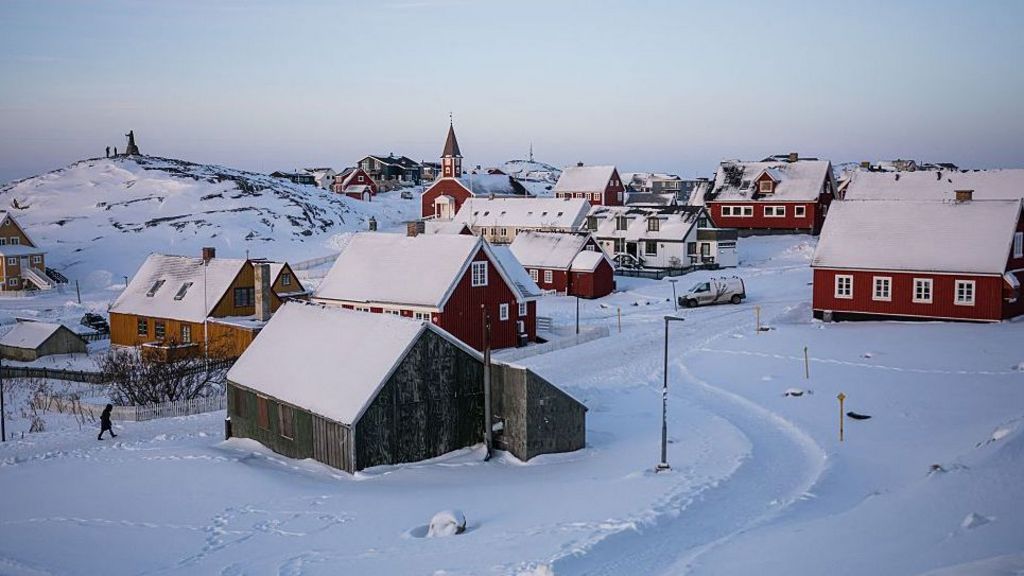
    This new deal amends and modernizes the original 1951 bilateral defense agreement between Denmark and the U.S. that has governed U.S. military activity in Greenland for 75 years. Under the terms of the updated pact, the U.S. gains permission to establish two new designated defense areas at Narsarsuaq in southern Greenland and Mestersvig on the island’s eastern coast. U.S. Northern Command has confirmed that U.S. military survey teams have already assessed Narsarsuaq, a former World War II military base and decommissioned civilian airport that already offers deep-water port access and a fully functional large runway. Mestersvig, by contrast, is a remote, barely developed outpost currently used only by a Danish naval dog sled patrol unit.

    Critical details of base construction and operations, outlined as “modalities and technical details” in the agreement, have not yet been finalized and require mutual approval from all three signatory parties, meaning U.S. activity in Greenland is not unlimited and cannot proceed without formal consent from Copenhagen and Nuuk.

    The U.S. already maintains Pituffik Space Base in northwestern Greenland, and the new agreement allows the U.S. to upgrade and expand its existing operations at that site. A key non-proliferation clause bars any non-NATO member state from constructing manned or unmanned military installations on Greenland, or maintaining a permanent military presence on the island. While this provision is explicit in the updated text, military access for non-allied nations was already effectively prohibited prior to the deal.

    Notably, the agreement involves no cession of territory to the United States, and Washington explicitly recognizes both Denmark’s full sovereignty and territorial integrity over Greenland, as well as Greenland’s constitutionally protected right to self-determination. This represents a clear retreat from Trump’s earlier public calls to acquire the Arctic island, but still delivers on his core goal of expanding U.S. military influence in the increasingly strategic Arctic region, a outcome that is already being framed as a major policy win among many U.S. political circles.

    Before the deal can enter into force, it must still receive formal ratification from both the Danish parliament and Greenland’s legislative assembly.

    Despite months of acrimonious public tension over the territory, the atmosphere at Tuesday’s signing was uniformly cordial and optimistic. Trump praised the pact, saying “We going to have a tremendous relationship, a secure relationship. This is tremendous for Europe and for the United States, for everybody, and for Greenland it’s going to be incredible.”

    Frederiksen framed the signing as a major milestone in the long-standing transatlantic defense partnership between the two nations, noting “Seventy-five years ago we entered into an agreement about the defence of Greenland. Today, we’re signing an even bigger and better agreement – a deal that can last forever.” She reiterated that the agreement fully upholds Danish sovereignty and Greenlandic autonomy.

    For his part, Nielsen emphasized that this agreement was negotiated with Greenlandic input at its core, saying “for Greenland, it is not only an agreement about us, it is an agreement with us. It takes into account the people of Greenland, our rights, our livelihoods and the development of our country. Greenland matters for North American security and for transatlantic security.” Nielsen also highlighted NATO’s central role in maintaining stability in the North Arctic amid a shifting global security landscape. The agreement also includes a provision confirming that Greenland would retain its NATO membership if it achieves full independence from Denmark in the future.

    The original 1951 agreement already allowed the U.S. to deploy as many military personnel to Greenland as it deemed necessary, and the U.S. currently stations more than 100 permanent troops at Pituffik Space Base. For months, Trump pushed for a move to purchase or annex Greenland, arguing the territory was vulnerable to growing influence from U.S. strategic rivals Russia and China. He also framed control of Greenland as critical to his proposed “Golden Dome” national missile defense system, though the new deal only mentions the project once and includes no binding commitments to advance it.

    Shortly after the signing, a NATO spokesperson issued a statement welcoming the agreement, noting that it would “help advance security, stability and cooperation in this vital region”. In Denmark, the deal has been broadly celebrated as a major diplomatic success, with multiple major political parties already announcing they will support ratification. For Greenland, a territory of just 56,000 people, the agreement brings a welcome end to months of political uncertainty. By securing formal recognition of its autonomy and sovereignty alongside the expanded defense cooperation, Greenlandic leaders have emerged from the standoff with a deal that addresses their core priorities, bringing a long period of geopolitical crisis to a close.

  • ‘A blatant affront’: Israeli embassy upgrade angers pro-Palestine voices in Morocco

    ‘A blatant affront’: Israeli embassy upgrade angers pro-Palestine voices in Morocco

    On September 16, a high-profile meeting between Israeli Foreign Minister Gideon Saar and Moroccan Foreign Minister Nasser Bourita in New York yielded a landmark agreement to deepen bilateral relations between the two North African and Middle Eastern nations. The core of the new deal elevates both countries’ existing diplomatic missions to full embassy status and paves the way for the appointment of resident ambassadors, marking a major step forward in the normalization process that began with the 2020 Abraham Accords brokered during former U.S. President Donald Trump’s first term. Two supplementary pacts — one focused on investment protection and another addressing double taxation — are also scheduled to be finalized before the end of 2024.

    In a joint statement released after the announcement, the United States, Israel, and Morocco reaffirmed their commitment to the principles of the Abraham Accords, arguing that full, peaceful diplomatic and friendly ties between Rabat and Tel Aviv serve the shared interests of all parties, with the potential to drive regional stability and unlock new economic and social opportunities across the Middle East and North Africa.

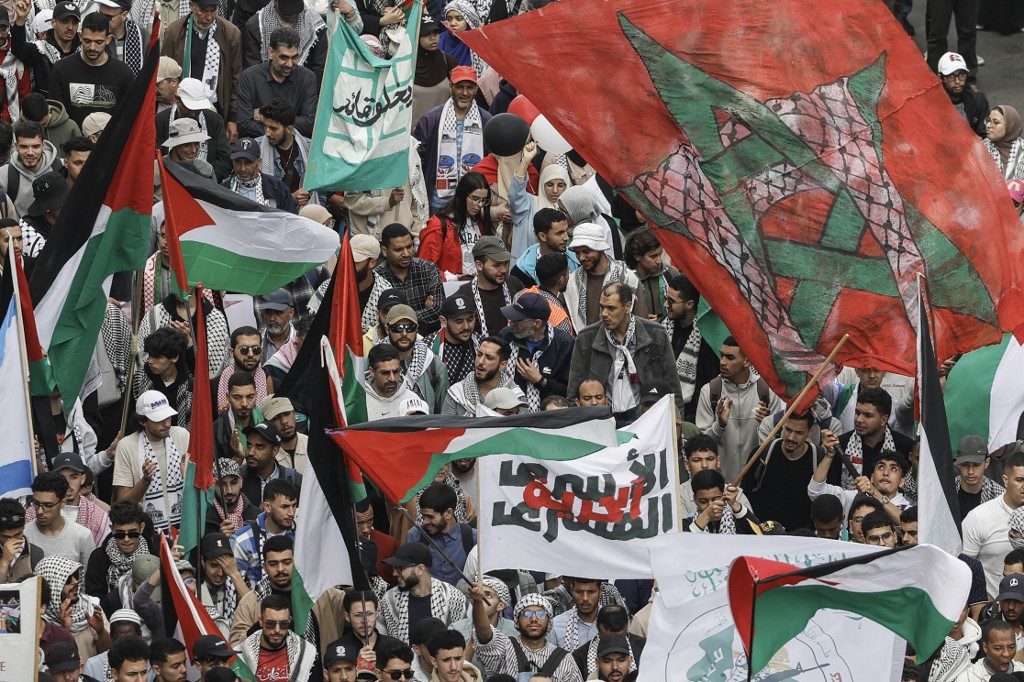
    But this latest advancement in normalization has unfolded against widespread public opposition in Morocco, where broad popular support for the Palestinian cause and consistent condemnation of formal ties with Israel have remained deeply entrenched since the original accords were signed four years ago. The announcement also comes just one week ahead of Morocco’s September 23 general elections, leaving the sitting government in a caretaker role with limited authority to act on major policy changes — a detail that has sparked internal political discussion over who holds ultimate decision-making power over foreign affairs in the kingdom.

    When the Abraham Accords were first signed in 2020, the Islamist-leaning Justice and Development Party (PJD) held the premiership under Saadeddine El-Othmani. PJD officials have long clarified that the 2020 accords did not contradict the party’s official pro-Palestine stance, pointing to Morocco’s unique political structure, where ultimate authority over international relations rests with the monarchy, not the sitting head of government. “Yes, PJD was in power when the Abraham Accords were signed, but the decision was made by the king; the head of government in Morocco does not have the power over international affairs,” a senior active PJD member, speaking on condition of anonymity to Middle East Eye, explained. The caretaker status of the current government during the recent announcement, he added, only reinforces that the monarchy retains full control over this major foreign policy shift.

    To date, PJD remains the only officially registered political party in Morocco that has openly condemned the latest agreement to deepen ties with Israel. Following an urgent virtual meeting held the same day as the New York announcement, the party released an official statement reaffirming its “firm and unwavering stance against any form of normalisation or agreements with Israel.” The banned Islamist movement Al Adl Wal Ihsane has also publicly denounced the diplomatic upgrade, with Dr. Boubker El Ounkhari, a senior member of the movement’s political circle, calling the move “a blatant affront to Moroccans’ sentiments and a provocation against the popular will.”

    El Ounkhari emphasized that at a moment when international pressure should be mounting on Israel to hold it accountable for its ongoing occupation and military campaign in Gaza, Rabat has instead chosen to formalize and deepen its bilateral relationship with Tel Aviv. Morocco’s current governing coalition, made up of the leading National Rally of Independents (RNI), the Authenticity and Modernity Party (PAM), and the Istiqlal Party, has remained largely silent on the agreement, with senior party members citing the sensitive pre-election context as a reason to avoid public comment.

    A senior RNI member, also speaking anonymously, told Middle East Eye that internal party reaction to the deal was marked by “a kind of rationality and calmness.” He framed this muted response as predictable, noting that Moroccan-Israeli relations have been an established, non-negotiable part of the kingdom’s foreign policy since the 2020 accords were signed. A senior PAM member echoed the sentiment of caution, explaining that no party figure would risk commenting on a divisive issue that could be weaponized by political opponents in the final days of campaigning.

    Moroccan officials have sought to justify the diplomatic upgrade by framing closer ties as a tool to advance humanitarian and diplomatic support for Palestinians. Foreign Minister Nasser Bourita told reporters that despite deeper cooperation, “Rabat does not agree with Israel 100 percent” — a narrative that mirrors the justification Rabat used when it deployed military personnel to the U.S.-backed International Stabilisation Force in Gaza as part of the 2020 Trump peace plan. The RNI member echoed this government framing, arguing that “Morocco can use its relations with Israel as a channel of diplomatic dialogue and pressure for stopping escalation and advancing a two-state solution,” though he acknowledged that “Moroccan-Israeli cooperation does not automatically translate into benefits for the Palestinians.”

    Critics of normalization have rejected this justification outright. Ahmed Ouihmane, president of the Moroccan Observatory Against Normalisation and a member of the national secretariat of the Moroccan Working Group for Palestine, dismissed the claim that normalization serves Palestinian interests as “nothing but nonsense and an insult to the intelligence of the Moroccan people.” He challenged the government’s narrative, asking: “If normalisation is a means to serve the Palestinian cause, what results have actually been achieved for the Palestinians through it?”

    Ouihmane pointed to the staggering human cost of Israel’s military campaign in Gaza, where the United Nations has recorded that at least 21,000 Palestinian children have been killed in Israeli attacks since October 2023. He argued that tangible support for Palestinians would require cutting all cooperation that enables Israel’s military operation, including ending Morocco’s role as a key transit hub for arms shipments bound for Israel — a role that has included facilitating transport of components for F-35 fighter jets used in attacks across Gaza. “Real aid for Palestinians would begin by denying the Israeli war machine any form of cooperation, support or facilitation – such as allowing Moroccan ports to receive ships laden with lethal weaponry destined for the Zionist killing machine,” he said.

    The announcement of the diplomatic upgrade comes at a particularly fraught time for the Moroccan government, which is already navigating multiple concurrent crises ahead of the general election. These include ongoing fallout from the Ceuta migrant crisis, allegations of Moroccan involvement that the kingdom has denied, a major high-profile leak that exposed the personal data of more than 70,000 Moroccan intelligence personnel, and a controversial Spanish bill that would grant citizenship to Sahrawis born in Western Sahara during the Spanish colonial era — a move that Rabat strongly opposes.

    Many political observers and insiders frame the ongoing advancement of normalization as rooted in long-standing geopolitical and strategic priorities, most notably Morocco’s claim to sovereignty over Western Sahara. In December 2020, the United States formally recognized Morocco’s sovereignty over the disputed territory in a side agreement that was tied directly to Rabat’s signing of the Abraham Accords. The Western Sahara dispute has dominated Morocco’s foreign policy for decades, with the kingdom locked in a long-running regional rivalry with Algeria, which supports the pro-independence Polisario Front’s claims to the territory.

    The PJD member acknowledged that Western Sahara is a core driving force behind the kingdom’s policy, explaining: “The state has its own geopolitical calculations that drive it to make such difficult decisions, that sometimes run counter to the will of the people.” Even so, he added, the rights of Palestinians remain a core principle for pro-Palestinian activists across the kingdom, and no strategic calculation can justify formal ties with Israel.

    El Ounkhari echoed widespread public frustration, noting that Moroccans have consistently rejected normalization across every recent poll and public protest, yet official policy continues to move steadily toward deeper ties with Israel. “The official process continues in the opposite direction, moving from one stage to another in deepening relations with the Zionist entity,” he said.

    Since the start of Israel’s military campaign in Gaza in October 2023, peaceful pro-Palestinian protests have been held every week outside Morocco’s parliament in Rabat, drawing thousands of participants from a broad coalition of trade unions, political groups, and civil society organizations. The Moroccan Working Group for Palestine, which Ouihmane serves on, is one of the leading umbrella organizations coordinating this grassroots movement.

    Just four days after the diplomatic deal was announced, Ouihmane was physically assaulted by alleged members of a pro-normalization group called “We Are All Israelis” on a major street in central Rabat, requiring hospitalization. Local activists note that the attack marks an escalation of tensions: prior to the assault, the loose network of pro-Israel Moroccans, which formed after October 2023, had limited its activities to online harassment of anti-normalization activists.

    Despite the attack, Ouihmane told Middle East Eye that the grassroots movement would continue its fight across all levels to reverse the normalization process. “We will continue our struggle at all levels […] our goal is to overturn the normalisation process,” he said. The movement’s demands are clear: end all normalization efforts, close the Israeli liaison office in Rabat, and cut all forms of cooperation with what Ouihmane calls a “rogue entity.”

    Protesters have repeatedly made their position clear in mass rallies across every region of Morocco, Ouihmane added, and the message remains unchanged: “Palestine is a Moroccan national cause, […] while normalisation is a betrayal.”

    El Ounkhari emphasized that official state policy does not make normalization inevitable or acceptable to the Moroccan public. “Embassies may be opened, and ambassadors exchanged, but that does not mean normalisation has become acceptable to the Moroccan people. Palestine will remain present in the conscience of Moroccans,” he said.