博客

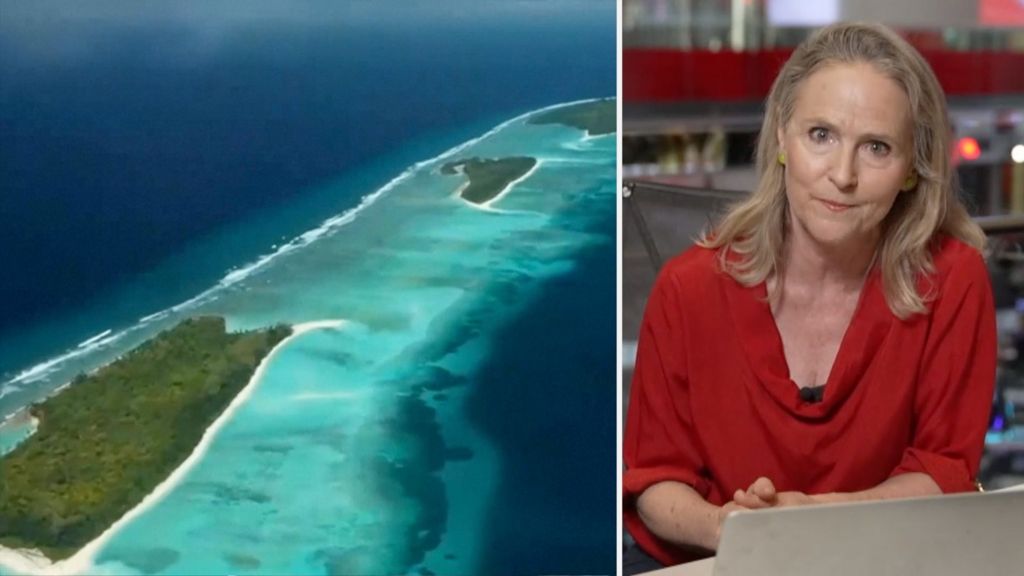
  • Watch: Why is the UK reviewing its Chagos Islands deal?

    Watch: Why is the UK reviewing its Chagos Islands deal?

    In a surprise announcement that has reignited debate over the future of the disputed Indian Ocean archipelago, the United Kingdom’s top defense official has confirmed that the British government is conducting a full review of the agreement to transfer sovereignty of the Chagos Islands to Mauritius. The confirmation of the review comes after months of mounting political pressure from opposition groups and some backbench lawmakers in the ruling party, who have raised questions over the strategic and legal implications of the 2024 preliminary deal that was struck between London and Port Louis.

    The Chagos Islands have been a source of diplomatic tension between the UK and Mauritius for more than half a century. The UK separated the archipelago from Mauritius ahead of Mauritius’s independence in 1968 to allow the United States to build a major military base on the largest island, Diego Garcia. For decades, Mauritius has challenged the UK’s control of the territory, with the International Court of Justice issuing an advisory ruling in 2019 that demanded the UK end its occupation of the islands and return them to Mauritian control.

    The original deal, announced earlier this year, was billed as a resolution to the long-running dispute, with the UK agreeing to transfer full sovereignty over the archipelago in exchange for Mauritius granting the US continued access to the Diego Garcia military base, a critical logistics and intelligence hub for Western operations in the Middle East and Indo-Pacific. However, critics in the UK have argued that the agreement undermines British national security interests and sets a dangerous precedent for territorial concessions. The defense secretary’s confirmation of the review indicates the current British administration is pausing to re-evaluate the terms of the agreement before moving forward with ratification, leaving the final outcome of the decades-long sovereignty dispute uncertain once again.

  • Angry Anderson, rock star who soundtracked Kylie’s wedding in Neighbours, dies aged 79

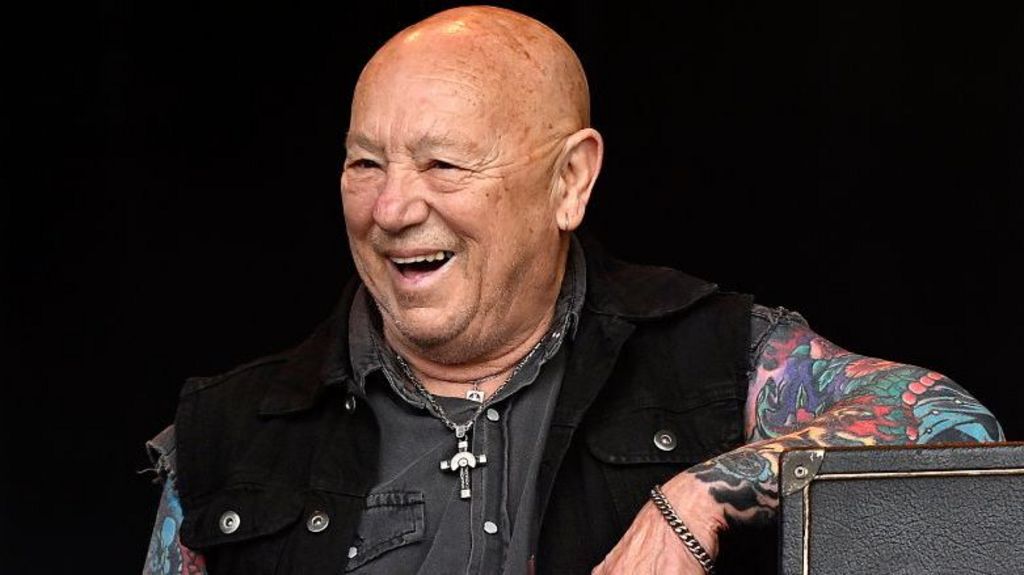
    Angry Anderson, rock star who soundtracked Kylie’s wedding in Neighbours, dies aged 79

    Beloved Australian rock icon Angry Anderson, best known to global audiences for his hit single that soundtracked one of the most iconic television weddings in pop culture history, has passed away at the age of 79. Born Gary Anderson in 1947 in Melbourne, he carved out a decades-long, influential career in rock music that left an enduring mark both in his home country and across the world.

    Anderson first stepped into the spotlight in 1976 as the founding frontman of Rose Tattoo, a hard rock outfit that quickly earned a reputation as one of Australia’s most revered and respected bands. The group made its official recording debut in 1978 with their self-titled first album, and went on to release four more full-length records before an initial split in 1987, when Anderson shifted his focus to a solo career.

    It was that same year that Anderson’s most famous work, *Suddenly*, co-written and released by the singer in summer 1987, became a global phenomenon. Kylie Minogue, who starred as Charlene Mitchell on the hit Australian soap opera *Neighbours*, insisted the track be used for Charlene’s 1988 wedding to Jason Donovan’s character Scott Robinson. Anderson would later say that *Suddenly* was the finest song he ever wrote, and the exposure from the wedding scene — which drew 20 million viewers in the United Kingdom alone — catapulted the track to the top 3 of the singles charts in both the UK and Australia, only blocked from the number one spot in Australia by Minogue’s own debut solo hit *The Loco-Motion*.

    After releasing two solo albums, Anderson reunited with Rose Tattoo in 1993 to open for legendary rock band Guns N’ Roses on their Australian tour. The band reformed permanently for headline touring in 1998, and capped their legacy with induction into the Australian Recording Industry Association (ARIA) Hall of Fame in 2006. Beyond his rock career, Anderson stretched into theater, playing the role of Herod in an Australian stage production of *Jesus Christ Superstar*, and earned widespread recognition for his community work: he was appointed a Member of the Order of Australia in 1993 for his advocacy for young people and extensive charitable service.

    Just one month before his death, Anderson suffered a cardiac arrest while Rose Tattoo was on a farewell tour across Europe. He received immediate medical care overseas before returning to Australia to recover, and the band canceled nine scheduled tour dates in the wake of the medical incident.

    Tributes have poured in from across the entertainment industry following news of his passing. Jason Donovan shared a heartfelt tribute on Instagram, writing: “Legend! What a great guy. Another great Australian. Thank you Angry for all the wonderful music and memories. Condolences to all friends and family.”

    In a joint statement released by Anderson’s family and Rose Tattoo, the singer was remembered as a “devoted father, and much-loved bandmate.” The statement added: “His loss will be deeply felt by all those who knew and loved him both here in Australia and overseas. We thank everyone for their prayers and messages of love and continued support.”

  • Trump to CNN: ‘You shouldn’t be here’

    Trump to CNN: ‘You shouldn’t be here’

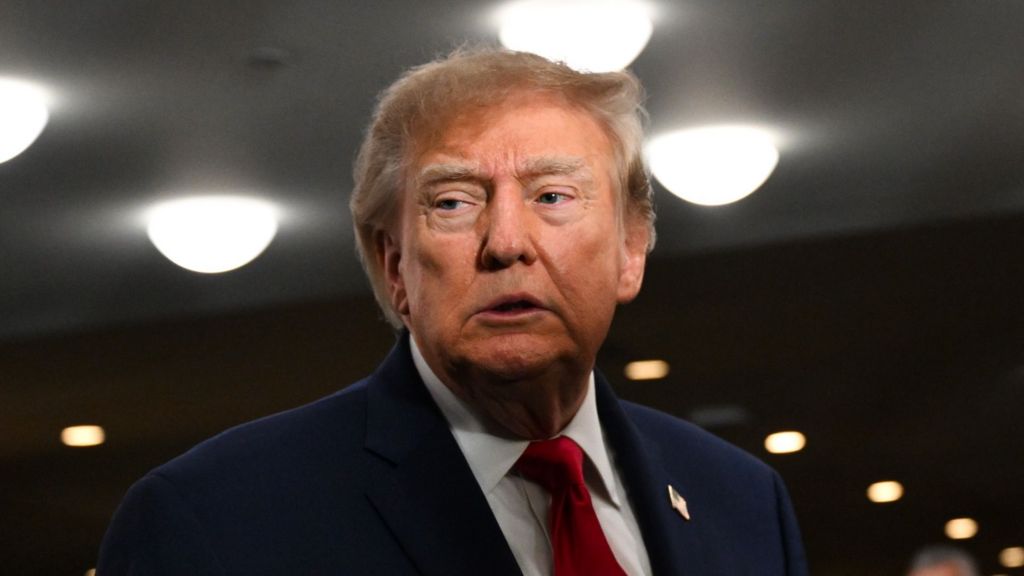
    A tense public confrontation unfolded between former President Donald Trump and CNN correspondent Kaitlan Collins on the sidelines of the United Nations General Assembly, marking a new escalation in the longtime tensions between the Trump administration and the major cable news network. The clash came after CNN was officially stripped of its press access to the White House grounds, a move that had already drawn sharp criticism from press freedom advocates across the political spectrum. As Collins approached Trump to ask questions during the high-profile international gathering, the former president directly addressed her, stating forcefully that the outlet did not belong at the event. The exchange immediately drew global media attention, reigniting debates about the relationship between sitting U.S. executive branch leadership and independent press, as well as the implications for journalistic access in political spaces. The confrontation underscored the deep divisions between the Trump White House and major mainstream media outlets, which had frequently clashed over coverage of the administration’s policies and actions throughout its tenure.

  • UK to review Chagos Islands deal over lack of US support, Streeting tells BBC

    UK to review Chagos Islands deal over lack of US support, Streeting tells BBC

    The United Kingdom has launched an informal review of its 2025 sovereignty agreement that would cede control of the Chagos Islands to Mauritius, UK Defence Secretary Wes Streeting has confirmed, following renewed public criticism of the pact from US President Donald Trump at the United Nations General Assembly this week.

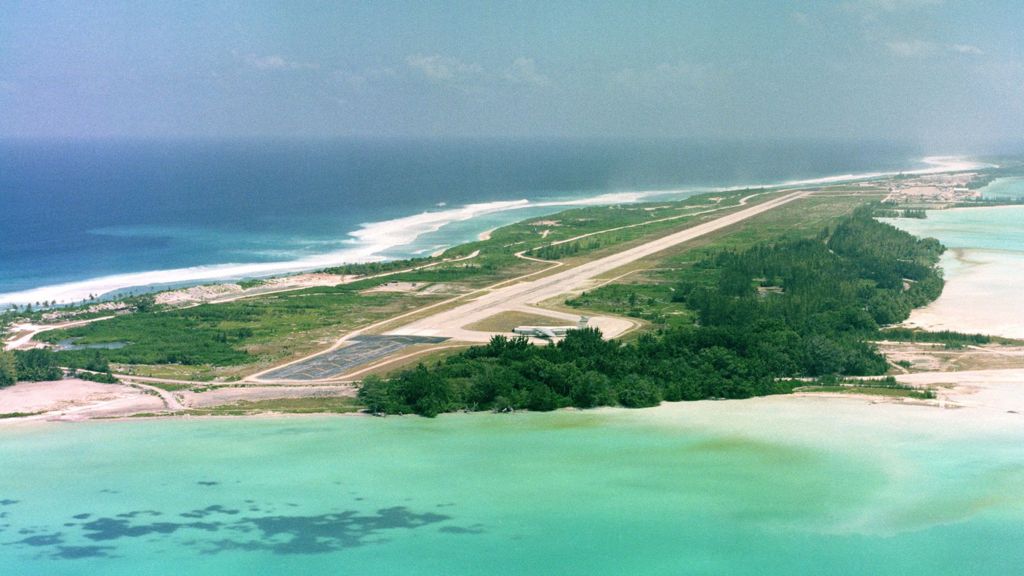
    The original deal, negotiated and signed under former UK Prime Minister Keir Starmer in May 2025, was designed to resolve a decades-long sovereignty dispute over the Indian Ocean archipelago. Under its terms, the UK would transfer full sovereignty of the islands to Mauritius in exchange for a 99-year lease on the strategic UK-US military base located on Diego Garcia, the archipelago’s largest island. The UK government initially projected the total net cost of the agreement at £3.4 billion, or roughly £101 million ($136 million) in annual payments to Mauritius, though political opponents have argued inflation-adjusted costs could reach as high as £35 billion, with additional risks of expanded Chinese influence in the region.

    The agreement hit a deadlock in April of this year when Trump withdrew US support, forcing the Starmer administration to pause the deal indefinitely ahead of its parliamentary ratification. Streeting made clear in comments to BBC Breakfast on Wednesday that the review is a direct response to Washington’s opposition, noting that Trump’s recent public criticism clarified his unchanged stance on the unamended draft. “What President Trump said yesterday wasn’t new but I think it does provide absolute clarity that his position on this Chagos deal as currently drafted is not changing,” Streeting told reporters. “So we have to do more work with our American allies, with President Trump and his administration, to get the deal to a place where he can support it.”

    The Diego Garcia base has long been viewed as one of the West’s most critical strategic assets in the Indian Ocean, giving UK and US military forces unmatched access to a region that has grown in geopolitical importance in recent decades. Successive UK prime ministers have held that the ongoing unresolved sovereignty dispute, which has backing from international courts, puts the long-term security of the base at risk. Streeting emphasized that the core priority of the ongoing review is to secure long-term stability and certainty for the base’s operations.

    The renewed public scrutiny of the deal came during Trump’s first in-person meeting with current UK Prime Minister Andy Burnham on the sidelines of the UN General Assembly in New York, where Trump publicly called the agreement “terrible” and stated the UK would revisit the terms. Burnham simply replied “Yep” during the exchange, and later clarified to reporters that his government inherited the negotiations and is committed to finding a workable resolution that protects the base’s future. “It’s critical to safeguard the future of the base, and that matters to us for security reasons, but also clearly to the United States as well,” Burnham said. “What I said in the meeting is that we will work to find that resolution between the different sides, and we’ll work hard to find it.”

    Ahead of his UN trip, Burnham spoke with Mauritian Prime Minister Navin Ramgoolam, and an official readout of the conversation confirmed Burnham “reiterated his commitment to continue doing everything possible” alongside the US to advance the deal toward ratification. Downing Street sources have stressed that the current review does not represent a major policy shift from the previous position, which has always required US backing to move forward, though Streeting’s comments marked the first explicit public confirmation that the unamended draft cannot gain Trump’s support. Officials added that the review is not a formal, time-bound process, and no public funds will be transferred to Mauritius while the assessment is underway.

    Political opposition figures have seized on the review to call for the entire deal to be scrapped. Conservative Party leader Kemi Badenoch urged Burnham to abandon the agreement entirely, calling it a “terrible deal” that serves no UK national interest. Reform UK leader Nigel Farage went further, declaring “The Chagos deal is dead. Thank God.”

    The dispute over the Chagos Islands dates back to 1965, when the UK separated the archipelago from Mauritius ahead of granting Mauritius independence, a move Mauritius has long argued was illegal. In 2019, the International Court of Justice (ICJ) issued a non-binding advisory opinion confirming the separation was unlawful and calling on the UK to end its administration of the islands as quickly as possible. The UN General Assembly endorsed the opinion, strengthening Mauritius’ sovereignty claims and pushing the UK to open formal negotiations in 2022.

    Streeting told BBC Radio 4’s Today programme that the goal of the current process is to find a compromise that can be accepted by all stakeholders. “Describing the Diego Garcia base as “one of the most sensitive and valuable national security assets”, he said work was underway to find a deal “that maybe not everyone loves, but everyone can live with.”

  • Trump again threatens to ‘annihilate’ Iran in genocidal UN speech

    Trump again threatens to ‘annihilate’ Iran in genocidal UN speech

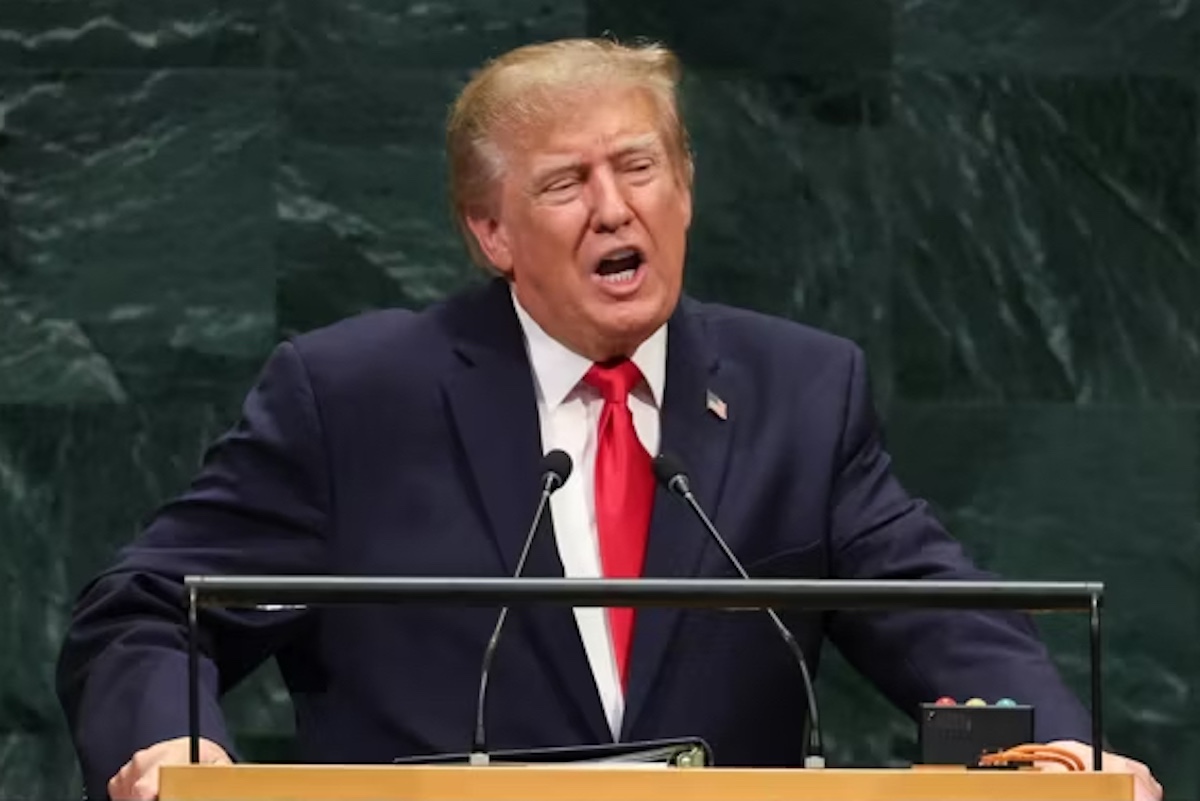
    During a Tuesday address to global leaders assembled at the United Nations General Assembly in New York City, former U.S. President Donald Trump delivered a rambling, factually contested speech that included open genocidal threats against the Islamic Republic of Iran, drawing sharp condemnation from policy experts, activists, and legal scholars across the international community.

    In the speech, Trump, who launched an illegal offensive against Iran nearly seven months prior, issued an ultimatum to Iranian leadership, threatening to completely “annihilate” the nation if they refused to accept a U.S.-drafted peace deal. “I have a big decision to make,” Trump told the assembled assembly. “Will a deal be made with Iran that lets them rebuild and create a far greater country than it ever was, maybe one of the greatest in the Middle East or even the world? Or do I annihilate the Islamic Republic and do it quickly, never giving them a chance to kill and destroy people and countries again?”

    Continuing his provocative remarks, Trump added, “Do I drive them into hell with no chance of survival and no hope of future greatness or generations?” He went on to predict a deal would be struck after the upcoming U.S. midterm elections, claiming Iranian leaders were waiting to see the election’s outcome while incorrectly noting that he was not on the ballot, having already won the presidency in a landslide. This threat of national annihilation marks a continuation of hostile rhetoric Trump has employed against Iran since his first term in office, but the open brazenness of the threat delivered from the UN podium sparked widespread shock among observers.

    Maryam Jamshidi, an associate professor at the University of Colorado Law School, highlighted the unprecedented severity of the moment in a post on X. “It’s one thing to make genocidal threats against a nation on social media. It’s another thing to do it from the podium of the UN. That’s what Donald Trump just did. He used his speech at the UN to threaten Iran with annihilation.” Jamshidi called on UN Secretary-General António Guterres and all UN member states to formally condemn Trump’s threat.

    Independent journalist Taylor Noakes echoed criticism of global inaction, arguing that the most troubling aspect of the incident was the silence from other Western democratic leaders. “What’s particularly sad about this (aside from the fact he’ll likely never be prosecuted for war crimes) is how so many leaders of other liberal democracies have stood by and done nothing while the Americans make a mockery of the UN as an instrument for global order,” Noakes said.

    VoteVets, a Democratic-aligned veterans advocacy organization, accused Trump of openly contemplating war crimes on the global stage, labeling his threat “deranged and dangerous.” Award-winning journalist Mehdi Hasan called the incident a new low for global governance, noting, “For shame. The president of the United States goes to the United Nations and threatens genocide against a UN member state in front of the world. This is where we’re at.”

    Matt Duss, executive vice president at the Center for International Policy and a former senior advisor to independent U.S. Senator Bernie Sanders, described the remarks as “dangerously unhinged.” “Such rhetoric is not merely reckless, it is a criminal threat of genocide against an entire nation,” Duss said. “US lawmakers and US partners around the world should condemn Trump’s remarks and take all due steps to bring an end to the war on Iran.”

    Beyond the threats against Iran, Trump’s speech was filled with multiple verifiably false claims and unsubstantiated assertions, including a baseless boast that the U.S. had destroyed 97% of illicit drug shipments traveling across international oceans via a campaign of strikes on suspected cartel vessels. Reporting from *The New York Times*, which draws on data from U.S. Southern Command and current Trump administration officials, confirms that at least 234 people have been killed in no fewer than 70 strikes on suspected smuggling boats in the Caribbean Sea and Pacific Ocean. To date, the Trump administration has not released credible evidence to back its claims that all targeted vessels were engaged in drug trafficking.

    Regional leaders and family members of those killed in the strikes argue that many of the victims were civilian fishermen with no ties to organized narcotrafficking. Legal experts have further concluded that the strikes violate core tenets of international law, regardless of the status of the vessels targeted.

    Other false claims included the unsubstantiated assertion that the Iranian government had killed 72,000 people in 2026, a false claim that a U.S. invasion of Venezuela and abduction of sitting President Nicolas Maduro left the U.S. in control of more than 60% of global oil reserves, a false statement that his administration had ended the ongoing war in Gaza, and an inaccurate claim that he had successfully negotiated an end to eight separate global conflicts during his prior tenure.

    Craig Mokhiber, a former senior United Nations official who resigned in protest of the world body’s failure to stop Israel’s military campaign in Gaza, called the speech a wake-up call for global leaders. “Donald Trump’s maniacal rant before the UN General Assembly today, complete with ridiculous braggadocio, narcissistic puffery, an almost unbroken line of absurd, demonstrable lies, open criminality, and deranged, murderous threats, should awaken even the most cowardly and complicit among world leaders that their attempts at appeasement of Trump and the tyrannical axis that he leads can only result in further aggression, economic terrorism, murder, and genocide,” Mokhiber said.

    He added, “The world must unite to counter the threat and to defend peace, human rights, and the rule of law, which are, after all, declared purposes of the UN.”
  • Dramatic eviction of woman aged 87 highlights Spain’s housing shortage

    Dramatic eviction of woman aged 87 highlights Spain’s housing shortage

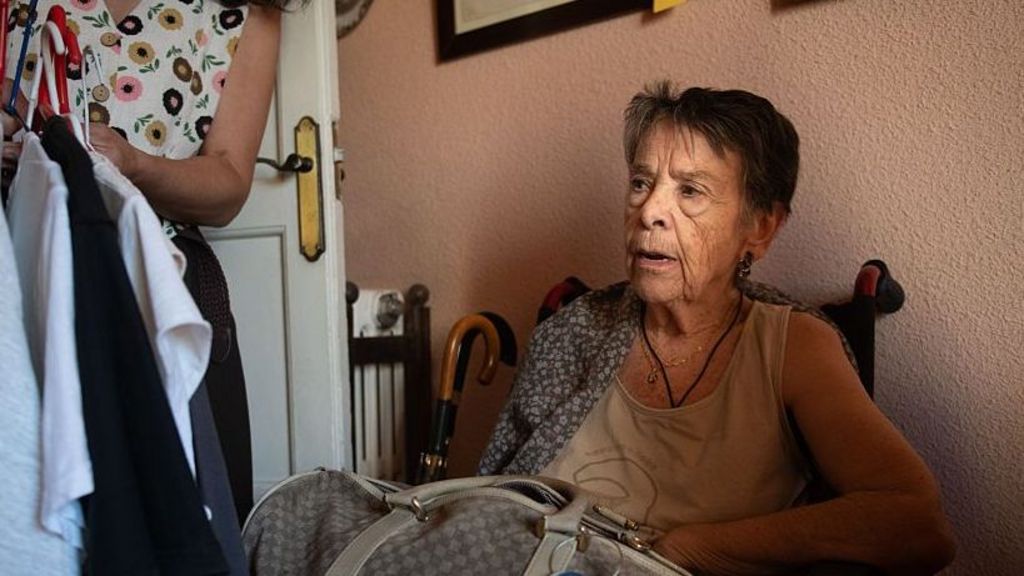
    On a tense Wednesday in central Madrid’s sought-after Retiro neighborhood, an 87-year-old woman named Maricarmen was forcibly removed from the apartment her family first rented back in 1956 — a home where she had lived continuously for 70 years after inheriting her parents’ tenancy. Her eviction, the result of a dramatic rent hike imposed by the private investment firm that bought the building in 2018, has sparked national outrage and thrown a harsh spotlight on the growing housing affordability crisis that has left millions of low-income Spaniards vulnerable.

    Maricarmen’s decades-long tenancy was protected by a long-standing rent cap, which kept her monthly payment at just €500, a sum she could cover with her €1,350 monthly state pension. But when Urbagestión acquired the property in 2018, the firm exploited a little-known legal loophole to push the rent up to an unaffordable €2,650. Even after lowering the demanded rate to €1,650 to ease pressure, the amount still exceeded Maricarmen’s entire monthly pension, leaving her with no way to keep up with payments.

    For years, court orders blocked three separate attempts to evict Maricarmen, and her fight gained widespread public and media attention as a symbol of systemic injustice in Spain’s housing market. Ahead of the scheduled eviction on Wednesday, hundreds of supporters gathered outside her building to stage a peaceful protest. Celebrities including actor Carlos Bardem and singer Ana Belén joined the overnight vigil, with Belén reciting Rafael Alberti’s iconic poem *Desahucio (Eviction)* to honor Maricarmen’s struggle. By Wednesday morning, hundreds of mostly young protesters had assembled to block access to the building, with a group of activists barricading the internal stairwell to prevent bailiffs from reaching her apartment. A tearful Maricarmen released a video on social media thanking her supporters for standing with her against what she called a “cruel struggle by someone who only wants to earn money.”

    The large police deployment that followed drew sharp criticism from activists and legal representatives. Officers cordoned off a full section of the nearby street, cleared protesters and journalists from the building entrance, and reports indicate some demonstrators were struck with batons during the clearance. “There is a police deployment as if this were a military operation,” said Beatriz Duro, Maricarmen’s lead lawyer. “This is the fourth time they’ve tried to evict her, but the first time they’ve come right to the door of the property. It’s completely disproportionate.” A representative from tenant advocacy group Sindicato de Inquilinas called on officers to reconsider their actions, shouting through a megaphone: “Think for 10 seconds about Maricarmen, who could be your own grandmother.”

    International pressure had also mounted to halt the eviction. Back in June, the UN Committee on Economic, Social and Cultural Rights formally called on Spanish authorities to stop the eviction and provide Maricarmen with affordable alternative housing. Local Madrid officials offered the 87-year-old a place in a publicly funded elderly care facility, which she declined. Representatives of Spain’s central national government also confirmed they had made repeated attempts to negotiate a solution with Urbagestión, all of which the firm rejected. A last-minute glimmer of hope emerged when an anonymous private donor offered to cover the majority of Maricarmen’s demanded back rent and ongoing payments, but Urbagestión reportedly turned the offer down, clearing the way for the eviction to proceed. The BBC has attempted to reach Urbagestión for comment on the case, but has not yet received a response.

    Spanish Housing Minister Teresa Rodríguez called the eviction a devastating example of the harm caused by unregulated housing speculation. “Today is a very sad day, a very dramatic day, when it’s plain to see the effects of unbridled speculation, of not wanting to control the market, of putting out the red carpet for the vultures and the speculators,” she said.

    Maricarmen’s case is far from an isolated incident. Spain has grappled with a chronic shortage of affordable rental housing for years, driven by limited new construction, growing foreign investment in residential property, and supply constraints that have sent rental prices soaring across the country. Data from leading Spanish property portal Idealista shows that average rental prices in Madrid have more than doubled over the last decade, with a 10% jump recorded in just the last 12 months. Millions of Spanish households now report spending more than a third of their income on housing, pushing low-income and fixed-income groups like pensioners into extreme insecurity.

    The current Socialist-led government of Prime Minister Pedro Sánchez has made reining in corporate housing speculation a key policy priority. Back in January, Sánchez pledged to “protect those who are most exposed to that speculation and that greed.” But critics say the government’s response has fallen short: some argue officials need to accelerate large-scale construction of new affordable housing to ease the core supply shortage, while others warn that the government’s tough rhetoric on private investment has discouraged small property owners from listing units for rent, tightening supply even further. Maricarmen’s high-profile eviction is expected to reignite national debate over what urgent policy reforms are needed to address Spain’s deepening housing crisis.

  • Dolly Parton’s manager accuses her nephew of ‘threats and intimidation’

    Dolly Parton’s manager accuses her nephew of ‘threats and intimidation’

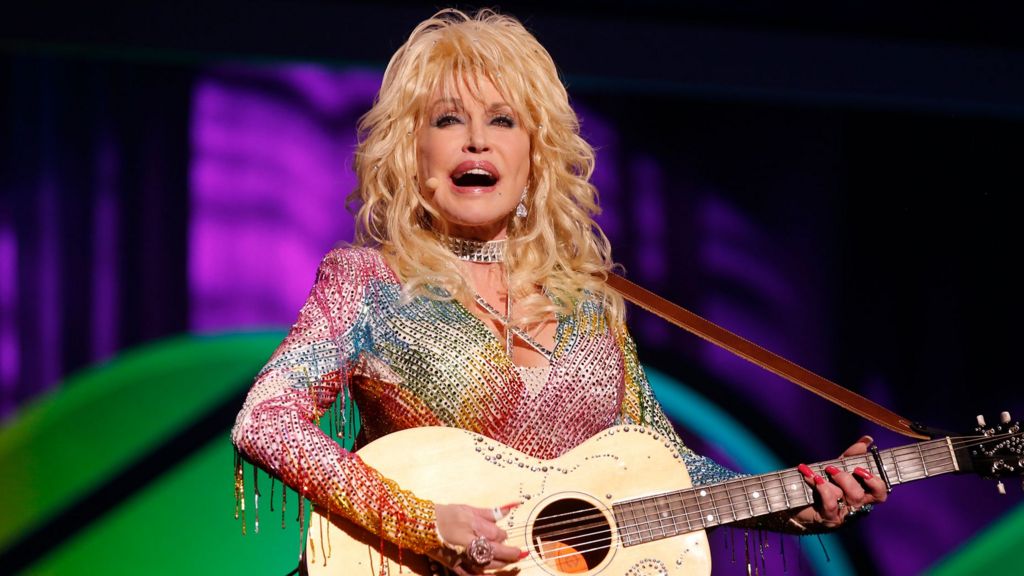
    Just weeks after iconic country music star Dolly Parton passed away at the age of 80 in August, a high-stakes public conflict has erupted over control of her sprawling professional and personal legacy, pitting her long-time management team against her own nephew, Bryan Seaver. The dispute became official this week when court documents were unsealed, revealing that She’s Alive — the entity that manages Parton’s business empire and estate assets, led by her long-time manager Danny Nozell — has filed for a temporary civil restraining order against Seaver.

    Seaver, the son of Parton’s sister Cassie, is no stranger to the star’s inner circle: his security firm has provided close protection for Parton for more than two decades, and he rose to the role of head of security for all of Parton’s properties. He was also handpicked by Parton years ago to announce her death to the public, a task he carried out in a somber August video posted to Parton’s official Instagram that was seen by millions of fans worldwide.

    According to court filings submitted in Nashville on Tuesday, She’s Alive accuses Seaver of launching what it calls “an obscene, deliberate and escalating campaign of threats, intimidation, and coercion” against estate staff and leadership. The management entity claims Seaver has demanded a large payout from the Parton estate, and has openly threatened to dismantle the legendary star’s professional brand if his demands are not met.

    Court papers quote a series of text and email exchanges attributed to Seaver, including one message where he allegedly claimed he would become “the hand of retribution for my entire family.” In another, he is reported to have written: “I’m going to set up a podcast dedicated to ruining Dolly’s brand partnerships and telling the violations these people have done on us. It’s going to be great. Or [expletive] pay me.” The filings also allege that Seaver leaned on his background as a military contractor to intimidate employees, claiming he stated in an email to one of Parton’s attorneys that he is a “killer” who had sold $27 million worth of arms and ammunition to Haitian police on the day of Parton’s death, adding: “All I do is warfare… Everyone needs to be worried about what I might do.”

    She’s Alive’s filings note that the alleged campaign of intimidation has already had tangible consequences: multiple employees and legal representatives working for Parton’s trusts and estate have resigned over safety concerns, and the company has been forced to hire additional private security for staff at their workplaces and personal residences.

    Seaver has forcefully denied all allegations of wrongdoing, pushing back against the narrative laid out by the estate. In a statement sent to celebrity outlet TMZ, Seaver argues that the text messages and emails cited in the court filings have been deliberately taken out of context to paint him as a villain. “Nothing in this lawsuit were threats and most of the comments I stand by,” he said, adding that many of the exchanged messages were nothing more than emotional “rage talk” between grieving family and trusted allies in the days immediately following Parton’s death.

    Addressing the comments about his military and arms contracting work, Seaver confirmed that he is indeed a career military contractor who conducts legitimate arms deals for foreign governments, but emphasized that his comments were made “talking frankly in a private way with Danny who I thought was my friend,” not as a threat.

    Last week, shortly before the restraining order filing, Seaver was abruptly fired from his role as head of security for Parton’s properties by She’s Alive. At the time, Seaver and his firm called the dismissal “unexpected” and “unexplained,” and issued a statement pushing back against the estate’s leadership: “We refuse to be intimidated by those whose actions we believe are being taken in bad faith and with the intent to profit from the life of someone who willingly gave so much.”

    Nozell, who took over as Parton’s full-time manager in 2004 after joining her team as a tour consultant, has long been credited with reviving Parton’s international career, repositioning her from a beloved “heritage act” to a global superstar in the 2010s. Following Parton’s death, Nozell released a statement saying Parton had worked up until her final day on upcoming projects, and had spent years working with her handpicked team to build a long-term roadmap for her legacy that would extend for decades after her passing. “She loved seeing her dreams come to life, and loved knowing her work brought people joy,” he said last month.

    Now, that carefully planned roadmap has been upended by a very public tug-of-war over the future of the icon’s legacy, as the two sides prepare for a drawn-out legal fight. The BBC has reached out to both Seaver and She’s Alive for additional comment on the ongoing dispute, and has not yet received additional responses from either party.

  • Tigray forces seize main airport in northern Ethiopia from police, residents tell the BBC

    Tigray forces seize main airport in northern Ethiopia from police, residents tell the BBC

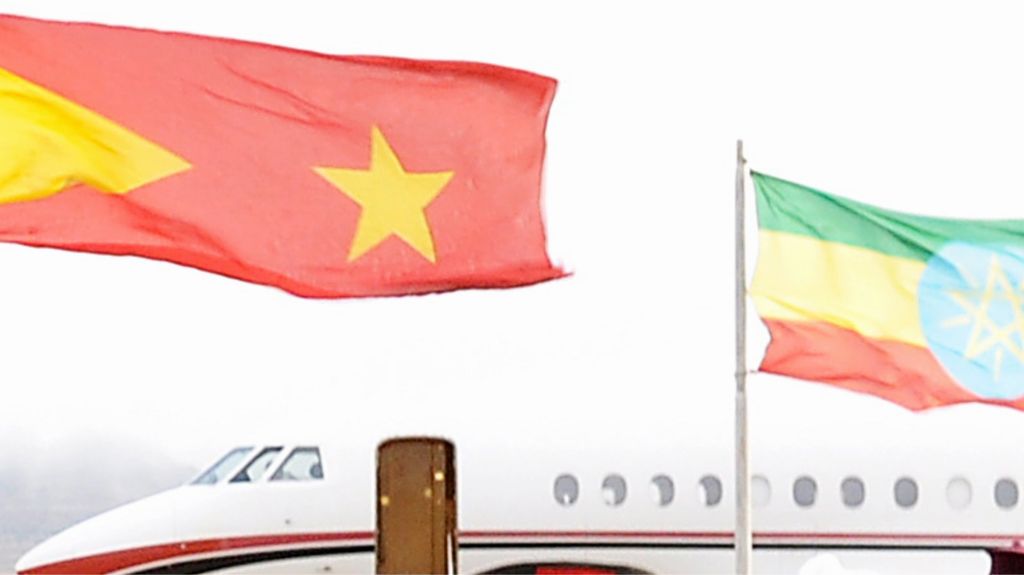
    Fresh violence has shattered the fragile peace in Ethiopia’s northern Tigray region, after local Tigrayan forces captured the main airport in the regional capital Mekelle from federal police, according to local residents who spoke to the BBC. The seizure has halted all air traffic to the city, with state-owned carrier Ethiopian Airlines announcing it would suspend all commercial flights to Mekelle, as well as the northern Tigrayan cities of Shire and Axum, citing the rapidly deteriorating security situation in the area.

    The capture of the strategic airport marks the most serious escalation of hostilities between Ethiopia’s federal government in Addis Ababa and the Tigray People’s Liberation Front (TPLF), the ruling political party of Tigray, since a two-year brutal civil war ended with an African Union-brokered peace deal in November 2022. Tensions have risen steadily throughout 2024, stoking widespread international and domestic fears that the country could slide back into full-scale civil conflict. Just days before the airport seizure, the TPLF announced a new military alliance with six other armed opposition groups across Ethiopia, with the explicit goal of removing Prime Minister Abiy Ahmed’s federal government from power.

    The 2020–2022 Tigray war remains one of the deadliest armed conflicts of the 21st century. AU peace mediators estimated that roughly 600,000 people lost their lives to violence, famine, and lack of access to basic medical care, as fighting pushed the entire region of 6 million people to the brink of mass starvation. While the Pretoria Peace Agreement ended open hostilities, both sides have repeatedly traded accusations of violating the terms of the deal over the past 21 months.

    The suspension of flights comes on the heels of multiple reported drone strikes targeting populated areas across Tigray. The deadliest of these strikes hit the southern Tigrayan town of Alamata on Tuesday, which Tigrayan authorities say killed at least 14 civilians and wounded 22 more. Alamata Mayor Mogos Shiferaw told the BBC that the attack began at approximately 3:30 a.m. local time, when more than five drones and a single fighter jet carried out 21 separate strikes across the town.

    “The attack has inflicted severe psychological harm on our population, and our people are living in a state of total panic,” Shiferaw said. He added that all casualties were civilian, and that federal forces targeted two empty secondary schools that had previously operated as federal military bases during the civil war. The schools were unoccupied at the time of the strike, as the new academic year had not yet begun, and Tigrayan forces were not using the facilities, Shiferaw said. The BBC has not been able to independently confirm these allegations, and Ethiopia’s federal government has not issued any public comment on the strike as of Wednesday.

    On Wednesday, Tigray’s regional administration publicly accused the federal government of launching an open invasion of Tigray and its civilian population, issuing a call for all Tigrayan residents to rally behind regional forces and maintain unity against what it described as external aggression.

    International concern has grown over the escalating violence, with the U.S. State Department’s Bureau of African Affairs issuing a condemnation of a separate drone strike that took place on Monday, which it says targeted a convoy of Catholic Church vehicles delivering humanitarian food aid to vulnerable communities in Tigray. The U.S. has called for a full, transparent investigation into the attack and urged all parties to return to diplomatic negotiations to resolve their disagreements, while calling for immediate steps to prevent further attacks on civilians and humanitarian infrastructure.

    Both the federal government in Addis Ababa and TPLF leadership have faced widespread international criticism for repeated delays in implementing key provisions of the 2022 Pretoria Peace Agreement. Tensions flared earlier this year ahead of Ethiopia’s May general election, when the TPLF reestablished its pre-war regional administration, dissolving an interim unity government that had been appointed by Prime Minister Abiy. In July, Abiy used an address to the federal parliament to publicly accuse the TPLF of actively preparing to resume open conflict against the federal government. Local and international monitors have also published reports claiming the TPLF has forcibly conscripted thousands of young Tigrayan men to reinforce its fighting ranks in recent months.

  • Netanyahu calls Macron’s remarks on West Bank in UN speech ‘grotesque’

    Netanyahu calls Macron’s remarks on West Bank in UN speech ‘grotesque’

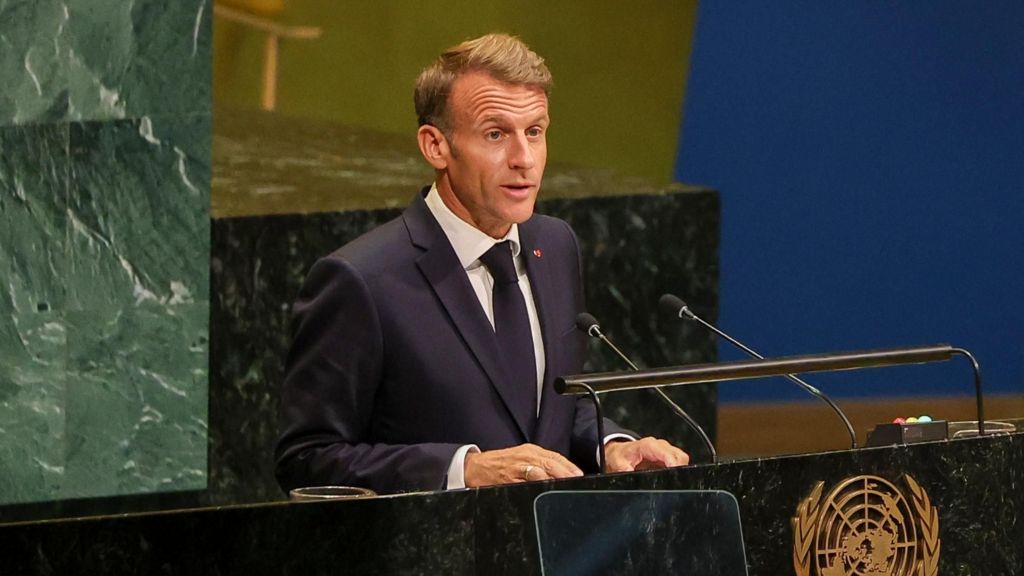
    A sharp diplomatic conflict has erupted between French and Israeli leadership following controversial comments French President Emmanuel Macron made during his annual address to the United Nations General Assembly, drawing fierce condemnation from Israeli Prime Minister Benjamin Netanyahu.

    During his speech, Macron called out ongoing violations in the Israeli-occupied West Bank, questioning the justification for these actions. According to the UN’s official interpreter, Macron stated that “Hamas was never very active in the West Bank.” The remark immediately triggered a blistering rebuke from Netanyahu’s office, which labeled the comment a “grotesque absurdity.”

    Netanyahu’s statement highlighted a recent fatal attack that took place just two days before the UN address, on the eve of the Jewish holy day Yom Kippur. In that attack, 36-year-old Netanel Shukrun, a French national and father of six, was shot and killed while sitting in his car near the West Bank settlement of Neve Tzuf. Israeli police confirmed that a Palestinian gunman carried out the shooting, later arresting the suspect at a Ramallah hospital. While Hamas praised the attack, it did not formally claim responsibility. Netanyahu emphasized that Hamas operatives carry out nearly daily attacks against Jewish civilians across the West Bank, which Israel refers to by the biblical name Judea and Samaria, and have killed countless Israeli civilians in the region.

    The condemnation extended beyond Israel, with U.S. Ambassador to Israel Mike Huckabee also dismissing Macron’s remarks as disconnected from on-the-ground reality.

    While Macron’s official office has not issued a formal public response, an anonymous senior French diplomatic source clarified to the *Jerusalem Post* that the French president’s original comment was widely misinterpreted. In Macron’s original French speech, the line was “Le Hamas n’a jamais sévi en Cisjordanie,” which the source translated as “Hamas has never governed the West Bank,” not a claim that the group has never carried out attacks in the territory. The West Bank is currently partially administered by the Fatah-led Palestinian Authority, while Hamas, which has been designated a terrorist organization by France, Israel, and much of the international community, maintains de facto control over the Gaza Strip. Hamas has long been a political rival of Fatah, splitting control of Palestinian territories between the two factions for over a decade.

    In addition to his comments on the West Bank, Macron also pushed back on former U.S. President Donald Trump’s claim that he had successfully ended the conflict between Israel and Hamas in Gaza. Despite a ceasefire agreement reached last October, the region has continued to see regular outbreaks of violence, including almost daily Israeli airstrikes, and catastrophic humanitarian conditions that have left millions of Gaza civilians without consistent access to basic aid. Macron rejected framing the current situation as peace, noting “Some boast of a supposed peace. But that peace has not reopened humanitarian access for a single second. Are we simply to stand by and watch this spectacle that should shame us all?”

    The broader context of the dispute dates back to the 1967 Six-Day War, when Israel seized control of the West Bank, East Jerusalem, and Gaza from neighboring Arab states. Today, Israel has constructed roughly 160 official settlements in the West Bank and East Jerusalem housing more than 700,000 Israeli settlers, alongside an estimated 3.3 million Palestinians. The international community uniformly considers these settlements to be illegal under international law, and Palestinians seek all three territories — the West Bank, East Jerusalem, and Gaza — as the sovereign land for their future independent state.

  • South Sudan’s president dissolves government ahead of country’s first elections

    South Sudan’s president dissolves government ahead of country’s first elections

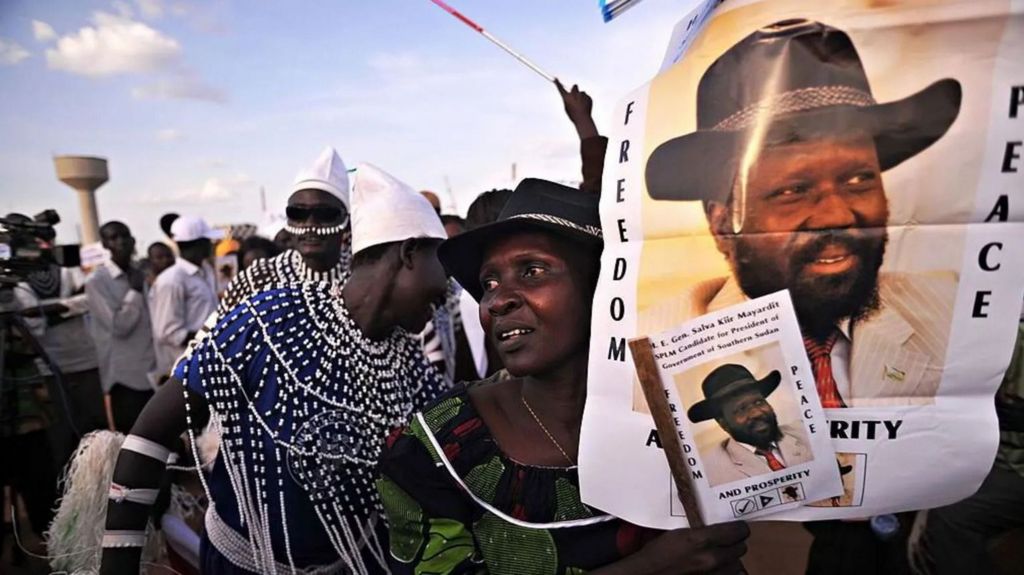
    Three months ahead of South Sudan’s first national election since gaining independence from Sudan in 2011, President Salva Kiir has announced the full dissolution of the country’s long-running transitional administration, setting the stage for a poll that has already been delayed twice and faced years of political tension.

    The dissolution, formalized under an amended law signed by Kiir this week, cleared out the entire existing transitional leadership structure: all five sitting vice presidents were removed from office, the national parliament was dissolved, and both national and state-level executive governments were disbanded. Kiir, who is running as the presidential candidate for his long-governing Sudan People’s Liberation Movement (SPLM), will retain full constitutional executive powers until a newly elected president is inaugurated following the December 22 vote. He has already appointed a small set of caretaker ministers and state governors to maintain basic government functions through the election period.

    The run-up to Tuesday’s formal announcement saw a dramatic security buildup across the capital, Juba. Joint patrols from the South Sudanese army and national intelligence services blocked entry to all government ministry compounds, turned away civil servants reporting for work, and increased patrols across high-traffic areas of the city. Government staff were instructed not to return to office until the following Monday, while United Nations agencies operating in Juba directed all non-essential personnel to switch to remote work as a precaution while security teams monitored the evolving situation.

    Kiir, who has led South Sudan since independence, faces no major declared challengers in the upcoming poll. His most prominent political rival, former vice president Riek Machar, has been sidelined since last year when Kiir removed him from office and brought treason charges against him; Machar is currently detained under house arrest. Machar’s inclusion as vice president in the transitional government was a core provision of the 2018 peace deal that ended a brutal five-year civil war fought between forces loyal to Kiir and Machar respectively.

    Weeks before the dissolution, Kiir made an unannounced leadership change at the country’s national election commission, removing chairperson Abednego Akok Kacuol from his post without public explanation and replacing him with Gabriel Bol Deng, the commission’s former secretary-general. Akok had publicly raised alarm in August over critical funding shortfalls, stating the commission required $250 million to run a free and fair election but had only received $21 million in committed funding to date.

    Machar’s main opposition bloc, the Sudan People’s Liberation Movement in Opposition (SPLM-IO), has already signaled it will not participate in election preparations. In a public Facebook statement in June, acting SPLM-IO chairperson Nathaniel Pierino warned that any individuals attempting to register voters or conduct campaign activity in territory held by the opposition would be treated as prisoners of war.

    The Reconstituted Joint Monitoring and Evaluation Commission (RJMEC), the independent body tasked with overseeing implementation of the 2018 peace agreement, has characterized South Sudan’s current political moment as an extraordinarily critical phase. The commission noted that multiple key negotiated provisions of the peace deal remain unfulfilled, and urged all political parties to quickly agree on a clear path that would deliver a credible, inclusive election and a peaceful conclusion to the transitional period that has been in place since South Sudan’s independence. The latest extension of the transitional period was originally scheduled to run until February 22, 2027, ahead of this week’s dissolution.