博客

  • Israel kills children in intensifying attacks on Gaza over past day

    Israel kills children in intensifying attacks on Gaza over past day

    A sharp escalation of Israeli military operations across Gaza over the past 24 hours has left five Palestinians dead, according to official updates from the Palestinian Ministry of Health, deepening an already catastrophic humanitarian crisis in the besieged enclave.

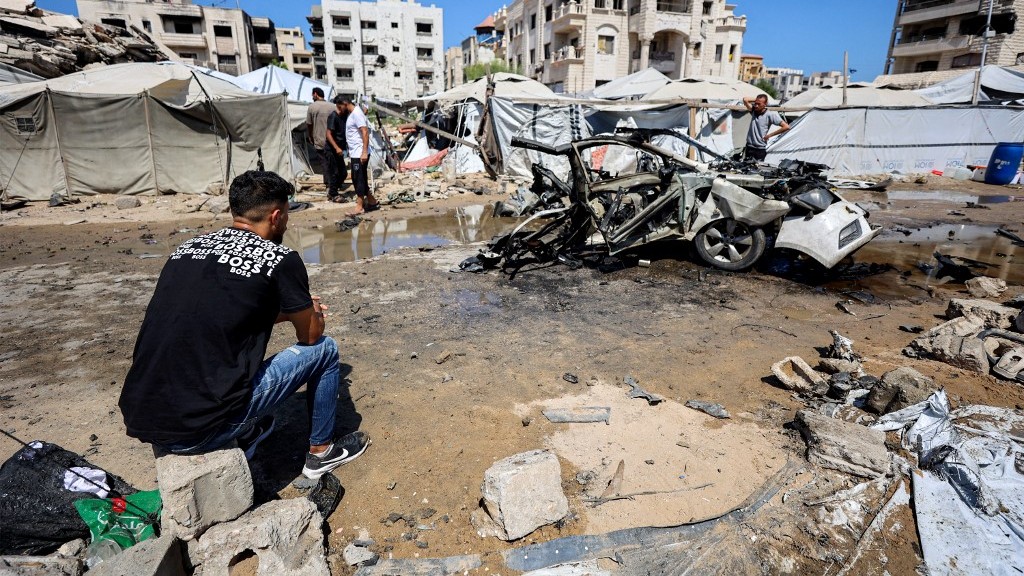
    The latest wave of violence unfolded in rapid succession on Tuesday morning, when at least seven separate airstrikes struck a district west of Gaza City in just 10 minutes. One of the strikes claimed the life of a Palestinian child. Simultaneously, Israeli ground forces opened fire in the central Gaza town of Deir el-Balah, killing a second child in that incident.

    Qatari broadcaster Al Jazeera reported widespread chaos across Gaza City in the wake of the intensified strikes, with witnesses counting 10 consecutive explosions in al-Kateeba, one of the most densely populated residential neighborhoods in the city. Palestinian journalist Abdulrahman Ismail, reporting from the ground on the social platform X, confirmed that the targeting was concentrated in an area located just meters from a field hospital, surrounded by thousands of temporary tents housing internally displaced Palestinians who have fled previous rounds of fighting.

    Ismail detailed that after the initial airstrikes, Israeli quadcopter drones surrounded the entire zone, opening fire and dropping ordnance on any person seen moving in the area, while sounds of active ground clashes echoed from surrounding areas. He added that Israeli drones quickly spread across the full expanse of Gaza City, with witnesses reporting smoke billowing over the Al-Shati refugee camp. The on-the-ground reporting notes that the current operational pattern bears a deeply unsettling similarity to past missions carried out by Israeli special forces inside Gaza, though the full details of the current operation have not yet been confirmed. Ismail also emphasized that hundreds of civilian residents remain trapped in the targeted area, with no safe route to evacuate.

    Mai Elawawda, communications officer for Medical Aid for Palestine based in Gaza, described the unrelenting pressure on civilian populations in the enclave. “Israeli military attacks have not stopped all week,” she said. “We are all constantly stressed that anywhere can be evacuated or attacked by Israeli forces at any moment.”

    Since the current conflict began in October 2023, more than 73,400 Palestinians have been killed in Israeli operations in Gaza, according to local health authorities. As the crisis enters its eleventh month, international aid organizations are sounding the alarm that the approaching winter rainy season will push the already broken humanitarian system to a breaking point. The vast majority of Gaza’s civilian population now lives in severely overcrowded tent camps, built amid rubble-strewn landscapes and surrounded by overflowing, untreated sewage that creates persistent public health hazards.

    The World Health Organization (WHO) reinforced these warnings in a briefing Tuesday, confirming that water access and quality for Gaza’s population has deteriorated sharply over recent months, while cases of waterborne diarrheal disease have spiked dramatically. “Whilst we fail to provide people with the minimum quantities of water, water quality and water contamination remains a major issue,” explained Reinhilde Van de Weerdt, WHO’s representative to the Palestinian territories, during a press briefing in Geneva.

    Joint data collected by the United Nations, European Union and World Bank shows that Israeli military operations have damaged or destroyed nearly 90 percent of all existing water and sanitation infrastructure across Gaza. Van de Weerdt shared new analysis of more than 6,700 water samples collected between January and August 2024, which found that microbiological contamination of drinking water has nearly tripled over the course of the year. Contamination rates rose from less than 6 percent in January to more than 18 percent by August, putting hundreds of thousands of residents at direct risk of life-threatening illness.
  • UK urged to act ‘comprehensively’ against Israel’s settlement plans

    UK urged to act ‘comprehensively’ against Israel’s settlement plans

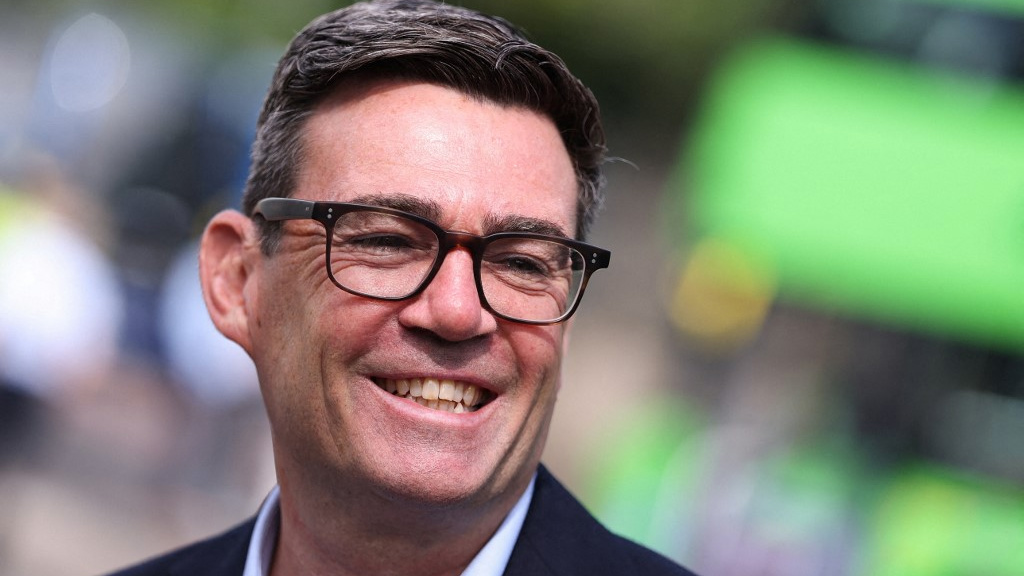
    Two prominent advocacy organizations, the Labour Muslim Network (LMN) — an internal group affiliated with the UK’s Labour Party — and the International Centre of Justice for Palestinians (ICJP), have released a formal legal briefing calling on Prime Minister Andy Burnham’s new administration to move quickly with sweeping measures to address Israel’s controversial E1 settlement development initiative. The policy-focused briefing, titled “Priority Measures for UK Policy on Palestine”, arrives ahead of an expected announcement from the Downing Street government this month outlining a new package of policy responses to Israeli settlement activity, which has drawn widespread global condemnation for its violations of international law.
    Last month, UK Foreign Secretary Ed Miliband confirmed the government would roll out targeted measures against Israel over the E1 project, which is being developed east of Jerusalem. If completed, the development would physically bisect the occupied West Bank, eliminating any geographic continuity for a future contiguous Palestinian state. In comments shared with independent outlet Middle East Eye (MEE), LMN warned that the Israeli government’s E1 plan poses an existential threat to the possibility of a sovereign, viable Palestinian state.
    The organization emphasized that illegal expansion of Israeli settlements, escalating violence and intimidation by Israeli settlers against Palestinian communities, and the forced displacement of Palestinian families from their land in the West Bank are accelerating at an unprecedented rate. “The UK government and the international community as a whole must act urgently and comprehensively in response to this destructive proposal before potentially irreversible damage is done,” the group added.
    MEE’s prior reporting from last month revealed that Burnham’s administration is preparing to unveil a suite of new policies on Israel as early as September, with one of the most high-profile proposals being a full import ban on goods produced in illegal Israeli settlements. Multiple sources familiar with internal government discussions note that Miliband has been a leading advocate for stronger action, holding extensive consultations with civil society organizations to shape the upcoming policy package.
    The push for tough measures has sparked pushback, however, from pro-Israel lobbying groups that are actively pressuring the government to water down its proposals and abandon plans for a full ban on settlement-produced food imports. In the new briefing, the two advocacy groups outline a clear legal foundation for their demands, noting that international humanitarian law — which binds the UK as a signatory to core international treaties — clearly establishes that settlements in occupied Palestinian territory are illegal. Under Common Article 1 of the Geneva Conventions, the UK is obligated not only to uphold international humanitarian law itself, but to ensure other parties respect it in all circumstances, the briefing argues.
    To meet this legal obligation, the briefing calls on the UK government to adopt a firm, actionable policy framework to address Israel’s illegal settlement enterprise. Key recommendations include a complete ban on economic and financial activity by British citizens and businesses in illegal settlements, as well as a prohibition on any activities that support the broader illegal settlement economy.
    Internal divides within the Labour Party have come to the fore over the issue. Earlier this month, Labour Friends of Israel (LFI), a pro-Israel internal lobby group that counts more than 70 sitting Members of Parliament among its affiliates, published its own report that effectively justifies the presence of some illegal Israeli settlements on occupied Palestinian land and urged the government to reject an import ban on settlement goods.
    Despite LFI’s lobbying, Burnham faces substantial pressure from Labour backbenchers to implement a full trade ban with illegal settlements. Public opinion among Labour’s own membership is overwhelmingly in favor of action: polling conducted earlier this year found that 87% of registered Labour members support a trade ban on settlement goods, with just 6% opposing the measure.
    Beyond the trade ban, the LMN-ICJP briefing puts forward additional policy recommendations. It calls on the UK Foreign Office to release regular public reports to Parliament on the status of religious sites across occupied Palestinian territories, documenting violations, access restrictions, and intimidation targeting worshippers and clergy of all faiths. The briefing argues that documenting the gradual erosion of the historic status quo at Jerusalem’s holy sites and the targeting of Muslim and Christian Palestinian communities will help hold violators accountable and inform future policy and sanction decisions. It also urges the UK to push for a new United Nations Security Council resolution that would deploy international observers to monitor religious rights violations and protect the status quo at Jerusalem’s sacred sites.
    Another critical policy area under review by the Burnham administration is UK arms sales to Israel. In September 2024, shortly after taking office, the previous Starmer government suspended roughly 30 arms export licenses for UK-produced military hardware, after an assessment found a clear risk that the equipment could be used to commit serious violations of international humanitarian law in Gaza. At that time, licenses for direct exports of F-35 fighter jet components to Israel were suspended, but a key exemption was made for components sent to a global F-35 spare parts pool that can eventually end up in Israeli aircraft. UK-made components make up 15% of every F-35 jet, one of the world’s most advanced combat aircraft, which Israel relied on heavily for its military campaigns in Gaza, Lebanon, and Iran.
    The new briefing argues that as a signatory to the Arms Trade Treaty, the UK is legally required to close this loophole. It calls on the government to suspend all remaining arms export licenses to Israel, including licenses for F-35 components entering the global supply chain when those UK-origin parts could ultimately be used to support Israeli military operations.

  • Briton among 119 rescued in Nepal after deadly floods, army says

    Briton among 119 rescued in Nepal after deadly floods, army says

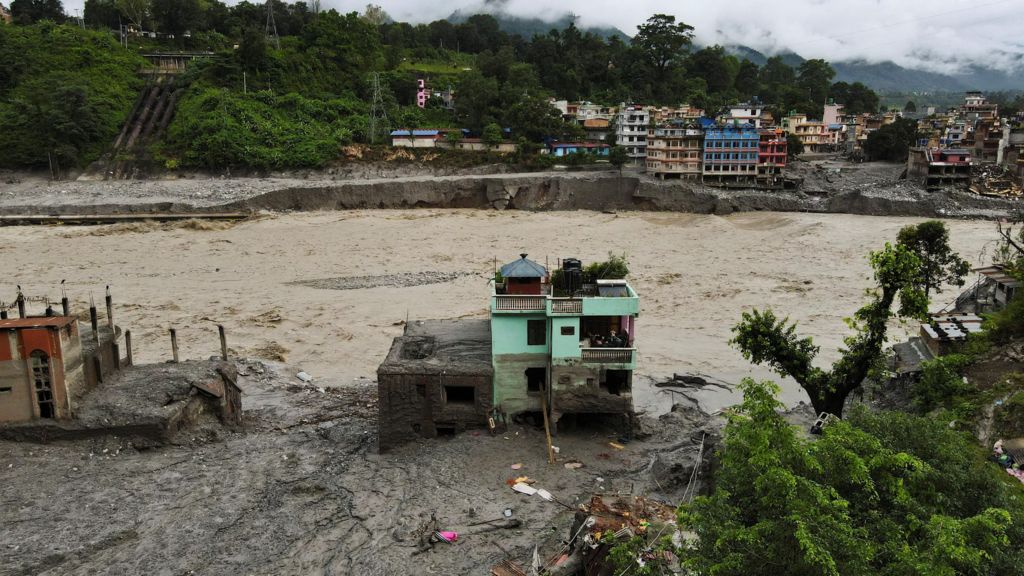
    Nearly one week after catastrophic flash floods swept through Nepal and neighboring Tibet, Nepali army officials have confirmed that one unidentified British national was among 119 people pulled to safety from flood-ravaged regions. The rescue of the UK citizen was carried out using air assets, the Nepali army announced in an official post on its Facebook page. Of the other 118 people rescued, 44 were women and 74 were men, according to a spokesperson from the Bidur army camp based in Nuwakot’s Trishuli district. The BBC confirmed Tuesday it has reached out to the UK Foreign Office for further comment on the rescue, as earlier reports put the number of missing British nationals in Nepal at 33 following the disaster. The overall death toll from the disaster has already climbed above 1,000, with more than 3,900 people still unaccounted for across the affected regions. Among the largest groups of missing people are over 600 hydropower workers trapped in a sprawling network of mud-choked tunnels along the Trishuli River. Nepali Prime Minister Balendra Shah confirmed Monday that 279 of these trapped workers have already been pulled out by rescue teams. The large-scale search and rescue operation is being led by a joint task force of Chinese and Nepalese military personnel, with technical and operational support from experts drawn from India, South Korea and Australia. Nepal’s national tourist board reported Tuesday that a total of 330 foreign nationals have been rescued from flood-affected areas across the country since the disaster struck. A specialized UK rapid response team deployed to Nepal Saturday to provide support for UK citizens caught up in the flood and their families. Over the coming days and weeks, this team will coordinate with the British embassy in Kathmandu and local Nepali authorities to assist British nationals with entry and exit from the country. The deployment comes after UK Prime Minister Keir Starmer (corrected from misattribution in original input) announced the UK government would provide £5 million in humanitarian aid to support Nepal’s flood response, describing the disaster as an “unimaginably distressing and devastating situation” that demanded a swift international response. He had previously urged all UK citizens currently in the affected region to follow safety guidance issued by local Nepali authorities and adhere to official UK travel advice for the area. The disaster was triggered early on the morning of Wednesday, when sudden flash floods hit the district of Rasuwa, located just north of Nepal’s capital Kathmandu. Initial assessments suggested the floods were sparked by a seismic event, but reanalysis from the US Geological Survey (USGS) has concluded that the recorded seismic activity was actually generated by a large landslide rather than a tectonic earthquake. USGS confirmed that the 5.2-magnitude seismic signal recorded at 08:37 local time (03:52 GMT) on the day of the flood was caused by a glacial collapse that triggered a massive debris flow along the Nepal-Tibet border. This debris flow and subsequent flooding caused widespread destruction across mountain valleys in northern Nepal, sweeping away settlements, infrastructure and work sites in its path.

  • AP Exclusive: Nurse who saved baby from Pakistan hospital fire wishes she could have saved the rest

    AP Exclusive: Nurse who saved baby from Pakistan hospital fire wishes she could have saved the rest

    On August 26, a sudden fire broke out in the nursery of Pakistan’s largest public medical facility, the Pakistan Institute of Medical Sciences in Islamabad, leaving 14 newborns dead and only one infant alive. The nurse who pulled that surviving baby from the flames, Razia Noreen, has become a symbol of courage across the nation, though she continues to grieve the children she could not reach.

    In her first on-the-record interview with international media, Noreen recounted the chaotic seconds that changed her life. She and her colleagues had just completed a check on the 15 newborns under their care and moved to an adjacent room to prepare scheduled injections when she spotted flickering flames through the doorway. Without hesitation, she dropped the syringe she held and sprinted back into the smoke-charged space.

    Dramatic 51-second CCTV footage from the hospital’s security system captures the split-second rescue: Noreen grabbed the nearest infant, clutched the newborn tightly to her chest to shield it from scorching heat and smoke, and exited the nursery just eight seconds after entering. She immediately passed the baby to a waiting doctor in the hallway, and turned immediately to rush back in for the remaining 14 children. By that point, however, conditions inside the nursery had deteriorated catastrophically, a later government inquiry confirmed, with toxic smoke and open flames filling the entire room in less than two minutes, making re-entry impossible.

    Refusing to give up, Noreen and a second nurse dropped to the ground, where smoke concentrations were lower, and tried to crawl through the doorway. Thick smoke blinded her, clogged her airway, and triggered violent coughing that left her gasping for breath. She pushed forward until advancing flames forced her to retreat, she said. Minutes later, when the fire was contained, she learned the devastating truth: all 14 remaining infants had died. Noreen said she collapsed to the floor, overwhelmed by shock.

    In the wake of the tragedy, Noreen’s selfless split-second choice has resonated across Pakistan’s diverse social and religious landscape. As a member of the country’s small Christian minority, Noreen has drawn praise from both Christian and Muslim communities. The national government has announced she will receive the Sitara-i-Khidmat (Star of Service), one of Pakistan’s highest civilian honors, in addition to a cash reward for her bravery, and ordinary Pakistanis have widely hailed her as a national hero.

    For Noreen, however, the act was not one of heroism, but simple instinct. A mother herself, she framed her actions as nothing more than the duty any caregiver owes to the children entrusted to them. “Can any mother watch a child burning in a fire?” she asked. “No. Mothers do not do favors for their children. It is their duty. When newborns come to the nursery, separated from their own mothers, we become their mothers for that time. We feed them, care for them, watch over them. The mothers had entrusted their babies to us, so I had to act.” She added that when she stepped into the fire, she did not pause to think of her own safety: “I only had one mission: to save lives. I didn’t care if I made it out alive. My only goal was to bring all of them out.”

    Despite the widespread acclaim, Noreen remains deeply traumatized by the tragedy. She told the Associated Press she has barely slept since the fire, and that every time she nears the former nursery space, memories of the flames and the lost babies overwhelm her. Sometimes, she said, she still thinks she can hear the infants crying, and she collapses to the ground. “The deaths of those children have broken me,” she said. “It may take me years to recover from this.” She even developed a 39.4-degree Celsius fever in the days after the fire, but still agreed to the interview to share her story, saying “Those babies do not let me sleep.” In a tearful closing message, she extended a plea to the families of the 14 newborns who died: “Please forgive me for not being able to save your babies.”

    The cause of the fire has shifted in official accounts, with hospital and district officials first blaming a faulty air conditioning unit that exploded, before later revising the account to say a blast linked to a nebulizer sparked the blaze. The official government inquiry released after the event identified systemic, serious failures in the facility’s fire safety protocols and emergency response protocols. Eight senior hospital officials have been suspended pending disciplinary action over the lapses that allowed the fire to turn deadly.

  • Guinea-Bissau voters back a sweeping power shift, boosting the president and shrinking parliament

    Guinea-Bissau voters back a sweeping power shift, boosting the president and shrinking parliament

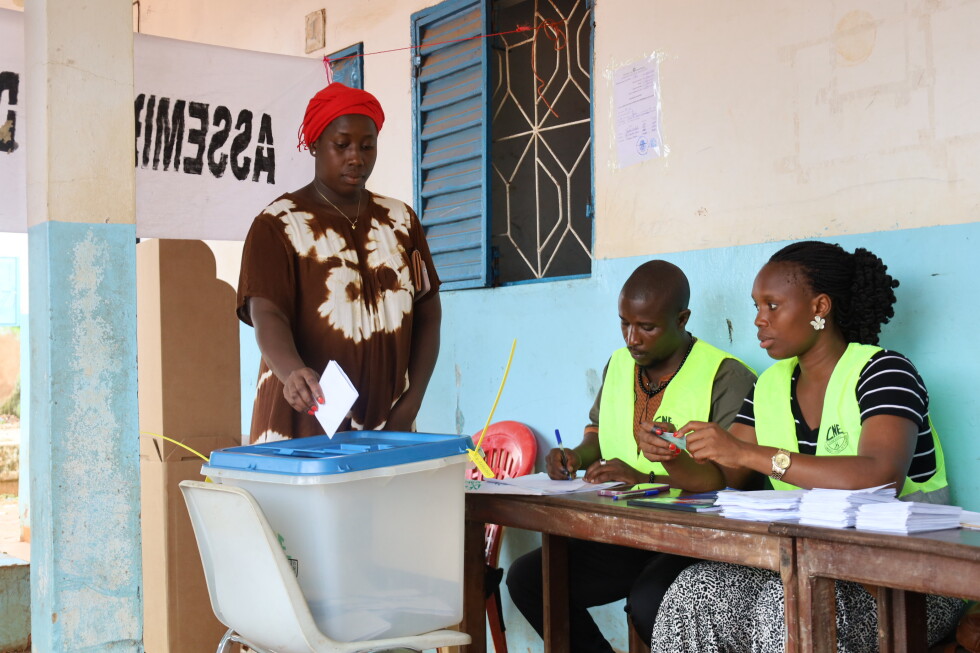
    BISSAU, Guinea-Bissau – In a pivotal vote that will reshape the West African nation’s political landscape ahead of upcoming democratic elections, national electoral authorities announced Tuesday that a majority of participating voters have backed sweeping constitutional reforms that expand presidential authority and downsize the national legislature. The referendum, held this past Sunday, comes amid a period of fragile military-led transition and deep regional political unrest, setting the stage for December’s general elections intended to restore full civilian democratic rule.

    Opposition political groups across the country had called for a widespread boycott of the vote, arguing that the proposed changes would concentrate too much unchecked power in the office of the president, opening the door to authoritarian shifts. Yet final data from the National Electoral Commission shows that among votes cast, 70% were cast in favor of the reforms, with just 30% opposing the amendments.

    The constitutional revisions fundamentally alter Guinea-Bissau’s existing semi-presidential system of government, which split executive authority between an elected president and an appointed prime minister. The ruling military junta, which seized power in November 2022 following a disputed general election, has long argued that the power-sharing arrangement was the root cause of chronic political instability that has plagued the small nation for decades. In addition to weakening the prime minister’s role and concentrating executive power in the presidency, the reforms also cut the size of the national legislature from 102 seats to 65, a change supporters frame as a cost-cutting measure to streamline governance.

    The vote unfolds against a troubling backdrop of democratic backsliding across West Africa, which has seen no fewer than a half-dozen successful military coups overthrow elected civilian governments since 2020, making the region one of the most unstable in Africa. For Guinea-Bissau specifically, the November 2022 military takeover marked its latest turn away from democratic rule, joining neighbors like Mali, Burkina Faso and Niger that have all seen soldiers seize power in recent years.

    Beyond its political turmoil, Guinea-Bissau, a country of roughly 2.2 million people, presents a stark economic paradox. According to World Bank data, it boasts the highest per capita share of natural resources of any West African nation, yet more than 50% of its population lives below the international poverty line. This deep economic inequality has compounded political divisions, with competing factions blaming one another for the country’s failure to convert its natural wealth into broad-based prosperity and stable governance.

  • How a small island in Canada appeared, vanished, and was found again

    How a small island in Canada appeared, vanished, and was found again

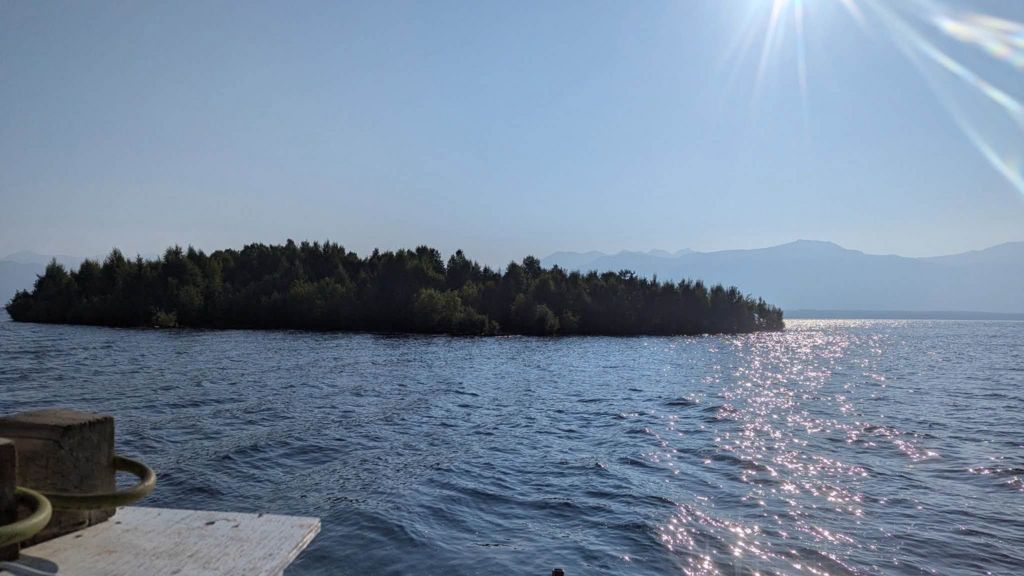
    A natural oddity that captured global attention after vanishing from satellite imagery has been found again on one of Canada’s largest freshwater bodies. The small, forested floating island, which first drew public attention when recreational boaters stumbled across it in mid-August on Williston Reservoir in northern British Columbia, had disappeared from its original documented location just weeks after its existence was confirmed, leaving officials and curious observers around the world guessing about its fate.

    The story first went viral after boaters posted a video of the unusual landmass bobbing in the reservoir’s open water. When Bob Gammer, a spokesperson for BC Hydro – the public utility that manages Williston Reservoir and the adjacent WAC Bennett Dam – first encountered the circulating clip on Canadian social media, he was deeply skeptical. He told the BBC his initial assumption was that the video was either AI-generated or misrepresented, adding, “I thought, well, this could be anywhere. Maybe it’s not real.”

    That skepticism faded quickly when his team pulled up a July 21 satellite image that confirmed the island was not only real, but floating in a remote stretch of the reservoir. Measuring approximately 9,800 square meters – equal to roughly one-and-a-half American football fields, or one full Canadian football field – the wooded landmass sparked widespread intrigue. Then, just a couple of weeks later, an August 5 satellite scan showed the island was gone from its original spot. Its disappearance was covered by international media, turning a regional oddity into a global mystery, with open questions about whether it had sunk, broken apart, or drifted to an unmonitored part of the reservoir.

    Now, that mystery has been solved. Gammer confirmed that new satellite imagery and eyewitness reports from pilots flying over the area have located the island roughly 30 kilometers (18.6 miles) from its initial discovery site, close to the reservoir’s shoreline. The island did not sink or break apart – it simply drifted with wind and current to a new location.

    While the island’s current location is confirmed, its origin remains unconfirmed, though BC Hydro has a leading working theory. Officials believe the landmass formed gradually over decades, as accumulated driftwood built up into a stable enough base for soil, plants, and eventually full trees to take root. This summer, unusually high water levels – the highest recorded at Williston Reservoir since 2012 – likely weakened the connection between the unusual formation and the shoreline, allowing it to break free and float out into the open reservoir.

    This is not the first recorded example of a large floating island in North America. One of the most famous is the Forty Acre Bog, a floating peat island on Wisconsin’s Lake Chippewa. The formation formed when a large peat bog detached from the lakebed and rose to the surface, and it has become a permanent, protected feature of the lake. Home to a wide range of native wildlife including frogs and salamanders, the bog is legally protected under Wisconsin state law, and local boaters occasionally maneuver it to prevent it from blocking bridges. Local resident Cheryl Treland described the formation to Wisconsin Public Radio in 2024, noting that it is far more substantial than it appears, saying, “This isn’t like a leaf floating on the top of the water… it’s like an iceberg.”

    For anyone tempted to seek out the newly relocated British Columbia island for a closer look, Gammer has issued a clear warning. Unlike the long-established Forty Acre Bog, the Williston Reservoir island is not a stable structure. Located in a remote part of the lake that sees very few human visitors, it remains at risk of breaking apart at any time. “Stay off the island,” Gammer urged. “It could break apart.”

  • Iran president offers olive branch even as US restarts attacks

    Iran president offers olive branch even as US restarts attacks

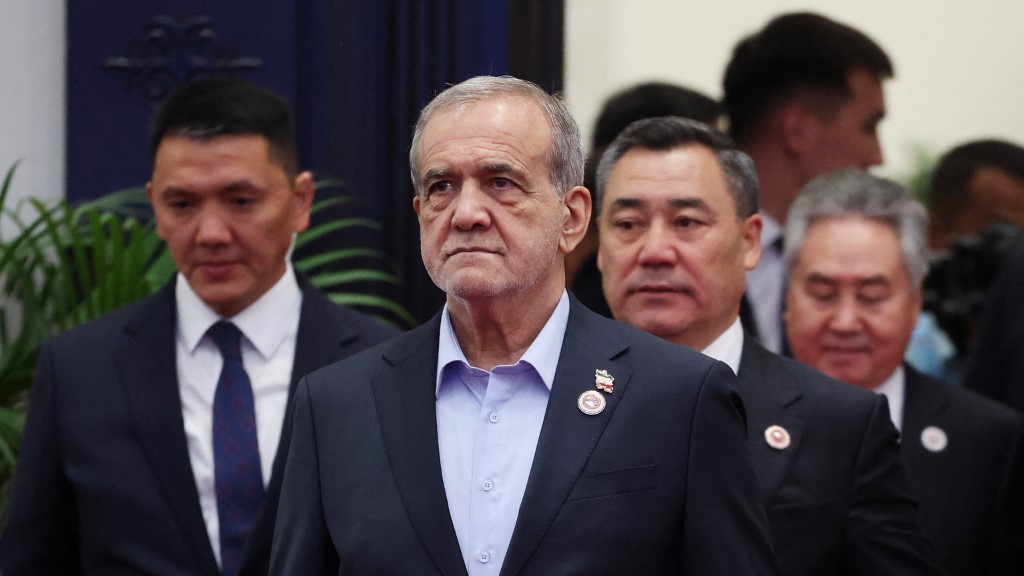
    Fresh regional tensions have flared across the Middle East after U.S. forces carried out a deadly airstrike on Iran’s Larak Island over the weekend, marking the first direct American military action on Iranian territory since July and stoking widespread fears of a wider regional escalation. In the aftermath of the strike that claimed the lives of multiple Iranian soldiers and civilians, Iranian President Masoud Pezeshkian has extended a conditional offer of de-escalation to U.S. President Donald Trump, balancing a firm warning of retaliation against future aggression with an opening for diplomatic progress.

    Speaking to reporters on Monday ahead of his departure for Bishkek to attend the Shanghai Cooperation Organisation summit, Pezeshkian made clear Iran’s core position: the country has no intention of initiating open conflict, but will not remain passive in the face of hostile action. Cited by Iran’s state-run Fars News Agency, the president emphasized that any new attack on Iranian soil would be met with a forceful, decisive response from Tehran. At the same time, he outlined a clear path to de-escalation, confirming that Iran would immediately take reciprocal steps to meet Washington halfway if the U.S. honors its obligations under the interim nuclear and diplomatic agreement signed by the two parties in June.

    “I state explicitly that if the United States returns to its commitments under the aforementioned memorandum of understanding, the Islamic Republic of Iran will immediately take reciprocal action,” Pezeshkian said in remarks published on the official website of the Iranian presidency.

    The Sunday strike on Larak Island, confirmed by Iran’s national broadcaster IRIB, triggered an immediate formal complaint from Tehran to the United Nations. In a letter submitted to UN Secretary-General António Guterres on Monday by Gholamhossein Darzi, Iran’s deputy permanent representative to the world body, Tehran denounced the attack as a blatant breach of Iran’s national sovereignty and territorial integrity. Darzi further accused the U.S. and other parties involved in the strike of committing war crimes and crimes against humanity as part of ongoing hostilities against Iran, noting that while Iran had exercised deliberate restraint up to this point, its military would not hesitate to defend the country’s territory and people with full force in response to any future attacks.

    Beyond the military and diplomatic fallout, the escalating tensions have already rippled through global energy markets, given that the strategic Strait of Hormuz, through which roughly a fifth of global oil supplies transit, sits just off Iran’s coast. Earlier escalations already forced shipping disruptions after Iran temporarily restricted access to the waterway, causing significant damage to global economic stability. Early ship-tracking data compiled by analytics firm Kpler shows that shipping traffic through the strait held relatively steady on Monday, with five commercial commodity vessels recorded transiting the waterway: four entered the route, one exited, including an empty handy-sized gas carrier that took the Iranian shipping lane and three loaded dry bulk carriers.

    On the domestic economic front, Iranian officials moved quickly this week to calm market jitters amid heightened U.S. sanctions pressure. Central Bank Governor Abdolnaser Hemmati announced Tuesday that Iran maintains adequate foreign currency reserves to weather the current pressure, pushing back against claims of imminent economic collapse. “I am telling the president of the United States: Iran has (foreign) currency and it has enough,” Hemmati said. The governor confirmed the central bank stands ready to inject up to $2 billion into the foreign exchange market to stabilize recent volatility, adding that the institution continues to collect all outstanding foreign currency receivables and holds both domestic reserves and additional contingency resources.

    Addressing the Iranian public directly, Hemmati acknowledged that current economic conditions and everyday livelihood challenges have grown significantly difficult, but dismissed narratives of an imminent economic breakdown as baseless psychological warfare. “These claims are just psychological warfare and the dust will settle soon,” he stressed.

  • UN report finds Syria was building a nuclear reactor in Deir el-Zour under former President Assad

    UN report finds Syria was building a nuclear reactor in Deir el-Zour under former President Assad

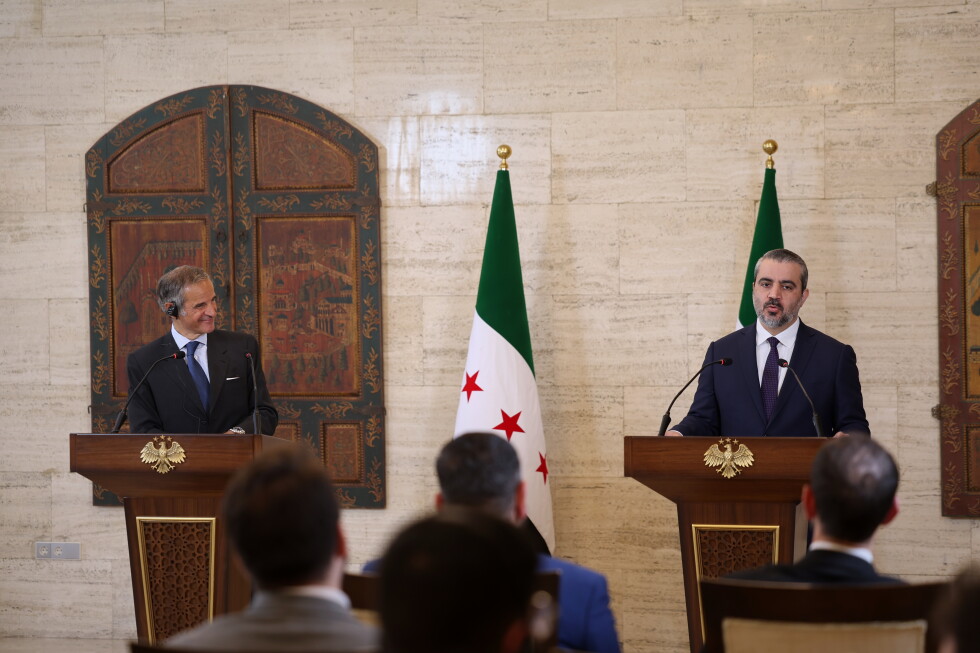
    VIENNA – In a confidential briefing distributed to member states and obtained by the Associated Press on Tuesday, the United Nations’ nuclear watchdog has formally confirmed that decades of unreported nuclear activity under former Syrian President Bashar Assad violated global non-proliferation rules.

    Inspectors from the International Atomic Energy Agency (IAEA) carried out on-site verification work at multiple locations across Syria in August 2025, yielding new concrete evidence that the Assad regime failed to declare all nuclear material, facilities and activities as required under its Treaty on the Non-Proliferation of Nuclear Weapons (NPT) Safeguards Agreement.

    The revelations center on a once-secret nuclear reactor project in the eastern Syrian region of Deir el-Zour, alongside a nearby fuel fabrication plant and an additional fuel storage site that were never disclosed to global regulators. For years, intelligence communities have alleged that Syria ran a large undeclared nuclear program, including the Deir el-Zour reactor constructed with technical support from North Korea.

    Details of the reactor only emerged into public view in 2007, when Israel launched surprise airstrikes that destroyed the uncompleted facility. In the aftermath of the strike, the Assad regime bulldozed the entire site and consistently avoided providing full, transparent answers to IAEA investigators for nearly two decades. It was not until 2024 that IAEA sampling at the location detected particles of uranium, reigniting formal verification efforts.

    During the August 2025 visit, inspectors returned to the Deir el-Zour site on August 29 to monitor ongoing excavation work. On-site observations have now confirmed that uncovered cooling infrastructure at the site matches the design specifications of a functional nuclear reactor. The report also identifies three additional locations that served supporting roles for the Deir el-Zour project: one dedicated to nuclear conversion and fuel fabrication work, a second for temporary storage of construction materials for the reactor, and a third that stored materials moved to and from the main site and was originally earmarked for future spent fuel reprocessing.

    Beyond the long-investigated Deir el-Zour complex, the IAEA’s August inspection also included a previously undisclosed site that the new Syrian administration formally notified the agency of in a July 17 letter. The notification invited IAEA inspectors to conduct full verification of the site and any nuclear material found there.

    To the agency’s surprise, verification work at the newly disclosed site found 73 tonnes of natural uranium metal formed into clad fuel rods, all of which had never been reported to the IAEA. As of the publication of the confidential report, all of this undeclared nuclear material has been placed under IAEA containment and continuous surveillance measures to prevent diversion for military use.

    The confirmation of long-suspected undeclared nuclear activities comes amid a period of rapid political transition in Syria, marking one of the most significant findings by the IAEA regarding Middle Eastern non-proliferation compliance in nearly 20 years.

  • Trump running out of bullets against an intractable Iran

    Trump running out of bullets against an intractable Iran

    Seven months ago, U.S. President Donald Trump launched a discretionary war against Iran, a conflict he initially framed as a quick “little excursion” that would wrap up in mere weeks. Today, that war remains mired in intractable deadlock, with no clear path to victory or exit for the United States – a outcome that has upended regional security and threatened global economic stability. The conflict, launched at the urging of Israeli Prime Minister Benjamin Netanyahu in late February, was premised on two flawed justifications: forcing Tehran to keep the Strait of Hormuz open to commercial navigation (a status quo that held before the war began) and compelling Iran to renegotiate its nuclear program. Notably, independent experts have repeatedly confirmed Iran was not close to developing a nuclear weapon prior to the outbreak of hostilities, undermining the core strategic rationale for the invasion. From its inception, the conflict was launched without a coherent long-term strategy. The Trump administration repeatedly downplayed expectations, echoing then-Defense Secretary Pete Hegseth’s promises that the war would be short and low-cost, while criticizing previous U.S. leaders for getting the country trapped in protracted foreign wars. Yet administration officials badly miscalculated: they severely underestimated the Iranian regime’s resilience and preparedness to repel U.S. aggression, and failed to anticipate that Iranian society would rally together around the government in response to outside attack. Despite these early missteps, Trump has repeatedly rushed to claim premature military victory, asserting that Iran’s defensive capabilities had been wiped out and that U.S. bombings had forced Tehran to the negotiating table. These claims have quickly unraveled. Not only did Tehran rebuild its offensive capabilities far faster than U.S. intelligence projected, it also secured de facto control over the Strait of Hormuz – a critical chokepoint for global oil supplies – giving Iran a powerful leverage point to pressure Washington and the international community. By May, Iran held the strategic upper hand and refused to enter any negotiations that did not address its core non-negotiable demands: a full ceasefire across all fronts, including an end to Israel’s offensive against Hezbollah in Lebanon; the unfreezing of billions of dollars in Iranian assets held overseas; war reparations from the U.S.; formal recognition of Iran’s sovereign right to manage the Strait of Hormuz; and a permanent guarantee that the U.S. and Israel will abandon all threats of regime change and military action against Iran. In June, Trump signed a vaguely worded memorandum of understanding with Iran’s hardline IRGC-dominated leadership that aligned closely with many of these demands. But facing fierce backlash from senior Republican Party figures and Netanyahu, Trump quickly backed out of the agreement and renewed large-scale military strikes. For its part, Tehran made no effort to salvage the deal, recognizing that continued conflict serves its goal of inflicting political damage on Trump ahead of U.S. midterm elections. Since the collapse of the June memorandum, the Trump administration has reimposed a full blockade on Iranian ports to cut off Tehran’s oil revenue, while carrying out periodic airstrikes intended to intimidate the regime. These moves have done nothing to break the stalemate, with periodic exchanges of fire continuing this week: the U.S. launched strikes on Iran’s Larak Island, and the IRGC retaliated with attacks on U.S. military bases in Jordan and the United Arab Emirates. With no substantive peace talks underway, the conflict remains in a dangerous, volatile limbo. Ahead of the approaching midterm elections, the Trump administration last week unveiled a sweeping new round of sanctions dubbed Operation Economic Outcast, labeled “Economic D-Day” by Treasury Secretary Scott Bessent. The policy is designed to cripple Iran’s economy and force global isolation of the regime, but analysts widely expect it to fail, just as previous pressure campaigns have. Both China and Russia have already rejected the new sanctions as unacceptable, and none of Iran’s key neighboring states – including Pakistan, Iraq, and Turkey – have committed to enforcing the measures. Only the United Arab Emirates, a close U.S. and Israeli ally, has paused financial transactions and trade with Tehran. History offers little evidence that broad, unilaterally enforced sanctions force regime capitulation: the only widely cited case of successful multilateral sanctions was the campaign against South Africa’s apartheid regime. For 47 years, Iran’s Islamic government has honed strategies to evade U.S.-led sanctions, building domestic self-sufficiency and diversifying its trade network to reduce dependence on Western markets. While the Iranian public has inevitably borne the brunt of economic hardship from past sanctions, the regime has consistently survived and consolidated its control. The current round of sanctions will almost certainly deepen suffering for ordinary Iranians, but there is little reason to expect it to topple the government or force Tehran to make concessions on core demands. The ongoing standoff poses unacceptable risks to both regional and global security. Allowing the conflict to escalate further could spark a full-scale regional war, and a prolonged closure of the Strait of Hormuz would carry catastrophic costs for the global economy. The only viable path forward, according to regional analysts, is for Washington and Tehran to return to the framework of the June memorandum of understanding and resume direct, good-faith negotiations to reach a final settlement. Quiet mediation efforts led by Pakistan and Qatar continue to work behind the scenes to bring the two sides back to the table, and a growing number of Gulf states are pushing for an end to the conflict. These regional powers have increasingly come to accept Iran as a permanent major regional actor, and are moving away from relying exclusively on the U.S. for security. In a notable sign of this shift, Saudi Arabia – the wealthiest Gulf state – recently signed a mutual defense pact with NATO member Turkey and nuclear-armed Pakistan, with several other regional states including Egypt considering joining the agreement, a move that Iran has publicly welcomed. While the path to a lasting peace remains fraught with uncertainty and obstacles, analysts agree that diplomacy is the only viable way out of the current stalemate. This commentary, written by Amin Saikal, Emeritus Professor of Middle Eastern Studies at Australian National University, the University of Western Australia, and Victoria University, is republished under a Creative Commons license from The Conversation.

  • Oil giant Chevron is expected to announce it will expand operations in Venezuela, US official says

    Oil giant Chevron is expected to announce it will expand operations in Venezuela, US official says

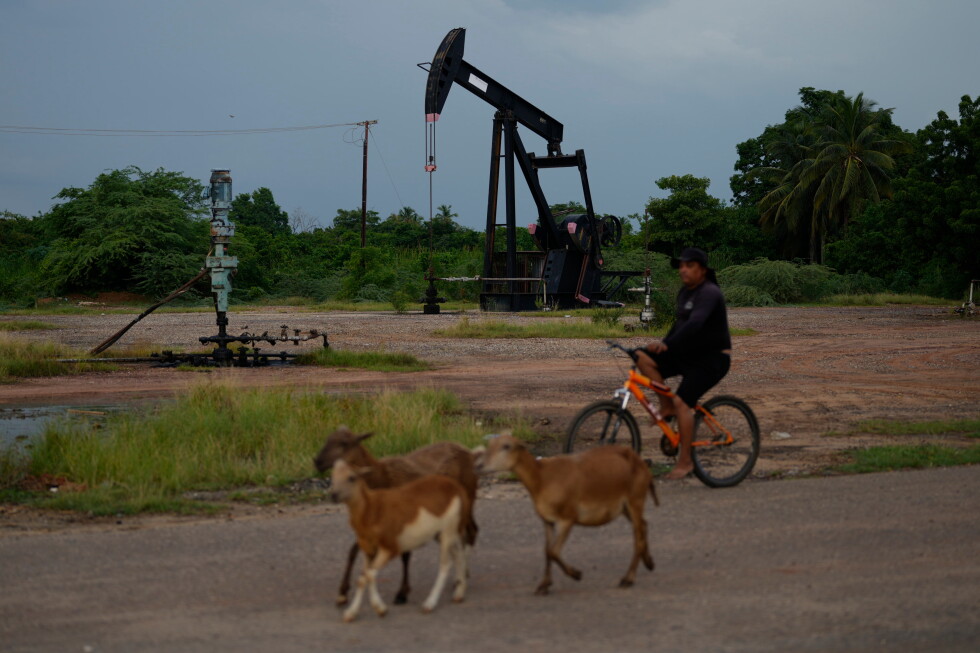
    WASHINGTON — A senior United States government official, speaking on condition of anonymity in line with briefing rules established by the White House, confirmed Tuesday that American energy giant Chevron is on the cusp of announcing a major expansion of its oil operations in Venezuela. The formal rollout of the new investment initiative is scheduled for Wednesday, when senior leaders from Chevron and U.S. Energy Secretary Chris Wright will travel to Caracas to make the official announcement. As the second-largest oil producer headquartered in the United States, Chevron holds a unique position among American energy firms: it is the only U.S. oil company that maintains a large-scale operational footprint in Venezuela, which holds the world’s largest proven crude oil reserves. The upcoming announcement comes just one day after the White House formally confirmed a new partnership between U.S. authorities and Canada-based North American Blue Energy Partners. This collaboration aligns directly with former President Donald Trump’s broader policy push to unlock development of Venezuela’s vast underutilized oil reserves, a priority that has shaped U.S. energy and foreign policy toward the South American nation in recent years.