博客

  • Israel imposes curriculum on 45,000 Palestinian students in East Jerusalem

    Israel imposes curriculum on 45,000 Palestinian students in East Jerusalem

    A sweeping expansion of Israeli education policy in occupied East Jerusalem is forcing more than 45,000 Palestinian students — roughly 38% of all Palestinian students in the city — to study under the Israeli national curriculum, a sharp, accelerated increase from enrollment numbers in recent years. Starting this week, all new first-grade and seventh-grade classes within East Jerusalem’s Israeli-run state school system will transition to the Israeli curriculum, completing the latest phase of a policy Palestinian officials describe as an unprecedented threat to their national identity.

    This rapid expansion marks a major jump from just five years ago, when only 10,347 Palestinian students attended Israeli curriculum schools. That number climbed to 27,041 by the 2025-26 school year, and now crosses the 45,000 threshold as the policy is extended to all new entering cohorts at state-run institutions.

    Palestinian students in East Jerusalem currently attend one of four school systems: schools operated by the United Nations, independent private institutions, schools run by the Islamic Waqf endowment, and Israeli municipal schools, where the new curriculum rules are now being widely enforced. The trajectory of education policy in the region has shifted dramatically since Israel occupied East Jerusalem in 1967: initially, the education system remained aligned with the West Bank, using a Jordanian-designed curriculum, which was replaced by a Palestinian Authority-developed curriculum in the 1990s. Today’s expansion of the Israeli curriculum represents the most significant change to that framework in decades.

    Maarouf al-Rifai, spokesperson for the Palestinian Authority’s Jerusalem Governorate, called the decision a dangerous escalation unmatched since the 1967 occupation. He framed the policy as a direct assault on the Palestinian national and cultural identity of Jerusalem residents, noting that the Israeli curriculum systematically marginalizes core elements of Palestinian history and collective narrative. Key topics such as the Nakba, the status of Palestinian political prisoners, and the centrality of Jerusalem to Palestinian identity are erased or sidelined from the curriculum, turning education into a battleground for collective memory, national consciousness, and cultural identity in the contested city.

    The curriculum expansion is not an isolated move, but part of a coordinated, systematic campaign targeting Palestinian education across East Jerusalem, Palestinian officials say. Additional restrictions have thrown the start of the new academic year into chaos for Palestinian private schools: Israel has blocked entry permits for roughly 70 West Bank-based teachers who work in East Jerusalem, and 40% of all teachers at the city’s Palestinian private schools — most of them Palestinian Christians — reside in the West Bank. In response, private schools have announced they will delay the 2026-27 academic year indefinitely until entry permits are renewed or reissued for all affected staff.

    Omar Rjoob, media director for the Jerusalem Governorate, explained to Middle East Eye that the crackdown on education ties into a broader Israeli strategy to solidify the annexation of East Jerusalem and sever the city from its geographic and cultural Palestinian roots. Long-standing barriers including Israeli military checkpoints and the separation barrier constructed in the early 2000s already cut Jerusalem off from the rest of the West Bank, forcing many Palestinian residents of Jerusalem to seek employment in the Israeli labor market and increasing pressure for expanded Hebrew language education over time.

    Recent policy changes have accelerated this shift: in January 2026, Israel’s parliament passed a ban barring the hiring of teachers who hold academic degrees from Palestinian Authority-affiliated universities within the Israeli education system. The rule has had an immediate, severe impact on Arabic-language education in East Jerusalem, where a large share of teaching staff graduated from Palestinian higher education institutions.

    Israeli authorities have also targeted United Nations Relief and Works Agency (UNRWA) schools that serve Palestinian refugees, closing multiple campuses and seizing agency-owned educational complexes in the Shuafat and Kafr Aqab refugee camps. Israeli newspaper Haaretz confirmed that a large purpose-built UNRWA school in central Shuafat has been taken over by the Jerusalem municipality, which plans to repurpose the site to house 14 high school classes, a co-ed primary school, and five special education kindergartens.
    “This entire trajectory, with all its components, represents an attempt to re-engineer the educational landscape of occupied Jerusalem to serve the Israeli occupation’s policy goals,” Rjoob told Middle East Eye. He added that the weakening of Palestinian educational institutions, movement restrictions on teachers, and forced curriculum changes collectively threaten the Palestinian identity of young students in the city, transforming education into a tool for annexation, Judaisation, and the erasure of East Jerusalem’s inherent Arab-Palestinian character.

    The policy announcement comes as high-profile far-right Israeli National Security Minister Itamar Ben Gvir prepares to launch a children’s book celebrating his political “activities and achievements” to be distributed to Israeli educational institutions. Titled *The Minister Who Didn’t Stop*, the book is scheduled to launch Tuesday, the first day of the Israeli school year, at a conference for Ben Gvir’s Jewish Power party.

  • Remarkable US oil deal puzzles analysts – and angers many Venezuelans

    Remarkable US oil deal puzzles analysts – and angers many Venezuelans

    In January, elite U.S. special operations forces entered Venezuelan leader Nicolás Maduro’s Caracas compound to oust him from power, and from that operation’s outset, U.S. President Donald Trump openly framed control of Venezuela’s vast oil reserves as a core strategic goal of his administration. At the time, Trump stated that the U.S. would directly “run” Venezuela and oversee the sale of the country’s crude for the foreseeable future. Last Wednesday, that years-in-the-making plan came to fruition as officials signed a landmark oil agreement in Caracas that hands a U.S.-led consortium a 100-year concession to 17 Venezuelan oil fields holding a staggering 65 billion barrels of proven crude – equivalent to more than one-fifth of the South American nation’s total documented oil reserves.

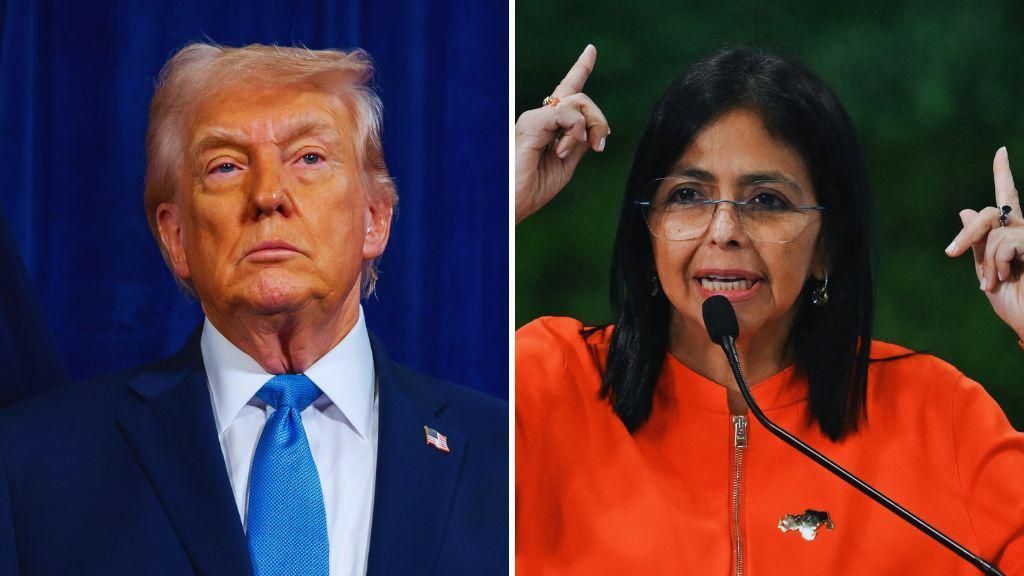
    Both the Trump administration and Venezuela’s interim government led by Delcy Rodríguez have celebrated the pact as a mutually beneficial breakthrough. Trump has hailed it as “the biggest oil deal in world history,” while Rodríguez framed the agreement as a historic turning point that will bring $100 billion in foreign direct investment and generate more than $200 billion in tax revenue for Venezuela’s cash-strapped public coffers. But not all observers have shared that optimistic assessment, with sharp criticism emerging from across the ideological spectrum on both sides of the bilateral relationship.

    Elliott Abrams, Trump’s own former special representative for Venezuela and Iran, has emerged as one of the deal’s most high-profile critics. He called the agreement a terrible giveaway, arguing that Rodríguez has surrendered 20% of Venezuela’s national natural patrimony for no meaningful long-term benefit, and suggested she is merely acting to comply with demands issued by Washington. Details released in a White House fact sheet last Tuesday laid out the framework for the partnership, which pairs the U.S. government with North American Blue Energy Partners (Nabep), Venezuela’s second-largest private oil producer after U.S. energy giant Chevron. One particularly notable provision grants the U.S. government formal veto power over every appointment to Nabep’s board of directors, and requires that a majority of the consortium’s board members hold U.S. citizenship.

    For the Trump administration, the deal comes amid heightened tensions with major oil producer Iran that have pushed up global gasoline prices, and officials frame the pact as a strategic win that shifts global energy market dynamics. U.S. Interior Secretary Doug Burgum told Fox Business that the agreement shifts the geopolitical center of global energy markets away from the so-called “choke points in the Middle East” and back to the Western Hemisphere. While Abrams acknowledged the strategic logic of partnering on Venezuelan oil production amid unstable Gulf supplies, he argued the one-sided terms of the deal amount to a “fever dream of what colonialism looks like.” The White House has gone even further in framing the pact’s strategic meaning, saying it formally re-establishes the Monroe Doctrine – the 19th-century principle that asserts U.S. geopolitical dominance over the Western Hemisphere – allowing Washington to “purge foreign malign influence from our backyard and ensuring American dominance in our hemisphere is never again questioned.”

    Despite the rosy framing from both governments, the deal faces significant practical and political hurdles that could derail its projected timelines and outcomes. Trump has claimed the agreement will generate profits within two to three years, but energy industry experts warn that decades of underinvestment and mismanagement have left Venezuela’s oil sector in such disrepair that a 10-year timeline is far more realistic. Luis Pacheco, an energy researcher at Rice University’s Baker Institute in Houston, told BBC Mundo that Venezuela requires roughly $100 billion in investment over eight years just to return to the oil production levels it achieved three decades ago. Beyond the upfront investment gap, Pacheco questioned the stewardship of the new revenue, asking whether the same officials who squandered Venezuela’s last major oil boom will be placed in charge of managing the new influx of capital.

    Political opposition to the deal runs deep across Venezuela’s ideological divide. Venezuela’s mainstream opposition argues the agreement deepens Trump’s ties to Rodríguez, who served as Maduro’s vice president before his ouster, and who they argue still leads the same authoritarian regime the U.S. once labeled a corrupt drug cartel. The Trump administration once surrounded Venezuela with the largest naval deployment the region has seen in modern history to pressure Maduro’s government, making the rapid pivot to partnering with his former top deputy particularly galling for opposition groups. While Nobel Peace Prize winner and leading opposition presidential candidate María Corina Machado has avoided public criticism of Trump – whose support she needs to pursue power – other opposition figures have been far more outspoken. Venezuelan economist Ricardo Hausmann accused the Trump administration in a social media post directed at Secretary of State Marco Rubio of choosing to ally with Venezuela’s oppressors rather than liberate the Venezuelan people, calling the deal an unconstitutional asset seizure struck with an illegitimate government that fails to prioritize restoring constitutional order and democratic rule. Opposition leaders also point to the lack of any clear timeline for free and fair elections in Venezuela as evidence of a broken promise.

    Criticism also comes from the Venezuelan left, where the ruling PSUV socialist party has officially backed Rodríguez, but many long-time party members view the deal as an unconditional surrender of national sovereignty. For nearly three decades, Venezuela’s socialist movement has opposed U.S. influence in the region, and many see the deal as gifting the country’s most valuable natural resource to Washington. Rafael Ramírez, who served as oil minister and head of state-owned PDVSA under iconic socialist leader Hugo Chávez, called the agreement a door opening to a new era of U.S. colonialism. The deal marks a striking reversal of the legacy Chávez built: in 2008, Chávez visited expropriated ExxonMobil oil fields in the Orinoco River Belt, where he declared defiantly that “We have the reins in our hands and we won’t ever let them go again,” denouncing previous U.S.-aligned governments for turning Venezuela into “a nation of gringos” and framing the expropriation as an end to decades of foreign theft of Venezuelan resources. Now, more than 15 years later, a successor that emerged from Chávez’s own Bolivarian movement has signed the sweeping concession with Washington and praised it as a victory for the Venezuelan people.

  • Watch: Astronauts set out on rare all-female spacewalk

    Watch: Astronauts set out on rare all-female spacewalk

    In a moment that marks another significant step forward for gender representation in space exploration, a duo of female astronauts has pulled off a rare all-female extravehicular activity (EVA), more commonly known as a spacewalk, outside the International Space Station (ISS). This achievement stands as only the sixth time in humanity’s history of space travel that an entire spacewalk has been carried out by an all-women team.

  • Venezuela’s main airport partially resumes commercial flights after deadly earthquakes

    Venezuela’s main airport partially resumes commercial flights after deadly earthquakes

    Nearly 10 weeks after two of the deadliest and strongest earthquakes to hit Venezuela in more than a century, the South American nation has taken a key step toward recovery by partially restarting commercial activity at its primary international gateway.

    On Tuesday, Simón Bolívar International Airport, located 20 kilometers north of the capital Caracas in the Maiquetía district of coastal La Guaira state, welcomed its first commercial passengers since the twin 7.2 and 7.5 magnitude tremors struck on June 24. The powerful quakes, which hit just 39 seconds apart along Venezuela’s heavily populated coastal mountain range, left more than 6,500 people dead and displaced roughly 17,900 who lost their homes. Severe structural damage forced an immediate full closure of the airport, destroying sections of its runways, damaging the air traffic control tower, and rendering main passenger and cargo terminals unsafe for use.

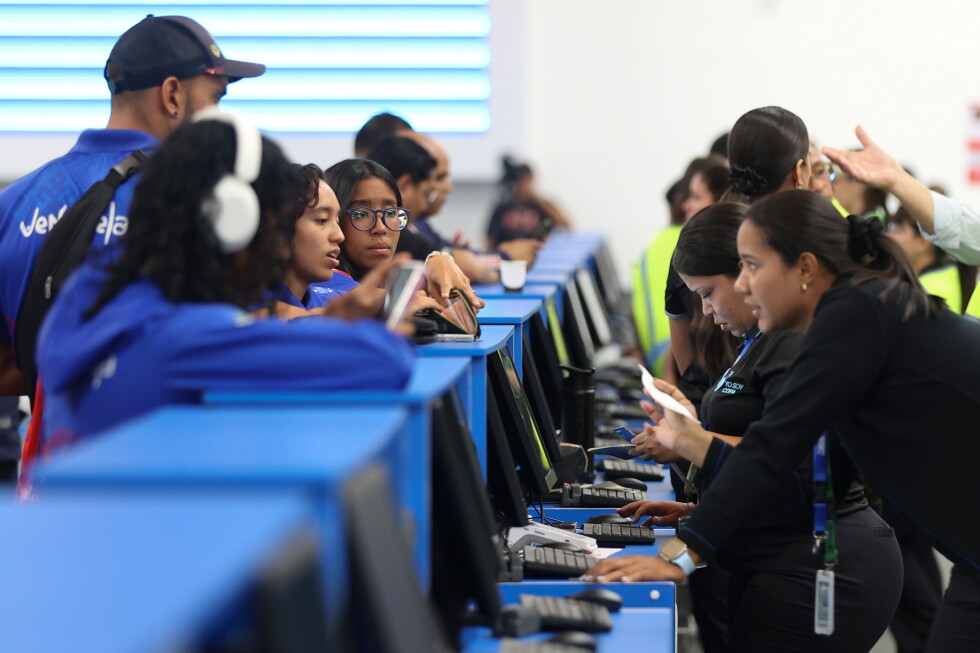
    To enable the phased restart while permanent structural repairs move forward, authorities constructed a 10,000-square-meter temporary passenger processing hub out of modular metal structures in the airport’s existing parking lot. The temporary facility is equipped with full passenger amenities, including check-in counters, climate-controlled waiting lounges, complimentary Wi-Fi access, on-site medical services, and public restrooms. Due to the modified layout, passengers will be shuttled between the temporary terminal and departing aircraft via ground bus transportation.

    According to official projections, the new temporary setup can accommodate up to 2,168 passengers per day in this initial operational phase. Transportation Minister Francisco Garcés told reporters on Tuesday that the government expects to restore 25% of the airport’s pre-earthquake flight volume in this first stage. Officials plan a gradual ramp-up of capacity over the coming months, targeting 40% of pre-disaster operations within a few months, and 60% by the end of 2024 or early 2025. Garcés confirmed that international safety oversight organizations completed required inspections and formally certified the airport’s readiness to resume commercial operations.

    The restart began with 11 weekly round-trip flights: seven domestic routes and four international services operated by Panama’s Copa Airlines and Spain’s Air Europa. Additional carriers, including Spain’s flag carrier Iberia, are set to add their services to the airport in the coming weeks. Prior to the Tuesday restart, all international flights bound for Venezuela were diverted to smaller regional airports in Carabobo state, 168 kilometers southwest of Caracas, and Anzoátegui state, 314 kilometers east of the capital, forcing passengers to endure hours of additional overland travel to reach the capital.

    The disaster hit La Guaira state, Venezuela’s second smallest by area, particularly hard. Most of the earthquake-related fatalities were recorded here, where 440,000 residents, most from low-income backgrounds, rely heavily on tourism, commercial activity, and jobs tied to the airport and the country’s second-largest port, both located within the state’s borders. The tremors also caused widespread damage across the capital Caracas and neighboring central-western states including Carabobo, Miranda, Aragua, and Yaracuy.

  • UK’s Burnham urged to address alleged UAE plot against British academic

    UK’s Burnham urged to address alleged UAE plot against British academic

    A London-based civil society leader is demanding answers from UK Prime Minister Andy Burnham over explosive allegations that the United Arab Emirates orchestrated a covert plot to assassinate him on British territory, following a months-long investigative journalism project that uncovered detailed evidence of the alleged operation.

    Last month, Britain’s ITV News published an investigation claiming the UAE committed millions of dollars to contracting a mercenary operative to target Anas Altikriti, chief executive officer of the Cordoba Foundation, a London-headquartered policy think tank focused on Middle East issues.

    The alleged plotter, Abraham Golan, a dual Hungarian-Israeli citizen who led the private security firm Spear Operations Group, traveled to the United Kingdom in December 2016 specifically to carry out surveillance on Altikriti, according to evidence gathered by ITV. The outlet obtained Emirati financial records confirming Golan, who resided in the United States, received regular payments from the UAE government during the period of the operation. These included a six-figure annual retainer plus large performance bonuses, with one $1 million payment processed just weeks before Golan’s 2016 London trip, originally tied to a separate operation in Yemen.

    ITV’s investigation, built from a trove of evidence including witness testimony, email correspondence, WhatsApp communications and financial documents, found Golan worked alongside a retired U.S. special forces operator to track Altikriti’s daily movements. Golan reached out to a British political strategist, identified by the investigation only as “Victor”, in November 2016, asking for access to networks connected to Altikriti and the Cordoba Foundation. Once in London, Golan initially offered Victor £50,000 (equivalent to $68,000 at current exchange rates) to help locate the think tank chief, later increasing the bribe to £100,000 ($136,000).

    Documents and witness accounts confirm Golan shared detailed surveillance intelligence with Victor, including photos of Altikriti’s personal residence and vehicle, custom maps with satellite imagery, and granular notes on his routine travel between home and work. During one planning meeting, Golan explicitly raised the possibility of killing Altikriti, the investigation found. When questioned about the outcome of the operation, Golan’s former special forces associate made a throat-slitting gesture to indicate assassination.

    Victor told ITV he grew increasingly alarmed by the scope and intent of the plot, ultimately cutting ties with the group once he confirmed the operation planned to end in Altikriti’s death. After the plot was uncovered, British police visited Altikriti at his London home twice to warn him his life was in imminent danger—but officers refused to share any details about the source or nature of the threat, leaving him without full context about the risk he faced.

    In a formal letter sent to Prime Minister Andy Burnham on August 21, Altikriti has laid out a series of urgent demands for transparency and action from the UK government. The activist is asking Burnham to explain how a foreign government could apparently plan an assassination on British streets without facing any diplomatic or legal consequences, and to clarify what protection the state can guarantee to individuals in his position when such threats emerge.

    Altikriti also pressed the government to release all information British intelligence and law enforcement agencies held about the 2016 plot, and to answer why he was not given full details about the threat at the time when the information would have been most critical. Addressing the UK government’s stated goal of deepening diplomatic and trade ties with the UAE, Altikriti questioned how this ambition can align with credible evidence of an Emirati assassination plot on UK soil, asking what new requirements of trust, transparency and accountability will now be applied to the bilateral relationship. He added that he is ready and willing to meet with Burnham or any relevant cabinet minister to discuss the matter in person.

    Per ITV’s reporting, Golan told the British strategist he was acting on direct orders from Abu Dhabi, which considers Altikriti and the Cordoba Foundation to be affiliated with groups labeled as terrorist organizations by the UAE government.

  • Camara’s £47.1m move from Monaco to Chelsea collapses

    Camara’s £47.1m move from Monaco to Chelsea collapses

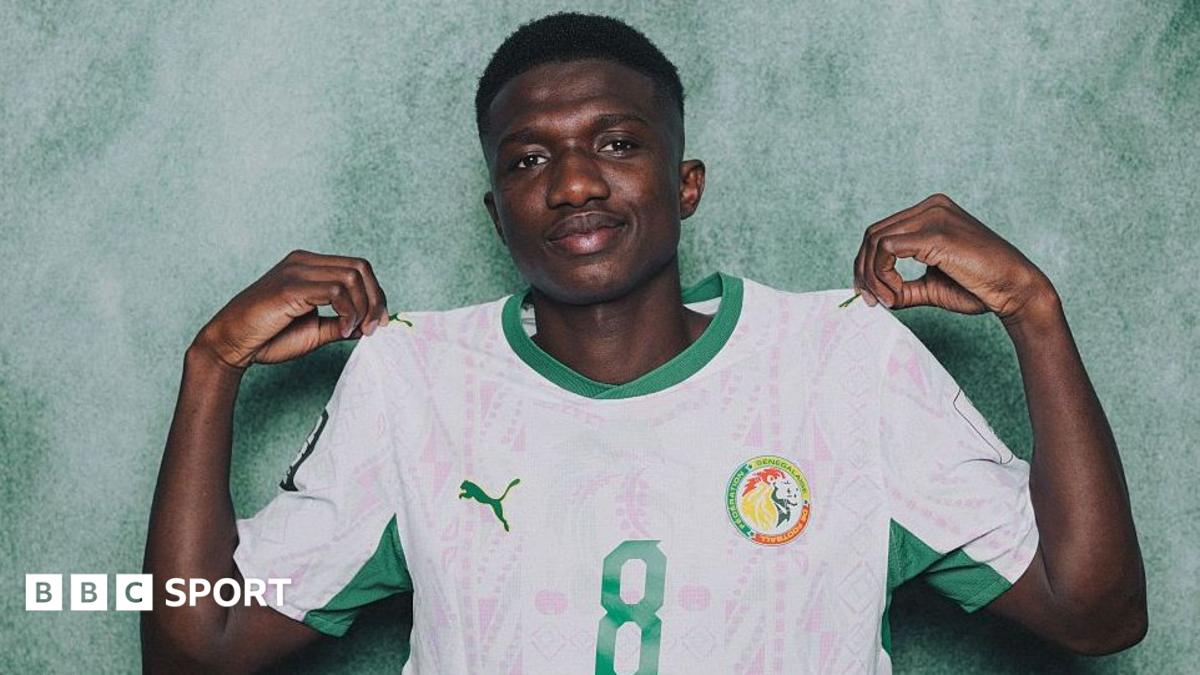
    On a chaotic final day of the summer football transfer window, a blockbuster move for Senegalese midfielder Lamine Camara to Chelsea fell apart at the eleventh hour, leaving the Premier League club scrambling and angry after they had already cleared space for his arrival. The 22-year-old, who has earned 37 senior international caps for Senegal, had successfully passed a medical examination in France earlier on Tuesday evening, with all signs pointing to the deal wrapping up moments after the 11pm BST deadline. What was supposed to be a major deadline day coup for Chelsea instead devolved into a bitter dispute, after Monaco confirmed in writing that they would not complete the £47.1 million transfer.

    The collapse of the deal is deeply tied to the tangled web of another proposed transfer: Folarin Balogun’s expected move from Monaco to Everton. For weeks, Monaco had resisted two separate bids from Chelsea for Camara, as the Ligue 1 side prioritized offloading Balogun, their American international striker, to meet summer financial targets. It was only when Balogun’s transfer to Everton hit unexpected doubt that Monaco softened their stance on Camara, dropping their asking price to the £47 million figure Chelsea had agreed to.

    Confident the deal would cross the finish line, Chelsea had already moved forward with their own high-profile outgoing transfer: Enzo Fernandez’s British joint-record £125 million move to Manchester City, a sale structured to free up both budget and squad space for Camara’s arrival. But when Balogun’s transfer to Everton unexpectedly got back on track, sources close to the situation told BBC Sport that Monaco reversed their decision to let Camara leave, providing no clear explanation to Chelsea for the last-minute change of heart.

    In the lead-up to deadline day, Camara featured for Monaco in their 2-0 league win over Marseille on Sunday, while Balogun was omitted entirely from the match squad – a clear sign at the time that both players were expected to depart the club. BBC Sport has reached out to Monaco for official comment on the collapsed transfer, leaving the final outcome of both Camara’s future and Balogun’s stalled Everton move unclear as the transfer window closes for another window.

  • Ndiaye’s journey from non-league football to £65m Man City move

    Ndiaye’s journey from non-league football to £65m Man City move

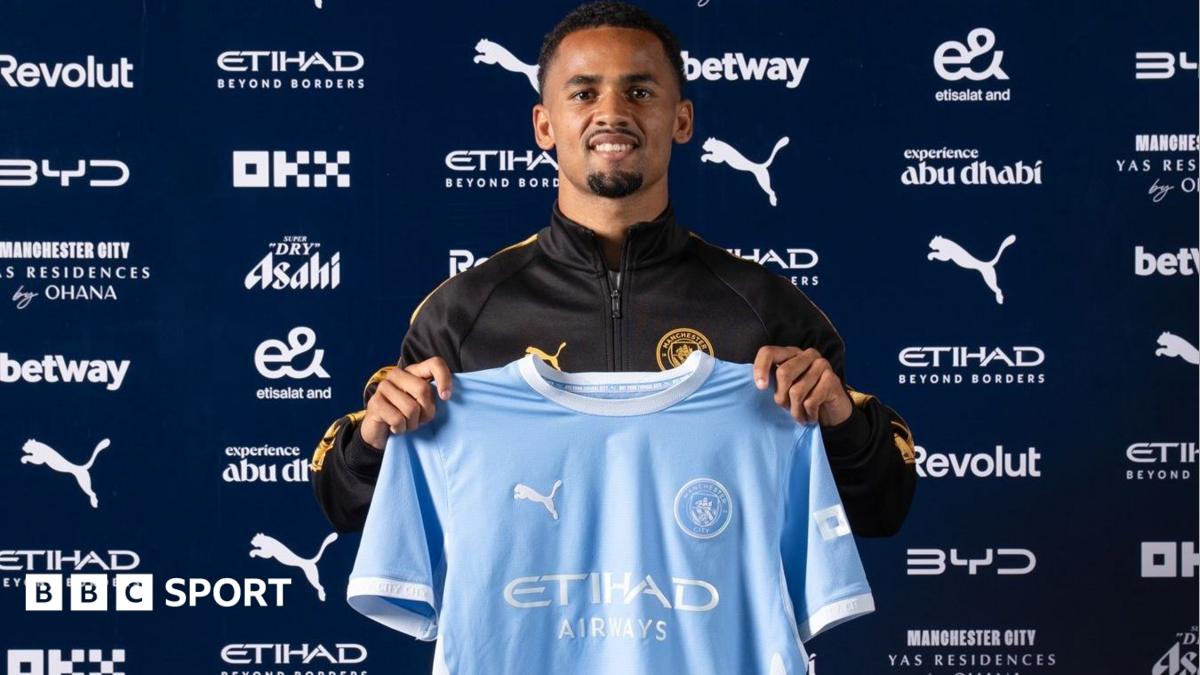
    On the final day of the summer 2026 Premier League transfer window, 26-year-old Senegalese winger Iliman Ndiaye completed a blockbuster move from Everton to English giants Manchester City, in a deal worth an initial £60 million with a further £5 million in performance-based add-ons that could take the total fee to £65 million. The transfer caps an extraordinary underdog journey for Ndiaye, who made his professional debut just over six years ago competing in the seventh tier of English football. Ndiaye has signed a five-year contract with the reigning top-flight side, and opened up about his gratitude for the once-in-a-lifetime opportunity.

    “I’ve worked my whole life for an opportunity like this,” Ndiaye said after the move was confirmed. “City are one of the best clubs in the world and I’ve seen them win everything as I’ve grown up. To be able to write my own chapter in a story that special is the chance of a lifetime and I’m determined to grab it with both hands.”

    The path to Etihad Stadium was anything but straightforward. Earlier in the summer, Ndiaye held private transfer talks with Saudi Pro League powerhouse Al-Hilal, and as recently as Friday night, London-based Tottenham Hotspur had reached a full transfer agreement with Everton for the winger, with a proposed swap deal that would have seen Brazilian attacker Richarlison move back to his former club Everton. However, sources close to the negotiation confirmed that Richarlison was unable to agree personal terms with Everton, collapsing the swap and leaving Ndiaye’s transfer to Tottenham dead in the water. That opened the door for Manchester City, who moved quickly to seal the deal on deadline day.

    Ndiaye’s arrival is City’s second major marquee signing of the day, coming just hours after the club confirmed they had agreed to pay a joint all-time British transfer record £125 million to sign Argentine World Cup-winning midfielder Enzo Fernandez from Chelsea. Ndiaye becomes the club’s eighth senior summer signing, joining Fernandez, Elliot Anderson, Geronimo Rulli, Ayyoub Bouaddi, Allan Elias, Jeremy Monga and Pierce Charles at Etihad Stadium.

    Looking back at Ndiaye’s rise to the top of English football, his journey is one of relentless persistence. As a 19-year-old based in London, Ndiaye was in the youth system of non-league side Boreham Wood, playing amateur Sunday league football when he earned a one-week trial with then-Premier League club Sheffield United. Two impressive trial matches were enough to convince the club to sign the raw young talent, but he would not make his first senior appearance for the Blades for another 18 months. Instead, he spent the second half of the 2019-20 season on loan at Hyde United in the Northern Premier League, six divisions below the Premier League, to gain match experience. It was there that he got his first taste of professional football, making six appearances, and often stayed behind on the training ground to work on his game even if it meant risking missing the last train back to Sheffield. “It’s not always been easy in my career,” Ndiaye reflected. “But I always had the belief that I could play for a team challenging for the biggest prizes and now I’m here.”

    After returning to Sheffield United’s Bramall Lane ground, Ndiaye made his Premier League debut in March 2021 against Leicester City, but it would take another three and a half years for him to secure a regular place in the top flight after Sheffield United suffered relegation to the Championship. Over two seasons in England’s second tier, Ndiaye emerged as the Blades’ leading attacking threat, scoring 14 goals in 43 starts to spearhead the club’s return to the Premier League in 2023. However, that summer he was sold to French side Marseille.

    After a difficult, inconsistent season in Ligue 1, Ndiaye moved back to the Premier League, joining Everton for an initial fee of £16 million in July 2024. He quickly became a fan favourite on Merseyside, earning the affectionate nickname “Skiliman” for his dazzling ball work, and notched 15 goals and four assists across 67 Premier League appearances for the Toffees ahead of this summer’s exit. As part of the Ndiaye deal to City, Manchester City playmaker Jack Grealish has joined Everton on a season-long loan, replacing Ndiaye at Goodison Park.

    In an era of ballooning Premier League transfer valuations, the £65 million price tag for Ndiaye has sparked debate over whether the fee represents good value for Manchester City. On one hand, Ndiaye’s raw attacking skill is undeniable: he is lightning quick, notoriously difficult to defend against on the dribble, and his 73 completed dribbles for Everton last season accounted for nearly 30% of the club’s total completed dribbles, the highest share of any player in the entire Premier League. Everton fans have argued that the club sold Ndiaye for less than his market value, pointing to recent comparable deals such as City’s sale of winger Savio to Tottenham for an initial £75 million earlier this summer as evidence they could have demanded more.

    On the other hand, the deal hands Everton a massive profit on their initial investment: the club is set to earn four times the £16 million they paid Marseille for Ndiaye just two years ago. Critics of the fee point out that Ndiaye’s underlying attacking numbers are not yet elite by top club standards. Last season, he only ranked joint third for goal contributions among Everton players with nine, behind Beto (10) and Kiernan Dewsbury-Hall (12). His creativity also lags behind other top wide players: he created 36 chances all season, good for fourth at Everton, 26 fewer than Toffees midfielder James Garner and eight fewer than Grealish, who missed half the season through injury. Across the entire Premier League, 45 players have recorded more goal contributions than Ndiaye’s 19 since he joined Everton two years ago.

    Most analysts agree that Ndiaye has the raw talent to thrive in Pep Guardiola (Enzo Maresca)’s attack-focused system at City, surrounded by a higher calibre of teammates than he played with at Everton. Even with the large upfront fee, most agree that the £65 million price tag is far from an unreasonable gamble for a club with City’s resources, given Ndiaye’s proven ability to improve at every step of his extraordinary journey to the top.

  • After Messi’s farewell, what is next for Argentina’s national team?

    After Messi’s farewell, what is next for Argentina’s national team?

    BUENOS AIRES – After a storied 21-year international career that culminated with lifting the 2022 FIFA World Cup trophy, Argentine football icon Lionel Messi has formally announced his retirement from the national side, closing one of the most legendary chapters in the history of the global game.

    The 39-year-old, who leaves the side as Argentina’s all-time leading goalscorer with 125 international strikes, made the announcement public via an Instagram post this Monday. “I gave it my all; I have nothing left to give,” Messi wrote. “Besides, there are young players coming up who deserve to be here.”

    Messi made his senior international debut for the Albiceleste in 2005, and went on to make a record-breaking mark on World Cup history: he appeared in six editions of the tournament, holds the all-time record for most World Cup matches played (34) and most World Cup match victories (23). While the timing of his international departure had long been anticipated given his age, the official confirmation has sparked an outpouring of emotion from current teammates and generations of fans who grew up watching him lead Argentina’s line.

    For Enzo Fernández, the 25-year-old star midfielder who made his international debut just months before the 2022 Qatar World Cup, the reality of a national camp without Messi is difficult to imagine. “I was just a kid, calculating the age gap between us to see if I might one day get to play alongside you,” Fernández said. “It’s hard for me to picture the next training camp without you — stepping onto the pitch and not seeing you up front in that No. 10 jersey. … We’re going to miss you dearly, Captain.”

    With Messi’s era officially over, all attention now turns to what comes next for the Argentine national side, a program that reached the latest World Cup final just six weeks prior to Messi’s announcement. The biggest question hanging over the side is simple: can Argentina’s renowned youth development system produce another generational talent to fill the void left by the greatest player of his era?

    This is not the first time Argentina has faced this challenge. The same uncertainty gripped the nation in 1994, when Diego Maradona’s international career ended abruptly after a positive drug test at the U.S. World Cup. It took more than a decade for a player of Messi’s caliber to emerge to claim the iconic No. 10 role, and 36 years before Argentina lifted the World Cup trophy again following Maradona’s retirement.

    Jorge Valdano, a 1986 World Cup champion and veteran sports analyst, told the Associated Press that Argentina’s deep football culture creates the perfect conditions for elite talent to emerge. “Argentina has a deep-rooted culture. Players grow up learning the craft on the street and at local clubs; football permeates everything,” Valdano said. “In that environment, a genius is far more likely to emerge. But to become Messi, you need to win both the genetic lottery and the social lottery.”

    At present, no active Argentine player matches Messi’s unparalleled technical brilliance and on-field impact. But there are several promising young prospects already in the senior squad in contention to step into the playmaking role that Messi dominated for two decades. Both Nico Paz and Thiago Almada shared the pitch with Messi during the 2026 World Cup, and while neither delivered a standout performance during the tournament, both have shown strong club form. Paz earned recognition as the best midfielder in Serie A last season with Como, while Almada recently joined Argentine powerhouse River Plate after a stint at Atlético Madrid.

    Argentina has already proven it can collect results when Messi is unavailable: in the final years of his international career, recurring injury issues forced Messi to miss more than 20 national team matches, and the side still maintained a strong winning record in his absence. During World Cup qualifying, manager Lionel Scaloni adjusted his tactical setup to pair center-forwards Julián Álvarez and Lautaro Martínez, while giving Almada and Paz opportunities to fill the traditional attacking playmaker role long held by Messi.

    Even with that proven adaptability, the magnitude of the gap Messi leaves remains undeniable. His match-winning performances throughout the 2022 World Cup, where he repeatedly dragged a collectively struggling Argentine side to victory, underscore just how impossible it will be to replace his impact on the biggest stages.

    Finding a successor to Messi is not the only question facing Argentine football’s next chapter. Scaloni, the manager who led the side to its most successful era in modern history – including two Copa America titles and one World Cup crown – has already hinted he could step down from his role by the end of the year, following Argentina’s 2026 World Cup final defeat to Spain. With Messi’s retirement now official, retaining Scaloni, whose current contract runs through December, has become a top priority for the Argentine Football Association (AFA) to steer the squad through this uncertain transition period.

    Fortunately for the Albiceleste, much of the current core roster is young enough to remain in peak form for the 2030 World Cup, which Argentina will co-host alongside Uruguay, Paraguay, and Chile. Key young pillars of the squad include defenders Cristian Romero and Lisandro Martínez (both 28), full-back Facundo Medina (27), midfielders Enzo Fernández (25), Alexis Mac Allister (27), and Valentín Barco (22), and forwards Giuliano Simeone (23) and Julián Álvarez (26).

    The first major test for the transitioning side will come at the 2028 Copa America. For the immediate future, Scaloni – who currently resides in Spain – is set to travel to Buenos Aires in the coming days to finalize plans for a series of friendly matches scheduled for September, October, and November. The AFA has not yet confirmed the opponents for these fixtures.

  • Bessent says G20 countries should also use tariffs to protect their industries from cheap imports

    Bessent says G20 countries should also use tariffs to protect their industries from cheap imports

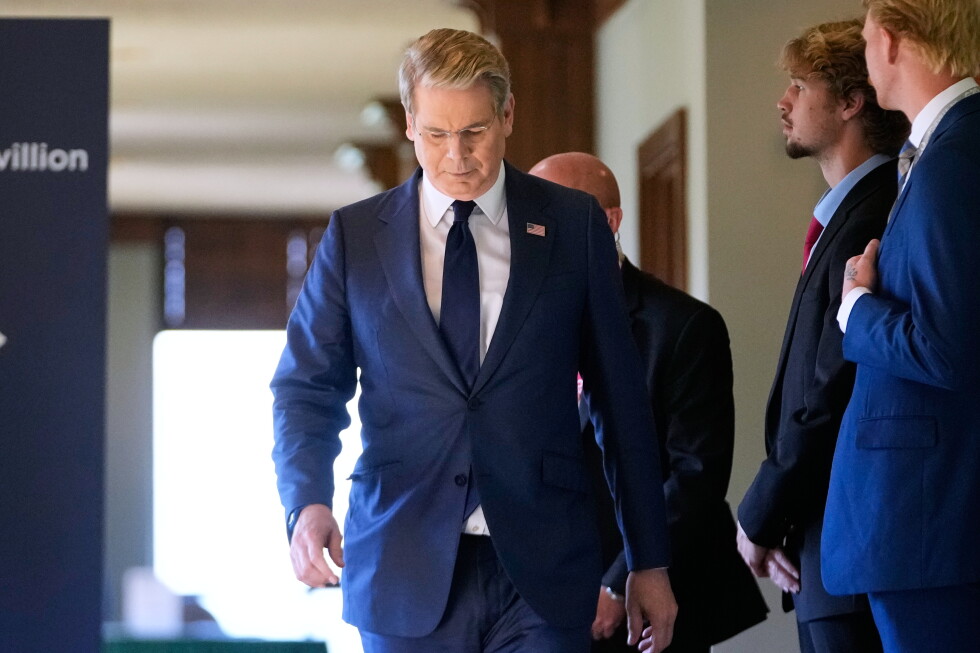
    ASHEVILLE, North Carolina — Against a backdrop of simmering trade frictions and geopolitical division, U.S. Treasury Secretary Scott Bessent has launched a push to convince fellow G20 finance ministers to mirror the Trump administration’s aggressive approach to trade imbalance enforcement, centered on broad tariffs and targeted trade restrictions. Speaking on the sidelines of the three-day G20 finance minister summit, Bessent confirmed his early warning — issued at the start of Donald Trump’s second presidential term — that Washington’s new multi-layered “tariff wall” targeting Chinese goods would redirect massive volumes of Chinese exports to third-party markets across the globe has already come to pass.

    “And unfortunately, I was right,” Bessent told assembled reporters. “The rest of the world probably needs to take a hard look at what they should be doing to protect their citizens’ jobs, their manufacturing base, so that everything they do doesn’t get offshored.”

    The Trump administration’s unilateral tariff strategy has drawn widespread criticism from economists and cross-party political leaders alike, who argue the measures have driven up living costs for ordinary American consumers and disproportionately hurt U.S. trade allies rather than targeted economic competitors. Independent economic think tank the Tax Foundation has quantified this impact, finding that new tariffs rolled out by the administration across 2025 lifted the overall retail price of imported consumer goods by roughly 7 percent compared to pre-tariff price trends. Compounding this political and economic pushback, the U.S. Supreme Court ruled in February that the sweeping global tariffs Trump imposed using emergency presidential powers during his second term were unconstitutional, forcing the White House to overhaul its trade playbook.

    Despite the court ruling, the administration is moving forward with new trade restrictions: it is currently weighing an additional 7.5 percent tariff on all Chinese imports, following a probe into alleged excess Chinese industrial capacity and what Washington calls problematic forced-labor regulations. Bessent confirmed he held one-on-one talks with his Chinese counterpart during the Asheville summit, though he declined to share any substantive details about the content or outcome of those discussions.

    Speaking in a Tuesday interview with Fox Business commentator Larry Kudlow, who served as Trump’s top economic advisor during his first term, Bessent outlined the administration’s current posture toward Beijing: “I often say in our trade discussions with China that we do not want to pull apart from them, but we have to de-risk.” He also noted unexpected common ground between Washington and Beijing on a key Middle East security issue: “We have more in common with the Chinese on Iran than we disagree on. The Chinese agree Iran cannot have a nuclear weapon. The Chinese agree that there should be freedom of navigation in the Strait of Hormuz.”

    Beyond trade tensions with China, Bessent addressed growing market jitters over soaring global debt levels. Global gross debt has surged to a historic $353 trillion, with U.S. national debt hitting a record $40 trillion as of August. Fears of a sustained sell-off in U.S. government bonds have rippled through global markets in recent weeks, but Bessent sought to downplay those concerns, telling reporters “I don’t think we’re in any kind of dire situation” when it comes to bond market stability. Bessent also identified China’s 2025 record trade surplus of $1.2 trillion, as well as what he frames as excessive Chinese economic regulation, as major headwinds to balanced global economic growth.

    The summit has also been marked by geopolitical discord over Russia’s participation, as the attendance of Russian Finance Minister Anton Siluanov sparked widespread discomfort among Western delegations. Though Siluanov held a brief sideline meeting with Bessent on Monday, he was excluded from the G20 finance ministers’ traditional opening “family photo,” a visible snub reflecting ongoing international tensions over Russia’s full-scale invasion of Ukraine. Canadian Finance Minister François-Philippe Champagne told reporters the Russian minister’s presence “created a lot of discomfort around the table, not only from Canada, but from colleagues around the table. We have made sure our discomfort is being heard by colleagues with respect to who is in attendance at the meeting.”

    Valdis Dombrovskis, European Commission’s economy commissioner, echoed that sentiment during a Tuesday press briefing, saying the international community should not move to normalize economic and diplomatic relations with Moscow at this time. Associated Press reporter Rob Gillies contributed reporting from Toronto.

  • Falklands: After Netanyahu’s son backs Argentina sovereignty, Trump hints US may review UK’s claim

    Falklands: After Netanyahu’s son backs Argentina sovereignty, Trump hints US may review UK’s claim

    A long-simmering territorial dispute over the Falkland Islands, known as the Islas Malvinas to Argentina, has reemerged as a flashpoint in global diplomacy, following provocative comments from Israeli Prime Minister Benjamin Netanyahu’s son and a groundbreaking shift in rhetoric from former U.S. President Donald Trump.

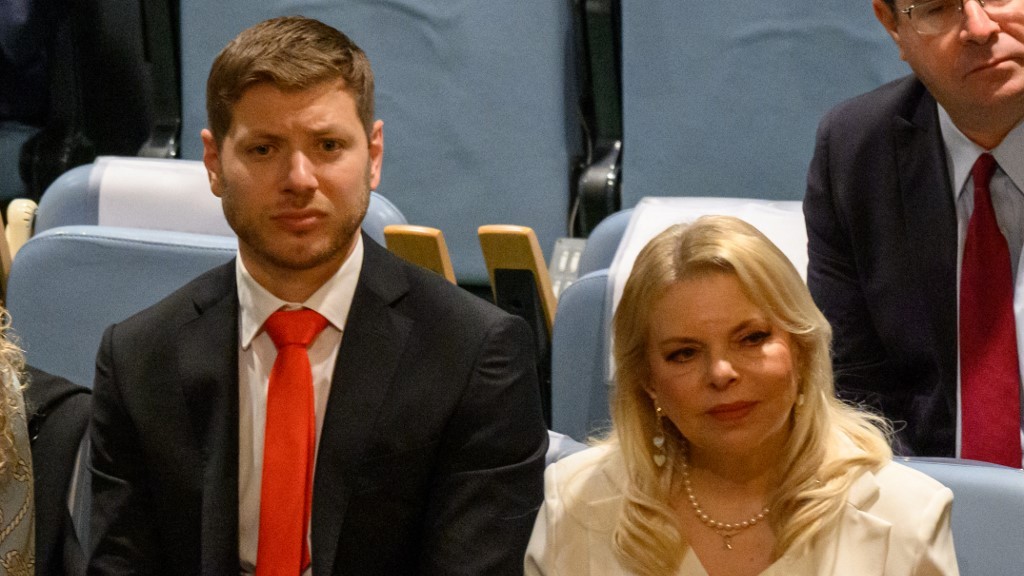
    Days after 35-year-old Yair Netanyahu, a U.S.-based political activist, publicly asserted in Spanish social media posts that the contested South Atlantic archipelago belongs to Argentina, Trump confirmed for the first time that Washington could open a review of its long-standing stance backing British sovereignty over the islands. Speaking to reporters in the Oval Office on Monday, when asked if the U.S. was reevaluating its position, Trump responded: “I always review every position – that’s just one of many.”

    The former president offered no further detail on what changes Washington might consider, but his remarks mark the first public signal from a U.S. leader that the country’s long-held position on the dispute could be up for negotiation. The 3,600 residents of the islands overwhelmingly support continued British rule, and the conflict over the territory already led to a 1982 war between Argentina and the United Kingdom that left hundreds dead on both sides.

    Yair Netanyahu’s intervention in the dispute was not rooted in the territorial question itself, but in his sharp criticism of the current British government’s stance toward Israel. In follow-up posts after his initial declaration, the activist made clear his position was a response to what he frames as British hostility toward Israel. He called the current British government “antisemitic, communist, jihadist,” and condemned the UK for its recent recognition of Palestinian statehood aspirations and criticism of Israel’s actions in Gaza and the occupied West Bank. “I don’t care about the Falkland Islands, I care about Israel,” he wrote, adding that Argentina has remained a consistent friend to Israel, unlike the UK.

    Argentine President Javier Milei, a staunch pro-Israel leader who has made backing the Netanyahu administration a core pillar of his foreign policy amid controversial domestic economic reforms, quickly reposted Yair Netanyahu’s comments. Milei has repeatedly expressed unwavering support for Netanyahu during the Gaza conflict, has spoken of converting to Judaism, and has pledged to move Argentina’s Israeli embassy from Tel Aviv to Jerusalem, a move strongly aligned with the current Israeli government’s priorities.

    Even before Yair Netanyahu’s public comments, UK newspaper The Telegraph reported that pro-Israel Republican figures had already been lobbying privately in Washington to push the Trump administration to abandon its long-standing neutral stance on the Falklands dispute. Analysts note that Israel holds unprecedented influence within the Trump administration, and recent British criticism of Israel’s military campaign in Gaza, its apartheid system in the occupied West Bank, and a prospective British sanctions package against Israeli officials reported earlier by Middle East Eye, have created incentive for Israel and its allies to use the Falklands dispute as leverage against the UK within the U.S. government.

    Yair Netanyahu’s comments have already sparked backlash from even pro-Israel and far-right political figures in the UK, who warn the remarks risk alienating British supporters of Israel. Right-wing pro-Israel commentator Alex Armstrong, who works for GB News, called the comments “unconstructive,” urging Yair Netanyahu to distinguish between the British government and pro-Israel constituents within the UK. Rupert Lowe, a far-right British lawmaker and vocal Israel supporter, added a firm rebuke, declaring “the Falklands are British and will remain so,” and noting that any future British government would defend the territory militarily if needed.

    A leaked Pentagon memo from earlier this year already suggested the Trump administration was considering using the Falklands dispute as bargaining leverage in trade and diplomatic negotiations with the UK, adding context to Trump’s recent comments that have upended decades of quiet agreement on the islands’ status.