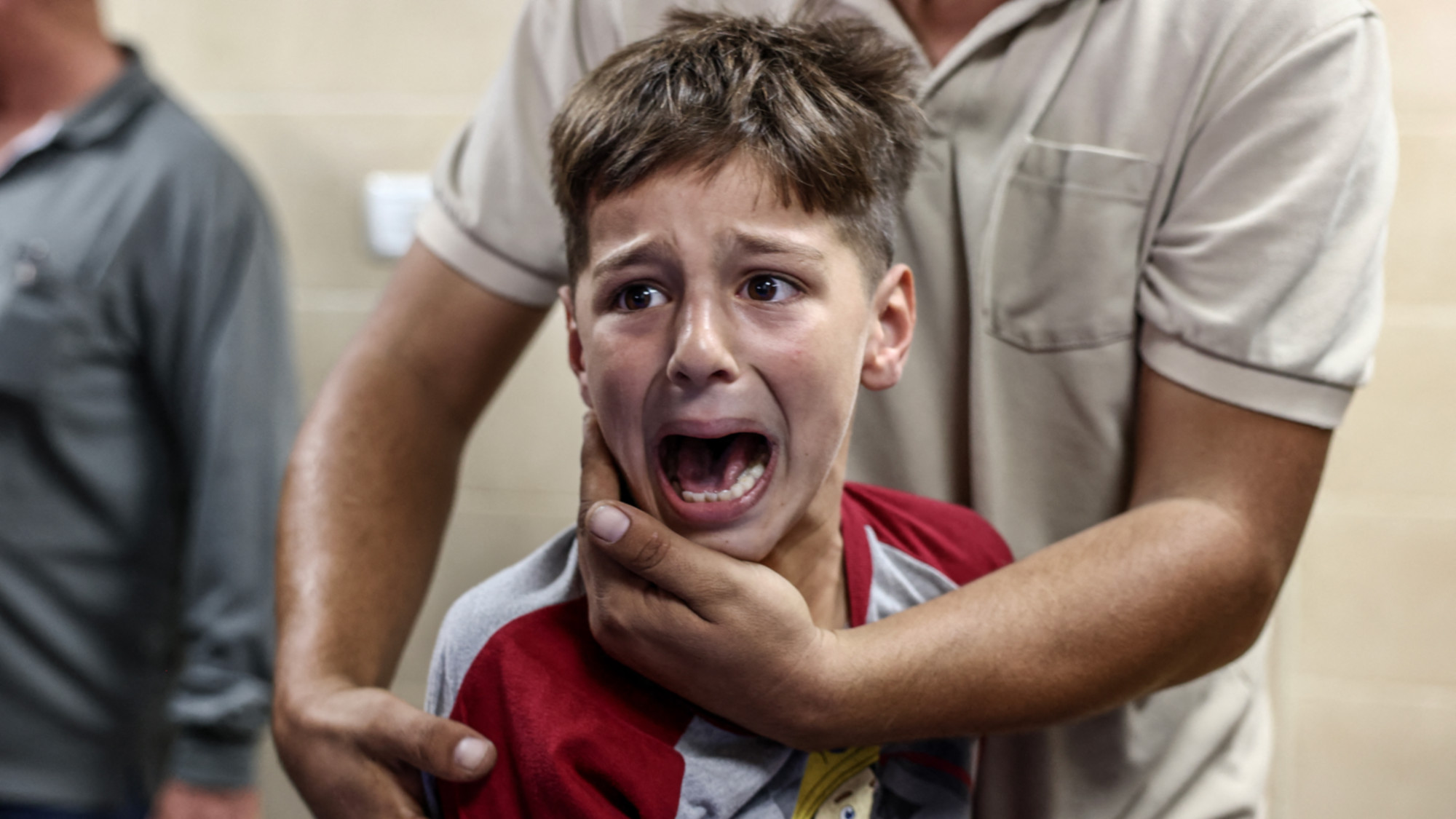
On Wednesday, a fatal attack carried out by Israeli settlers against Palestinian agricultural workers in the occupied West Bank left one farmer dead and nine others injured, marking the latest escalation in a documented wave of settler violence targeting local communities during the annual olive harvest season. The slain worker was identified by the Palestinian Ministry of Health as 44-year-old Ali Hassan al-Bazari, who was among a group of harvesters tending to olive groves on their ancestral land between the town of Burqa and the Ramin Plain, located east of Tulkarm.
Eyewitness accounts and local officials confirm that Israeli military personnel were present at the scene during the assault and provided protection for the attacking settlers. As of initial reports, it remains unconfirmed whether al-Bazari’s fatal wound was caused by gunfire from settlers or from Israeli army forces. The nine injured Palestinians have wounds ranging from minor to life-threatening, with one victim listed in critical condition. A woman is counted among those hurt, with casualties transported to two separate medical facilities: Thabet Thabet Government Hospital in Tulkarm and Rafidia Hospital in Nablus.
In addition to the attack on the farmers, the Palestinian Ministry of Health reported that Israeli army forces also targeted ambulance crews responding to the incident, as medics attempted to access the Ramin Plain to evacuate wounded civilians. Soldiers detained three paramedics and one civilian volunteer, seized the keys to their ambulances, and only released the group after ordering them to abandon the area entirely. This blockade delayed emergency care for bleeding casualties for nearly three hours, according to local officials.
Shadi Abu Omar, a representative of the Burqa Village Council, explained that the attack unfolded in a part of the West Bank classified as Area B under the Oslo Accords, a zoning that places all civil administration under the Palestinian Authority. The site is also located far from any official Israeli settlements or unofficial outposts, meaning the harvesting residents had no reason to expect an confrontation with settlers. “Residents had gone to the area to harvest olives and were not expecting to encounter settlers,” Abu Omar told Middle East Eye. He detailed the sequence of the assault: “A group of settlers arrived in a vehicle and opened fire on them. After the shooting, the settlers approached the harvesters, began beating them and then bound them. Among them was al-Bazari, who had been shot in the back. Despite bleeding from the wound, he, along with the other injured people, including a woman, was tied up.”
Abu Omar added that the entire attack transpired under the watch of Israeli forces, who made no attempt to intervene to remove the settlers. Settlers also personally blocked medics from reaching multiple wounded victims, issuing threats to shoot anyone attempting to access the incident site and prevent emergency evacuation.
This deadly assault comes as part of a dramatic, well-documented surge in settler violence against Palestinian civilians, disproportionately targeting farmers during the critical annual olive harvest, a core component of many West Bank Palestinian livelihoods. Data from the United Nations Office for the Coordination of Humanitarian Affairs (OCHA) shows that from the start of the current year through early September, more than 1,100 Palestinians have been injured in settler-linked attacks, with over 1,000 of those injuries directly inflicted by settlers.
OCHA records highlight a steep upward trend in such violence in recent years: in 2020, an average of one Palestinian was injured in settler attacks every three days; by 2025 that rate rose to two injuries per day, and so far in 2026 it has reached more than three injuries per day. Since January, the UN has documented over 1,300 separate settler attack incidents impacting roughly 250 Palestinian communities across the West Bank – an average of more than six attacks per day. These incidents span a wide range of hostilities, including physical assaults, arson attacks on homes and vehicles, deliberate vandalism of private property and cultivated farmland, and targeted attacks against Palestinians attempting to access their own agricultural land.
Settler violence during the olive harvest carries particular economic and social harm, as OCHA has repeatedly identified access to agricultural land and livelihoods as one of the primary contexts for settler aggression. The UN has documented widespread injuries to harvesters and the destruction of hundreds of mature olive trees and agricultural assets across multiple West Bank towns.
Salah al-Khawaja, director of the central office of the Wall and Settlement Resistance Commission, argued that settlers in the West Bank operate with near-total impunity for their attacks against Palestinians. “Settlers are carrying out killings in front of the media, shooting at farmers and burning farmland,” he said. “We are facing a government that supports terrorism and criminality, providing full backing to settlers because it is a terrorist government.”