博客

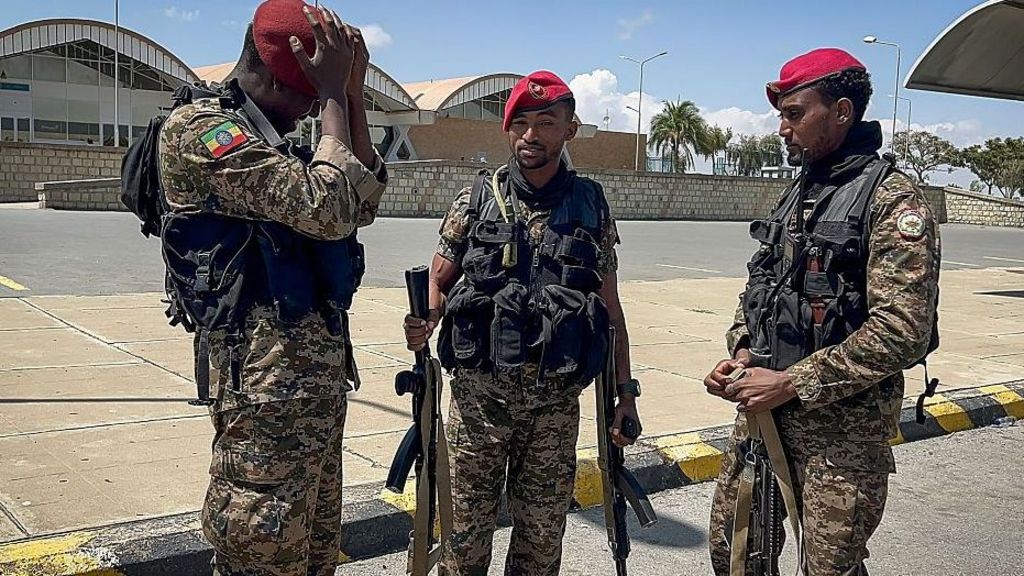
  • Ethiopia warns Eritrea it will defend itself after troops cross border

    Ethiopia warns Eritrea it will defend itself after troops cross border

    Two weeks after renewed violence erupted between Ethiopia’s federal government and the Tigray People’s Liberation Front (TPLF), a long-simmering rift between Ethiopia and neighboring Eritrea has exploded into open armed conflict, raising urgent fears of a wider regional conflict. The crisis comes on the heels of a broken 2022 peace deal that ended a two-year civil war in Tigray, and marks a dramatic reversal of the brief diplomatic detente between the two Horn of Africa nations that began in 2018.

    In a formal letter dated October 8, addressed to the United Nations Security Council and obtained by the BBC, Ethiopian Foreign Minister Gedion Timothewos has formally accused Eritrea of launching an “all-out invasion” of Ethiopia’s northern Tigray region. Timothewos called the incursion a “blatant act of aggression”, adding that Ethiopia is left with no choice but to exercise its inherent UN-guaranteed right to self-defense against the violation of its sovereign territory. According to the Ethiopian foreign minister, Eritrean military forces have pushed as far as 60 kilometers (37 miles) into Tigray, a depth of advance that has stunned regional observers.

    The accusation marks a sharp break from the dynamics of the 2020–2022 Tigray civil war, when Eritrea fought as a key military ally of the Ethiopian federal government against the TPLF. Relations between the two neighbors have collapsed rapidly in recent months, driven primarily by tensions over Ethiopian Prime Minister Abiy Ahmed’s stated ambition to secure access to one of Eritrea’s strategic Red Sea ports. Diplomatic ties between the two nations were formally severed just last week, opening the door for further escalation.

    In response to Ethiopia’s claims, Eritrean Information Minister Yemane Gebremeskel has rejected the accusations outright, framing Ethiopia as the aggressor in the crisis. Gebremeskel dismissed Addis Ababa’s claims as “duplicity in their most extreme forms”, and countered that Ethiopia has launched an “unprovoked war of aggression” against Eritrea. He also accused Ethiopian leaders of actively seeking to foment regime change in Asmara by providing shelter and logistical support to Eritrean opposition mercenary groups. Eritrea seceded from Ethiopian control in 1993 after a decades-long independence struggle, and relations between the two countries have been fraught with border disputes and political tension for most of the past 30 years, with a brief normalization period beginning when Abiy took office in 2018.

    Amid the escalating cross-border tensions, Ethiopian drone strikes have targeted Eritrean military positions in the border town of Adigrat, located in northern Tigray, according to multiple independent reports. US-based conflict analytics organization Armed Conflict Location & Event Data Project (Acled) confirmed that multiple drone strikes hit Eritrean troop deployments and ammunition stockpiles in Adigrat overnight this week. Multiple local witnesses, speaking to AFP, confirmed heavy drone activity, with one reporting “many, many drone strikes” and confirming that several Eritrean military supply trucks were destroyed in the attacks. Following the strikes, witnesses reported that Eritrean ground forces appeared to be retreating north toward the Eritrean border. As of Friday, there are no independently verified reports of civilian or military casualties from the strikes, and the BBC has confirmed it cannot deploy independent journalists to report from Tigray due to security restrictions.

    The current upsurge in violence follows months of rising political tension across northern Ethiopia. In September, the TPLF joined a new coalition of armed opposition groups opposed to the Abiy government, setting the stage for renewed fighting. Just last week, TPLF forces withdrew from Mekelle, Tigray’s largest regional capital, leaving the city under the control of Ethiopian federal government forces, which retook control of the key population center after the rebel withdrawal.

    In its formal letter to the UN Security Council, Ethiopia appealed to the international body for backing, saying “In this time of difficulty, when Ethiopia is left with no other option but to defend itself, we count on your understanding, support, and solidarity.” International observers have warned that the open clash between Ethiopia and Eritrea could destabilize the entire Horn of Africa region, drawing in neighboring powers and undoing the fragile progress made towards peace in Tigray after the 2022 ceasefire agreement.

  • France promises 3,000 extra teachers in first step to calm student protests

    France promises 3,000 extra teachers in first step to calm student protests

    After three weeks of escalating, often violent student protests across France demanding increased investment and resources for the country’s public secondary education system, the French administration has extended its first material compromise to demonstrators: a pledge to deploy 3,000 additional substitute teachers in the coming days. The announcement came from Education Minister Edouard Geffray during a primetime national television interview Thursday evening, capping off another day of chaotic demonstrations that drew tens of thousands of participants nationwide. The widespread unrest has already become the most significant episode of student-led civil unrest France has seen in decades, unfolding against a broader backdrop of growing social and political tension across the country ahead of 2027 presidential elections.

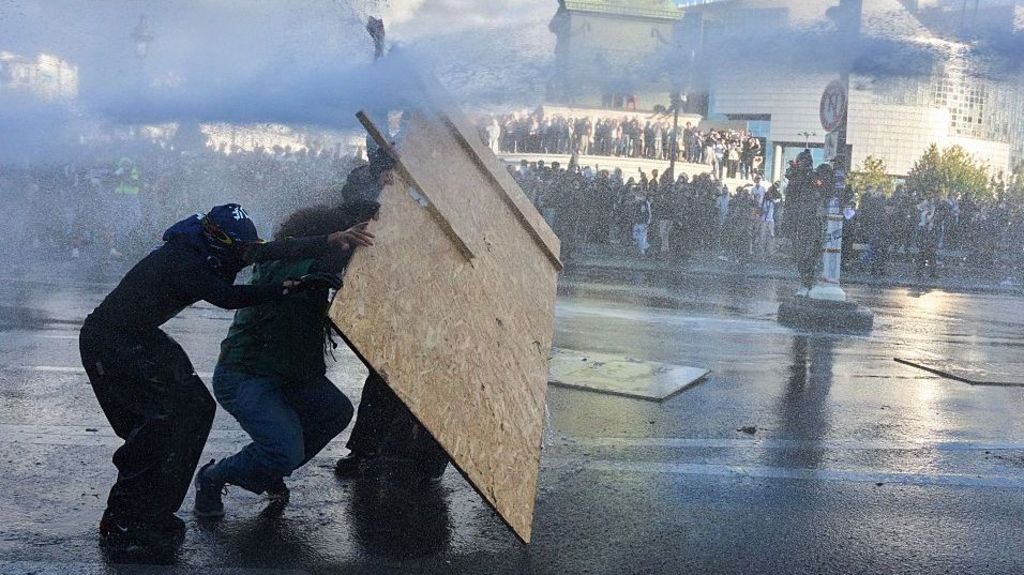
    On Thursday, what protest organizers labeled “Act Four” of the movement brought an estimated 71,000 demonstrators into the streets across France, with 24,000 gathering at Paris’ iconic Bastille square just hours before Geffray’s announcement. In multiple locations, demonstrations devolved into violence: protesters in Paris threw paving stones and homemade fireworks at law enforcement, who responded by deploying tear gas to disperse crowds. In Bordeaux, a local high school was ransacked by demonstrators, and a deputy headteacher was assaulted by protesters in Marseille. By Friday, official data showed that roughly 140 out of France’s 3,500 public lycées (high schools) remained fully or partially closed — a sharp reduction from previous days of protest, though movement organizers have already called for another national day of action next Tuesday.

    The root of the student unrest is a longstanding, widely acknowledged crisis in French secondary education: thousands of instructional hours are lost annually to unfilled teacher absences, as the education system lacks sufficient supply staff to cover for permanent teachers. Geffray explained that newly launched administrative software would allow the ministry to rapidly redirect the 3,000 newly mobilized substitute teachers to the 500 high schools facing the most severe staffing shortages, most of which are located in working-class, high-immigration suburban districts where gaps in education provision have long been most acute. In addition to the new supply teachers, the minister announced expanded overtime funding through an existing scheme to encourage existing teachers to fill staffing gaps, and confirmed that student demands would be formally incorporated into upcoming negotiations for the 2027 national education budget.

    However, the first concession falls far short of the transformative new investment protesters have demanded, and the government has explicitly ruled out large-scale new spending. Facing intense scrutiny from international financial markets over France’s already precarious public debt levels, the administration is unwilling to make major budget commitments that could destabilize the country’s fiscal position. This has led to a muted, skeptical response from protest leaders. Nathanaël Combary, representative of moderate student union Renouveau Lycéen (Lycée Renewal), noted that the announcement aligns with a small portion of the movement’s demands but that demonstrators are waiting for tangible, on-the-ground results. For more radical factions, the compromise is wholly insufficient: Sabrine Kharbach, a leader of the radical-left aligned Union Etudiante (Student Union), insisted the movement will continue until the government commits €10 billion in new education funding.

    The protests have quickly become a political flashpoint, drawing sharply diverging reactions from across France’s political spectrum. Radical-left opposition leader Jean-Luc Mélenchon praised Thursday’s demonstration at the Bastille, writing on social media that students had “retaken the Bastille.” On the opposite end of the political divide, hard-right opposition party National Rally condemned the government’s decision to offer any concessions at all. Spokesperson Laurent Jacobelli argued the move legitimizes violence, saying the government was sending a message that destructive protest tactics would be rewarded with policy changes.

    The student unrest comes as France faces a growing wave of social discontent across multiple sectors, with existing anger over rising fuel costs and deep distress in the agricultural sector already poised to trigger additional mass demonstrations. A revived “yellow vest” movement has called for a national day of protest next Saturday, October 17, echoing the 2018 movement that forced the government to scrap a planned fuel tax increase after months of widespread unrest. Adding to the atmosphere of confrontation, the upcoming 2027 presidential elections — where both far-right and far-left candidates are widely expected to outperform centrist incumbents — have amplified political tensions across the country. For its part, the government is betting that the upcoming half-term school break at the end of next week, paired with the arrival of colder, wetter autumn weather, will reduce protester turnout and defuse the unrest before it escalates further.

    Official government data shows that more than 6,800 people have been arrested since the protests began, with 86% of those detained under the age of 18.

  • EU weighs safeguard tariffs as China refuses hybrid car limits

    EU weighs safeguard tariffs as China refuses hybrid car limits

    A major new flashpoint has emerged in EU-China trade relations, after Beijing rejected a European Union demand to voluntarily cap Chinese hybrid vehicle exports to the bloc, raising the immediate prospect of steep new EU tariffs on hybrids that have until now avoided the extra duties applied to pure electric vehicles from China.

    According to reporting from the *Financial Times*, China turned down Brussels’ proposal that Chinese automakers limit their collective share of the EU’s hybrid market to roughly 15%, down from the current level of more than 33%. Following Beijing’s refusal, the European Commission is now evaluating the imposition of temporary safeguard tariffs — a measure that does not require formal proof of unfair trade practices, two unnamed diplomats told the outlet. Under the draft plan, Chinese hybrid imports within a fixed quota would enter the bloc under standard existing terms, but any shipments exceeding that cap would be subject to steep additional duties.

    Bloomberg reported Wednesday that Brussels views new hybrid trade restrictions as a test case that could eventually be expanded to other sectors running large bilateral trade imbalances with China. On Thursday, October 8, European Trade Commissioner Maros Sefcovic began two days of negotiations with Chinese Commerce Minister Wang Wentao in Beijing, in a last-ditch effort to resolve the standoff before EU leaders take up the issue at the European Council summit in Brussels scheduled for October 15 and 16. The summit meeting comes as EU officials characterize the bloc’s daily bilateral trade deficit with China, which hits roughly €1 billion (US$1.15 billion), as economically unsustainable.

    The current dispute follows the EU’s October 2024 decision to impose five-year countervailing duties ranging from 7.8% to 35.3% on Chinese-made battery electric vehicles (BEVs), added on top of the bloc’s standard 10% import tariff. In response to that move, Beijing implemented retaliatory anti-dumping measures targeting European brandy, pork, and dairy products. Critically, the EU’s 2024 BEV probe and subsequent tariffs excluded hybrid models, which remained subject only to the baseline 10% tariff. Over the past two years, leading Chinese automakers including BYD and Chery shifted their European export strategy toward hybrid electric vehicles (HEVs) and plug-in hybrid electric vehicles (PHEVs), rapidly capturing market share in the bloc while BEV shipments faced punitive new levies.

    To clarify, HEVs are non-plug-in hybrids that recharge their small onboard batteries via the gasoline engine and regenerative braking, while PHEVs feature larger batteries that can be charged directly from the power grid and allow for longer all-electric driving ranges. Eurostat data underscores the explosive growth of Chinese hybrid imports into the EU: imports of Chinese PHEVs rose from 56,706 units in 2022 to 217,764 units in the first seven months of this year alone. Over the same period, Chinese HEV imports jumped from just 659 units to 160,662 units. This growth has accelerated sharply in recent months: monthly Chinese HEV imports to the EU climbed from 23,711 units in May to 32,797 units in July, with the total monthly value of these shipments rising from €335.6 million to €489.4 million.

    Chinese trade and automotive analysts have roundly criticized the EU’s request for a voluntary export restraint (VER), arguing that it is fundamentally unfair and a violation of global trade rules. “The EU’s so-called voluntary export restraint tramples on international trade rules, and China will not accept it,” wrote a Zhejiang-based columnist writing under the pen name “Automobile Observe.” “Brussels is playing word games. An outright ban or unilateral tariff hike would clearly violate World Trade Organization rules, so it is instead pressuring China to voluntarily limit its own exports.”

    She noted that Chinese PHEV exports to Europe grew 155% year-on-year in 2025, far outpacing the 12% growth recorded for pure electric models, a trend that reflects European consumers choosing high-value Chinese hybrids over less competitive European offerings. Financial institutions including Morgan Stanley have already predicted that the EU will extend its anti-subsidy duties from pure EVs to HEVs and PHEVs. “The EU wants to extend the tariffs on pure EVs to hybrids and give its slow-moving legacy automakers more time to catch up,” she added. “Chinese automakers can easily bypass these new tariff barriers by setting up local assembly plants within the EU.”

    In March of this year, the European Commission unveiled the Industrial Accelerator Act (IAA), a sweeping “Made in Europe” industrial policy proposal. Under the IAA, all publicly funded or subsidized EVs and PHEVs sold in the bloc would be required to be assembled in the EU, with at least 70% of non-battery components sourced from local European suppliers. The legislation also introduces screening for non-EU investments exceeding €100 million in strategic sectors, tying regulatory approval to requirements for technology sharing and increased local sourcing. Investors from designated EU free trade partners are exempt from these screening rules, but China is not included on that list. If approved by the European Parliament and EU member states, the EV and PHEV local content rules will take effect around mid-2027, with the remaining provisions entering into force on January 1, 2029.

    Another Chinese industry commentator, writing from Liaoning under the pen name Xingwan, argued that new EU export quotas or tariffs will not stop Chinese automakers, as many have already begun building production facilities within the bloc. For example, BYD’s €4 billion Hungarian manufacturing plant is targeted to produce 300,000 vehicles annually and is set to begin mass production in the fourth quarter of 2026. “EU policymaking moves far too slowly to keep up with Chinese industry,” Xingwan wrote. “Brussels makes policy on a yearly timetable, while Chinese firms can adjust their production and supply chains every month. Chinese automakers have spread their production capacity across Europe, Mexico, and Turkey, so no single EU measure can stop their expansion.”

    Even so, Xingwan acknowledged that the IAA’s 70% local content requirement and foreign investment restrictions do create new headwinds for Chinese brands. If Chinese-built vehicles no longer qualify for EU consumer subsidies, they could lose their key competitive price advantage. In the long term, Xingwan added, Chinese automakers that operate factories within the EU will become increasingly integrated into the bloc’s production ecosystem, facing growing pressure to share proprietary technology and source more components from European suppliers.

    This is not the first time that major Asian automakers have faced Western market access restrictions over rapid export growth. From the mid-1970s onward, Japanese automakers faced similar squeeze measures in Western markets: Britain capped Japanese auto market share at roughly 11%, while France limited it to around 3%. The US pressured Tokyo to voluntarily curb auto shipments and maintained a 25% tariff on imported light trucks. In 1981, Japan agreed to a voluntary cap on auto exports to the US that remained in place until 1994, and in 1991, Tokyo and Brussels reached a similar agreement that capped Japanese auto exports to the European Community until 1999. Those restrictions ultimately expired as Japanese automakers built local plants and hired local workers in Western markets, and Japan still exports conventional gas-powered vehicles and hybrids to the US and EU today.

    China has repeatedly pushed back against the EU’s new trade push, reaffirming its commitment to fair open trade. “China-EU economic and trade relations are mutually beneficial in nature, not a zero-sum competition,” Chinese Foreign Ministry spokesperson Guo Jiakun said on September 18, when asked about the EU’s request to cap Chinese hybrid market share at 15%. “We hope the EU will honor its commitments to market openness and free trade and observe WTO rules. We will closely follow the EU’s moves and take all necessary steps to protect the legitimate and lawful rights and interests of Chinese businesses.”

    This trade standoff between the EU and China comes as the US has already implemented far stricter restrictions on Chinese vehicle imports. Washington imposed a 100% tariff on Chinese EVs in 2024 and has since banned Chinese software and hardware in connected vehicles on national security grounds. In a September 11 Fox News interview, US President Donald Trump said, “We don’t allow Chinese cars into the US, and we never have. If China wanted to come in and open a plant to build their cars here, I’d be okay with it — Japan does it, and they hire our people. But I don’t want Chinese automakers building cheap cars in Mexico and shipping them across the border.” Ahead of Chinese President Xi Jinping’s September 24 visit to the White House, Ford, General Motors, and the United Auto Workers union all urged Trump to maintain restrictions blocking Chinese automakers from full access to the US market.
  • Cars torched and shops looted as anti-migrant violence erupts in South Africa

    Cars torched and shops looted as anti-migrant violence erupts in South Africa

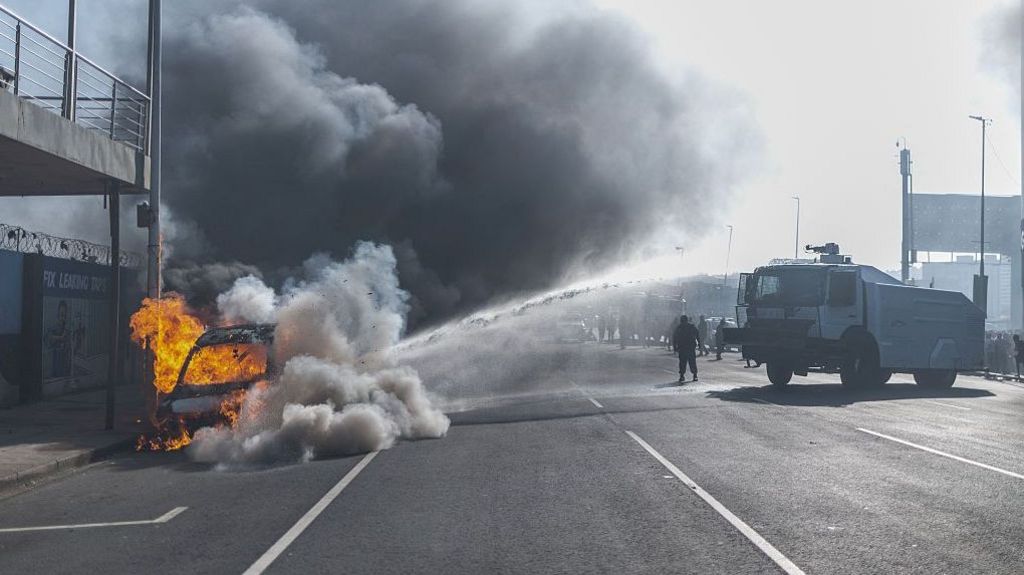
    Widespread civil unrest has broken out in two of South Africa’s largest urban centers, turning peaceful anti-immigration demonstrations into violent rioting that has left dozens of vehicles burned, foreign-owned businesses looted, and security forces scrambling to regain control, national police confirmed this week.

    The chaos first erupted on Thursday, spreading rapidly across Soweto — the sprawling historic township adjacent to Johannesburg, South Africa’s economic hub — and Durban, the country’s busiest Indian Ocean port that serves as a gateway for regional trade. The outbreak of violence comes on the heels of mounting public anger over a landmark Constitutional Court ruling that expanded access to asylum for certain migrants who entered the country without official documentation.

    The court’s July judgment struck down long-standing restrictions that barred asylum applications from people who entered South Africa irregularly or missed strict immigration filing deadlines. Under the new ruling, any eligible migrant may submit an asylum claim regardless of how they entered the country, a change that triggered massive overcrowding at official immigration reception centers as hopeful applicants lined up for hours to file their paperwork. By Friday, the Department of Home Affairs announced it would revise its implementation protocol to comply with the ruling while addressing the sudden surge in demand, though it offered no specific details on the adjusted policy. The department noted that its existing framework had left frontline staff “overwhelmed” and that “serious threats to public safety and order had emerged” as a result of the overcrowding, stressing that any new policy would still adhere to the court’s requirements.

    In Durban, the epicenter of the violence, Thursday’s demonstration shifted to rioting after unconfirmed allegations that a foreign national had assaulted a local protester. South African police confirmed three foreign nationals were taken into custody in connection with the alleged attack. Hundreds of protesters had initially gathered outside the city’s government-run refugee reception center, calling for an immediate end to all new asylum applications. As the unrest spread, business owners across the Durban city center shuttered their storefronts to avoid damage, and security forces deployed rubber bullets to break up agitated crowds. Senior local police official Xolani Fihla told public broadcaster SABC that clashes broke out between local residents and foreign nationals in the area, but as of initial assessments, no serious injuries or fatalities have been recorded.

    Police tallied 14 vehicles burned in Durban alone, with another 10 set alight in Soweto. In the Soweto neighborhood of Orlando West, protesters originally gathered to demand the permanent closure of spaza shops — small, neighborhood convenience stores that are commonly owned and operated by foreign migrants. Demonstrators forced foreign traders to abandon their businesses in parts of the township, with multiple shops attacked and one entire building set on fire, according to local media reports. Gunshots were also reported during confrontations between local residents and foreign shop owners in the area.

    Acting national police commissioner Lieutenant General Puleng Dimpane issued a formal statement condemning the deliberate destruction of private property, saying law enforcement has deployed additional reinforcements to both unrest zones to prevent further escalation of violence. South African authorities have also vowed to track down and prosecute every individual responsible for the rioting and looting.

    Government spokespersons have pushed back against misinformation surrounding the Constitutional Court ruling that sparked the unrest. Spokesperson William Baloyi told Reuters that bad actors deliberately spread false claims that the judgment would automatically grant permanent legal status to all undocumented migrants already in the country. Baloyi clarified that the ruling only allows migrants to submit asylum applications — each claim will still be reviewed individually on its merits, and all applicants remain subject to standard immigration background checks. No migrant is guaranteed refugee status or the right to permanent residency under the new framework, he emphasized.

    This week’s unrest is the latest in a years-long wave of anti-immigration mobilization in South Africa. Earlier this year, anti-immigration groups organized weeks of nationwide demonstrations demanding all undocumented foreign nationals leave the country by the June 30 deadline. Those protests forced tens of thousands of migrants to flee their homes and communities, with many repatriated to their home countries through government-organized programs.

    Xenophobic violence has been a recurring crisis in South Africa for nearly 20 years. The worst recorded outbreak occurred in 2008, when widespread targeted attacks on foreign nationals left more than 60 people dead and displaced more than 30,000 migrants across the country.

    The current unrest unfolds against a backdrop of deep-seated socioeconomic strain in South Africa, where systemic poverty, stark racial and economic inequality, and an unemployment rate that affects roughly one-third of the entire workforce have fueled public frustration. Migrants, most of whom come from poorer neighboring Southern African countries, are often scapegoated for high unemployment, rising crime, and strained public services, even though academic researchers have repeatedly found no empirical evidence to support these broad, generalized claims.

    Despite its ongoing economic challenges, South Africa remains one of the most popular destinations on the African continent for migrants seeking formal employment, physical safety from conflict or repression, and improved economic opportunities for their families.

  • Meet India’s feisty Gen Z protester who is taking on Modi

    Meet India’s feisty Gen Z protester who is taking on Modi

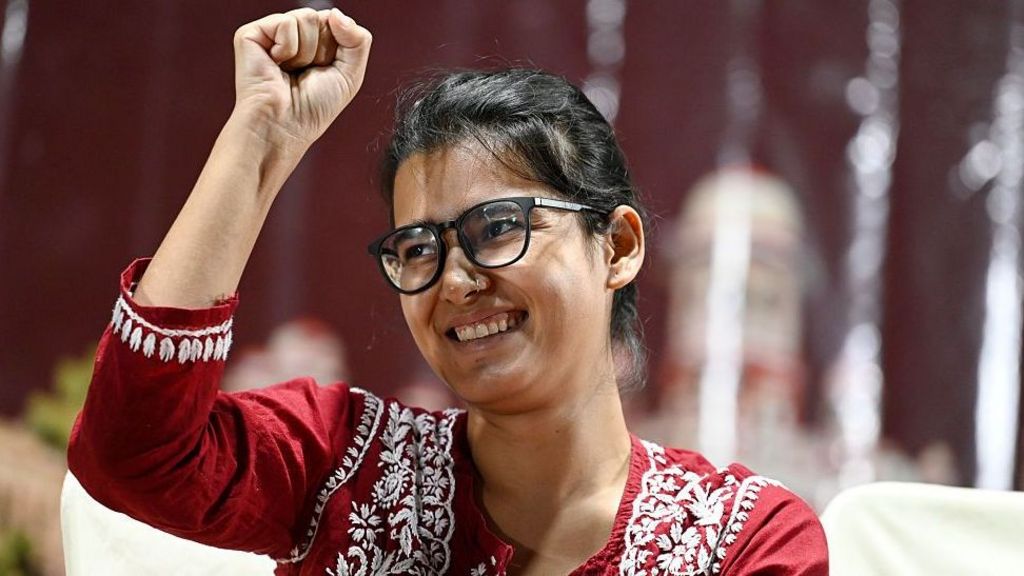
    As thousands of Gen Z-led demonstrators prepare to march through New Delhi this weekend demanding the resignation of India’s top election official, one figure has risen to become the most visible face of this growing grassroots movement: 29-year-old PhD scholar and lifelong student activist Neha Bora. A theatre artist and two-year president of the All India Students’ Association (AISA), a left-wing campus-focused political organization, Neha, who uses they/them personal pronouns, has transformed from a little-known campus organizer to a nationally recognized leader in what analysts describe as one of the most substantial challenges to Prime Minister Narendra Modi’s 12-year incumbency. In recent days, viral footage of Neha being dragged through city streets by female police officers, climbing over riot barricades, raising a clenched fist to shout protest slogans, and even smiling calmly while being led into police detention has captured national attention, turning the young activist into a symbol of youth resistance against the ruling Bharatiya Janata Party (BJP). Speaking in a recent interview with BBC Bangla, Neha downplayed the outsized attention they have received, emphasizing that their actions are no different from hundreds of other left-wing student activists across the country. “It just looks different because it was caught on camera,” Neha explained. “All of my comrades have done the same work I have. I just happen to be the one in front of the lenses right now.” This rising profile for Neha comes amid a surge in nationwide street protests led by young Indian activists, who have targeted the Modi government on multiple fronts, from education policy to electoral integrity. The weekend demonstration in Delhi is organized by the Cockroach Janta Party (CJP), a viral Gen Z-led satirical political movement that first made national headlines over the summer for weeks of sit-ins and marches demanding education reform, a campaign that ultimately ended in July after forcing the resignation of India’s education minister. Now, the CJP is targeting Chief Election Commissioner Gyanesh Kumar, calling for his ouster over unproven allegations that he manipulated national electoral rolls to favor Prime Minister Modi’s BJP. Both the Election Commission of India and the BJP have forcefully rejected these claims. While AISA is not affiliated with the CJP, Neha has confirmed that their student group will join the 10 October protest at Delhi’s iconic Jantar Mantar protest ground to stand in solidarity with the demands for electoral accountability. Neha’s path to national activism began in childhood, growing up as the child of an Indian Army officer who moved across multiple northern postings throughout their youth. After completing an undergraduate degree at the University of Delhi and a master’s degree at the capital’s Ambedkar University, Neha enrolled in a PhD program at Jawaharlal Nehru University, one of India’s most prestigious and politically active higher education institutions. They first entered the national spotlight during the CJP’s summer education reform protests. Though Neha and AISA joined the movement from its opening days, they remained largely out of public view until 28 June, when renowned educationist and scientist Sonam Wangchuk launched a hunger strike in support of the CJP’s demands, and Neha joined the fast alongside other AISA activists. “It was an obvious choice for us,” Neha said later. “We have been protesting against exam paper leaks and harmful education reforms for years, so this fight was already ours.” While most of the media focus at the time centered on Wangchuk, whose high profile helped galvanize broad public support for the movement, Neha’s unapologetic rhetoric and fiery on-site speeches began drawing growing attention. After Wangchuk and other fasting activists were transferred to hospital for medical care, Neha continued the hunger strike alone, eventually losing 8 kilograms before they too were admitted for treatment. From their hospital bed, Neha released a video reaffirming their commitment to the movement: “The fight does not end here. Once I recover, I will be back on the streets to continue fighting for our rights.” When the summer protests concluded with the education minister’s resignation in July, Neha had solidified their status as a leading voice of India’s Gen Z political resistance, regularly courted by the CJP, national media, and even mainstream opposition leaders, appearing alongside Congress party figurehead Rahul Gandhi at multiple press events. The newfound fame has not come without personal and political cost, however. Neha’s longstanding involvement with left-wing politics and public criticism of Prime Minister Modi, Home Minister Amit Shah, and other senior BJP leaders has created deep rifts within their own family, as Neha confirms their parents are devout BJP supporters. Last month, three separate police complaints were filed against Neha in Uttar Pradesh state by BJP representatives over claims the activist made “objectionable remarks” against the state’s chief minister. The complaints came just two days after AISA filed its own police report confirming Neha had received multiple written death threats. Neha, who has traveled across dozens of Indian cities to organize student-led protests, also made headlines earlier this year when a male assailant allegedly threw ink at them during a march in Jharkhand state. Neha shared a photo of their ink-streaked face on Instagram, and local police detained the attacker shortly after the incident. The repeated clashes with police, multiple detentions, and unwavering commitment to street protest have earned Neha a reputation as a fearless grassroots organizer, a label the activist embraces. In their BBC Bangla interview, Neha argued that street protest has always shaped the trajectory of Indian politics, a trend they believe will only grow in the coming years. “If we look at every major social change in India’s recent history, none of those changes came from people sitting in parliament,” they said. “They came from the streets, and the streets will continue to lead change. Now, as Delhi’s authorities prepare for the 10 October demonstration against the Chief Election Commissioner, Neha and AISA are ready to return to the streets alongside the CJP, with a shared message of defending Indian democracy.”

  • Nvidia-backed data centre firm scraps IPO as AI valuation concerns deepen

    Nvidia-backed data centre firm scraps IPO as AI valuation concerns deepen

    In a move that has sent ripples through the global AI and investment communities, Nvidia-backed AI data centre developer Firmus has pulled the plug on what was set to be one of the largest initial public offerings (IPO) in Australian history. The company announced Friday that shifting market conditions and widespread volatility convinced its leadership that moving forward with a public listing would not serve the best interests of either the firm or its existing shareholders.

    When Firmus first unveiled its IPO plans earlier this year, the offering was projected to value the company at more than $30 billion (£22.65 billion), a valuation that immediately raised red flags among large institutional investors. One major investment firm confirmed to the BBC it had already opted out of participating in the offering specifically over valuation concerns, and UniSuper, one of Australia’s largest pension funds, also joined the list of non-participants.

    UniSuper Chief Investment Officer John Pearce told the BBC that while Firmus has a strong value proposition as a key infrastructure player in the fast-growing AI sector, its proposed pricing failed to match its underlying fundamentals. “Firmus indeed has a compelling story. It just doesn’t have a compelling valuation,” Pearce said in an investor update, adding that the fund also shared concerns that Firmus would need to take on substantial new debt to fund its aggressive expansion pipeline. Pearce also noted that the Australian Securities Exchange (ASX) sorely needs high-profile new growth listings like this one, calling the withdrawal disappointing for the exchange.

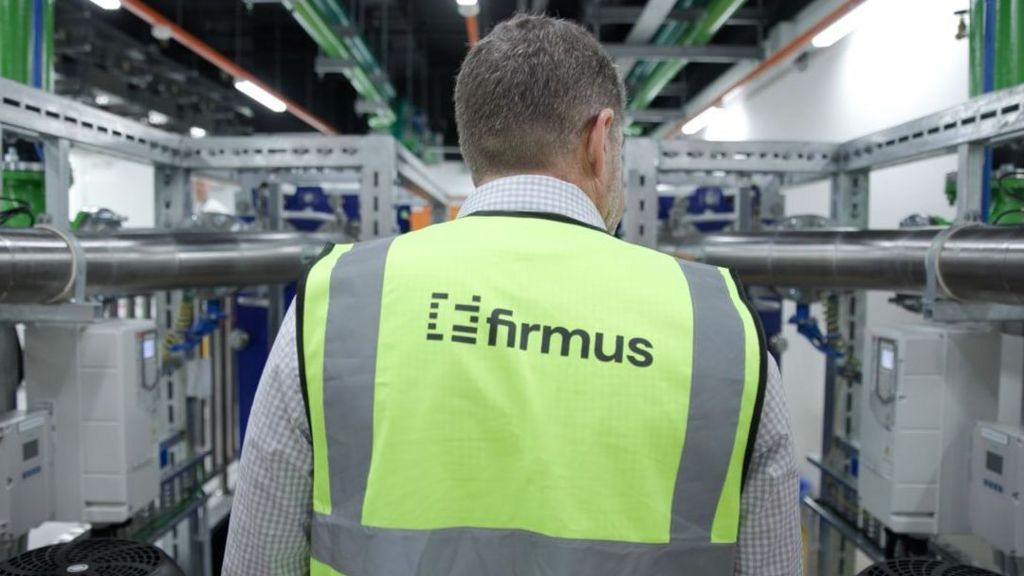
    Headquartered across the Asia-Pacific, Firmus designs, builds and operates cutting-edge liquid-cooled data centres, which the company brands as “AI factories” built specifically to power large-scale AI model development and deployment. Its client roster includes two of the biggest names in global AI: OpenAI and Meta, with operations currently spread across Australia, Singapore and other key APAC markets. Beyond Nvidia, the startup counts global investment giants Blackstone and Jane Street among its major backers. When contacted by the BBC, Blackstone declined to issue a statement, while requests for comment have also been sent to Nvidia and Jane Street with no immediate response.

    Going forward, Firmus said it will shift its focus to raising new capital from private market investors, and will re-evaluate alternative paths to a public listing or continued private ownership down the line. “We will provide additional information to shareholders as those options progress,” the company said in a statement.

    The collapse of Firmus’s IPO comes at a moment of growing investor scrutiny over the hundreds of billions of dollars in capital flooding into the AI sector, where questions around long-term profitability and return on investment remain largely unanswered. Phillip Wool, chief research officer at Rayliant Investment Research, described the planned Firmus listing as a key test of institutional investors’ ongoing willingness to pour capital into early-stage AI infrastructure. “Investors in Firmus would be buying into a company that is still in its early stages and is likely to need to borrow large sums of money,” Wool explained, adding “It’s more like a bet on a dream.”

    Australia has emerged as a hotspot for AI data centre investment in recent years, drawn by the country’s abundant access to low-cost clean energy, ample natural gas reserves, and large available parcels of land for large facilities. OpenAI CEO Sam Altman highlighted this potential earlier in 2024, saying Australia could position itself as a global leader in the AI data centre sector if it prioritizes the industry. Currently, more than 160 data centres operate across the country, with dozens more in planning stages, even as local communities have raised pushback over the facilities’ high energy consumption and noise pollution.

    The withdrawal of Firmus’s offering also aligns with a broader trend of caution around AI public listings this year. In September, Altman announced OpenAI itself would not pursue an IPO in 2024, citing ongoing concerns over AI safety that made a public debut ill-advised at this stage. Despite that, both OpenAI and rival AI developer Anthropic are reportedly planning blockbuster future listings that could value each firm at more than $1 trillion. Just this week, two major AI-linked stocks, Nvidia and Oracle, dropped in U.S. trading after reports emerged that OpenAI’s 2024 revenues have come in below earlier analyst projections, deepening market jitters over overinflated AI valuations.

  • Why Elon Musk is taking on India’s richest man over Starlink

    Why Elon Musk is taking on India’s richest man over Starlink

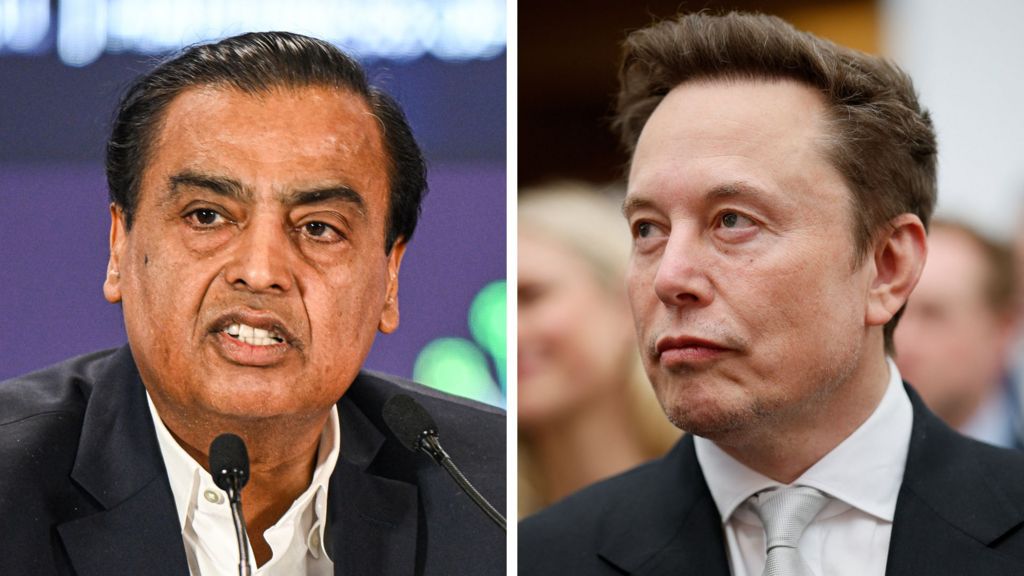
    A high-stakes public dispute has erupted over SpaceX’s Starlink satellite internet venture’s delayed entry into India, with Tesla and SpaceX CEO Elon Musk directly pointing fingers at Indian billionaire Mukesh Ambani, alleging that the tycoon’s business empire is using its influence to block Starlink from securing final regulatory approval.

    The controversy began on a Wednesday, when Musk took to social media platform X to claim that unnamed “certain oligarchs” were holding a “monopolistic chokehold” over Indian internet consumers. Without naming any individual initially, he added that blocking Starlink’s launch amounted to “a crime against the people of India.” The next day, Musk doubled down on his claims, specifically naming Ambani, whose Reliance Industries conglomerate owns Jio, India’s largest mobile network operator. In a provocative post on X, Musk asked, “Is Ambani the real boss of India?”, questioning why Starlink had not received its final license despite spending five years complying with all Indian government regulations and holding operating licenses in more than 165 countries globally.

    India’s Ministry of Communications quickly pushed back against Musk’s accusations, issuing a statement clarifying that the regulatory framework for satellite communications is fair and non-discriminatory. The ministry noted that three major players — Starlink, Eutelsat OneWeb, and Jio Satellite Communications — are all at the same stage of the approval process, with all three awaiting final security clearances and spectrum allocation before they can roll out commercial services. “The suggestion that the framework or its application is unfair or discriminatory is baseless and misconceived,” the ministry said, declining to name Musk directly.

    As of press time, neither Mukesh Ambani nor Reliance Group has issued a public response to Musk’s claims, and the BBC has reached out to both parties for additional comment. Bharti Airtel, another major Indian telecom provider that is also prepping its own satellite internet launch, has also been contacted for comment.

    Intriguingly, the public rivalry between Musk and Ambani masks a pre-existing business partnership between their companies. Back in March 2024, both Reliance Jio and Bharti Airtel signed formal agreements with SpaceX to distribute Starlink equipment and services across India, pending government approval. The two domestic firms also noted at the time that they would explore opportunities for shared network infrastructure with Starlink.

    The dispute unfolded against the backdrop of the 2024 India Mobile Congress held in New Delhi, where senior executives from all three companies gathered to outline their satellite internet plans. Akash Ambani, chairman of Reliance Jio Infocomm and son of Mukesh Ambani, told attendees that his firm was developing its own indigenous satellite communications technology and was also working through the regulatory approval process. When pressed by reporters for a response to Musk’s allegations, Akash Ambani declined to engage, only saying “We want to be heads down and deliver value to our Indian consumers.” Sunil Bharti Mittal, chairman of Bharti Airtel, also confirmed that his company’s satellite internet project remains pending government approval.

    Lauren Dreyer, SpaceX executive leading Starlink’s global business operations, told the conference that Starlink has spent years collaborating with Indian regulators and has built customized security controls into its network to meet India’s national requirements. Security concerns have long been a central sticking point for Starlink’s entry into the Indian market. Back in 2024, Indian law enforcement recovered unauthorized Starlink equipment during two separate operations: a drug smuggling probe in the remote Andaman and Nicobar Islands, and a counterinsurgency army operation in the northeastern state of Manipur. At the time, Musk pushed back against suggestions that the equipment was active, noting that Starlink had never turned on commercial service in India, so the recovered hardware could not have connected to its satellite network.

    Beyond regulatory and security hurdles, questions also linger about Starlink’s ability to deliver affordable service to mass Indian consumers, especially low-income households in rural regions. India is one of the world’s largest and fastest-growing internet markets, but connectivity access remains deeply uneven, with large swathes of remote and rural areas still lacking reliable high-speed infrastructure, laying fiber optic cables and building mobile towers in these regions is often prohibitively expensive for domestic telecom firms.

    Musk has repeatedly argued that Starlink’s low Earth orbit satellite technology is uniquely positioned to bridge this digital divide, writing on X this week that “Starlink in India would enable high-speed, affordable internet connectivity for those who can’t afford current prices or who don’t have a connection at all!” However, Starlink has not yet announced official pricing for the Indian market, and industry analysts point to existing pricing structures in other markets that suggest service may be out of reach for many ordinary Indian households. For context, Starlink’s residential plans in the United States start at $55 per month, not including upfront equipment costs, which would be far beyond the average budget for most rural Indian households.

  • New evidence gives family hope after death in Spain

    New evidence gives family hope after death in Spain

    Four years after 46-year-old Tobias White-Sansom, a father of two from Nottingham, UK, died in a Spanish hospital following an altercation with security and law enforcement in the holiday resort of Magaluf, new evidence has breathed fresh hope into his family’s long fight for accountability.

    White-Sansom was on a family holiday in July 2022 when he accompanied his teenage nephew and the nephew’s girlfriend for a night out at a local nightclub. After removing his T-shirt due to high temperatures, a disagreement broke out, and nightclub staff pinned him to the ground before calling law enforcement. When Spain’s Guardia Civil arrived, White-Sansom was handcuffed, struck with a Taser, and injected with sedatives before suffering cardiac arrest, according to his family. He was placed in an induced coma, and five days later, his family made the agonizing decision to remove life support. His older brother, Maximilian White, a medical cannabis entrepreneur, held him as he died.

    In the years since, White has waged a relentless campaign to uncover the full truth of his brother’s death, pushing for a formal investigation and criminal charges against those involved. Last month, the family received a newly completed blood spatter analysis report and a Spanish court order that has reignited their hopes of formal criminal proceedings moving forward. The report, which examined blood stains on White-Sansom’s T-shirt, trainers, and a sock, found that multiple individual stains are consistent both with blood spatter caused by external force and drip stains from gravity. The family says this evidence suggests excessive force was used during the altercation and subsequent restraint, a claim that will now be evaluated by an investigating judge to determine if a criminal case should proceed.

    An ambulance report reviewed by the BBC notes that White-Sansom had consumed drugs and was agitated when emergency services arrived, and that he was administered fentanyl and other medications. The Guardia Civil has not responded to repeated requests for detailed comment beyond its initial 2022 statement, which confirmed that officers restrained White-Sansom to allow medical assistance, and that he was formally placed under arrest on an assault charge prior to his death.

    Speaking to the BBC shortly after receiving the new evidence, White said he would not abandon his push for justice. “I won’t stop until we get answers for Toby,” he said, noting that the narrative of his brother as a reckless, drunk tourist on a stag do has always been false. “He wasn’t with a group of lads on a trip — he went out to keep my son company, because I didn’t want him going alone. That’s why this fight matters so much: for his two children to know who their father really was, and to make sure someone is held accountable for what happened.”

    White described the long process of seeking justice as an “uphill battle” that remains bittersweet even with the new development. “Even when you get what you’ve been fighting for, it doesn’t bring him back,” he said. “The whole brutality of what happened that night killed my brother, and someone needs to answer for that.”

    A UK coroner’s inquest into White-Sansom’s death was opened in 2022 but paused to allow the Spanish investigation to proceed. White says if the Spanish process does not deliver justice, he will push for the case to be moved back to UK courts. The family’s Spanish lawyer, Jaime Campaner, told the BBC that the drawn-out investigation is highly unusual for the region. “I’ve never seen a case with this combination of circumstances and such a long delay,” Campaner said. “I’ve been pushing for progress for years, and the blame for the delay lies squarely with the Guardia Civil.”

    Campaner added that the new blood spatter evidence could be a turning point for the case. The investigating judge will now review the evidence and decide whether to open formal criminal proceedings or dismiss the case. While no court date has been set, Campaner estimates that the investigative phase will conclude by the end of 2026, with a criminal trial likely to begin in 2027 if proceedings are approved.

    For White, the end goal is not just punishment, but closure. “When you lose a sibling, it’s like losing your entire history — every memory, every part of who you are, is tied up with them,” he said. “We all just want to close this chapter, get justice for Toby, and finally put this pain to rest.”

  • Adidas sues Australian label White Fox over four stripes design

    Adidas sues Australian label White Fox over four stripes design

    One of the world’s largest sportswear manufacturers, Germany-based Adidas, has launched a high-profile trademark infringement lawsuit against fast-growing Australian online fast fashion retailer White Fox in the Federal Court of Australia, centered on a controversial four-striped design used on White Fox apparel.

    Adidas argues that White Fox’s four parallel, equal-width stripe design is “deceptively similar” to its iconic three-striped logo, which the brand has held a registered trademark for in Australia since 1957. In court documents, the global brand notes that its three-striped marking has built a “substantial and valuable reputation” among Australian consumers over nearly seven decades of use.

    The legal dispute first emerged in March 2024, when Adidas says it first requested that White Fox cease all production, advertising, and sale of the infringing striped garments. According to Adidas’s legal team, the Sydney-headquartered retailer repeatedly rejected these demands, forcing the sportswear company to pursue formal legal action.

    Founded in 2013 by Greek-Australian couple Georgia and Daniel Contos alongside Daniel’s mother Melina Maceri, White Fox has experienced explosive growth in recent years, targeting teen and young adult consumers across Australia, the United States, and the United Kingdom. The brand has built its popularity through a multi-channel marketing strategy that includes out-of-home billboard advertising, bus stop and transit ads, and influencer partnerships with mostly university-aged content creators. Financial data from the Australian Financial Review shows the privately held company generated AU$542 million (£286 million; $377 million) in revenue in the 12 months leading up to June 2025, a fourfold increase from its 2022 revenue of just AU$121 million. It expanded into the UK market in 2024 and continues to scale its presence in North America.

    During the first court hearing before Justice Ian Jackman on Friday, legal representatives for White Fox formally denied any trademark violation. While the retailer has not yet submitted a full formal defense, its legal team outlined the core of White Fox’s coming argument: that many other prominent Australian fashion brands, including Cotton On, Sportscraft, and Glassons, already sell apparel featuring similar decorative stripes, implying the design is a generic decorative element rather than an infringing copy of Adidas’s trademark.

    As part of its claim, Adidas has submitted extensive visual evidence to the court, including side-by-side product comparisons of its own activewear and White Fox’s striped sweatpants and lounge shorts, photos of White Fox’s transit and billboard advertisements, and screenshots of the retailer’s online product listings. One key piece of evidence that Adidas has highlighted is a June 2025 online listing for White Fox branded socks, which featured a model wearing a pair of genuine pink Adidas sneakers. Adidas argues that this pairing is intentional, designed to lead consumers to believe there is an official partnership or endorsement between the two brands.

    Adidas further alleges that after the lawsuit was filed last month, White Fox attempted to cover up this connection: first, the brand digitally edited the Adidas logo on the sneakers in the image to remove one stripe, then removed all three stripes from the image entirely a week later. Adidas’s legal team told the court that White Fox’s actions demonstrate a clear “intention to trade off” Adidas’s long-held global reputation for commercial gain.

    Adidas is not a newcomer to trademark litigation over striped designs in Australia. In 2013, the brand successfully won a similar lawsuit against Australian manufacturer Pacific Brands over four-striped footwear, setting a precedent for trademark protection of its iconic stripe design. In the current case, Adidas is seeking financial damages, demanding that White Fox surrender all profits earned from the striped products, plus accumulated interest and legal costs.

    The court has scheduled a three-to-four-day full trial to take place in early 2026, where both sides will present their full evidence and legal arguments before a final ruling is issued.

  • Trump rules out new attack on Iran until after midterms as oil prices spike

    Trump rules out new attack on Iran until after midterms as oil prices spike

    Amid swirling speculation of impending American military escalation against Iran, former U.S. President Donald Trump announced Thursday that no new attacks on the Islamic Republic will occur before the country’s November 3 midterm congressional elections. The announcement came via a post on his Truth Social platform, where Trump also noted that ongoing diplomatic talks with Tehran are yielding productive progress.

    Trump’s public clarification followed multiple media reports fueling fears of imminent conflict. Axios, an outlet widely viewed as having close ties to Trump and his inner circle, was among the first to claim the U.S. Pentagon was drawing up plans for a new wave of high-intensity strikes against Iranian targets. The Atlantic separately reported that Trump was actively weighing a pre-election military attack to shift the political landscape ahead of the critical vote that will decide which party controls Congress.

    As rumors of conflict spread, and following confirmation of fresh vessel attacks in the Persian Gulf, global energy markets reacted sharply. Brent crude, the global benchmark for oil prices, jumped 4.5% in trading on Thursday. Two commercial tankers were targeted in attacks Wednesday: one off the coast of Qatar, roughly 500 kilometers west of the Strait of Hormuz, and a second off Oman’s coast outside the key shipping waterway.

    While direct armed confrontation between the U.S. and Iran has largely calmed in recent weeks, the two nations remain locked in a tense struggle over control of critical global energy chokepoints including the Bab el-Mandeb Strait. On this front, the U.S. has thus far held the upper hand: energy analytics firm Kpler reported that total oil flows through the Strait of Hormuz returned to nearly 90% of pre-conflict levels by late September. However, supplies of refined petroleum products remain constrained, with refined fuel flows through Hormuz stuck at roughly half their pre-war volume. This supply squeeze has driven sharp price increases for U.S. consumers, creating major political risk for Trump ahead of the midterms. Over the past month alone, U.S. diesel prices have surged 14% to an average of roughly $6 per gallon, placing additional strain on household budgets and business operations across the country.

    The regional crisis, sparked by the U.S.-Israeli attack on Iran, has now escalated into a broader conflict centered on Yemen, where Saudi Arabia and a coalition of allies are working to push back Houthi forces following a sweeping Houthi offensive along the Red Sea coast last month. The Houthis, who control large swathes of northern Yemen, are backed by Iran with arms and training, and oppose Saudi Arabia’s support for Yemen’s internationally recognized government. This week, Riyadh activated a new joint defense pact with two new regional partners, Turkey and Pakistan, marking a major shift in regional security alliances.

    Middle East Eye was the first outlet to report that Turkey would deploy advanced weapons systems including air defense batteries, along with military personnel, to support Saudi defense operations. Pakistan separately confirmed to CNN that it would also send weapons to bolster Saudi security. The involvement of Ankara and Islamabad has raised urgent questions about how deeply the two countries will commit to the conflict against the Houthis. Both nations have clear strategic goals: they aim to strengthen bilateral ties with Saudi Arabia and position themselves as reliable guarantors of a new regional security framework, amid growing global uncertainty over long-term U.S. commitment to the Middle East. At the same time, both countries are cautious about becoming trapped in a protracted conflict with an Iranian-aligned group that controls territory along one of the world’s busiest international trade routes.

    The U.S. has so far declined to join open combat operations against the Houthi movement. On Thursday, The New York Times published a report claiming Pakistani warplanes had conducted airstrikes against Houthi targets in Yemen. The Pakistani government quickly issued a formal denial, clarifying that it would only provide defensive support to Saudi Arabia and would not engage in offensive operations inside Yemen.

    Tensions around the Yemeni front spiked further this week following a series of cross-border attacks. Saudi Arabia has blamed the Houthis for strikes on the Islamic holy cities of Mecca and Medina, claims the group has repeatedly denied. The Houthis have garnered broad sympathy across much of the Arab and Muslim world for their strikes targeting Israeli shipping, which the group says are a protest against Israel’s military campaign in Gaza that began after the October 7, 2023 Hamas attacks on southern Israel. The Gaza assault has killed more than 74,000 Palestinians to date, a death toll that has led the United Nations and multiple genocide scholars to label the campaign a genocide.

    Most regional states including Qatar, Syria and Somalia have publicly condemned Houthi strikes against Saudi territory. Turkish Foreign Minister Hakan Fidan reiterated Thursday that Turkey supports Saudi Arabia’s backing of Yemen’s legitimate government against the Houthis, but emphasized the new defense pact is strictly defensive in nature. “When a country party to the pact comes under attack, you stand by it in its defence. This is not an offensive agreement. Turkey will not send troops to another country to carry out attacks on its territory,” Fidan stated.

    Despite Riyadh’s ongoing offensive against Houthi positions in Yemen, the group has continued to launch powerful retaliatory strikes deep into Saudi territory. On Wednesday, the Houthis claimed responsibility for coordinated attacks on Abha International Airport in southern Saudi Arabia and King Khalid International Airport in the capital Riyadh, which left at least three people dead. The group launched a second strike on Riyadh’s main airport on Thursday, with social media video footage showing at least two drones striking the facility. Regional officials speaking to Middle East Eye confirmed that at least one commercial Saudi aircraft suffered severe damage in the attack.

    The cross-border strikes have dealt a significant blow to Saudi Arabia’s efforts to position itself as a stable global business and tourism hub. While neighboring Gulf states including Qatar, Kuwait, Bahrain and the United Arab Emirates suffered widespread disruption and attack damage after the U.S.-Israeli strike on Iran, Saudi Arabia had thus far remained largely unscathed. Following this week’s attacks, Germany’s flagship carrier Lufthansa announced Thursday it would suspend all flights to Riyadh until October 16, the most high-profile international business reaction to the escalating instability.