博客

  • Watch: Judge orders deadlocked Clancy jurors to keep deliberating

    Watch: Judge orders deadlocked Clancy jurors to keep deliberating

    A high-profile homicide trial in Massachusetts has hit a procedural snag, after a jury announced it was unable to reach a unanimous verdict in the case against Lindsay Clancy. Clancy, a 32-year-old Massachusetts woman, stands accused of murdering her three young children in a tragic 2023 incident that unfolded in the basement of the family’s suburban home.

    Following days of deliberation that saw jurors fail to bridge their divides on a final verdict, the presiding judge made the rare decision to direct the deadlocked panel to return to closed-door deliberations in an effort to find consensus. Court observers confirmed that the instruction came after the jury sent a note to the judge indicating they were stuck and could not agree on a guilty or not guilty finding.

    The case has gripped local communities across the state, with the brutal nature of the alleged crimes sparking widespread public discussion about domestic violence, maternal mental health, and access to psychiatric care for at-risk parents. Legal analysts note that while directing deadlocked jurors to continue deliberating is within a judge’s discretionary authority, the move often raises questions about whether a mistrial will ultimately be declared if the panel remains at an impasse. As of the latest court update, jurors have resumed their deliberations, with the public awaiting a final outcome in one of the most tragic criminal cases the region has seen in recent years.

  • Frances hits Shein and Temu with fast fashion fees

    Frances hits Shein and Temu with fast fashion fees

    France has officially implemented a landmark tiered levy on ultra-fast fashion apparel this week, a regulatory move designed to rein in the growth of budget e-commerce clothing giants while addressing the sector’s well-documented environmental harms. The new fee structure, which entered into force on Tuesday, was authorized by a national law passed this past June that specifically targets major players in the ultra-fast fashion space, including China-linked brands Shein, Temu and AliExpress.

    Ultra-fast fashion, a business model defined by rapid production of low-cost, trend-driven clothing that encourages frequent consumer turnover, has come under growing fire from European policymakers for its outsized carbon footprint, textile waste generation, and unfair competition with traditional apparel retailers. French officials argue that the low price points of these e-commerce giants have spurred a dramatic surge in disposable clothing consumption across the country, amplifying environmental damage at a time when France is pushing for broader sustainability reforms in the fashion industry.

    The legislation defines ultra-fast fashion based on two core metrics: the total volume of clothing a retailer places on the French market each year, and the cost of repairing a damaged garment relative to its original purchase price. The per-item levy scales upward based on how a brand performs against both criteria, with initial 2026 fees ranging from just €0.50 for basic underwear to €2 for cotton T-shirts, €9 for denim jeans, and €12 for outerwear jackets. By 2030, the maximum per-item fee is set to rise to nearly €20, though the levy will be capped at 50% of a garment’s pre-tax retail price to avoid excessive cost increases for low-budget items.

    Notably, the French government confirmed in July that the levy will not apply to established European fast fashion retailers such as H&M and Zara, a carve-out that has drawn criticism for appearing to favor domestic and regional industry players while targeting foreign e-commerce brands. China’s Ministry of Commerce has already pushed back against the law, labeling it discriminatory, a non-tariff trade barrier, and a potential violation of core World Trade Organization (WTO) trading principles.

    Mathieu Lefevre, the French minister leading the regulatory push, has defended the policy, emphasizing that the environmental and economic harms of the ultra-fast fashion model are already widely recognized by climate and industry experts. The rollout of the levy comes at a pivotal moment for Shein, the largest of the targeted brands, which just completed its initial public offering (IPO) on the Hong Kong Stock Exchange. The company closed its first day of public trading with a valuation of $26.2 billion, a sharp drop from the nearly $100 billion valuation it commanded in private funding rounds just a few years ago. Shein has faced mounting headwinds in recent years, including intensifying global competition, ongoing trade tensions between China and Western nations, and persistent scrutiny over the ethical standards of its global supply chain.

    In a statement to the BBC ahead of the levy’s implementation, Shein argued that the targeted regulation would have a direct negative impact on household budgets across France. At a time when French consumers are already grappling with the ongoing fallout from the global cost-of-living crisis, the company said the new fees would only further erode ordinary shoppers’ purchasing power. Temu, another Chinese-owned e-commerce platform that has faced widespread criticism from policymakers in the United States and United Kingdom, has pushed back against being categorized as an ultra-fast fashion brand. A Temu spokesperson told the BBC that the company acknowledges the importance of the environmental goals behind France’s new legislation, but noted that Temu operates as a third-party online marketplace rather than a clothing manufacturer, and therefore does not fit the definition of an ultra-fast fashion retailer. AliExpress has not yet issued a public comment on the new levy as of Tuesday’s implementation. The policy is widely seen as a test case for broader European Union regulation of ultra-fast fashion, with Brussels currently drafting its own region-wide rules to curb the sector’s environmental impact.

  • A series of heatwaves leads Britain to record its hottest summer

    A series of heatwaves leads Britain to record its hottest summer

    LONDON – The United Kingdom’s national weather service has confirmed that the country’s 2026 summer, a season defined by back-to-back blistering heatwaves, widespread drought, and destructive wildfires, stands as the hottest ever recorded in British history. Provisional data from the Met Office, which has tracked temperature trends across the nation since 1884, shows this summer shattered the previous record set just one year prior.

    The mean average temperature for summer 2026 hit 16.5°C (61.7°F), eclipsing 2025’s average of 16.1°C (61°F). That 2025 reading had itself broken the prior record of 15.7°C (60.2°F) set in 2018, marking an accelerating pattern of record-breaking heat that climate scientists tie directly to anthropogenic climate change. Alarmingly, all five of the hottest summers recorded in the U.K. have occurred since 2003.

    “These records are now breaking with increasing frequency, reflecting the influence of human-induced climate change,” said Amy Doherty, head of the Met Office’s National Climate Information Center. “Particularly notable is how much we’ve exceeded the previous summer mean temperature record, set just last year.”

    Met Office climate modeling quantifies the stark impact of human greenhouse gas emissions: researchers calculated that fossil fuel pollution and other human-caused warming have made an extreme hot summer like this one 130 times more likely than it would be in a pre-industrial climate. Without human emissions, a summer this hot would be expected to occur roughly once every 1,000 years. Today, that same level of heat is projected to occur once every nine years on average.

    Heatwaves began plaguing the U.K. as early as late May, with recurring heat events striking every month through the end of summer, including two separate heatwaves in July alone. The extreme heat brought tangible, devastating harms across the country. The U.K. Health Security Agency estimates that 2,877 excess deaths in England were linked to the May and June heatwaves. A June 26 high of 38°C (100.4°F) in Norfolk set a new record for the hottest June temperature ever recorded in the region, while the year’s overall peak temperature hit 38.1°C (100.6°F) in London on August 13.

    Regional temperature breakdowns show England, Wales, and Northern Ireland all set new mean summer temperature records. Scotland bucked the trend, recording its sixth-warmest summer on record, with cooler and wetter conditions than the rest of the U.K. Even with the milder conditions in Scotland, the impacts of the persistent heat and lack of rainfall remain widespread: all of Wales and the vast majority of England are still experiencing official drought conditions months after the heatwave season began.

    “Our hottest summer ever is a brutal reminder that we’re not waiting for climate change to arrive in Britain; we’re living in the middle of it,” said Katie White, the U.K.’s Minister of Climate Transition. “With kids too hot to sleep, families worrying about older relatives, farmers watching fields dry out, and firefighters and our armed forces battling wildfires, we’ve all woken up to a reality none of us wants for the people and places we love.”

  • Exclusive: Igor Tulchinsky, British Museum’s Bayeux Tapestry sponsor, backs Israeli defence tech fund

    Exclusive: Igor Tulchinsky, British Museum’s Bayeux Tapestry sponsor, backs Israeli defence tech fund

    One of the most historic and widely anticipated cultural events in recent British history opened its doors to the public at London’s British Museum on Thursday morning: the first display of the Bayeux Tapestry on English soil in almost a century. The 70-metre fragile medieval embroidery, which chronicles the 1066 Norman Conquest of England, is set to draw hundreds of thousands of visitors over its 11-month run, after decades of diplomatic efforts to secure the loan from France finally bore fruit this summer. The artefact arrived in the UK under heavy security, and tickets for the first four months of the “once-in-a-generation” exhibition sold out within hours on the busiest single sales day in the museum’s 273-year history.

    The landmark exhibition would not have been possible without a £5 million ($6.75 million) sponsorship deal with Igor Tulchinsky, founder, CEO and chair of U.S.-based investment firm WorldQuant, who was named as the official sponsor in February. While Tulchinsky maintained a low profile at the exhibition’s official opening reception last week – where he stood alongside senior dignitaries including King Charles III, French President Emmanuel Macron and UK Prime Minister Andy Burnham – new reporting has revealed troubling connections between Tulchinsky’s newer business ventures and controversial Israeli military operations in Gaza and Lebanon that have drawn widespread human rights criticism.

    In April, two months after Tulchinsky’s sponsorship of the Bayeux Tapestry was announced, he launched WorldQuant Genesis, a Tel Aviv-based venture capital fund focused on early-stage defence technology startups. The fund is led by retired Israeli Major General Saar Tzur, who stepped down from his senior military posts leading the IDF’s Northern Corps and Manoeuvre Array in October 2024, retiring shortly after. During his tenure, Tzur oversaw Israeli military operations during the first year of the Gaza war, where Israel faces allegations of genocide against Palestinian civilians, as well as operations against Hezbollah in southern Lebanon.

    Following his retirement, Tzur joined the advisory board of Ottopia, an Israeli tech startup that develops remote control technology for Israeli military unmanned ground vehicles. On the company’s website, Tzur has described the technology as a critical “force multiplier” for IDF operations in Gaza, noting that “teleoperation is essential for unmanned operations, enhancing ground superiority by reducing casualties, improving maneuver resilience, and boosting combat effectiveness.” Ottopia frames its technology as “battle proven” for direct combat and target engagement, and founder Amit Rosenzweig has confirmed the company has supplied the IDF with remote-controlled explosive-laden armoured personnel carriers for use in Gaza. Rosenzweig explained that operators can control military vehicles, tanks and APCs from a safe distance using just a joystick.

    Human rights groups have linked the widespread deployment of these remote-controlled vehicles in Gaza to indiscriminate attacks on civilian residential areas and the systematic demolition of entire neighbourhoods. According to Euro-Med Human Rights Monitor, the IDF first began using explosive-laden remote-controlled vehicles in densely populated Gaza residential areas in May 2024, with use intensifying that October as part of Israel’s “Generals’ Plan” to depopulate and forcibly displace residents from northern Gaza. Between August and October 2025, the rights group recorded an average of 300 residential units destroyed daily, with the IDF deploying roughly 15 explosive remote-controlled vehicles each day, dropping an estimated 100 tonnes of explosives on residential areas monthly. Gazan residents described the blasts from these vehicles as far more destructive than standard airstrikes, reducing entire multi-story buildings to unrecognizable rubble and forcing mass panic displacement. While a ceasefire agreement reached in October 2025 paused most large-scale operations, Euro-Med Monitor has recorded a resurgence in the use of these explosive vehicles in northern and eastern Gaza over the past two months.

    Beyond civilian casualties and residential destruction, the widespread use of these weapons has also put Gaza’s cultural heritage at severe risk. While the group has not directly linked vehicle deployments to the destruction of specific heritage sites, multiple culturally significant locations – including Gaza City’s Old al-Omari Mosque, the Byzantine Church of Jabalia, and multiple historic Palestinian homes – lie in areas where these vehicles have been heavily deployed. “What is clear is that the use of these weapons has taken place in and around densely populated areas containing homes, religious sites, and other elements of Gaza’s historic and cultural fabric,” said Euro-Med Monitor’s Anas Jerjawi. “Their large-scale use has therefore posed a serious threat not only to civilian lives and residential structures, but also to the cultural heritage embedded within these communities.”

    While Euro-Med cannot independently confirm that the vehicles documented in Gaza use Ottopia technology, the vehicles observed match the description and features of the systems marketed by the company and Tzur. In southern Lebanon, the IDF has intentionally destroyed entire border towns and villages including multiple heritage sites, following a similar model of destruction to that used in Gaza, according to Israeli Defence Minister Israel Katz. While remote-controlled vehicles have been spotted in southern Lebanon, they have not been directly linked to demolitions there to date. No direct connection between Tulchinsky and Ottopia has been established, and neither Ottopia, the British Museum nor WorldQuant have responded to multiple requests for comment from Middle East Eye.

    WorldQuant Genesis has already publicly invested in NavAiro, an Israeli defence tech startup developing counter-drone technology, and Tulchinsky has been open about his longstanding financial and personal support for the IDF since the start of the 2023 Gaza war. In a March 2026 interview with the *Jerusalem Post*, Tulchinsky confirmed he has provided direct financial donations to the Israeli military, saying “First I was helping the army financially. I gave them money and they did whatever.” Born in Soviet-era Belarus, Tulchinsky emigrated to the U.S. as a child and has maintained business operations in Israel since 2009, and has publicly reaffirmed his commitment to investing in the country amid the ongoing conflict.

    These revelations have sparked fierce criticism from pro-Palestinian cultural advocates, who have called out the British Museum’s decision to accept Tulchinsky’s sponsorship as unethical. Artists for Palestine UK, a network of artists and cultural workers, notes that the destruction caused by remote-controlled military vehicles has contributed to the damage or destruction of more than 70% of Gaza’s documented cultural heritage sites, including a UNESCO World Heritage Endangered Site. Centuries of cultural history built by Palestinians and earlier civilizations across the region have been lost to rubble, in what a UN report has suggested may amount to cultural genocide.

    The group described Tulchinsky’s sponsorship as “shameful”, noting the billionaire appears set to profit from ongoing Israeli military operations that are erasing Palestinian communities and cultural heritage in Gaza and southern Lebanon. “How can the museum’s trustees possibly have come to the conclusion that Tulchinsky, with his links to the ongoing erasure of Gaza and parts of Lebanon, was a suitable sponsor? And, more fundamentally, how are basic ethical standards, human rights and international law not guiding factors in such decisions, even before considerations of reputational damage?” the group said.

    This is not the first time the British Museum has faced public backlash over controversial corporate sponsorships. The institution previously faced widespread protests and criticism over a 10-year, £50 million ($67.5 million) sponsorship deal with oil giant BP to fund its major Masterplan redevelopment project. It has also previously faced calls from UK Members of Parliament to launch an investigation into the museum’s removal of multiple references to Palestine from its public galleries, adding to ongoing scrutiny of the institution’s ethical decision-making around funding and content.

  • Exclusive: British Museum’s Bayeux Tapestry sponsor backs Israeli defence tech fund

    Exclusive: British Museum’s Bayeux Tapestry sponsor backs Israeli defence tech fund

    When the British Museum opened its doors to the public on Thursday morning, it launched what has been billed as the most anticipated exhibition in its 273-year history: the first display of the Bayeux Tapestry on English soil in almost a century. The 70-meter medieval embroidery, which chronicles the 1066 Norman Conquest of England, has been housed in France since the Middle Ages, and British negotiators have worked to secure a temporary loan of the fragile artifact since 1931. After nearly 100 years of diplomatic efforts, the tapestry finally arrived in London this summer under heavy security, with an 11-month exhibition run planned.

    Demand for tickets has been unprecedented: all allocations for the exhibition’s first four months sold out within hours on the single busiest sales day in the museum’s history, drawing projections that hundreds of thousands of visitors will view the work before it returns to France. This landmark cultural event would not have been possible without a £5 million ($6.75 million) sponsorship from Igor Tulchinsky, founder, CEO and chair of U.S.-based investment firm WorldQuant, who was named the exhibition’s official sponsor in February. Tulchinsky, who maintains a low public profile, stood alongside senior dignitaries including King Charles III, French President Emmanuel Macron and UK Prime Minister Andy Burnham at the exhibition’s official opening reception last week, where the leaders viewed the tapestry through its protective security casing. A fundraising gala in Tulchinsky’s honor is scheduled to take place at the museum next month to recognize his support.

    But new revelations about Tulchinsky’s lesser-known business interests have sparked fierce backlash and renewed ethical scrutiny of the British Museum, which has already faced intense criticism in recent years over its removal of Palestinian heritage references from its galleries and its history of controversial corporate partnerships. In April, two months after Tulchinsky signed on to sponsor the tapestry exhibition, he launched WorldQuant Genesis, a Tel Aviv-based venture capital fund focused on early-stage defense technology startups. The fund is led by retired Israeli Major General Saar Tzur, who stepped down from his senior command posts leading the Israeli military’s Northern Corps and Manoeuvre Array in October 2024, just one year into Israel’s ongoing military campaign in Gaza that has been accused of genocide by multiple human rights and legal bodies.

    Following his retirement from the military, Tzur joined the advisory board of Ottopia, an Israeli technology startup that provides remote control technology for unmanned military vehicles deployed by the Israeli army in Gaza. In public statements on Ottopia’s website, Tzur has described these teleoperated vehicles as critical “force multipliers” for Israeli operations in Gaza, noting that the technology allows soldiers to carry out combat operations without putting troops at risk. Ottopia markets its technology as “battle proven” in direct combat and target engagement, counting remote-controlled bulldozers and explosive-laden armored personnel carriers (APCs) among its products. Company founder Amit Rosenzweig has confirmed that these explosive APCs have been supplied to Israeli forces operating in Gaza, explaining that operators can control the vehicles from a safe location using a joystick.

    Human rights groups have directly linked the widespread use of these remote-controlled explosive vehicles to widespread civilian casualties, mass displacement, and systematic destruction of civilian and cultural infrastructure in Gaza. According to Euro-Med Human Rights Monitor, Israel first deployed these vehicles in densely populated residential areas of Gaza in May 2024, with use intensifying that October as part of the Israeli military’s “Generals’ Plan” to depopulate and forcibly displace all residents from northern Gaza. Between August and October 2025, the group recorded that Israeli forces deployed an average of 15 explosive remote vehicles per day, dropping an estimated 100 tonnes of explosives on residential neighborhoods monthly and destroying roughly 300 residential units every day. Gaza residents describe the blasts from these vehicles as far more destructive than conventional airstrikes, with entire multi-story buildings reduced to fine rubble in seconds, forcing mass panic and displacement.

    While an October 2025 ceasefire agreement paused large-scale use of the vehicles, Euro-Med Monitor has documented a renewed escalation in their deployment across northern and eastern Gaza over the past two months. While the group has not been able to independently confirm that the vehicles it has documented use Ottopia technology, it notes that the vehicles match the description of systems marketed by the firm and Tzur. Beyond civilian harm, the widespread use of these weapons in populated areas has put Gaza’s millennia-old cultural heritage at severe risk. While no direct hits to heritage sites from these vehicles have yet been recorded, multiple iconic heritage sites—including the Old al-Omari Mosque, the Byzantine Church of Jabalia, and al-Sheikh Saad Mosque—are located in areas where large-scale vehicle operations have taken place, and have sustained damage from adjacent attacks. Euro-Med Monitor estimates that more than 70% of Gaza’s total documented cultural heritage sites have already been destroyed or damaged during the current conflict, a pattern the group says matches the definition of cultural genocide laid out in a recent UN report.

    Tulchinsky has publicly confirmed his longstanding support for Israel and the Israeli military, noting that he has provided direct financial donations to the Israeli military since the start of the war in October 2023, and that WorldQuant has maintained an office in Israel since 2009. “Even against the backdrop of the complex reality, my commitment to Israel and its future remains intact,” he said in a statement following the launch of WorldQuant Genesis, which has already invested in Israeli defense tech startup NavAiro, which develops counter-drone technology for the military. There is no proven direct link between Tulchinsky’s fund and Ottopia, but campaigners say Tulchinsky’s clear ties to the Israeli defense industry that has overseen the destruction in Gaza make his sponsorship of a major cultural institution deeply unethical.

    Artists for Palestine UK, a leading network of cultural workers and artists, has called the British Museum’s decision to accept Tulchinsky’s sponsorship “outrageous” and “shameful.” “How can the museum’s trustees possibly have come to the conclusion that Tulchinsky, with his links to the ongoing erasure of Gaza and parts of Lebanon, was a suitable sponsor?” the group said in a statement. “And, more fundamentally, how are basic ethical standards, human rights and international law not guiding factors in such decisions, even before considerations of reputational damage?”

    This is not the first time the British Museum has faced criticism over its sponsorship choices: the institution previously drew widespread protests for accepting a £50 million 10-year sponsorship deal from fossil fuel giant BP to fund its major masterplan redevelopment. It also faces ongoing calls from UK Members of Parliament for an investigation into its removal of multiple references to Palestine from its public galleries. The Guardian also recently revealed that the museum hosted a private preview of the Bayeux Tapestry for Peter Thiel, the billionaire founder of Palantir, a U.S. tech firm that provides advanced AI and data analysis tools to the Israeli military. Neither the British Museum, WorldQuant nor Ottopia have responded to multiple requests for comment from Middle East Eye on the revelations.

  • Air raid alert shatters first day of school in Kyiv after overnight Russian missile strikes

    Air raid alert shatters first day of school in Kyiv after overnight Russian missile strikes

    On a Tuesday morning in Kyiv’s Obolon district, just hours after Russian ballistic missile strikes rattled Ukraine’s capital overnight, festive balloons drifted across a school playground. Groggy but determined parents and children in celebration attire gathered to the sound of music, marking the traditional kickoff of a new academic year — the fifth such start since Russia’s full-scale invasion. Within seconds, however, the joyful atmosphere shattered: an air raid siren wailed, the crowd scattered, and laughter and melody were replaced by the rumble of distant explosions.

    This jarring interruption has become the new normal for Ukrainian education, as the country enters another school year with no end to the ongoing war in sight. Over the course of nearly three years of full-scale conflict, thousands of schools across the nation have been forced to reinvent themselves to survive. Many have shifted to fully remote or hybrid learning models, others hold lessons in bomb shelters, and countless facilities in destroyed or Russian-occupied territories have been shuttered entirely. Russian attacks have already leveled an estimated 1 million educational textbooks, and national officials are bracing for what is projected to be one of the harshest winters of the war, with repeated expectations of widespread power outages and infrastructure disruptions.

    As Russia ramps up the intensity of its assault, the cumulative strain of years of conflict weighs heavily on every layer of Ukrainian society. Ukrainian air defense systems still lack sufficient capabilities to intercept the growing barrage of high-speed Russian ballistic missiles, while repeated waves of Shahed attack drones can stretch air raid alerts and attacks across multiple consecutive days. For school administrators like Yevhen Poliakov, principal of Kyiv’s Lyceum Obolon, the choice to hold an in-person opening ceremony was a difficult one. After weighing the risks, he opted to move forward, confident that his school’s on-site bomb shelter would let students reach safety quickly — a bet that paid off when the siren sounded.

    Kyiv’s city education administration has outlined a flexible plan for the 2024-2025 academic year: most schools will operate with a mix of in-person and remote instruction, shifting models immediately in response to changing security conditions. Back in August, Ukrainian Education Minister Andrii Butenko released national data showing that of the country’s general secondary schools, 8,424 will run fully in-person, 1,306 fully remote, and 2,211 will use a blended format — meaning nearly one-third of all secondary schools cannot operate at full in-person capacity this year.

    Poliakov has long prioritized keeping students in the classroom, pointing to the well-documented downsides of extended remote learning. “Parents need to go to work to earn a living,” he explained. “We can teach their children here, and it is far better for a kid to be under our supervision than locked alone in a ninth-floor apartment with only a dog for company, with no idea what to do with themselves while mom and dad are gone.” To support flexible learning, his lyceum uses Mriia, Ukraine’s national digital education portal and app, to connect students, parents, teachers and administrators for seamless remote instruction when needed. The school is also retrofitting and expanding its shelter, stockpiling firewood and making other preparations for potential winter blackouts.

    Across Kyiv, the impact of recent attacks is impossible to ignore. At one school damaged in a Russian strike just days before the start of the term, only a small handful of families showed up for an informal opening ceremony. Three school buildings suffered extensive damage to windows, facades, hallways, doors and classroom equipment, so nearly all students began the year learning online. Still, some families made the trip anyway: Oksana Herasymchuk brought her daughter, who was starting middle school, to mark the occasion. Her daughter began first grade in 2022, just months after the full-scale invasion began, and the entire family has struggled to adapt to the constant uncertainty of wartime life. In the wake of the latest attack, Herasymchuk says she has no clear idea what comes next for her daughter’s education. “Our children’s generation has already had to face so many trials,” she said.

    For Yevhen Yurko, bringing his 6-year-old son Darii to the school for his first day was a deliberate act of normalcy. Darii’s first official lesson was held online, but he wanted to see the school building in person. Yurko photographed his son wearing a traditional embroidered vyshyvanka shirt standing in the nearly empty playground. “Even when everything is like this, I still wanted to have something to remember this day by,” Yurko said. He and his wife plan to remain in Kyiv and keep Darii enrolled at the school, convinced that he can get a quality education there even if all lessons end up being held in a basement shelter.

    Official data from Kyiv’s education department shows that since the start of the full-scale invasion, 318 education facilities across the city have been damaged by Russian attacks, including 156 primary and secondary schools. Some facilities have been hit multiple times, ranging from two to eight separate strikes. The number of first-graders enrolling in Kyiv schools has plummeted by roughly 40% since 2022, falling from 28,500 on September 1 2022 to just 16,600 this year. Nationwide, the total number of school-aged children in Ukraine has dropped by 17.5% — more than 755,000 students — since the 2021-2022 academic year, before the full-scale invasion began.

    Anna Putsova, co-founder of the savED charitable foundation that supports Ukrainian education during the war, summed up the current state of the sector: “Ukrainian education right now feels like a constant obstacle course. The system adapts, but conditions often change faster than you can build one stable model and say ‘now we work like this.’” Putsova emphasized that the long-term toll of the conflict on education extends far beyond damaged buildings: accumulated learning loss, a shrinking student population, and overwhelming burnout among teachers and administrators create overlapping crises that threaten the country’s future. “School is an environment where a child learns to interact with others, build relationships, work in a group, resolve conflicts, be part of a community,” she noted. “For some Ukrainian children, there hasn’t been a normal school experience in several years.”

    The impact of the war varies drastically across regions, Putsova explained. Some frontline areas face nonstop air raid alerts that disrupt classes multiple times a day, while other regions have relied almost exclusively on online learning for years, because safe in-person classes can only be held underground. In some host communities, an influx of internally displaced children has outstripped available school capacity, while other areas have lost so many students to displacement or emigration that schools have been forced to merge or close permanently. Among regions where savED operates, more than 92% of schools in Ukrainian-held southern Kherson are damaged or destroyed, alongside 39% in Mykolaiv, more than 67% in eastern Kharkiv, and nearly 54% in northern Sumy.

    In the long run, Putsova argued, the crisis in education is not just a problem for the current school year — it threatens Ukraine’s long-term prosperity as an independent nation. “In the long term, this is no longer just a question of school,” she said. “The knowledge level of today’s children will determine the quality of future specialists, the productivity of the economy, the country’s ability to create complex products and technologies.”


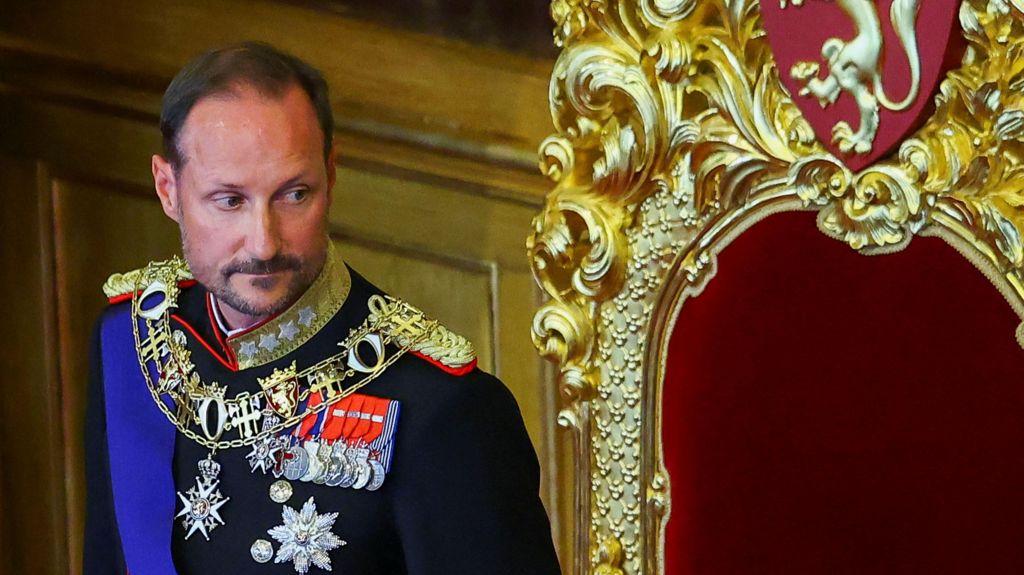
  • Norway’s new king takes oath as mourners pay respects to his late father

    Norway’s new king takes oath as mourners pay respects to his late father

    Norway has entered a new chapter in its modern constitutional monarchy this week, as the nation’s newly appointed king completed the formal oath of office to mark the start of his reign. The historic inauguration unfolded against a backdrop of quiet national grief, with the late King Harald V — the new monarch’s father and one of Norway’s longest-serving heads of state — lying in state at Oslo’s Royal Palace to allow members of the public to pay their final respects.

    The oath-taking ceremony, a constitutional requirement that formalizes the transfer of royal power following the passing of the previous monarch, stands as one of the most significant symbolic events in modern Norwegian political life. While the nation grapples with the loss of a beloved leader who steered the country through decades of social and economic change, the peaceful transition of power has reaffirmed the stability of Norway’s constitutional institutions.

    Thousands of mourners have already queued through the grounds of the Royal Palace to pay tribute to King Harald V, who was widely admired for his down-to-earth demeanor and unifying influence across Norwegian society. Many have left flowers, handwritten notes, and other tributes outside the palace gates, reflecting the deep affection the Norwegian public held for the late monarch. At the same time, political and civic leaders have welcomed the new king, emphasizing their confidence in his ability to carry forward the constitutional role of the monarchy and serve as a unifying figure for the nation.

    The dual ceremonies of mourning and inauguration underscore the unique balance of continuity and change that defines Norway’s monarchy: as the country says goodbye to a leader who shaped its modern identity, it also welcomes a new sovereign to guide the institution through the challenges and opportunities of the 21st century.

  • Brighton sign winger Azeez from Millwall

    Brighton sign winger Azeez from Millwall

    As the summer 2026 Premier League transfer window drew to a dramatic close, Brighton & Hove Albion pulled off two high-profile deadline-day acquisitions, locking in Nigerian winger Femi Azeez from Championship side Millwall and Spanish young defensive midfielder Chema Andres from Bundesliga club Stuttgart in a combined deal worth almost £28 million before extended administrative deadlines expired. The capture of Azeez comes after weeks of prolonged negotiations, with Millwall rejecting at least three previous offers from the Seagulls before the sides agreed on an initial fee of £12.5 million that can climb above £15 million through performance-based add-ons. This transfer marks a historic exit for Millwall, as it stands as the highest-value sale in the club’s history.

    The 25-year-old winger, who earned a spot in the 2025/26 PFA Championship Team of the Year after an outstanding breakout season that saw him net 11 goals and provide 8 assists across 37 competitive appearances, has signed a four-year contract with Brighton. Azeez, who had long publicly targeted a move to the top flight of English football, becomes Brighton’s 11th new arrival of what has been a frenzied summer transfer window for the south coast club. This window has already included the club’s record-breaking £45 million capture of Croatian centre-back Luka Vuskovic from Tottenham Hotspur.

    Azeez first joined Millwall from Reading for roughly £1 million in 2024, and made a total of 77 first-team appearances during his two-year stay at the Den, leaving with two years still remaining on his original contract with the Championship club. Club officials confirmed that the negotiating teams submitted the required deal paperwork to the Football Association shortly before the 23:00 BST statutory transfer deadline on deadline day, and finalized all regulatory checks to complete the signing during the 2-hour extended administrative window that closed at 01:00 BST on Wednesday.

    Not long after confirming Azeez’s transfer, Brighton announced a second major deadline-day signing: 21-year-old Spain Under-21 international Chema Andres, who joins from Stuttgart for an undisclosed fee confirmed to be £15.5 million, signing a five-year contract with the Seagulls. A product of Real Madrid’s renowned youth academy, Andres made his La Liga debut for Real Madrid’s first team in January 2025, before moving to Stuttgart that same summer. In his single season with the Bundesliga side, he went on to make 41 total first-team appearances and played a key role in helping the club secure qualification to the 2026/27 UEFA Champions League.

    Brighton’s aggressive summer recruitment drive has been supported by a series of major player sales that generated substantial transfer revenue for the club. Most notably, top midfielder Carlos Baleba completed a £70 million move to Manchester United earlier in the window, freeing up significant funds for the Seagulls’ new signings. Fans can access exclusive pre-match, post-match and original analysis content about Brighton & Hove Albion through BBC Sounds, with dedicated subscription feeds for regular updates on the club.

  • European tour heads to Switzerland as the only main pro tour in action; Walker Cup held in Ireland

    European tour heads to Switzerland as the only main pro tour in action; Walker Cup held in Ireland

    Golf fans around the world have a stacked slate of elite tournament action to tune into this week, headlined by two marquee events across two continents. The European Tour’s annual Omega European Masters is set to get underway this week at the iconic Crans-sur-Sierre Golf Club in the picturesque alpine town of Crans Montana, Switzerland, while the 2025 Walker Cup, the top amateur team competition between the United States and Great Britain and Ireland (GB&I), kicks off at Lahinch Golf Club in County Clare, Ireland.

    The Omega European Masters, widely regarded as one of the most visually stunning stops on the entire European Tour circuit, will carry a total prize purse of $3.75 million, with the champion taking home a $625,000 winner’s share. The 6,814-yard par-70 alpine course has played host to the event for decades, and this year’s field brings a mix of rising stars, seasoned veterans, and highly ranked competitors. South Africa’s Thriston Lawrence will return to defend his 2024 title, and the tournament marks the opening leg of the European Tour’s “Back Nine” stretch, where all but the final two events of the season will be held across continental Europe.

    Heading into the event, Ryan Gerard holds the distinction of being the highest-ranked player in the field at world No. 22, fresh off a third-place finish at last week’s Tour Championship at East Lake. Current Race to Dubai leader Patrick Reed, ranked 35th globally, is making his first appearance at the tournament in 11 years, competing in his sixth consecutive start to close out his season. Overall, the 2025 field features 10 of the top 100 ranked golfers in the world, and includes notable names such as Miguel Angel Jimenez – who is competing despite the PGA Tour Champions taking a scheduled break this week – John Daly II, making just his second career European Tour start after a tied 30th finish at the Nexo Championship in Scotland two weeks ago, and Sudarshan Yellamaraju, who earned his spot via the top-70 FedEx Cup exemption category.

    For U.S. viewers, all four rounds of the Omega European Masters will air exclusively on Golf Channel, with broadcast windows running 7:30 a.m. to 12:30 p.m. ET on Thursday and Friday, 6:30 a.m. to 11:30 a.m. ET on Saturday, and 6:00 a.m. to 11:00 a.m. ET on Sunday. Next week, the European Tour will travel to Northern Ireland for the Amgen Irish Open.

    Over at the Walker Cup, the biennial (now returning to an even-year schedule after a one-time odd-year adjustment) amateur team competition will see the defending champion United States look to extend their historic dominance over GB&I at the 6,950-yard par-72 Lahinch Golf Club, a links course that previously hosted the 2019 Irish Open (won by Jon Rahm) and the 2024 Palmer Cup college competition. The United States currently holds a commanding 40-9-1 lead in the overall series, and have claimed victory in the last five consecutive Walker Cup matchups, with GB&I’s last win coming in 2015 at Royal Lytham & St Annes.

    In 2024 at Cypress Point, the Americans dominated play, winning eight of 10 singles matches to secure a 17-9 victory, and return to compete this year with captain Nathan Smith at the helm, same as the 2024 event. GB&I will be led by returning captain Dean Robertson. The American side is led by top-ranked amateur Preston Stout of Oklahoma State, and features Stewart Hagestad competing in his sixth consecutive Walker Cup, with three returning players from the 2024 winning squad. GB&I brings six returning players from last year’s team, including Luke Poulter, son of legendary Ryder Cup competitor Ian Poulter, who is playing in his second straight Walker Cup, while Englishman Jack Whaley, the reigning U.S. Amateur champion, will make his first appearance in the competition. As defending champions, the U.S. needs 13 total points to retain the Walker Cup, while GB&I needs 13.5 points to claim the trophy. The competition format features four foursomes matches on both Saturday and Sunday, eight singles matches on Saturday, and 10 singles matches on Sunday.

    Broadcast coverage of the 2025 Walker Cup will also air on Golf Channel for U.S. audiences, with coverage running 8:30 a.m. to 1:30 p.m. ET on Saturday, and split windows of 3:30 a.m. to 8 a.m. ET and 8:30 a.m. to 2 p.m. ET on Sunday. The next Walker Cup is scheduled for 2028 at Bandon Dunes Golf Resort in Oregon.

    Beyond these two headline events, this week also brings a full slate of action across every major professional golf tour. On the PGA Tour, fresh off Scottie Scheffler’s win at the Tour Championship and his second consecutive FedEx Cup title – a victory that pushed him past Tiger Woods’ 26-year record for career PGA Tour earnings – the tour is on a break before the Biltmore Championship in Asheville kicks off September 17-20. On the LPGA Tour, Ruoning Yin claimed victory at last week’s FM Championship, and the tour will head to the Solheim Cup next week, with Nelly Korda entering the week as the leader of the Race to CME Globe. The PGA Tour Champions saw Steven Alker secure his second consecutive win with a victory at the Ally Challenge last week, and will compete in the Sanford International next week, with Stewart Cink holding the lead in the Charles Schw Cup standings. The Korn Ferry Tour’s most recent event was won by Yuta Sugiura, with the circuit next heading to the Simmons Bank Open, and Ross Steelman leading the overall points race.

    Lower-tier and amateur tours also have full competition schedules this week: the Challenge Tour hosts the Rosa Challenge Tour at Rosa Golf Club in Konopiska, Poland, with Hugo Townsend returning as defending champion; the United States Golf Association hosts both the U.S. Women’s Mid-Amateur at Montclair Golf Club in West Orange, New Jersey (with Ina Kim-Schaad defending) and the U.S. Senior Amateur at Baltimore Country Club’s East Course in Lutherville, Maryland (with Mike McCoy defending); the Legends Tour hosts the NI Legends at Galgorm Castle Golf Club in Ballymena, Northern Ireland, with Markus Brier defending; the Japan LPGA hosts the Golf5 Ladies at the Golf5 Club in Mizunami, Gifu, Japan, with Yuna Araki defending; and the Korea LPGA hosts the OK Savings Bank OK Man Open at Adonis Country Club in Pocheon, South Korea, with Shinsil Bang defending.

  • One still missing after Grand Canyon floods kill two and prompts rescue efforts

    One still missing after Grand Canyon floods kill two and prompts rescue efforts

    A brutal flash flood that swept through popular hiking trails at Arizona’s Grand Canyon over the weekend has left two people dead and only one hiker still missing, according to updates from the U.S. National Park Service (NPS). What began as an ordinary Saturday on one of the nation’s most visited natural landmarks quickly turned deadly when the sudden flood hit, destroying critical infrastructure and stranding dozens of visitors in low-lying areas.

    The disaster unfolded around 14:30 local time on Saturday, when intense monsoon rains triggered what the NPS describes as significant flooding in Bright Angel Canyon, the location of the park’s most popular hiking route. Floodwaters surged downstream, sweeping away footbridges, dislodging massive boulders, and cutting off access to popular campgrounds and outposts including Phantom Ranch, the area hardest hit by the disaster. By the time emergency crews arrived, at least two adult males had been killed; the NPS has confirmed one of the victims as a 46-year-old man whose body was recovered near Crystal Rapids along the Colorado River, and officials have declined to release further identifying details at this time.

    When the flood first struck, 30 hikers and visitors were initially unaccounted for. But incident commander Dave Black told reporters at a Monday press briefing that NPS rangers and emergency response crews have worked tirelessly around the clock to locate those missing, reducing the number of unaccounted-for people to just one. “We’ve had a very busy couple of days,” Black noted, praising his teams for their extraordinary efforts to get the rapidly unfolding crisis under control.

    Rescue operations centered on airlifting stranded visitors from Phantom Ranch, with 45 people evacuated by air on Saturday alone. An additional 37 people were lifted to safety by Sunday afternoon. Search crews will resume their hunt for the final missing person on Tuesday morning, focusing on the stretch of trail between Phantom Ranch and Cottonwood Manzanita. The search is complicated by a new forecast for further heavy rain overnight Monday into Tuesday, which brings an elevated risk of additional flash flooding in the already vulnerable area.

    Nikki Baggs, a 41-year-old hiker who was airlifted from the canyon along with two friends, described the chaotic moments when the flood hit to the BBC. “The whole thing was terrifying,” she said. “It was a beautiful day and then people were screaming, running.”

    Preliminary infrastructure assessments released Monday show nearly all footbridges spanning Bright Angel Creek were destroyed in the flood. The NPS has instituted a full closure of Phantom Ranch, Bright Angel Campground, the entire North Kaibab Trail to Phantom Ranch, Black Bridge, Silver Bridge and the adjacent stretch of the Colorado River. Additionally, roughly 40% of the Transcanyon Waterline, which supplies drinking water to park visitors and approximately 2,500 local residents, has been damaged or destroyed, creating a major ongoing challenge for park operations.

    The Grand Canyon draws roughly 5 million visitors every year, making it one of the most popular national parks in the United States, and the Bright Angel trail is its most frequently hiked route. This flooding is tied to the annual North American monsoon season that brings frequent heavy storms to the Southwestern U.S. This time of year, a shift in wind patterns pulls warm, moisture-heavy air north from the Gulf of California and tropical Pacific, which collides with the region’s mountainous terrain to trigger sudden, intense storms. These monsoon storms are notoriously difficult to predict accurately, meaning they can strike with little to no warning. Compounding the risk, the region’s typically parched ground cannot absorb heavy rainfall quickly, so even strong downpours almost immediately spawn dangerous flash floods, while frequent lightning from the storms also increases the threat of wildfires across the Southwest.