博客

  • Jurors in Lindsay Clancy trial deadlocked but judge asks them to keep trying

    Jurors in Lindsay Clancy trial deadlocked but judge asks them to keep trying

    After three full days of closed-door deliberations, the jury hearing the high-profile triple murder case against Massachusetts resident Lindsay Clancy has failed to reach a unanimous verdict, leaving the court in shock on Tuesday. Despite the impasse, the presiding judge has instructed the panel to continue their deliberations in an effort to resolve the deadlock.

    Clancy, a 36-year-old former nurse, stands accused of killing her three young children at the family’s Massachusetts home in 2023, and faces three counts of first-degree murder. Prosecutors with the commonwealth’s legal team have argued that Clancy carried out the killings in a premeditated, intentional act that meets the legal standard for first-degree homicide. Her defense team does not contest that Clancy caused the deaths of her children, but has centered its entire case on the argument that she was suffering severe, untreated postpartum psychosis at the time of the incident. This condition, the defense argues, left Clancy unable to distinguish right from wrong, negating the criminal intent required for a first-degree murder conviction.

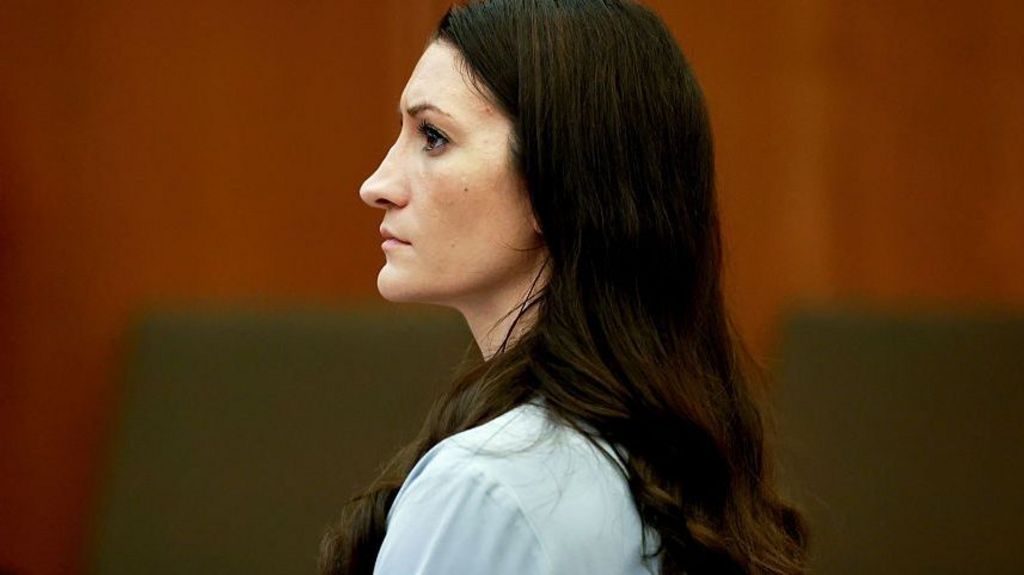
    The 12-member jury, made up of nine women and three men, began deliberations last week, wrapping up weeks of testimony from more than 50 witnesses called by both the prosecution and defense. When Judge William Sullivan read the jury’s note announcing the deadlock to the court, audible gasps from spectators filled the courtroom. Clancy, who appeared in court seated in a wheelchair beside her legal counsel, remained stoic as the announcement was made.

    Legal experts note that jury deadlocks are a far from uncommon outcome in high-stakes, emotionally fraught criminal cases, and the court system has established long-standing protocols for addressing such impasses. Heather Cucolo, a professor at New York Law School and a leading expert in mental health law, explained to media outlets that hung juries are particularly typical of what she described as “complex and emotionally charged trials” such as Clancy’s.

    “If the deadlock does not break, the judge may issue what is commonly called a ‘dynamite instruction’ – known as a Tuey-Rodriguez charge in Massachusetts state courts – which encourages jurors to reconsider opposing perspectives in an effort to reach a consensus, while still upholding each juror’s right to their own honest conviction,” Cucolo explained. She added, however, that this kind of additional instruction is typically only deployed as a last-ditch effort to avoid a mistrial.

    If the jury ultimately convicts Clancy on all three first-degree murder charges, Massachusetts state law requires a mandatory sentence of life in prison without any possibility of parole. If no verdict can be reached, the case will result in a mistrial, leaving open the possibility that prosecutors would have to try Clancy again at a later date.
  • Trump says US position on Falklands ‘one of many’ under review

    Trump says US position on Falklands ‘one of many’ under review

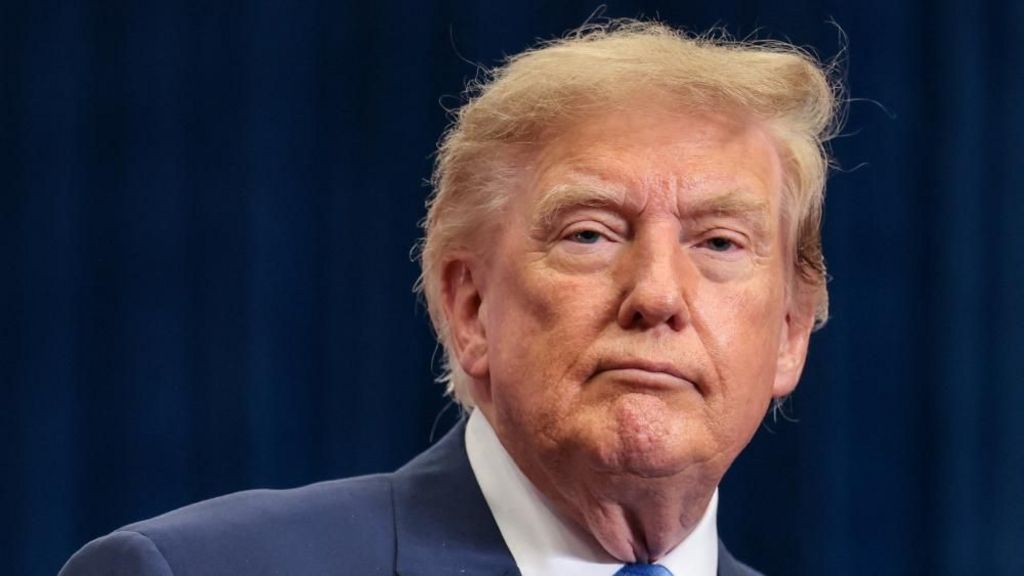
    In a development that has sparked cross-party friction in British politics, former U.S. President Donald Trump has confirmed that the United States’ longstanding ambiguous stance on the Falkland Islands sovereignty dispute is “one of many” international positions currently under formal review, as the U.S. presses the United Kingdom to accelerate its planned increases to NATO-aligned defence spending.

    The confirmation follows a weeks-old report from The Daily Telegraph, which first revealed that senior U.S. defence officials were drafting a set of proposals designed to pressure NATO allies into meeting their mandatory 2% of GDP defence spending commitments. Among the leverage options reportedly under consideration was a U.S. shift away from its longstanding neutrality on the Falklands dispute, which could see Washington oppose London’s long-held sovereignty claim over the South Atlantic territory.

    The Falkland Islands, located 300 miles off the southern coast of Argentina, have been the site of a bitter sovereignty dispute between London and Buenos Aires for nearly two centuries. The dispute boiled over into open conflict in 1982, when Argentine military forces invaded the islands to stake the South American nation’s territorial claim. A 74-day British military campaign retook control of the territory, but the conflict left more than 900 people dead – 255 British service members, three civilian islanders, and 649 Argentine military personnel. For decades, successive U.S. administrations have formally recognized the UK’s de facto governance of the islands, but have declined to take an official position on the underlying sovereignty question.

    During a press briefing with reporters on Monday, BBC correspondents asked Trump directly whether his administration was actively reviewing the U.S.’s longstanding position on the dispute. Trump responded simply: “I always review every position. That’s just one of many.” He added that the UK “has got some problems, but they’ll get solved” when pressed for further comment on the link between the review and British defence spending targets.

    Trump’s remarks drew immediate pushback from senior British political figures. Dame Emily Thornberry, the Labour Member of Parliament who chairs the House of Commons Foreign Affairs Committee, dismissed the comments as “nonsense” and called on the UK government to issue an immediate, formal response to the threat from Washington. Responding to the call during Tuesday’s parliamentary session, Foreign Office Minister Uma Kumaran reaffirmed London’s unwavering position on the dispute, telling MPs: “The UK has no doubt about its sovereignty over the Falkland Islands. They are and will always remain a British overseas territory in line with the wishes of the Falkland islanders. The UK is steadfast in our support for the islanders’ rights of self-determination. Our position remains unchanged.” A UK government spokesperson added in a separate statement: “Falkland islanders are British with a right to determine their own future. The islanders have repeatedly expressed their wish to remain a British overseas territory and our commitment to them is unwavering.”

    The current debate around the Falklands is not the first time a potential review of U.S. policy has emerged. Earlier this year, an internal Pentagon email obtained by Reuters revealed the U.S. was considering a range of punitive options against NATO allies that it deemed insufficiently supportive of its military operations in Iran. The Falklands sovereignty position was one of the potential leverage tools listed in that internal correspondence, and the proposal has reemerged in recent reporting tied to the Trump administration’s pressure on NATO members to increase defence spending.

    The row over the Falklands comes as the UK’s new ruling administration works to lock in commitments to raise defence spending in line with NATO demands. New Prime Minister Andy Burnham has pledged to honour a commitment made by his predecessor, former Prime Minister Keir Starmer, to hit a target of 3.5% of GDP for core defence spending by 2035. On Tuesday, Chancellor John Healey told The Times that he would outline a clear, binding timeline to meet that 3.5% target during the next government spending review, scheduled for spring 2026. Healey added that the plan will also include an explicit target date for reaching an interim 3% of GDP spending target. Healey, who served as defence secretary under Starmer, resigned from the previous cabinet in June over a public dispute about military spending timelines, saying in his resignation letter that he was frustrated by the lack of a clear plan to hit the 3% target by 2030, his preferred timeline.

    Beyond the Falklands dispute, the Burnham administration is also facing ongoing political pressure over a stalled plan to transfer sovereignty of the Chagos Islands to Mauritius. The 2024 agreement, reached under Starmer, would have seen London hand over control of the Indian Ocean archipelago in exchange for a long-term lease to retain the joint US-UK military base on Diego Garcia, a key strategic logistics hub for U.S. and British military operations across the Middle East and Africa. In April, the deal was paused indefinitely after Trump withdrew U.S. support for the agreement, throwing the entire process into doubt.

    Appearing before the Commons on Tuesday, Kumaran reaffirmed that maintaining long-term operational control and security of the Diego Garcia base remains the UK government’s top priority, and that this goal is the entire foundation of the ongoing negotiations with Mauritius. She added that any funding tied to a final agreement would be covered within existing spending allocations for the Foreign, Commonwealth and Development Office and the Ministry of Defence. But the minister’s comments drew fierce criticism from the opposition Conservative Party. James Cartlidge, the Conservative shadow defence secretary, called the existing Chagos agreement “crazy” and said it “belongs on the ash heap of history.” He called on Burnham to “show some backbone” and scrap the deal entirely, reallocating any planned funding for the transfer to the armed forces. Conservative shadow Foreign Office minister Wendy Morton also pressed the government for clarity, noting that the Starmer administration acknowledged in April that the treaty had become “impossible to agree at political level” and asking what had changed to justify continuing negotiations. In response, Kumaran said the Burnham government would “continue to work with the US and Mauritius to find a way forward that is in the UK’s best interests and protects our national security.”

  • Pistol in a lake gives hope for French cold case

    Pistol in a lake gives hope for French cold case

    One of Europe’s most high-profile unsolved murder cases has taken an unexpected turn, after a 12-year-old cold case gained a critical new lead following the discovery of a vintage Luger pistol in a French lake close to where a British family and a passing cyclist were gunned down in 2012.

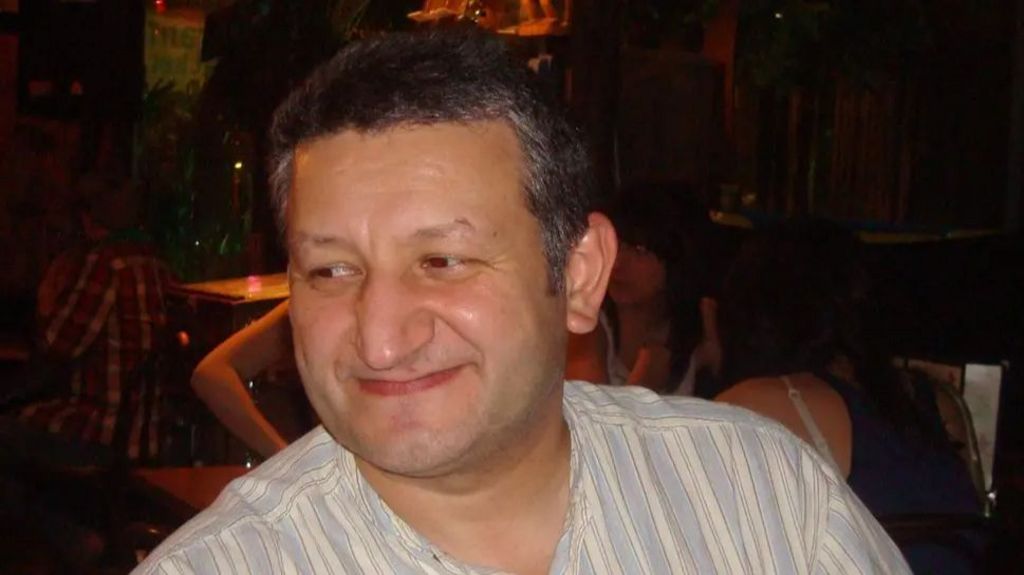
    The killings, which shocked communities on both sides of the English Channel, unfolded on 5 September 2012 in the hilly, picturesque countryside near Lake Annecy in eastern France. Saad al-Hilli, an Iraqi-born British engineer, was on a family caravan holiday with his wife Ikram, his mother-in-law Suhaila Al-Allaf, and their two young daughters, aged four and seven. The bodies of al-Hilli, his wife, and his mother-in-law were found slumped in their family car, which was left idling on a remote forest road near the village of Chevaline. A French cyclist, Sylvain Mollier, who had been passing the scene, was also fatally shot. All four victims were killed by a gunshot to the head.

    In a cruel twist of fate, the al-Hilli’s two young daughters survived the attack. The seven-year-old girl was struck in the head with a pistol butt and left badly injured, while the four-year-old hid under her mother’s body and was not discovered by forensic investigators until hours after the first officers arrived at the crime scene. Forensic analysis of fragments left at the scene from the pistol butt allowed investigators to quickly confirm the murder weapon was a Luger P06, a semi-automatic pistol once standard issue for the Swiss military, phased out of service around 1960. Today, the model is largely held as a collector’s item rather than a functional weapon, a detail that long complicated theories of a professional contract killing.

    For more than a decade, exhaustive cross-border investigations carried out by law enforcement teams in France and the United Kingdom have failed to identify a suspect or establish a clear motive for the killings. Multiple lines of inquiry, from a family dispute over inherited assets to a random attack by an unhinged individual, even the theory that cyclist Mollier was the intended target, have been pursued by investigators over the years, only to be ultimately discarded. At one point, investigators also examined a potential link to the sudden death of al-Hilli’s wife’s first husband, an American man who died of a heart attack only hours before the Annecy attack, but no connection was ever proven.

    Now, France’s national cold case unit has confirmed that a vintage Luger pistol was recovered from Lake Annecy, just a short distance from the 2012 murder site, according to reporting from French outlet Marianne, which first broke news of the discovery. The weapon was found by British tourists visiting the region on 20 August, who spotted the object lying two meters below the water’s surface near Le Solitaire du Lac, the campsite where the al-Hilli family had parked their caravan for the holiday. Initially, the group mistook the weapon for a plastic water toy, but quickly realized it was a real firearm once they pulled it from the water and felt its weight.

    The recovered pistol has suffered significant corrosion and damage after more than a decade submerged in lake water, and forensic experts are currently conducting detailed testing to confirm whether the weapon is the Luger P06 model used in the killings. Roughly 60,000 P06 models were manufactured during the pistol’s production run, out of more than three million total Luger pistols made globally. Lake Annecy sits only 50 kilometers from the Swiss border, and investigators have long noted that many retired P06 pistols remain in private family collections on both sides of the French-Swiss border, a context that could help narrow down the weapon’s provenance if testing confirms it is the murder weapon.

    The discovery marks the first major break in the case in years, giving investigators new hope of finally solving one of the most puzzling unsolved murder cases in recent European history.

  • Germany says Russia behind Leipzig airport drone attack

    Germany says Russia behind Leipzig airport drone attack

    In a landmark public announcement that escalates tensions between Berlin and Moscow, German officials have formally named Russia as the perpetrator of an explosive drone attack last month at Leipzig/Halle Airport, a critical logistics hub supporting military shipments to Ukraine.

    The incident, which unfolded on August 4, saw an explosive-laden drone discovered near Ukrainian cargo aircraft parked at the eastern German airport. The device never detonated, investigators confirmed, after its detonator malfunctioned. Separately, probes suggest a second drone collided with a nearby cargo plane, while a third unmanned device was located in the area surrounding the airport 10 days after the initial discovery.

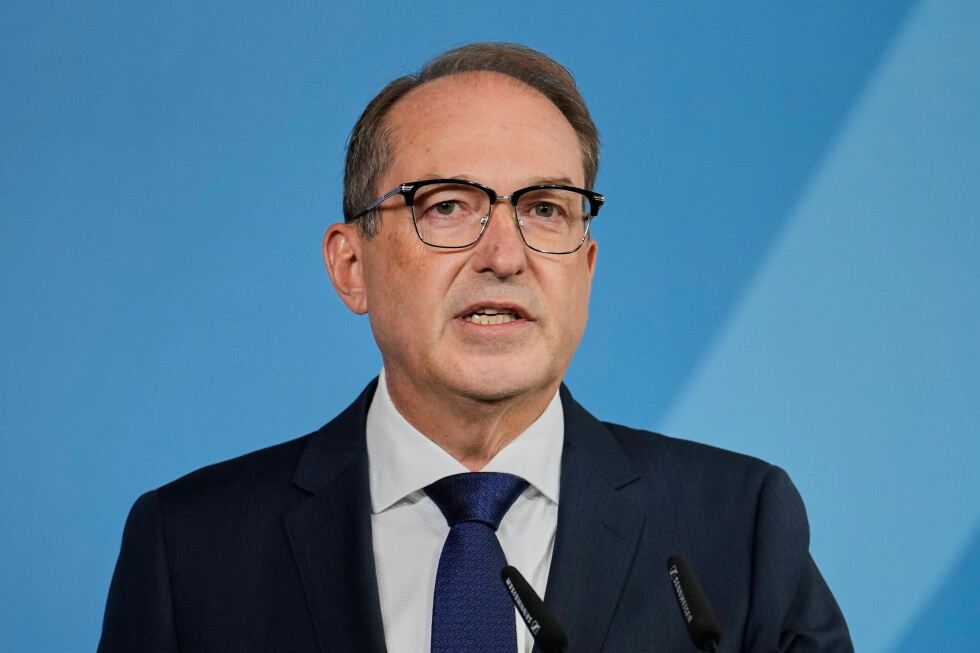
    Speaking at a Berlin press conference alongside German Foreign Minister Johann Wadephul, Interior Minister Alexander Dobrindt framed the attempted attack as fitting the long-documented blueprint of Russian hybrid operations targeting European states. He added that German authorities operate under the working assumption that further attacks on German soil are likely.

    Leipzig/Halle Airport holds unique strategic significance: it is used by the German military and NATO allies to transfer military supplies, and it also acts as a operational base for Ukraine’s Antonov Airlines, the carrier that moves the vast majority of Ukraine’s airborne cargo. That strategic role makes it a logical target for Moscow, analysts note, at a time when Germany remains one of Kyiv’s most prominent backers in its war against Russian invasion.

    In response to the confirmed Russian involvement, Wadephul announced sweeping diplomatic measures: he has ordered the closure of Russia’s consulate in Bonn, and the government will terminate the operating contract for the Russian House in Berlin, a facility long suspected by security observers of being used for Russian espionage and disinformation campaigns.

    The formal accusation and retaliatory measures have drawn immediate reaction from across the Western alliance. NATO Secretary General Mark Rutte released a statement on X confirming the alliance’s full solidarity with Germany, noting that “the evidence is clear” and that he supports the actions Berlin has taken in response. The incident is scheduled to be a top topic of discussion during a meeting of European Union foreign ministers taking place in Ireland on the same Tuesday the announcement was made.

    Moscow has repeatedly denied any involvement in attacks on European soil, and in response to the new measures, Russian Foreign Ministry spokesperson said Russia would retaliate for what it calls “anti-Russian decisions”, according to Russian state news agency Interfax.

    This formal attribution marks a shift from Berlin’s previous cautious stance, which only referenced potential involvement by “foreign powers” without naming a specific actor. US media had already reported that American intelligence agencies linked the attack to Russian actors, confirming the assessment that German intelligence had privately reached.

    German officials have long warned that the country faces daily hybrid threats from hostile powers. Last week, Chancellor Friedrich Merz, who has taken a hardline stance in support of Ukraine, reiterated that any actor that carries out hostile acts against German interests will “pay a price”. The German government is currently moving forward with plans to expand the legal powers of the country’s intelligence agencies, which have long been criticized for having limited authority to counter hybrid and asymmetric threats.

    The announcement comes at a sensitive domestic political moment for the Merz administration. A key regional election in the eastern state of Saxony-Anhalt, where the airport is located, is approaching, and polls suggest the far-right Alternative for Germany (AfD) could win enough support to take control of the state government for the first time in the party’s history. The AfD, Germany’s largest national opposition party, has campaigned on ending all military and political support for Ukraine and restoring normal diplomatic and economic ties with Russia.

    In a separate development that adds to growing concerns over security on German soil, German police confirmed Tuesday they are launching an investigation into the discovery of improvised explosive and incendiary devices at a power substation in the eastern state of Brandenburg. The devices damaged a power line, causing a temporary power outage in the area. No group or actor has yet been linked to the sabotage attempt, and investigations into what happened remain ongoing.

    Over the past 12 months, multiple NATO member states, Germany included, have recorded a surge in drone sightings near critical infrastructure, military bases, and industrial facilities, raising alarms across the alliance over the growing scope of Russian hybrid activity targeting Western countries.

  • River water smashed into tunnel and chased me for 20 minutes, Nepal worker tells BBC

    River water smashed into tunnel and chased me for 20 minutes, Nepal worker tells BBC

    Last week, catastrophic flash floods swept through river valleys across Nepal, triggering a deadly collapse at a hydropower construction tunnel along the Trishuli River that left hundreds of workers missing and thousands dead. In harrowing first-person interviews with the BBC, surviving workers have shared their accounts of the terrifying moments that unfolded when river water breached the tunnel they were building.

    Pemba Dundu Tamang, one of the workers who narrowly escaped the rushing floodwaters, was part of a 30-person crew pouring concrete lining inside the tunnel when the disaster struck. The first sign of trouble, he recalled, was an unexpected, violent gust of wind that ripped through the tunnel, sending splintered plywood flying through the air and shaking loose large construction equipment. Outside the tunnel mouth, nearby riverside homes had already been torn from their foundations and swept away by the surging water.

    “I ran toward the tunnel entrance,” Tamang described. “The water was chasing behind me and I was running ahead of it.” For 20 minutes, he fled uphill, with the deluge nipping at his heels, until he emerged from the tunnel disoriented and numb with shock. By the time he reached safety, the devastating reality of what he had lost began to sink in.

    Tamang lost six members of his family—including his mother, older brother, sister-in-law, and three young nieces and nephews—who were staying at their riverside home when the flood hit. Only his wife, son, and one nephew survived the disaster. His colleague Itha Ghale suffered an equal loss, losing eight family members including his mother and eldest daughter; only Ghale, his wife, and three sons survived. “I feel life is meaningless now. Surviving feels miserable. I do not know where to eat or where to go,” Tamang said. “The dead are at peace. It is those of us who survived who suffer.”

    Beyond the personal toll on these workers, the disaster has brought widespread devastation across Nepal. Official counts put the national death toll at more than 1,000, with roughly 4,000 people still unaccounted for. Hundreds of the missing are hydropower workers like Tamang, who were employed across a sprawling network of construction tunnels for hydropower projects running along the Trishuli River, which generates over 99% of Nepal’s total electricity supply.

    Tamang and Ghale were working on the Upper Trishuli 3B Hydropower Project, a major facility scheduled to come online in 2027 that was designed to reuse water from an upstream plant to add additional capacity to Nepal’s national energy grid. Around 50 to 60 workers escaped the tunnel with Tamang, but dozens more remain trapped inside, he said.

    Nepal’s military has launched a large-scale search-and-rescue operation across the affected region, with crews pumping air into submerged and blocked tunnels to sustain any potential survivors still trapped. Soldiers have also been assigned to recover bodies and implement public health measures to prevent the spread of waterborne disease in the flood aftermath. “We are focused on search-and-rescue efforts at the tunnels, our work is continuing,” Nepal Army spokesman Raja Ram Basnet told AFP.

    International teams of specialists from China, India, and Nepal are also on-site, operating heavy excavators and clearing tonnes of debris to reach trapped workers at multiple hydropower construction sites. Tamang, who took shelter in the nearby village of Shanti Bazar for two days before military rescuers reached him, says he holds out hope for the colleagues still trapped. “There are probably still some survivors inside. I would be happy if they were rescued quickly,” he said. “I know many people who are still trapped there.”

    The disaster has also sparked new discussion about disaster preparedness in Nepal’s mountainous, flood-prone river valleys. A new analysis by an international coalition of mountain hazard experts—including researchers from the Asian Mountain Academic Alliance, the Stimson Centre, and China’s Institute of Mountain Hazards and Environment—found clear warning signs of impending instability in the upstream glacier in the days before the flood triggered the disaster.

    Satellite imagery captured before the event showed the glacier surface was accelerating, meltwater had changed to a sediment-heavy brown colour, and a large crack was forming in the surrounding rock—all clear indicators that a collapse and downstream flood was imminent. While the avalanche that triggered the flood moved too quickly to warn communities immediately upstream, experts say a functioning early warning system would have given 10 minutes or more of warning to downstream communities and construction sites—time that could have saved hundreds of lives. Tamang echoed this assessment, saying more lives could have been saved if adequate emergency resources had been in place before the flood hit.

    As the search continues for missing workers and flood victims, survivors like Tamang are left grappling with the loss of their families and uncertain futures. Many, including Tamang, fear that if the damaged hydropower projects are shuttered indefinitely, they will be left without work and unable to feed their surviving families. “If things continue like this, we will go hungry,” Tamang said. “Sometimes I feel it would have been better not to survive.”

  • ‘I have fired 40 of my agents for being corrupt’, says Nigeria’s anti-corruption chief

    ‘I have fired 40 of my agents for being corrupt’, says Nigeria’s anti-corruption chief

    Nigeria’s top anti-graft watchdog has carried out a major internal clean-up, removing more than four dozen of its own employees over allegations of corruption and financial misconduct in the three years since current leadership took office. The announcement came from Ola Olukoyede, chairman of the Economic and Financial Crimes Commission (EFCC), during a public briefing in the nation’s capital Abuja, where he outlined the agency’s progress and structural reforms since he assumed leadership in October 2023.

    According to Olukoyede, more than five of the dismissed staff have already been formally charged and are facing prosecution in court, while investigative case files are still being compiled for the remaining terminated employees to move forward with legal proceedings. The EFCC, Nigeria’s primary agency tasked with probing financial crimes including advance fee fraud, money laundering, and public sector corruption, regularly pursues high-profile cases against sitting politicians, senior public officials, prominent business leaders, and other figures accused of diverting or misappropriating public funds.

    In comments to reporters at the briefing, Olukoyede confirmed the scale of internal accountability measures, noting that he had personally authorized the dismissal of over 40 staff members over his three-year tenure over proven charges of corruption and financial malpractice. As part of a broader package of internal reforms to strengthen ethical standards across the agency, Olukoyede revealed that the EFCC’s existing Department of Internal Affairs has been formally rebranded as the Department of Ethics and Integrity, to reflect its renewed mandate of upholding professional integrity within the commission.

    To further mitigate risks of conflicts of interest and improper influence, the EFCC has also introduced a new mandatory policy regulating gifts and hospitality received by agency staff. The new rule requires all EFCC officers to formally declare any gifts received that exceed an undisclosed monetary threshold, a requirement that extends even to gifts sent by relatives living outside of Nigeria.

    Olukoyede emphasized the non-negotiable need for internal probity in the agency’s anti-corruption mission, stating: “You must be sure that your hands are clean. You can’t be fighting corruption when your hands are soiled with corrupt practices.” When the BBC reached out to the EFCC to request additional details on the specific allegations against the dismissed former employees, the agency declined to release further information, noting the data was not currently available for public disclosure.

    Beyond internal reforms and staff dismissals, Olukoyede highlighted a string of strong enforcement outcomes achieved during his tenure, announcing that the EFCC had recovered a record 1.23 trillion naira (equivalent to approximately $925 million or £683 million) in stolen funds, with an overall conviction rate for prosecuted cases exceeding 75% between October 2023 and July 2026.

    Breaking down the agency’s operational output, Olukoyede reported that over the 33-month period, the EFCC received 49,673 public petitions alleging financial crimes, completed investigations into 39,615 separate cases, filed 14,476 formal charges with the courts, and secured 10,872 criminal convictions. In the first half of 2026 alone, the agency secured 1,370 convictions from just 1,889 filed cases, a result Olukoyede said demonstrates the commission’s improving efficiency and focus on evidence-based prosecutions.

    “These results reflect diligence, resilience and a prosecutorial approach anchored on evidence and courtroom outcomes,” he added. Data presented at the briefing also revealed a shifting priority in the EFCC’s caseload, with a growing share of investigations now focused on cybercrime and cyber-enabled fraud, alongside traditional corruption cases involving high-profile public officials.

  • US borrowing costs hit fresh highs over inflation fears

    US borrowing costs hit fresh highs over inflation fears

    Renewed military strikes in the Middle East have sent global oil markets into volatility, pushing crude prices above $92 per barrel and amplifying long-running concerns about sticky U.S. inflation. This geopolitical and economic pressure triggered a fresh surge in U.S. government borrowing costs on Tuesday, with the 10-year Treasury yield – the benchmark effective interest rate for U.S. government borrowing – climbing to 4.79%, its highest point since January 2025.

    Beyond impacting how much the federal government pays to access capital, movements in the U.S. bond market have far-reaching ripple effects across the domestic economy. Benchmark Treasury yields directly shape the interest rates consumers pay for everyday forms of borrowing, including home mortgages, auto loans, and credit card balances. Already, 30-year fixed mortgage rates have jumped to nearly 6.7%, a one-year high, following the recent bond market selloff.

    The sharp uptick in borrowing costs has coincided with growing market speculation that the U.S. Federal Reserve will greenlight a new interest rate hike when it meets later this month. Persistent above-target inflation has left policymakers open to further tightening, with top Fed officials signaling that stubborn price growth could force decisive action.

    In a public speech delivered Tuesday, Federal Reserve Governor Michael Barr emphasized that inflation has remained unacceptably elevated for five years. “If it does not cool, then I think we should act decisively to raise rates,” Barr warned. His remarks echoed comments made the previous week by Fed Chairman Kevin Warsh, who told attendees that policymakers would “have work to do” if they cannot confirm that cost-of-living pressures are easing for U.S. households.

    Latest official inflation data puts annual price growth at 3.4% as of July, a full 1.4 percentage points above the Federal Reserve’s longstanding 2% target. Despite this overshoot, the central bank has held its benchmark policy rate steady for months at a range of 3.5% to 3.75%. While Warsh has declined to elaborate on his personal outlook for rate policy, shifting investor expectations following recent official comments have pushed the probability of a September rate hike sharply higher.

    For bond markets, persistent inflation is the core driver of rising yields – the term used to describe the effective interest rate governments pay to investors who buy their debt. When governments issue bonds, they are essentially selling interest-bearing IOUs to raise capital for public spending. Bond investors routinely demand higher yields when inflation is high or projected to stay elevated, to offset the eroding impact of price growth on their future returns. Since U.S. Treasury yields serve as a global benchmark for borrowing, this shift pushes up borrowing costs across nearly every major economy worldwide.

    Inflation is not the only factor weighing on bond investors. Growing anxiety over ballooning government debt levels across the world, paired with uncertainty over the future returns of Big Tech’s massive artificial intelligence investments, has also put upward pressure on yields. In the U.S. specifically, total national debt has crossed the $40 trillion threshold, doubling over the past 10 years under both the Trump and Biden administrations.

    Last week, 30-year Treasury yields reached levels not seen since 2008, prompting a policy response from the Treasury Department. Treasury Secretary Scott Bessent announced that the U.S. government would expand debt buyback programs in an effort to cool rising rates. However, the positive market reaction to the announcement faded quickly, leaving yields to resume their upward climb.

    Economists warn that the sustained rise in borrowing costs carries meaningful downside risks for U.S. economic growth. Higher interest rates make both consumer borrowing and business investment less attractive. If households pull back on discretionary spending and companies pause expansion plans in response to elevated rates, the broader economy could slow sharply, tipping the balance between cooling inflation and triggering a downturn.

  • Vance calls Michigan Senate candidate El-Sayed ‘evil’ at campaign rally

    Vance calls Michigan Senate candidate El-Sayed ‘evil’ at campaign rally

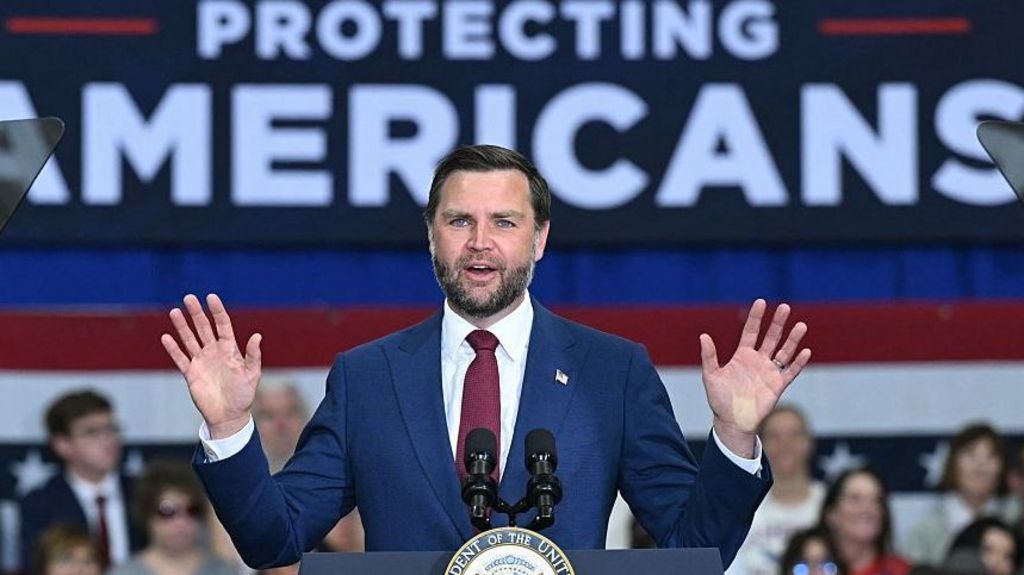
    A heated Michigan Senate campaign has devolved into raw personal confrontation this week, after U.S. Vice President JD Vance delivered a blistering attack on Democratic candidate Abdul El-Sayed at a campaign rally for Republican nominee Mike Rogers in suburban Detroit Monday night. Vance, a close ally of former President Donald Trump, labeled the 41-year-old Muslim candidate “a very, very evil” person seeking to “destroy” the United States, framing El-Sayed as a divisive extremist who represents a dangerous rising force in American politics.

    The vice president’s tirade came after El-Sayed made controversial remarks about Vance’s family, specifically suggesting that Vance’s late grandfather would not accept Usha Vance, the Hindu Second Lady and Vance’s wife. Addressing that comment directly, Vance issued a sharp public warning: “keep my wife’s name the hell out of your mouth.”

    Vance also sought to tie El-Sayed to far-left streamer Hasan Piker, who once claimed the U.S. “deserved” the 9/11 terrorist attacks. El-Sayed appeared alongside Piker during his primary campaign, but has repeatedly denied sharing Piker’s views and publicly distanced himself from the 9/11 comment. Undeterred, Vance repeated unsubstantiated insinuations that El-Sayed sympathizes with terrorists and aligns with anti-American ideology, claiming the candidate sided with attackers over victims of a shooting at a Detroit-area synagogue.

    Within hours, El-Sayed pushed back forcefully against Vance’s accusations during an interview with CNN, turning the “evil” label back on the Trump administration’s policy agenda. He argued that the real harm facing American communities comes from what he called the Trump White House’s unethical policy choices: “Evil is ripping healthcare away from working people in exchange for tax breaks for billionaires. Evil is making people pay more for groceries and gas while pushing for trade wars and actual war. Evil is dividing people for your own gain. Evil is selling out your morals for a little bit of power.”

    El-Sayed also moved to clarify his earlier comments about Usha Vance, explaining that his remarks were never intended as a personal attack. Instead, he said, they were meant to illustrate what he frames as Vance’s core political belief: that some people are inherently “more American than others” based on their identity or background.

    The contest between El-Sayed and Rogers, a long-time former law enforcement official and seasoned political figure, has already become one of the most closely watched races of the 2026 midterm elections. Michigan is a critical battleground state: it went to Joe Biden in the 2020 presidential election, and flipped back to Donald Trump in 2024, making this Senate seat a key target for both major parties as they fight for control of the upper chamber.

    A recent poll released by Michigan-based research firm Epic-MRA shows the race remains tight, with El-Sayed holding only a narrow four-point lead over his Republican opponent ahead of the general election. The rapid escalation of personal hostility between the candidates has underscored the deep polarization that continues to shape competitive electoral contests across the U.S. ahead of 2026’s voting.

  • Germany blames Russia for last month’s attempted drone attack at Leipzig airport

    Germany blames Russia for last month’s attempted drone attack at Leipzig airport

    BERLIN — In a significant escalation of diplomatic tensions between Berlin and Moscow, the German government formally announced Tuesday that it holds Russia directly responsible for an attempted explosive drone attack at Leipzig/Halle Airport last month, a key logistics hub critical to Western military and humanitarian support for Ukraine.

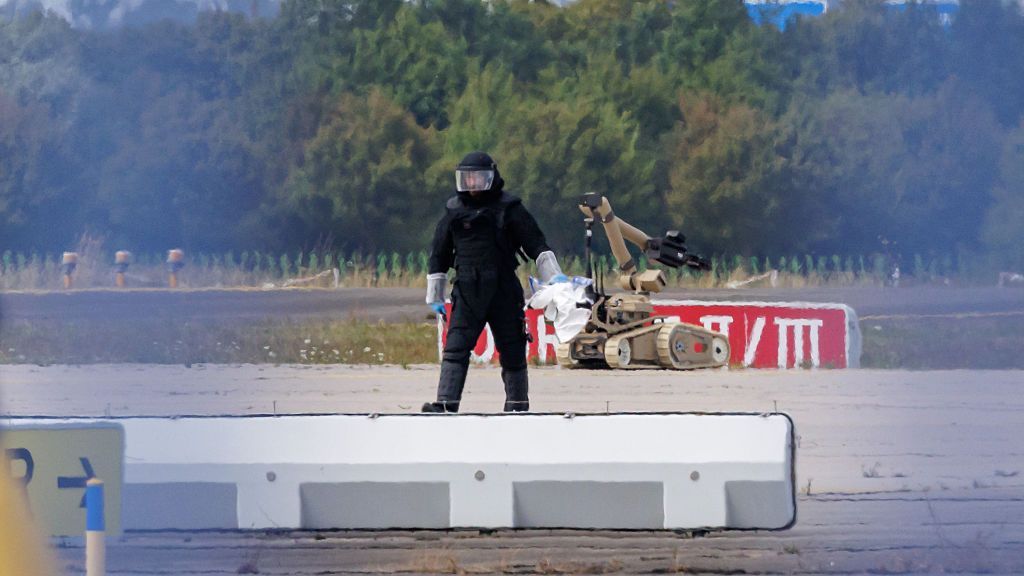
    The foiled plot first came to light on the evening of August 4, when security personnel discovered an explosives-laden drone positioned near a Ukrainian-owned aircraft parked at the airport. Bomb disposal experts successfully carried out a controlled defusion of the device before it could be detonated, preventing potential mass casualties and major infrastructure damage.

    German Interior Minister Alexander Dobrindt told reporters the botched attack aligns with a well-documented pattern of aggressive covert activity that Western officials have labeled “Russian hybrid operations.” “The German government has conducted a thorough investigation and comes to the clear conclusion that Russia is responsible for the hybrid attack in Leipzig on August 4,” Dobrindt stated.

    In response to the alleged plot, Berlin has announced sweeping retaliatory diplomatic measures. Foreign Minister Johann Wadephul confirmed that the Russian consulate general in Bonn will be shut down permanently, effective September 18. Additionally, the operating contract for the Russian House, a prominent Russian cultural center located in central Berlin, will be terminated immediately.

    Leipzig/Halle Airport is far more than a standard commercial cargo hub: it serves as a primary logistics gateway for Western support to Ukraine, and regularly hosts Ukrainian Antonov transport aircraft that carry military and humanitarian aid into the war-torn country. It also hosts the NATO Strategic Airlift International Solution (SALIS) program, which conducts near-daily operations moving military equipment to NATO battle groups deployed along the alliance’s eastern flank, stretching from Finland in the north to Romania in the south, while also supporting mission deployments for both the EU and individual NATO member states.

    This is not the first time the airport has been targeted in suspected sabotage linked to Russia. In 2024, an incendiary device detonated at an on-site logistics center, igniting a fire in a freight container that was preparing to be loaded onto a cargo plane bound for Ukraine. Western security officials have long suspected that attack was coordinated by Russian intelligence services.

    For years, Western governments have accused Moscow of running a coordinated continent-wide campaign of sabotage, covert attacks, and disruptive activities across Europe. The core goal of this campaign, officials say, is to erode public and political support for Ukraine in the face of Russia’s full-scale invasion, and to destabilize political and social order within European Union and NATO member states. Moscow has repeatedly denied all accusations of involvement in sabotage activities across Europe.

  • Man Utd fail in attempt to sign Ait-Nouri from Man City

    Man Utd fail in attempt to sign Ait-Nouri from Man City

    On the final day of the summer transfer window, Manchester United saw two high-stakes, last-minute attempts to strengthen their squad collapse, leaving the Premier League side empty-handed in their late push to address defensive and midfield depth gaps.

    For weeks leading up to the deadline, United’s coaching staff under manager Michael Carrick had prioritized shoring up the left-back position, an area identified as a key squad weakness. After ruling out moves for Barcelona’s Alejandro Balde and Racing Santander’s Jorge Salinas, with less than 12 hours remaining before the window closed, United pivoted to a surprise target: Algerian full-back Rayan Ait-Nouri from cross-city rivals Manchester City.

    United exclusively explored a loan arrangement for the 25-year-old, ruling out any permanent purchase up front. However, Manchester City’s only acceptable terms for a temporary exit included a mandatory obligation to buy Ait-Nouri at the end of the loan spell — a condition United rejected outright. City later confirmed that Ait-Nouri would remain at the Etihad Stadium for the current season.

    Ait-Nouri joined City from Wolverhampton Wanderers for a £31m transfer fee in June 2025, but his debut campaign at the club fell short of expectations. He made just 12 starts in Premier League play and 31 total appearances across all competitions, and currently sits third in Enzo Maresca’s left-back depth chart, behind starter Josko Gvardiol and young prospect Nico O’Reilly. He has been named to the matchday squad for all three of City’s opening 2026/27 fixtures but has yet to take the pitch this season.

    Notably, a completed transfer for Ait-Nouri would have made him the first player to move directly between the two Manchester rivals for an agreed transfer fee in more than 27 years. The last such direct transfer saw Terry Cooke leave United for City for a £1m fee in January 1999. In recent decades, only Owen Hargreaves and Carlos Tevez have made the cross-city switch, both joining City after their United contracts expired — Tevez’s arrival famously included City’s provocative “Welcome to Manchester” publicity campaign that stoked the already fierce rivalry between the clubs.

    United’s failure to land an experienced new left-back has forced a last-minute change of plans for the club’s own young prospect, 19-year-old Harry Amass. Amass served as backup to first-choice left-back Luke Shaw through most of pre-season, but has not been named to Carrick’s matchday squad for either of United’s opening two Premier League games. He had been widely expected to leave on a loan deal to gain first-team minutes, but will now remain at Old Trafford to provide defensive cover. He is still expected to be third in the depth chart, however, after Noussair Mazraoui filled in for the injured Shaw during United’s 5-2 opening weekend win over Ipswich Town.

    Alongside the collapsed Ait-Nouri deal, United also saw their pursuit of highly-rated 18-year-old Leicester City midfielder Louis Page fall through. United’s interest in Page, who plays in England’s League One with the Foxes, was first revealed by BBC Sport back in August, but the writing was on the wall for the deal when Leicester named Page in their starting line-up for a league fixture against Plymouth Argyle on transfer deadline day itself. Multiple sources later confirmed the transfer would not be completed, and Page will remain at Leicester for the coming season.

    Leicester held firm on their valuation of the teenage prospect, demanding more than £10m to sanction the sale. Page only made his senior first-team debut in August 2025, but has already earned a strong reputation after 25 first-team appearances for the club. It was widely understood that United had planned to loan Page straight back to Leicester for the remainder of the season to continue his development, as the Red Devils have already spent more than £150m on senior international midfield reinforcements this summer.

    United’s new midfield signings Youri Tielemans and Andrey Santos have already made their debuts for the club, while £70m summer addition Carlos Baleba, signed from Brighton & Hove Albion, will miss the next two weeks of action with a minor ankle injury.