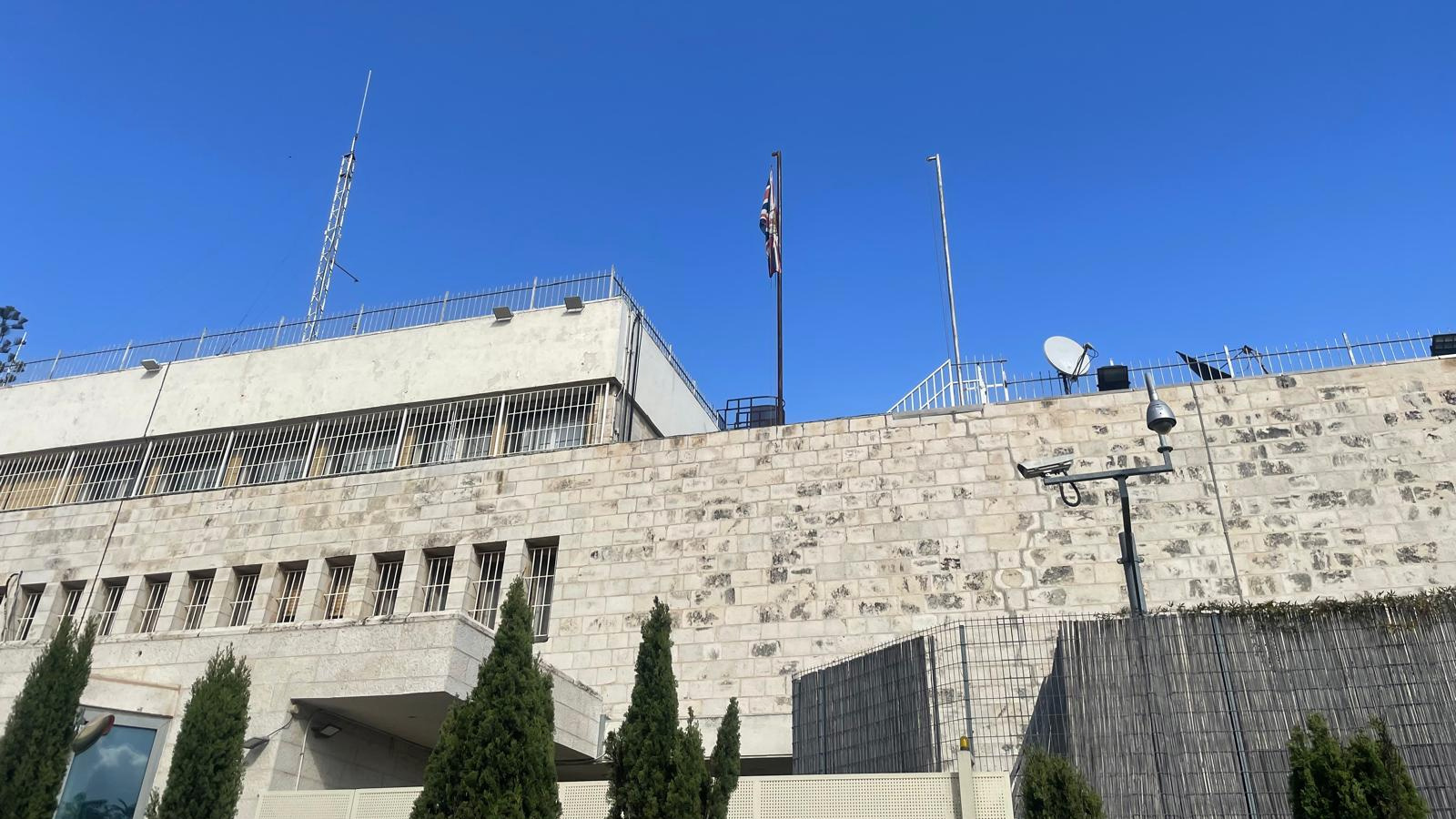
A decades-old diplomatic presence in occupied East Jerusalem is drawing to a close this week, after Israel ordered the United Kingdom’s 200-year-old consulate serving Palestine to shut its doors by a Thursday deadline, multiple sources confirmed to Middle East Eye. British Consul-General Helen Winterton and her team are expected to depart the mission, based in the Sheikh Jarrah neighborhood — an area where Palestinian residents have faced repeated displacement threats amid ongoing Israeli settlement expansion — and relocate their operations to Amman, Jordan, where they will continue work in exile with the hope of eventually returning.
The order to close the consulate was issued last month by Israeli Foreign Minister Gideon Saar, a retaliatory measure after the new UK Labour government banned all trade with Israeli settlements built illegally on occupied Palestinian territory. Under the terms of the order, once all British diplomatic staff exit occupied Palestinian territory, none will be permitted to re-enter without explicit Israeli government approval. Multiple insiders note the closure is likely permanent unless Israel’s current governing coalition is replaced in future elections.
While the exit of the top diplomatic leadership is confirmed, negotiations over the mission’s future remain ongoing, according to senior sources. A small skeleton crew could potentially remain on-site to maintain limited operations, though no final agreement has been reached. The imminent departure of Winterton puts an end to widespread speculation that the UK would choose to defy Israel’s order and keep the consulate operating against the deadline.
Earlier this week, Israeli media reported that the UK was preparing a reciprocal retaliatory measure, planning to expel Israeli diplomats and their families from London in response to the closure. The UK Foreign Office has declined to confirm or deny those reports, with a government spokesperson telling MEE that “we will not go into detail on live discussions about the future of the British Consulate General in Jerusalem. The protection and wellbeing of our staff is our priority.” Last week, British Foreign Secretary Ed Miliband noted that the government was “looking at all our options,” and stressed that UK officials have no desire to see the mission close.
“We do not want this to happen – because it would damage the very important work that we are doing helping people in those communities, including Palestinians,” Miliband said. “The consulate has been there for nearly 200 years, and this is a long-standing position that we have had.”
The UK’s decision is being closely watched by other European diplomatic missions based in East Jerusalem, including those of France and Spain, whose governments fear they could be targeted with similar expulsion orders if the UK complies with Israel’s demand.
Unlike the UK’s main embassy in Tel Aviv, which serves Israeli citizens and bilateral relations with the Israeli state, the East Jerusalem consulate has been the primary diplomatic link between the UK and Palestinian communities across Jerusalem, the West Bank, and Gaza for nearly two centuries. Multiple Palestinians told MEE the mission plays a unique role: it documents human rights abuses against Palestinians in occupied territory and reports those findings directly to the UK government, a function the Tel Aviv embassy has never filled.
Earlier this month, the new UK Labour government took a historic step, formally recognizing Israel’s occupation of Palestinian territory as illegal, aligning UK policy with the 2024 landmark advisory opinion issued by the International Court of Justice. That official recognition preceded the trade ban on settlement goods that prompted Israel’s retaliatory closure order.
The looming closure has drawn widespread criticism from across UK political and civic spheres. Former British Attorney General Dominic Grieve KC argued in a recent legal opinion that Israel’s order amounts to “an unlawful assertion of sovereignty over occupied Palestinian territory. Successive British governments have affirmed that Israel’s rights in East Jerusalem are limited to those of an occupying power.”
Emily Thornberry, chair of the UK Parliament’s influential Foreign Affairs Committee, told MEE: “I hope that Israel will not go through with the closure of a consulate which has served Britons and Palestinians since 1838. Britain should not allow Israel to do this.” Zack Polanski, leader of the UK Green Party, echoed that criticism, calling on the UK to defy the order. “East Jerusalem is illegally occupied Palestinian territory, and Israel has no sovereignty over it. The UK must ignore Israel’s order and keep the British Consulate open,” Polanski said. He added that closing the mission “would further isolate Palestinians and weaken Britain’s ability to engage with them directly.”
Over the weekend, special prayers for the consulate and its staff were held at East Jerusalem’s Anglican Cathedral, with a specific focus on the dozens of Palestinian local staff who are expected to lose their jobs if the consulate permanently closes. Richard Sewell, dean of St George’s College Jerusalem, called the impending closure a deliberate attack on Palestinian community life. “I am really disturbed by the prospect of the imminent closure of the British consulate. It is a further attack on the Palestinian community and will severely impact the UK’s relationship with them,” Sewell said. He also noted that the closure will disrupt services for UK nationals residing in East Jerusalem, as well as British pilgrims and tourists visiting the holy city.
When MEE journalists visited the consulate on Wednesday afternoon and asked the on-site security supervisor whether the consul-general had already departed, the supervisor declined to comment, saying only: “I am sorry, but I cannot give you any information.”