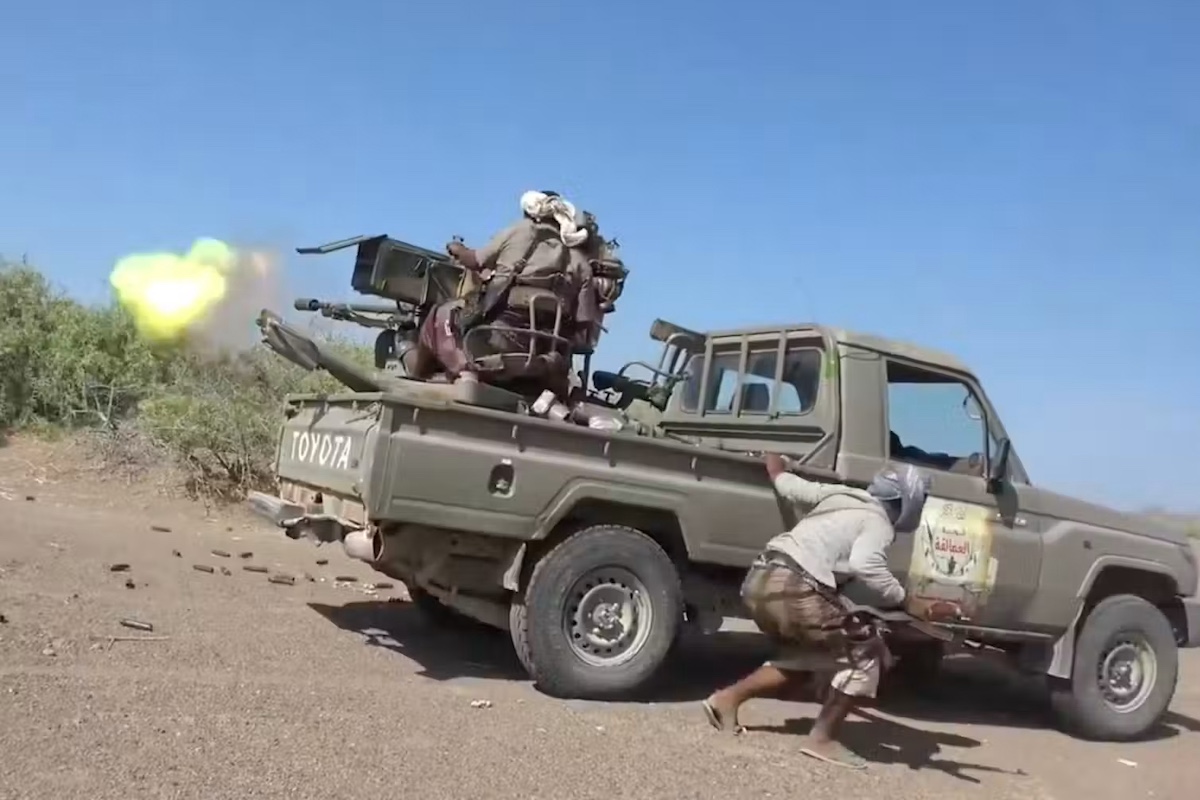
While high-profile tensions between Washington and Tehran have dominated global headlines in 202X, a rapidly intensifying conflict in Yemen between the Iran-aligned Houthi movement, the internationally recognized Yemeni government backed by Riyadh, and Saudi Arabia itself is emerging as a threat of equal consequence to regional stability and global energy markets. This long-simmering conflict has gained new momentum this year, amplified by overlapping geopolitical alignments that draw in major global powers and raise the risk of an uncontrolled escalation.
Yemen’s internal conflict carries layers of complexity that cannot be overstated, with violence deeply intertwined with broader regional rivalries between Iran and Saudi Arabia, as well as the ongoing standoff between the United States, Israel, and Iran over control of the Strait of Hormuz. The competing alliances in the conflict have divided major global powers: Iran provides military and political backing to the Houthis (officially named Ansar Allah, or Partisans of God), while Saudi Arabia supports Yemen’s internationally recognized governing body, the Presidential Leadership Council (PLC). The U.S. has aligned with its long-time de facto ally Saudi Arabia, while Russia and China stand alongside Iran. Most recently, Saudi regional allies Turkey and Pakistan have finalized plans to activate a newly signed mutual defense agreement, committing to deploy troops to defend Saudi territory if it comes under further Houthi attack.
With so many interconnected stakeholders holding competing interests, analysts warn the conflict could spiral outward rapidly, engulfing the entire Middle East and sending shockwaves through already strained global fuel supplies.
Against the backdrop of a stalemate in the direct U.S.-Iran standoff over the Strait of Hormuz – the critical chokepoint that previously carried 20% of the world’s daily oil and liquefied natural gas trade – the Houthis have stepped up their operations to support their Iranian backers. Holding control of roughly one-third of Yemen, including the capital Sanaa, the Houthi movement has consolidated its hold over another strategically vital waterway: the Bab el-Mandeb Strait, which links the Red Sea to the Gulf of Aden and the Indian Ocean. Since July, the group has made steady territorial gains across Yemen as it pushes to seize full control of the country, while launching repeated targeted attacks on Saudi oil infrastructure, commercial tankers, and King Khalid International Airport in Riyadh.
A recent Houthi attack has once again halted crude oil pumping through Saudi Arabia’s East-West Pipeline, a key export route Riyadh has relied on to ship oil via Bab el-Mandeb after the Strait of Hormuz was effectively closed to regular commercial traffic amid the U.S.-Iran standoff. In response, combined Yemeni and Saudi forces have launched a large-scale counteroffensive to retake territory held by the Houthis, bringing the country back to the brink of full-scale civil war and threatening to plunge Yemeni civilians into an unprecedented humanitarian catastrophe.
Riyadh has formally requested that Washington carry out direct airstrikes against Houthi positions, but U.S. President Donald Trump has declined to commit American troops to active combat, offering only support from U.S. intelligence and military advisors. Trump has made clear he has no interest in expanding the existing U.S.-Iran conflict and drawing the U.S. into another protracted Middle Eastern war, though the risk of a full-scale resumption of hostilities with Iran remains elevated. Observers also note that Trump is acutely aware of the impact of ongoing conflict on American consumers, who face soaring gasoline prices and mounting cost-of-living pressures. With U.S. midterm elections just one month away, Trump’s Republican Party is scrambling to shore up its support among voters, making new military entanglement a politically risky move.
With no direct U.S. military support on the table, Saudi Arabia has turned to its new security partners Turkey and Pakistan. For weeks, both countries had hesitated to commit to intervention, balancing their alliance with Saudi Arabia against the risk of alienating Iran and its major strategic partners Russia and China, but they finalized their commitment to deploy military forces this week.
The renewed outbreak of fighting has already inflicted devastating harm on Yemeni civilians: more than 800 people have been killed, 3,000 injured, and 158,000 displaced since hostilities escalated. This death toll comes on top of the hundreds of thousands of Yemenis who have died since the original civil war and Saudi-led intervention began in 2014–15, with many deaths caused not just by direct fighting, but by secondary crises including widespread hunger, preventable disease, and the total collapse of health infrastructure and basic services.
The worsening conflict in Yemen carries growing risks for the entire global economy. While the Strait of Hormuz remains largely closed to regular traffic due to widespread fears of attacks on commercial vessels, a small number of tankers have been able to transit the waterway either after reaching agreements with Iran’s newly established Persian Gulf Strait Authority or under the protection of U.S. naval escorts. U.S. Energy Secretary Chris Wright recently claimed that 13 million barrels of crude oil are passing through the strait daily, a figure Iranian officials have immediately disputed.
On October 4, Iranian Parliamentary Speaker Mohammad Bagher Ghalibaf reaffirmed that the strait will not fully reopen until the U.S. meets all of Iran’s core demands: a full ceasefire across all fronts, an end to the U.S. naval blockade of Iranian ports, and the unfreezing of billions of dollars in Iranian assets held abroad. Compounding this disruption, the Houthis announced a full blockade of Saudi ports in July and began targeting Saudi-linked commercial shipping in the Red Sea, a move that is expected to worsen already severe disruptions to global oil supplies.
At its core, this expanding, multi-dimensional crisis is rooted in the U.S.-Iran conflict. If Trump opts to escalate hostilities with Iran through the use of additional lethal force, Iranian officials have made clear they will retaliate aggressively, and have warned that U.S. Arab allies in the Persian Gulf could face far more severe targeting than in previous rounds of conflict. The entire regional situation remains a tinderbox, and only a de-escalation of tensions between Washington and Tehran, followed by a return to negotiated settlement, can prevent full-scale conflict. While a negotiated agreement remains a distant prospect at this stage, it is still within reach, argues emeritus professor of Middle Eastern Studies Amin Saikal of the Australian National University, the University of Western Australia, and Victoria University.
This analysis is republished from The Conversation under a Creative Commons license.