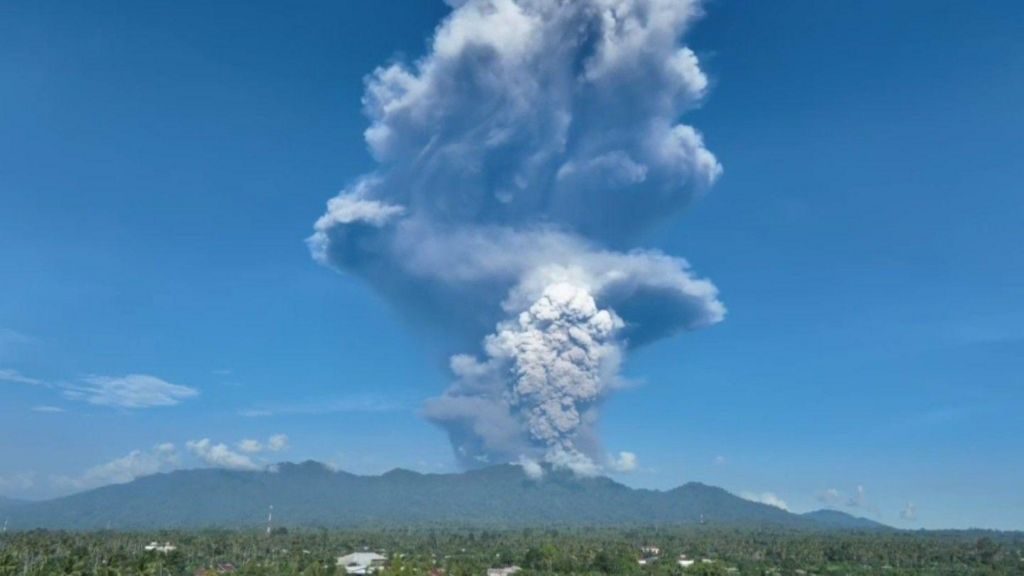
On a Friday morning in Indonesia, a sudden eruption of the active Mount Dukono volcano claimed three lives, turning a routine early morning hike into a fatal tragedy that has sparked new debates about public risk perception and enforcement of volcanic safety regulations.
The 1,335-meter volcano, located on Indonesia’s North Maluku island, erupted at 07:41 local time, sending a towering column of volcanic ash 10 kilometers into the sky. Footage captured from the scene shows thick plumes of ash and rocky debris continuing to spew from the volcano’s crater long after the initial blast. Among the hikers on the mountain that morning were 20 people who had ignored repeated official warnings against climbing the volcano: 18 Singaporean and Indonesian hikers, and two local porters. Three members of that group — two Singaporean citizens and one local resident from nearby Ternate — were killed by the eruption.
Search and rescue teams were deployed immediately to extract the remaining hikers. Most of the surviving group members were safely evacuated and transported to local hospitals to receive treatment for eruption-related injuries. The two porters from the original group stayed behind on the mountain to help rescuers navigate the terrain and locate the victims’ remains, which are trapped at higher elevations. As of Friday afternoon, body recovery efforts have been blocked by ongoing volcanic activity, rough, uneven terrain, and repeated explosive blasts from the crater. Aldy Salabia, a local resident assisting with rescue operations, told BBC Indonesian that from the team’s staging shelter, continuous ejection of ash and rock material was clearly visible.
Eyewitness accounts from other hikers on the mountain that morning have added context to the tragedy. A local guide who escaped unscathed with his two clients told reporters he had detected warning signs of an impending eruption days earlier. “When Dukono hasn’t erupted for a few days, you have to be careful,” he explained, noting that he spotted deep tremors just before the blast and immediately fled downslope with his guests. As he descended, he said, he saw dozens of other hikers still lingering at the summit — including one group at the edge of the crater itself, and another 50 meters away filming footage with a drone.
Mount Dukono has had more than 200 recorded eruptive events since March 2025, and has maintained a Level 2 alert status on Indonesia’s four-tier volcanic warning system for an extended period, a classification that signals elevated activity and requires strict caution. Since December 2024, Indonesian volcanic authorities have officially banned all tourism and climbing activity within a 4-kilometer radius of the main crater, citing constant risks of flying rock, ash fall, lava flows and sudden explosive eruptions. Officials say these warnings were widely shared across social media platforms and posted on large banners at all trail entrances, but many climbers continue to disregard the restrictions.
Indonesia’s national search and rescue agency, Barsanas, has launched an investigation into the incident, noting that initial reviews suggest possible negligence by tourism operators or individual guides who led groups up the mountain despite the known risks. “The government is continuing to gather information to establish a complete account of the incident,” a Barsanas spokesperson said.
Disaster experts say the tragedy exposes a growing, dangerous misperception of volcanic risk among tourists fueled by social media content. Dr Daryono, a member of the Indonesian Association of Disaster Experts, told the BBC that active volcanoes should never be treated as routine tourist destinations. “Dukono is a mountain with almost continuous eruptive activity, so any violation of the danger zone carries a fatal risk,” he said. He added that social media has warped public understanding of the danger: users only see content from influencers and climbers who successfully summit and return unharmed, while the constant, lethal risks of volcanic activity are pushed out of public view. “The real danger remains and could emerge at any time in the form of ejections of incandescent material, thick ashfall, volcanic gas, or sudden explosive eruptions,” he warned.