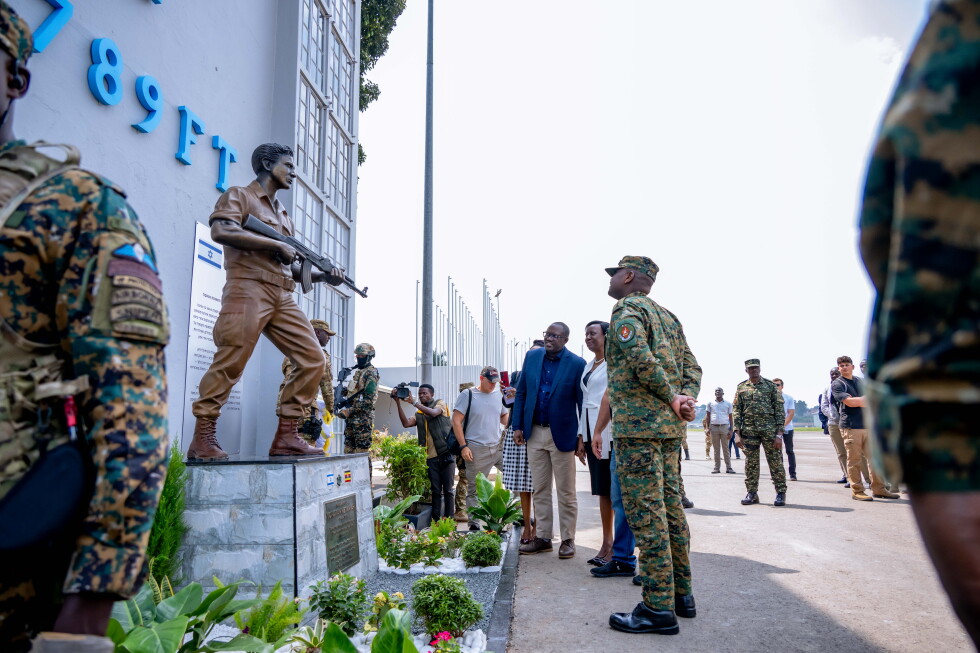
Nearly half a century after one of the most audacious hostage rescue missions in modern military history played out on Ugandan soil, Uganda’s military has dedicated a permanent memorial to the fallen Israeli commando who led the operation: Yonatan Netanyahu, older brother of current Israeli Prime Minister Benjamin Netanyahu. The bronze statue, which depicts the lieutenant colonel holding an assault rifle in a combat-ready stance, was formally unveiled Saturday by Gen. Muhoozi Kainerugaba, Uganda’s top military commander and the eldest son of long-serving President Yoweri Museveni, widely viewed as his likely political successor. Kainerugaba, who personally commissioned the monument, used the opening ceremony to honor the fallen soldier’s extraordinary courage and commitment. The memorial stands on the grounds of Entebbe International Airport, the exact site where the 1976 raid unfolded, and the event drew a crowd that included Israeli nationals based in the region, among them local businessman Barak Orland. The story of the Entebbe raid began when pro-Palestinian hijackers — two Palestinian militants and two German collaborators — seized an Air France passenger flight carrying 106 people, diverting it to Entebbe Airport. The hijackers separated Jewish and Israeli passengers from the rest of the group and issued an ultimatum: they would execute the hostages unless Israel released dozens of imprisoned Palestinian militants within a week. Over seven days of stalled negotiations, Israeli military planners secretly prepared a high-risk rescue mission that would go down in military legend. On the night of July 3, 1976, Israeli commandos landed at Entebbe, stormed the terminal, and engaged hijackers and responding Ugandan forces. In the under-an-hour operation, Yonatan Netanyahu, the raid’s commander, was fatally struck by enemy gunfire — the only Israeli commando killed in the mission. Just three hostages died in the crossfire, and the vast majority of captives were brought to safety. Dozens of Ugandan soldiers were also killed during the clash. At the time of the 1976 raid, Uganda was ruled by dictator Idi Amin, who had cut diplomatic ties with Israel and openly supported the Palestinian independence movement. Israel’s successful rescue severely humiliated Amin, and the operation drew sharp criticism from the Organization of African Unity, the precursor to the modern African Union, which condemned the raid as a violation of Ugandan national sovereignty. For Israel, however, the mission has become a defining moment in the nation’s modern history, widely celebrated as one of the most extraordinary military achievements in its history. Benjamin Netanyahu has repeatedly stated that his brother’s death during the raid fundamentally altered the trajectory of his own life and political career. In his remarks at the unveiling, Kainerugaba emphasized the enduring meaning of the memorial beyond just remembrance. “Today, this memorial stands not only in remembrance of a distinguished soldier, but also as a tribute to the enduring values he embodied: courage in the face of danger, unwavering commitment to protecting innocent lives, and steadfast devotion to duty,” he told attendees. Today, relations between the Ugandan government and Israel are officially cordial, with President Museveni having repeatedly stated his public support for a two-state solution to resolve the long-running Israeli-Palestinian conflict. The unveiling of the monument marks a striking shift from the diplomatic tensions that surrounded the original raid, representing a public acknowledgment of the fallen soldier’s sacrifice decades after the historic mission.
分类: world
-
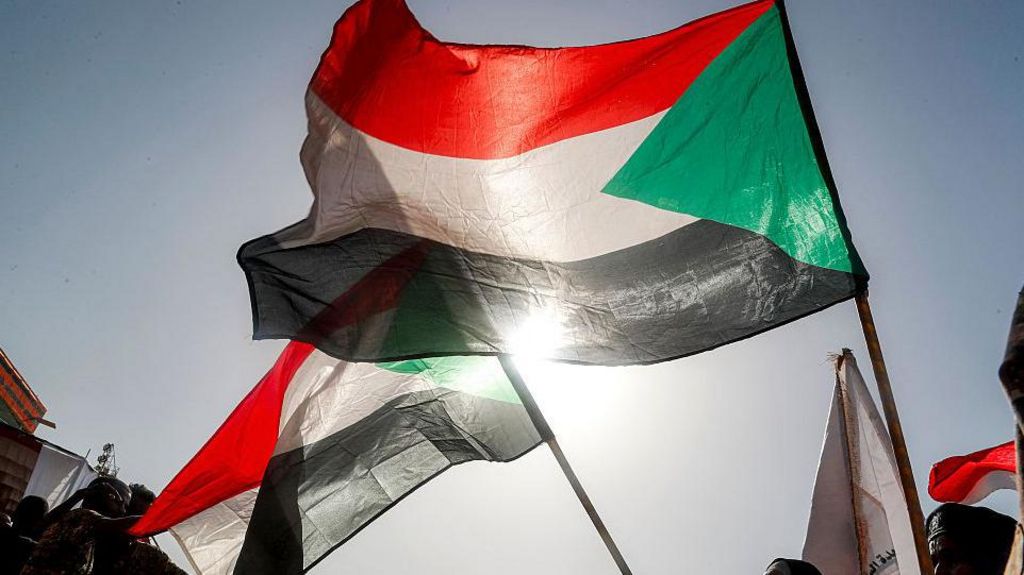
Sudan army drone strike on court session kills 35, rights group says
Three years into Sudan’s devastating civil conflict between the national army and the paramilitary Rapid Support Forces (RSF), a deadly drone attack has left dozens dead and wounded in the restive Darfur region, amplifying global concerns over escalating violence against civilian populations.
A local Sudanese human rights monitoring group, the Emergency Lawyers Group, has confirmed that 35 people lost their lives in the Sunday afternoon strike, which hit an open-air traditional court session in Ghara al-Zawiya village. The village is currently under RSF control, a faction that holds sway over most of Darfur, Sudan’s western territory. Dozens of additional civilians and attendees were injured in the attack, and as of Monday, the Sudanese army has not issued any public statement acknowledging or responding to the incident.
Witnesses to the strike shared chilling details with Agence France-Presse, confirming that the informal court gathering was held under a tree, with local community leaders in attendance. Among those killed were four prominent tribal leaders and two RSF commanders, the witness reported. Local outlet Darfur 24, a privately owned regional news site, cited a resident who said two unmanned aerial vehicles circled the settlement before launching at least four missiles into the gathering.
The Emergency Lawyers Group has issued an official statement condemning the attack, calling for an immediate independent investigation into the strike. The organization emphasized that deliberately targeting civilian gatherings and community infrastructure constitutes a severe violation of established international humanitarian law. It also drew attention to a worrying growing trend in the conflict: the increasing use of drone strikes to target populated civilian areas and public gatherings, a shift that has drastically raised safety risks for millions of Sudanese civilians trapped in crossfire.
The current conflict, which broke out in April 2023 between the Sudanese Armed Forces and the RSF, has already been marked by widespread atrocities against civilian populations on both sides. The RSF has faced repeated accusations of war crimes and mass atrocities, including large-scale drone strikes targeting civilian communities over the course of the three-year war. A United Nations fact-finding mission concluded last year that the RSF’s prolonged siege and assault on el-Fasher, Darfur’s largest remaining major city, carried all the identifying characteristics of genocide—a finding the RSF has repeatedly denied.
As the army continues to mobilize its supporters amid ongoing frontline clashes across the country, the humanitarian catastrophe in Sudan shows no sign of abating. The conflict has killed more than tens of thousands of people to date, and forced millions more to flee their homes as internally displaced persons or cross-border refugees into neighboring countries.
-

Singapore bans 2 Massive Attack members after pro-Palestine display at concert
In a diplomatic and social controversy that has sparked international debate over free expression versus domestic social cohesion, Singapore has permanently barred two founding members of the iconic British trip-hop group Massive Attack from reentering the country, following an on-stage pro-Palestine demonstration during a late July concert in the city-state.
Singaporean police announced in an official statement that the two musicians were investigated over actions that took place during their sold-out July 29 performance, which included unfurling a Palestinian flag on stage and one member chanting the slogan “Free Palestine” for the crowd to hear. After completing their inquiry, law enforcement officials issued the pair formal stern warnings and added them to the country’s entry blacklist.
Singaporean police emphasized that authorities view any action that could threaten the nation’s carefully maintained racial and religious harmony with severe seriousness. The statement called on all visitors and local residents, including foreign nationals performing in the country, to avoid bringing divisive foreign political conflicts into Singapore’s public sphere, noting that such actions can erode national social cohesion and violate the country’s commitment to the rule of law.
While police declined to publicly name the two banned individuals, video footage shared by local Singaporean media outlets confirms the pair are the band’s two core founders: Robert “3D” Del Naja and Grant “Daddy G” Marshall.
In an official response posted to the band’s Instagram account shortly after the ban was announced, Massive Attack representatives said the group was caught off guard and deeply disappointed by the Singaporean government’s decision.
The band explained that long before their formal set began and after the performance concluded, large portions of the concert audience chanted “Free Palestine” spontaneously. The group said they had no prior expectation that displaying the flag in solidarity with fans would run afoul of any Singaporean regulations, but added that they remain proud of the impromptu collective expression of solidarity with the Palestinian cause alongside the audience.
Massive Attack concluded its statement by calling on the Singaporean government to respect its own citizens’ right to express their conscientious beliefs without the threat of state enforcement.
-
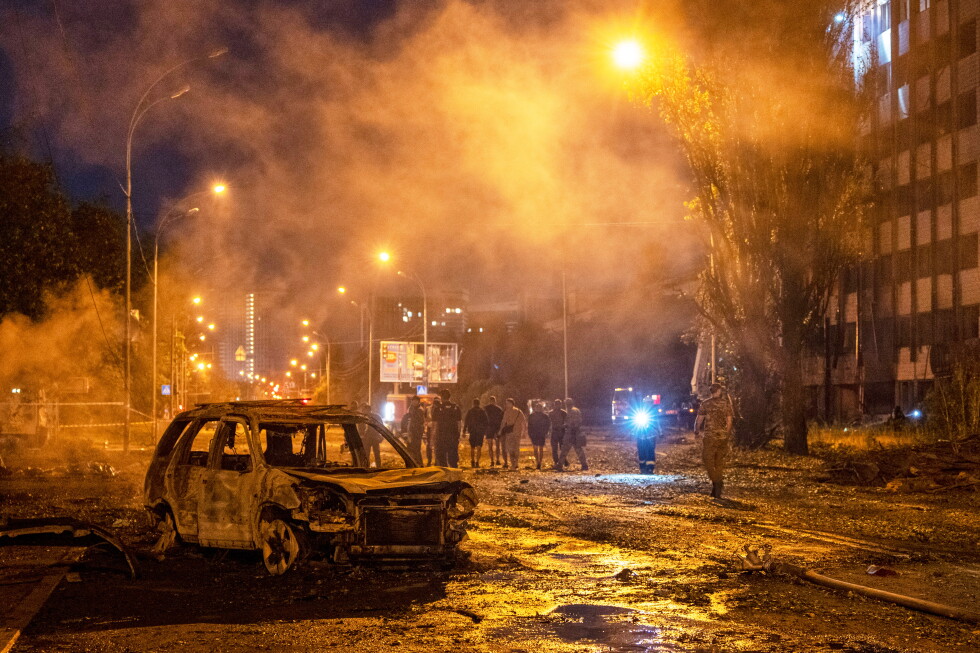
Russian planes fire a salvo of glide bombs at a southern Ukraine city, killing 1 and wounding dozens
A devastating aerial assault on residential neighborhoods in southern Ukraine’s Zaporizhzhia has left one civilian dead and dozens injured, marking the latest in a years-long pattern of Russian use of largely uncountered heavy weaponry against Ukrainian population centers, regional officials confirmed Monday.
Over a 90-minute window Sunday evening, Russian warplanes deployed eight powerful guided glide bombs across four districts of the city, Zaporizhzhia regional governor Ivan Fedorov announced. The attack killed a 71-year-old woman and left 31 people wounded, among them a 16-year-old girl. At least 22 multi-unit apartment buildings suffered significant damage in the strike, adding to the massive toll of civilian infrastructure destruction from Russia’s full-scale invasion, which entered its fifth year this year.
Glide bombs, a weapon Russia has relied on heavily since the beginning of its invasion, are modified Soviet-era munitions fitted with modern guidance systems that give them increased accuracy. Each weapon can carry up to 3,000 kilograms of high explosive, enough to leave massive craters and level entire city blocks. Critically, Ukraine currently lacks operational defense systems capable of reliably intercepting these weapons, leaving civilian communities vulnerable to repeated devastating strikes.
The deadly assault came on the heels of a wider wave of long-range Russian attacks across Ukraine that unfolded over the weekend and into Monday. In an overnight barrage from Sunday to Monday, Russia launched 181 long-range strike drones at targets across the country, Ukraine’s Air Force reported. While Ukrainian air defense teams managed to jam and shoot down 163 of the unmanned aerial vehicles, 18 penetrated defenses, damaging infrastructure at 13 separate locations.
The continued onslaught of ballistic missile and glide bomb attacks has pushed Ukrainian President Volodymyr Zelenskyy to issue another urgent appeal to Western allies for additional air defense capabilities, specifically U.S.-manufactured Patriot systems. The Patriot platform is the only weapons system currently in Ukraine’s arsenal that can reliably intercept Russian ballistic missiles, but stockpiles of Patriot interceptors have been stretched dangerously thin globally amid ongoing conflicts including tensions in the Middle East tied to the Iran war.
“The world has Patriot missiles. What matters now is for our partners to make the political decision to provide the necessary packages,” Zelenskyy stated in a social media post Monday. “The United States knows what we need. Europe knows what we need. Anti-ballistic missiles must protect people — not sit in stockpiles.”
The plea comes amid uncertainty over U.S. support for Ukraine’s defense industrial capacity. Last week, U.S. President Donald Trump walked back an earlier indication that he would approve a license to allow Ukraine to produce its own Patriot interceptors domestically, telling reporters Friday the issue remains under active review and no final decision has been reached.
In response to this delay, Zelenskyy has floated an alternative proposal: that tech entrepreneur Elon Musk allow Ukraine to use his Starlink satellite internet network to enable targeting of Russian ballistic missile launch sites located inside Russian territory. As of Monday, Ukrainian officials have not publicly confirmed whether the plan is moving forward.
Russian officials have meanwhile reported their own set of alleged strikes and Ukrainian counterattacks over the same 24-hour period. The Russian Defense Ministry claimed its forces hit four bulk cargo ships carrying military supplies for Ukraine, three of which were located in Black Sea waters and one docked in the Ukrainian port of Mykolaiv, though no independent verification of the claim has been provided.
Russian-installed authorities in Crimea, the Ukrainian peninsula illegally annexed by Russia in 2014, said three people were killed and two wounded in an overnight Ukrainian attack on the region. No further details on the strike were released by the Kremlin-appointed head of Crimea, Sergei Aksyonov.
Ukrainian drone strikes have also continued targeting Russian logistics infrastructure, hitting a key warehouse operated by Wildberries, Russia’s largest e-commerce retailer, in the Vladimir region, located east of Moscow. The strike sparked a large fire at the facility, the company confirmed Monday. Three people were injured in the attack, regional governor Alexander Avdeyev said. This latest incident is part of a sustained Ukrainian campaign that has hit more than a dozen Wildberries distribution hubs across Russia, causing significant disruption to the company’s national operations.
On Monday, the Russian Defense Ministry said its air defense forces intercepted 131 Ukrainian drones overnight across multiple Russian regions, annexed Crimea, and the Black Sea, matching the scale of the largest recent cross-border drone offensives by Ukraine.
This ongoing cycle of attack and counterattack underscores the continued intensity of fighting across the front lines and deep behind enemy lines more than four years after Russia launched its full-scale invasion of Ukraine.
-

Africa takes lead in BRI investment, report says
Against a backdrop of shifting global trade flows and widespread economic uncertainty, Africa has cemented its status as the top destination for new investment under the Belt and Road Initiative (BRI), new collaborative research shows. In the first half of 2026, the continent attracted $33.5 billion in Chinese BRI investment, marking a staggering 254% jump from the same period a year earlier, with growth fueled by rapidly expanding activity in manufacturing, clean energy and critical infrastructure development.
The report, produced jointly by Fudan University’s Green Finance & Development Center in Shanghai and the University of Queensland Business School in Australia, breaks down the key drivers of Africa’s outperformance against other global regions. Among African nations, Ethiopia recorded the fastest growth in BRI-linked engagement of any country worldwide, pulling in more than $18.9 billion in total investment in the first half of the year.
The East African nation secured the world’s largest single allocation of Chinese energy investment through a landmark green energy partnership with China’s Ming Yang Smart Energy Group, valued at over $14 billion. The mega-project is set to dramatically accelerate Ethiopia’s transition to a low-carbon green economy. Its first phase will deliver an 8.4-gigawatt renewable energy facility combining wind and solar power capacity, representing a $7.5 billion investment. For the second phase, Ming Yang Smart Energy will commit an additional $7.3 billion to develop green ammonia production facilities, as well as local manufacturing for electric transmission infrastructure and wind turbine components.
Beyond expanding Ethiopia’s renewable energy capacity, the investment is projected to deliver broad-based economic benefits: catalyzing national industrial development, generating thousands of local jobs, facilitating cross-border technology transfer, and strengthening the country’s foreign exchange earnings.
Egypt also saw a dramatic surge in announced Chinese BRI investment in the first half of 2026, hitting $12.2 billion for the period. China’s Xinfeng Steel is leading a $10 billion project to build a integrated industrial and steel manufacturing complex in Egypt’s Ain Sokhna industrial zone, which will specialize in producing high-grade automotive steel and other large-format industrial steel products for regional and global markets.
Since the BRI launched in 2013, the initiative has driven transformative progress across Africa, expanding critical infrastructure networks, boosting intra-regional and international trade, and unlocking billions in new foreign investment. Flagship projects across the continent continue to deliver sustained positive spillovers for local economic and social development.
On a global scale, the first half of 2026 marked the highest level of overall BRI activity recorded for any opening half of the year since the initiative’s founding. Total global BRI investment hit $49.8 billion, with an additional $76.5 billion in signed construction contracts.
Energy investment remained the primary engine of Chinese BRI engagement worldwide, with total energy-related investment reaching $36.3 billion in H1 2026. This figure is nearly twice the average first-half total recorded since 2013, and only exceeded by the energy investment total recorded in 2025. Notably, investment in green energy reached an all-time record: $14.3 billion was committed to wind, solar, and waste-to-energy projects, alongside $5.3 billion in new hydropower investment. Overall, Chinese investment in green energy and hydropower more than doubled year-on-year in the first half of 2026.
Cumulatively, total BRI activity has surpassed $1.5 trillion since the initiative launched, split between $926 billion in construction contracts and $614 billion in direct investment.
Christoph Nedopil Wang, founding director of the Green Finance & Development Center, noted that BRI engagement is on track to remain strong for the remainder of 2026, even amid widespread global economic uncertainty driven by U.S. trade policy shifts and fossil fuel market volatility tied to geopolitical tensions around the Strait of Hormuz.“With strong engagement in capital-intensive sectors such as mining and manufacturing, and a growing capacity to scale up investment in energy and digital infrastructure like data centers, I expect average deal sizes to remain large going forward,” Wang said.
-
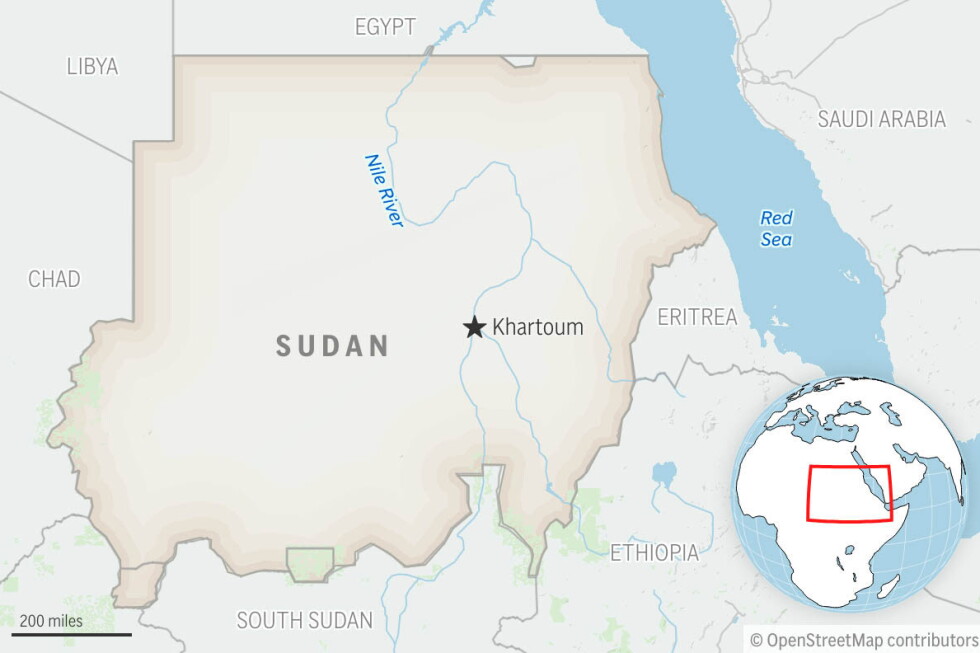
Sudanese army drone strike hits Darfur civil court, killing at least 35, rights group says
CAIRO – An independent Sudanese human rights documentation group has confirmed that a drone strike carried out by the Sudanese army on a civilian judicial facility in the country’s restive Darfur region has left at least 35 people dead. In a public statement released Sunday afternoon, Emergency Lawyers — the organization tracking atrocities committed amid Sudan’s ongoing civil conflict — said the attack targeted the main headquarters of the civil court in Al-Zawiya Gara, a village located in North Darfur State. The group emphasized that the targeted site is a clearly marked civilian infrastructure that serves core judicial and community functions for the local population.
The rights group stressed in its statement that deliberately launching strikes against civilian people and civilian infrastructure amounts to a severe breach of established international humanitarian law. It has formally called for an independent, full-scale investigation into the incident to hold all responsible parties accountable.
Sudan’s ongoing full-scale internal conflict broke out in April 2023, pitting the country’s official military against the Rapid Support Forces, a powerful paramilitary group. Data from the Armed Conflict Location & Event Data Project, an independent conflict monitoring initiative, shows the fighting has already claimed at least 59,000 lives. International aid organizations working in the region warn this official tally is a significant undercount, and note the actual death toll could be multiple times higher than the recorded figure.
Drone strikes have emerged as a defining feature of the 18-month-long war, with both warring factions routinely carrying out aerial attacks across the country. According to United Nations analysis, drone attacks have become the single leading cause of fatalities in Sudan, responsible for roughly 80% of all civilian deaths recorded in the first four months of 2024. As of Monday, the Sudanese military had not issued any response to repeated requests for comment on the Al-Zawiya Gara strike.
-
Prime minister visits quake-hit southern Japan as cleanup begins in intense heat
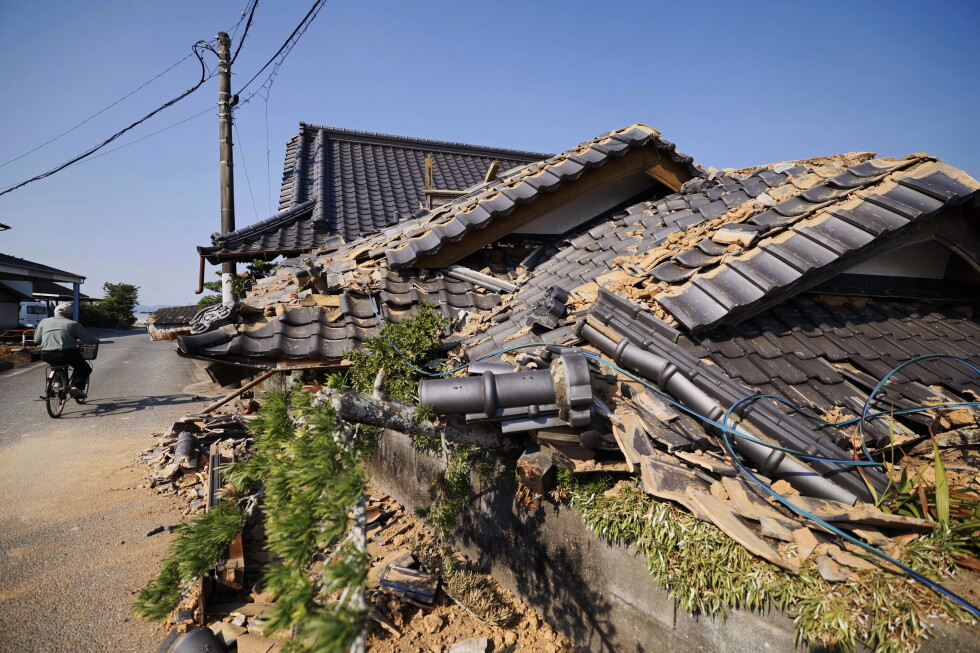
One week after a powerful magnitude 7.1 earthquake shook Japan’s southwestern Kumamoto Prefecture on the island of Kyushu, the disaster-battered region is facing a cascading series of new crises: sweltering near-40°C heat, critical shortages of basic supplies, and growing public anger over missteps from both political leaders and a local business.
As of Monday, prefectural officials confirmed the earthquake’s death toll has reached 38. Among those fatalities is one resident who died of apparent heat stroke while sheltering in a vehicle amid the ongoing high temperatures, and another victim whose cause of death is still undergoing official investigation. An additional 114 people across the prefecture have been confirmed injured, with infrastructure damage widespread: official data shows 700 residential properties have been completely destroyed, and more than 11,300 other buildings have sustained varying degrees of damage.
In communities across the quake zone, residents have begun the slow first steps of recovery: stacking mounds of splintered debris, broken household furniture and water- or impact-damaged appliances on curbs for municipal collection crews. In the smaller towns of Uki and Hikawa, construction crews have broken ground on the first batches of temporary housing for residents left homeless by the disaster.
But recovery efforts are being severely hampered by extreme weather and crippling supply shortages. The Japan Meteorological Agency forecast that temperatures would climb as high as 35°C to 40°C (104°F) across the region on Monday, and more than 46,000 households remain cut off from running water. Shortages of fuel for generators and vehicles have also been widely reported, leaving communities without reliable power for cooling. As of Monday, more than 8,500 displaced people are still staying in overcrowded emergency shelters converted from public facilities including community centers, school gymnasiums and classrooms, and the vast majority of these shelters lack working air conditioning. Other displaced residents have been forced to sleep in uncooled vehicles in public parking lots and parks, or camp outside the ruins of their damaged homes.
Disaster experts have long warned that this combination of overcrowding, insufficient cooling, poor sanitation and limited privacy creates deadly health risks for displaced populations following major natural disasters. The death of a heat stroke victim in a shelter vehicle has already amplified fears that more lives could be lost to heat-related illness, compounding the earthquake’s initial death toll.
On Monday, Japanese Prime Minister Sanae Takaichi made her first visit to the quake-hit region since the disaster struck. However, the trip quickly sparked public backlash: Takaichi toured one of the area’s best-resourced shelters, which offers residents cardboard beds, privacy partitions and full air conditioning. Critics on Japanese social media quickly argued that the carefully selected visit did not reflect the grim reality facing most displaced people in the prefecture, and that the prime minister’s trip amounted to performative politics that ignored the scale of the crisis.
A separate controversy has also emerged surrounding the deaths of two employees at a local general store inside the collapsed Aeon Mall in Kashima. Officials confirmed that an explosion, believed to be caused by a gas leak that followed the initial earthquake, killed the pair after roughly 3,000 shoppers had already been evacuated to a nearby parking lot. Seven total deaths were reported at the mall, with rescuers recovering seven bodies and pulling five survivors from the rubble.
The store’s operator, local firm Habita, has confirmed that it instructed the two employees to re-enter the damaged shopping mall after the initial quake to retrieve sales proceeds and lock them in a safe. On Sunday, two Habita executives attended the wake of 22-year-old Kurumi Otake, one of the two dead employees, to offer a formal apology to her family. “I wish someone had stopped her,” Otake’s mother told reporters through tears, after meeting with the executives. “My daughter is not coming back.”
-
Top US admiral warns against coercion, says no nation will dominate Indo-Pacific
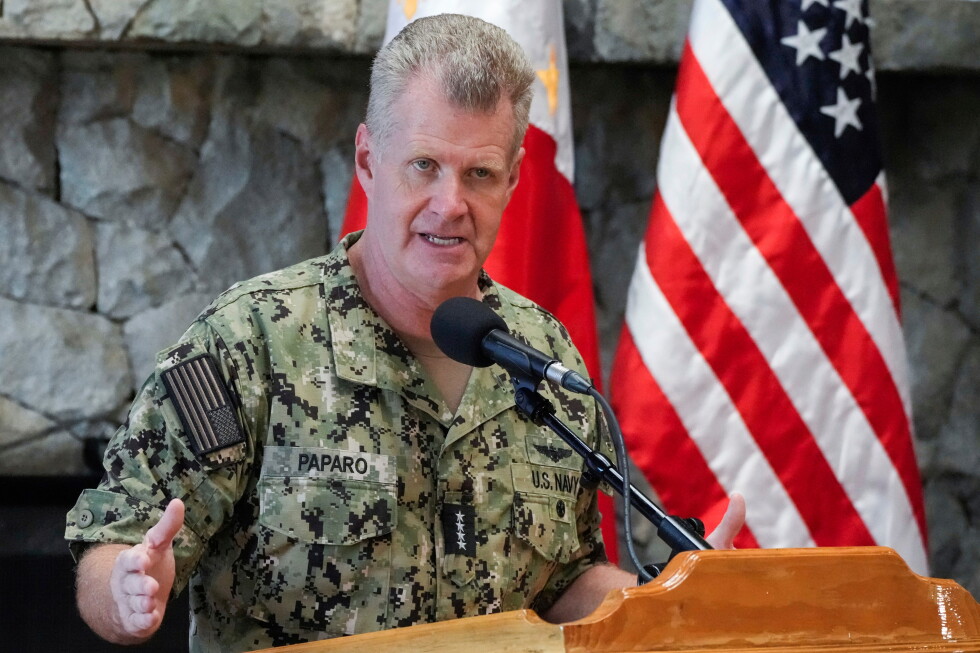
At a regional security conference hosted in Kuala Lumpur, Malaysia by U.S. Pacific Command on Monday, the leader of the U.S. military’s Indo-Pacific command delivered a stark warning that coercive behavior from Beijing and other global actors poses growing threats to Indo-Pacific stability, stressing that Washington will never permit a single power to seize control of the strategic region.
Admiral Samuel Paparo, commander of U.S. Indo-Pacific Command, spoke via video link to the assembled delegates, arguing that some actors are leveraging manufactured claims of legitimacy to enable intimidation and pressure against neighboring states. He drew a sharp conceptual distinction for the current geopolitical moment: “That’s not the rule of law. That’s the rule by law. That distinction between law as a tool of order versus law as a weapon of raw power, is the defining fault line of our time.”
Paparo’s comments arrive against a backdrop of sustained heightened tensions in the South China Sea, where China’s expansive territorial and maritime claims overlap with competing claims from multiple Southeast Asian coastal nations. The Philippines has emerged as the primary site of recent standoffs between Beijing and a regional claimant, with repeated confrontations between Chinese and Philippine maritime vessels centered on a contested shoal. Manila has formally accused Chinese crews of carrying out dangerous navigation maneuvers, deploying water cannons against Philippine vessels, and repeatedly attempting to block government resupply missions to Filipino personnel in the disputed area. China has outright rejected all these accusations, and continues to assert its full territorial sovereignty over the contested waterway.
The United States has repeatedly maintained that it does not take formal sides in the overlapping sovereignty claims in the South China Sea, but affirms its unwavering support for freedom of navigation, adherence to international law, and the right of all nations to operate in accordance with their recognized legal rights. Paparo underlined that open sea access, collective maritime security, and unobstructed global commerce form the foundation of lasting regional stability. He added that peaceful negotiation of disputes and universal respect for national sovereignty are non-negotiable requirements to protect the existing rules-based order in the Indo-Pacific.
“The United States is clear-eyed about the complex security environment in this region. Our posture and our intent are well defined. The United States is deterring China through strength, not through confrontation,” Paparo stated. “We will not let any nation dominate this region or sweep away the hard-fought sovereign rights of independent states.”
The U.S. commander further noted that the Indo-Pacific remains the central global hub of geopolitical and economic activity, but rising instability and evolving security challenges have made closer coordination between U.S. allies and regional partners more critical than ever before.
Opening remarks earlier in the conference came from Philippine Defense Secretary Gilberto Teodoro, who pledged that Manila would continue to resist and push back against what he framed as Chinese aggression in the region. Speaking to reporters after his address, Teodoro expanded on his concerns, noting that Philippine anxiety over China’s actions extends far beyond its activities in the South China Sea. He pointed to Beijing’s recent test of a ballistic missile launched into the Pacific Ocean as clear evidence of China’s expanding regional reach and growing military footprint. “China is everywhere … this is a matter of concern,” he added.
On the sidelines of the security gathering, Association of Southeast Asian Nations (ASEAN) Secretary-General Kao Kim Hourn offered a more optimistic update on long-running negotiations between ASEAN member states and China over a binding code of conduct to govern interactions in the South China Sea and de-escalate long-running tensions. According to Kao, talks have advanced dramatically in recent months, with negotiators now far closer to finalizing the text than ever before. “The pace has picked up dramatically and I think we are much closer to finalizing the code of conduct,” Kao said. “I have full confidence that we will get it done within this year.”
-
Nauru, the world’s third-smallest country, changes its name to Naoero
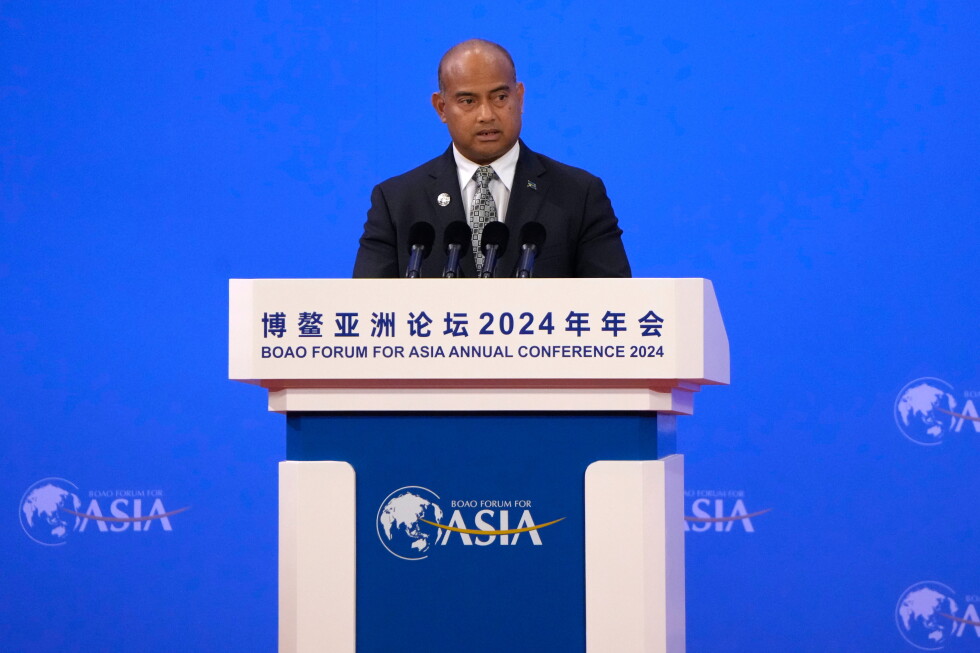
WELLINGTON, New Zealand — In a landmark step toward reclaiming its Indigenous cultural heritage and distancing itself from colonial-era naming conventions, the small South Pacific island nation previously known internationally as Nauru has formally adopted the traditional name Republic of Naoero, the country’s president has confirmed. The change aligns the nation’s international title with the spelling and pronunciation used in its Indigenous language, bringing a years-long effort to correct a colonial naming compromise to a successful close.
Per the new designation, the country’s two-letter international code will shift from NRU to NRO, while its citizens will be identified as dei-Naoero, replacing the previous colonial-era term Nauruan. Phonetically, the previous international pronunciation was commonly rendered as “Now-roo” by global audiences, while the traditional Naoero is pronounced “Now-ero.”
In an official statement published to the government’s Facebook page Thursday, administration officials explained the change returns the remote atoll nation to its original, pre-colonial identity. From the early 20th century, the country was labeled Nauru for international use not as a reflection of local preference, but because colonizers found the traditional Indigenous name too difficult to pronounce, a choice made purely for foreign convenience rather than respect for local culture. President David Adeang first laid out the proposal to parliament in January, framing the amendment as a long-overdue act of respect for the nation’s roots.
“This proposed change seeks to more faithfully honor our nation’s heritage, our language, and our identity,” Adeang said in his January address to lawmakers. The constitutional amendment required two rounds of parliamentary approval, both of which it has now secured, though formal official updating of the national constitution has not yet been publicly confirmed.
Naoero, home to roughly 12,000 residents, ranks as the world’s third least populous sovereign state, trailing only Vatican City and neighboring Tuvalu. The tiny coral limestone atoll has a long history of foreign domination: it was first colonized by Germany in the late 19th century, then placed under Australian administration after World War I, before finally gaining full independence as a republic in 1968.
In the decades following independence, the nation faced severe economic instability after decades of intensive phosphate mining generated extreme wealth for the small state in the 1970s, before the industry collapsed entirely in the 1990s, pushing the country to the edge of economic collapse. Today, Naoero faces an even larger existential threat: it ranks among the nations most vulnerable to sea level rise driven by anthropogenic climate change, prompting its government to launch a paid citizenship-by-investment program to raise funds required to relocate communities and infrastructure inland as ocean waters encroach on coastal areas.
Adeang described the name change as “the beginning of renewed national pride” in his recent public announcement of the change. When parliament initially approved the shift in May, the president had initially scheduled a public referendum to confirm the change. But the government announced last week that after “extensive discussions” across communities and political bodies, lawmakers concluded a public vote was unnecessary. The administration noted in its statement that the traditional name Naoero has never been absent from national life, and the change simply formalizes what already exists for the country’s people.
“While a referendum is intended to determine the will of the people, the name Naoero has never been lost, but rather waiting to be fully embraced,” the statement read. “The designation is already the identity of the people, is on the national coat of arms, and spoken in the community; and importantly is allowed by the Constitution.”
Naoero’s decision to revert to its traditional name makes it the latest sovereign state to distance itself from colonial naming practices in recent years. In 2018, the southern African nation formerly known as Swaziland similarly reverted to its pre-colonial title Eswatini. In 2022, Turkey formally requested the United Nations and global bodies recognize its domestic name Türkiye as the country’s official international title, a shift also rooted in reclaiming national identity.
The change will require updating the naming of Naoero’s registered national aircraft and civilian ships, and the government has already begun outreach to secure formal recognition from foreign governments and international institutions. Remarkably, the United Nations officially updated its records to reflect the new name in June, shortly after the government submitted the formal request. As of this report, the foreign ministries of Australia and New Zealand, as well as the U.S. and Chinese embassies accredited to the Pacific region, have already updated their official websites to use the new title Republic of Naoero.
-
Survivors recall blasts before deadly Indonesian ferry fire
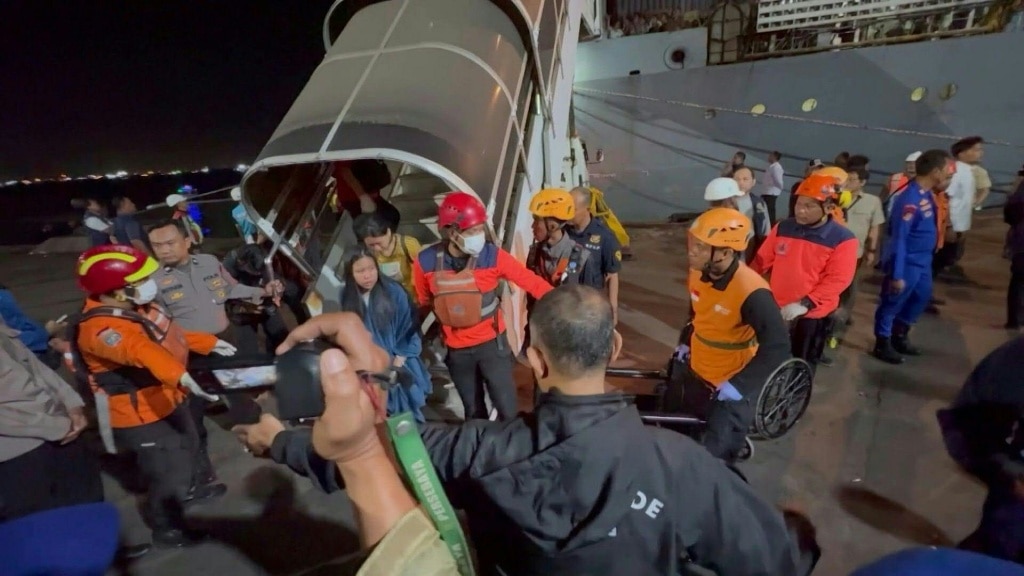
On Sunday morning, a passenger ferry traveling from Surabaya, Indonesia’s second-largest urban center, to Makassar on Sulawesi Island caught fire, resulting in at least five confirmed deaths and a still-unclear number of missing passengers, with survivors recalling multiple loud explosions moments before the blaze broke out. More than a day after the disaster, search and rescue teams continue to comb the waters around the incident site, which lies approximately six hours by sea from the port of Surabaya.
Inconsistent official counts have added confusion to the emergency response effort. According to the head of Indonesia’s national search and rescue agency, Nanang Sigit, the vessel carried 236 passengers and crew when it departed port. As of Monday, he confirmed that 229 people had been rescued alive, five bodies had been recovered, and just two people remained unaccounted for, a figure that officials are still cross-checking with the ferry’s operator. However, these numbers differ sharply from earlier reports: on Sunday, officials cited a total passenger manifest of 271 people, with 41 reported missing. East Java police official Arman Asmara Syarifuddin also gave a conflicting count Monday, stating that roughly 28 people are still missing. The root cause of the major discrepancies in official figures has not been explained to date.
Survivors rescued and brought back to Surabaya have shared harrowing accounts of the disaster. Muhammad Abdul Karim, one of the passengers rescued after seven hours adrift at sea, told reporters that the fire broke out as many passengers were eating their morning breakfast. “Initially, the smoke entered the information room, the sleeping quarters. And then explosions happened,” he explained. The blaze started in the stern section of the ferry, sending panicked passengers rushing toward the bow, where crews distributed life jackets to everyone on board. As the flames spread rapidly toward the front of the vessel, Karim jumped into the sea alongside an elderly passenger, and looked back to see the fire engulf nearly the entire ship. “The waves were big and the ship coming to save us was quite far. Those were our fears when we were about to jump,” Karim said, adding that he did not spot any usable lifeboats on the ferry during the emergency.
Another survivor, 36-year-old Bambang Susilo, recalled that the rising heat of the ferry’s floor convinced him he had no option but to jump more than 10 meters into the open ocean alongside another passenger. “We had no choice but to surrender” to our fate, he told reporters from Bhayangkara Hospital in Surabaya, where he waited to claim the body of a colleague who died in the incident. Bambang and five other passengers swam roughly five kilometers to reach a waiting rescue vessel. Most rescued passengers have been transported back to Surabaya, with search operations continuing around the clock through Sunday night into Monday. A second rescue vessel was deployed on Monday to expand the search for the missing.
This latest ferry disaster highlights the persistent risk of marine accidents across Indonesia, a sprawling archipelago nation made up of more than 17,000 islands that relies heavily on maritime transport to connect its population of 270 million. Industry analysts and safety officials have long warned that lax enforcement of marine safety standards, combined with the nation’s often unpredictable tropical weather, creates frequent hazards for passenger ferries. Just one month prior to this incident, another ferry carrying more than 70 people sank near Selayar, a small tropical island south of Sulawesi. That disaster left at least four people dead, with 14 others remaining missing when search operations were called off.