分类: world

  • Rising maritime threats test global trade lifeline

    Rising maritime threats test global trade lifeline

    Against a backdrop of accelerating global interconnectedness and shifting geopolitical dynamics, rising traditional and non-traditional threats to maritime security have emerged as an urgent collective challenge for the international community. Global industry experts and academic analysts have emphasized that coordinated negotiation, mutual respect, and unified governance mechanisms are critical to protecting maritime shipping, the undisputed backbone of the global economy and international stability.

    This consensus was forged by hundreds of global participants at a high-level international forum hosted by Shanghai Maritime University on Thursday, which centered on advancing shared maritime security and inclusive blue economic prosperity.

    Zhang Feng, professor and dean of the School of Marxism at Shanghai Maritime University, outlined the outsized importance of maritime shipping to global commerce, noting that more than 80 percent of all global trade by volume and over 95 percent of China’s foreign trade cargo – much of it originating from China’s role as the world’s manufacturing hub – moves across ocean shipping lanes. Even minor disruptions to these shipping operations can ripple through global import and export markets, Zhang warned, posing cascading risks to global economic activity, food security, and energy stability.

    “Shipping connects every corner of the globe and binds our shared future together; it is the irreplaceable economic lifeline of the modern world,” Zhang said. “As the world navigates major changes unseen in a century, maritime security has become a central arena for major power competition. Recent events in the Strait of Hormuz and the Red Sea have underscored just how critical this domain is to global welfare.”

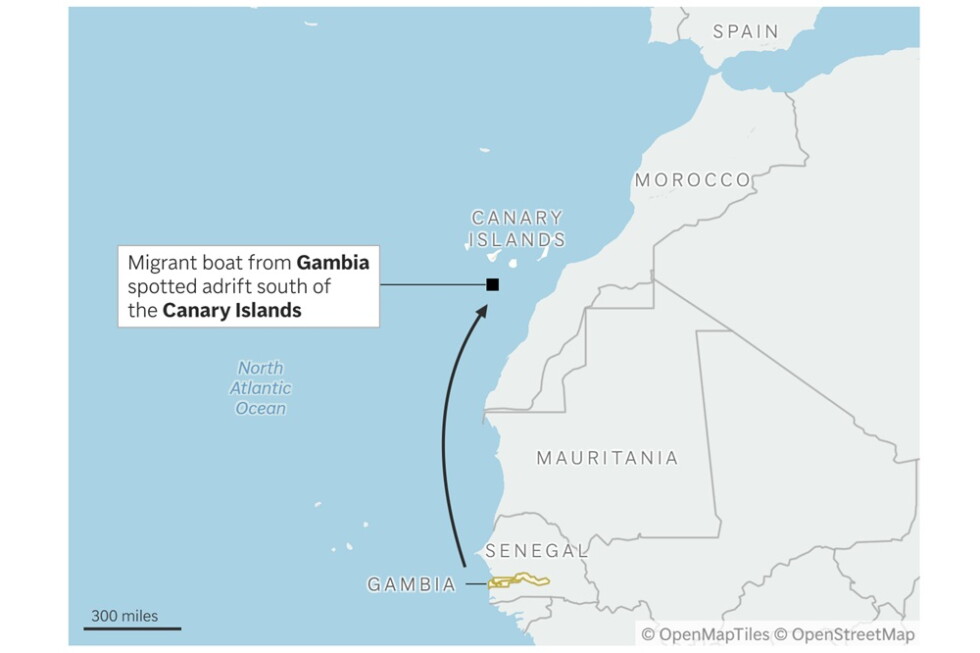
    Kazem Agamy, dean of the Arab Research Institute for Sustainable Blue Economy at the Arab Academy for Science, Technology and Maritime Transport, used a recent high-profile disruption to illustrate the fragility of global maritime security. Two years ago, widespread insecurity in the Red Sea forced the world’s largest container carriers to divert their fleets on the much longer route around the Cape of Good Hope, sending global freight costs soaring. The centuries-old supply chain connecting Asia, Africa, and Europe via the Suez Canal was severed almost overnight. The canal, which normally carries roughly 12 percent of all global trade and generates over $10 billion in annual revenue at peak activity, saw its annual earnings plummet by nearly half.

    “This incident laid bare a harsh fundamental truth,” Agamy explained. “While more than 80 percent of global trade travels by sea, the governance frameworks that underpin maritime security remain deeply fragmented. Shipping lanes are inherently global, but the institutional mechanisms designed to protect them are not. This gap is the single most pressing challenge we face on this issue.”

    Norman Martinez Gutierrez, director of the International Maritime Law Institute at the International Maritime Organization, added that while maritime security is most often linked to traditional threats such as terrorism, piracy, and armed robbery at sea, its actual scope is far broader. Modern maritime security also encompasses reliable safe navigation, protection of critical offshore and port infrastructure, environmental protection of marine ecosystems, and consistent compliance with established international legal standards.

    “Without robust, widespread maritime security, there can be no predictability in global maritime transport, no stability in cross-border supply chains, and no confidence in the international legal rules that govern global shipping,” Gutierrez said.

    Mao Ruipeng, a senior researcher at the Shanghai Institutes for International Studies, highlighted China’s active role in advancing collective global maritime security. He noted that China was among the first group of nations to sign the ambitious agreement under the United Nations Convention on the Law of the Sea focused on the conservation and sustainable use of marine biological diversity in areas beyond national jurisdiction, widely known as the BBNJ Agreement.

    “China is a steadfast defender of the established international maritime order,” Mao said. “It has proposed and implemented the Global Governance Initiative, consistently upholds multilateral cooperation, and works to safeguard the international maritime order rooted in the United Nations Convention on the Law of the Sea.”

  • At least 42 people killed in eastern Chad during clashes over water resources

    At least 42 people killed in eastern Chad during clashes over water resources

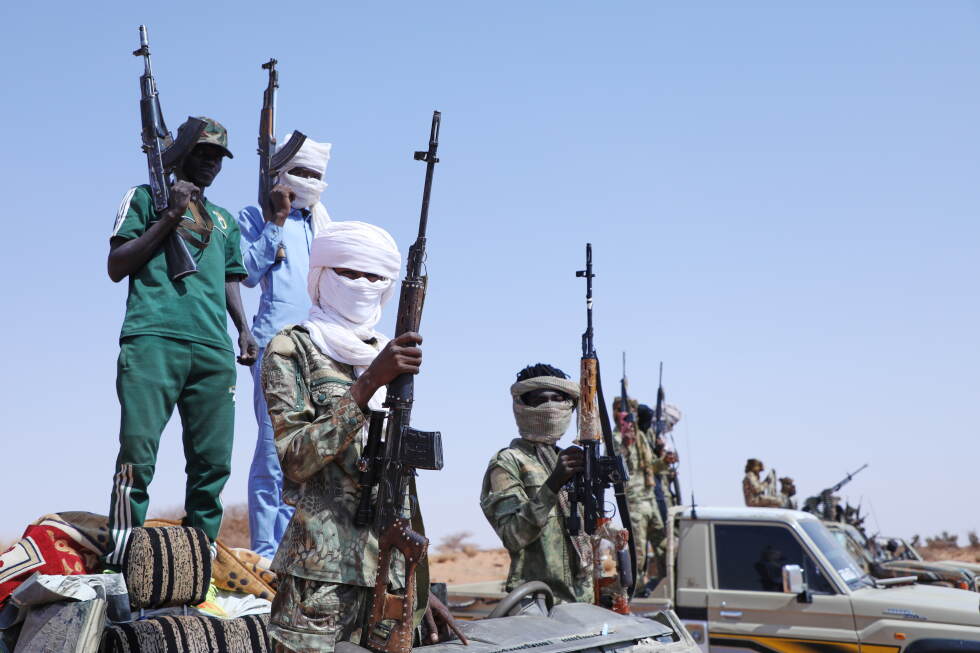
    In the early hours of Saturday, a long-simmering local dispute over access to a critical water source between two families in eastern Chad erupted into widespread, revenge-fueled violence that left at least 42 people dead and 10 others injured, the Central African nation’s deputy prime minister confirmed in a statement late Sunday.

    Deputy Prime Minister Limane Mahamat made the confirmation during an official visit to Igote, the small border village in Wadi Fira province where the violence unfolded, located just kilometers from Chad’s shared boundary with conflict-wracked Sudan. The injured victims have already been evacuated to the region’s main provincial health facility for urgent medical care, Mahamat added.

    The cycle of retaliatory attacks quickly spread across multiple communities in the area, forcing Chadian military forces to deploy to curb the violence. According to Mahamat, the army’s rapid intervention successfully halted further bloodshed, and public order has now been fully restored across the conflict zone.

    In response to the violence, Chadian authorities have launched two parallel processes: a traditional community mediation initiative to resolve underlying tensions in Igote, and formal judicial investigations to hold those responsible for the deaths and destruction accountable.

    Intercommunal violence driven by competition over scarce natural resources is a recurring crisis across Chad. Just last year, similar clashes between farming and pastoral communities in southwestern portions of the country also claimed 42 lives and destroyed hundreds of residential structures.

    Mahamat stressed that the Chadian government will implement every necessary measure to prevent further instability in this high-risk border region, which has faced growing strain since the outbreak of full-scale civil war in Sudan in early 2023. For months, eastern Chad has hosted hundreds of thousands of Sudanese refugees who fled the cross-border conflict, placing unprecedented pressure on local water, food, and land resources that has exacerbated existing intercommunal tensions.

    Back in February, Chad’s government took the drastic step of closing its entire border with Sudan indefinitely, framing the move as an effort to stop the spillover of Sudanese fighting into its territory after multiple armed incursions by militias aligned with Sudan’s warring factions.

    According to United Nations estimates, the ongoing civil war in Sudan has already killed more than 40,000 people, though independent humanitarian groups warn the actual death toll is likely far higher, as many casualties in hard-to-reach conflict zones are never counted. The conflict has spawned the world’s most severe current humanitarian crisis, displacing more than 14 million people from their homes, triggering widespread deadly disease outbreaks, and pushing multiple regions of Sudan into full-blown famine.

  • Iran FM blames US for failure of talks after landing in Russia

    Iran FM blames US for failure of talks after landing in Russia

    A fragile ceasefire across multiple fronts of the broader Middle East conflict remains tenuously in place this week, even as high-stakes negotiations between Iran and the United States have hit a deadlock, with Tehran pinning the blame directly on Washington as its top diplomat launches a frantic regional diplomatic tour. Iranian Foreign Minister Abbas Araghchi landed in Saint Petersburg on Monday, where he is scheduled to hold high-level talks with Russian President Vladimir Putin, capping a packed four-day schedule that already included stops in Oman and Pakistan – the latter serving as the host of the only completed round of direct talks between the two adversarial nations. That initial round of negotiations ultimately ended without an agreement, and hopes for a breakthrough follow-up round this weekend were dashed last week when former US President Donald Trump canceled a planned trip by his top envoys, Steve Witkoff and Jared Kushner, to the region. Speaking to reporters in the Russian city Monday, Araghchi attributed the collapse of the earlier talks to inflexible positioning from the US side, saying “The US approaches caused the previous round of negotiations, despite progress, to fail to reach its goals because of the excessive demands.” Following the cancellation of his representatives’ trip, Trump told Fox News that Tehran would need to reach out to Washington directly if it wanted to restart discussions, though he emphasized that the cancellation does not mean a return to open hostilities between the two countries. Despite the public impasse, backchannel diplomatic efforts have continued behind the scenes. Iran’s semi-official Fars News Agency confirmed that Tehran has conveyed formal written messages to US officials through Pakistan, outlining Tehran’s non-negotiable red lines on core issues including its nuclear program and sovereignty over the Strait of Hormuz. The outlet clarified that these messages do not constitute formal full-scale negotiations. Separately, US news outlet Axios reported Sunday, citing an anonymous US official and two other sources familiar with the correspondence, that Iran has submitted a new proposal to end the direct conflict centered on reopening the Strait of Hormuz and lifting the US naval blockade on the waterway, with negotiations over the country’s nuclear program deferred to a later date. Iran’s official state news agency IRNA republished the Axios report without issuing a formal denial, lending quiet credence to the outline of the proposal. Beyond the bilateral diplomatic stalemate, the ongoing conflict continues to send shockwaves through the global economy, rooted in the dispute over the critical Strait of Hormuz – the chokepoint through which nearly 20% of global oil supplies transit daily. After Iran implemented an initial blockade of the strait in response to the outbreak of war, global prices for oil, natural gas, and agricultural fertilizer spiked dramatically, amplifying already pressing fears of widespread food insecurity in low-income developing nations. The US responded to Iran’s blockade with its own naval and economic blockade of Iranian ports across the Persian Gulf and beyond. Domestically, Trump faces growing political pressure as elevated fuel prices hit American consumers ahead of November’s midterm elections, with public opinion polls consistently showing the broader conflict is unpopular with a majority of US voters. During Araghchi’s earlier stop in Oman this week, a neighboring Gulf state that shares the Strait of Hormuz coastline with Iran, the question of reopening the waterway to safe commercial transit was a key topic of discussion. “The safe passage through the Strait of Hormuz is an important global issue. Naturally, as the two coastal countries of this strait, we must speak with each other so that our common interests are secured,” Araghchi said from Saint Petersburg. While both Russian and Iranian officials have confirmed the upcoming meeting between Araghchi and Putin, hardline factions within Iran have already ruled out backing down on the Hormuz blockade. Iran’s Islamic Revolutionary Guard Corps, the country’s elite military force, reaffirmed Monday that control of the strait and maintaining its deterrent effect against the US remains Tehran’s definitive, unchanging strategy. Global oil markets reacted to the stalled talks on Monday, with prices edging upward as investors priced in continued supply uncertainty, though the slow climb was tempered by lingering hopes that a diplomatic breakthrough could still be reached in coming weeks. Away from the Gulf diplomatic standoff, violence has flared once again on the conflict’s Lebanese front, despite a recently extended ceasefire between Israel and Iran-backed Hezbollah. Both sides traded accusations of ceasefire violations on Sunday, with Israeli Prime Minister Benjamin Netanyahu confirming that the Israeli Defense Forces continue to target Hezbollah positions vigorously, after both sides carried out new attacks over the weekend. Hezbollah first drew Lebanon into the broader Middle East conflict on March 2, launching a massive rocket barrage on Israel to avenge the assassination of Iran’s supreme leader Ali Khamenei. Israel responded with large-scale airstrikes and launched a ground invasion of southern Lebanon. At Sunday’s weekly cabinet meeting, Netanyahu argued that Hezbollah’s repeated attacks were effectively dismantling the existing truce, while the Iranian-aligned group vowed to continue responding to Israeli violations and what it calls Israel’s continued occupation of disputed Lebanese territory. Lebanon’s Ministry of Health reported that Israeli airstrikes across southern Lebanon on Sunday killed 14 people, marking the deadliest single day of violence since the current ceasefire went into effect. Agence France-Presse correspondents on the ground reported massive traffic jams of civilian vehicles heading north as thousands of residents fled the intensified raids following new Israeli warning orders for populated border areas. On the Israeli side, the IDF confirmed one soldier was killed in combat in southern Lebanon over the weekend. Netanyahu insisted that Israel’s actions are fully permitted under the terms of the existing ceasefire agreement, saying it grants Israeli forces freedom of action not only to respond to ongoing attacks but also to preempt imminent and emerging threats to Israeli territory.

  • Pirates seize another vessel off Somali coast as threat level increased

    Pirates seize another vessel off Somali coast as threat level increased

    After years of near-eradication, piracy off the coast of Somalia has returned with a sharp uptick in attacks, prompting maritime security officials to issue urgent warnings for commercial and civilian shipping transiting the region. The United Kingdom Maritime Trade Operations (UKMTO), the leading body monitoring maritime security in the Indian Ocean, has upgraded the regional threat assessment to “substantial” following a spate of hijackings and attempted boardings in the past seven days.

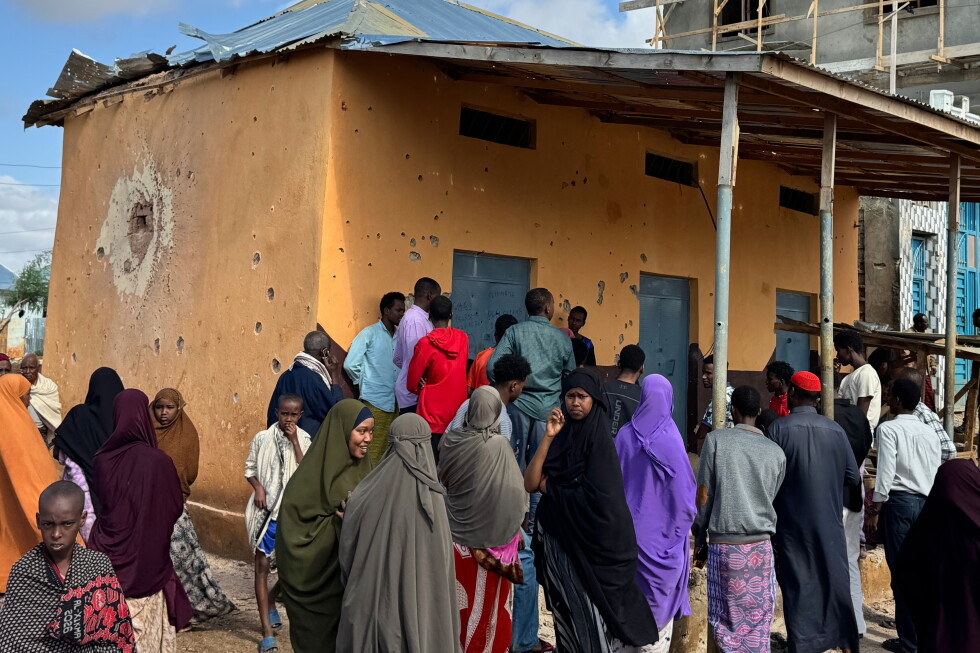
    The most recent incident unfolded Sunday, when unidentified unauthorized individuals seized a cargo vessel roughly six nautical miles off the Somali coastal town of Garacad, steering the ship into Somali territorial waters. No additional details on the crew, cargo, or current status of the vessel have been released as of initial reporting.

    This hijacking marks the fourth confirmed targeted vessel in a single week. On April 21, a separate hijacking was reported off the coast of Mareeyo in northern Somalia. Just one day later, security officials confirmed that pirates seized the oil tanker *Honour 25* carrying 17 crew members as it sailed near the Somali coast. Under pirate control, the vessel — whose crew includes 10 Pakistani nationals, four Indonesians, one Indian, one Sri Lankan, and one Myanmarese citizen — has been anchored close to shore between the fishing towns of Xaafun and Bander Beyla. Two more vessels, a Somali-flagged fishing boat and another oil tanker, were seized this past Thursday. On the same day, two armed individuals in a small craft attempted to board a second cargo vessel, only retreating after the ship’s crew fired warning shots to repel the attack.

    In its official advisory, UKMTO noted that current sea and weather conditions are ideal for small boat operations, the tactic most commonly used by pirate action groups (PAGs) to approach and board larger unsuspecting vessels. “Due to the increased threat of possible PAG activity, vessels are advised to transit with caution,” the statement read.

    This resurgence marks a stark reversal of years of progress. Just three years ago, pirate attacks in this stretch of the Indian Ocean — once one of the most dangerous waterways for global shipping — had been almost completely eliminated. At the peak of Somali piracy between 2005 and 2012, the World Bank estimates pirate groups earned between $339 million and $413 million by holding crew and vessels hostage for large ransom payments, disrupting global trade routes and forcing shipping companies to pay huge premiums for insurance and security escorts.

  • How a surgeon kept a Sudan hospital functioning on the war’s front line

    How a surgeon kept a Sudan hospital functioning on the war’s front line

    Three years into Sudan’s brutal civil conflict, orthopedic surgeon Dr. Jamal Eltaeb has faced one impossible, gut-wrenching choice after another. Which wounded patient will get the last vial of painkiller? Is it ethical to operate without proper anesthesia to save a dying child? Where will the next liter of generator fuel come from to keep the hospital’s lights on? Through all of it, only one decision has ever felt inevitable: he would stay and keep working.

    Eltaeb now leads Al Nao Hospital in Omdurman, the urban neighbor of Sudan’s capital Khartoum, a territory that has changed hands repeatedly between Sudan’s national army and the Rapid Support Forces (RSF), the country’s powerful paramilitary group. As front lines shifted closer to the facility and patient overflow stretched its capacity to breaking point, many of his colleagues fled for safety. But the soft-spoken 54-year-old surgeon refused to leave, even after repeated bombing strikes on the hospital and the near-total depletion of critical medical supplies.

    “I weighed the options of staying here, and taking care of your patients and helping other people that need you as a skilled surgeon, rather than choose your own safety,” Eltaeb explained in an interview with The Associated Press.

    He is one of thousands of Sudanese medical workers and civilians who have stepped forward to fill the gap left by a largely disengaged international community, which has turned most of its attention and humanitarian resources to ongoing conflicts in Ukraine and the Middle East. Eltaeb has borne firsthand witness to the human cost of the war, which the United Nations estimates has killed tens of thousands of people and pushed Sudan’s entire public health system to the brink of collapse. Today, nearly 40% of the country’s hospitals are no longer functional; many have been stripped of critical equipment or repurposed as military bases by armed factions. Even after the Sudanese army retook full control of Khartoum in recent months, Al Nao remains one of the only fully operational health centers in the entire capital region.

    Walking through the hospital grounds with AP journalists, Eltaeb pointed to the lingering scars of the conflict’s worst months. A shattered window across the courtyard marks the spot where a patient’s family member was killed in a strike. A tattered canvas tent is the last remaining structure of the temporary encampment erected to hold hundreds of mass casualties when the fighting reached its peak.

    “We were working everywhere, in tents, outside, on the floor, doing everything to save patients’ lives,” he said.

    Eltaeb’s extraordinary sacrifice has earned global recognition: he is this year’s recipient of the $1 million Aurora Prize for Awakening Humanity, an award that honors individuals who risk their own lives to save others. He has already donated a large portion of the prize funds to medical and humanitarian organizations working across Sudan and neighboring crisis zones.

    Before the war broke out in April 2023, Al Nao was a quiet community hospital that rarely filled its 100 available beds. When RSF fighters captured large swathes of Khartoum in the first weeks of conflict, wounded residents flooded the facility seeking care. Eltaeb’s original hospital closed just days after the war began, so he relocated to Al Nao to help. By July 2023, nearly all the facility’s senior staff had fled the capital, leaving Eltaeb to take charge of the hospital with only a small team of remaining employees and local volunteers.

    For weeks at a time, the hospital had no access to grid electricity, relying on irregular fuel deliveries from the army to keep generators running. Antibiotics, painkillers, and anesthetics quickly ran out as demand for care surged. Just a month after Eltaeb took leadership, the facility was hit by its first bombing strike.

    “From that moment, we knew that we are a target … And from that time, they didn’t stop targeting us,” Eltaeb said. The RSF carried out three additional strikes on the hospital in the months that followed.

    On one particularly devastating day in late 2024, an airstrike hit a nearby market, leaving more than 100 wounded people desperate for care. Eltaeb and his small team were forced to triage patients under extreme pressure, making impossible calls on who would receive what little care was available. Eight people died that day.

    “You choose … as if you can choose who is going to live and who is going to die,” he said.

    The day brought an even more harrowing choice: Eltaeb had to perform emergency amputations on two young children without general anesthetic, as the children were bleeding heavily and there was no time to move them to the damaged operating wing. Using only local anesthetic, he removed an arm and a leg from a 9-year-old boy, and a leg from his 11-year-old sister. Today, Eltaeb keeps photos of the surgeries on his phone, to show the world the unreported horror of Sudan’s conflict that few outsiders have witnessed.

    To keep the facility supplied, Eltaeb’s team turned to a network of local volunteers. When the team posts requests for critical medications on social media, local pharmacists who have closed their shops amid the conflict often donate their stock, sending volunteers to collect the supplies. Volunteer Nazar Mohamed spent months navigating Omdurman’s bomb-damaged streets, often traveling by bicycle, to deliver medications while fighting echoed across the city. International donations came from aid groups and the global Sudanese diaspora, with Sudanese doctors living overseas providing remote clinical guidance for treating mass casualties when standard medications run out. When medical supplies ran low, the team improvised: they built makeshift beds and crutches from scrap wood and repurposed ordinary clothing as bandages and splints.

    Today, fighting has shifted away from the Khartoum area to other regions of Sudan, and many international aid groups that supported Al Nao have redirected their limited resources to harder-hit zones. Eltaeb says the hospital currently has enough funding to cover staff salaries and generator fuel only through June, and it needs roughly $40,000 per month to stay operational. While several countries have pledged reconstruction aid to Sudan, local medical leaders worry that the ongoing conflict in the Middle East will divert attention and funding, particularly from Gulf states that had originally promised major support for Sudan’s recovery.

    Across Omdurman at Al Shaabi Hospital, which was occupied by the RSF for most of the war, director Dr. Osman Ismail Osman says the few hundred thousand dollars in government funding provided for repairs is nowhere near enough to rebuild the completely destroyed facility. Millions of dollars of medical equipment lie broken and piled in dusty corridors, scattered with chunks of concrete from damaged walls and twisted metal bed frames. The goal of reopening the hospital for emergency care in the coming weeks is a distant ambition.

    But for medical workers like Eltaeb, who have learned to keep working through even the most impossible circumstances, hope persists. “I believe I did my best as a doctor as a Sudanese,” the surgeon said.

  • Ukraine’s drone commander has Russian oil, troops and morale in his sights

    Ukraine’s drone commander has Russian oil, troops and morale in his sights

    In a rare on-the-record interview with the BBC from a hidden, heavily secured launch site in eastern Ukraine, the commander of all of Kyiv’s unmanned military forces has laid out Ukraine’s escalating strategy of deep strikes into Russian territory, a campaign that has grown in intensity over recent weeks to levels never seen before in the full-scale invasion.\n\nRobert Brovdi, an ethnic Ukrainian Hungarian from the western city of Uzhhorod who goes by the military call sign “Magyar”, says his drone units have become a constant, disruptive threat to Russian forces, bringing the war home to Russian territory that Moscow has long considered an unassailable, peaceful rear. “We’re like a red rag to the enemy. Because we’re taking the war to their territory so that they feel it too,” Brovdi told the BBC. “1,500 to 2,000km inside Russian territory is no longer the ‘peaceful rear’. The freedom-loving Ukrainian ‘bird’ flies there whenever and wherever it wants.”\n\nOn the drizzly, unmarked field where the reporting team visited, crews worked at breakneck speed to assemble and prepare a long-range drone for launch, racing against the clock to avoid detection by Russian electronic warfare systems and subsequent ballistic missile strikes. After a shouted launch command, the engine roared to life, and the small, jet-like drone lifted off in a flash of white streaking skyward, bound for targets deep inside Russia.\n\nIn recent weeks, these deep strikes have overwhelmingly prioritized Russian oil export and energy infrastructure, causing what Ukrainian President Volodymyr Zelensky has described as tens of billions of dollars in critical losses for Moscow’s energy sector, even amid the recent rally in global crude oil prices. Brovdi defends the targeting of energy facilities, arguing that Russian fossil fuel revenues directly fund the invasion of Ukraine. “Putin extracts natural resources and converts them into blood dollars that they then direct against us in the form of Shahed drones and ballistic missiles,” he said. “If oil refineries are a tool to make money that’s used for war, then they are a legitimate military target, subject to destruction.”\n\nFollowing repeated strikes on the Tuapse refinery on Russia’s Black Sea coast, local residents have reported toxic rain and widespread disruption to daily life, a outcome Brovdi views as an intentional, necessary consequence of the invasion Russia launched.\n\nThe expansion of Ukraine’s long-range drone campaign has been enabled by two key shifts: advances in domestic drone manufacturing, and a deliberate strategic reorientation to prioritize these deep strikes. Locally produced Ukrainian drones are now cheaper than ever, with extended flight ranges: the model launched during the BBC’s visit can travel more than 1,000 kilometers, and other models already in service can fly twice that distance.\n\nBrovdi commands Ukraine’s Unmanned Systems Forces from a high-tech underground command bunker, accessed through blacked-out van rides and reinforced staircases lined with sleeping quarters for personnel. The cavernous operations room is lined floor-to-ceiling with display screens, where dozens of operators in casual clothing monitor real-time video feeds from drone pilots across the frontline and deep inside Russia. Despite making up only 2% of Ukraine’s total military manpower, Brovdi says his forces are responsible for one-third of all Russian targets destroyed in Ukraine, with an annual casualty rate for his own personnel of less than 1% – a stark contrast to high frontline casualty rates for conventional infantry units. All strikes are recorded for verification and logged in a real-time public scoreboard displayed on one wall of the command center.\n\nBefore Russia’s full-scale invasion, Brovdi was a wealthy grain dealer and art collector, comfortable in international auction houses like Christie’s rather than underground military bunkers. Fragments of his pre-war life remain: works by Ukrainian artists are displayed throughout the command center alongside decommissioned missile casings and captured Russian drones. A clean-shaven civilian before 2022, he now sports a long, mixed ginger and grey beard.\n\nBrovdi joined Ukraine’s Territorial Defence forces just weeks before the full-scale invasion, saying “we all knew war was inevitable.” He fought in some of the war’s bloodiest engagements, including the months-long battle for Bakhmut. His interest in drone warfare began unexpectedly when he was pinned down by Russian fire in Kherson: he recalled a small recreational drone he had bought for his own children, and began integrating similar devices into his unit’s operations. What started as a tactic for self-preservation quickly transformed his unit’s capabilities, allowing them to spot Russian positions and relay coordinates to artillery units for precision strikes. Within months, his unit was building its own armed drones, and gained renown as the 414th Brigade, nicknamed the “Birds of Magyar.”\n\nBrovdi’s strategy goes far beyond deep strikes on Russian energy infrastructure. A second core priority is eroding Russia’s manpower advantage, a pressing need as Ukraine faces its own challenges mobilizing new frontline troops. “Those who wanted to fight are already fighting,” Brovdi acknowledged. To offset this disadvantage, he has ordered his units to kill more Russian soldiers each month than Russia can recruit new personnel – a target of more than 30,000 enemy casualties per month. “30% of all drone strikes have to be against military personnel. You can call it a kill plan, yes, and right now we are exceeding it,” he said, adding that his forces have hit the target for four consecutive months, with every casualty verified by video footage to be counted. The BBC was not able to independently verify this casualty claim.\n\nBrovdi frames the brutal strategy as a matter of survival for Ukraine. “Russian troops are far beyond their own borders, sent by Putin who wants to destroy our nation. If we don’t kill them, they kill us. That is clear,” he said. He rejects any suggestion of moral ambiguity, refusing to “be gnawed by pity” for enemy troops deployed to attack his country.\n\nA third, less discussed pillar of Brovdi’s strategy is targeting Russian domestic morale. He says Putin cannot afford to end the war given the catastrophic political risks of a failed invasion, so putting constant pressure on Russian civilians and institutions deep inside the country is critical to creating domestic discontent with the war. Viral footage of distraught Tuapse residents whose lives have been upended by drone strikes, he argues, is a sign that the cost of the war is finally reaching ordinary Russians, beyond the small circles of opposition that have criticized Putin since the invasion began. “With every drone, I aim to make more Russians question the war their country is fighting and the president who started it,” he said.\n\nUnlike some Ukrainian military and political leaders who have framed the war’s goal as a full reconquest of all occupied Ukrainian territory through large-scale counter-offensives, Brovdi says he has no illusions about his forces’ role. His goal, he says, is not seizing large swathes of land, but containing Russian advances and slowing any offensive progress. “We have an effective weapon: not to conduct an offensive war, but to prevent the enemy advancing effectively on our territory,” he said. He dismissed Putin’s stated goal of seizing the remainder of Ukraine’s Donbas region within months as absurd. “What is he smoking? That’s not realistic. It’s absurd,” he said.

  • Tired and worried, seafarers have been stranded in the Persian Gulf for weeks

    Tired and worried, seafarers have been stranded in the Persian Gulf for weeks

    Eight weeks into the ongoing armed conflict between the United States and Iran, more than 20,000 commercial seafarers aboard hundreds of oil tankers, gas carriers and cargo ships remain stranded in the Persian Gulf, trapped by the effective closure of the Strait of Hormuz — the world’s most critical chokepoint for global energy trade. For these trapped crews, every day brings a constant backdrop of geopolitical tension, the threat of attack, and growing uncertainty about when they will be able to return home.

    Indian Captain Rahul Dhar, one of the captains holding position with his crew in the gulf, told the Associated Press his team has watched drones and missiles detonate within visible range of their tanker during daily watches. While the crew has worked to maintain normal routines to preserve morale, the unrelenting strain of the situation is starting to take a toll. A fragile, indefinite ceasefire brokered between the U.S. and Iran has brought a cautious glimmer of hope, Dhar said, but no clear timeline for reopening the strait or allowing ships to exit the region has emerged.

    “Day to day, we try to keep things normal with open conversations and small team activities that help lift everyone’s spirits,” Dhar explained. “Those moments when we see drones and interceptions near the ship were really difficult, and created real tension for the whole crew. None of us expected to end up in a warlike situation when we set sail.” Reliable connectivity that has allowed the crew to stay in touch with family back home has been their greatest source of strength, he added, with regular calls and messages helping the crew stay grounded amid chaos.

    Dhar is far from alone in his experience. Maritime industry data confirms the staggering scale of the crisis: in the week of April 13–19, only 80 vessels total transited the Strait of Hormuz, a sharp drop from the pre-war average of more than 130 transits per day. Normally, roughly 20 percent of the world’s total oil and liquefied natural gas supplies move through the waterway, making its closure a major disruption to global energy markets and trade. Since the conflict began, dozens of commercial vessels have come under attack, and the United Nations has confirmed at least 10 seafarers have been killed in the violence. The ceasefire has not resolved hostilities entirely: the U.S. has maintained its blockade of Iranian ports, while Iran has retaliated by firing on transiting vessels and seizing two commercial ships.

    India, the world’s largest supplier of maritime labor, has thousands of its nationals trapped on stranded vessels, most anchored close to major Iranian ports including Bandar Abbas and Khorramshahr. Manoj Kumar Yadav, a representative with the Forward Seamen’s Union of India, told AP that explosions have occurred as close as a few hundred meters from some anchored ships, forcing crews to witness blasts directly from their decks. Many of the trapped sailors are on their first overseas voyage, Yadav said, leaving them unprepared for the chronic fear and isolation of their current situation. His union receives daily distress calls from trapped crews and their worried families back in India.

    Beyond the threat of violence, many crews are facing acute shortages of basic necessities including food and drinking water, forcing ships to implement strict rationing of supplies. Internet connectivity is often spotty or disrupted entirely by signal jamming, and when contact with home is possible, sailors face exorbitant roaming charges for just a few minutes of conversation. Most Indian sailors in the region are beyond the reach of coordinated government evacuation efforts; as of last week, India’s shipping ministry confirmed only 2,680 sailors have been evacuated since the conflict began. Families of trapped seafarers have grown increasingly anxious, mounting calls for urgent action to secure the safe return of their loved ones. The International Transport Workers’ Federation confirmed earlier this month that it has received hundreds of requests for urgent assistance, including pleas for emergency food supplies, from trapped crews across the gulf.

    For many seafarers, the greatest burden of the crisis is the pervasive uncertainty. Reza Muhammad Saleh, an Indonesian chief officer on a Greek-owned cargo ship that has been stranded off Oman for more than a month, described how a drone exploded near his port of anchorage just days after the crew arrived in early March, with two additional follow-up incidents forcing the entire crew to repeatedly evacuate to reinforced bunkers. No crew members were injured in the attacks, but the constant unpredictability has worn on the team.

    “The biggest problem is the uncertainty. We don’t know when Hormuz will be open again,” Saleh said. His 24-person multinational crew, which includes sailors from Indonesia, Arab states, India and Ethiopia, normally transports iron ore across Gulf states and transits Hormuz one to two times per month. Now, any crossing requires written official clearance from Iran, a requirement that makes shipping companies unwilling to take the risk of moving the vessel. Even experienced crews used to working in high-risk regions have been shaken by near-daily missile strikes and persistent GPS disruptions that force crews to navigate manually, Saleh added: “Sometimes we think it’s safe, then suddenly it’s not. Today we’re safe. Tomorrow, nobody knows.”

    Shipping company leaders report that while limited crew rotations have been possible, most replacement crews are unwilling to travel to the conflict zone, a choice companies say they respect. Fleet Management Limited, which manages more than 400 seafarers across dozens of stranded vessels in the region, checks food stock levels regularly and arranges for emergency resupply by moving ships to the nearest safe points to pick up fresh provisions, said CEO Captain Rajalingam Subramaniam. Most trapped seafarers have been stuck in the gulf since the war began, and many never agreed to work in a combat zone when they signed their contracts.

    “For mariners who did not sign up to be in warlike area, they also need to be respected so that they do not become the unintended collateral,” Subramaniam said. Even during the ceasefire, multiple vessels that attempted to cross Hormuz were fired on or forced to turn back, so Fleet Management has not allowed any of its managed ships to attempt a crossing. Germany’s Hapag-Lloyd, one of the world’s largest container shipping firms, has 150 sailors trapped on six vessels near the strait, and stays in daily contact with trapped crews, according to spokesman Nils Haupt. While limited rotations have occurred, months of isolation have left crews facing crippling monotony.

    The International Maritime Organization (IMO), the United Nations’ global shipping regulatory body, and other international groups have called for the establishment of a safe transit corridor for commercial vessels in the strait. Despite Iran’s claims that it has opened the strait to non-hostile vessels and its demand to collect passage tolls from commercial ships, almost all vessels remain blocked. Iran has placed naval mines in the waterway, while the U.S. is currently conducting mine-clearing operations and has issued orders to attack any Iranian boats laying mines. “Under heightened risks of mines and attacks on ships, there is no safe transit anywhere in the Strait of Hormuz,” said IMO Secretary-General Arsenio Dominguez.

    Industry leaders warn the ongoing crisis could worsen an already severe global shortage of skilled seafarers. Trapping seafarers against their will in conflict zones is not a new problem: the COVID-19 pandemic created widespread crew change crises, followed by Russia’s invasion of Ukraine, and ongoing Houthi rebel attacks on commercial shipping in the Red Sea. Subramaniam warned that even after the Iran conflict ends and the strait reopens, fewer skilled workers will be willing to work on commercial vessels that travel through high-risk Middle Eastern regions, exacerbating the existing global labor shortfall.

    Reporting for this article was contributed by Associated Press journalists across New Delhi, Berlin, Paris, Hong Kong and Jakarta.

  • Dealing with the dead in the ruins of Sudan’s war

    Dealing with the dead in the ruins of Sudan’s war

    As Sudan’s brutal civil war between the national army and the Rapid Support Forces (RSF) paramilitary group enters its fourth year, the full scale of human loss remains uncounted – but ordinary citizens and humanitarian teams are working against overwhelming odds to give the war’s victims a dignified final resting place.

    Ali Gebbai, an engineer who switched careers to become a volunteer mortician, keeps a meticulous spreadsheet of every person his team has laid to rest in Khartoum. With more than 7,000 entries, each marked with a photograph of the deceased and a note of their burial location, the document stands as one of the few unoffical, accurate records of the capital’s mounting death toll. When his crew recovers an unclaimed body, they first share the victim’s photo on social media, waiting a full 72 hours to allow grieving relatives a chance to come forward and claim their loved one.

    “We photograph every body. We check if there’s anything in their pockets to help us identify them, and we mark the spot where we buried them,” Gebbai explained to Agence France-Presse during an interview at the team’s makeshift Khartoum morgue, where an unidentifed woman lay wrapped in a speckled brown thobe, awaiting burial. If no family claims her, Gebbai’s team will wash her body in accordance with Muslim tradition, wrap her in a clean white shroud, and bury her locally – a far more dignified end than the majority of Sudan’s war victims receive, many of whom are left in unmarked, shallow graves dug in the dirt where they fell.

    No official, confirmed death toll exists for the conflict that broke out in April 2023. While conservative estimates count at least tens of thousands of fatalities, aid workers suggest the real number could surpass 200,000. The uncertainty around the death toll itself inflicts lasting trauma on millions of Sudanese who remain separated from their families, unsure if their loved ones are alive or dead. “It’s disheartening, all these estimations. When you have a population not knowing what has happened, that trauma and the impact cannot be overlooked,” said Jose Luis Pozo Gil, deputy head of the International Committee of the Red Cross (ICRC) in Sudan.

    One year after Sudan’s army retook control of Khartoum, government forensic teams have exhumed and reburied roughly 28,000 bodies recovered from across the capital – and they have only cleared just over half of the city’s territory. Beyond Khartoum, the violence has been even more catastrophic: ethnic massacres in the Darfur region have killed thousands in single events, and at least 700 civilians have been killed by drone strikes in Kordofan this year alone.

    Across the entire country, the existing morgue infrastructure has collapsed completely. Even before the war, Khartoum’s morgues were operating at full capacity, and all four of the capital’s main mortuary facilities were knocked out of service during the height of fighting. Many were left abandoned with bodies still trapped inside, with no power to preserve remains. The Omdurman morgue, one of Khartoum’s largest, was completely destroyed in an airstrike; its cooling compressors were looted, and bodies were left to rot throughout the building.

    Trapped by crossfire and artillery barrages, civilians trapped in Khartoum during the worst fighting were unable to reach public cemeteries to bury their loved ones. Instead, they dug graves in residential courtyards, public playgrounds, street corners, and even along the banks of the Nile and in city sewers. Over three years of conflict, this turned the entire capital into an sprawling open-air graveyard. “That leaves a mark on society, it destroys human dignity and it normalises death,” said Hisham Zein al-Abdeen, head of forensic medicine at Sudan’s health ministry and one of only two forensic doctors still working in Khartoum. The same crisis has played out across the country: in Darfur, satellite imagery has captured widespread scenes of mass killing; in al-Jazira, bodies have been dumped in irrigation canals; and in Kordofan, drone strikes continue to claim civilian lives with no infrastructure to recover the dead.

    Most of the bodies exhumed by government teams in Khartoum are identified by families who buried their loved ones themselves during the fighting, but are now seeking a permanent, proper resting place. But hundreds of others remain anonymous. For these unidentifed remains, forensic teams collect small bone and hair samples for future DNA testing – but Sudan has no fully operational DNA laboratories to process the samples, and no secure storage facility to hold them for future testing. For now, the samples are buried separately in marked plots, to be exhumed and tested at a later date.

    The ICRC estimates that at least 11,000 people are currently listed as missing across Sudan. “We know that the lack of closure for families leaves an open wound. In any kind of recovery in the future, in order to find closure, to rebuild trust, the issue of the missing has to be addressed,” Pozo Gil noted.

    For Gebbai, the work is relentlessly grim, but it offers a small measure of closure to grieving families. He recalled one young man who spent more than a year searching for his father and uncle, only to learn from the volunteer team that both men had been shot dead on a Khartoum street in the first weeks of the war. Though the news shattered the man, leaving him collapsed in tears, it also gave him something he had been denied for a year: the chance to visit his relatives’ marked graves and grieve properly.

  • As some hijabs come off in Iran, restrictions still in place

    As some hijabs come off in Iran, restrictions still in place

    Viral images of Iranian women going without the mandatory hijab while socializing at Tehran cafes have captured global attention as a visible sign of pushback against the country’s long-standing dress rules. But for many women living across Iran, this small public shift has not translated to meaningful progress on gender rights or broader personal freedom.

    Elnaz, a 32-year-old painter based in Tehran who requested anonymity for safety, told AFP she sees no sign of systemic change from the government. “There has been no real achievement when it comes to women’s rights,” she explained. “Under the surface, in reality, no tangible change has taken place for people’s freedom, especially regarding women’s basic rights.”

    The mandate that all women wear a headscarf in public was implemented shortly after the 1979 Islamic Revolution and has long stood as a core ideological pillar of the ruling clerical establishment. Visible enforcement of the rule has softened in recent years, particularly in parts of Tehran and other major urban centers, a shift that traces its roots to the nationwide 2022-2023 protests that erupted after 22-year-old Mahsa Amini died in morality police custody. Amini had been arrested for allegedly violating the country’s dress code.

    The trend of women ditching the hijab in public persisted through multiple subsequent crises: a 2025 war with Israel, January 2025 protests over soaring living costs, and the most recent ceasefire-halted conflict between Iran and a US-Israeli coalition. Today, the feared white patrol vans of the morality police, which once patrolled public squares and street corners to detain women violating the hijab rule, are rarely seen in many areas. It is now common to see women with and without headscarves walking side by side even in Tehran’s more liberal neighborhoods, leaving the choice of attire up to individual women for the first time in decades.

    For some long-time advocates of personal choice, the change is dramatic, even stunning. Just five years ago, public displays of women going without a hijab were unthinkable. “I’m happy for all of them, because until just three years ago this was only a dream,” said 57-year-old Zahra, a housewife from the central city of Isfahan. “My youth has passed and I never got to have this experience; now I don’t wear hijab anymore, but I wish I could have experienced these days when I was young.”

    Yet beneath this visible surface shift, harsh restrictions remain firmly in place. Women can still be summoned by law enforcement for refusing to wear a hijab, and cafes that allow bareheaded women on their premises are regularly shut down by authorities. Entry to banks, government buildings, and educational institutions still almost universally requires women to wear the head covering. Rights groups add that broader gender restrictions remain intact, with tens of thousands of protesters arrested following January’s demonstrations, and thousands more detainees including women detained during the most recent conflict.

    Cafe owners in particular bear the brunt of ongoing enforcement, even as viral social media posts frame the relaxed street-level norms as newfound freedom. “Beautiful photos of cafes and girls are being shared everywhere, but as cafe owners, we’ve been paying a heavy price for that,” said 34-year-old Tehran cafe owner Negin. “We’ve been treated very harshly over these years, continuing until this day. We’ve been shut down multiple times, fined and forced to pay bribes… What makes me even angrier is when people call this ‘freedom’ and claim women are becoming freer.”

    Amnesty International confirmed this mixed landscape in a statement released earlier this month, noting that widespread grassroots resistance to compulsory hijab had pushed authorities to back away from the large-scale violent arrests and assaults seen in earlier years. However, the human rights organization added that authorities continue to leverage existing laws to enforce mandatory veiling in workplaces, universities and all public sector institutions. Women who resist still face routine harassment, physical assault, arbitrary arrest, heavy fines, and expulsion from their jobs or academic programs.

    One notable, politically charged shift has appeared on state-controlled television, which now occasionally airs footage of women without hijab — but only when those women publicly support the Islamic Republic and denounce its opponents, a move critics dismiss as a cynical public relations tactic.

    “More women are putting their fear aside each day and trying out what it’s like to go out without hijab, and it’s gradually becoming more widespread,” noted 39-year-old Tehran housewife Shahrzad. “But I don’t see any change in the government system. It’s the same as before, aside from those videos of girls going in front of state news cameras without hijab and saying ‘my leader, my leader, I will sacrifice myself for him’.”

    The level of relaxed enforcement also varies drastically across the country, with tighter restrictions remaining in place in more conservative and religiously significant regions. In Mashhad, a major eastern city that hosts one of Shia Islam’s holiest shrines, rules remain far stricter than in Tehran. “Before the 12-day war against Israel in June, in Mashhad they wouldn’t let us in anywhere without hijab,” said 32-year-old student Mahsa. “Now they do let people in, but unfortunately, we haven’t had the same level of change that people in Tehran have seen over the past three years.”

    Even in Isfahan, a major city widely categorized as conservative, enforcement has ramped back up recently despite the public shift in the capital. Farnaz, a 41-year-old Isfahan resident, is scheduled to appear in court later this month over a charge of violating hijab rules. “In Isfahan, for the past few days they’ve started sealing cafes again over hijab issues. They didn’t even wait for the situation with the war to be clarified,” she said. “Here, you’re dealing both with the government and with conservative community members. Like before in some neighbourhoods, religious people sometimes warn you and harass you. It’s not just about the morality police. I don’t see any significant change.”

    Fellow Isfahan resident Maryam, 35, added that women without hijabs are still turned away from service at some local banks, and all retail workers are required to adhere to the mandate. “If you are involved in social or economic activity, you are expected to observe hijab,” she explained.

    Zahra, the Isfahan housewife, pointed out that the current softer street norms came at a devastating cost: human rights groups estimate hundreds of protesters were killed in the brutal government crackdown that followed the 2022 Mahsa Amini demonstrations. She warned that the current lull in harsh enforcement may only be temporary, as authorities are currently distracted by ongoing regional conflict. “Right now, they (the authorities) are just distracted by the war,” she said. “But after that, who knows what they will do about it.”

  • North Korea opens memorial museum for troops killed in Russia-Ukraine war

    North Korea opens memorial museum for troops killed in Russia-Ukraine war

    On Sunday, North Korea held a grand opening ceremony for a new memorial museum in its capital Pyongyang, honoring hundreds of North Korean service members killed while fighting alongside Russian forces against Ukraine in the Kursk border region. The event marked the one-year anniversary of the conclusion of operations to secure the Kursk area, and brought together top leadership from both North Korea and Russia to reaffirm their growing bilateral partnership.

    The joint military deployment dates back to April 2025, when Pyongyang and Moscow confirmed that North Korean troops had fought alongside Russian units to repel a Ukrainian incursion into Russia’s Kursk region. Neither country has publicly released an official death toll or full deployment number, but South Korea’s national intelligence agency has estimated that roughly 15,000 North Korean troops were sent to the frontline, with approximately 2,000 of those personnel killed in combat.

    North Korea’s state-run Korean Central News Agency (KCNA) confirmed that Supreme Leader Kim Jong Un led the inauguration ceremony, alongside a high-level Russian delegation including Vyacheslav Volodin, Speaker of the State Duma, and Russian Defense Minister Andrei Beloussov. During the event, Kim personally placed soil over the remains of one fallen soldier, laid floral tributes at a mortuary holding other recovered bodies, and joined the Russian officials in signing a commemorative guest book.

    In his keynote address, Kim framed the fallen North Korean troops as eternal symbols of the North Korean people’s bravery, saying their legacy would forever fuel the shared victorious march forward for both the Korean and Russian peoples. He lauded the combined force for pushing back against what he described as a U.S.-led Western campaign of hegemonic ambition and military adventurism on the Ukrainian front. In separate talks with Beloussov, Kim reiterated that Pyongyang would offer unwavering support for Moscow’s policies to defend its sovereign rights and national security interests, KCNA reported.

    Russia’s top leadership sent a clear message of solidarity through the event. In a letter read aloud by Volodin to attendees, Russian President Vladimir Putin said the new museum would stand as an enduring marker of the friendship and shared purpose binding the two nations. Putin added that he was confident the two countries would continue to deepen their comprehensive strategic partnership in the years ahead. Beloussov also confirmed Moscow’s plan to expand military cooperation, telling Kim that Russia is prepared to sign a formal bilateral military cooperation agreement covering the 2027 to 2031 period.

    Since Russia launched its full-scale invasion of Ukraine, North Korea has positioned Moscow as the top priority of its foreign policy, providing both conventional weaponry and frontline troops to support Russia’s war effort. In exchange, defense and international relations analysts widely believe Pyongyang has received critical economic aid and other forms of support from Moscow. The growing alignment has sparked deep alarm in Seoul, Washington and their allied partners, who warn that Russia could share advanced high-tech military technologies that would allow North Korea to accelerate the development of its nuclear weapons and long-range missile programs.

    Military analysts have noted that the North Korean troops deployed to Kursk faced early challenges, with many falling vulnerable to Ukrainian drone strikes and artillery fire due to limited modern combat experience and unfamiliarity with the local terrain. However, Ukrainian military and intelligence assessments have concluded that the deployment has delivered significant long-term benefits to Pyongyang: North Korean personnel have gained hands-on, modern frontline combat experience, and they have become a core component of Russia’s strategy to outlast Ukrainian defenses by deploying large ground forces to overwhelm Ukrainian positions in the Kursk campaign.