分类: world

  • Africa calls for urgent climate action

    Africa calls for urgent climate action

    Against a backdrop of accelerating climate damage that continues to devastate vulnerable frontline communities across the continent, African leaders, policy specialists and climate researchers have issued a urgent, unified call for immediate locally rooted climate action, warning that further delays will have catastrophic consequences for millions.

    Across Africa, intensifying climate-driven disasters – from record-breaking temperature spikes and multi-year droughts to devastating flood events – have already exacerbated long-standing food insecurity, forced mass displacement of local populations, and destroyed critical public and private infrastructure. Stakeholders warned that without swift, coordinated cross-border and regional intervention, climate change could erase decades of hard-won development progress, stall inclusive economic growth, and push already strained food systems, freshwater reserves and household livelihoods past breaking point.

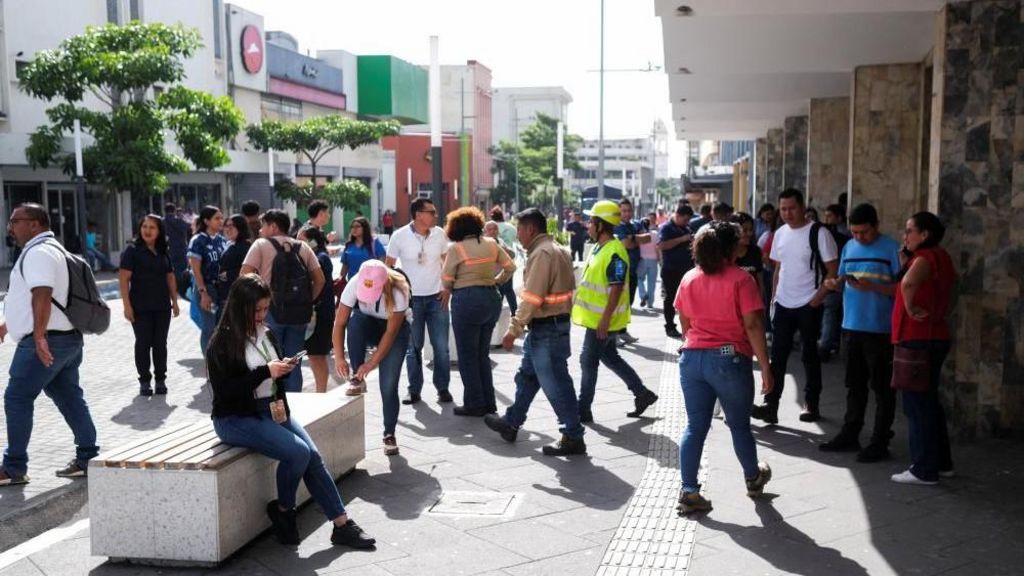
    The call to action was delivered during a high-level Nairobi-based sensitization conference focused on clarifying state obligations in the context of climate change, convened just months after the International Court of Justice (ICJ) issued its landmark 2025 advisory opinion on global climate responsibilities.

    Issued on July 23, 2025, the historic ICJ ruling formally confirmed that all UN member states carry binding legal obligations to safeguard the global climate system, and can be held legally and financially accountable for cross-border climate harm their emissions contribute to. Experts attending the three-day conference, which concluded on April 24, 2026, framed the ruling as a transformative turning point that will force governments to embed rigorous climate risk assessment into core national planning, public budget allocation, and large-scale infrastructure project approval processes.

    Kenya’s Foreign Affairs Principal Secretary Korir Sing’Oei explained that the ICJ opinion has fundamentally shifted the global conversation around climate policy, moving it from a framework of voluntary national pledges to a system of enforceable legal obligations that carry tangible economic and legal consequences for non-compliance.

    Sing’Oei reiterated that these binding climate obligations must be implemented comprehensively, including through full alignment with countries’ Nationally Determined Contributions (NDCs) outlined under the Paris Agreement. “The ICJ advisory opinion leaves no room for ambiguity: State obligations are legal, binding and enforceable – they are not optional,” he told delegates during the conference. He added that Kenya, working alongside Rwanda, spearheaded the push to bring the question of state climate obligations before the ICJ, to address the longstanding pattern of selective implementation of international climate commitments by wealthy developed nations.

    “Developing countries, particularly those in Africa, bear the brunt of a climate crisis we did almost nothing to create. We contribute less than 4 percent of global greenhouse gas emissions, yet we suffer the earliest and most severe impacts. The devastating recent floods that submerged large parts of Nairobi are a stark reminder of how high the cost of inaction already is,” Sing’Oei said.

    Conference participants also raised sharp concerns over the United States’ withdrawal from key global climate commitments, warning that this move could significantly reduce much-needed climate financing for low-income developing nations – even as the ICJ ruling confirms that the US remains bound by its international climate responsibilities regardless of its withdrawal from multilateral arrangements.

    George Wamukoya, team leader of the African Group of Negotiators’ Expert Support, emphasized that no nation can escape its legal climate obligations simply by exiting international climate agreements. “The ICJ has made clear that even if a country withdraws from a multilateral climate arrangement, it remains bound by foundational international legal principles. That means even the United States can face climate litigation for failing to deliver promised financing and support, when climate harm has occurred as a result of that inaction,” Wamukoya said. He added that many African nations are already forced to divert limited public funds to cover climate adaptation costs, all while grappling with unsustainable sovereign debt burdens that leave little room for new green investments.

    The Nairobi conference centered on elevating homegrown African solutions as the core of any effective regional climate response. Key locally led interventions highlighted by delegates include expanding climate-smart agriculture programs to stabilize food production amid erratic weather, scaling up landscape restoration projects to improve freshwater security across drought-prone regions, and accelerating utility-scale renewable energy investments to reduce costly dependence on imported fossil fuels.

    Eliane Ubalijoro, chief executive officer of the Center for International Forestry Research, noted that climate change is far more than an environmental or legal challenge – it is fundamentally a crisis of human development and equity. “Addressing this crisis effectively requires the integration of scientific expertise, legal frameworks and inclusive policy design working in lockstep, so that we can move beyond high-level principles to deliver tangible, life-changing solutions for frontline African communities,” Ubalijoro said.

  • Tensions build over Hormuz as peace stalls

    Tensions build over Hormuz as peace stalls

    Growing geopolitical friction has gripped the strategic Strait of Hormuz, one of the world’s most critical energy shipping chokepoints, after planned peace negotiations between the United States and Iran collapsed in Islamabad, Pakistan earlier this week. The breakdown of talks has triggered a sharp escalation of hostile rhetoric and military posturing, while a fragile extension of the Israel-Lebanon ceasefire has failed to ease broader regional volatility.

    In a provocative social media announcement this week, former US President Donald Trump issued a direct order to the US Navy, instructing forces to immediately “shoot and kill” any Iranian small craft caught laying sea mines in the strait’s international waters. Trump emphasized there should be “no hesitation” in carrying out the order, adding that ongoing US minesweeping operations in the waterway would be tripled in intensity. The president also drew widespread condemnation after reposting a user-generated video that endorsed calls to kill Iranian leaders who refuse to accept a negotiated peace deal.

    Iranian officials have roundly rejected the US threats, framing the rhetoric as blatant aggression against Iranian sovereignty. Iranian Foreign Ministry spokesperson Esmail Baghaei highlighted that Trump’s repost of the call to assassinate Iranian leadership marks an unprecedented violation of basic diplomatic norms. Top Iranian government figures, including President Masoud Pezeshkian and Foreign Minister Seyed Abbas Araghchi, have pushed back against US claims of internal division among Iranian factions, issuing a unified public statement emphasizing national solidarity. “In Iran, there are no radicals or moderates; we are all ‘Iranian’ and ‘revolutionary’, and with the iron unity of the nation and government, with complete obedience to the Supreme Leader of the Revolution, we will make the aggressor criminal regret his actions,” the leaders posted on their social media accounts.

    The recent escalation comes on the heels of the cancellation of high-stakes US-Iran peace talks scheduled for Wednesday in the Pakistani capital, just as an existing US-Iran ceasefire was set to expire. Trump ultimately extended the ceasefire deadline hours ahead of its expiration, avoiding an immediate full escalation. Despite the collapse of this week’s meeting, three anonymous Pakistani sources reported Friday that talks could resume imminently, with Araghchi expected to arrive in Islamabad Friday night. Two Pakistani government sources added that a US logistics and security delegation has already deployed to the city to prepare for new negotiations. Neither Washington nor Tehran has issued an official response to these reports as of press time.

    Regional analysts warn that the tit-for-tat escalation at the Strait of Hormuz is a deliberate coercive strategy that carries severe risks. Nagapushpa Devendra, a West Asia analyst and research scholar at Germany’s University of Erfurt, told China Daily that Trump’s positioning is designed to force Iran back to the negotiating table through pressure, even as he publicly claims he faces no time pressure to end the conflict. Devendra noted that Iran has shown no willingness to concede, and instead is prepared to leverage its control over the strait to counter US pressure. The most likely outcome of this dynamic, she explained, is an extended protracted standoff, marked by increased vessel seizures, higher risk of accidental military clashes, and growing volatility for global energy and shipping markets. Diplomatically, she added, the escalation risks eroding US allied support in the region while drawing Israel deeper into an expanding regional crisis.

    The United Nations has warned that the ongoing US-Iran conflict has already triggered devastating humanitarian consequences across the Middle East and beyond. Alexander De Croo, administrator of the United Nations Development Programme, told Reuters that the conflict has already pushed more than 30 million people back into extreme poverty, with food insecurity projected to worsen sharply in the coming months. “Even if the war stopped tomorrow, those effects, you already have them, and they will be pushing back more than 30 million people into poverty,” De Croo said, also warning of secondary impacts including widespread energy shortages and a collapse of remittance flows that support millions of vulnerable households across the region.

    In a further show of military buildup, US Central Command announced Thursday that a third American aircraft carrier strike group, led by the Nimitz-class USS George H.W. Bush, has arrived in the command’s area of responsibility, which covers all US military operations in the Middle East, according to Xinhua News Agency.

    Parallel to the US-Iran escalation, the conflict between Israel and Lebanon has entered a new phase after the two sides agreed to extend their existing ceasefire for an additional three weeks during Thursday’s White House talks brokered by Trump. The extension comes one day after an Israeli airstrike across the border killed five people, including veteran Lebanese journalist Amal Khalil, who worked for local newspaper Al-Akhbar. The strike marked the deadliest day in Lebanon since the original ceasefire took effect on April 16, Reuters reported.

    Despite the ceasefire extension, Lebanese militant group Hezbollah has rejected the terms of the truce, reserving its right to respond to any Israeli aggression during the 21-day period. Hezbollah MP Ali Fayad said that extending the ceasefire “makes no sense” in light of ongoing Israeli hostile acts, adding that the continuation of attacks gives “the resistance the right to respond at the appropriate time.” Mourners gathered in Lebanon Thursday to lay Khalil to rest, throwing flowers on her coffin as she was carried through funeral processions.

    Xinhua News Agency and other international agencies contributed reporting to this article.

  • Australia and New Zealand gather in Turkey to commemorate WWI battle

    Australia and New Zealand gather in Turkey to commemorate WWI battle

    On a pre-dawn Saturday in northwestern Turkey, delegations and attendees from Australia, New Zealand, and host nation Turkey assembled along the historic shoreline of Gallipoli to honor the 111th anniversary of one of the First World War’s most consequential military campaigns. The memorial service kicked off at 5:30 a.m. local time, timed to match the exact moment 111 years prior when soldiers of the Australian and New Zealand Army Corps (ANZAC) first came ashore on this stony beach at dawn on April 25, 1915.

    Stretching over an hour, the solemn gathering featured somber hymns, interfaith prayers, and wreath-laying rituals, with diplomatic representatives from dozens of nations across the globe joining the tribute to the fallen. The Gallipoli operation itself was a core component of a British-led Allied offensive designed to topple the Ottoman Empire during WWI. The campaign’s strategic goal was to seize control of the Dardanelles Strait, open a year-round supply and military route from the Mediterranean to Istanbul, and force the Ottoman Empire out of the war. After eight months of brutal, close-quarters combat, the offensive ended in total Allied defeat, leaving more than 100,000 young soldiers dead from both sides scattered across the peninsula’s battlefields.

    Beyond its strategic impact on the First World War, the Gallipoli campaign left a lasting legacy that reshaped three nations: for Australia and New Zealand, the shared sacrifice of ANZAC soldiers became a foundational moment that forged their distinct modern national identities. For Turkey, the successful defense of Gallipoli launched the military career of Mustafa Kemal Ataturk, who would go on to lead the Turkish War of Independence and found the modern Turkish Republic. Most remarkably, the heavy mutual loss of life ultimately laid the groundwork for a lasting, respectful friendship between the three former adversaries.

    In her opening address to the gathered crowd, New Zealand Governor-General Dame Cindy Kiro highlighted this transformative legacy. “From great suffering, understanding can grow. From former enemies, friendships can blossom. The relationship between Turkey, Australia and New Zealand is built on remembrance, respect and recognition of our shared humanity,” Kiro said.

    Following opening remarks, Turkish Colonel Fatih Cansiz recited a iconic tribute written by Ataturk in 1934, words that have been read at every major Gallipoli commemoration for nearly a century. “Those heroes that shed their blood and lost their lives … you are now lying in the soil of a friendly country. Therefore rest in peace. There is no difference between the Johnnies and the Mehmets to us where they lie side by side in this country of ours,” Cansiz read, echoing Ataturk’s message of universal respect for all fallen soldiers regardless of which side they fought on.

  • ‘Animals are traumatised too’: Pet rescuers under fire in Ukraine

    ‘Animals are traumatised too’: Pet rescuers under fire in Ukraine

    In a frontline Ukrainian city that has endured relentless military pressure, a quiet morning shift preparation turned into a deadly attack that underscores the hidden human and animal cost of the ongoing war. In early February, a Russian drone crashed directly into the compound of the “Give a Paw, Friend” animal shelter in Zaporizhzhia, just as staff were changing into their work uniforms. While the shelter’s thick steel entrance door absorbed the brunt of the blast and likely saved the lives of all human workers, more than 12 animals housed at the facility did not survive the strike.

    “It was terrifying, to put it mildly,” recalled Iryna Didur, the organisation’s director. In the immediate aftermath of the attack, local residents poured into the damaged shelter to clear rubble and round up animals that had fled in panic. Even the local energy provider, which has itself repeatedly been targeted by Russian strikes, donated and installed a new reinforced steel door to replace the destroyed one. Within three days, nearly all the debris had been cleared, a speed Didur credits to the outpouring of community support. “We’ve got very good people here in Zaporizhzhia. A lot of them have been visiting us to help,” she told the BBC.

    Didur’s group is just one of dozens of grassroots and formal organisations across Ukraine that have dedicated themselves to caring for animals displaced by the ongoing conflict. Beyond providing emergency shelter, food and veterinary care, these groups carry out dangerous evacuation missions to move abandoned pets out of frontline zones, and run neutering programs to control growing stray animal populations.

    The scale of the animal displacement crisis is staggering. As millions of Ukrainians fled escalating Russian bombardment near conflict lines, countless pets were left behind when owners had no way to bring them along. Other animals have been left homeless after their owners were killed in attacks. For Lala Tarapakina, head of the 12 Guardians animal rescue charity, the first sight of disoriented former family pets wandering empty roads near the front line pushed her to launch large-scale evacuation work. “That was the first time I witnessed the catastrophe affecting animals,” she said. “They were walking along a road, and they obviously used to be family pets. It was awful.”

    Since that moment, Tarapakina’s organisation has rescued more than 40,000 animals, many extracted directly from active combat zones under constant artillery and drone threat. “Many people were forced to flee under shelling, losing friends, relatives and limbs along the way. They left lots of animals behind, and we evacuated them under artillery shelling,” she explained. Rescued animals are either placed in permanent foster or adoptive homes, housed in temporary shelters away from the front, or reunited with their displaced owners. These missions also save the lives of owners themselves, many of whom have refused to evacuate without their companion animals. In one notable case, a woman named Alla became the last person to leave her village in the Donetsk region because she refused to abandon the cats and dogs in her care. “I love them all! How could I abandon them? I probably wouldn’t survive, my heart would just break,” she told Ukrainian media.

    The crisis is not limited to traditional companion pets, either. In the northern Sumy region, a specialist police evacuation unit recently assisted a local farmer extract his 11 goats from an active bombardment zone. Even with widespread support for animal rescue efforts, moving animals out of dangerous areas remains a massive challenge. Many Ukrainians have chosen to stay in high-risk frontline areas because travelling with animals is prohibitively expensive and logistically complicated, and finding pet-friendly rental accommodation in safer western and central regions of Ukraine is extremely difficult. Cross-border evacuation to other European countries is even harder, requiring extensive veterinary paperwork including proof of rabies vaccination that many displaced owners cannot obtain under bombardment.

    For rescue volunteers and workers, operating in active conflict zones carries constant mortal risk. Nate Mook, who leads the Hachiko Foundation – an organisation that provides veterinary care, pet food, and runs 150 feeding stations for homeless animals along the front line – says his teams now carry drone detection equipment and fit their vehicles with anti-drone netting to protect against attacks. “We’ve had to relocate in certain areas because it became too dangerous, and unfortunately, some of the areas where we began our work in 2022 are now no-go zones,” he said.

    Amid the widespread destruction, stray animals have become a constant presence along frontline positions, to the point that Ukrainian soldiers joke that cats and dogs are now standard military issue. Outside the eastern town of Kupyansk, a drone unit driver has been accompanied for more than two years by a pet maltipoo that lives and travels with the unit. The 831st Myrhorod Tactical Aviation Brigade hosts a ginger stray cat that reportedly appears near air defence positions during every air raid, sitting silently beside artillery guns as if standing duty alongside the troops.

    Observers often question why rescuers choose to risk their lives to save animals amid widespread human suffering, but rescue leaders say the work provides critical hope for a population traumatized by years of war. “Saving one animal is the same as saving several people because it gives them hope,” Tarapakina said. “By rescuing one dog, you make an average of about 10 people happy. That’s good maths, isn’t it?” Mook, who previously ran crisis food relief organization World Central Kitchen, notes that animals share the same trauma as human civilians, but have no ability to flee or protect themselves. “Dogs and cats have no choice about what’s happening around them, and there’s this sense that they are really powerless. They are equally traumatised and shell-shocked, and the same thing that humans go through, the animals also go through,” he said. “It is not a case of helping one or the other, and animals do not start wars,” he added.

  • Ukrainians thought they had reduced the risks at Chernobyl. Then Russia invaded

    Ukrainians thought they had reduced the risks at Chernobyl. Then Russia invaded

    In the quiet dead of night, two catastrophic events have shaken the Chernobyl nuclear site, separated by nearly four decades and forever linked to Ukraine’s history of crisis. The first, at 1:23 a.m. on April 26, 1986, tore through Reactor No. 4 during a routine safety test, sending a deadly plume of radiation across Europe, unraveling public trust in the Soviet Union, and leaving a permanent scar on the region that many historians link to the bloc’s eventual collapse. The second, recorded at 1:59 a.m. on February 14, 2025, is a new wound inflicted by war: Ukrainian officials attribute the blast to an explosive-laden Russian drone that hit the iconic New Safe Confinement (NSC), the massive protective structure that caps the site of the 1986 disaster. While far less catastrophic than the original explosion, the strike has sparked urgent global anxiety over nuclear safety in an era of full-scale invasion, turning a site already synonymous with suffering into another frontline of Russia’s campaign.

    For the thousands of workers who tend to the decommissioned plant inside Chernobyl’s 2,600-square-kilometer exclusion zone — the uninhabited swath of land carved out after the 1986 disaster — the attack brought back traumatic memories many thought they had laid to rest. Klavdiia Omelchenko, now 59, was a 19-year-old textile worker living in Pripyat, the ghost plant town built for Chernobyl employees, when the 1986 explosion occurred. She slept through the blast, waking only to scattered rumors, and did not grasp the full scale of the disaster until weeks later, when she was evacuated with nothing more than a small bag of documents and cosmetics. Her home became part of the exclusion zone, and never having been able to build a new life elsewhere, she returned in 1993 to work in the plant’s cafeteria.

    Decades of living with low-level radiation have become routine for Omelchenko, but the risks of war have proven far more terrifying. “It wasn’t as scary as now. Back then, at least, there was no bombing,” she explained. Though she developed persistent headaches after the 1986 accident and later underwent surgery for a precancerous condition, she shrugs off the daily contamination risk that comes with living and working inside the zone. “We grew up in it,” she said. “We don’t pay attention to it anymore.”

    Completed in 2019 at a cost of $2.1 billion, the NSC is a massive arch-shaped engineering marvel large enough to enclose the entire Statue of Liberty. It was built to replace the crumbling, hastily constructed concrete sarcophagus the Soviet Union erected immediately after the 1986 disaster, designed to contain the 200 tons of highly radioactive fuel and debris left inside Reactor No. 4 for a projected 100 years, while enabling the safe dismantling of the old sarcophagus. The Chernobyl plant ceased all electricity production in 2000, when its final operational reactor was shut down, and the NSC was supposed to be the cornerstone of a decades-long global effort to finally neutralize the site’s ongoing threat.

    That progress has been completely upended by Russia’s full-scale invasion of Ukraine, which began in 2022. Liudmyla Kozak, an engineer with more than 20 years of experience working at the plant, was on duty when Russian troops seized the Chernobyl site in the opening weeks of the invasion. For nearly three weeks, staff kept critical operations running while under armed guard, receiving radiation doses far exceeding safe limits for their rotations. “We had no hope we would make it out alive — it was really that scary,” Kozak recalled. Workers slept on office floors and desks, while Russian soldiers occupied key infrastructure, damaged and stole critical equipment, and stirred up radioactive dust by driving heavy military vehicles through contaminated areas and digging defensive trenches. Now, with the added damage from the drone strike, completing the decades-long cleanup has become even more challenging.

    Serhii Bokov, who manages day-to-day operations for the NSC, was on duty early the morning of the 2025 strike when he felt the dull thud of the explosion ripple through the arch. He and his colleagues rushed outside, smelled smoke, but could not immediately locate the source. After a nearby military checkpoint confirmed the strike, firefighters arrived roughly 40 minutes later, and crews eventually found the fire smoldering through the structure’s outer membrane. Flames repeatedly re-ignited, and it took more than two weeks to fully extinguish the blaze.

    “There was no feeling of fear, none at all. It was just a fire — something we practice in drills — only this time it was real,” Bokov said. “I didn’t think, honestly, that we could lose the entire arch.”

    The strike did not fully penetrate the NSC’s outer layer, and the damage was confined to a section of the arch with low contamination. Radiation monitors recorded no spike in radiation levels beyond the structure, and no workers were injured in the attack. The breach has been temporarily patched, with the visible damage sealed from the outside, but the International Atomic Energy Agency (IAEA) has warned that the damage could cut significantly into the arch’s projected 100-year lifespan, compromising its core safety function.

    Before the strike, crews were preparing to begin dismantling the old Soviet sarcophagus, a milestone decades in the making. That work is now on indefinite hold, and Bokov estimates the project will be delayed by at least 10 years. While the NSC can continue to operate in its damaged state for a limited period, the long-term stability of the crumbling sarcophagus beneath it remains a critical concern. “Everything depends on how quickly we can restore this and return to normal operations — and to preparing for dismantling,” Bokov noted.

    Oleh Solonenko, head of a radiation safety shift at the plant, emphasized that the strike has shattered long-held assumptions about nuclear safety during armed conflict. “What once seemed unthinkable — strikes on nuclear facilities and other hazardous sites — has now become reality,” he said.

    Moscow has denied intentionally targeting the Chernobyl plant, claiming the attack was staged by Ukrainian authorities. But environmental group Greenpeace Ukraine has echoed the IAEA’s warning, noting that without urgent repairs, the risk of the old sarcophagus collapsing increases dramatically. “It is difficult to comprehend the scale of the deadly, hazardous conditions inside the sarcophagus,” said Eric Schmieman, an engineer who spent years working at Chernobyl and assisted in designing the NSC. “There are tons of highly radioactive nuclear fuel, dust and debris. Now it is critical to find a way to restore the key functions of this facility.”

    Today, yellow daffodils bloom beside wartime fortifications inside the exclusion zone, and workers in plain clothes, carrying radiation badges and special access permits, still pass through restricted checkpoints to keep the site stable. For the people who have dedicated their lives to containing Chernobyl’s legacy of disaster, the strike is a reminder that the site’s danger is not just a historical memory — it is an ongoing risk amplified by a war that has already upended decades of progress on nuclear safety.

  • ‘We cried together’: Trump’s deportation drive forces tough decisions for couples

    ‘We cried together’: Trump’s deportation drive forces tough decisions for couples

    Since US President Donald Trump began his second term in January 2025, a sharp escalation in immigration detention and deportation operations has forced hundreds of thousands of mixed-status American families—couples where one partner is a US citizen and the other lives in the country without authorized immigration status—to make an agonizing choice: stay separated forever, or leave the only home many of them have ever known to rebuild their lives together in Mexico. This is the untold story of two families who chose love over distance, chronicling their pain, sacrifice, and fragile hope for the future.

    For Janie Pérez, a 29-year-old US-born woman from Missouri, that fateful choice began on an ordinary October morning. Her husband Alejandro, an undocumented Mexican migrant who had lived in the US for 16 years, left for his cook job at a local café, just like any other workday. Minutes after he walked out the door, Janie’s phone rang. On the line, Alejandro whispered the words that would upend their entire lives: “I think ICE is here.”

    As Janie held the phone, she could hear US Immigration and Customs Enforcement agents in the background moving to arrest her husband. She immediately began to pray, but in that moment, she knew her life would never be the same. What she could not anticipate, though, was that just months later, she would be packing up her entire life, leaving her home country to follow her deported husband to central Mexico, alongside their two young daughters, Luna and Lexie.

    Alejandro’s journey to the US began long before he met Janie. Born in Michoacán, Mexico, he first crossed into the US without documentation at age 7 with his father. When he returned to Mexico as a pre-teen, he faced a growing threat that haunts young men across his home region: forced recruitment by violent criminal organizations. To escape that danger, he made the decision to cross back into the US unlawfully as a young adult, building a quiet, law-abiding life working in restaurants for 16 years.

    The pair met in 2019 while working at the same Missouri café—Alejandro as a cook, Janie as a waitress. Bonded by their shared Christian faith, they fell in love and married, and immediately sought legal help to secure Alejandro permanent resident status (a green card) through their marriage. But their efforts failed: current US immigration law bars most people who entered the country unlawfully from gaining legal status through spousal sponsorship, trapping thousands of mixed-status couples in legal limbo.

    Though they knew Alejandro could be detained at any time, they tried to live as normal a life as possible, raising their two young daughters. That normalcy shattered the morning ICE agents arrested Alejandro. Over the next five months, as Alejandro awaited deportation in a detention center, Janie could only meet him through a thick pane of glass, pressing their hands together from opposite sides and crying together. She watched him in court hearings, shackled at the hands, feet and waist, a sight she describes as heart-wrenching.

    When Alejandro was formally deported to Mexico in March 2025, Janie did not hesitate. Leaving behind all her friends, family and the life she had always known, she packed her belongings and brought their two daughters across the border to join him, reuniting at Querétaro’s international airport. “I had tears of happiness when I saw him again,” Janie recalled. For Alejandro, the emotion of hugging his 3-year-old daughter after five months apart was overwhelming: “It can’t be explained in words.”

    Today, the family is adjusting to their new life. Janie, a native English speaker who does not speak Spanish, admits building a life from scratch in an unfamiliar country has been far from easy. Still, she has no regrets about her choice. “There is nothing more important than being together,” she says. She also pushes back against the narrative that justifies deporting undocumented migrants like her husband. Though Alejandro entered the US without authorization, he has never been convicted of a crime. He came to escape violence and build a better life, a decision Janie calls morally justified. “All these years he has devoted himself to working and he has no criminal record. That makes me think that many people want this to be a country only for white people. I am white and that does not make me a better person.”

    Janie and Alejandro’s story is far from unique. Official US estimates place the number of US citizens married to undocumented partners at roughly 1.1 million. As deportation operations have ramped up, hundreds of these families are making the same choice to relocate to Mexico. For Raegan Klein, a US citizen, and her husband Alfredo Linares, an undocumented Mexican who had lived in the US for 22 years, the choice came earlier: they left voluntarily before they could be separated by detention and deportation.

    Alfredo, who entered the US unlawfully at 17, built a successful career as a fine dining chef, and the couple had just launched their own Japanese-style street food barbecue business in Los Angeles when Trump took office and ramped up enforcement. Raegan, terrified that ICE would detain Alfredo and tear their family apart, convinced him to move voluntarily to Puerto Vallarta, a popular tourist hub on Mexico’s Pacific coast.

    Leaving was devastating for Alfredo, who had built his entire adult life in the US. In a tearful social media post the day he left, he wrote: “Today is my last day here in the United States. After 20 years, it’s time to leave.” Now, one year after their move, the challenges persist. Though Alfredo is Mexican by birth, he left as a teenager and feels like a stranger in the country he now calls home. The pair have struggled to build a steady income: Alfredo cooks private dinners for small groups, but the work is inconsistent, and Raegan, who does not speak Spanish, has been unable to find steady remote work. There have been many days when they have questioned their decision.

    Still, Raegan stands by the choice to stay together. Despite the financial struggles, they hold onto a new dream: opening their own restaurant in Puerto Vallarta, catering to the area’s large community of foreign tourists. Right now, they lack the startup capital to make that dream a reality, but they continue to work toward it. For these couples, the American dream that once drew their partners north of the border is now in the rearview mirror; what remains is the quiet hope of building a new “Mexican dream” together, united as a family.

    The current US administration says its immigration enforcement priorities focus on deporting undocumented migrants with criminal records. Department of Homeland Security data, however, contradicts that framing: less than 38% of people deported under the new policy have ever been charged or convicted of a crime. For the growing number of mixed-status families, that means the threat of displacement and separation remains a daily reality, forcing impossible choices that prioritize immigration policy over family unity.

  • China to send two pandas to Atlanta

    China to send two pandas to Atlanta

    A decades-long collaborative conservation partnership between China and the United States will enter an exciting new chapter this year, following a formal announcement Friday from the China Wildlife Conservation Association that two young giant pandas will soon travel to Zoo Atlanta in Georgia under a freshly sealed 10-year agreement. The pact extends a bilateral giant panda conservation cooperation that first launched between the two institutions back in 1999, building on a 25-year track record of landmark scientific and cultural achievements.

    Born and raised at the Chengdu Research Base of Giant Panda Breeding in southwest China’s Sichuan Province, the new panda residents—male Ping Ping and female Fu Shuang—were selected for this assignment after years of careful health and behavioral assessment, association officials confirmed. The framework for the new decade-long cooperation was first negotiated and agreed upon between the Chengdu research base and Zoo Atlanta in 2025, with formal administrative approval completed earlier this year ahead of the public announcement.

    Preparation for the pandas’ arrival is already well underway at Zoo Atlanta, with Chinese conservation specialists providing on-site technical guidance to upgrade the pair’s new enclosure. Teams have worked closely to align habitat specifications with modern giant panda welfare requirements, refine daily husbandry routines, update nutritional feeding plans, and establish proactive health monitoring protocols tailored to the new arrivals.

    The previous generation of giant pandas at Zoo Atlanta, Lun Lun and Yang Yang, who arrived at the facility in 1999 as the first pair under the original partnership, left an extraordinary legacy of breeding success. Over their 25 years at the zoo, the pair produced seven cubs across five successful litters—a record that still stands as the most successful giant panda breeding outcome for any China-Western country international conservation partnership to date.

    Beyond breakthroughs in captive breeding, the two-decade collaboration has delivered far-reaching advances across multiple areas of giant panda science and public outreach. Joint research projects have produced new insights into giant panda behavioral patterns, developed cutting-edge protocols for preventive veterinary care, and expanded global public conservation education programs that reach millions of visitors annually. These shared research outputs and people-to-people exchanges have not only accelerated global progress in giant panda protection but also fostered deeper cultural understanding and connection between the Chinese and American public.

    For the new 10-year agreement, collaboration will prioritize four key focus areas: advanced disease prevention and control research, expanded cross-border scientific exchanges, in-situ giant panda conservation work in native wild habitats, and ongoing development of China’s Giant Panda National Park. The park, established in 2021, has already dramatically improved the connectivity, ecological coordination and overall protection integrity of giant panda habitats across China, bringing roughly 72% of the country’s total wild giant panda population under strict, unified protection.

    In a statement following the announcement, Raymond King, President and CEO of Zoo Atlanta, expressed enthusiastic support for the renewed partnership, noting that the facility feels deeply honored to once again be trusted as stewards of this globally beloved endangered species. “Zoo Atlanta is delighted and honored to yet again be trusted as stewards of this treasured species and to partner with the association on the continued conservation and research efforts that are the most important outcomes of this cooperation,” King said. “We can’t wait to meet Ping Ping and Fu Shuang, and to welcome our members, guests, city and community back to the wonder and joy of giant pandas.”

    Zoo Atlanta’s official statement also highlighted the extraordinary progress China has made in giant panda conservation over the past decades, noting that the Chinese government has allocated extensive human, material and financial capital to restore and protect wild giant panda habitats, establishing 67 dedicated giant panda reserves across the country to support population recovery. The statement added that the creation of Giant Panda National Park has marked a major step forward for cohesive, landscape-scale protection of the species, cementing China’s role as a global leader in endangered species conservation.

  • The Kashmir town trying to win back tourists after a deadly attack

    The Kashmir town trying to win back tourists after a deadly attack

    Nestled in the breathtaking Himalayan alpine landscapes of Indian-administered Kashmir, the town of Pahalgam once drew millions of visitors annually to its snow-capped peaks, rolling meadows and pine-fringed river valleys. Today, one year after a militant attack that left 26 tourists and local residents dead, this iconic tourism destination is still grappling with the lingering aftermath of violence—its economy fractured, community trauma unhealed, and the delicate balance between daily life and long-running regional instability shattered.

    For 30-year-old local tourist guide Nazakat Ali, the new routine of daily life revolves around a single, repeated task: reassuring anxious prospective visitors that Pahalgam is safe to visit. “There is a lot of fear,” Ali explains, as he takes yet another evening call from a traveler planning a trip. “We have to convince them that everything is fine.” But the numbers tell a stark story of how far the region is from full recovery. Official data shows total visitor arrivals across Indian-administered Kashmir plummeted from nearly 3 million in 2024 to fewer than 1.2 million in 2025. Between January and mid-April 2026, Pahalgam recorded just 259,000 visitors—less than 55% of the 469,000 that visited the town in the same period before the attack. While most regional tourist sites have reopened in the year since the attack, Baisaran meadow, the site of the killings, remains closed to the public, with a quiet memorial erected nearby to honor the victims.

    The attack, one of the deadliest targeting tourists in Kashmir in decades, sent shockwaves far beyond Pahalgam’s town limits. The Himalayan region has been contested for decades, with both India and Pakistan claiming full sovereignty over the territory, and decades of insurgency and conflict have claimed thousands of lives. Within days of the Pahalgam attack, the violence triggered a four-day military confrontation between the two neighboring nuclear powers, after India accused a Pakistan-based militant group of orchestrating the assault—an accusation Pakistan swiftly denied. A ceasefire was eventually reached, but the damage to Pahalgam’s reputation as a safe tourist destination was already done.

    The economic collapse has upended livelihoods across the town, where nearly every resident relies directly or indirectly on tourism. Just four months before the attack, 25-year-old Mohammad Abubakar invested 2 million Indian rupees (equivalent to roughly $21,250) to open his own small hotel in Pahalgam. Within weeks of the attack, however, bookings dried up completely. “After April, we earned almost nothing,” Abubakar says, confirming he was forced to shut down the business permanently. Mushtaq Ahmad Magrey, head of Pahalgam’s hotel association, reports that up to 80% of hotel rooms across the town sit empty on most nights. “Last year my target was to earn around 20 million rupees but I could only make 1.5 million,” Magrey says. Even for independent workers like horse riders and tour guides, work has become sporadic and uncertain. Guides now gather along Pahalgam’s main roads for hours each day, waiting for clients that rarely arrive, and most visitors who do come only stay for a few hours rather than booking overnight stays, leaving the town nearly deserted after dark.

    The impact of the attack extends far beyond lost tourism revenue. In the immediate aftermath, Indian authorities launched an intensive security crackdown across the region, detaining nearly 3,000 young men for questioning and authorizing the demolition of homes belonging to suspected militants, a policy critics denounce as collective punishment that punishes innocent families for the actions of others. In Pulwama district, Abdul Rashid and his family have lived in a makeshift makeshift shelter for a full year after authorities demolished their family home in the crackdown. Rashid’s son, who had joined a militant group, was killed a year before the attack, leaving his family to bear the consequences of state policy. “Temperatures dropped below zero last winter,” Rashid says. “If someone has committed a crime, why should the family suffer?” Authorities maintain that home demolitions are a necessary deterrent to future militancy.

    For Pahalgam’s community, the attack broke a fragile unspoken pact that had allowed the town’s tourism industry to survive decades of regional unrest. For years, even as unrest flared in other parts of Kashmir, Pahalgam remained largely insulated from direct violence, allowing residents to rebuild their livelihoods again and again after periods of tension. By targeting tourists directly, the attack disrupted that fragile balance, leaving a lasting psychological scar on both visitors and locals. “We’ve seen difficult times before,” says Abdul Waheed Bhat, head of Pahalgam’s pony riders’ association. “But this attack is different. This has sent a very negative message.”

    Many residents still carry vivid, traumatic memories of the day of the attack. Rayees Ahmad Bhat, a local horse rider who was among the first first responders to reach Baisaran meadow after the shooting, still struggles with the trauma a year on. “I saw bodies lying all around,” he says. “People crying for help.” In the months after the attack, he sought professional therapy to process what he saw. For Syed Haider Shah, the loss is permanent: his 26-year-old son Adil, a pony rider and the family’s only breadwinner, was killed while shielding tourists and guiding them to safety from the attackers. “We miss him every day,” Shah says. “But we are proud of him.”

    Regional officials have sought to frame the security situation as stabilized, pointing to overall violence levels that are near their lowest in three decades, and say outreach campaigns across India are working to rebuild traveler confidence. Syed Qamar Sajad, Kashmir’s tourism director, says that “confidence is gradually returning,” adding, “We are hinged to hope.” The recovery effort also aligns with the Indian federal government’s long-running goal to frame Kashmir as stable and open for business after the 2019 revocation of the region’s semi-autonomous special status, a move that triggered a months-long security lockdown and communication blackout, and a temporary collapse in tourism that the government has worked for years to reverse.

    A small number of cautious travelers have begun to return. Kiran Rao, who visited Pahalgam with his family from the southern Indian state of Kerala, says that while the group had concerns before booking, they felt secure during their trip. “There were worries before we booked,” he says. “But it feels good to be here.”

    But for most of Pahalgam’s residents, the road to recovery remains long and uncertain. For Nazakat Ali, the work of reassuring potential visitors never ends. Even as he repeats his assurances line by line, call after call, he acknowledges that the town has changed irrevocably. “Nothing in the landscape has changed, and yet the place does not feel entirely the same,” he says. “The place feels cursed now.” Then the phone rings again, and he begins the work of reassurance once more.

  • Trump issues ‘shoot and kill’ order against Iranian boats

    Trump issues ‘shoot and kill’ order against Iranian boats

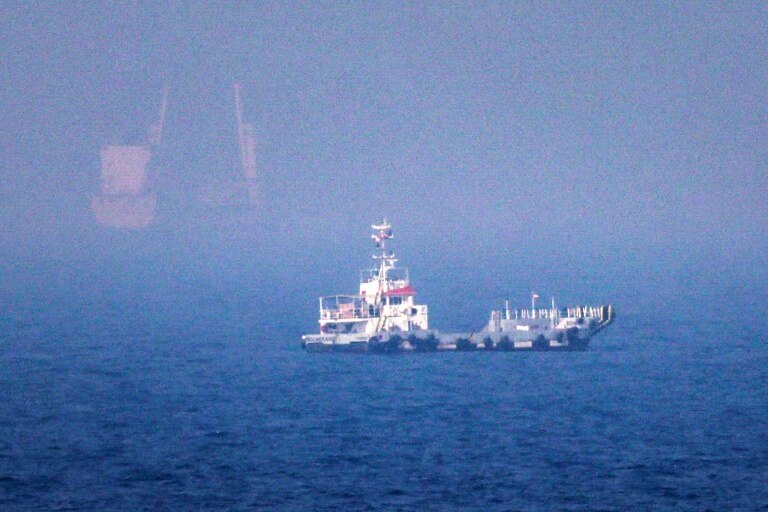
    Tensions between the United States and Iran have spiked dramatically in the strategic Strait of Hormuz after US President Donald Trump issued an extraordinary order directing American naval forces to “shoot and kill” any Iranian vessels accused of laying mines in the key waterway, throwing already fragile ceasefire negotiations into further jeopardy. The hardline directive comes as hopes for a diplomatic breakthrough to end the ongoing regional conflict have all but collapsed.

    In a public post shared on social media, Trump made his order explicit, stating: “I have ordered the United States Navy to shoot and kill any boat, small boats though they may be … that is putting mines in the waters of the Strait of Hormuz.” He added that naval forces were instructed to act without hesitation, and announced that ongoing US mine-clearing operations in the strait would be ramped up to three times their original intensity. Alongside the order, Trump reposted a video that openly called for the assassination of Iranian leaders who refuse to accept a US-brokered deal, a move that drew swift and fierce condemnation from Iranian officials.

    Iranian Foreign Ministry spokesman Esmail Baghaei blasted Trump’s decision to amplify the violent call for killing Iranian leadership, condemning the US as a promoter of state-sanctioned violence. “The President of the United States has reposted a statement from an individual openly calling for ‘killing the ones who don’t want a deal’,” Baghaei said in a post on X Thursday evening. “The United States, which once presented itself as a cradle of democracy, freedom, and human values, now appears to become a promoter of terrorism, murder, and mass violence. What should one call this, if not a profound moral failure?”

    Top Iranian officials, including President Masoud Pezeshkian and Foreign Minister Abbas Araghchi, pushed back against US claims of internal division within the country, releasing coordinated messages affirming national unity in the face of American aggression. “In Iran, there are no radicals or moderates; we are all ‘Iranian’ and ‘revolutionary’, and with the iron unity of the nation and government, with complete obedience to the Supreme Leader of the Revolution, we will make the aggressor criminal regret his actions,” the officials wrote on their X accounts. They added: “One God, one nation, one leader, and one path; that path being the path to the victory of our dear Iran, more precious than life.”

    The escalation around the Strait of Hormuz, one of the world’s most critical global oil and commercial shipping chokepoints, follows the collapse of planned ceasefire talks this week in Islamabad, Pakistan. Earlier this week, Trump announced he would extend an unofficial US ceasefire deadline indefinitely, repeating that he is in no rush to end the conflict.

    Regional analysts warn that Trump’s new aggressive order is a deliberate tactic of coercive diplomacy designed to force Iran into making concessions at the negotiating table. Nagapushpa Devendra, a West Asia analyst and research scholar at the University of Erfurt in Germany, told China Daily that Trump’s approach relies on applying military pressure to gain leverage while he claims to face no time pressure for a resolution. However, she noted that Iran has signaled it is prepared to withstand the pressure and turn the strategically vital strait into its own bargaining tool against the US.

    Devendra predicts that the escalation will not lead to a quick negotiated settlement, but rather a prolonged, high-stakes standoff between the two powers. “The likely consequence is not a quick settlement but a longer standoff, with more ship seizures, the risk of more clashes in the Hormuz Strait, and higher pressure on oil and shipping markets,” she explained. Diplomatically, she added, the escalation could erode what little allied support the US has for its aggressive policy in the region, while also pulling Israel deeper into an expanding regional crisis that risks spiraling into full-scale war.

    The ongoing conflict, which was instigated by the US and Israel in late February, has already inflicted catastrophic humanitarian damage across the broader Middle East, according to United Nations officials. Alexander De Croo, administrator of the United Nations Development Programme, warned that the war will push more than 30 million people across the region back into extreme poverty, with widespread food insecurity expected to worsen in the coming months. “Even if the war would stop tomorrow, those effects, you already have them, and they will be pushing back more than 30 million people into poverty,” De Croo told Reuters. He also highlighted other far-reaching consequences of the conflict, including widespread energy shortages and a sharp decline in remittances that many regional households depend on for survival.

    In a further sign of growing US military buildup in the region, Xinhua News Agency reported Thursday that a third American aircraft carrier strike group — the Nimitz-class USS George H.W. Bush and its accompanying fleet of warships — has arrived in the US Central Command area of responsibility, which covers all US military operations across the Middle East.

    The escalation has already been matched by Iranian action: Reuters reported Thursday that Iran has seized two foreign container ships near the Strait of Hormuz, detaining roughly 40 crew members and moving the vessels toward Iran’s southern port of Bandar Abbas. A relative of one of the detained seafarers told the news agency that “Some 20 Iranians armed to the teeth stormed the​ ship,” adding that “Sailors are under Iranians’ control, their movements on the ship are limited, but the Iranians are treating them well.”

    As both sides ramp up military posturing and diplomatic efforts remain stalled, the international community faces growing risks of a major military confrontation in the Strait of Hormuz that could send shockwaves through global energy markets and destabilize the entire Middle East.

  • Israeli PM says he was treated for early-stage prostate cancer

    Israeli PM says he was treated for early-stage prostate cancer

    JERUSALEM — In a surprise public announcement made on Friday, Israeli Prime Minister Benjamin Netanyahu confirmed that he received complete treatment for early-stage prostate cancer detected after a routine surgical procedure in late 2024, and that no trace of the malignancy remains in his body today.

    Details of the prime minister’s health status were outlined in an annual medical report published by his official office. The report explains that Netanyahu underwent a scheduled operation in December 2024 to address a benign prostate condition. During post-operative follow-up examinations, medical teams identified a small malignant lesion, measuring less than one centimeter in size. The cancer was confirmed to be at an early stage, with no evidence of it spreading to other parts of the body.

    Netanyahu emphasized in his announcement that the malignant spot has been successfully treated and has since disappeared entirely. Taking to the social media platform X, the prime minister wrote, “I am healthy,” adding that he remains in “excellent physical condition” to carry out his official duties.

    According to Netanyahu, when the lesion was discovered, his medical team presented two possible paths forward: ongoing regular monitoring or immediate active intervention. He said he made the decision to move forward with treatment without delay to eliminate the health risk.

    The Israeli leader also explained the two-month delay in making the diagnosis and treatment public. He stated that he held off on releasing the information to prevent the Iranian government from exploiting the news for what he described as “false propaganda” amid the ongoing active conflict between Israel and Iran.