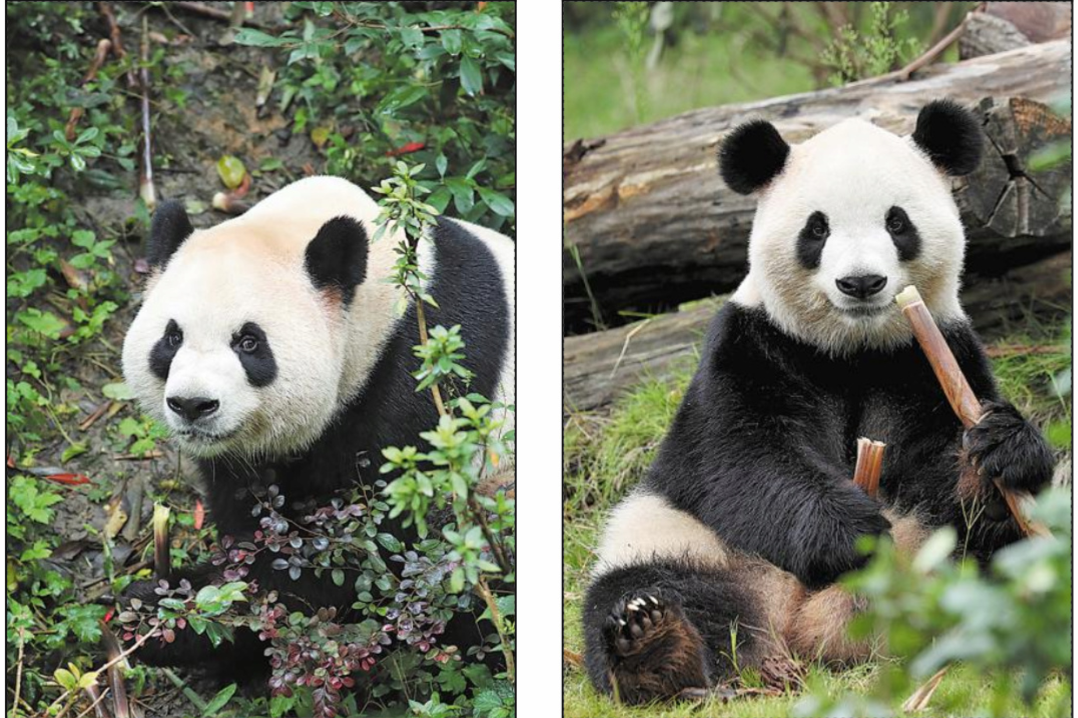
A decades-long collaborative conservation partnership between China and the United States will enter an exciting new chapter this year, following a formal announcement Friday from the China Wildlife Conservation Association that two young giant pandas will soon travel to Zoo Atlanta in Georgia under a freshly sealed 10-year agreement. The pact extends a bilateral giant panda conservation cooperation that first launched between the two institutions back in 1999, building on a 25-year track record of landmark scientific and cultural achievements.
Born and raised at the Chengdu Research Base of Giant Panda Breeding in southwest China’s Sichuan Province, the new panda residents—male Ping Ping and female Fu Shuang—were selected for this assignment after years of careful health and behavioral assessment, association officials confirmed. The framework for the new decade-long cooperation was first negotiated and agreed upon between the Chengdu research base and Zoo Atlanta in 2025, with formal administrative approval completed earlier this year ahead of the public announcement.
Preparation for the pandas’ arrival is already well underway at Zoo Atlanta, with Chinese conservation specialists providing on-site technical guidance to upgrade the pair’s new enclosure. Teams have worked closely to align habitat specifications with modern giant panda welfare requirements, refine daily husbandry routines, update nutritional feeding plans, and establish proactive health monitoring protocols tailored to the new arrivals.
The previous generation of giant pandas at Zoo Atlanta, Lun Lun and Yang Yang, who arrived at the facility in 1999 as the first pair under the original partnership, left an extraordinary legacy of breeding success. Over their 25 years at the zoo, the pair produced seven cubs across five successful litters—a record that still stands as the most successful giant panda breeding outcome for any China-Western country international conservation partnership to date.
Beyond breakthroughs in captive breeding, the two-decade collaboration has delivered far-reaching advances across multiple areas of giant panda science and public outreach. Joint research projects have produced new insights into giant panda behavioral patterns, developed cutting-edge protocols for preventive veterinary care, and expanded global public conservation education programs that reach millions of visitors annually. These shared research outputs and people-to-people exchanges have not only accelerated global progress in giant panda protection but also fostered deeper cultural understanding and connection between the Chinese and American public.
For the new 10-year agreement, collaboration will prioritize four key focus areas: advanced disease prevention and control research, expanded cross-border scientific exchanges, in-situ giant panda conservation work in native wild habitats, and ongoing development of China’s Giant Panda National Park. The park, established in 2021, has already dramatically improved the connectivity, ecological coordination and overall protection integrity of giant panda habitats across China, bringing roughly 72% of the country’s total wild giant panda population under strict, unified protection.
In a statement following the announcement, Raymond King, President and CEO of Zoo Atlanta, expressed enthusiastic support for the renewed partnership, noting that the facility feels deeply honored to once again be trusted as stewards of this globally beloved endangered species. “Zoo Atlanta is delighted and honored to yet again be trusted as stewards of this treasured species and to partner with the association on the continued conservation and research efforts that are the most important outcomes of this cooperation,” King said. “We can’t wait to meet Ping Ping and Fu Shuang, and to welcome our members, guests, city and community back to the wonder and joy of giant pandas.”
Zoo Atlanta’s official statement also highlighted the extraordinary progress China has made in giant panda conservation over the past decades, noting that the Chinese government has allocated extensive human, material and financial capital to restore and protect wild giant panda habitats, establishing 67 dedicated giant panda reserves across the country to support population recovery. The statement added that the creation of Giant Panda National Park has marked a major step forward for cohesive, landscape-scale protection of the species, cementing China’s role as a global leader in endangered species conservation.