分类: world

  • World Cup 2026: Palestinian flags become a target at US-based games

    World Cup 2026: Palestinian flags become a target at US-based games

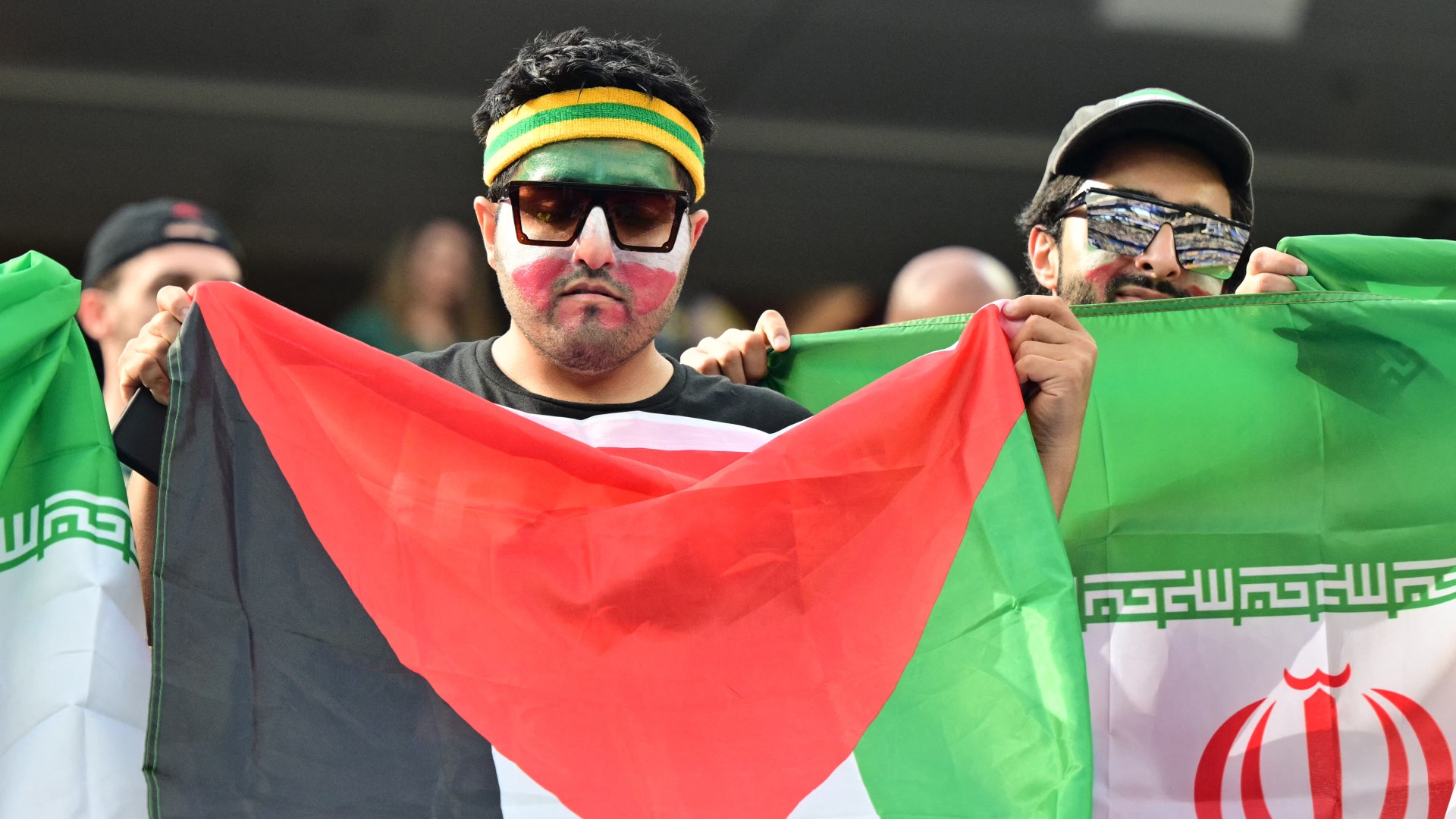
    As the 2025 World Cup hosted in the United States heads into its highly anticipated final match at New Jersey’s MetLife Stadium, a simmering debate over the display of Palestinian flags has emerged as one of the tournament’s most contentious off-pitch stories, drawing new attention to inconsistent political policies within global football governance. What has become clear over the course of the competition is that the Palestinian flag has become both one of the most widely visible symbols of solidarity in stadium stands and one of the most frequently targeted by venue security personnel.

    Multiple supporters who brought Palestinian flags to matches have told Middle East Eye that they were stopped by security officials during venue entry and ordered to remove the flags or face confiscation, a move that directly contradicts FIFA’s own public regulations that permit all national flags to be brought into World Cup stadiums. These confrontations have occurred amid a groundswell of grassroots solidarity from fans of Arab nations competing in the tournament, who have turned out in large numbers to display Palestinian flags throughout the stands, even though Palestine is not a participating team in this year’s competition.

    For pro-Palestine activists and organizers, these repeated incidents are not isolated mistakes, but rather a reflection of what they frame as growing systemic scrutiny of Palestinian identity in public spaces across the U.S., even as popular global support for Palestinian statehood and an end to the war in Gaza has become increasingly visible. As the tournament prepares for its final showdown, two major questions remain unanswered: whether venue authorities will allow Palestinian flags to be displayed openly in the stands of MetLife Stadium, and whether Israeli Prime Minister Benjamin Netanyahu – who faces widespread accusations of war crimes for his government’s military campaign in Gaza – will attend the final as previously rumored.

    Maisa Morrar, a Palestinian-American community organizer based in Oakland, argues that FIFA itself bears ultimate responsibility for the clashes between security guards and flag-bearing fans. She explains that conflicting pre-tournament messaging from the global football governing body over whether Palestinian flags would be allowed created unnecessary confusion, which in turn emboldened security staff to confront supporters displaying the symbol. “We were seeing reports that FIFA was allowing the Palestine flag in stadiums, and my first thought was, why was that even a question?” Morrar said in an interview. “People bring their national flags to World Cup matches all the time; it was bizarre that there was ever any question over whether Palestinians could fly their flag.”

    For many attendees, those unclear policies quickly turned into on-the-ground conflict. Omar Dreidi, a Palestinian-American from Southern California and an NBA player agent with past connections to FIFA through the FIFA Masters program, was confronted by security while attending a match at California’s Levi’s Stadium. He told Middle East Eye that security approached him directly and said he was not permitted to display his Palestinian flag.

    Dreidi, who is familiar with FIFA’s official rules and maintains connections within the organization, refused to comply. A viral video he posted to the social platform X immediately after the confrontation shows him draped in the Palestinian flag, challenging security: “If you’re going to make me take down my Palestinian flag, then make that person take off their keffiyeh,” he says in the footage, pointing to another supporter who had stepped in to defend him. After an extended back-and-forth, the security guard radioed his supervisors before returning to inform Dreidi he could keep the flag. “When he told me I could keep it, he said ‘you can chill now’ – and I told him, you were the one who came and harassed me,” Dreidi recounted.

    The incident drew immediate solidarity from nearby spectators, with two Algerian fans stepping in to support Dreidi, and another attendee beginning to record the interaction. “It shows acts of solidarity and pride and love, and I was really grateful for those two guys,” Dreidi said. After he shared his experience online, Dreidi received dozens of messages from other fans across the tournament reporting identical confrontations, many of whom had their Palestinian flags confiscated by security. “I felt bad because I wish they knew their rights under FIFA rules,” he said. He has since urged all Palestinian supporters attending matches to familiarize themselves with tournament regulations, document all interactions with security if possible, and says he has connected with FIFA’s legal team to offer support to fans facing similar harassment.

    Middle East Eye reached out to FIFA for official comment on the incidents ahead of publication, but did not receive a response before the article went to press.

    The disputes over Palestinian flags are unfolding against a backdrop of broader criticism of the current World Cup and FIFA’s leadership on multiple human rights fronts. While FIFA markets the tournament as a global celebration of football and cross-national unity, campaigners and activists have accused the governing body of failing to uphold those stated principles when confronted with ongoing war, human rights abuses and political expression.

    Critics have repeatedly highlighted what they call FIFA’s deeply inconsistent approach to global conflicts. In 2022, Russia was fully suspended from international football within days of launching its full-scale invasion of Ukraine. Yet repeated calls from the Palestinian Football Association and dozens of global human rights organizations to suspend Israel over its ongoing military campaign in Gaza, which has killed more than 34,000 Palestinians to date, the majority of them women and children, have not resulted in any similar action from FIFA.

    FIFA has also faced new scrutiny over its increasingly close public alignment with former U.S. President Donald Trump, who has made multiple high-profile appearances at tournament events. Rights groups have raised alarm over FIFA’s willingness to align itself with a political leader accused of undermining international law and domestic civil liberties, particularly after FIFA awarded Trump its annual FIFA Presidential Award earlier in the tournament.

    For many Palestinian supporters, these broader institutional controversies have framed the flag disputes as part of a larger pattern of institutional bias, rather than isolated errors by individual security staff.

    For Dreidi, however, the tournament has also highlighted football’s unique power to unite diverse supporters across national and political divides. “We have many problems with FIFA – the peace prize for Trump, the way they allow Israel to play without any sanctions, we have a lot of problems – but put that aside for a second,” he said. “The World Cup is a really unique sporting event because it brings people together. I see the pride and the joy it brings in people.”

    When asked what message he wants the global public to take from the widespread display of Palestinian flags at the tournament, Dreidi said it boils down to a simple demand for equality and inclusion. “I just want everybody to know that the Palestinian flag, like any other nation in the world, is allowed in stadiums,” he said. “We’re allowed to wear our jerseys, we’re allowed to fly our flag high, and be prideful. I knew that going in.”

    For Morrar, attending the tournament was about far more than watching football. She said it felt critical to be present at a major U.S.-hosted global event at this historic moment, and to witness the widespread grassroots solidarity firsthand. “It felt really important for me to go and see the camaraderie and the solidarity, not just for the games but also for us as Palestinians,” she said. She added that fans from dozens of competing nations repeatedly approached her to express solidarity, ask to hold her Palestinian flag, and join chants in support of Palestinian liberation. “Everywhere we’ve gone, people have been so receptive to the flag, and I think a large part of that has to do with the genocide in Gaza,” Morrar said. “The message I’ve fully received and witnessed is that the people are really standing with Palestine, and that at the end of the day it’s always about people’s struggles and their liberation.”

  • Tate brothers arrested in US after more charges laid against them in UK

    Tate brothers arrested in US after more charges laid against them in UK

    In a major development in the long-running legal case against controversial online influencers Andrew and Tristan Tate, the pair have been taken into custody in the United States, just hours after British prosecuting authorities announced a new round of serious criminal charges against both men.

    The UK Crown Prosecution Service (CPS) confirmed on Friday that Andrew Tate, 39, faces an additional seven counts of rape, alongside new charges connected to alleged sex trafficking and the possession of child pornography. For his part, 37-year-old Tristan Tate has been hit with one count of sexual assault, two counts of rape, and three counts of arranging or facilitating human trafficking for the purpose of sexual exploitation.

    According to CPS Special Crime Division head Malcolm McHaffie, the latest charging decisions came after prosecutors received an expanded evidence file from investigators at Bedfordshire Police. This addition of new alleged offenses pushes the total number of identified victims in the case to seven. All of the newly alleged criminal activity is said to have occurred between June 2010 and August 2017, expanding the timeline of alleged offending beyond the previously charged acts which date from 2012 to 2016.

    Both brothers have repeatedly and unequivocally denied all allegations of wrongdoing brought against them since the investigation first opened.

    U.S. law enforcement officials have confirmed the arrest details: U.S. Marshals Service took the pair into custody, and a spokesperson for the U.S. Department of Justice clarified that the arrests were carried out as part of ongoing extradition proceedings. The CPS has publicly stated that UK prosecutors will formally request the extradition of both Tate brothers to the United Kingdom to face trial on all accumulated charges.

    This latest action comes more than a year after May 2025, when UK prosecutors first confirmed an initial list of 21 charges that the pair would face in UK courts. This is an ongoing, developing breaking news story, with additional details expected to be released in the coming hours as extradition proceedings move forward.

  • US and Israel used Karim Khan misconduct claims to ‘defang’ ICC, says former EU top diplomat

    US and Israel used Karim Khan misconduct claims to ‘defang’ ICC, says former EU top diplomat

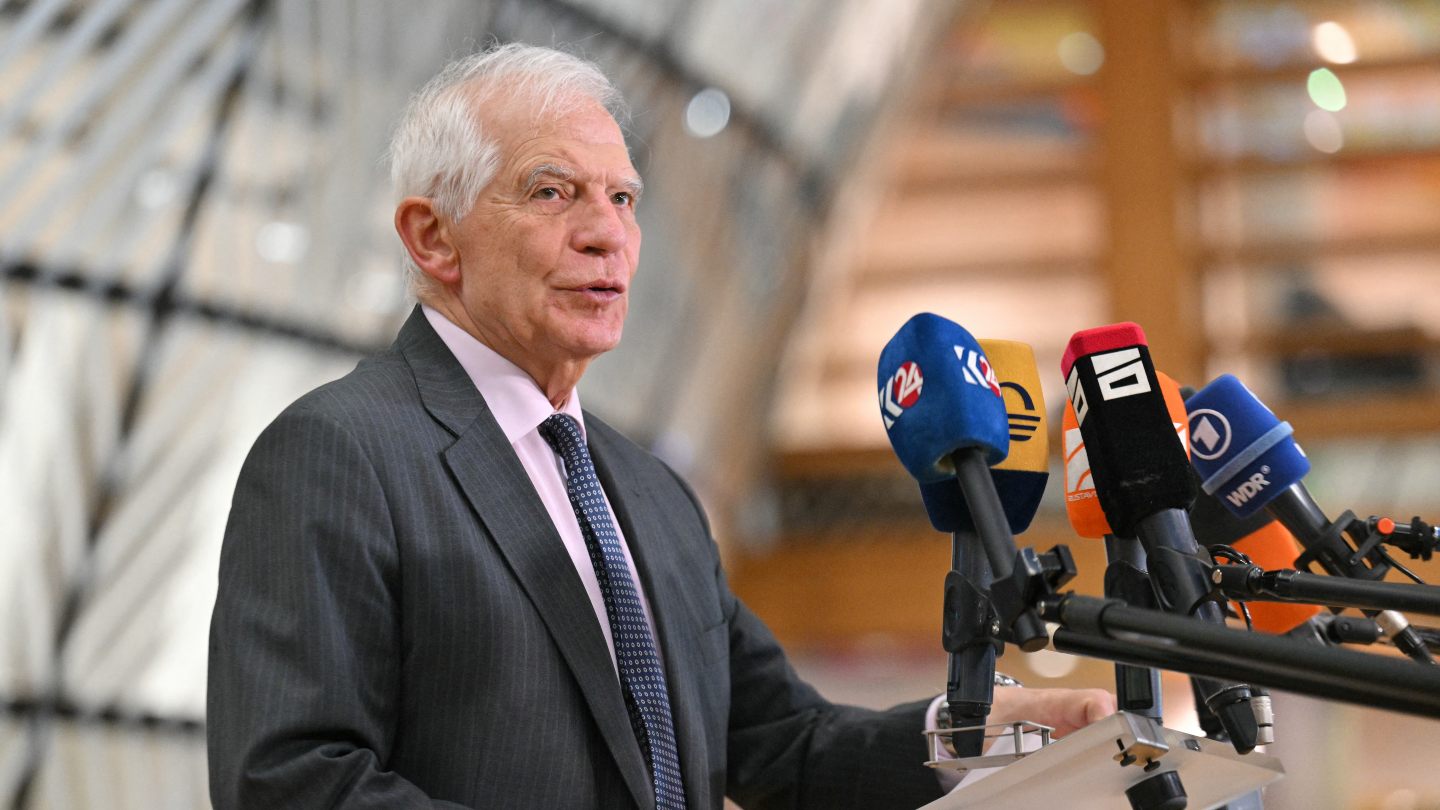
    A former top European Union diplomat has leveled explosive accusations that the United States and Israel are leveraging unproven sexual misconduct claims against International Criminal Court (ICC) Chief Prosecutor Karim Khan to advance a long-held goal: disabling the global court from the inside out. In a Friday opinion piece published by Project Syndicate, Josep Borrell, the former EU High Representative for Foreign Affairs, is calling on ICC member nations to defend fair legal procedure when they vote on Khan’s future next week.

    “Some institutional failures do not stem from public scandal, but from deliberate procedural sabotage, where acts of undermining are disguised under the rhetoric of good-faith investigation and accountability,” Borrell wrote in the piece. “By the time the true nature of what is unfolding becomes clear, irreversible damage has already been done. I fear this is exactly what we are witnessing in the coordinated attacks against Karim Khan. Recent developments align perfectly with objectives Washington and Jerusalem have spent months advancing.”

    The 125-member Assembly of States Parties (ASP) to the Rome Statute, the governing body of the ICC, is scheduled to cast its decisive vote on Khan’s tenure at United Nations Headquarters in New York on 24 July. The vote follows a June decision by the ASP’s 21-member executive bureau, which voted by a two-thirds majority last month to find Khan committed “serious misconduct” — a ruling that directly contradicts the findings of an independent judicial panel appointed by the bureau itself. That panel concluded evidence compiled from a United Nations investigation into the allegations was insufficient to confirm any form of misconduct. Khan has forcefully denied all accusations of wrongdoing and breach of professional duty.

    Borrell points to a series of irregular procedural changes first exclusively reported by Middle East Eye that break the ICC’s own established rules. Originally, the removal process was structured as two separate votes: first, a vote to confirm whether serious misconduct occurred, followed by a second vote to decide on removal if misconduct was upheld. Under the Rome Statute’s Article 46, a finding of misconduct requires a two-thirds majority of states present and voting, while a final removal vote needs an absolute majority of 63 out of the 125 total ASP members. The ASP’s own March procedural guidance, seen by Middle East Eye, explicitly outlined this two-step process. Despite this, the bureau chose to merge the two votes into a single ballot that requires only an absolute majority to remove Khan immediately.

    The contours of the misconduct allegation have also shifted dramatically, Borrell argues. In a confidential June 8 bureau decision obtained by Middle East Eye, the body claimed it had found “beyond reasonable doubt” that Khan engaged in a sexual relationship with the complainant, arguing that such a relationship was inherently inappropriate due to the power imbalance between the two. This reframing directly deviates from the original non-consensual sexual misconduct allegations that formed the core of the investigation and subsequent media leaks. Both Khan and the complainant have denied the existence of any consensual sexual relationship.

    Borrell warns that this procedural manipulation lowers the bar for removal dramatically. “This is no trivial procedural change. Folding the second vote into the first — on an accusation that remains unproven — allows for removal based on an unsubstantiated claim, or even a completely new allegation no one ever raised, such as an abuse-of-authority consensual relationship,” he wrote.

    Tracing the origins of the campaign against Khan to a direct threat from U.S. lawmakers earlier this year, Borrell notes that in April 2024, a bipartisan group of U.S. senators explicitly warned Khan that moving forward with an arrest warrant for Israeli Prime Minister Benjamin Netanyahu would make him a target for retaliation. Despite the threat, Khan proceeded to file applications for arrest warrants against Netanyahu, former Israeli Defense Minister Yoav Gallant, and three senior Hamas officials. This was not the first time Khan has pursued warrants against high-profile leaders who had long been considered untouchable: under his tenure, the ICC has also secured warrants for Russian President Vladimir Putin, former Philippine President Rodrigo Duterte, and senior Taliban leadership.

    Borrell frames the attack on Khan as part of a broader, well-documented offensive to dismantle the ICC entirely. He points to a recent Wall Street Journal op-ed by U.S. Secretary of State Marco Rubio, who openly stated the current U.S. administration intends to dismantle the court “brick by brick.” Washington has already imposed harsh sanctions on 11 senior ICC officials, including Khan, two deputy prosecutors, and eight judges: the sanctions have frozen their personal bank accounts and restricted access to services provided by major global tech and finance platforms including Apple, Amazon, and PayPal.

    Citing reporting from The Financial Times, Borrell also revealed that former U.S. President Donald Trump, during a May 2025 meeting with Chinese President Xi Jinping, proposed that China and Russia — neither of which are parties to the Rome Statute — join the U.S. campaign against the court. Borrell argues this move directly undermines the U.S.’s official justification for its anti-ICC campaign, which it frames as a defense of national sovereignty. “That America’s chosen partners in this crusade are precisely the two countries with the greatest reason to fear the court says more about the real purpose of the operation against Khan than any official communique about sovereignty,” he wrote.

    “Both the Trump administration and Prime Minister Netanyahu want the same outcome: to ensure that no international court can hold soldiers, state officials, or their allies accountable, no matter how severe the allegations of war crimes and crimes against humanity,” Borrell added. “Both see the so-called ‘Khan scandal’ as the perfect opportunity to defang the court permanently. They do not need to destroy it from the outside when they can convince its own member states to hollow it out from within, ignoring a formal judicial finding to stage a political vote against the man who issued the arrest warrants that most inconvenienced them.”

    Closing his argument, Borrell praised Khan for his willingness to pursue high-profile suspects that would have been off-limits in the court’s earlier history. “At a time when international criminal justice and the global rule of law are facing a full-scale frontal assault, not least from indicted war criminals themselves, he deserves the full recognition and support of the international community,” he concluded.

  • Social media influencers Andrew and Tristan Tate arrested in Miami, US Marshals Service tells AP

    Social media influencers Andrew and Tristan Tate arrested in Miami, US Marshals Service tells AP

    Controversial social media influencers Andrew and Tristan Tate have been taken into federal custody by U.S. Marshals in Miami, according to official statements from the agency. The arrest, carried out on Saturday, centers on a sealed arrest warrant that has not yet been released to the public, per U.S. Marshals spokesperson Brady McCarron, who confirmed the details to The Associated Press.

    Hours after the Miami arrest, the Crown Prosecution Service (CPS), the UK’s public prosecution body, publicly confirmed that British authorities are moving forward with a formal extradition request for the two brothers. The new charges from UK prosecutors include rape and organized sex trafficking, with the alleged offenses spanning from 2010 through 2017. Specifically, prosecutors say the alleged abuse occurred between 2012 and 2015 in a region north of London, where the pair grew up.

    Both Andrew and Tristan Tate, who are dual citizens of the United States and the United Kingdom, relocated to Romania in 2016. The pair, both former professional kickboxers, rose to global fame by cultivating a persona centered on extreme hypermasculinity, a lavish luxury lifestyle, and unapologetic misogyny, amassing millions of followers across major social media platforms. Their audience draws heavily from young men and adolescent boys, making their controversial ideological stances a frequent topic of public debate worldwide.

    This is not the first time the brothers have faced criminal allegations related to sexual exploitation. In 2022, Romanian authorities arrested the pair on charges that they ran a criminal scheme to lure women into coerced sexual exploitation. The brothers have consistently denied all wrongdoing in every case brought against them, and the 2022 Romanian charges never proceeded to trial after legal and procedural irregularities were identified in the handling of the case. Defense representatives for the Tate brothers have also reaffirmed their clients’ denial of the new UK allegations.

  • Two US troops killed and one missing after Iranian attack in Jordan

    Two US troops killed and one missing after Iranian attack in Jordan

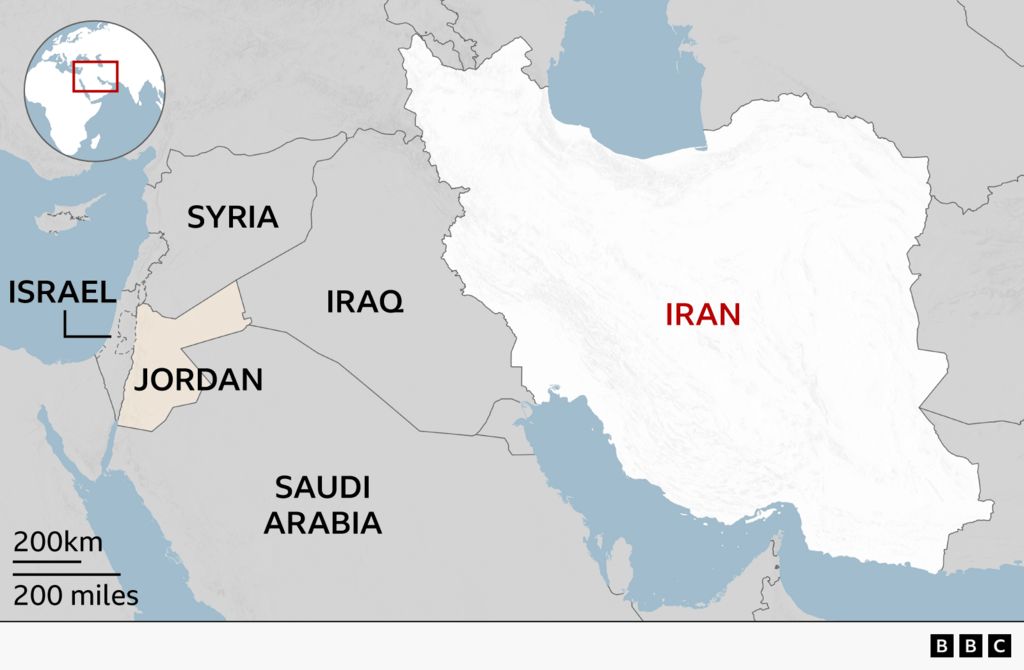
    In a deadly escalation of tensions between the United States and Iran that has pushed an already fragile informal ceasefire into full-blown open conflict, two American service members have been confirmed dead and one is still unaccounted for following a coordinated Iranian strike involving ballistic missiles and drones targeting a location in Jordan, senior US military officials confirmed Friday.

    According to a statement released by US Central Command (Centcom), four additional US service members who required immediate medical attention after the attack were evacuated to regional medical facilities in Jordan, and all four have now been released from care after receiving treatment. Other personnel who sustained only minor injuries in the assault have already returned to their assigned posts, the command added.

    Jordan’s national military had previously released its own update on the overnight attack, confirming that its air defense systems successfully intercepted 10 Iranian missiles that entered the country’s airspace, with no reported casualties or damage from the intercepted projectiles.

    The Friday attack comes amid a sustained campaign of retaliatory action by the US military, which has now launched seven straight nights of offensive strikes against Iranian positions and assets across the region. This campaign began after former President Donald Trump announced that the temporary ceasefire agreement between the two nations was officially terminated.

    The latest fatalities push the total number of American service members killed in the ongoing active conflict between the US and Iran to 14. That count includes a US Navy pilot who went missing earlier this month and was recently officially declared dead by the military, marking another grim milestone in the rapidly deteriorating security situation across the Middle East.

  • Ukrainian strikes on Russian warehouses kill 8, shroud skies in smoke

    Ukrainian strikes on Russian warehouses kill 8, shroud skies in smoke

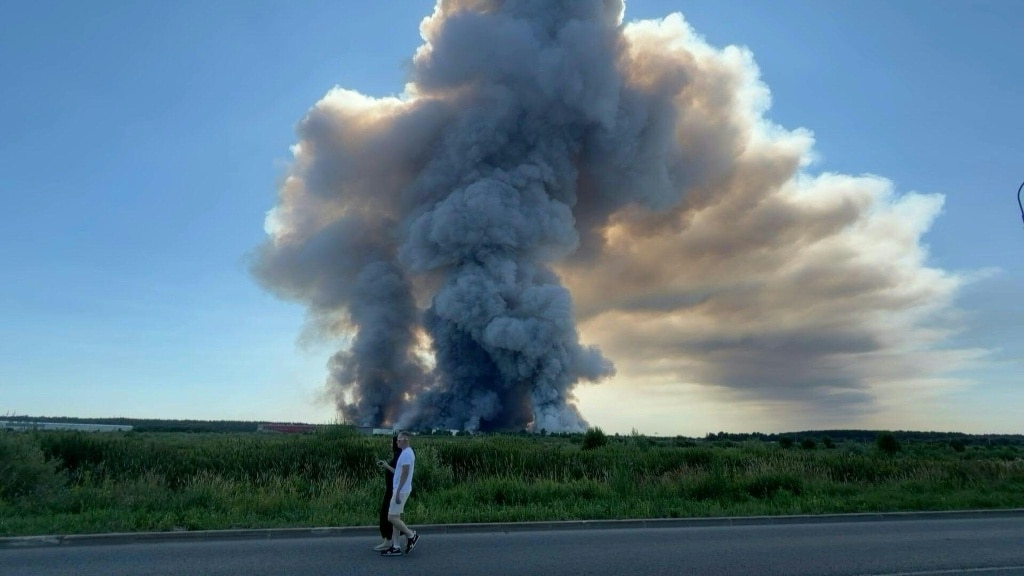
    In an escalation of cross-border military action, waves of Ukrainian explosive-laden drones targeted logistics facilities operated by Russia’s largest e-commerce retailer Wildberries in two Russian regions on Saturday, leaving eight people dead and nearly 90 others hospitalized. Large-scale fires sparked by the attacks filled the sky with thick black smoke that lingered for hours, marking one of the deadliest Ukrainian strikes on Russian civilian-linked infrastructure in recent months.

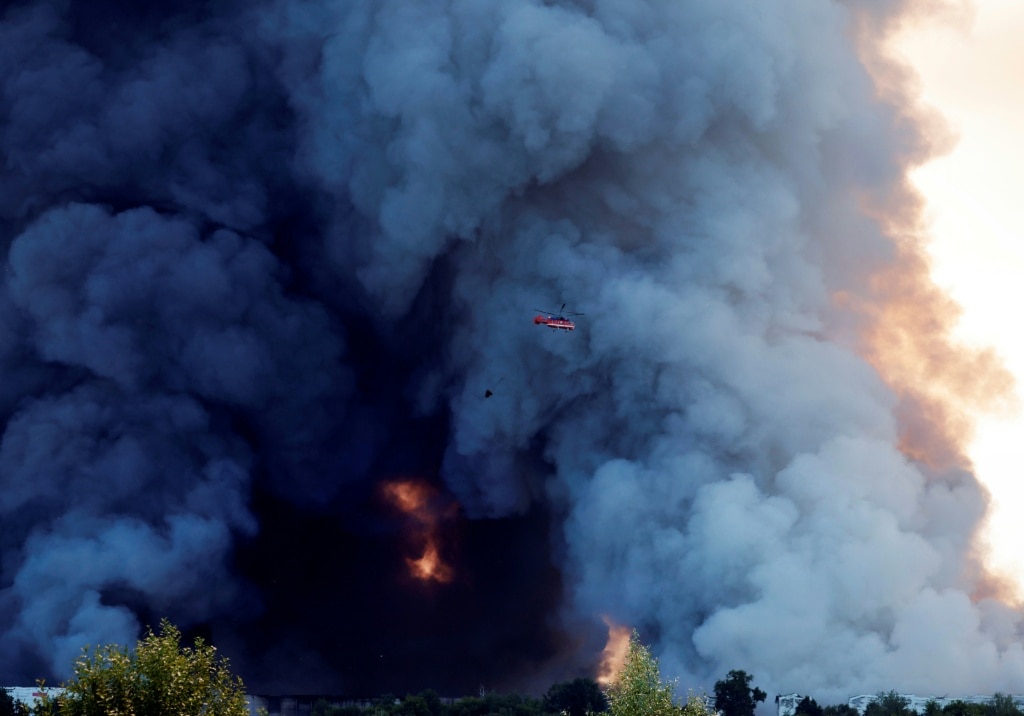
    The attack hit two separate Wildberries warehouses: one in the Tambov region, roughly 500 kilometers southeast of Moscow, and a second in Elektrostal, Moscow Oblast, where an oil depot and an empty kindergarten were also damaged. Seven night-shift workers were killed at the Tambov facility, regional governor Evgeny Pervyshov confirmed, while a eighth person died of injuries in a Moscow region hospital, according to Moscow Oblast governor Andrei Vorobyov. An empty kindergarten in Elektrostal was also struck, but no injuries were reported at that site. As of Saturday evening, firefighters were still working to fully contain the blaze at the Moscow Oblast warehouse, while the fire in Tambov had been fully extinguished.

    Wildberries CEO Tatiana Kim called the incident an unfathomable tragedy for the company and the country. “A terrible night, terrible events for our company and for our country. It is a pain that cannot be put into words,” Kim said in a statement. An AFP correspondent on the scene observed thick black smoke billowing over the Moscow region from early Saturday morning through late afternoon.

    The strike comes as part of Kyiv’s months-long intensification of long-range attacks on Russian territory, a campaign Ukrainian officials describe as “long-range sanctions” and retribution for more than four years of Russian bombardments on Ukrainian civilian and infrastructure targets. To date, this campaign has primarily targeted Russian oil infrastructure, contributing to widespread fuel shortages across nearly 90% of Russia’s regions since June — a disruption to daily life unprecedented since the full-scale invasion began. For Russian civilians, this has meant long daily lines at petrol stations, a sharp shift from years of abundant, low-cost fuel that remained cheaper than prices across Western Europe.

    Ukrainian President Volodymyr Zelensky explicitly claimed responsibility for the attack in a post on the social platform X, confirming the targeting of the two logistics facilities. Zelensky alleged the warehouses were being used to store sanctioned components for Russian drone production and military navigation equipment, framing the strike as a direct response to ongoing Russian attacks on Ukrainian civilian infrastructure.

    Concurrent with the strike on Russian territory, new Russian bombardments across southeastern Ukrainian regions killed five people and wounded nearly 20 others, according to local reports. The cross-border attacks come amid a broader stalemate on the main front line, where Ukraine has managed to slow Russia’s ongoing summer offensive but has not made significant territorial gains of its own.

    The incident also unfolds against a backdrop of growing domestic unrest in Ukraine, where thousands of protesters have gathered for three consecutive days in major Ukrainian cities to oppose the surprise dismissal of popular Defense Minister Mykhailo Fedorov. Zelensky’s sudden government reshuffle, which removed the young, tech-savvy minister who led many of Ukraine’s key military innovation projects, has triggered rare public dissent during wartime. Diploatic efforts led by the United States to negotiate a end to the conflict remain stalled, as Washington has shifted its foreign policy focus to escalating tensions with Iran in recent weeks.

    Russian officials have reported a sharp surge in drone attacks targeting Moscow in recent weeks. Moscow mayor Sergei Sobyanin confirmed that more than 370 drones were launched toward the Moscow region during Saturday’s overnight attack alone, adding that nearly 1,892 Ukrainian drones targeting the capital were intercepted between July 11 and July 18.

  • US strikes leave 10,000 Iranians without water as Kuwait desalination plant burns

    US strikes leave 10,000 Iranians without water as Kuwait desalination plant burns

    The rapid escalation of direct military conflict between the United States and Iran has inflicted mounting damage on critical civilian infrastructure across the Persian Gulf region, triggering widespread disruption of basic services and raising alarms over the risk of a full-scale regional war. In the most recent civilian casualty of the escalating hostilities, Iranian officials confirmed that overnight US airstrikes destroyed a key coastal desalination plant that supplied drinking water to roughly 10,000 residents across 20 rural communities.

    Hamzeh Pour, chief executive of Hormozgan Province’s Water and Wastewater Company, told Iran’s state-run Tasnim News Agency that the strikes targeted desalination pumps and core electrical infrastructure in Bunji village, located in the coastal Jask district. “The supply of drinking water to 20 villages with a combined population of approximately 10,000 people has been completely disrupted,” Pour said. He labeled the attack on the civilian water facility “a series of crimes and terrorist acts,” noting that the facility’s seawater pumping station and main power transformer were “completely destroyed” and that the affected communities are now grappling with a severe drinking water shortage.

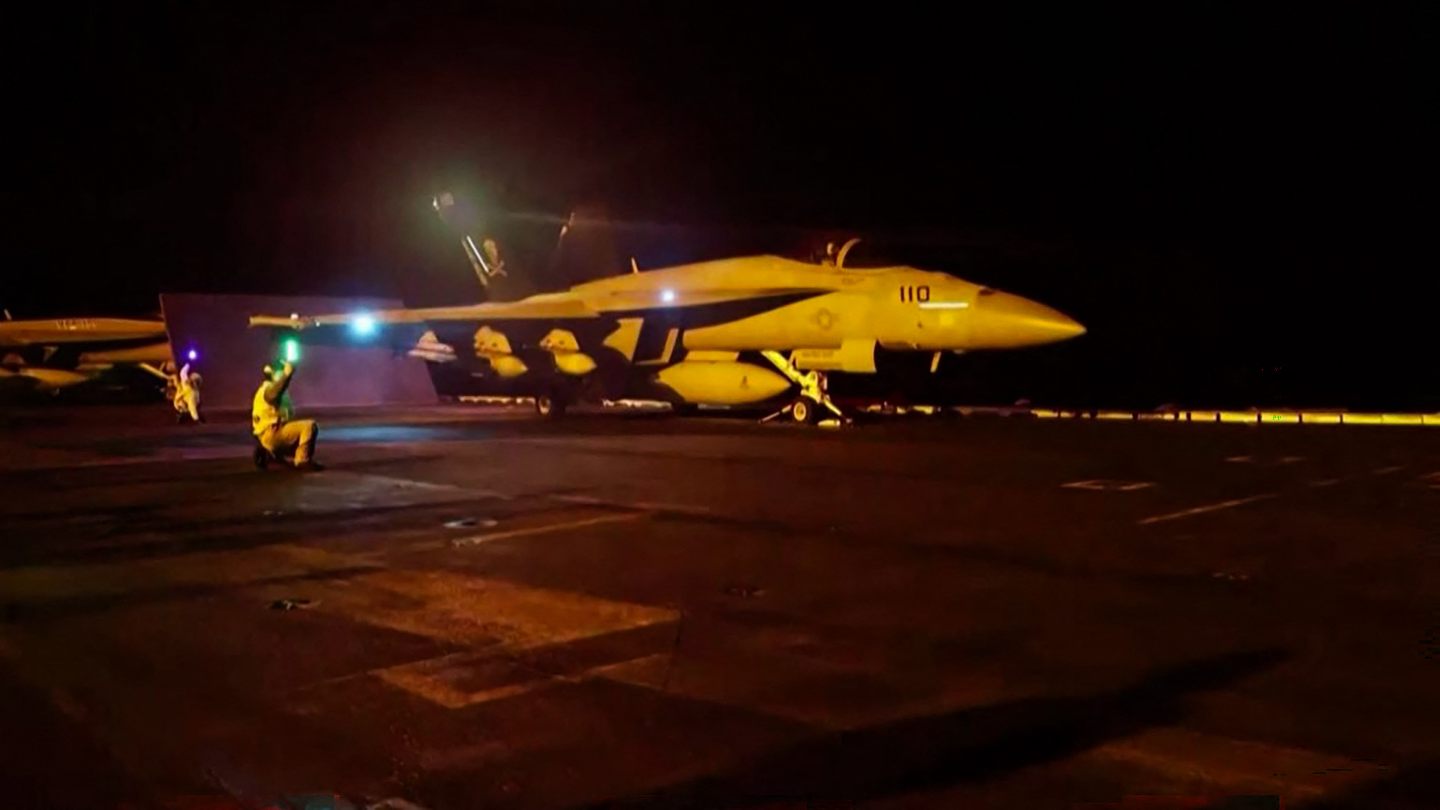
    The strike on the desalination plant came as part of the United States Central Command (Centcom)’s seventh consecutive round of overnight airstrikes targeting Iranian positions across the region. Centcom confirmed in a public statement that the latest wave of attacks focused on Iranian surveillance outposts, military logistics hubs, underground weapons storage facilities and maritime military assets. The operation drew on a full spectrum of US military capabilities, including fighter aircraft, attack drones, and naval warships, and unfolded as more than 50,000 US service members remain deployed across the Middle East to support ongoing operations against Iran.

    As hostilities spread across the Gulf, neighboring Kuwait reported its own critical infrastructure damage following Iranian retaliatory strikes. Kuwait’s Ministry of Electricity, Water and Renewable Energy announced that a fire broke out at a key component of one of the country’s integrated power generation and desalination plants after an Iranian attack. In response, authorities implemented precautionary safety measures, taking several power generating units offline to protect plant staff and preserve the stability of the national electrical grid. The ministry confirmed that emergency response plans have been activated to maintain uninterrupted power and water services, while technical teams continue round-the-clock monitoring of the situation. Kuwait also temporarily closed its airspace, suspended operations at Kuwait International Airport, and rescheduled nearly all commercial flights amid the wave of incoming missile and drone attacks.

    Iran’s Islamic Revolutionary Guard Corps (IRGC) has issued a stark warning to all nations hosting US military forces in the region, urging them to prepare for imminent retaliatory action. In an official statement, the IRGC called on host countries to “activate their civil defence units to protect their citizens and move them away from potential military targets,” accusing these states of allowing their territory to be used as “launchpads for aggression against Iran.” The IRGC confirmed it launched missile and drone strikes against multiple US-aligned military sites, including Camp Arifjan and Ali Al Salem Air Base in Kuwait, US naval facilities at Kuwait’s Mina al-Ahmadi port, and key military installations in Bahrain. Bahraini authorities activated air raid sirens across the country multiple times during the attacks, while Kuwaiti military forces confirmed they intercepted a number of incoming missiles and drones before impact.

    Iranian state media also reported new damage to two key bridges along the busy Bandar Abbas-Rudan highway, while provincial officials confirmed that at least eight civilians were killed in US strikes carried out in Hormozgan Province on Friday. Against this backdrop, a senior Iranian military official has announced a major shift in Tehran’s military posture, warning that Iran will abandon its long-held policy of restraint if US attacks continue. “Iran will no longer limit itself to retaliatory, like-for-like responses… and no political border will be safe,” Major-General Mohsen Rezaee told Iran’s state-run IRIB news agency. “Until now, we have not focused on expanding the war, nor on launching an invasion. Until now, the goal was deterrence, to put an end to the conflict,” he said, adding that “the policy of negotiating during war is over.”

    Beyond the immediate human and infrastructure damage, the latest round of cross-border attacks has disrupted one of the world’s most critical energy chokepoints. Data from ship-tracking platform MarineTraffic shows commercial vessel traffic through the Strait of Hormuz has fallen to its lowest level in three years, with only eight vessels transiting the strategic waterway on Thursday, down from 15 the previous day. Roughly 20% of the world’s daily oil supply passes through the strait, so any extended disruption to shipping there risks roiling global energy markets and driving up fuel prices worldwide.

  • Ukrainian strikes on Russian warehouses kill 8, shroud skies in smoke

    Ukrainian strikes on Russian warehouses kill 8, shroud skies in smoke

    In a sharp escalation of cross-border hostilities between Russia and Ukraine, waves of explosive-laden Ukrainian drones targeted key logistics facilities belonging to Russia’s largest e-commerce retailer Wildberries across the Moscow and Tambov regions on Saturday, leaving eight people dead and triggering massive infernos that filled the sky with thick, dark smoke for hours.

    The deadly attack marks a new phase in Ukraine’s months-long campaign of deep strikes into Russian territory, which Kyiv frames as justified retribution for more than four years of continuous Russian bombardment across Ukrainian soil. Dubbed “long-range sanctions” by Ukrainian officials, this campaign has previously focused heavily on Russia’s energy infrastructure, contributing to widespread fuel disruptions in one of the world’s top oil-producing nations.

    Saturday’s strikes specifically hit two core Wildberries warehouses, claiming the lives of eight night-shift workers and leaving both facilities nearly completely destroyed by fire. Wildberries CEO Tatiana Kim voiced profound grief over the incident, saying, “A terrible night, terrible events for our company and for our country. It is a pain that cannot be put into words.”

    An Agence France-Presse journalist on the ground observed dense black smoke billowing over the Moscow region from early Saturday morning, with the plume lingering until at least late afternoon. Evgeny Pervyshov, governor of the Tambov region located roughly 500 kilometers southeast of Moscow, confirmed seven night-shift employees were killed when an enemy drone struck the local Wildberries logistics center. In the Moscow region, where a second Wildberries warehouse and an adjacent oil depot were hit, regional governor Andrei Vorobyov announced one additional fatality after a wounded person died in hospital.

    As of Saturday evening, firefighters continued to battle the remaining blaze in Elektrostal, the Moscow town where the warehouse is located, while the fire in Tambov had already been fully extinguished. Vorobyov added that an empty kindergarten in Elektrostal was also damaged in the strike, though no additional casualties were reported at that site. Regional health officials confirmed that nearly 60 people sustained injuries in the coordinated attacks and were transported to local hospitals for treatment.

    Sergei Sobyanin, mayor of Moscow, released details of the unprecedented scale of the overnight drone assault, stating that more than 360 drones were launched toward the Moscow region alone. He added that between July 11 and July 18, Russian air defense systems intercepted nearly 1,900 Ukrainian drones bound for the capital.

    In a public post on X confirming the attack, Ukrainian President Volodymyr Zelenskyy framed the strike as a direct response to Russian attacks on Ukrainian civilian infrastructure. “In response to Russian strikes on our civilian infrastructure and on our cities and communities, two major logistics facilities were hit — in the Moscow and Tambov regions,” he wrote. Zelenskyy also alleged that the targeted warehouses were being used to store sanctioned components for Russian drone production and navigation equipment.

    The escalation comes amid a broader spike in cross-border hostilities: on the same day as the Wildberries strikes, Russian bombardment of the Ukrainian Black Sea port city of Odesa left one civilian dead and 13 others wounded, as Russian forces continue to ramp up attacks on key Ukrainian port infrastructure.

    Ukraine’s sustained campaign of strikes on Russian oil infrastructure has disrupted daily life across Russia more dramatically than at any previous point in the ongoing conflict. Data shows that fuel shortages have impacted nearly 90 percent of Russian regions since June, forcing long lines at petrol stations across the country — a marked shift from the pre-strike era, when fuel was consistently abundant and far cheaper in Russia than in most of Western Europe.

    Meanwhile, frontline fighting between the two sides remains largely deadlocked, with Ukrainian defenses slowing Russia’s planned summer offensive to a near standstill. Diplomatic efforts led by the United States to negotiate a end to the conflict remain stalled, as Washington has shifted its foreign policy focus to ongoing tensions with Iran.

  • Mali rebels ambush an army convoy, killing or capturing scores of soldiers

    Mali rebels ambush an army convoy, killing or capturing scores of soldiers

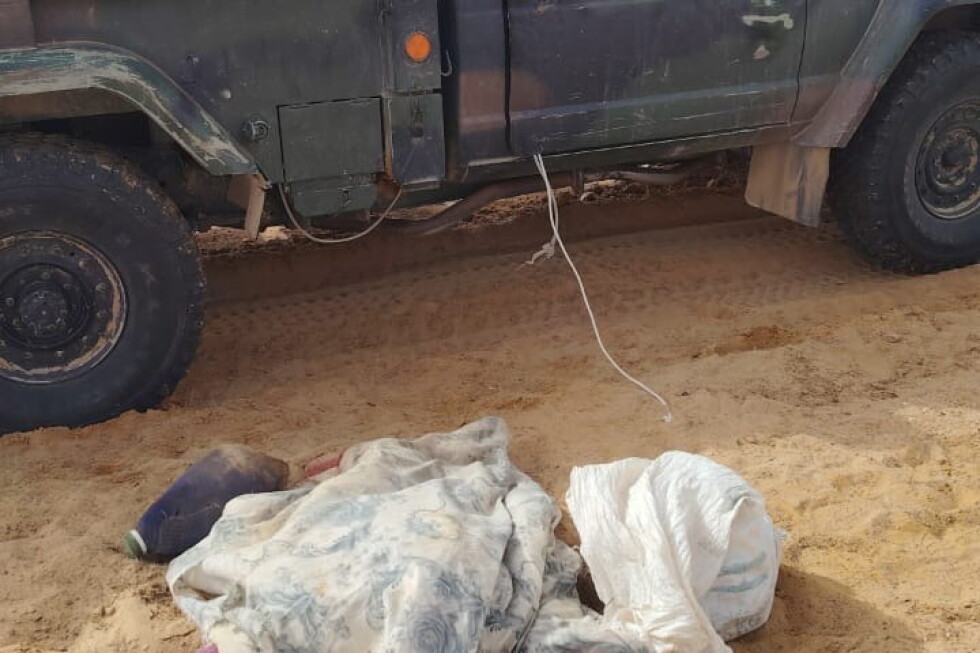
    In a coordinated pre-planned assault that underscores the growing security crisis in the Sahel, an alliance of jihadi militants and Tuareg separatist fighters ambushed a Malian military convoy in Mali’s violence-plagued northern region on Saturday, with rebel spokespeople confirming dozens of government troops were either killed or taken prisoner. The attack, which took place in a remote stretch of the Gao region, has been officially confirmed by Mali’s national military, which issued a brief statement confirming the assault on the convoy carrying Malian soldiers and their foreign allies. The military declined to release further details on casualties or damage, noting only that a counteroffensive against the armed groups is currently ongoing.

    Two separate groups have independently claimed joint responsibility for the operation: Jama’at Nusrat al-Islam wal-Muslimin (JNIM), the regional al-Qaeda affiliate active across the Sahel, and the Azawad Liberation Front (FLA), a unified Tuareg separatist movement formed in 2024 to push for an independent Azawad state in northern Mali. In their public statements, both groups confirmed that the targeted convoy included members of Mali’s regular military alongside personnel from Russia’s Africa Corps, the paramilitary force that has propped up Mali’s ruling junta since the country cut ties with United Nations peacekeeping forces in 2020.

    FLA spokesperson Mohamed Elmaouloud Ramadane outlined the details of the assault in a press statement, noting that the convoy was traveling from the northern outpost of Anefis toward the regional capital of Gao when the attack unfolded in the open Sahara Desert. Observers have identified the convoy as a likely logistics support unit, as visible fuel tankers accompanying the column indicate it was moving supplies to forward government positions. Ramadane added that multiple army vehicles, including armored vehicles, were destroyed in the ambush, while other working vehicles were seized by the alliance.

    The rebel alliance has released multiple videos purportedly documenting the aftermath of the attack. The footage, which has not been independently verified by The Associated Press, shows captured Malian soldiers surrendering while surrounded by rebel fighters, as well as armed rebels transporting detainees in their own vehicles. One clip shows rebels opening fire on a group of soldiers lying on the ground, confirming the heavy violence of the assault.

    This attack marks the latest in a growing pattern of coordinated operations between the once ideologically opposed JNIM and FLA, a partnership that regional security analysts warn poses a severe threat to Mali’s fragile stability and the authority of its military junta, which has ruled the country since a 2020 coup. Mali, a landlocked nation at the heart of the Sahel, a vast semi-arid belt stretching across Africa south of the Sahara, has become the global epicenter of Islamist extremist violence over the past decade. Tuareg separatist groups have waged an on-again off-again insurgency for independence since 2012, and the FLA unified multiple separate separatist factions into a single movement earlier this year.

    The April 2024 coordinated assault on Malian forces, the largest such attack in the country in more than 10 years, first signaled the depth of the growing collaboration between JNIM and the FLA. The new ambush adds to a sharp upward trend in militant attacks against government forces across the Sahel, where armed groups are increasingly pushing to expand their territorial control and influence amid a fragmented security landscape.

  • Venezuela earthquakes death toll surpasses 5,000

    Venezuela earthquakes death toll surpasses 5,000

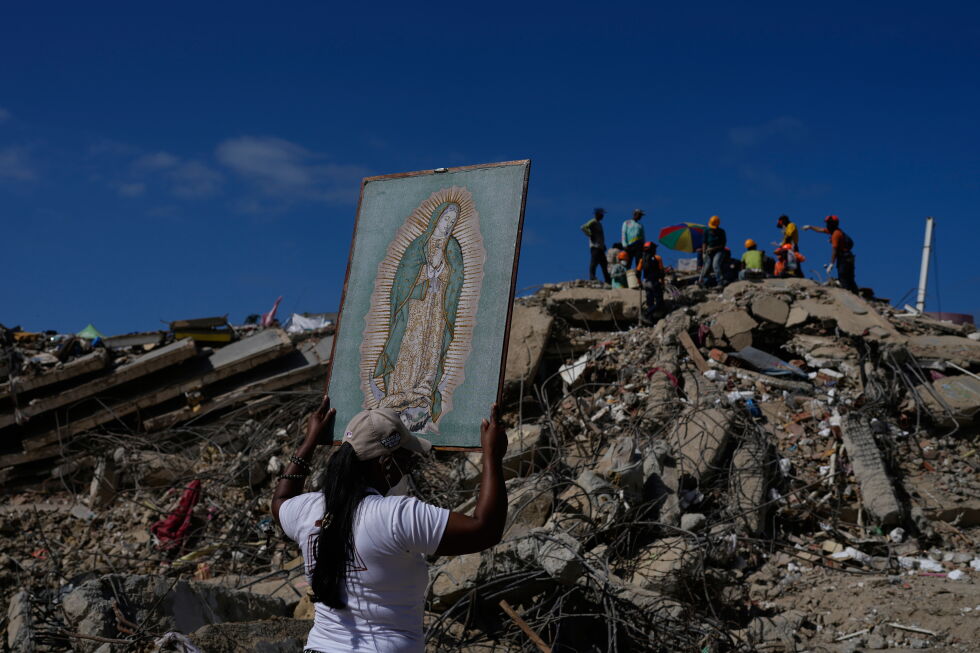
    CARACAS, Venezuela – Local Venezuelan authorities announced Friday evening that the total number of fatalities from the two powerful seismic events that struck the nation last month has climbed to 5,069. In an official statement from the interim government led by President Delcy Rodriguez, officials confirmed that the count of injured people has held steady at 16,740, a figure that has not changed over the past 11 days.

    Officials attribute the upward adjustment in the death toll to ongoing search, recovery and debris clearance work, which is being carried out across affected regions. The coastal state of La Guaira, located along the Caribbean Sea and the area hardest hit by the tremors, has seen the bulk of the newly recovered fatalities. As of Friday, national geological monitoring agencies had documented a total of 1,331 aftershocks following the initial major quakes.

    According to Venezuelan government data, the magnitude 7.2 and 7.5 quakes that struck on June 24 have left 856 buildings damaged, with another 190 structures completely leveled. Hundreds of critical public infrastructure assets, including transportation routes such as bridges and highways, also sustained damage, disrupting access to many affected communities.

    Full coverage of Latin American and Caribbean regional news is available via AP News at https://apnews.com/hub/latin-america.