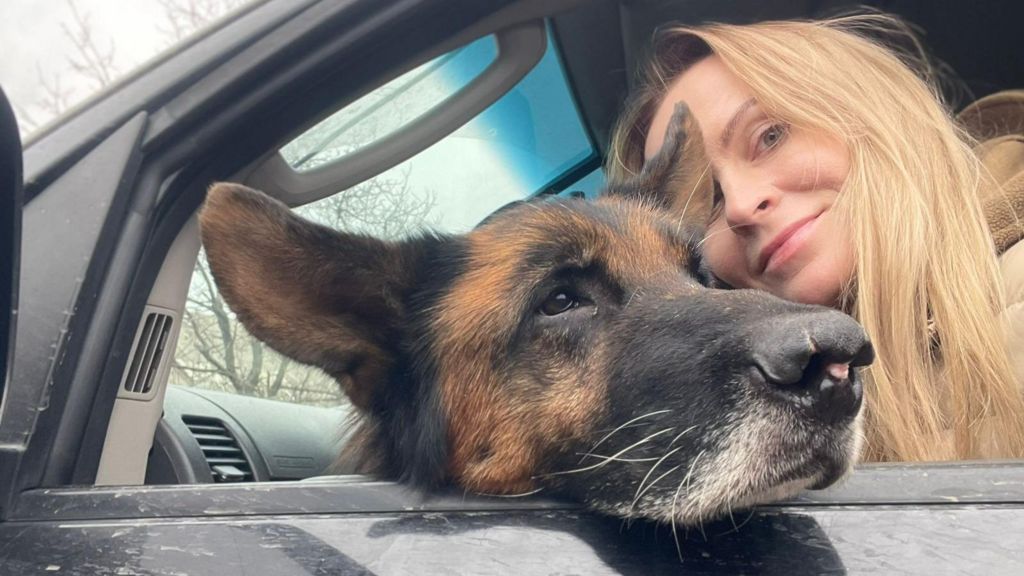
In a frontline Ukrainian city that has endured relentless military pressure, a quiet morning shift preparation turned into a deadly attack that underscores the hidden human and animal cost of the ongoing war. In early February, a Russian drone crashed directly into the compound of the “Give a Paw, Friend” animal shelter in Zaporizhzhia, just as staff were changing into their work uniforms. While the shelter’s thick steel entrance door absorbed the brunt of the blast and likely saved the lives of all human workers, more than 12 animals housed at the facility did not survive the strike.
“It was terrifying, to put it mildly,” recalled Iryna Didur, the organisation’s director. In the immediate aftermath of the attack, local residents poured into the damaged shelter to clear rubble and round up animals that had fled in panic. Even the local energy provider, which has itself repeatedly been targeted by Russian strikes, donated and installed a new reinforced steel door to replace the destroyed one. Within three days, nearly all the debris had been cleared, a speed Didur credits to the outpouring of community support. “We’ve got very good people here in Zaporizhzhia. A lot of them have been visiting us to help,” she told the BBC.
Didur’s group is just one of dozens of grassroots and formal organisations across Ukraine that have dedicated themselves to caring for animals displaced by the ongoing conflict. Beyond providing emergency shelter, food and veterinary care, these groups carry out dangerous evacuation missions to move abandoned pets out of frontline zones, and run neutering programs to control growing stray animal populations.
The scale of the animal displacement crisis is staggering. As millions of Ukrainians fled escalating Russian bombardment near conflict lines, countless pets were left behind when owners had no way to bring them along. Other animals have been left homeless after their owners were killed in attacks. For Lala Tarapakina, head of the 12 Guardians animal rescue charity, the first sight of disoriented former family pets wandering empty roads near the front line pushed her to launch large-scale evacuation work. “That was the first time I witnessed the catastrophe affecting animals,” she said. “They were walking along a road, and they obviously used to be family pets. It was awful.”
Since that moment, Tarapakina’s organisation has rescued more than 40,000 animals, many extracted directly from active combat zones under constant artillery and drone threat. “Many people were forced to flee under shelling, losing friends, relatives and limbs along the way. They left lots of animals behind, and we evacuated them under artillery shelling,” she explained. Rescued animals are either placed in permanent foster or adoptive homes, housed in temporary shelters away from the front, or reunited with their displaced owners. These missions also save the lives of owners themselves, many of whom have refused to evacuate without their companion animals. In one notable case, a woman named Alla became the last person to leave her village in the Donetsk region because she refused to abandon the cats and dogs in her care. “I love them all! How could I abandon them? I probably wouldn’t survive, my heart would just break,” she told Ukrainian media.
The crisis is not limited to traditional companion pets, either. In the northern Sumy region, a specialist police evacuation unit recently assisted a local farmer extract his 11 goats from an active bombardment zone. Even with widespread support for animal rescue efforts, moving animals out of dangerous areas remains a massive challenge. Many Ukrainians have chosen to stay in high-risk frontline areas because travelling with animals is prohibitively expensive and logistically complicated, and finding pet-friendly rental accommodation in safer western and central regions of Ukraine is extremely difficult. Cross-border evacuation to other European countries is even harder, requiring extensive veterinary paperwork including proof of rabies vaccination that many displaced owners cannot obtain under bombardment.
For rescue volunteers and workers, operating in active conflict zones carries constant mortal risk. Nate Mook, who leads the Hachiko Foundation – an organisation that provides veterinary care, pet food, and runs 150 feeding stations for homeless animals along the front line – says his teams now carry drone detection equipment and fit their vehicles with anti-drone netting to protect against attacks. “We’ve had to relocate in certain areas because it became too dangerous, and unfortunately, some of the areas where we began our work in 2022 are now no-go zones,” he said.
Amid the widespread destruction, stray animals have become a constant presence along frontline positions, to the point that Ukrainian soldiers joke that cats and dogs are now standard military issue. Outside the eastern town of Kupyansk, a drone unit driver has been accompanied for more than two years by a pet maltipoo that lives and travels with the unit. The 831st Myrhorod Tactical Aviation Brigade hosts a ginger stray cat that reportedly appears near air defence positions during every air raid, sitting silently beside artillery guns as if standing duty alongside the troops.
Observers often question why rescuers choose to risk their lives to save animals amid widespread human suffering, but rescue leaders say the work provides critical hope for a population traumatized by years of war. “Saving one animal is the same as saving several people because it gives them hope,” Tarapakina said. “By rescuing one dog, you make an average of about 10 people happy. That’s good maths, isn’t it?” Mook, who previously ran crisis food relief organization World Central Kitchen, notes that animals share the same trauma as human civilians, but have no ability to flee or protect themselves. “Dogs and cats have no choice about what’s happening around them, and there’s this sense that they are really powerless. They are equally traumatised and shell-shocked, and the same thing that humans go through, the animals also go through,” he said. “It is not a case of helping one or the other, and animals do not start wars,” he added.