分类: world

  • Sustainable development is new growth driver: SCO book

    Sustainable development is new growth driver: SCO book

    On Thursday, a landmark new blue book focused on the Shanghai Cooperation Organization (SCO) was officially unveiled in Beijing, framing sustainable development as a powerful new engine for inclusive growth across the member bloc. The publication, *Sustainable Development of the Shanghai Cooperation Organization: Building a Better Homeland Together*, was jointly released by the China Institute of International Studies (CIIS) and the China Shanghai Cooperation Organization Research Center.

    This release marks two notable milestones for the research institutions: it is the first entry in CIIS’ new country and regional studies series, and it stands as the seventh blue book produced by the China SCO Research Center since the series launched.

    Aligned with the United Nations Sustainable Development Goals, the blue book documents that the SCO has delivered measurable, tangible progress across a wide range of sustainable development priority areas. These include poverty reduction, expanded access to education, green growth initiatives, digital economy expansion, cross-border infrastructure connectivity, vocational skills training, cross-border e-commerce development, and multilateral energy cooperation. According to the report, these collective achievements have injected robust, sustained momentum into economic and social development across the entire SCO region.

    One of the most distinctive features of this year’s blue book is its inclusive authorial structure: it features contributions from leading scholars from across SCO and partner states, including Russia, Belarus, Kazakhstan, and Azerbaijan. These diverse input offer nuanced, varied perspectives on the unique priorities and expectations of different member states when it comes to advancing cross-bloc sustainable development cooperation. As a result, the publication serves as a critical, multi-vantage window into how the broader international community assesses the SCO’s evolving role in global and regional affairs going forward.

    In opening remarks at the launch event, Li Ziguo, secretary-general of the China SCO Research Center and director of CIIS’ Department for Eurasian Studies, outlined the complex geopolitical context shaping the SCO’s current agenda. Li noted that the bloc operates today amid a turbulent external landscape, characterized by rising global instability and persistent, recurring regional tensions. At the same time, he emphasized that shifting global dynamics—including the growing influence of emerging economies and the rapid acceleration of digital transformation and artificial innovation—are reshaping the global order and creating new opportunities for cooperative progress.

  • Watch: Demonstrators display 20,000 teddy bears for missing Ukrainian children

    Watch: Demonstrators display 20,000 teddy bears for missing Ukrainian children

    A powerful public demonstration has taken shape in the heart of Washington, D.C., where thousands of soft, stuffed teddy bears line a public space to draw international attention to a heartbreaking humanitarian crisis. Organizers of the installation placed exactly 20,000 teddy bears on display, each one carefully chosen to stand in for a single child that Ukrainian authorities confirm has been forcibly abducted and transferred to Russia amid the ongoing full-scale invasion.

    The visually striking exhibit aims to cut through mainstream news cycles and bring the personal toll of the conflict directly to the American public and policymakers based in the U.S. capital. Unlike formal diplomatic statements, the installation uses a universally accessible symbol of childhood innocence to make the abstract scale of the crisis tangible: each empty bear represents a child torn from their family, separated from their home, and held outside of Ukraine’s borders against international law.

    Ukraine’s government has repeatedly documented what it calls mass forced deportations of minors, a practice that human rights organizations have condemned as a violation of the Geneva Conventions and international humanitarian law. Russian authorities have previously denied claims that the transfers are involuntary, framing the actions as efforts to rescue children from conflict zones. The D.C. demonstration is one of the most high-profile public displays outside of Ukraine to highlight the fate of the missing children, calling for global pressure to secure their safe return to their home country and families.

  • Israeli settlers cross into Syria and Lebanon calling for new settlements

    Israeli settlers cross into Syria and Lebanon calling for new settlements

    During Israel’s 78th Independence Day commemorations this week, two separate far-right Israeli settler groups carried out coordinated illegal incursions into neighboring Syrian and Lebanese territory, escalating long-simmering expansionist demands that have put Israeli security forces in the position of intervening to remove the activists.

    The first incident unfolded along Israel’s northern border with Syria, when approximately 40 activists linked to the right-wing Halutzei HaBashan — or Bashan Pioneers, a movement named for the biblical term for the Golan Heights-adjacent region — crossed into the village of Hader, located in Syria’s Quneitra Governorate on Wednesday. Multiple members of the group barricaded themselves inside a local building, tying their bodies to the structure to resist removal. They launched a public appeal, urging ordinary Israelis to pressure government ministers to defy military orders and allow them to remain on Syrian territory. Footage circulated online confirmed the presence of the settlers on the building’s rooftop in Hader. Israeli military forces ultimately intervened, removing all the activists and escorting them back across the border into Israel.

    In a second separate incursion just days after a similar crossing into Syria on Monday, a small group of activists from another far-right settler organization, Uri Tzafon (translated as Awaken North), entered Lebanese territory near the Manara Cliff, an area Israelis refer to as Ramim Ridge. Local Israeli media correspondent Itay Blumental of public broadcaster Kan 11 confirmed the group advanced hundreds of meters into Lebanese land before Israeli security forces detained them and transferred the activists to national police for processing.

    In a statement released after the incident, Uri Tzafon claimed the incursion was framed as a “family tour” to visit cedar trees the group had planted near the border earlier in 2026, and said the action was meant to mark Israel’s Independence Day in what they called “renewed Lebanon.” The group doubled down on its long-held expansionist platform, saying: “We reiterate our call for true independence and full sovereignty of the State of Israel in southern Lebanon – up to the Litani River and beyond.”

    For their part, the Bashan Pioneers said they would not abandon their goals, noting they would only withdraw from the territory permanently once the government authorized their families to move to and settle the occupied areas. In a direct appeal to the current right-wing Israeli administration, the group stated: “The right-wing government should capitalise on the time it has left to set facts on the ground.”

    Israeli officials have formally condemned the unauthorized incursions. The Israel Defense Forces labeled the Hader incursion “a serious offence” that endangered both the civilian activists and deployed military troops. Israeli police have issued formal warnings that crossing into Syria or Lebanon without authorization is a criminal offense, carrying a maximum penalty of four years of prison time for convicted violators.

    These two incursions are not isolated events: both groups have carried out similar illegal border crossings repeatedly since Israel expanded its occupation into new portions of Syria and Lebanon starting in 2024. The actions come amid a growing coordinated push by multiple Israeli settler movements to formally expand Israeli state borders and authorize civilian settlement in newly occupied territories.

    One of the most prominent established settler organizations, Nachala, has publicly joined the call for settlement in southern Lebanon, echoing expansionist language previously used for the Gaza Strip. Ayelet Schlissel, a spokesperson for Nachala, told Israeli settler news outlet Srugim on Sunday: “any area from which the enemy poses a threat – we must eliminate it, expel, and settle.” She repeated the slogan “Occupation, expulsion, settlement” when referring to southern Lebanon, mirroring the movement’s longstanding demands for the Gaza Strip. Just days later on Wednesday, Nachala organized a mass march of roughly 2,000 people on Israeli territory near Gaza, with all participants holding a single clear demand: to be allowed to return to and resettle the Gaza Strip. Unlike the incursions into Syria and Lebanon, the protest remained inside Israeli-designated borders.

    Top Israeli government officials have already signaled openness to these expansionist goals. Earlier this month, Israeli Finance Minister Bezalel Smotrich told a crowd of settlers in the occupied West Bank that the government would pursue “a clear political strategy in Gaza that expands our borders,” adding that the same policy would apply to both Lebanon and Syria. Currently, Israel has maintained full military occupation of captured Syrian territory since the fall of the Bashar al-Assad regime in December 2024, and has occupied large swathes of southern Lebanon for most of the past two and a half years.

  • International graduates bridge China and the world

    International graduates bridge China and the world

    In an era where cross-cultural understanding has never been more critical, international students who complete their higher education in China and return to their home countries are emerging as indispensable connectors between China and the rest of the world, according to a leading Chinese academic.

    Zhang Hao, a professor at Beijing Language and Culture University, shared this observation in an exclusive interview with China Daily, emphasizing the growing role these globally minded graduates play in facilitating people-to-people exchanges. Updated on April 24, 2026, the report highlights how these alumni are embedded across a wide spectrum of professional sectors, turning their experiences in China into tangible connections that bridge cultural and informational gaps.

    From teaching Chinese language to communities abroad to supporting the on-the-ground operations of Chinese enterprises expanding into international markets, these graduates carry far more than just academic credentials from their time in China. They bring first-hand cultural insights, nuanced understandings of Chinese society, and personal friendships forged during their studies, integrating these valuable assets into both their professional work and everyday interactions. In doing so, they are breaking down stereotypes, fostering mutual trust, and creating sustainable channels for dialogue between China and global communities.

  • Three Kosovo Serbs jailed over deadly gun battle and monastery siege

    Three Kosovo Serbs jailed over deadly gun battle and monastery siege

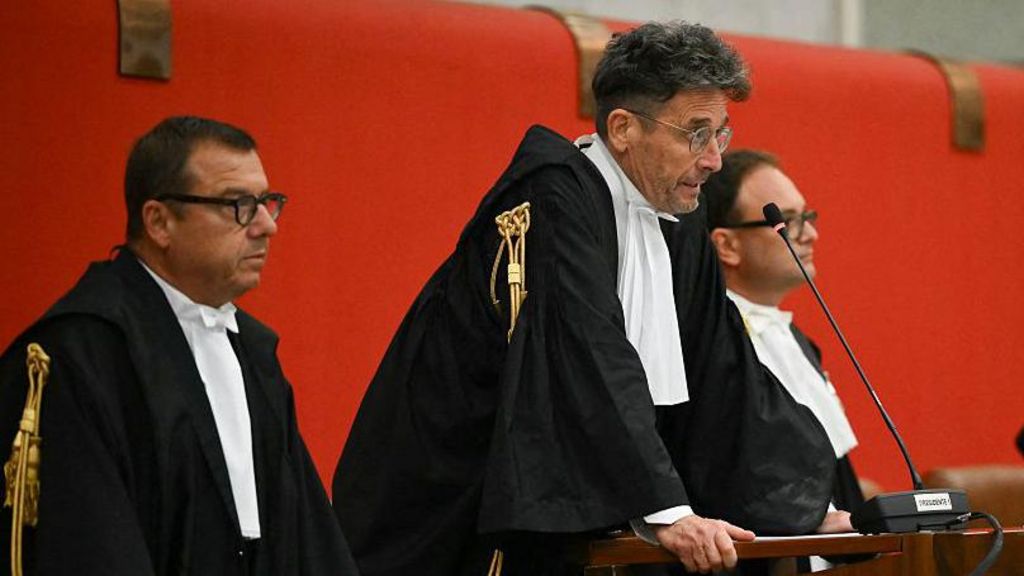
    In a long-awaited ruling that amplifies already tense relations between Serbia and Kosovo, a Pristina court has handed down heavy sentences to three Kosovo Serbs convicted of participating in the September 2023 armed assault on Kosovo security forces in the northern village of Banjska — an incident that stands as one of the deadliest episodes in Kosovo’s post-independence history.

    Two of the defendants, Vladimir Tolić and Blagoj Spasojević, received life imprisonment, while a third, Dušan Maksimović, was sentenced to 30 years behind bars. All three were found guilty of breaching Kosovo’s constitutional order and orchestrating terrorist activities. In total, prosecutors have leveled charges against 45 individuals connected to the attack, but authorities acknowledge the vast majority of the accused are hiding in Serbia, which has refused to extradite them to Kosovo.

    The Banjska attack, which unfolded on the morning of September 24, began when Kosovo police responded to a report of a freight truck blocking a local bridge. As officers arrived, a group of roughly 30 armed assailants opened fire with automatic weapons and grenades, killing Kosovo police Sergeant Afrim Bunjaku and wounding two other officers. After the initial gun battle, the surviving attackers retreated to a nearby 14th-century Serbian Orthodox monastery, forcing their way inside, barricading the entrances, and trapping a group of Serbian pilgrims from Novi Sad inside with them.

    A day-long standoff followed, leaving three members of the armed group dead. By the time Kosovo special forces secured control of the monastery in the late afternoon, all remaining attackers had escaped despite the site being fully surrounded. The group’s self-proclaimed leader, Milan Radoičić — a prominent Kosovo Serb politician — resurfaced days later in Serbia, where he publicly admitted to organizing all logistical preparations for the assault. While Serbian authorities questioned Radoičić, he has not been charged with any crime in Serbia and remains free, though an Interpol arrest warrant restricts his ability to travel internationally.

    Kosovo’s leadership has long argued that the attack had implicit backing from the Serbian government in Belgrade, pointing to Radoičić’s close political ties: he previously served as deputy leader of the Serbian List, the main Kosovo Serb political party that maintains deep links to Serbian President Aleksandar Vučić’s ruling Progressive Party. Radoičić has denied any claims that Serbian government officials knew of his plans, but Kosovo Prime Minister Albin Kurti has repeatedly described the attack as part of a wider Serbian plot to seize control of majority-Serb northern Kosovo.

    Kosovo unilaterally declared independence from Serbia in 2008, and relations between the two entities have remained strained ever since the Banjska incident, hitting near-breaking point. Multiple efforts by the European Union to restart mediated normalization talks between Belgrade and Pristina have collapsed, and Friday’s convictions are not expected to repair the fractured diplomatic relationship.

    In a statement following the verdicts, Kosovo’s acting President Albulena Haxhiu framed the ruling as a critical milestone for accountability, saying it “proves that the attack on the Kosovo police, on the constitutional order and on the security of our country will not remain unpunished.” Kosovo Interior Minister Xhelal Sveçla added that the next step is holding Serbia accountable for what Kosovo claims is Belgrade’s political, financial, and logistical support for the attack. Even with the convictions in hand, however, key questions remain unresolved about the full scope of the attack, the ultimate goals of the armed group, and how the escaped assailants slipped past a full police cordon around the monastery.

  • Amjad Youssef, key perpetrator of Tadamon massacre, arrested in Syria

    Amjad Youssef, key perpetrator of Tadamon massacre, arrested in Syria

    Nearly 12 years after one of the most documented war crimes of the Syrian civil war, a central perpetrator of the 2013 Tadamon massacre has been taken into custody by Syrian authorities, marking a milestone in the new government’s push to hold former regime actors accountable for mass atrocities.

    Syrian Interior Minister Anas Khattab confirmed the arrest of Amjad Youssef, a former intelligence officer under the ousted government of Bashar al-Assad, in a post on X on Friday, describing the detention as the outcome of a successful targeted security operation. A senior security source told state-run Sana news agency that Youssef was apprehended in the al-Ghab region of Hama, a rural area in western Syria.

    The massacre that Youssef is linked to unfolded on April 16, 2013, in the working-class Tadamon neighborhood of Damascus, an area originally built in 1967 to resettle Syrians displaced from the Golan Heights after Israel’s occupation of the territory. Long a diverse, multi-communal home to Druze, Sunni, Alawi, Turkmen and Palestinian communities, Tadamon became a target of harsh reprisal from the Assad regime after residents joined widespread peaceful pro-democracy protests in 2011.

    On that April day in 2013, Assad regime soldiers and affiliated militiamen forced 288 captives into a pre-dug earthen pit, subjected them to humiliation and mockery, then executed them at point-blank range. Seven women and 15 children were among those killed, according to footage captured by the perpetrators themselves that was leaked to the public in 2022. The graphic video showed blindfolded, bound detainees being marched to the edge of the pit before being shot, making it one of the most concrete and detailed pieces of evidence confirming war crimes committed by the former Assad administration.

    Witness testimony collected by independent outlet Middle East Eye confirms that the execution pit in Tadamon was not a one-off atrocity. For nearly a decade after the 2013 massacre, targeted killings and mass executions continued in the roughly one-square-kilometer kill zone overseen by Assad’s military intelligence and the pro-regime paramilitary National Defence Forces, with the regime’s operations headquartered in a local building residents dubbed the “chess house” for its distinctive chequered tilework. Neighbors report women abducted from local mosques were brought to the facility to be sexually assaulted, and regime forces acted with complete impunity in the area.

    “I cannot count how many they killed. Everyone here in Tadamon lived in terror,” Abdul-Rahman Saud, a lifelong Tadamon resident and witness to repeated mass killings, told Middle East Eye in December 2024, after Assad’s regime fell to a rebel offensive led by current Syrian President Ahmed al-Sharaa. “Everyone loved each other but the regime made us hate each other. If they saw on your ID that you were originally from a Sunni area like Idlib or Deir Ezzor, that was enough to kill you.”

    The 2022 leak of the massacre footage proved critical to advancing accountability efforts. The video allowed investigators to identify key suspects, including Youssef, and has been integrated into the new Syrian government’s ongoing legal efforts to bring perpetrators of mass atrocities during the civil war to justice.

  • Pirates hijack oil tanker off the coast of Somalia

    Pirates hijack oil tanker off the coast of Somalia

    After nearly a decade of sharp decline following coordinated international anti-piracy interventions, pirate activity off the coast of Somalia has reemerged as a critical threat to regional maritime security in recent years. The latest and most high-profile incident has underscored the growing risk: armed pirates have seized the oil tanker *Honour 25*, carrying 17 crew members and thousands of barrels of fuel, while it transited waters roughly 30 nautical miles from the Somali shore.

    Multiple regional security sources confirmed to the BBC that six armed assailants boarded and took control of the vessel late Wednesday. Shipping tracking data from ShipAtlas details the tanker’s weeks-long route ahead of the hijacking: it departed Berbera Port, located in the self-declared independent region of Somaliland, on February 20. Shortly after the outbreak of cross-border conflict tied to the U.S.-Israel Iran tensions, the *Honour 25* reached waters near the United Arab Emirates, then loitered near the Strait of Hormuz entrance before reversing course on April 2 to head for Mogadishu, Somalia’s capital.

    Puntland regional security officials, the governing body for Somalia’s semi-autonomous northeastern territory, confirmed the tanker was carrying 18,500 barrels of oil destined for Mogadishu. Following the hijacking, the vessel has been anchored near the Somali coast between the coastal fishing towns of Xaafun and Bander Beyla, under full pirate control. Additional reinforcements have since joined the hijacking party: five more armed men have boarded the *Honour 25*, according to anonymous regional sources. Investigators currently believe the hijackers launched their attack from a remote, unpatrolled stretch of coastline near Bander Beyla, though it remains unclear how the group was able to intercept and overwhelm the tanker without detection.

    The 17-person crew on board includes 10 Pakistani nationals, four Indonesians, one Indian, one Sri Lankan, and one Myanmarese national. No reports on their condition have been released to date.

    This hijacking comes amid a well-documented resurgence of piracy in the Indian Ocean region off Somalia’s coast. Once the global epicenter of maritime hijacking, the area saw pirate attacks drop to near-zero after 2011, when international naval coalitions launched widespread anti-piracy patrols and vessel security mandates. Over the past three years, however, attacks have rebounded, with fishing trawlers, cargo container ships, and now large oil tankers targeted by armed groups.

    The seizure of a fuel tanker bound for Mogadishu is expected to exacerbate already severe economic strain in the capital. Local fuel prices have already tripled in the wake of regional conflicts linked to escalating tensions between Iran and the U.S.-Israel alliance, and renewed fears of disrupted shipping will almost certainly push prices higher and deepen public anxiety.

    As of Thursday, neither formal Somali national government authorities nor the European Naval Force – the multinational body that coordinates official anti-piracy operations in Somali territorial waters – has issued an official statement confirming the hijacking or outlining next steps for response.

  • Pakistani astronauts begin training at China space center

    Pakistani astronauts begin training at China space center

    In a landmark milestone for China-Pakistan aerospace cooperation and international space collaboration, two Pakistani astronauts arrived at the Astronaut Center of China in Beijing on Friday to kick off joint training with their Chinese counterparts, according to official confirmation from the China Manned Space Agency (CMSA).

    In an official statement announcing the start of training, CMSA expressed its expectation that the Pakistani astronauts will soon turn their long-held national space ambition into reality, carrying the Pakistani public’s decades-old spaceflight dream and the enduring friendship between the two Asian nations to China’s Tiangong Space Station, nicknamed the “Heavenly Palace” in Chinese.

    The two trainees, Muhammad Zeeshan Ali and Khurram Daud, are the first international astronaut candidates to receive training at China’s dedicated astronaut facility. Over the coming months, the pair will complete a structured program of specialized training modules before undergoing formal competency assessments. Following the evaluation process, one candidate will be selected to serve as a payload specialist on an upcoming Chinese crewed mission to Tiangong, making history as the first non-Chinese astronaut to visit the Chinese orbiting outpost.

    For Pakistan, the mission carries extra national significance: if the collaboration proceeds successfully, the selected astronaut will become the first Pakistani national ever to reach Earth’s orbit, fulfilling a long-held national goal for the country’s space program.

    The current training program is the outcome of a bilateral agreement signed 14 months prior, in February 2025, between CMSA and Pakistan’s Space and Upper Atmosphere Research Commission in Islamabad. That agreement laid the formal institutional and operational groundwork for joint cooperation in the selection and training of Pakistani astronauts for a mission to Tiangong.

    Completed after more than a decade of development, Tiangong stands as one of the largest and most technologically advanced space structures ever placed in low Earth orbit. It is currently the only active space station in the world that is independently designed, constructed and operated by a single country. Since the station reached full operational capacity, it has hosted 10 consecutive crews of Chinese taikonauts, supporting hundreds of scientific experiments across a wide range of space research disciplines.

  • Trump says Lebanon ceasefire extended as Israel continues strikes

    Trump says Lebanon ceasefire extended as Israel continues strikes

    In a striking contradiction that lays bare the fragility of cross-border calm in the Middle East, former U.S. President Donald Trump has announced a three-week extension of a fragile truce between Israel and Hezbollah in Lebanon — even as Israeli bombing raids continued to target Lebanese territory on the day of the announcement.

    Trump made the extension public via a post on his Truth Social platform, shortly after hosting a high-level diplomatic meeting at the White House with Yechiel Leiter, Israel’s ambassador to the United States, and Nada Moawad, Lebanon’s envoy to Washington. The talks came just hours after a new wave of Israeli strikes across Lebanon left seven people dead, among them a working journalist.

    The additional three weeks will stretch the fragile 10-day truce reached last May into mid-month, offering a tentative window for U.S.-brokered negotiations to continue toward a long-term settlement. But the ceasefire has been marked by near-constant violations from both sides since it first took effect. Even as the Washington meeting was underway, exchanges of fire continued across the Israel-Lebanon border. Israel has persisted with air assaults, ground incursions, and home demolitions in southern Lebanon, and earlier this week, the Lebanese armed group Hezbollah responded by launching a barrage of rockets and drones targeting Israeli positions.

    Shortly after the extension was made public on Friday morning, Lebanese state media reported new Israeli air strikes and artillery shelling targeting the outskirts of four areas in southern Lebanon: Majdal Zoun, Touline, Kherbet Selem, and the al-Rihan highlands.

    The ceasefire extension forms part of ongoing U.S. mediation efforts between the Israeli government and Lebanese national authorities. Speaking to reporters on Thursday, Trump said he anticipates that Israeli and Lebanese leaders will travel to Washington to meet with him in the coming weeks, adding that he holds out hope for a permanent, comprehensive peace agreement before the end of the year. “I think there’s a very good chance of having peace. I think it should be an easy one,” Trump told reporters.

    Not all key stakeholders have signed on to the diplomatic process, however. Hezbollah, the primary Lebanese armed group that has led months of fighting against Israeli forces in southern Lebanon, has explicitly rejected the U.S.-led talks.

    Lebanese Prime Minister Nawaf Salam outlined his government’s core non-negotiable demand in an interview with The Washington Post: any final peace deal must include the full withdrawal of all Israeli forces from southern Lebanon, including from the contested buffer zone Israel has unilaterally declared inside Lebanese territory.

    The current round of full-scale open hostilities dates back to March 2, when Israel restarted large-scale military operations in Lebanon. This followed more than a year of repeated ceasefire violations after a temporary truce between Israel and Hezbollah was reached in November 2024. Since resuming its offensive, Israeli ground forces have pushed several kilometers into southern Lebanese territory, establishing a self-declared 10-kilometer buffer zone inside Lebanese borders. Israeli troops remain deployed across this area, and all Lebanese civilians have been barred from returning to their native villages in the zone.

  • After a failed attempt, Australian families again attempt repatriation from Syria’s Roj camp

    After a failed attempt, Australian families again attempt repatriation from Syria’s Roj camp

    In a development that reignites debate over the repatriation of citizens linked to the Islamic State (IS) militant group, four Australian families departed the Roj Camp in northeast Syria on Friday, launching a fresh push to return to their home country, according to regional officials.

    Correspondents from the Associated Press witnessed 13 Australian women and children board a bus guarded by a Syrian government delegation for the journey out of the remote camp, which sits just kilometers from the Iraq-Syria border and holds thousands of family members of people suspected of ties to IS.

    Lana Hussein, a senior official with the Women’s Protection Units, an arm of the Kurdish-led Syrian Democratic Forces (SDF) that oversees security at Roj Camp, confirmed that the departure was coordinated jointly with the central Syrian government in Damascus. Per the agreed-upon arrangement, the Australian group will stay in the Syrian capital for approximately three days, after which they will be deported following standard security vetting procedures, Hussein explained.

    As of Friday evening, neither the Syrian Ministry of Foreign Affairs nor the Australian federal government had issued any public statement in response to press requests for comment. It also remains unclear whether the Australian government was aware of or involved in planning this latest departure attempt.

    This second effort to repatriate Australian citizens from the camp follows a failed attempt in February that saw a group of 34 women and children turned away by Syrian authorities before they could reach Damascus to depart for Australia. At the time, Australian officials explicitly stated they would not facilitate the group’s repatriation, and Canberra later issued a temporary exclusion barring one of the participating women from reentering the country.

    The geographic context of the situation has shifted dramatically since that February attempt. Roj Camp is located in a region of northeast Syria that was long controlled by the SDF, but clashes between the SDF and Syrian government forces in early 2024 ended with Damascus seizing control of the majority of the territory the SDF previously held. The fighting also triggered a wave of prison breaks and mass escapes from the larger al-Hol camp, another major facility holding IS-linked detainees, which has since been formally closed. Following the collapse of IS’s self-declared caliphate in 2019, tens of thousands of former fighters, their spouses and children from dozens of countries were detained in a network of SDF-run camps and detention centers across northeast Syria. In the aftermath of the January clashes, the U.S. military transferred thousands of former IS detainees from Syria to Iraq to face legal proceedings.

    Canberra has previously facilitated two repatriation operations for Australian women and children held in Syrian detention camps, and an unknown number of other Australian citizens have returned to the country without official government support. Even after the defeat of IS’s territorial rule, the group retains active sleeper cells that continue to launch lethal attacks across both Syria and Iraq.

    This report includes contributing reporting from AP correspondent Abby Sewell based in Beirut.