分类: world

  • US-Iran fighting escalates with infrastructure targeted

    US-Iran fighting escalates with infrastructure targeted

    Less than five weeks after the two sides signed a preliminary ceasefire deal meant to de-escalate months of open conflict, hostilities between the United States and Iran have surged to their most dangerous level in months, with both sides expanding attacks to critical civilian and military infrastructure across the Gulf region. What began as a series of limited tit-for-tat strikes has rapidly escalated into a widening conflict that now threatens to draw in neighboring US-aligned Gulf states, raising fears of a full-scale regional war.

    Iran launched coordinated retaliatory strikes across three Gulf nations on Saturday, responding to seven straight nights of US bombardment on Iranian territory that has killed more than a dozen people and disabled critical public services. According to officials in Kuwait, Iranian strikes hit one of the country’s oil processing facilities and a major power and water plant, forcing the shutdown of multiple power generation units. This marked the second consecutive day of attacks on Kuwaiti energy and water infrastructure: a Friday strike on the same power facility sparked an industrial fire and extensive structural damage. Kuwaiti state oil representatives confirmed unspecified injuries and property damage from the Saturday oil facility strike, and local fire department personnel confirmed multiple firefighters were injured while extinguishing blazes ignited by the Iranian projectiles.

    In Bahrain, another key US military partner in the Gulf, Iranian military officials confirmed via state television that their forces targeted Sheikh Isa Air Base, a primary operating location for US forces in the region. Drones struck aircraft hangars, parking areas for military aircraft, US fuel storage depots, and connecting access roads on the base, Iranian military statements said. Bahrain’s army confirmed its air defense systems successfully intercepted and repelled the majority of the incoming Iranian strike wave.

    Jordan, a key northern US ally bordering both Iran and Syria, was also drawn into the escalation Saturday. Iranian state media reported that fuel storage tanks at Jordan’s Al-Azraq Air Base, another frequent US military operating site, were targeted in the strike. Jordan’s army announced it had shot down all 10 incoming missiles, with no recorded casualties or infrastructure damage from the failed attack.

    The sharp escalation comes after weeks of slowly building tension following the preliminary ceasefire agreement. Senior Iranian military officials have issued stark warnings that the country is abandoning its previous policy of proportional, like-for-like retaliation for US strikes. “Iran will no longer limit itself to retaliatory, matching responses… and no political border will be safe,” Major General Mohsen Rezaei, a top military adviser to Iran’s supreme leader, told state media Saturday. Rezaei added that if US strikes continue for another two to three days, Tehran will launch full-scale offensive operations against all hostile targets in the region.

    On the Iranian side, the damage from seven consecutive nights of US strikes has been extensive. Iran’s state-run IRNA news agency confirmed Saturday that US strikes in the southern Hormozgan Province have killed three people and wounded eight more. Local officials reported that 116 telecommunications towers were destroyed in the bombardment, cutting landline, mobile phone, and internet access across large parts of northern Hormozgan. In the southwestern Khuzestan Province, deputy provincial governor told Iran’s Tasnim news agency that the US has struck 95 separate locations across 12 cities over the past 10 days, killing eight people in the province alone.

    Critical public services have been disrupted across large swathes of southern Iran. Tasnim reported that US strikes on power facilities and desalination plant pumps in the village of Bonji have cut drinking water access to multiple nearby rural communities. Iran’s energy ministry has issued an urgent public appeal for residents to cut electricity usage and turn off air conditioning during peak demand hours, as the national power grid struggles to cope with widespread damage to generation and transmission infrastructure. As of Friday, Iran’s health ministry confirmed that 50 people have been killed and more than 500 wounded in the renewed fighting that erupted one week ago.

    Hope for a renewed diplomatic settlement to end the conflict has largely collapsed, even as regional mediators continue quiet efforts to bring the two sides back to negotiations. US President Donald Trump publicly threatened to target Iranian infrastructure earlier this week, though the White House has not issued any official confirmation of the ongoing strike campaign. The current round of violence was initially triggered by Iranian attacks on commercial shipping in the Strait of Hormuz, the strategic chokepoint through which roughly 20% of the world’s global oil supplies pass, which Iran has sought to control as leverage in negotiations. The Strait has been a central flashpoint since the war began in late February with a joint US-Israeli strike on Iranian nuclear and military facilities; Iran closed the waterway to commercial traffic shortly after the war began, and control over the route remains the core sticking point in peace talks.

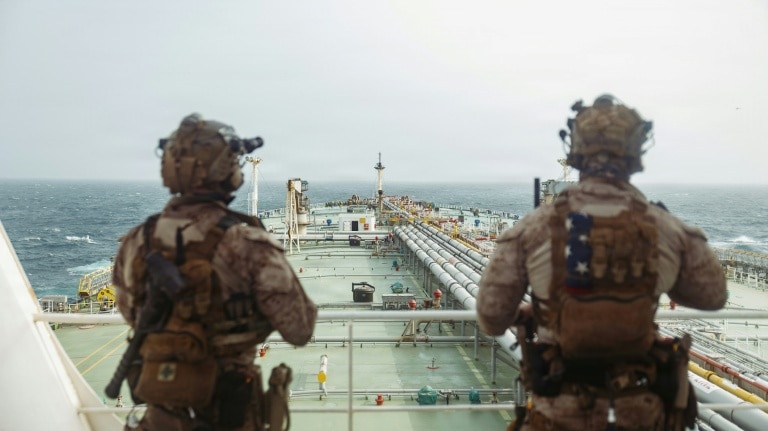
    In response to the latest Iranian escalation, the US has reimposed a full naval blockade of Iranian ports, aiming to cut off the country’s critical oil export revenues that fund its military operations. On Saturday, Iran’s Revolutionary Guards claimed two oil tankers transiting the Strait had struck mines laid by the US, claiming the vessels were operating under US intelligence direction. The US military quickly issued a full denial of the Iranian claim. The Revolutionary Guards also announced Saturday that they had intercepted and stopped four commercial vessels attempting to transit the closed strait.

    Regional analysts warn the conflict is now on track to spiral out of control, as neither side is willing to back down for fear of appearing weak. “The paradox is that, while the conflict continues to escalate, neither side has a strategic interest in allowing this dynamic to continue. Yet both perceive any compromise as a form of capitulation,” explained David Khalfa, a Middle East specialist at the Paris-based Jean-Jaures Foundation, noting that the conflict is now drawing in a widening range of strategic infrastructure across the region that was previously untouched by hostilities.
  • Russian online retail warehouses hit by deadly Ukrainian strikes

    Russian online retail warehouses hit by deadly Ukrainian strikes

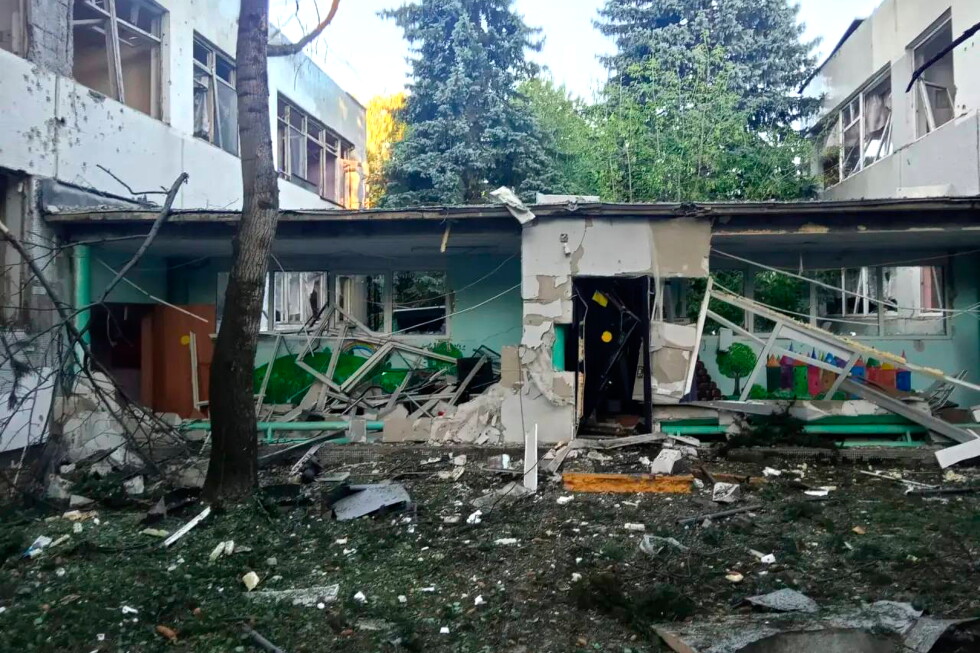
    A deadly wave of Ukrainian drone attacks targeting two logistics warehouses belonging to Russia’s largest e-commerce giant Wildberries has left eight people dead and 62 others injured, Russian regional officials confirmed this week, marking one of the most high-profile cross-border strikes on Russian commercial infrastructure in months.

    The deadliest incident unfolded in Tambov, a city located roughly 475 kilometers southeast of Moscow, where a nighttime drone strike killed seven workers on the night shift and left 25 people injured, seven of whom remain in critical condition. Evgeniy Pervyshov, governor of the Tambov region, wrote on Telegram that the attack was the “largest and most inhumane” strike the region has faced since the start of the full-scale invasion, noting that 28 incoming drones were intercepted and shot down before the strike. Most of the injuries reported were shrapnel wounds from the blast, he added.

    A second strike hit another Wildberries warehouse in Elektrostal, a city in the Moscow Oblast, killing one more person and injuring 37, eight of whom are in serious condition. Moscow region governor Andrei Vorobyov added that 48 drones were shot down across the region overnight, and a separate falling drone debris hit a local Russian oil depot, causing what he called the incident with the “most serious consequences” of the overnight attacks. Ukrainian President Volodymyr Zelensky later confirmed that Ukrainian forces had struck an oil facility alongside the logistics targets.

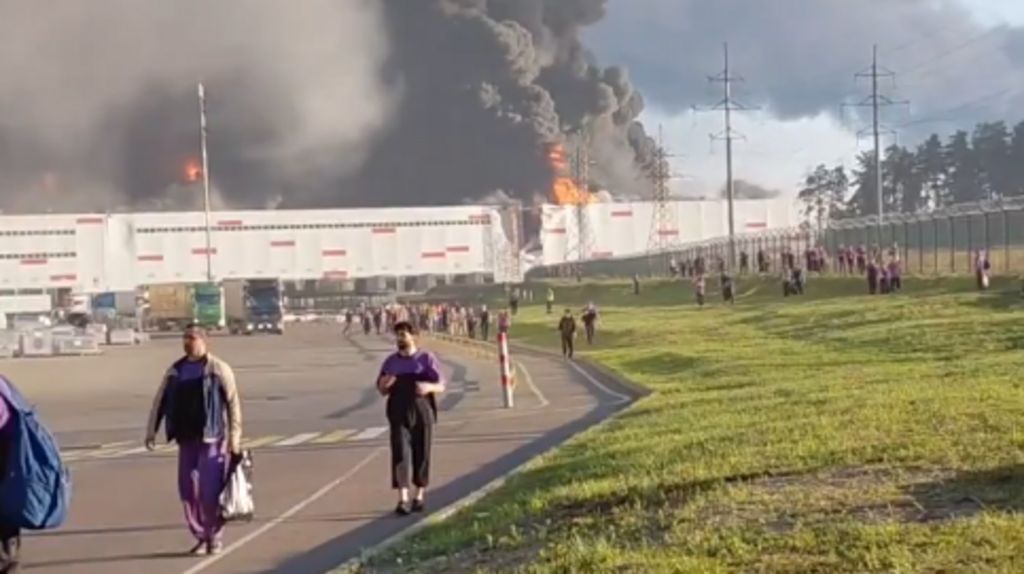
    Unverified footage circulating from the strike sites shows massive flames engulfing the large industrial warehouse buildings, with thick plumes of black smoke billowing into the sky over the facilities. Dozens of workers can be seen fleeing the burning structures to gather in adjacent parking lots, as emergency response teams including firefighters and local emergency services raced to contain the blaze and treat casualties. As of Thursday, response operations were still ongoing at both strike locations, with officials yet to release full details of structural damage to the facilities.

    In comments following the attacks, Zelensky framed the strikes as a targeted operation against Russian military supply chains, saying the hit facilities were “major logistics facilities” that had been used to store and move “sanctioned components for drone production and navigation equipment” for the Russian military. He added that the strikes were part of a broader set of operations that also hit military and infrastructure targets in the Sea of Azov, the Black Sea, and Russian-annexed Crimea. Zelensky emphasized the attacks were a direct retaliation for recent Russian strikes on Ukrainian civilian infrastructure, which killed 14 people across Ukraine overnight Tuesday.

    Wildberries, often described as the Russian equivalent of Amazon, is the country’s dominant online retail platform. In 2026, the combined RWB Group — which merged Wildberries with domestic advertising firm Russ — was valued at roughly $12.6 billion by Forbes Russia. In a statement following the strikes, Wildberries CEO Tatyana Kim called the incident a “terrible night” for both Russia and the company.

    The attack comes as Ukraine has significantly intensified its long-range drone campaign targeting Russian critical infrastructure over the past month, particularly focusing on the country’s energy and refining sector. Ukrainian officials claimed earlier this July that nearly 43% of Russia’s total oil refining capacity has been disabled as a result of these repeated strikes, a figure that the BBC has not been able to independently verify. Ukraine justifies targeting Russian energy facilities by noting that fossil fuel exports are the largest source of revenue for the Russian government, which relies on those funds to finance its full-scale invasion that launched in February 2022.

    Last month, Russian President Vladimir Putin made a rare public acknowledgment that Ukrainian strikes had caused widespread domestic fuel shortages across Russia. In early July, he signed into law emergency legislation designed to boost domestic fuel supplies by restricting exports and increasing domestic production. Prior to the Wildberries strikes, the ongoing drone campaign had already created significant disruptions to Russian fuel distribution networks and driven up domestic fuel prices in many regions.

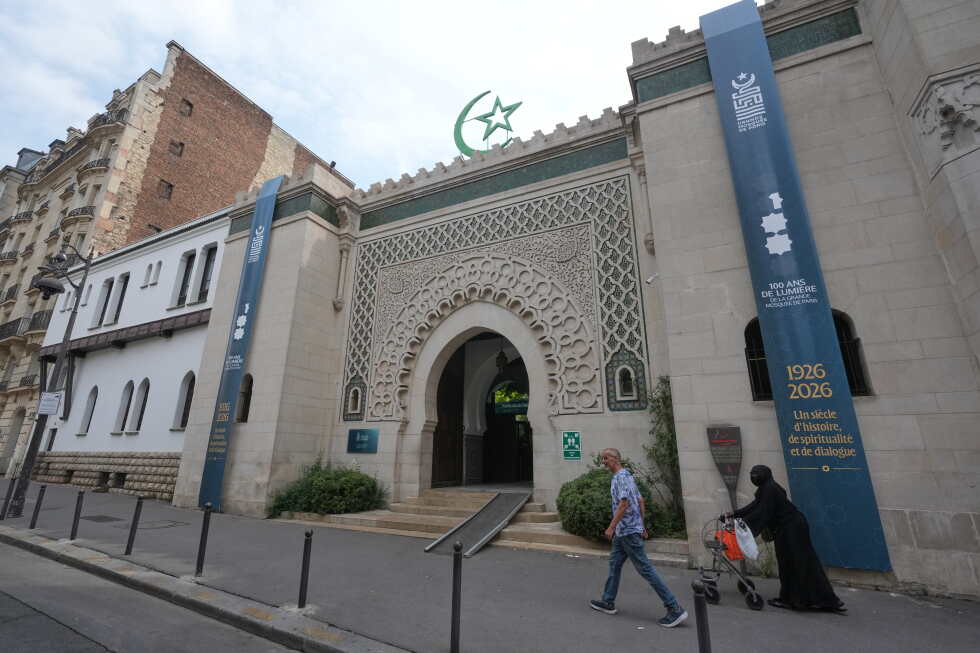
  • Paris’ Grand Mosque celebrates its 100th anniversary and interfaith dialogue

    Paris’ Grand Mosque celebrates its 100th anniversary and interfaith dialogue

    One hundred years after its construction to honor colonial Muslim soldiers who fought and died for France in World War I, the Grand Mosque of Paris is celebrating its centenary, even as worshippers and leaders grapple with rising religious tensions and growing far-right rhetoric ahead of the country’s 2025 presidential election. Nestled in the heart of Paris’ bustling Latin Quarter, the mosque has grown far beyond a place of worship over the past century, evolving into an integral landmark of the French capital that draws worshippers and tourists from across the globe.

    Designed with architectural inspiration from Spain’s Alhambra palace, the 33-meter minaret of the mosque stands overlooking the Seine River, complementing the silhouette of nearby Notre Dame Cathedral without overshadowing the iconic landmark. Its ornate, carpeted prayer room is listed as a top must-see attraction on Paris City Hall’s official tourism portal, and the site also hosts a popular traditional tea room and public hammam steam bath that attract both local Parisians and international visitors. For the Muslim community that gathers here weekly, however, the mosque’s meaning is rooted in a century-old promise of inclusion.

    When French authorities approved and inaugurated the mosque in 1926, the project was framed as a tribute to the estimated 100,000 Muslim soldiers from French colonial territories across Africa and beyond who died defending France in the trenches of World War I, from Verdun to the Western Front. Then-French President Gaston Doumergue emphasized in his opening address that France’s cultural and religious diversity would only strengthen the national community, a message that current rector Chems-eddine Hafiz says remains just as relevant today.

    Hafiz, who has led the mosque for years, frames the historic site as a enduring symbol of interfaith dialogue and the richness of France’s pluralistic society. But he has raised urgent alarms over escalating religious divisions in the country, stoked by ongoing conflicts in the Middle East and the increasingly polarizing rhetoric of the upcoming presidential election campaign. “It’s the responsibility of everyone to see Muslims as a part of the national community,” Hafiz told the Associated Press in an interview ahead of the centenary celebrations.

    Today, Islam is the second largest religion in France, which is home to Western Europe’s largest Muslim population. But decades of stigma, amplified by deadly Islamic extremist attacks across the country over the past 15 years, have left many French Muslims facing systemic discrimination and social exclusion. As campaigning for the 2025 presidential election ramps up, far-right leader Marine Le Pen and her National Rally party have centered their platform on targeting Islam and restricting immigration, amplifying anti-Muslim rhetoric across national political discourse.

    Fatma Chouchane, a volunteer at the Grand Mosque, spoke to the AP about the daily barriers many Muslim women face across France, including legal restrictions on wearing traditional Muslim headscarves in public schools and certain workplaces. “I ask France to leave these people alone and let them make their religious choices,” she said. Despite these challenges, Chouchane joined other worshippers in framing the centenary as an occasion to reaffirm messages of tolerance and solidarity. “It’s a symbol, it is the Paris museum for Muslims,” she said. “We must all be in solidarity.”

    For centenary prayers held Friday, worshippers traveled from across the greater Paris region, representing generations of Muslim communities in France: some born in the country, others who migrated over decades from Algeria, Senegal and other former French colonies, with many tracing their family roots to the very colonial soldiers the mosque was built to honor. For Ibrahima Seye, who first visited the mosque shortly after moving to France from Senegal, it has long served as a welcoming home for new arrivals and a point of pride for the entire community. “It’s always open,” he said. “It’s good for the Muslim community, and I see that it is a mosque that is appreciated by a lot of tourists, too.”

    Hafiz emphasized that the core political promise of the mosque, as a testament to Muslim contributions to French national life, has not wavered since its opening 100 years ago. “The problem lies in people’s attitudes,” he said. “Today, anti-Muslim acts are still being committed against Muslims. Islam is often misunderstood, and talking about Muslims or Islam can trigger hostility.” As the mosque marks its 100th year, community leaders say its centenary is not just a moment to celebrate history, but to reaffirm the founding vision of a diverse, inclusive France where all religious communities belong.

  • Laos says it can’t determine cause of  tourist deaths linked to methanol

    Laos says it can’t determine cause of tourist deaths linked to methanol

    A 2024 tragedy that claimed the lives of six foreign backpackers in the popular Laotian tourist town of Vang Vieng has left international authorities frustrated after Laotian officials announced they cannot formally assign blame or confirm the exact cause of the deaths, all linked to locally produced alcohol contaminated with dangerous levels of methanol.

    The fatal incident unfolded in mid-November 2024, when a group of international travelers fell ill after a night out drinking at local establishments. The victims have been identified as 28-year-old British national Simone White, 19-year-old Australian Bianca Jones, 19-year-old Australian Holly Morton-Bowles, 20-year-old Danish citizen Anne-Sofie Orkild Coyman, 21-year-old Dane Freja Vennervald Sorensen, and 57-year-old American James Louis Hutson.

    In an official statement released Saturday by the Laos Ministry of Public Security, authorities confirmed that investigators lack the forensic evidence required to definitively tie the deaths to methanol poisoning or the actions of any specific individual. The gap in evidence stems from the fact that no autopsies were performed on the victims’ remains, a restriction that prevented officials from reaching a formal conclusion on cause of death. Despite this limitation, the ministry did confirm that testing found excessive concentrations of methanol in vodka produced by a local distillery connected to the incident.

    Methanol is a cheap toxic chemical most commonly used in products like paint thinner. Unethical alcohol producers sometimes illegally add it to homemade spirits to cut production costs, as it shares a similar taste and appearance to ethanol. Even small doses of the chemical can be fatal: after being absorbed into the bloodstream through the gut, the body’s natural metabolic process breaks methanol down into formaldehyde and formic acid, toxic compounds that can cause organ failure and death within hours or days. Early symptoms of poisoning include vomiting, impaired decision-making, loss of coordination and drowsiness, while advanced cases develop within 12 to 48 hours, bringing abdominal pain, breathing difficulty, vision damage that can lead to permanent blindness, coma, and convulsions.

    In the weeks following the tragedy, legal action has been taken, but the limited scope of charges has drawn sharp criticism from foreign governments. The owner of the implicated distillery is currently facing two charges: selling harmful food products and operating an unlicensed business. Notably, the charges do not reference the six deaths, and carry a maximum penalty of just one year in prison and a fine equivalent to roughly $1,100 USD. Earlier this year, 10 staff members connected to the Nana Backpacker Hostel, where many of the victims were staying, were charged with destroying evidence, each receiving suspended sentences and a fine of around $185 USD.

    The Australian government has publicly condemned the limited legal action, saying it is “deeply frustrated and bitterly disappointed” that more severe charges have not been filed over the deaths of the two Australian backpackers. In response to the outcome, Australian foreign ministry officials summoned Laos’ ambassador to Canberra to discuss the case. The British government has also responded by launching a new public awareness campaign to warn British travelers visiting Southeast Asia of the severe risks of unregulated methanol-tainted alcohol, publishing a full list of poisoning symptoms to help tourists seek urgent care if exposed.

    Vang Vieng, a scenic riverside destination in central Laos, has long been a key stop on the Southeast Asian backpacker trail, drawing thousands of young international travelers every year. The tragedy has highlighted ongoing risks of unregulated alcohol production in popular tourist regions, and raised questions about accountability for incidents that harm foreign visitors.

  • 7 killed and more than 50 wounded in Ukrainian drone attack on Russian regions

    7 killed and more than 50 wounded in Ukrainian drone attack on Russian regions

    In a significant escalation of Ukraine’s long-range aerial offensive against targets inside Russian territory, seven people were killed and 51 more injured in a wave of overnight drone attacks, Russian regional and federal officials confirmed Saturday. The strikes mark a continued push by Kyiv to bring the costs of the Kremlin’s full-scale invasion of Ukraine, now in its third year, home to Russian civilians and disrupt Moscow’s military supply chains.

    Multiple sites across central and western Russia were targeted, including two large storage warehouses operated by Wildberries, Russia’s largest e-commerce retailer. One warehouse was located in Kotovsk, a town in the Tambov region roughly 360 kilometers (220 miles) north of the Ukraine-Russia border, while the second sat in Elektrostal, an industrial city just 50 kilometers (30 miles) east of the Russian capital.

    Ukrainian President Volodymyr Zelenskyy confirmed the strikes in a social media post on Telegram Saturday, noting the two targeted logistics hubs were being used by Russian forces to source sanctioned electronic components for Russian drone manufacturing and navigation systems. He added that an oil processing and storage facility was also hit in the coordinated attacks, alongside additional strikes against Russian military targets in the Sea of Azov and Russian-occupied Ukrainian territory.

    Casualty reports released by regional officials confirm all seven fatalities were night shift workers at the Kotovsk Wildberries facility, where 25 additional people were wounded. In Elektrostal, 24 people were injured in the strike on the second warehouse, according to Moscow region governor Andrei Vorobyov. A separate drone attack on an oil depot in Noginsk, a city north of Elektrostal, sparked a large fire that forced precautionary evacuations of a nearby maternity hospital and one adjacent residential building, with two additional people wounded in that incident.

    Further east in Vladimir, a city 180 kilometers (110 miles) east of Moscow, a drone struck a residential apartment building causing a small fire, with no reported casualties, regional governor Alexander Avdeyev confirmed.

    The Russian Ministry of Defense reported in a statement Saturday that its air defense systems intercepted and destroyed 379 Ukrainian drones overnight across 19 Russian regions, as well as over the illegally annexed Crimean Peninsula, the Sea of Azov, and the Black Sea. Kyiv’s ongoing aerial campaign targets both energy infrastructure and military-linked logistics assets across Russia, part of a strategy to erode Moscow’s ability to sustain its full-scale invasion by forcing Russian society to confront the ongoing conflict directly.

  • US-Iran strikes: latest developments

    US-Iran strikes: latest developments

    A rapidly escalating cycle of violence between the United States and Iran has sent shockwaves across the Middle East, entering its seventh consecutive day on Saturday with expanding cross-border strikes, regional spillover, and a stark threat from Tehran of all-out conflict if American attacks continue.

    The latest wave of hostilities has put key global energy infrastructure at severe risk, with the strategically critical Strait of Hormuz—the passage through which roughly 20 percent of the world’s daily oil shipments transits—remaining almost entirely cut off to commercial traffic over the weekend.

    US Central Command (CENTCOM), the American military’s regional headquarters, confirmed via social media platform X on Saturday that its forces had completed another round of targeted strikes against Iranian assets. A CENTCOM statement outlined that the attacks hit a range of key Iranian military assets, including surveillance outposts, military logistics hubs, underground weapons storage facilities, and maritime operations capabilities.

    The expanding conflict has already drawn in neighboring Gulf states, with multiple countries reporting intercepted attacks and damaged infrastructure over the 24-hour period. Bahrain’s military announced Saturday that its integrated air defense systems successfully intercepted and thwarted a wave of incoming Iranian strikes targeting its territory. An Agence France-Presse journalist based in the Bahraini capital Manama confirmed hearing loud explosions after air raid sirens sounded across the city. Bahrain is host to the United States Navy’s Fifth Fleet, a major regional American military installation, and Iranian state television confirmed Saturday that Iranian forces targeted this US-linked air base on Bahraini territory. Bahrain’s interior ministry confirmed air raid sirens were activated across the country, and earlier in the day both Bahrain and Qatar announced they had intercepted incoming ballistic missiles.

    To the north, Kuwait confirmed Saturday that Iran had struck one of its combined power and water desalination plants for the second consecutive day. The attack forced the temporary shutdown of multiple power generation units, Kuwaiti government officials confirmed. Kuwait’s military noted in a social media statement that local residents may hear explosions as its air defense systems work to intercept incoming hostile targets. Iran confirmed its strikes targeted two key military sites in Kuwait—Al-Adiri camp and Ali Al-Salem base—as well as fuel storage tanks at the Al-Azraq military base in Jordan. Jordan’s military responded quickly to the attack, announcing it had shot down 10 incoming Iranian missiles, with no reported casualties or infrastructure damage from the strike.

    Disputes have already emerged over an incident involving two commercial vessels in the Strait of Hormuz. Iran’s Islamic Revolutionary Guard Corps (IRGC) claimed Saturday that two oil tankers transiting the waterway had struck naval mines, that the vessels were misled into the mined area by deceptive American intelligence, and that both ships had caught fire. The US CENTCOM quickly issued a full denial of the IRGC’s claims. Separately, the IRGC also announced it had halted four commercial vessels from attempting to transit the strategic strait, further tightening the chokehold on global energy shipping.

    Human impact from the escalating strikes is already being reported. Iran’s state-controlled Islamic Republic News Agency (IRNA) confirmed Saturday that American strikes in the southern Iranian province of Hormozgan have left three people dead and eight others wounded. IRNA also reported five large explosions in the central Iranian city of Yazd shortly after US strikes were announced Saturday, with another state-run Iranian news outlet, Mehr News, reporting additional blasts across multiple southern Iranian provinces.

    The most alarming development of the day came from a senior Iranian military commander, who issued a stark warning that drastically changes the framework of the conflict. Major General Mohsen Rezaei, speaking to Iran’s state-controlled broadcaster IRIB, threatened that Tehran will launch full-scale offensive operations across the region if American strikes continue in the coming days. “Iran will no longer limit itself to retaliatory, like-for-like responses,” Rezaei said, adding “no political border will be safe” if the US continues its current campaign of attacks.

  • Helicopters dump water as huge Norway fire destroys homes

    Helicopters dump water as huge Norway fire destroys homes

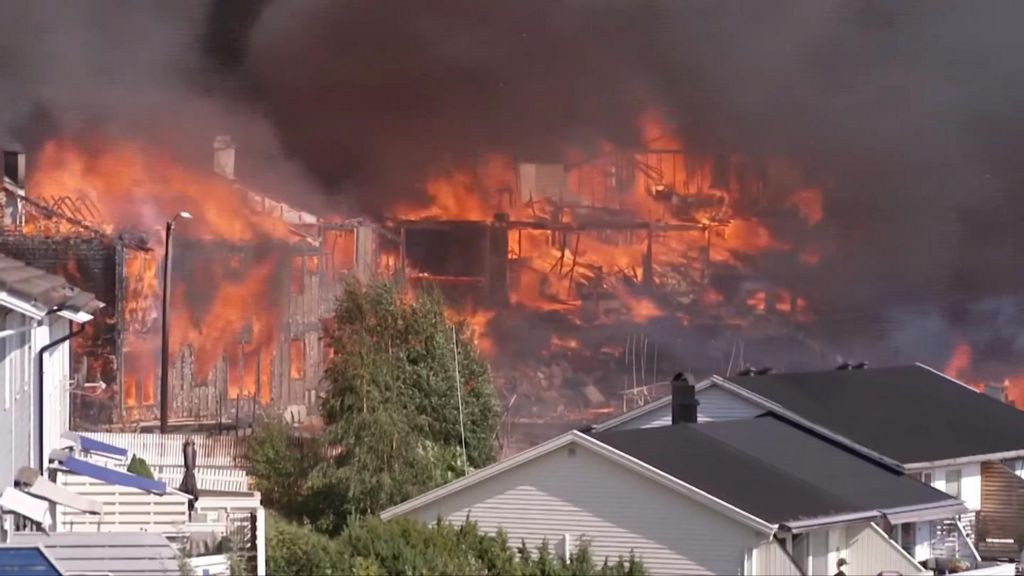
    A devastating large-scale wildfire has torn through the Norwegian city of Drammen, leaving a trail of destruction that has forced residents to flee and destroyed more than 100 residential properties, local emergency authorities confirmed this week. The fast-moving blaze, which ignited in a built-up area of the city, quickly outpaced initial ground containment efforts and spread into adjacent forested land, creating a dual threat to both communities and local ecosystems.

    In response to the rapidly growing emergency, regional disaster management agencies deployed a fleet of helicopters to mount an aggressive aerial assault on the fire, dumping thousands of liters of water over hot spots in an effort to slow the fire’s advance and protect remaining unburned structures.

    Emergency crews have not yet released information on any reported casualties, but local officials have activated evacuations for multiple neighborhoods in the fire’s path, opening emergency shelters to accommodate displaced residents. The cause of the blaze is still under investigation, with authorities yet to announce a confirmed timeline for when the fire is expected to be fully contained. The disaster has already upended the lives of hundreds of people in the Drammen area, marking one of the most destructive urban-adjacent wildfires to hit southern Norway in recent years.

  • Mount Olympus, home of the ancient Greek gods, is a candidate for the UNESCO World Heritage List

    Mount Olympus, home of the ancient Greek gods, is a candidate for the UNESCO World Heritage List

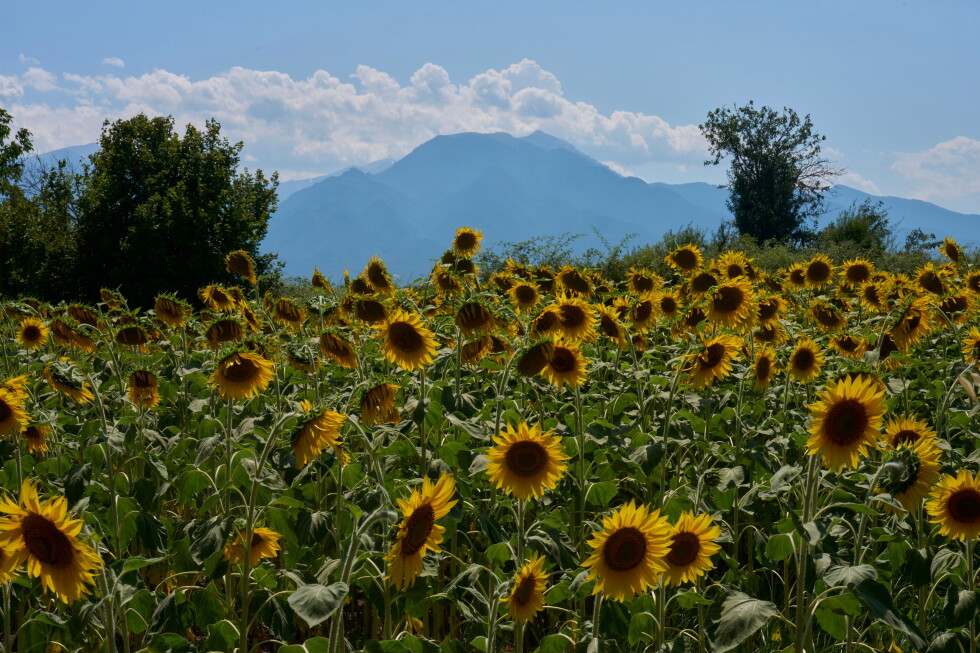
    For thousands of years, the snow-dusted peaks of Mount Olympus – the fabled ancestral home of the 12 Olympian gods of ancient Greek mythology – have captivated human imagination across the globe. Towering 2,918 meters above sea level, with its highest jagged, mist-enveloped peak long believed by ancient Greeks to hold the throne of Zeus, king of the gods, the mountain is now on the cusp of a global recognition that could cement its cross-cultural legacy for generations.

    This month, Greece’s highest peak is up for consideration as a mixed natural and cultural UNESCO World Heritage Site, with the World Heritage Committee set to deliberate the nomination during its annual session running from July 16 to 29 in Busan, South Korea. For local communities that have built their lives around the mountain, the designation is far more than an honor – it is recognition of Olympus’ unmatched blend of mythic history, cultural continuity, extraordinary biodiversity, and stunning natural beauty.

    “Olympus is our life. It is the place we grew up in,” shared Evagelos Geroliolios, mayor of the Dion-Olympus municipality that is centered in Litochoro, the main gateway town to the mountain. “It is the place we see every day, but at the same time, it carries with it myth, history, biodiversity, extraordinary beauty and a very great cultural weight.”

    Few locations hold as central a place in Western cultural mythology as Mount Olympus. Legend holds that after Zeus waged a 10-year war to overthrow his father Cronus and end the reign of the Titans, he established his divine court on the mountain’s highest peaks. This year, public interest in Olympus is also getting a major pop culture boost: Christopher Nolan’s new big-screen adaptation of Homer’s *The Odyssey*, which frames the mountain as the seat of Zeus and the Olympian gods that shape Odysseus’ legendary journey, hit theaters this week.

    Archaeological excavations on one of Olympus’ lower slopes have already uncovered an open-air sanctuary, with the earliest artifacts dating back to the Hellenistic period (323 BCE to 30 BCE). Greece’s UNESCO nomination file notes the sanctuary is widely believed to be the same site referenced by 2nd-century philosopher and historian Plutarch, who recorded regular religious processions to the peak to carry out animal sacrifices to Zeus. The mountain’s religious significance persisted through the Christian era: a chapel dedicated to the Prophet Elias sits at 2,803 meters, making it the highest-altitude Orthodox Christian chapel in the world. Near the mountain’s Enipeas Gorge, the ruins of a 16th-century monastery remain standing, just a short walk from the Holy Cave of St. Dionysios, a cliffside chapel fed by a small spring whose waters are considered holy by Orthodox believers.

    Beyond its deep cultural roots, Olympus’ slopes, which descend almost directly to the Aegean Sea, support an extraordinary wealth of plant and animal life, including multiple species found nowhere else on Earth. It is this rare combination of tangible cultural heritage, millennia of mythic meaning, unique ecosystems, and dramatic natural landscapes that local leaders hope will convince the committee to approve the designation.

    “It is a place we love. It is a place that many people from all over the world visit to see, to live, to experience. We want to protect it,” Geroliolios said. A UNESCO listing, he added, would carry global significance that extends far beyond Greece’s borders. “It is something that concerns the entire world. It is very important.”

    Despite widespread local support, Olympus’ path to World Heritage status is not guaranteed. Greece first launched the nomination process back in 2014, when it added the mountain to UNESCO’s Tentative List – the required first step for any prospective site, where properties remain eligible for formal nomination over a 5 to 10 year window. After a preliminary assessment and the submission of a full nomination dossier, the proposal underwent a 14-month evaluation by advisory bodies including the International Council on Monuments and Sites (ICOMOS) and the International Union for Conservation of Nature. Final votes are cast by representatives of 21 member states on the World Heritage Committee during the annual session. Preliminary meeting agenda documents indicate the committee is poised to refer the nomination back to Greek authorities to request additional technical information, leaving the final outcome uncertain for now.

    Still, local stakeholders hold out hope that approval will bring stronger, more coordinated protections for the mountain’s fragile ecosystem – a priority that has grown more urgent as visitor numbers have surged in recent years. Babis Marinidis, a veteran mountain guide and president of the Alpine Club of Litochoro, explained that while a UNESCO listing would likely draw even more tourists, the mountain’s ecosystem already has a limited carrying capacity.

    “How many people can this mountain, this ecosystem, bear?” he asked. Though much of Olympus was designated a national park decades ago with formal conservation rules in place, Marinidis said regulations against unauthorized camping, swimming in protected watersheds, and off-trail hiking are regularly ignored by visitors. As crowds have grown, local authorities have begun considering mandatory visitor registration and entrance fees to manage foot traffic – a measure Marinidis once opposed but now supports. “But now with so many people, I believe some limit must be imposed,” he said.

    As a world-renowned mountaineering and hiking destination, Olympus draws thousands of adventurers annually from across the globe. While reaching the summit does not require advanced technical climbing skills, the mountain’s rapidly shifting weather and uneven, treacherous terrain make it a serious challenge that has claimed dozens of lives over the years. Just this month, a 64-year-old Greek hiker died after collapsing on a hiking trail, and in May, rescue teams recovered the body of a 25-year-old Spanish hiker who went missing while attempting a winter summit attempt.

    First-time visitor Triantafyllos Giannospyros, 32, noted that while proper preparation and caution are non-negotiable, the mountain is accessible for careful hikers. “You need to be careful, and safety measures must always be kept in mind,” he said. “But with care and with good organization, it isn’t something you should be afraid of.”

    Stavroula Vourou, a Litochoro hotel owner whose business caters to hikers setting off for the peak, echoed that respect for the mountain. “Everyone sets off to go up and conquer a mountain that needs respect,” she said. “You respect this mountain, it respects you too.”

  • Takeaways from AP’s report on the impact of US aid restrictions on reproductive rights in Africa

    Takeaways from AP’s report on the impact of US aid restrictions on reproductive rights in Africa

    Half a world away from the polarized abortion debate playing out across the United States, thousands of African women face heightened danger to their lives and health as American anti-abortion groups expand their influence and funding on the continent. This growing international push gained new momentum from the Trump administration, which implemented sweeping cuts to U.S. foreign aid for any global organization that provides or advocates for abortion-related services — changes that threaten to cut off access to reproductive health support tied to as much as $30 billion in global assistance.

    For decades, conservative American anti-abortion organizations have pushed for restrictions both domestically and internationally, and Africa has become a key front for their efforts, given that many African national health systems rely heavily on foreign donor funding to operate. New analysis from the Institute for Journalism and Social Change has pulled back the curtain on the scale of this funding: 17 major U.S. anti-abortion nonprofits poured more than $16 million into African operations between 2019 and 2022, followed by an additional $9.3 million in spending across 2023 and 2024. Researchers warn that even these figures are an underestimate, as U.S. churches and many religious anti-abortion groups are exempt from mandatory public financial disclosure requirements, leaving millions more in unreported spending off the books. Institute researcher Claire Provost describes the documented spending as “just the tip of the iceberg” of the full scope of U.S. anti-abortion investment in the continent.

    This influx of American funding and support has emboldened a widespread campaign of harassment against local reproductive health workers and rights advocates across multiple African nations. A 2024 report from Marie Stopes International, a leading global reproductive health provider, documented a surge in online harassment, legal threats, and even criminal detention of staff delivering legal abortion and reproductive care. In the Democratic Republic of Congo, health workers have been detained for days for providing services that are fully legal under local law, before being released without any formal charges. In Ethiopia, the local head of U.S.-based anti-abortion group Family Watch International has targeted senior reproductive health leaders with social media trolling and published YouTube videos spreading harmful misinformation about abortion. In Kenya, personal contact information for staff at reproductive rights organizations has been published online, with workers falsely accused of murder. One anonymous Nairobi-based private abortion clinic owner told the Associated Press that staff have been repeatedly detained by police, who demand bribes in exchange for dropping fabricated criminal charges. Kenyan government officials declined repeated requests for comment on these reports.

    Health and rights advocates warn that this growing anti-abortion push is rolling back decades of incremental progress toward expanding safe reproductive care across Africa. The Maputo Protocol, adopted by the African Union 20 years ago, enshrines safe abortion as a human right and requires signatory nations to legalize the procedure in cases of rape, incest, risk to the pregnant person’s health, and fatal fetal abnormality. But implementation of the protocol has been inconsistent at best, leaving millions of women with no access to legal care. The African Institute for Development Policy estimates that sub-Saharan Africa records more than 6 million unsafe abortions every year, and the region already has the world’s highest rate of maternal mortality, making it the deadliest place globally for women of reproductive age.

    In recent months, the anti-abortion movement has notched high-profile policy wins across the continent, powered by U.S. funding and organizing. Last year, U.S., European, and African anti-abortion groups joined with senior Kenyan government officials for a Nairobi conference focused on advancing a conservative “family values” agenda. Charles Kanjama, vice chairman of the conference organizing body the African Christian Professionals Forum, framed the fight over abortion access as an international “culture war.” In May 2024, that work paid off when a Kenyan appeals court overturned a lower court ruling that had affirmed abortion access as a fundamental constitutional right; Kanjama led the legal challenge, and called the ruling a victory that “restored constitutional balance.” Just one month later, delegates from 20 African nations finalized a draft regional charter in Ghana that calls for rejecting established sexual and reproductive health rights, which will go to a vote before the African Union in 2025. Sharon Slater, co-founder of U.S.-based anti-abortion group Family Watch International, was among the organizers fundraising for the charter’s adoption at a European Parliament event in Brussels earlier this year.

    In response to questions about the new aid restrictions, the U.S. State Department defended the policy in a statement, saying “the American people expect their tax dollars to support programs that save lives … and reflect American values, not fund abortion-related activities, left-wing social agendas, or wasteful overseas bureaucracies.” The department added that U.S. assistance continues to support broad maternal and child health programming under the administration’s America First Global Health Strategy. But healthcare providers and reproductive rights advocates say the reality on the ground tells a different story: while the Trump administration and anti-abortion groups frame their work as protecting life, the end result is a growing number of preventable deaths among African women.

  • Women are dying in Africa as US ramps up its global battle against abortion

    Women are dying in Africa as US ramps up its global battle against abortion

    Decades of advocacy by U.S.-based anti-abortion groups have reshaped reproductive health policy both at home and abroad, with the reversal of Roe v. Wade marking their biggest domestic victory. Now, the second Trump administration is injecting dramatic new momentum into their cross-border campaign to export conservative “family values” to nations across the globe.

    Speaking at the annual March for Life anti-abortion demonstration in Washington D.C. in January, Vice President JD Vance unveiled sweeping new restrictions on U.S. funding for international nongovernmental organizations, foreign governments, and United Nations agencies that work to expand access to abortion, gender-affirming care, and diversity programming overseas. “We’re going to start blocking every international NGO that performs or promotes abortion abroad from receiving a dollar of U.S. money,” Vance told the gathered crowd.

    These expanded restrictions build on decades of on-the-ground anti-abortion advocacy led by U.S. conservative nonprofits, particularly in sub-Saharan Africa, a region where local health systems rely heavily on foreign assistance. Already home to the world’s highest rate of unsafe abortions and the highest maternal mortality linked to pregnancy termination, sub-Saharan Africa bears 70% of the world’s global maternal deaths, recording roughly 180,000 preventable pregnancy-related fatalities each year.

    Analysts estimate the new policy could impact at least $30 billion in U.S. foreign aid, upending global reproductive health frameworks that have been in place for decades. For conservative advocates, the shift represents a long-sought alignment of U.S. foreign aid with their ideological goals. “We’re seeing opportunity here to have a consistently pro-life ethic,” explained Nicole Hunt, a representative of Colorado-based conservative evangelical group Focus on the Family. “We’ve been influencing health policies for a long time with our foreign aid. This is just a new direction.”

    A key target of the movement is the Maputo Protocol, a 20-year-old international agreement signed by most African nations that enshrines safe abortion as a human right. The protocol requires signatory countries to legalize abortion in cases of rape, incest, fatal fetal abnormality, and when a pregnancy threatens a woman’s life or health, but implementation across the continent has been uneven, forcing millions of women to seek unregulated, unsafe procedures each year. The African Institute for Development Policy records more than 6 million unsafe abortions annually across sub-Saharan Africa, and emboldened by the new U.S. policy, anti-abortion activists are now working to roll back even the limited access guaranteed by the protocol.

    Reproductive health advocates say the policy shift has already created a new, hostile landscape for reproductive rights work across the continent. “We’ve now moved into a new era where we are the ones who are in opposition because the most powerful and influential supporters of reproductive health — the U.S. and a lot of Europe — are now more aligned with anti-rights groups,” said Nardos Hagos, regional representative for the International Planned Parenthood Federation in Nairobi. “We’re gonna see more women dying from unsafe abortions.”

    Tracking the full scope of U.S. anti-abortion funding flowing into Africa is complicated by loose disclosure rules for religious and charitable groups. An analysis by the Institute for Journalism and Social Change, a research organization, of public tax filings from 17 major U.S. anti-abortion groups found funding to Africa jumped 50% between 2019 and 2022, reaching more than $16 million. Previously unreported data from the institute shows the same groups spent nearly $9.4 million across the continent in 2023 and 2024 alone.

    Claire Provost, a researcher with the institute, notes that these numbers are just “the tip of the iceberg,” because U.S.-based churches and many religious organizations are exempt from mandatory annual financial disclosure requirements that would reveal how much funding they direct to anti-abortion work in Africa. One major group increasingly active on the continent is The Church of Jesus Christ of Latter-day Saints, commonly known as the Mormon church, which has more than 1 million followers across Africa and has hosted “Strengthening Families” conferences across the continent over the past eight years.

    Sean E.R. Donnelly, the church’s Africa communications manager, told the AP roughly a quarter of the $1.5 billion the church spent on international programs last year went to African development projects focused on healthcare, education, and emergency relief “with the goal of helping people, especially families.” When asked about reproductive rights, Donnelly said the church is “not really active” on abortion issues, though it does invite government officials to its conferences to help craft “policy and strategy to make sure that we protect the family.” The church’s official position opposes elective abortion in most cases, but allows exceptions for rape, incest, and threats to a pregnant woman’s life or health.

    Local rights groups have noted that the church held a major conference in Sierra Leone last year, just as the country was moving forward with plans to decriminalize abortion. Pressure from local religious lobbies ultimately stalled the reform, a change that advocates link to the ideological and financial support from U.S. conservative groups. Donnelly denies the church interfered in the process, saying “This is not how the church operates in Africa or globally.”

    Beyond shifting funding, the growing influence of U.S. anti-abortion groups has emboldened a wave of harassment and intimidation targeting reproductive health workers and providers across Africa. Hannah Ruguru, who works at a reproductive health clinic in Kisumu, western Kenya, entered the field after her own sister died from an unsafe backstreet abortion. Today, her work has become increasingly dangerous: she has been screamed at by anti-abortion protesters, and deleted her Facebook account after years of relentless online abuse. “Sometimes you can get scared,” she said. “But at the end of the day, I’m helping women.”

    A 2024 report from Marie Stopes International, which operates the clinic Ruguru works at, documents widespread coordinated attacks across multiple African countries led by U.S.-based groups and U.S.-funded local organizations. In the Democratic Republic of Congo, health workers have been detained for days for providing legally allowed abortion services before being released without charge. In Ethiopia, the head of the local office of U.S.-based anti-abortion group Family Watch International has targeted senior reproductive health leaders with online harassment and spread anti-abortion misinformation via YouTube. In Kenya, staff contact information has been published online with false accusations of murder, and private clinic owners report repeated police harassment, detention, and extortion.

    Musoba Kitui, regional director of the Ipas Africa Alliance, which advocates for safe abortion access, called the combination of new U.S. aid restrictions and growing ideological incursion deeply concerning. “The changes in U.S. foreign aid policy combined with this advancing American interest in ideology in Africa is really concerning,” Kitui said. “We think the consequences are going to be dire,” especially for women and marginalized LGBTQ+ communities who already face barriers to care.

    Anti-abortion leaders frame the campaign as a necessary defense of traditional cultural values against what they describe as an imposed global progressive agenda. At a 2023 conference in Nairobi bringing together U.S., European, and African anti-abortion Christian leaders alongside senior Kenyan government officials, attendees framed the fight over reproductive rights as an global cultural conflict. “It’s a culture war, really,” said Charles Kanjama, vice chairman of the African Christian Professionals Forum, the conference organizer. He noted that international aid previously flowed overwhelmingly to reproductive rights groups, but “we are hoping that … we can start attracting money from people who think like us.”

    That momentum is already translating to institutional change across the continent. In June 2024, representatives from 20 African nations finalized a draft charter in Ghana that calls for rejecting international sexual and reproductive health rights frameworks; the charter will go to a vote before the African Union in 2025. Anti-abortion activists from the U.S. have already begun international fundraising to support the charter’s passage.

    In Kenya, one of Africa’s largest economies, the impact of shifting policy is already visible on the ground. The African Population and Health Research Center records an average of seven preventable deaths from unsafe abortion complications every single day. While the 2010 Kenyan constitution allows abortion when a woman’s life or health is at risk, and courts have expanded access to cases of rape, incest, and threats to mental health, a colonial-era penal code still criminalizes abortion providers and patients, who face up to 14 years in prison. Most public hospitals refuse to perform even legal abortions, leaving women to choose between costly private care or unregulated dangerous procedures. In May 2023, a Kenyan appeals court overturned a lower court ruling that affirmed abortion access as a fundamental right — a case led by Kanjama, who called the ruling a restoration of “constitutional balance.”

    The Kenyan government did not respond to repeated requests for comment on the issue. In a statement responding to questions about the new U.S. aid rules, the U.S. State Department defended the policy: “The American people expect their tax dollars to support programs that save lives … and reflect American values, not fund abortion-related activities, left-wing social agendas, or wasteful overseas bureaucracies. U.S. assistance continues to support a wide range of maternal and child health services as part of the America First Global Health Strategy.”

    On the ground in Kenyan public hospitals, doctors and public health workers say the reality of the policy is a growing tide of preventable death. “By the time the women come, we are often dealing with a life-threatening situation,” said Dominic Omollo, reproductive health coordinator in Bondo, western Kenya, where public hospitals only treat life-threatening complications from unsafe abortions, not the procedures themselves.

    For 25-year-old Mary Olouch, that reality proved fatal. A fish seller in rural Karabok village, Olouch discovered she was pregnant while already raising a young child, and hid her pregnancy from her husband. She did not qualify for a legal abortion at a public hospital, and could not afford the cost of private care. She bled to death after an illicit abortion, leaving her young child motherless. Today, two trees mark her grave just meters from her home.

    After Olouch’s death, Loice Ochieng, a local community health volunteer, said women in the village began speaking openly about abortion for the first time — a topic that had long been taboo. “Because they have seen that this thing can cause death,” Ochieng said.