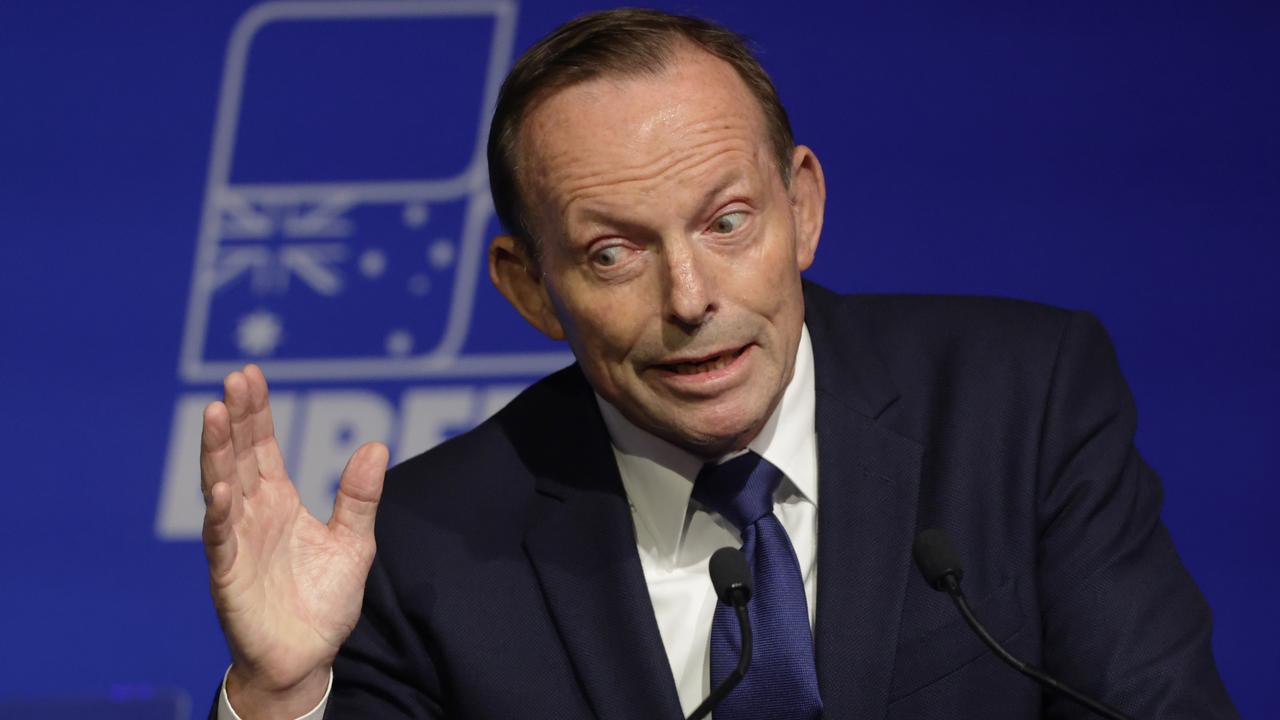
A public clash over Australia’s multicultural policy has erupted within the country’s Liberal Party, after former prime minister and current party president Tony Abbott claimed the decades-long framework of multiculturalism has failed, citing last year’s deadly terrorist attack at Bondi Beach as his evidence.
In a speech circulated on social media earlier this week, Abbott argued that Australia has incorrectly opened its doors to immigrants who refuse to endorse the core values enshrined in the country’s citizenship oath. He went further, claiming that key tenets of the Islamic faith are fundamentally incompatible with the norms of Western liberal democracies, specifically calling out the Bondi attacker for disregarding Australia’s longstanding commitment to religious freedom.
“Plainly, multiculturalism has failed and diversity is not our strength when two individuals have so rejected our national ideals,” Abbott stated in his remarks.
The controversial claim drew an immediate public rebuke from one of the party’s senior frontbench senators, Andrew Bragg, who pushed back against Abbott’s assertion on Sunday, saying he strongly disagrees with the former leader’s assessment. Bragg emphasized that Abbott’s comments run counter to the Liberal Party’s own long historical legacy of advancing inclusive immigration and multicultural policy in Australia.
“I don’t agree with that,” Bragg told public broadcaster ABC. He went on to explain that liberal ideology itself laid the groundwork for modern Australian multiculturalism by establishing the foundational legal and social framework that protects freedom of religion, freedom of thought, and freedom of individual conscience for all residents.
Bragg walked through the Liberal Party’s decades-long track record of advancing inclusive policy to underscore his point: “The Liberal Party built modern Australia – if you look at the Menzies government opening up immigration after the war, the Holt government abolishing key parts of the White Australia policy, and then of course Malcolm Fraser’s actions to promote multiculturalism and introduce iconic institutions like the Special Broadcasting Service (SBS). So we have a very proud record to stand on, and I think it’s very important that we’re clear about that.”
While Abbott’s current role as party president is officially classified as administrative, political observers note he still holds significant sway over the direction of the party’s federal campaign messaging. Bragg stressed that parliamentary party leaders have a responsibility to clearly articulate the party’s stance on what multiculturalism actually represents, and how the policy aligns with both liberal values and the needs of 21st-century Australia.
He added that any concerns over illegal activities, from terrorism to forced marriage, are often misattributed to multicultural policy. “If people have concerns about certain things in Australia, whether that be around terrorism, forced marriages, other things like that, those are things which are illegal under Australian laws, and those things are not multiculturalism,” Bragg said. “The great thing about multiculturalism is that you can subscribe to the Australian nation, its laws, and its culture, but you can engage in your own cultural practices as well.”
When asked whether senior party figures should pressure Abbott to retract his comments or stop making similar public statements, Bragg stopped short of calling for censorship, noting that as a former prime minister, Abbott retains the right to hold and express his own personal views, even as they diverge from the party’s historical position. “He’s a former prime minister. He’s entitled to his views. And I strongly disagree with them,” Bragg summarized.