分类: politics

  • Gaza flotilla activists await deportation from Israel

    Gaza flotilla activists await deportation from Israel

    As international condemnation mounts over the mistreatment of detained Gaza-bound activists, hundreds of people seized by Israeli forces from the Global Sumud Flotilla remained in custody Thursday, with the vast majority en route to deportation from southern Israel’s Ramon Airport.

    The latest incident marks the second consecutive attempt by activist organizers to breach Israel’s 17-year blockade of the Gaza Strip, a restriction that has pushed the besieged Palestinian territory into catastrophic humanitarian hardship following the outbreak of the 2023 Israel-Hamas war. Last week, roughly 50 vessels carrying more than 430 activists from dozens of countries set sail from Turkey, only to be intercepted at sea by Israeli security forces and taken into custody.

    Controversy erupted earlier this week after Israel’s far-right National Security Minister Itamar Ben Gvir posted a provocative video of the detained activists, who were shown with their hands bound and foreheads pressed to the ground. Captioned “Welcome to Israel”, the footage showed Ben Gvir heckling the captives while waving an Israeli flag, drawing fierce backlash from leaders across the globe as well as unexpected criticism from within Israel’s own governing coalition.

    Adalah, the Israeli legal center representing the detained activists, confirmed Thursday that most detainees were being transferred from Ktziot Prison, a maximum-security facility located in the Negev Desert near the Gaza border, to Ramon Airport for expulsion. Only a small group remains in custody, including one Israeli citizen activist who attended a court hearing Thursday to face what Adalah calls “absurd” and unfounded charges, including illegal entry, unlawful stay, and attempting to break the Gaza blockade.

    Multiple detained activists and observers have shared harrowing accounts of abuse in custody. Legal director Suhad Bishara told reporters that at least two activists had been hospitalized after being shot with rubber bullets, while dozens more reported injuries including suspected broken ribs. Bishara added that while attorneys had been able to meet with many detainees, a number of activists were forced to attend court hearings without any legal representation.

    Alessandro Mantovani, an Italian journalist who was deported ahead of the main group, described violent treatment at the hands of Israeli security forces during a press conference after landing at Rome’s Fiumicino Airport Thursday. “They beat us up. They kicked us and punched us and shouted ‘Welcome to Israel’,” Mantovani said, adding that he and other early deportees were transported to Ben Gurion Airport in handcuffs and leg chains before being put on flights out of the country.

    Dario Carotenuto, an Italian member of parliament who was also detained and expelled, called the experience traumatizing. “It was really tough… They called us by number… with rifles pointed at us… I think those were the longest seconds in my life,” Carotenuto said.

    The backlash to Ben Gvir’s video has been swift and widespread, with condemnation pouring in from national governments including Italy, Spain, Australia, and Canada. Even domestic allies and international partners joined in the criticism: Israeli Prime Minister Benjamin Netanyahu and Foreign Minister Gideon Saar publicly distanced themselves from the minister’s actions, while U.S. Ambassador to Israel Mike Huckabee labeled the incident “despicable actions”.

    Francesca Albanese, the United Nations’ independent expert on human rights in the Palestinian territories and a native Italian, called on her home country to take concrete action against Israel. “Words do not suffice: let Italy stop opposing the suspension” of the EU-Israel Association Agreement, she wrote on the social platform X.

    Israel has enforced a complete land, air, and sea blockade of Gaza since 2007, when Hamas took control of the territory. Since the outbreak of war in October 2023, triggered by Hamas’ cross-border attack that killed roughly 1,200 people, the humanitarian situation in Gaza has collapsed. More than 2 million Gazans, nearly the entire population, have been forcibly displaced at least once and rely entirely on international aid for survival. While a fragile temporary ceasefire has reduced active fighting in recent months, Israel has repeatedly paused aid deliveries, leaving Gaza grappling with extreme shortages of food, clean water, medicine, and other critical supplies.

    A previous attempt to break the blockade by the Global Sumud Flotilla was intercepted last month in international waters off the coast of Greece. Most participants were expelled directly to European countries, while two were taken into Israeli custody, held for several days, and then deported.

  • UK government to release papers related to former Prince Andrew’s appointment as trade envoy

    UK government to release papers related to former Prince Andrew’s appointment as trade envoy

    LONDON – The British government is scheduled to declassify and publish a set of confidential documents Wednesday detailing the appointment and tenure of King Charles III’s brother, the former Prince Andrew, now legally named Andrew Mountbatten-Windsor, as the UK’s international trade envoy. This long-awaited release comes just months after a cross-party group of UK lawmakers accused Andrew of prioritizing his controversial personal friendship with disgraced financier and convicted sex offender Jeffrey Epstein over national interests.

    The push for full transparency began back in February, when parliament overwhelmingly approved a formal motion demanding the documents be made public. The vote followed a major development: Andrew was arrested on charges alleging that he shared sensitive government trade reports with Epstein during his time in the unpaid official role. The calls for publication gained even more urgency after the U.S. Department of Justice unsealed millions of pages of previously sealed court records tied to the Epstein case, which laid bare the disgraced financier’s extensive network of high-profile connections across the globe.

    Those released U.S. documents detailed how Epstein leveraged his web of wealthy, powerful friends to accumulate influence and carry out a years-long pattern of sexual exploitation targeting young women and underage girls. Nowhere has the wave of revelations from the Epstein files caused more upheaval than in the UK, where the scandal has opened up fierce new debates about power, accountability and unregulated influence within the country’s so-called Establishment – the interconnected group of aristocratic elites, senior politicians and high-profile business leaders that have long shaped British public life.

    During a heated parliamentary debate held to examine Andrew’s long-documented ties to Epstein, ministers and backbench lawmakers from across the political spectrum united to demand greater transparency and accountability from the British royal household. Trade Minister Chris Bryant was among the most vocal critics, arguing that Andrew engaged in a relentless pattern of self-serving behavior throughout his decade as a working royal. “Andrew was a rude, arrogant and entitled man who could not distinguish between the public interest he claimed to serve and his own private interest,” Bryant stated during the debate, adding that the former prince’s time in office was defined by a constant “self-enriching hustle.”

    Andrew has already faced significant consequences for his ties to the scandal: he was stripped of all his honorary royal titles and public roles last year, as King Charles III moved quickly to distance the monarchy from the growing controversy surrounding the former prince. This is not the first time Andrew’s ties to controversial figures have cut short his public service: he originally held the post of special trade envoy from 2001 to 2011, when he was forced to step down over widespread concerns about his questionable links to autocratic figures in Libya and Azerbaijan.

  • India has a new political superstar – a cockroach

    India has a new political superstar – a cockroach

    In the crowded landscape of Indian political symbols, where the ruling Bharatiya Janata Party claims the lotus and the opposition Congress relies on the iconic hand, an unlikely new mascot has exploded into online consciousness: the humble, reviled, notoriously indestructible cockroach. What began as a throwaway offensive comment from India’s Chief Justice Surya Kant has evolved into a viral satirical political movement that has upended conventional Indian politics and given a voice to millions of frustrated young Indians.

    The controversy that sparked the movement ignited last month, when Kant made headlines during a public court hearing. He was accused of comparing unemployed young people who gravitated toward journalism and activism to cockroaches and parasites. The judge quickly issued a clarification, stressing his remarks were aimed exclusively at individuals holding fake academic credentials, not the broader Indian youth population. But by the time the clarification was issued, the original comment had already spread like wildfire across Indian social media, sparking a mix of public outrage, dark internet humor, and eventually, the creation of a spontaneous online uprising: the Cockroach Janta Party (CJP), or Cockroach People’s Party.

    Far from a traditional, registered political party, the CJP is a satire-driven online collective founded by Abhijeet Dipke, a 30-year-old political communications strategist and current Boston University student who previously worked with India’s anti-corruption born Aam Aadmi Party, a group renowned for its sophisticated social media outreach. Dipke originally conceived the CJP as a lighthearted joke, telling BBC Marathi that he simply wanted to create a space for disillusioned young people to gather. What unfolded far outpaced his wildest expectations.

    Within days of launching, the CJP racked up tens of thousands of membership sign-ups via a simple Google form, spawned the viral hashtag #MainBhiCockroach (translated “I too am a cockroach”), and earned public endorsements from high-profile opposition politicians. The movement soon crossed over from online to offline, with young volunteers donning cockroach costumes to appear at public clean-up drives and protest events, leaning into the reclaimed label with theatrical, unapologetic energy. By last Thursday, the CJP’s Instagram account hit 10 million followers – surpassing the official BJP account, which counts roughly 8.7 million followers, even as the BJP claims the title of the world’s largest political party by formal membership. While the CJP’s X account, which boasts more than 200,000 followers, is currently withheld for users in India following an unspecified legal demand, the movement’s momentum has shown no signs of slowing.

    For its growing base of supporters, the CJP represents a much-needed break from India’s rigid, heavily managed mainstream political culture that often shutters out dissent. Backing for the movement has come from across the political opposition, including prominent figures like MP Mahua Moitra, veteran politician Kirti Azad, and senior lawyer Prashant Bhushan. Critics, however, have pushed back against framing the CJP as a spontaneous grassroots rebellion, pointing to Dipke’s past ties to the AAP and arguing the movement is nothing more than opposition-aligned digital political theater, carefully packaged rather than organically born.

    Beneath the memes and insect-themed jokes, the CJP’s rapid rise exposes a deep well of generational frustration among India’s massive youth population. Roughly half of India’s 1.4 billion people are under the age of 30, making it home to the youngest national population on the globe, yet formal political participation among young Indians remains strikingly low. A recent national survey found that 29% of young Indians avoid all forms of political engagement entirely, while only 11% hold formal membership in any established political party.

    “People are frustrated because they don’t feel heard or represented,” Dipke explained.

    Across South Asia, the past half-decade has seen a wave of youth-led protest movements that have toppled sitting governments in Sri Lanka, Nepal, and Bangladesh, all fueled by widespread public anger over lack of job opportunities, skyrocketing living costs, and stagnant economic mobility. India has not yet seen a mass uprising of comparable scale, but the underlying economic and social pressures mirror those that drove unrest across the region. Even as India posts impressive headline GDP growth, anxieties over employment, widening economic inequality, and rising cost of living have not eased. For many young Indians entering the workforce, a college education no longer guarantees financial stability, and the long-held promise of upward social mobility feels increasingly out of reach.

    While Dipke rejects comparisons between the CJP and the mass upheavals that shook neighboring countries, noting India’s unique political context, he agrees that the frustration among young Indians is tangible – it is simply expressed differently, fragmented across online spaces rather than concentrated in mass street protests. “Gen Z has given up on traditional political parties and wants to create its own political front in a language they understand,” he said.

    That distinctly internet-native language is on full display on the CJP’s website, which reads far less like a traditional political manifesto and more like a product of meme culture. The collective describes itself as “the voice of the lazy and unemployed,” boasts “zero sponsors” and “one stubborn swarm,” and invites people “tired of pretending everything is fine” to join its ranks. The site features satirical mock forms, intentionally unpolished design, and a visual identity that feels more like an inside internet joke than a formal political institution. Yet tucked between the self-deprecating jokes about doomscrolling, unemployment, and widespread political burnout are clear, concrete political demands: greater government accountability, media reform, electoral transparency, and expanded political representation for women.

    This balance between parody and sincere grievance is core to the movement’s broad appeal. The jokes resonate because the underlying frustrations are universal for young Indians: stagnant job markets, growing inequality, systemic corruption, and a pervasive sense of political alienation. Even the choice of the cockroach as a mascot carries deliberate meaning: far from a heroic or aspirational symbol, the cockroach is defined by its resilience, adaptability, and ability to survive in hostile conditions with minimal resources, a metaphor that hits close to home for many young Indians.

    The merging of political satire and organized politics is not a new phenomenon globally: in Italy, comedian Beppe Grillo turned anti-establishment humor into the Five Star Movement, a major force in Italian politics, while in Ukraine, Volodymyr Zelenskyy parlayed a career playing a fictional president on television into winning the actual presidency. In the United States, the rise of Donald Trump sparked long-running debates over whether political satire has become obsolete in an era where political reality often feels like parody. The CJP, however, offers a distinctly Indian, internet-first iteration of this trend: a meme-driven, insect-themed movement shaped by viral hashtags, widespread youth burnout, and ironic despair.

    While the CJP strikes many observers as an unusual development in Indian politics, it fits into a long history of political spectacle in the country. Indian politicians have long embraced dramatic public displays, from staged meditative retreats in Himalayan caves to high-drama party switching that sees legislators whisked between locations on buses and hidden in hotels to avoid defection. Mainstream Indian political campaigns already rely on tightly choreographed viral content and punchy slogans designed to maximize social media reach. Against that backdrop, an insect-themed satirical movement feels far less out of place than it might seem.

    The CJP’s rapid spread is less a sign that young Indians want another formal political party, and more evidence that they are desperate for a new way to express their deep-seated frustration with the status quo. Dipke believes the CJP is just the start of a larger youth-led political shift. “Young people are fed up with the current political system, and more youth organisations will come forward,” he predicted. Skeptics, however, argue the movement is a viral flash in the pan that will fade as quickly as it emerged.

    Regardless of its long-term fate, the CJP has already achieved something unprecedented in modern Indian politics: it has, for the first time for many young Indians, made them feel seen and heard. Where past generations of politically frustrated young Indians produced formal manifestos and organized mass movements, 2026 has given rise to a meme-driven party with an insect mascot – a reflection of how a new generation is reimagining political expression for the digital age.

  • Pauline Hanson proposes Norway-style government stake in new gas ventures

    Pauline Hanson proposes Norway-style government stake in new gas ventures

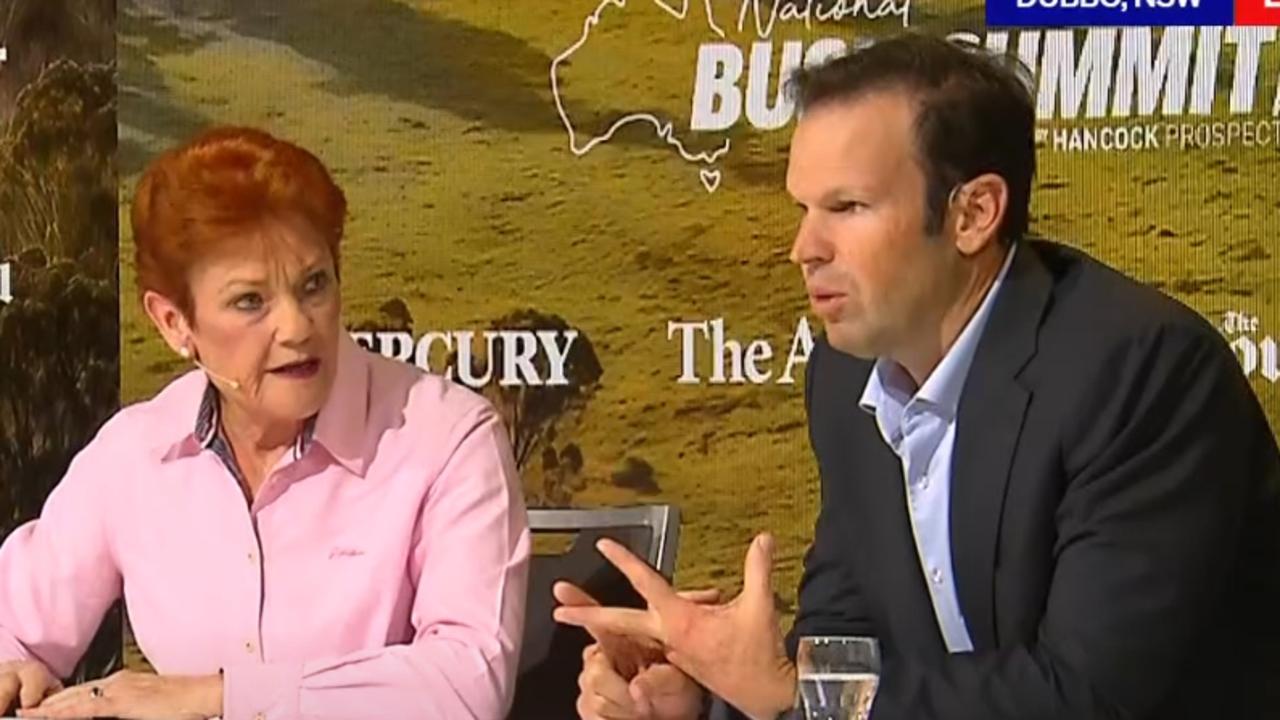
    Australia’s right-wing populist party One Nation has put forward a Norway-modeled energy policy that would see the federal government take up to a 30 percent equity share in new offshore gas ventures, a proposal crafted to boost domestic production, secure public returns from natural resources and address investor concerns over policy volatility.

    Speaking at the Australia Energy Producers conference in Adelaide on Thursday, party leader Senator Pauline Hanson framed the plan as a collaborative public-private partnership that spans the full lifecycle of gas projects, from initial exploration through to production and eventual decommissioning. Hanson stressed that the framework is designed to expand gas output rather than restrict it, while deliberately protecting the position of smaller domestic Australian gas producers that might be crowded out by larger players or sweeping policy changes.

    Under the policy, the government will offer a 30 percent rebate to operators covering legitimate exploration costs in Commonwealth waters. In exchange, the Commonwealth reserves the right to claim a 30 percent equity stake in any approved production licenses that emerge from that exploration. The government will cover its proportional share of all project costs, including end-of-life decommissioning expenses, guaranteeing that environmental protection responsibilities are baked into project planning from day one and that Australian taxpayers will not be left covering unpaid cleanup costs down the line. In return for its equity contribution, the government will receive an equivalent share of project production.

    All government-held equity will be owned by two newly established public entities: a Commonwealth special investment vehicle and the Australian National Wealth Investment Corporation. Hanson said these bodies will manage the public stake to align with Australia’s national interests, with all profits generated from the equity holdings directed into a national sovereign wealth fund that will be reinvested to grow long-term public wealth. Drawing a direct comparison to Norway’s successful resource model, Hanson noted that Norway’s state-led oil and gas strategy has built a $3 trillion sovereign wealth fund that benefits all Norwegian citizens, while Australia has yet to capture similar long-term value from its own abundant natural resources.

    Hanson pushed back against claims that the policy amounts to a socialist nationalization of the gas sector, arguing instead that the framework brings much-needed predictability for international investors. She pointed out that major Australian gas export partners, including Japan and South Korea, have already started shifting their purchasing to other markets due to chronic policy instability in Australia’s energy sector, and this plan will reverse that trend by creating a clear, consistent regulatory and investment environment.

    The One Nation leader also launched sharp criticism of a competing policy proposal, pushed by independent Senator David Pocock, the Greens and the Australia Institute, that would introduce a 25 percent export tax on gas. Hanson dismissed this approach as a deliberate attempt to dismantle Australia’s gas industry to advance an extreme green ideological agenda, arguing it would damage investment, kill jobs and erode Australia’s energy security.

    In comments to reporters after her speech, Hanson shared that the policy has been in development for a long time, rooted in a close study of Norway’s successful approach to public ownership of domestic energy resources. One Nation MP Barnaby Joyce added that the plan would make every Australian a part-owner of the nation’s offshore gas resources, delivering shared benefits that extend far beyond industry profits. When asked about where the government would find the funds to cover its share of project costs, Joyce noted that savings could be reallocated from existing climate funding portfolios.

    The proposal comes amid a shifting landscape for Australian gas policy: the federal Coalition has recently pledged to fast-track approval for new gas projects, while the ruling Labor government announced earlier this month that it will introduce a mandatory gas reservation scheme requiring exporters to set aside 20 percent of their total production for the domestic market to keep domestic energy prices stable.

    Hanson also addressed apparent tensions between her national policy and the position of One Nation’s South Australian branch, which has gained significant political traction following strong results in the state’s March 2024 election and is opposing the state Labor government’s bill to lift the statewide blanket ban on hydraulic fracture stimulation, or fracking. Hanson clarified that her national plan applies exclusively to gas projects in Commonwealth offshore waters, not onshore land-based developments, so there is no conflict with the state branch’s position. She emphasized that she does not interfere in state-level policy decisions, noting that South Australian One Nation members made their own independent call on the fracking ban.

    Hanson added that she personally opposes allowing fracking in South Australia’s southeast region, where One Nation holds the seat of MacKillop, because the area is prime agricultural production land situated over a critical water table. She also predicted that Premier Peter Malinauskas’ bill to lift the fracking ban will fail to pass state parliament, noting that the legislation lacks support from the Greens, the Liberal Party and One Nation. Hanson dismissed the push to lift the ban as a cynical political stunt rather than a serious policy proposal.

  • Queensland Olympics minister Tim Mander stands aside from job amid election scandal

    Queensland Olympics minister Tim Mander stands aside from job amid election scandal

    In a sudden and high-stakes development that has shaken Queensland’s state government, Olympics Minister Tim Mander has stepped aside from his cabinet role, after the Australian Electoral Commission (AEC) referred his case to the Australian Federal Police (AFP) over allegations of a potential electoral offence.

    The controversy centres on claims that Mander, a Liberal National Party politician, incorrectly enrolled to vote at a staffer’s residential address last year, despite never residing at the property for the minimum 30-day period required under Australian electoral law. Under the Commonwealth’s Criminal Code Act 1995, the alleged misrepresentation of an enrolment address qualifies as a potential criminal offence, prompting the AEC to hand the investigation over to federal law enforcement.

    Mander, who was leading preparations for the 2032 Brisbane Olympic and Paralympic Games, released a public statement late Thursday confirming his decision to stand aside. He emphasized that he had self-reported the matter and cooperated fully with inquiries, saying he is confident the investigation will clear his name and disprove accusations from the opposition Labor Party. He added that his choice to step back was driven by a desire to avoid distracting the government from its core policy and operational work.

    The allegations first emerged in reporting by *The Australian*, after which Mander faced sustained pressure and criticism from Labor rivals. Addressing the Queensland parliament on April 21, Mander explained that the enrolment confusion grew from a period of personal upheaval following a marriage separation more than a year prior. He noted that he updated the Queensland Electoral Commission with his correct permanent address once his living situation stabilized, and has always complied with the state electoral body’s requirements.

    Queensland Premier David Crisafulli was briefed on the AEC’s advice at midday Thursday, and accepted Mander’s decision to stand aside from cabinet. The 2032 Olympics and Paralympics portfolio has now been transferred to Tourism Minister Andrew Powell, who will oversee ongoing preparations for the global sporting event until the investigation concludes.

    In its official statement, the AEC confirmed that the referral relates to a potential breach of the Criminal Code Act 1995, and determined that the AFP was the appropriate body to lead the probe. An earlier version of this reporting incorrectly stated that Mander had resigned permanently, but a spokesperson for his office later clarified that he is stepping aside only temporarily while the matter is resolved.

  • ‘Ready for violence’: Serbian hooligans target protesters

    ‘Ready for violence’: Serbian hooligans target protesters

    For over a year, Serbia has been roiled by mass, student-led anti-government demonstrations that have grown into one of the largest political challenges to President Aleksandar Vucic’s administration since the fall of Slobodan Milosevic in 2000. What began as calls for a transparent public inquiry into the November 2024 railway station canopy collapse that killed 16 people has snowballed into a broader movement demanding early national elections – and as the protests have expanded, so too has targeted violence against movement participants.

  • Montenegro at 20: After breaking with Serbia and joining NATO, EU is the next frontier

    Montenegro at 20: After breaking with Serbia and joining NATO, EU is the next frontier

    This week, the small Balkan nation of Montenegro is holding nationwide celebrations to commemorate two decades of full independence following its split from the state union with Serbia. Over the past 20 years, the country has already achieved one major strategic milestone by joining the North Atlantic Treaty Organization, and now it is laser-focused on its next ambitious goal: full integration into the European Union.

    In an interview with the Associated Press on the sidelines of national independence festivities, Montenegrin President Jakov Milatovic framed NATO membership as a defining achievement for the young nation. He expressed unwavering confidence that Montenegro, a country with a total population of just 623,000, will meet its target of becoming the 28th member of the 27-nation EU by 2028. This goal has become so central to the country’s national agenda that the motto “28 by 28” has even been painted on the fuselage of one of Montenegrin national airline’s aircraft. “We can achieve it,” Milatovic stated from his office in the capital Podgorica. “I am optimistic about it.”

    Known for its dramatic, turquoise Adriatic coastline and rugged, towering mountain ranges, Montenegro is hosting concerts, community events and formal celebrations across Podgorica and smaller towns throughout the country this week to mark the historic anniversary of the 2006 independence referendum.

    The path to independence was far from unified two decades ago. After a decade of regional conflict that accompanied the dissolution of Yugoslavia, capped by the 1999 NATO bombing campaign to end the Kosovo War, Montenegro held its independence referendum on May 21, 2006. The final result was narrow: 55.5% of voters backed splitting from the State Union of Serbia and Montenegro to form an independent Montenegrin state.

    The split exposed deep divisions across the country, given Montenegro’s centuries-long cultural, political and social ties to Serbia. Roughly one-third of the population identifies as ethnically Serb, the two nations share the Eastern Orthodox Christian faith, their languages are mutually intelligible, and they have a long history of political alliance. The independence movement was led by longtime Montenegrin leader Milo Djukanovic, who guided the country into NATO and shifted its geopolitical alignment away from Russia, another historic Slavic ally.

    Milatovic emphasized that the 2006 referendum put Montenegrins in control of their own future, laying the groundwork for all progress that has followed. “The major progress probably happened when the country became a part of NATO in 2017,” he added. “Being a part of NATO for a small country like Montenegro is very important because NATO is indeed a security guarantee for our independence and statehood.”

    Today, Montenegro stands as the leading candidate for EU accession among the six Western Balkan nations that are at varying stages of the membership process. The EU has already established a specialized working group to draft Montenegro’s accession treaty, a clear signal that membership is within tangible reach. EU leaders are expected to reaffirm their support for Western Balkan integration at a summit of candidate country leaders to be held in the coastal Montenegrin town of Tivat in early June, where delegates from Albania, Bosnia-Herzegovina, North Macedonia, Serbia and Kosovo will also gather. Multiple other countries, including Ukraine, also hold candidate status and aim to join the bloc in the coming years.

    Milatovic noted that public support for EU membership in Montenegro remains very high, hovering around 80%. However, he acknowledged that the country still needs to complete a series of key democratic and economic reforms, and the speed of progress moving forward “is now entirely up to Montenegro.”

    Challenges remain substantial on the road to accession, according to Jovana Marovic, Montenegro’s former European integration minister. The country has been an official EU candidate since 2010, and a top unmet priority is strengthening democratic state institutions to meet EU standards. “What was missing in the last 14 years, we have to provide now just in six months,” she said. “So it’s really demanding, but the process is going on.”

    For ordinary Montenegrin citizens, improving economic conditions and raising living standards are the most pressing priorities. While Montenegro has already adopted the euro as its national currency and made significant democratic strides, its economy remains small and disproportionately reliant on the seasonal tourism industry. Zorana Popivoda, a 28-year-old Montenegrin, praised the restoration of independence but echoed widespread economic frustration: “then you go into a store and you see that you can buy absolutely nothing.”

    Milatovic, a 39-year-old economist who took office in 2023, criticized previous administrations for failing to move faster on democratic reforms and crack down on endemic organized crime and corruption in the early years of independence. “I think that over the last 20 years, we can objectively say that the country experienced progress,” he said, “but also that Montenegro had a number of missed opportunities.” Moving forward, the president’s administration is committed to meeting the 2028 accession target and delivering tangible improvements to the lives of all Montenegrin citizens.

  • In many ways, Brits admire the US. But as America hits 250, they say one man defines it: Trump

    In many ways, Brits admire the US. But as America hits 250, they say one man defines it: Trump

    As the United States marks 250 years of formal independence from British rule, a year-long, on-the-ground survey of British public opinion by The Associated Press across the country — stretching from George Washington’s ancestral estates near the Scottish border to the urban hubs of Cambridge, Bristol, and London — reveals a striking, unanimous conclusion: it is impossible to talk about contemporary America without centering its 47th President, Donald Trump. The reporting found that even Britons who back some of Trump’s policy positions frame their entire view of the U.S. around his tenure, and his influence has reshaped the centuries-old “special relationship” between the two nations.

    When asked “What do you think of America now?”, nearly every respondent opened with a deliberate pause before turning to coded or direct commentary on Trump and his second term. Phrases like “Your president…” and “The current state of politics…” are the universal opening, a pattern that itself reveals how deeply Trump has skewed British views of their former colony. “It’s Trump’s world now, isn’t it?” noted Mark Keightley, a printer technician working in Cambridge, roughly an hour north of London.

    Eddie Boyle, a resident of Falkirk, Scotland, speaking while crossing London’s Westminster Bridge, summed up a common sentiment: “My own opinion of America is now dictated by the president and he’s not covering himself in glory as far as I’m concerned. It’s a shame that such a long arrangement between the two countries has been tarnished.”

    Disappointment among Britons with the direction of the American experiment is not a new trend. As far back as 1842, famed British author Charles Dickens left his widely celebrated U.S. lecture tour — where he earned a substantial fortune from public readings — frustrated and disappointed by the young nation. Outraged by the continuation of chattel slavery, which Britain had abolished a decade earlier in 1833, Dickens also condemned what he saw as a debased American press, calling it more “mean, and paltry, and silly, and disgraceful than any country I ever knew.” He famously wrote to a friend, “This is not the Republic I came to see. This is not the Republic of my imagination. In every respect but that of National Education, the Country disappoints me.”

    Over two and a half centuries, the U.S.-U.K. relationship has evolved through multiple defining turning points that cemented America’s status as a global power. The War of 1812, a rematch of the Revolutionary War, ended in a stalemate but proved the young nation could hold its own against British military and economic power, establishing it as a permanent global actor. The U.S. survival through its Civil War, followed by its critical role in helping Britain defeat Nazi Germany in World War II, solidified the alliance. Decades later, the close partnership between U.S. President Ronald Reagan and British Prime Minister Margaret Thatcher helped bring about the 1991 collapse of the Soviet Union, a joint achievement still recognized by many Brits today. “They did something great there,” said Maria Miston of Suffolk, speaking near London’s Big Ben. “They actually managed to bring the Cold War to an end.” Still, Miston argued that America’s global standing has declined steadily since the 2003 U.S.-led invasion of Iraq: “We’ve just gone backwards since then.”

    In Trump’s second term, the decades-old “special relationship” has undergone a fundamental reorientation. Trump has had a tense relationship with British Prime Minister Keir Starmer, dismissing him publicly as “not Winston Churchill” after Starmer refused to commit British forces to a U.S. conflict with Iran. The president has repeatedly suggested he views King Charles III, not the elected prime minister, as his equal peer. Last year, Trump accepted an unprecedented second state visit invitation from the king, which included a state dinner at Windsor Castle, and he welcomed Charles for a return visit to Washington earlier this year. During his U.S. trip, Charles emphasized that the 250-year bilateral relationship “is more important today than it has ever been,” while also making a public case for the importance of democratic checks and balances — widely interpreted as an implicit rebuke of Trump. The White House drew international attention when it posted on social media describing the pair as “TWO KINGS,” a jab likely aimed at the anti-monarchy “No Kings” rallies that drew large crowds across the U.S. during Charles’ visit. The irony was not lost on Britons: the U.S. was founded on the rejection of monarchy, specifically rule by King George III, Charles’ five-times great-grandfather. Back in the U.K., pre-visit polling showed majority public opposition to Charles’ U.S. trip, but the king’s performance won broad praise as a deft display of soft power, even amid well-documented tensions over climate policy and Trump’s repeated playful (yet provocative) threat to annex Canada — a Commonwealth realm where Charles is head of state. Rock star Rod Stewart summed up a common British view when he told Charles at a May gala, within earshot of reporters: “May I say, well done in the Americas. You were superb, absolutely superb, put that little rat bag in his place.”

    National polling confirms that British views of the U.S. have soured sharply during Trump’s second term. A Gallup poll conducted in late 2025 found just 28% of British adults approve of U.S. global leadership, with 68% holding a negative view. That number is roughly on par with approval during Trump’s first term, and far lower than the 45% approval recorded during Democratic President Joe Biden’s tenure. Pew Research Center’s 2025 Spring Global Attitudes Survey echoes this shift: while two-thirds of British adults held a favorable view of the U.S. in the first two years of Biden’s presidency, that number fell to 54% by spring 2024, and sits at just 50% in 2025. This is not the first period of strain between the two nations: the 1956 Suez Crisis marked a defining shift, when British power declined and American global dominance became the new global order, and a decade later London rejected U.S. pressure to join the Vietnam War.

    For decades, following American politics has functioned as a national spectator sport in Britain, a way to watch the world’s oldest modern democracy evolve from across the Atlantic. Today, Britons still acknowledge a long list of American qualities they admire: national ambition, unprecedented economic wealth, unmatched military power, the sheer scale of the country, its global cultural output from television to music to film, and its political resilience even after crises like the January 6, 2021 Capitol insurrection. But alongside those positive perceptions are longstanding points of confusion and criticism. Topping the list for many is America’s persistent gun violence, which is nearly incomprehensible to Brits: the country banned private handgun ownership in 1997, after a mass shooting at a Scottish school that killed 16 children. Many Britons also express confusion at hardline U.S. immigration crackdowns, given the United States was founded by immigrants — even as the U.K. grapples with its own domestic debates over unauthorized migration.

    On the 250th anniversary of American independence, Trump remains the central point of fascination and confusion for most British respondents. Discussing Trump is also a socially sensitive topic in the U.K., where Brexit has left deep political divisions and populist reform movements aligned with Trump’s agenda have gained ground in recent local elections. At The Cross Keys pub in Washington, England — a small town located just downhill from George Washington’s ancestral family home — local resident Mark Gibson sipped a pint and summed up the widespread confusion: “How can someone like that become president?” Gibson said he could rationalize the election of other American leaders, even when he disagreed with them, but Trump’s history of business bankruptcies and repeated legal scandals leave him bewildered. “I don’t understand it. He’s had bankruptcies and legal troubles,” Gibson said. “But, I guess that’s what people wanted. They elected him twice.”

  • Trump says Iran talks in ‘final stages’ to end war, as Tehran weighs proposal

    Trump says Iran talks in ‘final stages’ to end war, as Tehran weighs proposal

    A new push for a diplomatic resolution to ongoing conflict between the United States and Iran has entered its final phases, according to former U.S. President Donald Trump, even as hardening rhetoric and competing military moves in the strategically critical Strait of Hormuz keep regional tensions elevated. Speaking to reporters on Wednesday, Trump confirmed that negotiations between Washington and Tehran have advanced to the closing stages, warning that failure to reach a binding agreement could trigger harsh retaliatory measures from the U.S. “We’re in the final stages of Iran. We’ll see what happens. Either have a deal or we’re going to do some things that are a little bit nasty, but hopefully that won’t happen,” he told the press pool.

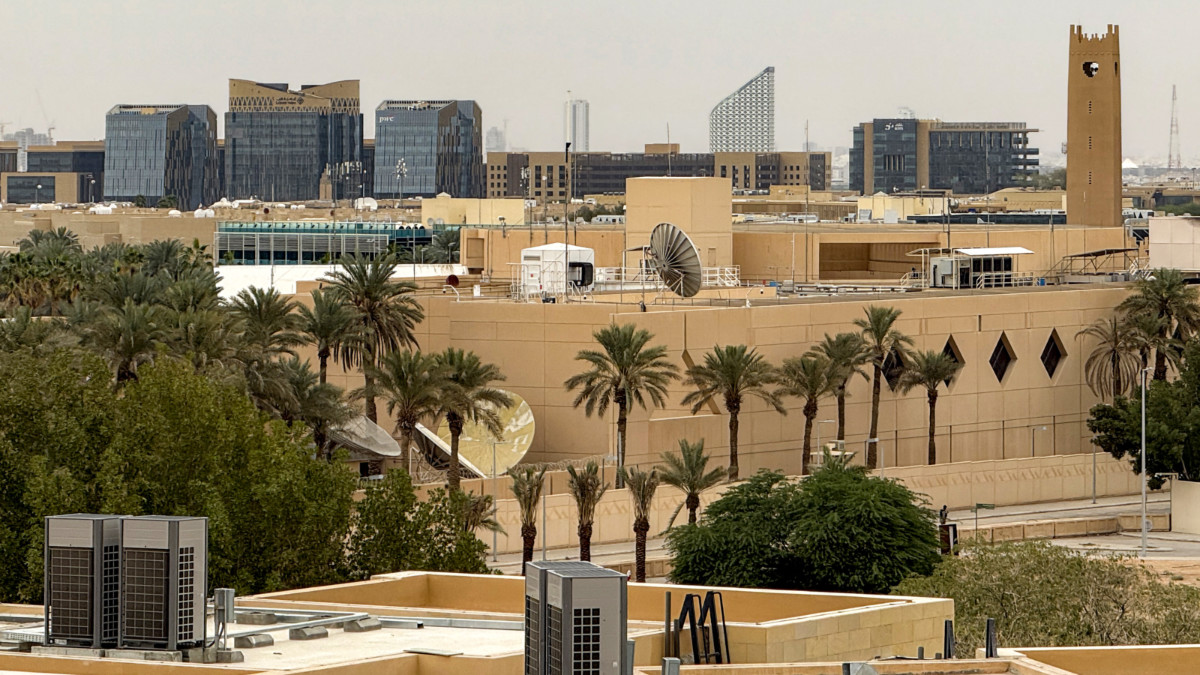
    Iranian officials have formally acknowledged receipt of a new U.S. peace proposal, confirming that Pakistan’s interior minister is currently in Tehran to serve as a neutral intermediary for communications between the two governments. Key regional U.S. partner Saudi Arabia has publicly welcomed Trump’s commitment to exploring diplomatic solutions, issuing a statement urging Iranian leadership to seize the opportunity to reach a negotiated settlement.

    In a reveal exclusive to Middle East Eye, Trump last week scrapped a pre-planned military strike on Iran after intense pushback from Gulf regional allies and senior members of his own national security team, who argued that launching an attack during the annual Hajj pilgrimage would carry unacceptable humanitarian and political risks. Trump later confirmed this account to reporters, noting that Gulf leaders had persuaded him to hold off on offensive action, and he would wait several additional days for a formal response from Tehran. The U.S. leader also held a diplomatic call with Turkish President Tayyip Erdogan; a readout from Erdogan’s office confirmed the Turkish leader backed the extended ceasefire and expressed confidence that a mutually acceptable negotiated solution to the conflict could be achieved.

    Trump’s public posture toward Iran has remained inconsistent in recent weeks, shifting sharply between optimistic claims that a breakthrough settlement is imminent and blunt threats to resume large-scale military hostilities. Iranian hardline leaders have pushed back against U.S. overtures, with parliament speaker Mohammad Bagher Ghalibaf issuing a stark warning that any renewed U.S. war effort would be met with a forceful Iranian response. The Islamic Revolutionary Guard Corps (IRGC) has additionally cautioned that any new conflict would quickly spread far beyond the boundaries of the Middle East. In an audio message carried by multiple Iranian state media outlets, Ghalibaf said, “The enemy’s movements, both overt and clandestine, show that despite economic and political pressure, it has not abandoned its military objectives and is seeking to start a new war.”

    Beyond diplomatic posturing, tangible shifts have been observed in the Strait of Hormuz, the narrow strategic waterway through which roughly 20% of global oil trade passes. The waterway has become the central point of contention in ongoing peace talks, as Iran and the U.S. have enforced competing blockades in a bid to assert dominance over the route. On Wednesday, three large supertankers carrying a combined 6 million barrels of crude oil from Kuwait and Iraq bound for Asian markets transited the strait. Two of the vessels have reported ties to China, while the third is linked to South Korea.

    Data from global shipping intelligence firm Windward confirms the three vessels sailed along the northern corridor of the strait, the route Iran has designated for commercial traffic to allow for cargo inspections and the collection of transit tolls. The resumption of regular commercial transits alongside positive diplomatic developments pushed U.S. crude prices down 6% on Wednesday, settling at roughly $98 per barrel.

    Tehran has outlined its core demands for any final peace deal, with Iranian Foreign Ministry spokesman Esmaeil Baghaei confirming Wednesday that Iran is pushing to establish a joint security mechanism with Oman to guarantee long-term stability in the strait. Iran has long demanded international recognition of its authority over the waterway, including the right to collect transit tolls from commercial shipping.

    Despite the progress in talks, the U.S. has continued its long-running campaign of intercepting and seizing Iranian-flagged commercial vessels in international waters. The U.S. military confirmed Wednesday that U.S. Marine forces boarded an Iranian-flagged oil tanker in the Gulf of Oman this week. “American forces released the vessel after searching and directing the ship’s crew to alter course,” U.S. Central Command, the military command that oversees U.S. operations in the Middle East, wrote in a post on X.

    Baghaei responded that any permanent peace deal would require the U.S. to immediately end what Iran describes as state-sponsored piracy against its commercial shipping. “Despite the negative record of the other side over the past year-and-a-half, Iran is pursuing the path of negotiations with seriousness and good faith, but it has strong and reasonable suspicion over America’s performance,” he added.

  • Trump says he will speak to Taiwan’s president in break from protocol

    Trump says he will speak to Taiwan’s president in break from protocol

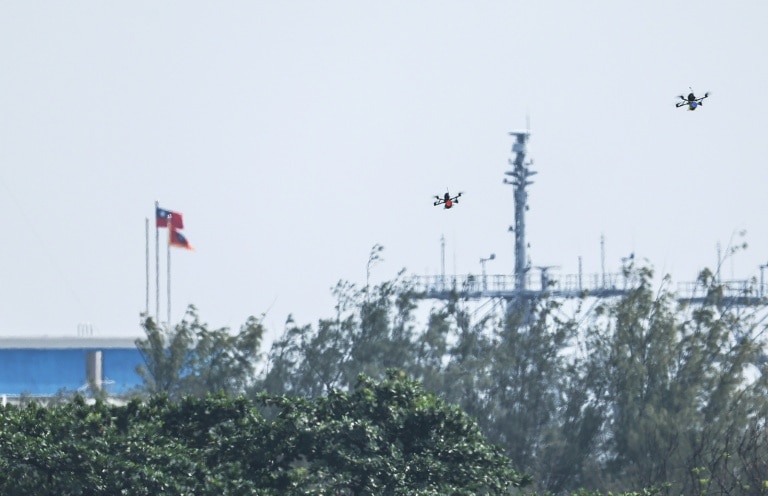
    In a move that upends nearly half a century of U.S. diplomatic protocol, former and current U.S. President Donald Trump has confirmed he intends to hold direct talks with Taiwanese leader Lai Ching-te regarding a proposed $14 billion arms package to the self-governing island, a step that threatens to roil already delicate relations between Washington and Beijing.

    No sitting U.S. president has spoken directly with a Taiwanese leader since 1979, when the United States formally cut diplomatic ties with Taipei to recognize the People’s Republic of China as the sole legitimate government of China. Beijing has consistently claimed Taiwan as an inalienable part of its territory, and has repeatedly refused to rule out the use of military force to assert its control over the island. Since Lai took office in 2024, he has overseen one of the most aggressive pushes in recent years to bolster Taiwan’s defensive capabilities amid growing Chinese military pressure.

    Washington’s long-standing policy on Taiwan has been rooted in deliberate ambiguity: the 1979 Taiwan Relations Act legally commits the U.S. to provide Taiwan with defensive arms, but successive administrations have worked to balance this commitment with the need to preserve stable diplomatic and economic ties with Beijing. When pressed by reporters on Wednesday whether he planned to speak with Lai before finalizing a decision on the arms deal, which reportedly includes advanced air-defense missile systems and anti-drone technology, Trump offered a straightforward response: “I’ll speak to him. I speak to everybody.. we’ll work on that, the Taiwan problem.”

    The announcement comes just one week after Trump wrapped up a two-day summit with Chinese President Xi Jinping in Beijing, where Trump himself described his personal relationship with Xi as “amazing.” During that summit, Beijing made clear that the Taiwan issue remains the most sensitive and consequential flashpoint in bilateral relations, with Xi warning outright that mishandling the question could lead to open conflict between the two global powers.

    Trump has so far declined to take a formal position on whether the $14 billion arms package will move forward, telling reporters aboard Air Force One on the return trip from Beijing that he would “make a determination over the next fairly short period.” He reiterated this week that he had not made any binding commitments to either side on the issue, while acknowledging that Xi holds very strong views on Taiwan’s status. “Xi felt ‘very strongly’ about Taiwan. I made no commitment either way,” he told reporters last week.

    In an additional break from long-standing U.S. policy, Trump revealed he had discussed the proposed arms sale “in great detail” with Xi during their Beijing meeting. That revelation contradicts a 1982 U.S. diplomatic commitment to Taiwan that Washington would not consult Beijing on arms sales to the island. When pressed on this decades-old pledge, Trump brushed it off, saying the 1980s were “a long way” away.

    This is not the first time Trump has broken with long-standing diplomatic norms around Taiwan. As president-elect in 2016, he held a controversial call with then-Taiwanese leader Tsai Ing-wen, which drew a formal diplomatic complaint from Beijing.

    Since the Trump-Xi summit, Lai has doubled down on his position, issuing public statements describing Taiwan as a “sovereign, independent democratic country” and insisting that cross-strait peace will not be “sacrificed or traded away.” He has also framed U.S. arms sales as a “key factor in maintaining regional peace and stability.” Under Lai’s leadership, Taiwan has significantly increased its defense budget to counter growing Chinese military activity near the island. Today, most Taiwanese residents support maintaining the current status quo, which sees the island operate as a de facto independent state without formal declaration of independence or unification with mainland China, though a majority identify as separate from China.

    Beijing has already signaled its displeasure with the Trump administration’s trajectory, with multiple sources confirming that China has delayed approval for a planned visit by Elbridge Colby, the Pentagon’s top policy official, until Trump makes a final decision on the arms deal. The $14 billion proposal follows a $11 billion arms sale approved by the U.S. last December, one of the largest ever to Taiwan, which also sparked fierce condemnation from Beijing.