分类: politics

  • Iran’s new supreme leader injured but ‘safe’, says president’s son

    Iran’s new supreme leader injured but ‘safe’, says president’s son

    Iran’s political landscape faces unprecedented uncertainty as newly appointed Supreme Leader Mojtaba Khamenei remains out of public view following injuries sustained during the transition of power. Presidential adviser Yousef Pezeshkian confirmed Wednesday that the 56-year-old successor is “safe and sound” despite physical injuries, marking the first official acknowledgment of his condition.

    The previously low-profile but influential figure assumed Iran’s highest leadership position after his father, Ali Khamenei, was killed alongside his mother and wife in a February 28 airstrike that initiated the US-Israeli military campaign against the Islamic Republic. The daytime attack on a Tehran compound reportedly left Mojtaba with leg injuries, though he remains alert while sheltering at a highly secure location with limited communication access.

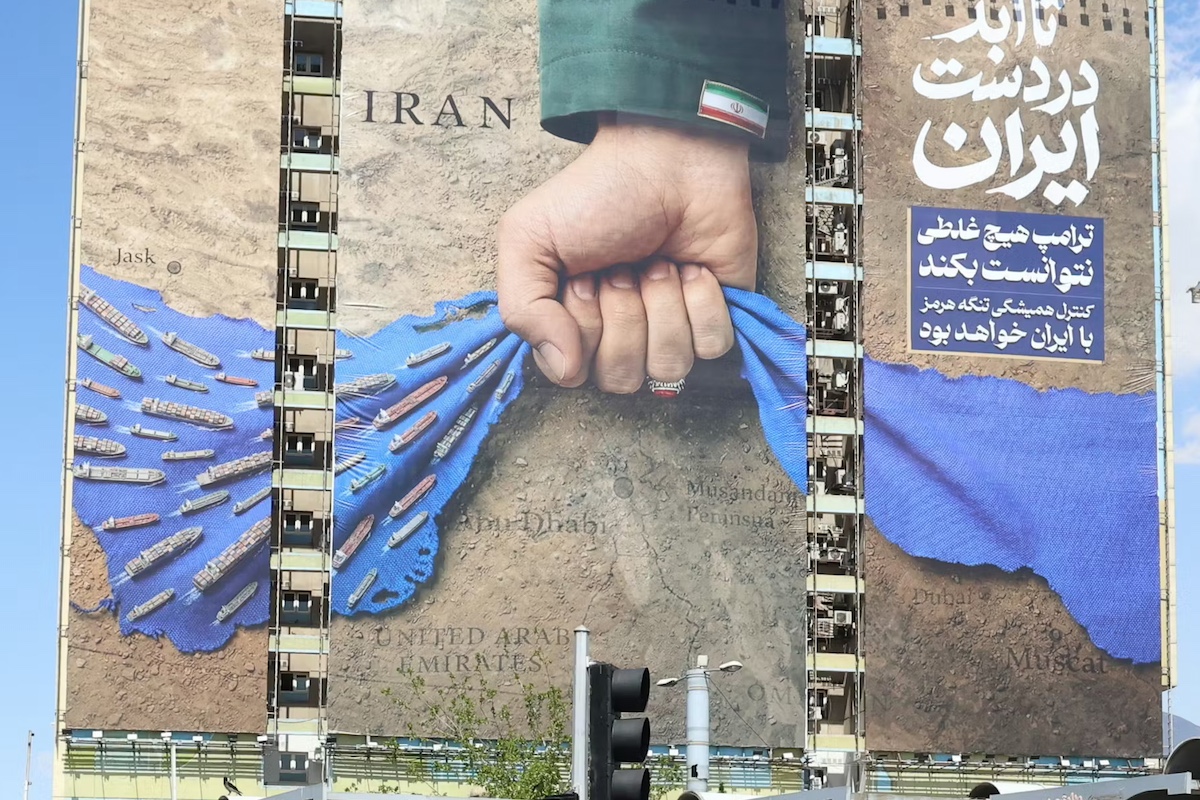
    State television has characterized Khamenei as a “wounded veteran of the Ramadan war,” referencing the conflict that erupted during the holy Muslim fasting month. His symbolic ascension to power has been visually represented across Tehran through giant billboards depicting him receiving the national flag from his father under the watchful gaze of Islamic Republic founder Ruhollah Khomeini.

    The new leader’s invisible presence has created a complex political dynamic. While thousands of pro-government supporters brandished his posters at rallies, nighttime protests in the capital have featured chants of “Death to Mojtaba!”—reflecting public opposition to a figure believed instrumental in suppressing anti-government demonstrations since 2009.

    Security analysts anticipate Khamenei will maintain a bunkered existence for the foreseeable future, given his immediate designation as a primary target for US and Israeli forces. Emile Hokayem of the International Institute for Strategic Studies noted that “killing him early is certainly an Israeli priority,” while suggesting that survival would transform him into “a totem, a testimony to the resilience of the system.”

    Power delegation appears imminent, with expectations that Khamenei will assign governmental operations to national security chief Ali Larijani and military operations to powerful parliament speaker Mohammad Bagher Ghalibaf. The new leader has already received pledges of allegiance from Iran’s conventional military, the Islamic Revolutionary Guard Corps, and Tehran-backed groups including Yemen’s Houthi rebels and Lebanon’s Hezbollah. Russian President Vladimir Putin has additionally promised “unwavering support.”

    The leadership transition occurs against the backdrop of former US President Donald Trump’s warning that Khamenei would require American approval to maintain power, stating Sunday that without such endorsement, “he’s not going to last long.” This development marks a critical juncture for Iran’s political future, combining dynastic succession with intensified international pressure and internal dissent.

  • Carney inches closer to majority, as fourth MP defects to Liberals

    Carney inches closer to majority, as fourth MP defects to Liberals

    Canadian Prime Minister Mark Carney’s minority government stands on the brink of securing parliamentary majority following a significant political defection. Lori Idlout, representing Nunavut and previously aligned with the left-leaning New Democratic Party (NDP), has crossed the floor to join the governing Liberal Party. This move marks the fourth parliamentary defection to Carney’s administration in recent months.

    Idlout’s decision follows extensive personal deliberation and consultations with her constituency, family, and political supporters. In an official statement released by the Liberals, she expressed her conviction that joining the governing party would better serve her constituents’ interests. The Liberal leadership enthusiastically welcomed Idlout, characterizing her defection as evidence of growing confidence in Carney’s leadership.

    The NDP’s interim leader Don Davies voiced strong disapproval, asserting that elected officials who switch party allegiance should seek renewed electoral mandates from their constituents. This defection occurs amid broader political realignments, with three former Conservative MPs—Matt Jeneroux, Chris d’Entremont, and Michael Ma—having previously joined the Liberal ranks.

    Conservative opposition figures have accused the government of employing coercive tactics to lure opposition members, though no specific evidence has been presented. The political landscape further intensifies with Carney’s announcement of three critical by-elections scheduled for April 13th. Two contests in Liberal-friendly Toronto districts and one highly competitive race in Montreal—where the previous election was decided by a single vote later invalidated by the Supreme Court—could determine the government’s future.

    Should the Liberals secure all three seats alongside Idlout’s defection, they would achieve 173 parliamentary seats, providing Carney with a stable majority that could extend his government’s tenure for three additional years without elections. This political shift occurs against the backdrop of the NDP’s organizational challenges, having retained only seven seats in last year’s federal election amid significant voter erosion. The party prepares to select new leadership later this month as it reevaluates its political strategy.

  • US Senate approves Joshua Rudd as leader of NSA and Cyber Command

    US Senate approves Joshua Rudd as leader of NSA and Cyber Command

    WASHINGTON – In a decisive bipartisan move, the United States Senate has confirmed Joshua Rudd as the new director of both the National Security Agency (NSA) and the US Cyber Command. The confirmation, which occurred on Tuesday, March 11, 2026, concludes an 11-month leadership vacuum that began with the dismissal of the previous chief in April 2025.

    The upper chamber approved Rudd’s nomination with a final tally of 71 votes in favor to 29 against. This margin, while comfortable, revealed a notable level of opposition. A faction of Democratic lawmakers mounted resistance to the appointment, primarily challenging Rudd’s credentials. Their central argument centered on his perceived lack of specialized, hands-on experience in the complex domain of cybersecurity and digital warfare.

    Rudd’s professional background is deeply rooted in conventional military strategy and command. Prior to this appointment, he held the position of Deputy Director at the US Indo-Pacific Command, capping a military career spanning several decades. Proponents of his nomination highlighted this extensive command experience as a critical asset for leading the nation’s premier signals intelligence and cyber operations entities.

    Since the departure of former director Timothy Haugh last spring, William Hartman has been serving as the acting head of the two agencies, ensuring operational continuity during the extended interim period. Rudd’s confirmation now provides permanent, Senate-mandated leadership to oversee the nation’s cyber defense and intelligence-gathering apparatus at a time of escalating global digital threats.

  • Military exercises slammed

    Military exercises slammed

    PYONGYANG/SEOUL — North Korea has issued a forceful condemnation of the ongoing joint military exercises between the United States and South Korea, characterizing them as a direct threat to regional stability. The official Korean Central News Agency (KCNA) reported on Tuesday that the Democratic People’s Republic of Korea (DPRK) views these drills as substantially undermining peace in the region.

    The military exercises, designated as Freedom Shield and scheduled from March 9 to March 19, encompass 22 field training operations involving actual troop deployments and maneuvers. While Seoul and Washington maintain that the exercises are defensive in nature, Pyongyang and various critics argue they represent provocative actions that heighten military tensions on the Korean Peninsula.

    Kim Yo-jong, a senior official in the Workers’ Party of Korea, explicitly rejected characterizations of the drills as routine training, instead labeling them as ‘provocative and aggressive war rehearsals’ specifically designed to simulate combat scenarios against North Korea. She emphasized the inviolability of North Korea’s security sphere and reaffirmed the nation’s commitment to defending both the Korean Peninsula and the broader region.

    Simultaneously, civic groups in Seoul organized protests outside the US embassy, where activists demanded the immediate cessation of the joint exercises. Demonstrators argued that the drills jeopardize peace prospects and hinder potential inter-Korean reconciliation efforts. Protest leaders particularly expressed concern about the potential deployment of advanced weapon systems, including unmanned attack aircraft and new missile technologies, during the exercises.

    Critics accused the United States of prioritizing geopolitical ambitions over the safety of South Korean citizens, urging Seoul to reconsider its military dependence on Washington and instead pursue diplomatic solutions to reduce tensions on the peninsula.

  • New strategy to revitalize Chinese cities

    New strategy to revitalize Chinese cities

    China is positioning urban renewal as a cornerstone of its national development strategy through the forthcoming 15th Five-Year Plan (2026-2030), marking a significant shift in the nation’s approach to urbanization. According to Jon Taylor, Associate Dean at the University of Texas at San Antonio, this strategic pivot moves beyond mere physical reconstruction to encompass comprehensive urban transformation.

    The draft outline submitted to the National People’s Congress emphasizes a fundamental policy reorientation from outward urban expansion to intensive inward development. This new paradigm encourages cities to pursue compact, efficient, and environmentally sustainable redevelopment rather than unchecked spatial growth.

    Taylor notes that China’s urbanization drive, particularly in first-tier cities like Beijing, Shanghai, Guangzhou, and Shenzhen, has created a substantial inventory of aging infrastructure. Much of the residential and commercial properties constructed between the late 1980s and early 2000s have become increasingly inadequate to meet modern demands driven by demographic changes and evolving social, environmental, and technological needs.

    The urban renewal strategy serves multiple objectives: revitalizing aging districts, stabilizing housing markets, and advancing affordable housing reforms. More significantly, it functions as a major structural driver for China’s economy during the coming five-year period. The initiative connects neighborhood renovations, infrastructure modernization, and efficient land use optimization with broader domestic economic growth objectives.

    Several cities have already pioneered experimental approaches. Shanghai has implemented “micro-renewal” programs at the neighborhood level, while Guangzhou has pursued district-level regeneration. All major cities have rapidly expanded transit-oriented redevelopment, and Beijing has undertaken substantial old-city preservation and renewal projects.

    Beyond physical reconstruction, this strategy aims to strengthen high-efficiency urban governance aligned with national goals of improving government responsiveness, integrating digital systems, and enhancing public services. Taylor emphasizes that urban renewal represents not merely a construction program but a comprehensive vehicle to reshape Chinese society, local governance, and economic development for the next decade and beyond.

    Once the 15th Five-Year Plan is approved and implemented, urban renewal will transition from a peripheral initiative to a central tenet of China’s national development strategy, reflecting its critical importance in the nation’s future planning.

  • Presidium of China’s annual legislative session holds 2nd meeting

    Presidium of China’s annual legislative session holds 2nd meeting

    The presidium of China’s National People’s Congress (NPC) convened its second meeting on March 10, 2026, at Beijing’s Great Hall of the People, marking a significant phase in the country’s annual legislative session. Presided over by Zhao Leji, executive chairman of the presidium and chairman of the NPC Standing Committee, the meeting set in motion the deliberation process for several critical legislative documents and national development plans.

    The assembly determined to submit three major legislative revisions to NPC delegations for comprehensive review: an updated environmental code, a revised law promoting ethnic unity and progress, and an amended national development planning law. These legislative instruments represent China’s continued commitment to environmental governance, social harmony, and strategic economic direction.

    Additionally, the presidium approved for delegation deliberation several draft resolutions concerning the government work report, the outline of the 15th Five-Year Plan (2026-2030) for national economic and social development, the 2026 national economic and social development plan report, and the 2026 central and local budgets report. These documents collectively form the policy framework that will guide China’s development trajectory through the latter half of the 2020s.

    Prior to the main presidium meeting, Zhao Leji conducted a meeting of the executive chairpersons, ensuring procedural efficiency and organizational coherence throughout the legislative process. The systematic approach to these deliberations reflects the structured nature of China’s legislative procedures and the importance placed on comprehensive review of national policies.

  • Tehran says no return to diplomacy after attacks

    Tehran says no return to diplomacy after attacks

    Iran has formally declared an end to diplomatic engagement with the United States following coordinated military strikes by US and Israeli forces, despite previously participating in what international observers characterized as promising negotiations. The escalation directly contradicts Washington’s assertions that hostilities would conclude swiftly, instead pointing toward a prolonged regional conflict that has already begun impacting global energy markets.

    In a televised interview with PBS News, Iranian Foreign Minister Seyed Abbas Araghchi characterized the breakdown as a “very bitter experience,” noting that attacks occurred despite substantial progress during three rounds of negotiations. This perception is reinforced by analysis from Arhama Siddiqa of Pakistan’s Institute of Strategic Studies, who observes that Tehran views US diplomatic overtures as fundamentally disconnected from military actions on the ground.

    The confrontation has exposed potential fractures within the US-Israeli alliance, with Siddiqa suggesting that any American attempt to de-escalate could create strategic divergence if Israel believes continued military pressure better serves its security objectives. This dynamic has significantly constricted diplomatic space amid intensifying regional tensions driven by mutual mistrust and competing agendas.

    Humanitarian consequences continue to mount, with Iranian officials reporting over 1,200 fatalities including 200 children and 11 healthcare workers. The conflict’s spillover has displaced hundreds of thousands across the Middle East, with UNICEF reporting nearly 700,000 displaced in Lebanon alone. International involvement continues to evolve, with Australia announcing deployment of surveillance aircraft and missile systems to the United Arab Emirates while emphasizing purely defensive objectives.

  • UK will publish files about the appointment of Epstein friend Mandelson to ambassador post

    UK will publish files about the appointment of Epstein friend Mandelson to ambassador post

    The British government has committed to publishing classified files concerning the controversial appointment of Peter Mandelson as ambassador to the United States, following mounting pressure from lawmakers. This disclosure occurs alongside an ongoing police investigation into potential misconduct linked to Mandelson’s association with the late financier and convicted sex offender Jeffrey Epstein.

    Prime Minister Keir Starmer’s administration faces intense scrutiny after parliamentarians compelled the release of thousands of documents related to Mandelson’s diplomatic nomination during the commencement of Donald Trump’s second presidential term. Government officials indicate these files will demonstrate that Mandelson provided misleading information to authorities regarding the depth of his relationship with Epstein.

    Mandelson, a 72-year-old veteran Labour Party figure and former Cabinet minister, was apprehended at his London residence on February 23 under suspicion of misconduct in public office. While released without bail conditions pending further investigation, he maintains his innocence and faces no criminal charges or allegations of sexual misconduct.

    Cabinet minister Darren Jones confirmed the initial batch of documents would be made public Wednesday afternoon, following meticulous review by Parliament’s Intelligence and Security Committee. Law enforcement authorities have requested the government withhold any materials that might jeopardize their criminal investigation.

    Prime Minister Starmer dismissed Mandelson from his position last September following previous disclosures about his Epstein connections. However, the Prime Minister now confronts significant political backlash over his initial decision to appoint Mandelson to the crucial Washington diplomatic post.

    Recent evidence emerging from the U.S. Department of Justice’s extensive Epstein document release in January suggests Mandelson may have shared market-sensitive government information with Epstein during his tenure as Business Secretary following the 2008 financial crisis. This includes internal reports discussing potential government asset sales and indications that Mandelson attempted to lobby for reduced banker bonus taxes at Epstein’s behest.

  • China’s defense spending maintains reasonable growth

    China’s defense spending maintains reasonable growth

    China has unveiled a strategic defense budget of 1.91 trillion yuan ($278 billion) for fiscal year 2026, representing a measured 7% year-on-year increase. Senior Colonel Zhang Xiaogang, spokesperson for the People’s Liberation Army and People’s Armed Police Force delegation, articulated the rationale behind this expenditure during the fourth session of the 14th National People’s Congress.

    The budget allocation reflects China’s commitment to synchronized development of national defense capabilities and economic prosperity. Colonel Zhang emphasized that the funding determination follows comprehensive evaluation of multiple strategic factors, including national security requirements, overall development objectives, and the synchronization between military modernization and China’s broader modernization agenda.

    According to defense officials, the increased expenditure will primarily fuel three key modernization initiatives: advancing integrated military development through mechanization, informatization, and smart technology implementation; enhancing joint operational capabilities and traditional combat forces; and accelerating the systematic development of new-domain forces with combat-ready capabilities.

    The budgetary expansion will also facilitate critical investments in advanced weaponry development, defense technology innovation, modern logistics infrastructure, and combat-oriented training programs. Additionally, the military plans to implement comprehensive reforms in budget management systems, establishing dynamic balance mechanisms between funding supply and demand while strengthening full-cycle financial oversight and performance evaluation.

    Colonel Zhang characterized these developments as essential strategic underpinnings for Chinese modernization, noting that the approach simultaneously enhances both defense capabilities and economic strengths while safeguarding national sovereignty and security interests.

  • Motions prioritize emerging industries

    Motions prioritize emerging industries

    Chinese legislators are channeling significant attention toward establishing legal frameworks for cutting-edge technological sectors during the current National People’s Congress session. According to the session’s secretariat, an overwhelming majority of the 226 motions submitted by NPC deputies focus on legislative priorities for the 15th Five-Year Plan (2026-2030), with particular emphasis on building China’s modern industrial system.

    Guo Zhenhua, head of the motions work group, revealed that more than two-thirds of proposals target legal establishment or amendment to strengthen technological self-reliance and develop a high-standard socialist market economy. The legislative push specifically addresses artificial intelligence governance, digital economy regulations, low-altitude economic development, and national laboratory operations.

    Beyond emerging technologies, deputies have advocated for revisions to existing legislation including the Patent Law to accelerate the transformation of scientific achievements into practical applications. This initiative aims to bridge the gap between innovation and industrial implementation.

    Concurrently, social welfare concerns feature prominently in the legislative agenda. Sixty-six motions address quality-of-life improvements including traffic safety enhancements, comprehensive elderly care services, and protection for workers in emerging employment sectors such as ride-hailing and delivery services.

    The secretariat additionally reported receiving over 7,000 suggestions covering broader policy areas including internet economy development, green energy transition, agricultural智能化services, and combating online misinformation and telecommunications fraud. Unlike formal motions, these suggestions represent advisory opinions for government departments rather than items requiring NPC review.