分类: politics

  • Trump vows ‘death, fire, fury’ as Iran civilian Infrastructure hit

    Trump vows ‘death, fire, fury’ as Iran civilian Infrastructure hit

    A renewed military offensive by United States and Israeli forces struck multiple targets across Iran late Monday and early Tuesday, with reports indicating significant civilian infrastructure damage including residential buildings, educational facilities, and power grids. The escalation coincides with former President Donald Trump’s explicit threat targeting Iran’s entire population through his Truth Social platform.

    Trump declared that US forces would “take out easily destroyable targets that will make it virtually impossible for Iran to ever be built back, as a Nation, again” if Iranian authorities interfere with oil tanker navigation through the Strait of Hormuz. Maritime traffic through this critical choke point has dramatically decreased since the initiation of joint US-Israeli operations.

    Eyewitness accounts from Tehran describe catastrophic scenes at strike locations, with one resident reporting “a huge disaster” and the recovery of numerous civilian casualties, including children, from bombed residential complexes. Iranian media additionally confirmed damage to a school and surrounding homes in Khomeyn city, following what evidence suggests was a US-orchestrated attack on a girls’ elementary school in Minab last month that killed over 160 people, predominantly young students.

    Dylan Williams of the Center for International Policy characterized the campaign as “a war against the people of Iran,” noting that AIPAC, the pro-Israel lobbying organization, amplified Trump’s threatening social media post. Iranian officials responded with defiance, with Parliament Speaker Mohammad Bagher Ghalibaf vowing to “strike the aggressor in the mouth” to prevent further aggression.

    Diplomatic prospects appear increasingly remote according to Kamal Kharazi, foreign policy adviser to Iran’s supreme leader, who told CNN that Trump’s pattern of deception had eliminated opportunities for negotiation. Kharazi indicated conflict resolution would require sufficient international economic pressure to guarantee cessation of hostilities.

    With oil prices surging and creating administration concerns, an anonymous senior Iranian source warned that Tehran controls “the screw of the global oil price” and would continue fighting until Trump acknowledges defeat, suggesting prolonged energy market instability.

  • Democrats demand investigation of claims US-Israeli war on Iran is biblical prophecy

    Democrats demand investigation of claims US-Israeli war on Iran is biblical prophecy

    A coalition of nearly 30 Democratic lawmakers has formally requested an inspector general investigation into disturbing allegations that U.S. military leadership has framed operations against Iran through the lens of biblical prophecy. The controversy centers on claims that service members have been told their combat participation would accelerate apocalyptic events leading to Jesus Christ’s return.

    In a letter obtained by Military.com, prominent progressives including Representatives Rashida Tlaib, Ilhan Omar, and Pramila Jayapal joined former Speaker Nancy Pelosi in demanding answers from the Department of Defense. The correspondence alleges that commanding officers have invoked religious doctrine and eschatological theology to rationalize American military engagements in Iran.

    The legislators expressed grave constitutional concerns, noting that such rhetoric potentially violates Pentagon regulations mandating religious neutrality. They questioned whether these incidents reflect a broader pattern within the defense establishment, particularly referencing Secretary of Defense Pete Hegseth’s documented affinity for Christian nationalist symbolism. Hegseth sports a Crusader’s cross tattoo and the Arabic term ‘kafir’ (unbeliever) on his arm, and recently advocated for battlefield prayer during a ’60 Minutes’ interview.

    The Military Religious Freedom Foundation reports receiving over 200 complaints from across all service branches regarding commanders characterizing the Iran conflict as a prelude to Armageddon. Foundation founder Michael Weinstein, a veteran himself, warns this represents systematic religious coercion rather than isolated incidents, exacerbated by the growing influence of fundamentalist ideologies within military leadership.

    The congressional inquiry seeks to determine the origin of these religious communications, assess potential violations of religious neutrality protocols, and evaluate whether service members fear retaliation for objecting to these theological framings of military operations.

  • What do Georgians want from Marjorie Taylor Greene’s replacement?

    What do Georgians want from Marjorie Taylor Greene’s replacement?

    The political landscape of Georgia’s 14th Congressional District enters a decisive phase as voters prepare to select a permanent successor to former Representative Marjorie Taylor Greene. The special election, triggered by Greene’s January resignation to pursue other political ambitions, has advanced to a runoff between Republican contender Clayton Fuller and Democratic challenger Shawn Harris after neither secured an outright majority in the initial voting round.

    This electoral contest represents more than a routine political transition—it serves as a critical barometer of the district’s evolving political priorities. The northwestern Georgia constituency, traditionally conservative, now faces a choice between continuing Greene’s brand of confrontational politics or embracing alternative representation.

    Fuller, running as the Republican standard-bearer, has positioned himself as a continuation of conservative values while promising more focused district advocacy. His campaign emphasizes border security, economic development, and traditional Republican platforms. Harris, his Democratic opponent, has centered his campaign on healthcare accessibility, educational improvements, and bipartisan cooperation—issues he argues were neglected during Greene’s tenure.

    The runoff mechanism, required under Georgia election law when no candidate achieves majority support, extends the electoral process and intensifies campaign efforts. Both campaigns now mobilize their bases while attempting to sway undecided voters and those who supported eliminated candidates in the first round.

    Political analysts observe that this election may reveal whether voters prioritize ideological purity or pragmatic representation, with outcomes potentially influencing campaign strategies in similar districts nationwide. The result will determine who completes the remainder of Greene’s term, with implications for the balance of power in the closely divided House of Representatives.

  • US says wouldn’t be ‘happy’ if Russia giving Iran intel

    US says wouldn’t be ‘happy’ if Russia giving Iran intel

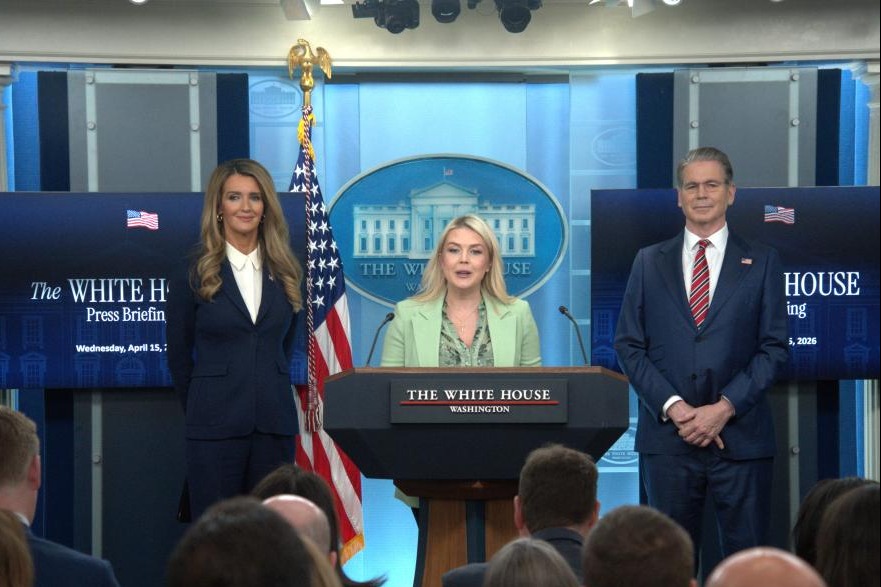
    The White House has conveyed its dissatisfaction with potential intelligence collaboration between Russia and Iran during ongoing Middle Eastern hostilities, while maintaining diplomatic restraint toward Moscow. Press Secretary Karoline Leavitt stated Tuesday that President Trump would not be ‘happy’ if such intelligence sharing were confirmed, following Washington Post reports that Russia had provided Tehran with sensitive information including US naval and aircraft positions in the region.

    Despite these allegations, the administration has adopted a measured response. President Trump characterized his Monday conversation with Vladimir Putin as constructive, noting the Russian leader’s desire to be ‘helpful’ in Middle Eastern matters—even as Putin offered ‘unwavering support’ to Iran’s new leadership.

    In a related development, the US has temporarily suspended certain sanctions on Russian oil exports to India, citing global crude price surges resulting from the Iran conflict. Leavitt clarified that this waiver recognized New Delhi’s previous compliance with US sanctions and represented a temporary measure to address oil supply disruptions. She emphasized that the move wouldn’t provide ‘significant financial benefit to the Russian government at this time.’

    Special Envoy Steve Witkoff, who has led US negotiations with both Russia and Iran, suggested taking Moscow at its word regarding intelligence sharing denials. When questioned about the apparent contradiction between alleged intelligence transfers and sanctions relief, Witkoff acknowledged his lack of intelligence expertise but noted Russia’s official denial during the presidential call.

    The administration continues to navigate complex diplomatic waters as Trump maintains his distinctive approach to US-Russia relations, insisting his personal rapport with Putin remains crucial for potential negotiations regarding Ukraine.

  • Trump reportedly wants to seize Iran’s Kharg Island. He floated the idea 40 years ago

    Trump reportedly wants to seize Iran’s Kharg Island. He floated the idea 40 years ago

    A recently resurfaced 1988 interview with then-businessman Donald Trump reveals his early consideration of military action against Iran’s critical Kharg Island oil terminal. Speaking to The Guardian, Trump articulated a confrontational approach toward Iran, stating he would “be harsh on Iran” and proposing to “go in and take” Kharg Island in response to any provocation against US assets.

    This historical perspective gains contemporary significance as recent reports from Axios indicate that US and Israeli officials have recently discussed the possibility of seizing this strategic facility, which handles approximately 90% of Iran’s crude oil exports. The parallel between Trump’s 1988 comments and current deliberations highlights remarkable consistency in his strategic thinking regarding Iran.

    The context of Trump’s original remarks was the brutal Iran-Iraq War (1980-1988), which resulted in approximately 500,000 casualties. During this period, the US Navy was actively escorting vessels through the strategically vital Strait of Hormuz and conducting operations against Iranian oil infrastructure and naval mines.

    Trump’s adversarial stance toward Iran appears rooted in the 1979 Iranian Revolution, which overthrew US-backed Shah Mohammad Reza Pahlavi and established the Islamic Republic. The subsequent 444-day hostage crisis, where 52 American diplomats were held captive in Tehran, profoundly shaped the perceptions of many Americans of Trump’s generation.

    Despite this confrontational posture, historical records reveal a more complex US-Iran relationship. During the Iran-Iraq War, the United States and Israel actually sold weapons to Iran, perceiving Saddam Hussein’s secular Iraqi government as a greater threat than the Islamic Republic. Some of these transactions became part of the controversial Iran-Contra affair, where proceeds were illegally diverted to support anti-communist rebels in Nicaragua.

    The potential closure of the Strait of Hormuz, through which approximately 20% of global oil and natural gas supplies transit, represents a significant threat to energy markets. Recent reports indicate that Iran continued loading operations at Kharg Island even after the initiation of US-Israeli military actions, though current operational status remains unclear.

  • Iran’s MEK plots a US-backed path to power from exile in Albania

    Iran’s MEK plots a US-backed path to power from exile in Albania

    Amidst escalating military actions against Iran initiated by Israel and the United States on February 28th, the Mujahedin-e Khalq (MEK) – an opposition group long marginalized in exile – has launched a strategic maneuver to position itself as a viable alternative to Tehran’s Islamic Republic.

    The organization’s 72-year-old leader, Maryam Rajavi, proclaimed the establishment of a provisional government tasked with overseeing the transition to a democratic republic under her leadership. This declaration comes as the group, which maintains approximately 3,000 members in a fortified Albanian compound near Tirana, seeks relevance in a conflict that has suddenly created political opportunities.

    Originally founded as an Islamist-Marxist student militia during the 1960s, the MEK has undergone significant ideological transformation. The group relocated to Albania’s Manze village in 2013 following a Washington-brokered agreement that resettled members previously based in Iraq. Despite its current marginalization, the MEK played a substantial role in the 1979 revolution before being suppressed by Ayatollah Khomeini’s regime.

    The organization’s relationship with Western powers has been complex and controversial. Designated as a terrorist organization by the U.S. in 1997, the MEK successfully lobbied for removal from the list in 2012. The group gained international attention in 2002 when it exposed Iran’s previously concealed uranium-enrichment program, demonstrating its intelligence capabilities.

    Analysts remain skeptical about the MEK’s domestic appeal. Professor Thomas Juneau of the University of Ottawa characterizes the group as “a thuggish and corrupt cult that is unpopular inside Iran.” Similarly, Iran expert Sajjad Safaei notes that the MEK’s utility to foreign powers stems precisely from its lack of political future within Iran, making it an ideal instrument for external interests.

    The organization maintains sophisticated infrastructure in Albania, including media rooms and communication centers that monitor Iranian developments and distribute content online. This operational capacity, combined with an extensive lobbying network in Washington, has enabled the MEK to cultivate support among prominent Western politicians. Financial disclosures reveal substantial speaking fees paid to figures including Mike Pence ($190,000), John Bolton ($40,000), and numerous other former officials from the U.S. and Europe.

    As speculation about regime change intensifies, tensions have emerged within the exiled Iranian opposition community. Rudy Giuliani, a prominent MEK ally, recently attacked Reza Pahlavi on social media, highlighting the fractious nature of the opposition movement. Despite these developments, Washington has maintained caution regarding official endorsement, recognizing the potential consequences of supporting groups with limited domestic legitimacy.

  • Hereditary peers to be removed from Lords as bill passes

    Hereditary peers to be removed from Lords as bill passes

    The British Parliament has enacted landmark legislation that will remove all remaining hereditary peers from the House of Lords, concluding a constitutional reform process that began over two decades ago. The House of Lords (Hereditary Peers) Bill received parliamentary approval following a compromise agreement between the government and Conservative opponents.

    This legislation eliminates the final 92 hereditary positions that had survived the initial 1999 reforms under Prime Minister Tony Blair’s Labour government. Baroness Smith, Lords Leader, characterized the move as fulfilling Labour’s manifesto commitment to eliminate inherited parliamentary privilege, stating: ‘This has never been about the contribution of individuals but the underlying principle that no-one should sit in our Parliament by way of an inherited title.’

    The breakthrough came after ministers offered significant concessions to secure Conservative support. The agreement provides for the creation of 15 life peerages for Conservative hereditary members, allowing them to remain in the upper chamber. Additionally, the government plans to increase the number of paid ministerial positions in the Lords and is considering further reforms including potential retirement age requirements and minimum participation standards.

    Lord True, Conservative leader in the Lords, acknowledged the government’s mandate while characterizing the compromise as ‘a bitter pill for some on his side to swallow.’ The transition will occur when the current parliamentary session concludes, expected in May.

    The Earl of Devon, one of the departing hereditary peers whose family has held a seat for 900 years, expressed regret over the decision, noting that Parliament and the public ‘will miss us.’ Meanwhile, electoral reform advocates celebrated the change. Dr. Jess Garland of the Electoral Reform Society stated: ‘No part of Parliament should be a gated community from which the public are excluded.’

    This reform represents the culmination of a process that began in 1999 when Blair described the hereditary system as an ‘anachronism’ and removed over 600 hereditary peers, leaving the remaining 92 as a temporary measure that persisted for 25 years.

  • Will Trump blink on Iran as pressure mounts?

    Will Trump blink on Iran as pressure mounts?

    As global oil prices surge and domestic political pressures intensify, President Donald Trump’s approach to the Iran conflict appears increasingly fluid. The commander-in-chief has offered contradictory timelines for the military engagement, initially suggesting a four-to-five week campaign before recently characterizing operations as a “very complete” and “short-term excursion.

    This rhetorical shift occurs against a backdrop of concerning economic indicators and precarious midterm election prospects for the Republican Party. Historically low public support for the war compounds these challenges, with fuel prices potentially exacerbating voter discontent over living costs.

    Analysts interpret Trump’s ambiguous messaging as evidence of the so-called “TACO” phenomenon (Trump Always Chickens Out), suggesting the president seeks an exit strategy that preserves political capital. Colin Clarke of the Soufan Center predicts an intensive two-week military push followed by a declaration of victory, regardless of tangible outcomes.

    The administration’s stated objectives remain equally inconsistent, ranging from unconditional surrender and regime change to securing Gulf oil flows. Officially documented military goals include denuclearization, elimination of ballistic missile capabilities, and curbing regional proxy influence—targets that might provide face-saving justification for disengagement.

    Tehran’s response has been characteristically defiant despite significant infrastructure damage from joint US-Israeli strikes. Iranian leadership has mocked Trump’s timeline assertions and threatened Gulf oil supply disruptions. Meanwhile, Israel pursues its own strategic priorities, including energy infrastructure attacks that may not align with Washington’s broader calculations.

    The succession of Ayatollah Mojtaba Khamenei following his father’s death presents additional complications. Without visible internal resistance to the new leadership, Operation Epic Fury risks being remembered as superficial military posturing rather than transformative action.

    Experts warn that incomplete resolution could yield perilous consequences: a wounded Iranian regime potentially accelerating nuclear ambitions while ethnic insurgencies destabilize the broader Middle East. The administration thus faces not merely political calculations, but decisions that could reshape regional security architectures for decades.

  • ‘I don’t know why we’re doing it’ – Americans divided on Iran war

    ‘I don’t know why we’re doing it’ – Americans divided on Iran war

    A profound national division has emerged among American citizens regarding the military engagement with Iran, with many expressing confusion and skepticism about the strategic objectives. A broad spectrum of opinions has been captured in a series of interviews conducted by the BBC, highlighting the uncertain public sentiment a decade after the initial authorization of force by the Trump administration.

    The national discourse reveals a fractured perspective on foreign policy, with respondents from diverse geographic and demographic backgrounds presenting starkly contrasting viewpoints. While a segment of the population defends the military action as a necessary demonstration of strength and deterrence, a significant portion of the citizenry openly questions the wisdom and long-term consequences of the operation. Core points of contention include the ambiguity of the mission’s end goal, the potential for regional escalation into a broader conflict, and the overarching question of national interest.

    The background to this public deliberation is a complex geopolitical landscape that has evolved significantly since the initial strike. The ongoing analysis of the conflict’s impact underscores deep concerns about economic stability, given global oil market fluctuations, and the safety of military personnel deployed overseas. The national conversation, therefore, extends beyond mere tactical support to encompass a deeper evaluation of American diplomacy and strategic leadership on the world stage.

  • Paraguay lawmakers approve a defense agreement that allows an increased US military presence

    Paraguay lawmakers approve a defense agreement that allows an increased US military presence

    ASUNCIÓN, Paraguay — In a decisive move that strengthens hemispheric security ties, Paraguay’s Chamber of Deputies has overwhelmingly endorsed a defense agreement permitting temporary deployment of United States military and civilian personnel within its territory. The Tuesday ratification marks a significant diplomatic achievement for the Trump administration, which has actively pursued expanded engagement throughout Latin America.

    The Status of Forces Agreement (SOFA), previously signed by both nations in Washington during December, received legislative approval with 53 votes in favor versus eight opposing votes. Four ballots were returned blank while fifteen lawmakers abstained from participation. Having already cleared the Paraguayan Senate, the agreement now awaits final endorsement from President Santiago Peña—a recognized regional ally of the Trump administration—who is anticipated to formalize the pact imminently.

    This bilateral framework establishes legal parameters for U.S. security forces conducting training operations, joint military exercises, and humanitarian missions within Paraguay. Notably, it extends criminal jurisdiction over American personnel to U.S. authorities, a provision that has ignited substantive debate regarding national sovereignty.

    Both U.S. Secretary of State Marco Rubio and Paraguayan Foreign Minister Rubén Ramírez Lezcano have characterized the agreement as “historic,” emphasizing its role in enhancing collaborative efforts against transnational organized crime and terrorism. The Paraguayan government has explicitly clarified that the pact does not authorize establishment of permanent U.S. military bases.

    Despite official assurances, opposition legislators and civil society organizations have expressed reservations. Critics highlight concerns over granting foreign troops immunity comparable to diplomatic personnel, arguing that such provisions might undermine judicial sovereignty. Independent congressman Raúl Benítez articulated this perspective, stating: “We believe in international cooperation, but we also believe in strong states, respected institutions and real democratic sovereignty.”

    The non-governmental organization Peace and Justice Service, which operates across Latin America, issued a pre-vote statement contending that the agreement “does not represent progress in security, but rather the formalization of a geopolitics of impunity that undermines the pillars of our national dignity.”

    This development occurs against the backdrop of increased U.S. diplomatic engagement in Latin America under the Trump administration’s national security priorities, signaling a reorientation of regional defense partnerships.