分类: politics

  • Thailand to open new parliament on Saturday

    Thailand to open new parliament on Saturday

    BANGKOK – Thailand’s political landscape enters a new chapter as the nation prepares to convene its freshly elected parliament this Saturday, March 14, following last month’s decisive general election. The official proclamation, published in the Royal Gazette on Wednesday and bearing the endorsement of King Maha Vajiralongkorn alongside Prime Minister Anutin Charnvirakul’s countersignature, marks a significant constitutional milestone.

    The February 8th electoral contest resulted in a substantial victory for the Bhumjaithai Party under Prime Minister Anutin’s leadership, which secured a commanding 191 seats in the 500-member House of Representatives. The People’s Party emerged as the second-largest faction with 120 seats, while the Pheu Thai Party captured 74 seats, completing the tripartite political structure that will shape the upcoming parliamentary session.

    This convening adheres to Section 121 of Thailand’s constitution, which mandates parliament must assemble within 15 days following the formal certification of election outcomes, thereby initiating the first annual ordinary session. The legislative agenda will commence with the newly constituted House of Representatives convening on March 15 to elect critical leadership positions, including the speaker and deputy speaker positions that will oversee parliamentary proceedings.

    The political process will further advance on March 19 when the assembly is expected to conduct a decisive vote to determine Thailand’s next prime ministerial candidate, setting the course for the nation’s governance in the coming legislative period.

  • Iran war on same disastrous path as Iraq war

    Iran war on same disastrous path as Iraq war

    Two decades after the United States launched its invasion of Iraq, the strategic outcome stands as a stark lesson in the limitations of military power. While American forces achieved their immediate tactical objectives with remarkable efficiency—decapitating Saddam Hussein’s regime within 21 days and establishing total air dominance—the political aftermath reveals a profound strategic failure.

    Despite expending $2 trillion and 4,488 American lives, the United States ultimately transformed Iraq into an authoritarian state firmly within Iran’s sphere of influence. Iranian-backed militias now operate openly on Iraqi soil, with many holding official positions within the government structure. This paradoxical outcome stems from a critical misunderstanding that has plagued American foreign policy: the conflation of military destruction with effective governance.

    The critical turning point came in April 2003 when L. Paul Bremer, head of the Coalition Provisional Authority, issued two fateful orders: Order 1 dissolved the ruling Baath Party and purged all senior members from government positions, while Order 2 disbanded the Iraqi army without disarming it. These decisions effectively eliminated Iraq’s administrative class and created a pool of 400,000 armed, unemployed soldiers who would fuel the insurgency.

    Meanwhile, Iran had spent the previous two decades cultivating Shia political networks, exile parties, and militia groups. When the U.S. dismantled Iraq’s existing institutions, Tehran’s well-established networks were positioned to fill the vacuum. The U.S.-backed opposition figures like Ahmed Chalabi and the Iraqi National Congress enjoyed Washington’s favor but lacked domestic legitimacy and governing experience.

    This pattern repeats across American military interventions. In Libya, the Obama administration’s 2011 regime change brought enduring political instability rather than democratic transformation. The fundamental error remains the assumption that destroying existing orders creates space for improvement, when in reality it creates opportunities for the best-organized, best-armed, and most-willing actors to seize control.

    The contemporary implications for Iran are equally sobering. The Islamic Revolutionary Guard Corps—controlling 30-40% of Iran’s economy and maintaining parallel state infrastructure—represents the organization most likely to fill any power vacuum. External attacks typically produce rally-around-the-flag effects, fusing regime and nation even when citizens despise their leaders.

    With 92 million people, active proxy networks, and an unverified stockpile of highly enriched uranium, Iran presents exponentially greater challenges than Iraq did in 2003. The fundamental question remains unanswered: who would govern 92 million Iranians after regime collapse? Military destruction without a coherent theory of governance represents not strategy but strategic bankruptcy.

  • A Putin peace gambit to end two wars at once

    A Putin peace gambit to end two wars at once

    In a strategically significant development, U.S. President Donald Trump and Russian President Vladimir Putin held their inaugural telephone discussion this year on Monday. The comprehensive dialogue addressed multiple pressing global issues, with particular emphasis on the ongoing Iran conflict and energy market dynamics.

    Kremlin senior aide Yury Ushakov characterized the exchange as “highly substantive” and “productive,” noting that conversations extended to matters concerning Ukraine, Venezuela, and the global energy landscape. This diplomatic engagement occurred alongside President Putin’s energy market consultations, where he reiterated Russia’s conditional willingness to maintain energy exports to European Union nations.

    President Putin articulated a nuanced position: “Should European entities demonstrate commitment to enduring, apolitical cooperation frameworks, Russia remains prepared to accommodate such partnerships.” This statement signals Moscow’s strategic pivot toward Asian markets while maintaining European export possibilities contingent upon sanction relief.

    The geopolitical calculus suggests potential collaboration between the powers. President Trump indicated openness to sanction modifications, stating post-conversation that imposed restrictions might be temporarily lifted during conflict resolution processes. Notably, the American leader acknowledged Putin’s potential constructive role in mediating the Iran confrontation, despite previously demanding Tehran’s unconditional surrender.

    This diplomatic movement coincides with internal White House deliberations regarding exit strategies from the Iranian engagement. With escalating oil prices and diminishing domestic support for military operations, administration advisors reportedly advocate for conflict de-escalation mechanisms.

    A potential resolution framework involves Russian custody of Iran’s highly enriched uranium stockpiles—a critical non-proliferation measure—in exchange for sanctions relief and peace negotiations in Ukraine. Such arrangement could simultaneously address nuclear concerns while facilitating global energy market stabilization through resumed Russian and Gulf energy exports.

    The proposed settlement would enable conflict resolution before U.S. midterm elections while advancing American strategic interests regarding Iranian energy resources, potentially creating future leverage scenarios in great power competition.

  • Young people expect little change as the Republic of Congo heads to a presidential election

    Young people expect little change as the Republic of Congo heads to a presidential election

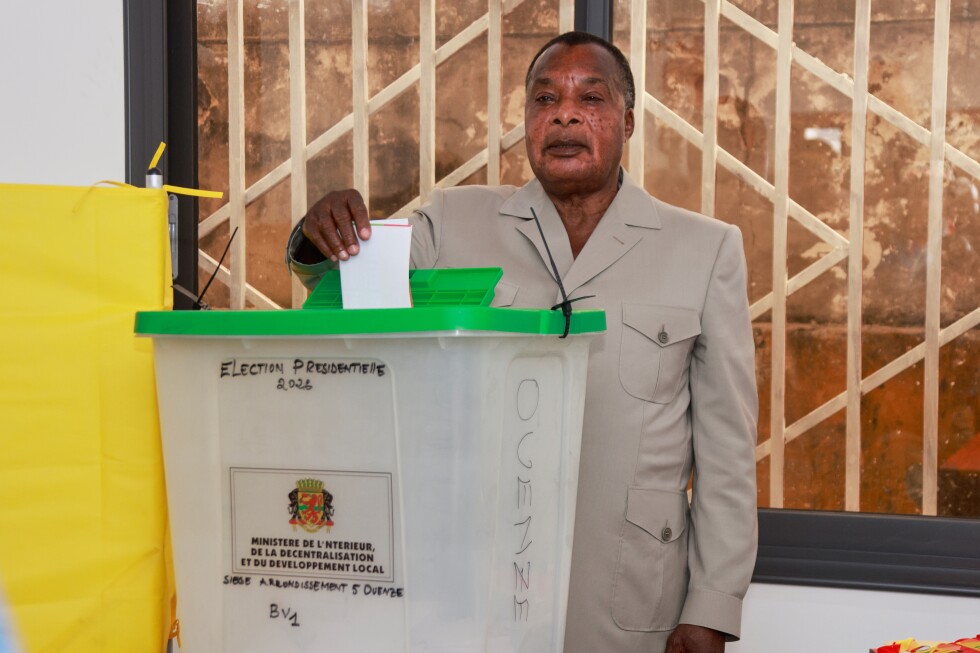
    BRAZZAVILLE, Republic of Congo — As the Republic of Congo prepares for its presidential election this weekend, political analysts anticipate a predetermined outcome with incumbent President Denis Sassou N’Guesso poised to secure another term against a fragmented opposition. The 82-year-old leader, who has governed this Central African nation for a cumulative 42 years, faces minimal challenge from six opposition candidates in an electoral process characterized by widespread public disillusionment.

    Sassou N’Guesso’s political dominance stems from a complex history: initially taking power in 1979, he briefly lost office after finishing third in the 1992 election before reclaiming control through militia leadership following the 1997 civil war. Constitutional amendments in 2015 eliminated presidential age and term limits, effectively cementing his eligibility for perpetual reelection. He currently ranks as Africa’s third-longest serving ruler, trailing only Cameroon’s Paul Biya and Equatorial Guinea’s Teodoro Obiang Nguema Mbasogo.

    The election unfolds against a backdrop of severe economic challenges. Despite the country’s oil wealth, the World Bank reports youth unemployment (ages 15-24) at 41%—nearly double the national average—while the debt-to-GDP ratio has reached 95.4%. This economic distress has fueled electoral apathy, particularly among young citizens who perceive the voting process as meaningless.

    Macaire Epoha, a 38-year-old mathematician working odd jobs in Brazzaville, expressed the prevailing sentiment: “N’Guesso will be re-elected with his usual scores, which are close to 80%. The elections have no bearing on young people.” Similarly, geography graduate Cyprien Massamba, who has driven a taxi for a decade, plans to boycott the election to draw international attention to the nation’s economic crisis.

    Remadji Hoinathy, senior researcher at the Institute for Security Studies, notes that the election primarily serves to “legitimize power without competition.” Opposition candidates face systematic marginalization through intimidation tactics and alleged electoral manipulation, with two major opposition figures already boycotting the process.

    Looking beyond the imminent election, political observers highlight the looming succession question. Given Sassou N’Guesso’s advanced age, this term may represent his final tenure. Attention increasingly focuses on his 51-year-old son, Denis-Christel Sassou Nguesso, currently serving as Minister of International Cooperation, who appears positioned as the political heir.

    Despite campaign promises to accelerate development and agricultural modernization, the government’s message fails to resonate with a population where 47% are under 18. As 28-year-old job seeker Coretta Imongui noted: “The system is locked down by the old guard. However, they will not live forever. I still have hope for my children and grandchildren.”

  • UK govt to release first batch of Mandelson files

    UK govt to release first batch of Mandelson files

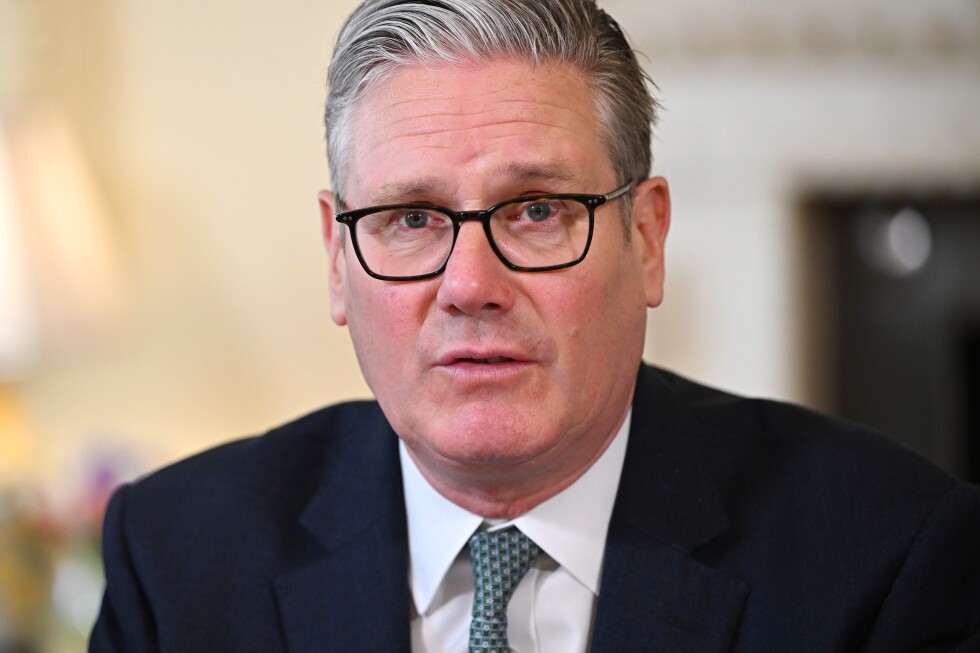
    The UK government commenced the disclosure of documents on Wednesday concerning Prime Minister Keir Starmer’s contentious 2024 appointment of Peter Mandelson as ambassador to Washington, despite his known associations with convicted sex offender Jeffrey Epstein. This initial release, described by Government Minister Darren Jones as containing a “big number” of files, represents only a fraction of the comprehensive documentation that Parliament has mandated for full transparency.

    The disclosure follows intense political pressure and a parliamentary order last month compelling the Labour government to release tens of thousands of emails, messages, and vetting documents related to Mandelson’s appointment. Prime Minister Starmer has acknowledged that Mandelson repeatedly misled officials about the depth of his friendship with Epstein, both before and during his diplomatic tenure in Washington.

    Mandelson, a former Labour communications strategist and government minister, was arrested last month on suspicion of misconduct in public office. The investigation focuses on allegations that he transmitted sensitive government documents to Epstein, including during the critical period of the 2008 financial crisis. Although Mandelson has not been formally charged, the scandal led to his dismissal as ambassador in September last year following revelations by a US Congressional committee.

    The controversy has triggered significant political repercussions, including the resignation of two of Starmer’s senior aides and mounting calls for the Prime Minister’s own resignation. Starmer has subsequently issued a formal apology to Epstein’s victims for the appointment, acknowledging the profound lapse in judgment.

  • Lords a-leaving: Britain is ejecting hereditary nobles from Parliament after 700 years

    Lords a-leaving: Britain is ejecting hereditary nobles from Parliament after 700 years

    LONDON — In a historic break with tradition, Britain’s Parliament has voted to remove hereditary aristocrats from the unelected House of Lords, ending a seven-century practice of inherited parliamentary power. The upper chamber finally dropped its objections to legislation passed by the House of Commons that will oust dozens of dukes, earls, and viscounts who gained parliamentary seats through aristocratic titles rather than democratic election.

    Government Minister Nick Thomas-Symonds hailed the change as eliminating “an archaic and undemocratic principle,” stating that Parliament should be “a place where talents are recognized and merit counts” rather than “a gallery of old boys’ networks” where centuries-old titles override the will of the people.

    The move completes a reform process initiated a quarter-century ago by former Prime Minister Tony Blair’s Labour government, which removed most hereditary peers in 1999 but allowed 92 to remain temporarily to avoid rebellion. Prime Minister Keir Starmer’s current Labour administration has now introduced legislation to remove the remaining hereditary members.

    The House of Lords, with over 800 members making it the world’s second-largest legislative chamber after China’s National People’s Congress, plays a crucial role in Britain’s parliamentary democracy by scrutinizing legislation from the elected Commons. However, critics have long criticized it as unwieldy and undemocratic.

    The chamber’s composition has evolved significantly throughout its 700-year history. Originally dominated by male noblemen who inherited their seats alongside bishops, the Lords began admitting “life peers”—government-appointed retired politicians and notable figures—in the 1950s. These appointed members now constitute the vast majority, with hereditary peers representing roughly one in ten members.

    Recent controversies, including the case of Peter Mandelson who resigned from the Lords in February following revelations about his friendship with the late sex offender Jeffrey Epstein, have drawn renewed attention to problems within the upper chamber.

    The Lords initially resisted the reform, forcing a compromise that will allow an undisclosed number of hereditary members to remain by being “recycled” into life peers. The legislation will become law once King Charles III grants royal assent—a formality—with hereditary peers exiting at the end of the current parliamentary session this spring.

    Opposition Conservative Party leader in the Lords, Nicholas True, acknowledged the end of “well over seven centuries of service by hereditary peers,” noting that while many were “flawed,” most “served their nation faithfully and well” and contributed to thousands of legal improvements.

    Looking forward, Labour remains committed to eventually replacing the House of Lords entirely with a more representative alternative second chamber, though historical precedent suggests such fundamental change may proceed gradually.

  • South Africa deploys troops in Johannesburg to tackle organized crime

    South Africa deploys troops in Johannesburg to tackle organized crime

    JOHANNESBURG — In a significant security operation, South African military forces have been deployed across Johannesburg to address escalating organized crime and illegal mining activities. This mobilization follows President Cyril Ramaphosa’s recent announcement designating criminal networks as the foremost threat to the nation’s democracy and economic stability.

    Eyewitness accounts confirmed the presence of soldiers in the Riverlea district, where a convoy of over a dozen military vehicles conducted operations. Troops were observed entering apartment complexes in this suburb, which has been severely impacted by both gang violence and unauthorized mining operations.

    The deployment represents the initial phase of a broader national strategy, with 550 soldiers activated in Gauteng province through April. According to parliamentary documents, this operation will eventually expand to five of South Africa’s nine provinces, targeting illegal mining in Gauteng, North West, and Free State provinces, while concentrating on gang violence in Western and Eastern Cape regions. Certain operations may extend beyond one year based on security assessments.

    Police statistics underscore the urgency: 6,351 homicides occurred between October and December 2025, averaging nearly 70 daily in this nation of 62 million people. The government characterizes illegal mining and gang violence as particularly severe manifestations of organized crime.

    This deployment marks the most substantial military engagement in domestic security since the 2021 civil unrest that resulted in 350 fatalities during COVID-19 lockdown protests. President Ramaphosa emphasized that the decision underwent careful consideration, acknowledging the military’s controversial historical role during apartheid-era suppression of pro-democracy demonstrations.

    While the move has received broad public support, opposition parties interpret it as an implicit acknowledgment of police failure to control crime. The military operates under police command following specialized training in law enforcement protocols, with defense authorities withholding immediate operational details.

  • Cross-Strait youth exchanges pave the way for a brighter future, says national political adviser

    Cross-Strait youth exchanges pave the way for a brighter future, says national political adviser

    BEIJING – Enhanced interactions between mainland Chinese and Taiwanese youth are creating vital bridges for peaceful development across the Taiwan Strait, according to a prominent political adviser speaking at China’s top political advisory body.

    Dr. Xu Kewei, President of the Guangdong Provincial Federation of Taiwan Compatriots and member of the 14th National Committee of the Chinese People’s Political Consultative Conference (CPPCC), emphasized the transformative power of cross-Strait exchanges during a group interview preceding the closing ceremony of the CPPCC’s fourth session on March 11, 2026.

    As a third-generation Taiwan compatriot who has established roots on the mainland, Dr. Xu brings unique perspective to his dual roles as a medical surgeon and political representative. Through his extensive travels across provinces for surgical procedures, consultations, and academic lectures, he has witnessed firsthand the growing integration of Taiwanese youth into mainland society.

    “Young people from Taiwan are not merely visiting – they are building lives, launching enterprises, and pursuing advanced education throughout the mainland,” Xu observed. He cited compelling examples of this integration: entrepreneurs blending Taiwanese and mainland culinary traditions to create successful beverage franchises, and tech innovators applying artificial intelligence to revolutionize traditional manufacturing sectors.

    The cultural dimension remains equally significant, with young Taiwanese exploring innovative approaches to preserve shared heritage. Xu specifically highlighted renewed interest in Gezai opera, a traditional art form that resonates deeply across both sides of the Strait.

    Statistical evidence underscores this trend, with nearly 4.9 million mainland visits recorded by Taiwan residents in the previous year. Notably, youth constituted over one-third of these exchanges, signaling a generational shift toward deeper engagement.

    “Our shared aspiration must progress from conceptual kinship to tangible coexistence,” Xu asserted. “By fostering these connections, we collectively architect a more prosperous and harmonious future for all Chinese people, regardless of which side of the Strait they call home.”

  • Iran’s new supreme leader injured but ‘safe’, says president’s son

    Iran’s new supreme leader injured but ‘safe’, says president’s son

    Iran’s political landscape faces unprecedented uncertainty as newly appointed Supreme Leader Mojtaba Khamenei remains out of public view following injuries sustained during the transition of power. Presidential adviser Yousef Pezeshkian confirmed Wednesday that the 56-year-old successor is “safe and sound” despite physical injuries, marking the first official acknowledgment of his condition.

    The previously low-profile but influential figure assumed Iran’s highest leadership position after his father, Ali Khamenei, was killed alongside his mother and wife in a February 28 airstrike that initiated the US-Israeli military campaign against the Islamic Republic. The daytime attack on a Tehran compound reportedly left Mojtaba with leg injuries, though he remains alert while sheltering at a highly secure location with limited communication access.

    State television has characterized Khamenei as a “wounded veteran of the Ramadan war,” referencing the conflict that erupted during the holy Muslim fasting month. His symbolic ascension to power has been visually represented across Tehran through giant billboards depicting him receiving the national flag from his father under the watchful gaze of Islamic Republic founder Ruhollah Khomeini.

    The new leader’s invisible presence has created a complex political dynamic. While thousands of pro-government supporters brandished his posters at rallies, nighttime protests in the capital have featured chants of “Death to Mojtaba!”—reflecting public opposition to a figure believed instrumental in suppressing anti-government demonstrations since 2009.

    Security analysts anticipate Khamenei will maintain a bunkered existence for the foreseeable future, given his immediate designation as a primary target for US and Israeli forces. Emile Hokayem of the International Institute for Strategic Studies noted that “killing him early is certainly an Israeli priority,” while suggesting that survival would transform him into “a totem, a testimony to the resilience of the system.”

    Power delegation appears imminent, with expectations that Khamenei will assign governmental operations to national security chief Ali Larijani and military operations to powerful parliament speaker Mohammad Bagher Ghalibaf. The new leader has already received pledges of allegiance from Iran’s conventional military, the Islamic Revolutionary Guard Corps, and Tehran-backed groups including Yemen’s Houthi rebels and Lebanon’s Hezbollah. Russian President Vladimir Putin has additionally promised “unwavering support.”

    The leadership transition occurs against the backdrop of former US President Donald Trump’s warning that Khamenei would require American approval to maintain power, stating Sunday that without such endorsement, “he’s not going to last long.” This development marks a critical juncture for Iran’s political future, combining dynastic succession with intensified international pressure and internal dissent.

  • Carney inches closer to majority, as fourth MP defects to Liberals

    Carney inches closer to majority, as fourth MP defects to Liberals

    Canadian Prime Minister Mark Carney’s minority government stands on the brink of securing parliamentary majority following a significant political defection. Lori Idlout, representing Nunavut and previously aligned with the left-leaning New Democratic Party (NDP), has crossed the floor to join the governing Liberal Party. This move marks the fourth parliamentary defection to Carney’s administration in recent months.

    Idlout’s decision follows extensive personal deliberation and consultations with her constituency, family, and political supporters. In an official statement released by the Liberals, she expressed her conviction that joining the governing party would better serve her constituents’ interests. The Liberal leadership enthusiastically welcomed Idlout, characterizing her defection as evidence of growing confidence in Carney’s leadership.

    The NDP’s interim leader Don Davies voiced strong disapproval, asserting that elected officials who switch party allegiance should seek renewed electoral mandates from their constituents. This defection occurs amid broader political realignments, with three former Conservative MPs—Matt Jeneroux, Chris d’Entremont, and Michael Ma—having previously joined the Liberal ranks.

    Conservative opposition figures have accused the government of employing coercive tactics to lure opposition members, though no specific evidence has been presented. The political landscape further intensifies with Carney’s announcement of three critical by-elections scheduled for April 13th. Two contests in Liberal-friendly Toronto districts and one highly competitive race in Montreal—where the previous election was decided by a single vote later invalidated by the Supreme Court—could determine the government’s future.

    Should the Liberals secure all three seats alongside Idlout’s defection, they would achieve 173 parliamentary seats, providing Carney with a stable majority that could extend his government’s tenure for three additional years without elections. This political shift occurs against the backdrop of the NDP’s organizational challenges, having retained only seven seats in last year’s federal election amid significant voter erosion. The party prepares to select new leadership later this month as it reevaluates its political strategy.