分类: politics

  • Motions prioritize emerging industries

    Motions prioritize emerging industries

    Chinese legislators are channeling significant attention toward establishing legal frameworks for cutting-edge technological sectors during the current National People’s Congress session. According to the session’s secretariat, an overwhelming majority of the 226 motions submitted by NPC deputies focus on legislative priorities for the 15th Five-Year Plan (2026-2030), with particular emphasis on building China’s modern industrial system.

    Guo Zhenhua, head of the motions work group, revealed that more than two-thirds of proposals target legal establishment or amendment to strengthen technological self-reliance and develop a high-standard socialist market economy. The legislative push specifically addresses artificial intelligence governance, digital economy regulations, low-altitude economic development, and national laboratory operations.

    Beyond emerging technologies, deputies have advocated for revisions to existing legislation including the Patent Law to accelerate the transformation of scientific achievements into practical applications. This initiative aims to bridge the gap between innovation and industrial implementation.

    Concurrently, social welfare concerns feature prominently in the legislative agenda. Sixty-six motions address quality-of-life improvements including traffic safety enhancements, comprehensive elderly care services, and protection for workers in emerging employment sectors such as ride-hailing and delivery services.

    The secretariat additionally reported receiving over 7,000 suggestions covering broader policy areas including internet economy development, green energy transition, agricultural智能化services, and combating online misinformation and telecommunications fraud. Unlike formal motions, these suggestions represent advisory opinions for government departments rather than items requiring NPC review.

  • Seoul says can deter threats from North if US weapons shifted to Mideast

    Seoul says can deter threats from North if US weapons shifted to Mideast

    South Korean defense officials have declared their nation’s military readiness remains uncompromised despite reports of potential redeployment of US missile defense assets to the Middle East. The statement from Seoul’s Ministry of Defense comes amid speculation that components of the Terminal High Altitude Area Defense (THAAD) system might be transferred from the Korean Peninsula to address escalating tensions in the Persian Gulf region.

    Citing anonymous sources, The Washington Post recently indicated that the United States military command was considering relocating elements of its advanced anti-missile infrastructure from South Korea to strengthen Middle Eastern defenses. The THAAD system, operational in South Korea since 2017, represents a critical component of the regional security architecture designed to counter ballistic missile threats from North Korea.

    Defense Ministry representatives emphasized that South Korea’s independent military capabilities, combined with the existing US force presence of approximately 28,500 troops, ensure continuous deterrence against potential northern aggression. The ministry’s official communication stated that regardless of specific asset deployments, the nation’s defensive posture remains robust and fully operational.

    The possible redeployment has generated complex diplomatic considerations. While President Lee Jae Myung’s administration expressed formal opposition to the potential movement of defense systems, officials simultaneously acknowledged limited influence over ultimate US decision-making regarding military asset allocation. This delicate balance reflects the intricate nature of the US-South Korea security partnership.

    Photographic evidence published by Yonhap news agency appeared to show dismantling activities at the THAAD installation in Seongju County, approximately 220 kilometers south of Seoul. Presidential officials cautioned against speculative reporting on sensitive military matters, emphasizing the importance of maintaining strategic relationships with Middle Eastern partners while protecting national security interests.

    The THAAD system’s technological sophistication enables it to intercept short, medium, and intermediate-range ballistic missiles through hit-to-kill technology. Its original deployment in 2017 provoked significant diplomatic friction with China, which viewed the advanced system as a regional security threat, demonstrating the complex geopolitical implications of missile defense positioning.

  • South Korea confirms US moving air defence systems to the Middle East

    South Korea confirms US moving air defence systems to the Middle East

    South Korean President Lee Jae Myung has publicly acknowledged that the United States intends to reposition air defense assets from the Korean Peninsula to the Middle East, marking a significant shift in regional security priorities. During a cabinet meeting on Tuesday, President Lee expressed opposition to the withdrawal of these systems but conceded that Seoul’s ability to prevent the move remains limited.

    This development represents the first official confirmation that Washington is reallocating vital missile defense capabilities from East Asia to address escalating tensions with Iran. According to initial reports by The Washington Post, the Pentagon is specifically relocating components of a Terminal High Altitude Area Defense (THAAD) system from South Korea.

    The strategic repositioning occurs despite South Korea’s status as a key U.S. ally facing ongoing threats from nuclear-armed North Korea. The two nations maintain substantial economic ties, with South Korea ranking as America’s sixth-largest trading partner—economic relations that far surpass U.S. commercial links with Israel, Turkey, or Gulf states.

    This marks not the first instance of the U.S. diverting defensive resources in response to Iranian missile capabilities. Turkey recently confirmed additional Patriot battery deployments to Malatya province following Iranian missile attacks. Middle East Eye reported these systems were transferred from NATO’s Ramstein base in Germany, with analysts suggesting Iranian missiles may have been testing Turkish air defenses near critical NATO radar installations.

    The redistribution underscores increasing strain on U.S. military resources as Middle Eastern partners request additional air defense interceptors. Some Gulf analysts have begun questioning the effectiveness of U.S. military presence in the region despite ongoing attacks from Iran.

    This strategic reallocation presents a paradox given the Trump administration’s previous commitments to disengage from Middle Eastern conflicts. The move also contrasts with defense policy recommendations from officials like Under Secretary Eldridge Colby, who advocated for reducing Middle East commitments to better focus on strategic competition with China.

  • Kast to take office as Chile marks its sharpest shift to the right since dictatorship

    Kast to take office as Chile marks its sharpest shift to the right since dictatorship

    SANTIAGO, Chile — José Antonio Kast assumed Chile’s presidency on Wednesday, initiating the nation’s most dramatic conservative transformation since its democratic restoration in 1990. The Trump-inspired leader of the Chilean Republican Party secured a decisive December victory against communist contender Jeannette Jara, capitalizing on public demand for stringent crime prevention measures and controlled immigration policies.

    The 60-year-old lawyer assumes power amid escalating great power competition in Latin America. Analysts note his administration faces immediate pressure to navigate between the United States seeking regional influence reassertion and China, which remains Chile’s primary trading partner. Mariano Machado, Verisk Maplecroft analyst, observes that “U.S.-China rivalry in Latin America has moved from rhetoric to implementation.”

    Kast’s diplomatic orientation became evident through recent overtures to Trump’s administration, including praise for U.S. operations targeting former Venezuelan leader Nicolás Maduro. Tensions with outgoing President Gabriel Boric culminated in an unprecedented suspension of transition proceedings following disputes over a Chinese submarine cable project that drew vehement U.S. opposition.

    The new president’s agenda reflects his alignment with regional right-wing leaders, evidenced by his participation in Miami’s “Shield of the Americas” summit alongside El Salvador’s Nayib Bukele and Argentina’s Javier Milei. University of Chile analyst Gilberto Aranda notes “a very significant alignment of Chile with directives emanating from Washington.”

    Domestically, Kast’s victory signals a stark reversal from his 2021 runoff loss to Boric. While his previous opposition to abortion and same-sex marriage—coupled with favorable references to Augusto Pinochet’s legacy—proved politically untenable, his hardline security platform ultimately resonated with approximately 60% of voters. The electorate demonstrated heightened concern over organized crime surges and unfulfilled expectations from the previous administration.

    Aranda identifies “a sense of emergency, particularly in security” as the defining theme of Kast’s governance framework, with immigration and economic concerns “framed within this narrative of social decline.” The president has pledged to emulate Bukele’s crime-fighting tactics, criminalize illegal immigration, intensify deportations, and install physical barriers along national borders.

    Administrative challenges await Kast’s divided government, which must secure congressional cooperation for legislative priorities. Machado emphasizes that “volume, traction and clear direction in the first 100 days” will determine political establishment alignment. The abrupt transition suspension—an unprecedented democratic precedent—risks polarizing governance and complicating parliamentary negotiations from the outset.

  • Trump: US Navy sank unarmed Iran ship because it was ‘more fun’

    Trump: US Navy sank unarmed Iran ship because it was ‘more fun’

    Former President Donald Trump has sparked international condemnation by openly admitting that the U.S. Navy deliberately sank an unarmed Iranian frigate in the Indian Ocean simply because it was “more fun” than capturing the vessel. The March 4 attack on IRIS Dena resulted in the deaths of 104 Iranian sailors and injured 32 others, according to Iran’s state media.

    The warship was returning from the Milan Peace 2026 naval exercises hosted by India when an American submarine torpedoed it approximately 2,000 miles from the Persian Gulf. Both Iranian and Indian officials have confirmed the vessel was unarmed and operating in a purely ceremonial capacity during the multinational drills.

    During a gathering hosted by the Congressional Institute, Trump recounted his conversation with military officials about the incident. He expressed initial frustration about destroying what he called a “top-of-the-line” vessel, questioning why they didn’t capture it instead. According to Trump, an unidentified official responded that sinking ships was “more fun” and “safer,” prompting laughter from both the audience and the former president.

    The incident has been described by political commentator Adam Schwarz as “the most blasé admission of a war crime by a US president in history.” International law experts note that while attacking military ships might technically be legal under naval warfare rules, the stated motivation of doing it for “fun” raises serious ethical and legal concerns.

    Phyllis Bennis of the Institute for Policy Studies emphasized that failing to rescue survivors constitutes a clear violation of the Second Geneva Convention. The 32 survivors and numerous bodies were eventually recovered by a Sri Lankan joint rescue operation following a distress call.

    The attack occurs within the broader context of escalating US-Israel military actions against Iran that have reportedly killed at least 1,255 people, including 200 children and 11 healthcare workers. Defense Secretary Pete Hegseth has previously stated the US would not abide by “stupid rules of engagement” in the campaign against Iran.

    Journalist Mark Ames characterized the attack as demonstrating “sadistic pleasure” in tormenting those who can’t fight back. Bennis further argued that the entire US campaign against Iran represents the “supreme international crime” of aggression under Nuremberg principles, as it lacks UN Security Council authorization or justification as self-defense.

  • Democratic senator says Trump on ‘path toward deploying’ US troops in Iran

    Democratic senator says Trump on ‘path toward deploying’ US troops in Iran

    A stark warning has been issued by Democratic Senator Richard Blumenthal, who expressed grave concerns following a classified Senate Armed Services Committee briefing on Tuesday. The senator asserted that the current administration appears to be advancing toward deploying American ground forces in Iran, marking one of the most explicit indications of President Trump’s potential strategic direction in the ongoing conflict.

    The context for these apprehensions is underscored by Reuters reporting, citing anonymous sources, that at least 150 U.S. service members have sustained injuries in operations against Iran, with eight fatalities confirmed in the Gulf region. This military campaign, officially designated ‘Operation Epic Fury,’ has proceeded without a publicly articulated clear rationale from the President himself, drawing significant criticism.

    Democratic lawmakers have vehemently challenged the administration’s approach, condemning the President for initiating military action without seeking congressional authorization—a constitutional prerogative of the legislature—and for failing to define clear strategic objectives. This criticism is particularly pointed given Trump’s previous condemnations of U.S. military engagements and regime-change operations in the Middle East.

    Senator Blumenthal, with fifteen years of Senate tenure, described the briefing as one of the most unsatisfactory he has attended, stating, ‘I emerge from this briefing as dissatisfied and angry, frankly, as I have from any past briefing.’ He emphasized his profound concern for American lives, specifically the potential deployment of ‘our sons and daughters on the ground in Iran.’

    Further complicating the geopolitical landscape, Blumenthal accused Russia of actively and intensively aiding Iran ‘with intelligence and perhaps with other means,’ and suggested China might also be providing assistance.

    The White House response, delivered by Press Secretary Karoline Leavitt, dismissed the Democrats’ concerns as ‘disingenuous.’ Leavitt defended the President’s prerogative as Commander-in-Chief not to rule out any options and reiterated the administration’s objective to prevent Iran from acquiring a nuclear weapon. While denying the operation is explicitly a regime-change endeavor, Leavitt acknowledged that achieving U.S. objectives might ‘inadvertently cause a change in regime,’ and stated it is in the best interest of the U.S. and its allies to no longer have ‘a radical terrorist in charge of Iran.’

    This stance appears at odds with recent diplomatic efforts. Reports indicate that U.S.-Iran negotiations mediated by Oman last month were nearing a potentially acceptable agreement regarding Tehran’s nuclear program. However, it is alleged that Trump’s unconventional negotiating team, comprising peace envoy and real estate mogul Steve Witkoff and his son-in-law Jared Kushner (who holds no formal government role), lacked the technical expertise to recognize significant concessions made by Iran, potentially derailing a diplomatic resolution.

  • Lack of grand, compelling narrative behind Iran war poll numbers

    Lack of grand, compelling narrative behind Iran war poll numbers

    In a striking departure from historical precedent, President Donald Trump’s military engagement in Iran faces substantial domestic opposition from its inception. Speaking on March 5, 2026, Trump asserted his intention to influence Iran’s leadership transition, even suggesting potential ground troop deployment to achieve his objectives. This stance places him within a longstanding tradition of American presidents—from Franklin Roosevelt and Harry Truman to George W. Bush and Barack Obama—who have initiated conflicts to either dismantle adversarial regimes or bolster allied governments overseas.

    However, current polling data reveals a significant divergence from historical patterns. A recent CNN survey indicates 59% of Americans oppose the Iran conflict, a consistent trend across multiple polls since hostilities began. This opposition stems primarily from the absence of a compelling, purpose-driven narrative that has historically justified American military interventions.

    Historical analysis demonstrates that successful military campaigns typically feature powerful unifying stories. During the 1930s-40s, the tangible threat of fascism spreading across Europe and the attack on Pearl Harbor created national consensus for World War II engagement. Similarly, the post-9/11 era generated overwhelming public support for interventions in Afghanistan (88% in 2001) and Iraq (70% in 2003) through narratives centered on preventing future terrorist attacks.

    Contemporary perception data reveals why no similar narrative has emerged regarding Iran: a March 2026 Marist poll shows 55% of Americans consider Iran either a minor threat or no threat at all, with only 44% viewing it as a major threat—down from 48% in July 2025. This contrasts sharply with the 64% who perceived Iraq as a ‘considerable threat’ before the 2003 invasion.

    Iran’s diminished geopolitical standing contributes to this perception. Following the 12-Day War with Israel in summer 2025 that reportedly damaged nuclear facilities, loss of key regional allies, collapsing proxy networks, economic struggles, and domestic protests, Iran appears considerably weakened rather than an existential threat.

    The administration’s messaging failure exacerbates this narrative vacuum. Unlike Roosevelt’s extensive pre-WWII speeches or Bush’s two-year buildup to Iraq, Trump devoted minimal attention to Iran in his State of the Union address and provided inconsistent justifications for military action. Consequently, 54% disapprove of his Iran handling, 60% believe he lacks a clear plan, and 60% disapprove of his overall foreign policy approach.

    This has created unusual political fractures, with Democrats, independents, and even portions of Trump’s MAGA coalition expressing opposition. Historical precedents suggest an available exit strategy: as demonstrated by Clinton’s withdrawal from Somalia after Black Hawk Down (1993), Obama’s Libya pullout following Benghazi (2012), and Trump’s own disengagement from Yemen (2025), presidents can extract themselves from unpopular conflicts without significant political damage. With rising gas prices, potential casualties, and market volatility, disengagement may represent the most prudent course forward.

  • North Korean leader Kim watches cruise missile tests with his daughter

    North Korean leader Kim watches cruise missile tests with his daughter

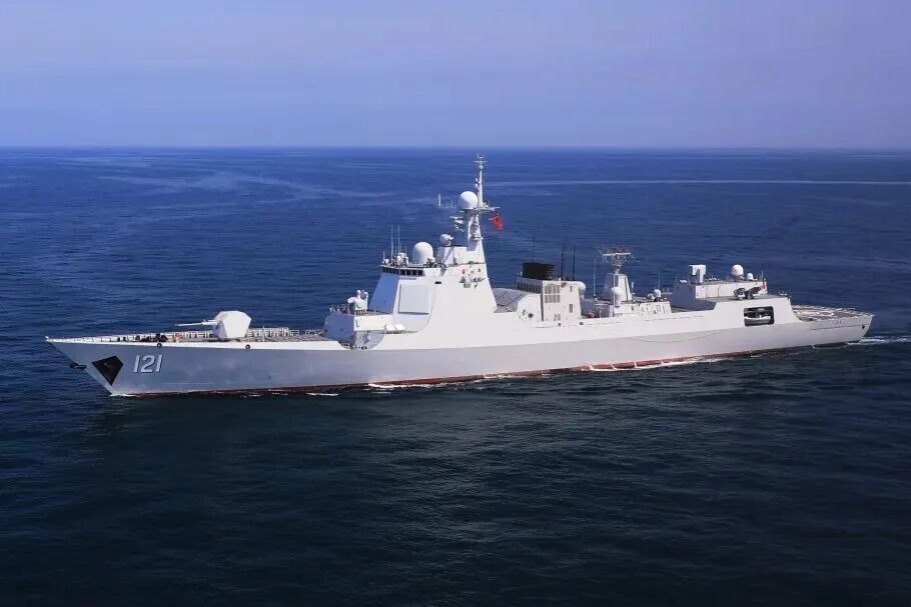
    In a demonstration of military readiness, North Korean leader Kim Jong Un supervised the test-firing of strategic cruise missiles from the naval destroyer Choe Hyon via video monitoring on Tuesday. The Korean Central News Agency (KCNA) reported that the missiles successfully struck target islands off the country’s west coast, showcasing the navy’s strategic offensive capabilities.

    Kim emphasized the critical importance of maintaining a “powerful and reliable nuclear war deterrent” during the observation, though state media did not mention the presence of his teenage daughter, Kim Ju Ae, in their initial dispatch. However, subsequent imagery revealed the approximately 13-year-old heir apparent accompanying her father in the conference room as they monitored the weapons tests.

    The missile launches coincided with the commencement of the Freedom Shield military exercises, an 11-day computer-simulated command post drill conducted jointly by the United States and South Korea. North Korea has consistently condemned these annual drills as invasion rehearsals.

    In response to the military exercises, Kim Yo Jong, the leader’s sister and senior official, issued a stern warning stating that the drills reveal the “inveterate repugnancy toward” North Korea by the U.S. and South Korea. She declared that North Korea would “convince the enemies of our war deterrence” through appropriate measures.

    This latest weapons test follows Kim’s personal observation of similar cruise missile launches from the Choe Hyon destroyer just last week, though his daughter was not present during that previous demonstration. The pattern of weapons testing in response to joint military exercises reflects North Korea’s established pattern of demonstrating military capabilities amid heightened regional tensions.

  • Advocacy groups sue Trump administration to maintain temporary visas for Somalis

    Advocacy groups sue Trump administration to maintain temporary visas for Somalis

    A coalition of advocacy organizations has initiated federal litigation against the Trump administration’s decision to terminate Temporary Protected Status (TPS) for Somali nationals residing in the United States. The lawsuit, filed by African Communities Together, Partnership for the Advancement of New Americans, and several affected individuals, contends that Somalia continues to experience severe humanitarian crises that warrant maintained protection.

    The legal challenge asserts that Somalia’s designation for TPS in 1991 recognized extraordinary conditions including ongoing armed conflict, arbitrary detentions, physical violence, torture, and systematic human rights violations. The complaint argues that the termination decision represents a “preordained, pretextual, politically influenced agenda” rather than a genuine assessment of country conditions.

    Legal representatives from Muslim Advocates, Haitian Bridge Alliance, the Legal Defense Fund, and Communities United for Status and Protection emphasize that stripping TPS protections would force approximately 1,082 beneficiaries and 1,383 applicants into imminent loss of immigration status, work authorization, and potential deportation to dangerous conditions. The Department of Homeland Security had previously announced the program’s expiration set for March 17, urging community members to “self-deport” through a mobile application that allegedly has not provided promised reimbursement.

    The lawsuit contextualizes this decision within broader administration patterns of terminating TPS for predominantly Black and brown nations, including recent cancellations for Venezuelans, Syrians, and Afghans. The litigation highlights inflammatory remarks President Trump made about Somali immigrants, including statements that they “come from hell” and that their “country stinks,” which plaintiffs argue demonstrate racial animus influencing policy decisions.

    The case represents a significant challenge to the administration’s immigration enforcement mechanisms and its interpretation of “non-refoulement” principles under international law, which prohibit returning individuals to countries where they face imminent danger.

  • Georgia race to replace Marjorie Taylor Greene heads to a runoff

    Georgia race to replace Marjorie Taylor Greene heads to a runoff

    Georgia’s 14th Congressional District is set for a high-stakes runoff election on April 7th after no candidate secured a majority in Tuesday’s special election. The contest will feature Republican Clay Fuller, a former district attorney endorsed by former President Donald Trump, against Democrat Shawn Harris, a retired Army Brigadier General and local farmer.

    The election, which drew a crowded field of 17 candidates from both parties, will determine who completes the remainder of former Representative Marjorie Taylor Greene’s term. The runoff comes after Greene’s unexpected departure from Congress, which created a vacuum in the strongly conservative district.

    Fuller’s campaign gained significant momentum following Trump’s “complete and total endorsement” delivered via Truth Social and reinforced during a rally in Rome, Georgia last month. The former president’s involvement highlighted the ongoing influence he wields within the Republican base. “For those who questioned how important Donald J. Trump is to this country, to Georgia’s 14th District, and to the state of Georgia, you see what this man means to this community,” Fuller stated on election night.

    Harris, representing Democratic hopes to flip the long-held Republican seat, struck an optimistic tone on social media: “This race isn’t over. Momentum is real. The coalition is growing.”

    The special election served as an early indicator of Trump’s ability to shape electoral outcomes ahead of the November midterms. Voters faced a complex choice among numerous candidates, with many Republicans looking for a reliable advocate for Trump’s agenda. Some gravitated toward former State Senator Colton Moore, who embodied Greene’s anti-establishment approach but ultimately finished third.

    The shadow of Greene’s controversial tenure loomed large over the election. During her nearly six years in Congress, she developed a reputation for embracing conspiracy theories, delivering bombastic committee performances, and advocating hardline immigration policies. Her relationship with Trump deteriorated following their disagreement over the Epstein files legislation, and she has since criticized Trump’s military operations against Iran.

    Democratic voters expressed hope for a more conciliatory representative. “I want someone more positive who will speak kindly to all constituents regardless of party,” said Democrat Sheila Hutchings, explaining her support for Harris.

    The April runoff will test whether Trump’s endorsement power can overcome Democratic momentum in a district that has been reliably Republican but now faces questions about its political direction.