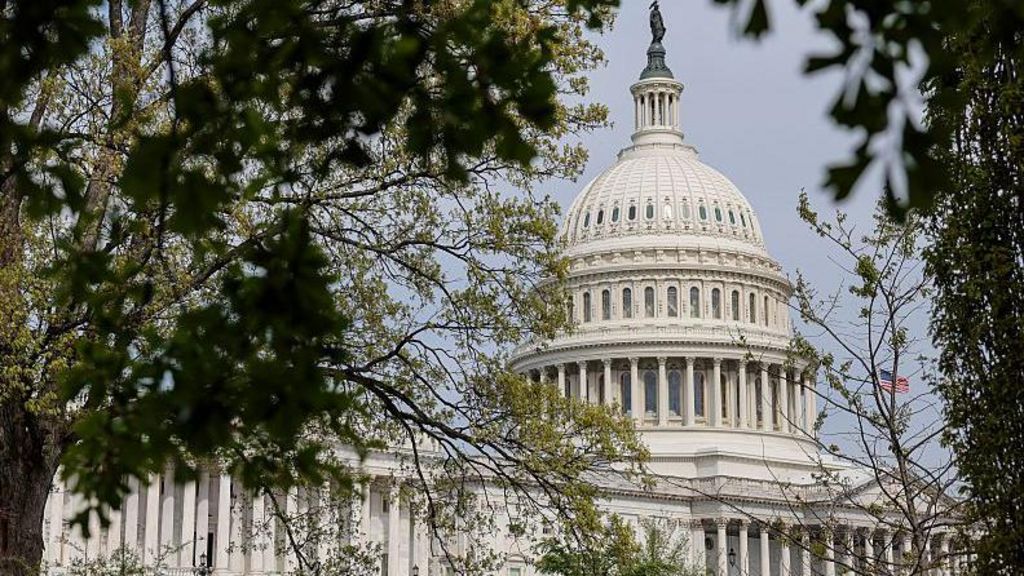
A second attempt by congressional Democrats to limit President Donald Trump’s authority to launch expanded military action against Iran has collapsed in the U.S. House of Representatives, falling by just a single vote one day after an identical measure was blocked in the Senate.
The War Powers Resolution, which sought to reassert congressional oversight over U.S. military engagement connected to the ongoing Iran-related conflict, failed in a razor-thin 213-214 vote Thursday. Long viewed as largely symbolic by legislative observers, the measure faced steep procedural barriers even if it had cleared the House: passage in both chambers would still have been almost certain to be defeated by a presidential veto from Trump.
Party lines largely held on the vote, echoing the pattern seen one day earlier in the Senate. Only one Republican, Representative Thomas Massie of Kentucky, broke ranks to join Democrats in supporting the measure. On the opposite side, Representative Jared Golden of Maine was the sole Democrat to vote against the resolution. Ohio Representative Warren Davidson, who backed a similar Democratic-led effort back in March, chose to vote “present”, a procedural move that counts as an official abstention.
Following the unsuccessful vote, New York Representative Gregory Meeks, the sponsor of the resolution, told reporters he planned to begin outreach to Golden and other on-the-fence lawmakers to build more support for future attempts. Meeks confirmed he would introduce a new War Powers Resolution in the coming weeks, as Democrats continue their long-running push to reclaim Congress’s constitutionally granted authority over decisions to enter armed conflict.
This latest failure comes just one month after a near-identical measure fell by a narrow margin in the House. In that first vote, two Republicans supported the resolution while four Democrats opposed it. Even if Thursday’s vote had flipped to a majority in favor, the measure was already facing long odds in the Senate, where a matching resolution was voted down Wednesday in a 47-52 vote that broke almost entirely along party lines.
Republican opposition to the resolution is not necessarily set in stone, however. Multiple GOP lawmakers have signaled that they are open to reconsidering their positions if the ongoing U.S.-Israel military campaign, which launched on February 28, expands geographically or drags on past the end of this month. Trump has offered inconsistent timelines for how long the engagement will last, most recently claiming the conflict was “close to over”.
The push for the resolution comes directly out of requirements laid out in the 1973 War Powers Resolution, the landmark federal law passed to limit executive authority during the Vietnam War, when then-President Richard Nixon continued U.S. military involvement without full congressional approval. The 1973 law mandates that Congress must grant explicit approval for any military action that extends longer than 60 days. With the current campaign having launched on February 28, that 60-day window is rapidly approaching.